


 PLATFORM UPDATE:

Chemical and enzymatic strategies for the synthesis, ligation, assembly and emerging applications of DNA nanostructures

Abstract
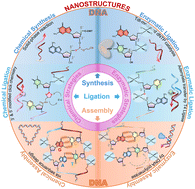
DNA, the fundamental carrier of genetic information, has evolved beyond its biological function to serve as a versatile and programmable material for constructing nanoscale architecture. This review presents a comprehensive overview of the chemical and enzymatic strategies that enable the synthesis, ligation, and assembly of DNA nanostructures, highlighting their interdisciplinary impact. We first examine key chemical approaches, including oligo synthesis and DNA origami, which offer precise control over base sequence and structural complexity. We then explore enzymatic methods—such as ligation and amplification techniques—that facilitate high-fidelity and scalable construction of intricate nanostructures. Subsequently, we investigate how these strategies are applied to create DNA-based materials such as chips, hydrogels, and reconfigurable architectures for in vitro biosensing and other biomedical applications. The review further delves into enzymatic assembly in vivo, including drug delivery, bioimaging, molecular machines, and therapeutic interventions. Finally, we highlight emerging frontiers of DNA nanotechnology, particularly its integration into nanoelectronics and its transformative potential as a medium for digital data storage. By addressing recent advances, current challenges, and future perspectives, this review underscores the pivotal role of chemical and enzymatic techniques in advancing DNA nanotechnology as a foundational platform for next-generation biomedical, materials, and information technologies.
 Please wait while we load your content...


