


 PLATFORM UPDATE:


A heparin-functionalized scaffold loaded with pleiotrophin enhances endothelialization and angiogenic potential in liver tissue engineering

Abstract
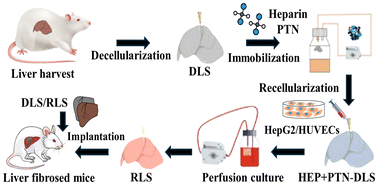
End-stage liver disease resulting from advanced fibrosis and cirrhosis, often requires transplantation, but donor shortages remain a critical limitation. Bioengineered liver scaffolds offer an alternative, but thrombosis and poor vascularization due to the lack of functional endothelial lining limit their success. This study aimed to develop and assess heparinized decellularized liver scaffolds (HEP-DLS), integrated with pleiotrophin (PTN), a heparin-binding growth factor, to improve scaffold endothelialization and angiogenesis, thereby enhancing therapeutic outcomes in a fibrotic liver mouse model. Heparin was covalently immobilized onto scaffolds using an end-point attachment technique, enabling growth factor binding and sustained release. PTN was incorporated into the heparinized scaffolds (HEP + PTN-DLS) to synergistically promote vascularization, angiogenesis, and regeneration. The scaffolds were reseeded with HUVECs via the portal vein and cultured in a perfusion bioreactor for 7 days to establish endothelialization, followed by co-seeding with HepG2 cells and HUVECs. Histological analysis of the recellularized HEP + PTN scaffold showed a uniform endothelial lining, with HepG2 in the parenchyma and HUVECs along vascular walls confirming effective spatial organization. In vivo implantation into the omentum confirmed superior angiogenic potential of HEP + PTN-DLS, with enhanced neovascularization, indicating strong biocompatibility. In a thioacetamide-induced liver fibrosis mouse model, transplantation of HEP + PTN recellularized scaffolds reduced serum ALT/AST levels and demonstrated hepatic regeneration and extracellular matrix remodeling. Our results demonstrated that heparin-functionalized liver scaffolds with PTN promote endothelialization, angiogenesis and significantly improve tissue regeneration in fibrotic livers. These findings represent a promising step toward functional, transplantable liver grafts and support the therapeutic potential of bioengineered liver constructs.
 Please wait while we load your content...


