


Nanomaterial-based therapeutic strategies for spinal cord injury repair: harnessing multifunctionality to overcome pathophysiological challenges
 *acd
and
Kexiao
Yu
*bc
*acd
and
Kexiao
Yu
*bc
Abstract
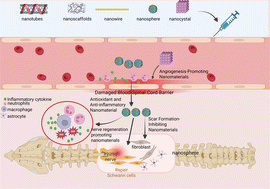
Spinal cord injury (SCI) is a severe central nervous system (CNS) disorder caused by mechanical trauma, leading to primary injury characterized by irreversible neural damage and secondary injury involving cascades of neuroinflammation, oxidative stress, glial scar formation, and disruption of the blood–spinal cord barrier (BSCB), which collectively result in profound functional deficits. This review synthesizes recent progress (past five years) in nanomaterial-based strategies to address the multifaceted pathophysiology of SCI. Nanomaterials leverage their tunable size, surface functionalization, and multimodal properties to overcome the limitations of conventional therapies. Additionally, nanocarriers enable localized and sustained delivery of growth factors and antifibrotic agents, creating a permissive microenvironment for axonal regeneration. Hybrid systems, such as hydrogel–nanocomposite scaffolds, integrate multiple functions to address the sequential phases of SCI, from acute neuroprotection to chronic tissue remodeling. Despite challenges in translating preclinical findings from rodent models to humans and ensuring long-term biocompatibility, nanomaterials offer transformative potential by dynamically interacting with the injury microenvironment, paving the way for personalized, multimechanistic therapies to enhance neural repair and functional recovery after SCI.
 Please wait while we load your content...


