


Simultaneous determination of six microplastics in drinking water by pyrolysis-gas chromatography/mass spectrometry

Abstract
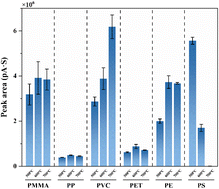
In our study, we have successfully established an analytical method capable of simultaneously detecting six key MPs in drinking water: polyethylene (PE), polypropylene (PP), polystyrene (PS), polyethylene terephthalate (PET), polymethyl methacrylate (PMMA) and polyvinylchloride (PVC), employing stainless steel membrane filtration to enrich the MPs in drinking water, and using pyrolysis-gas chromatography/mass spectrometry (Py-GC/MS) for qualitative and quantitative analysis of characteristic fragment ions produced after high-temperature pyrolysis. And the characteristic fragment ions for MPs are as follows: PMMA(100, 69, 41), PP(126, 70, 55), PVC(128, 127, 102), PET(182, 105, 77, 51), PE(82, 96) and PS(117, 91, 207). By optimizing the key instrument parameters and pretreatment steps, a wide linear range, a relatively low LOD of 0.012–0.40 µg L−1, and a limit of quantitation (LOQ) of 0.039–1.32 µg L−1 were ultimately achieved. The average recovery rate and relative standard deviation (RSD) were 69.73–111.21% and 2.78–12.56%, respectively. The method was applied and verified in the detection of 34 actual samples in different types of water, including groundwater, tap water, and bottled water. This study provides a solution for the quantitative detection of key MPs in drinking water.
 Please wait while we load your content...


