


 PLATFORM UPDATE:


Multi-omics profiling characterizes the primary cilium-related molecular regulatory landscape in systemic lupus erythematosus

Abstract
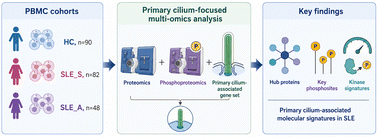
Objective: Systemic lupus erythematosus is a complex autoimmune disease characterized by immune dysregulation and multisystem involvement. The primary cilium, a crucial cellular sensory organelle involved in immune signaling, has received limited attention in SLE. This study aims to characterize the expression patterns and potential regulatory features of primary cilium-related molecules in SLE and explore candidate compounds through integrated proteomic and phosphoproteomic analysis. Methods: Proteomic and phosphoproteomic data were obtained from peripheral blood mononuclear cells of 130 SLE patients and 90 healthy controls. Gene ontology enrichment and hierarchical clustering analysis were used to characterize functional features and expression patterns of primary cilium-related molecules. PPI network analysis and phosphosite annotation were used to identify hub proteins and key phosphorylation sites (phosphosites). Stage-associated regulatory features were explored using Mfuzz clustering and kinase–substrate network analysis. Candidate compounds were predicted via Connectivity Map (cMAP). Results: A total of 67 differentially expressed and 36 differentially phosphorylated primary cilium-related proteins were identified. The PPI network identified hub proteins (MAPRE1, VCP, TUBB, TUBB4B and RAB7A) and key phosphosites (TUBB S168/S172, TUBA4A S48 and SEPTIN2 S218). Kinase analysis highlighted that IKKβ, GSK3β and CDK5 were associated with stable-stage patterns, whereas MAP2K2, CDKL1 and CCRK were associated with active-stage patterns. Increased predicted IKKβ activity, elevated CYLD S422 phosphorylation and upregulated NF-κB1/2 expression in SLE suggested the potential involvement of a candidate IKKβ-CYLD/NF-κB regulatory module. Stage-associated cMAP analysis identified 20 candidate compounds with potential reversal signatures. Conclusion: This study suggests a primary cilium-related regulatory network in SLE and identifies hub proteins, key phosphosites and kinases associated with stage-related molecular patterns. These findings provide new insights into primary cilium-related molecular alterations in SLE and propose preliminary candidate compounds that require further validation.
 Please wait while we load your content...


