Xinlong
Shang
a,
Yang
Li
a,
Liang
Chen
*a,
Quan
Zhang
a,
Leidang
Zhou
b,
Naizhe
Zhao
a,
Jinlu
Ruan
a,
Shiyi
He
a,
Fangbao
Wang
b,
Yapeng
Zhang
b and
Xiaoping
Ouyang
*a
aNorthwest Institute of Nuclear Technology, 710024, Xi’an, China. E-mail: chenliang@nint.ac.cn; ouyangxiaoping@nint.ac.cn
bSchool of Microelectronics, Xi’an Jiao Tong University, 710049, Xi’an, China
First published on 28th October 2025
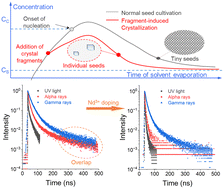
Strategic incorporation of heterogeneous elements through doping has emerged as a prominent methodology for optimizing the performance of halide perovskites. However, due to inherent self-purification mechanisms during crystal growth, achieving desired doping levels usually requires substantially elevated feeding ratios of dopants in precursors. High feeding ratios notably induce burst nucleation during seed generation, especially for 2D perovskites, which presents particular challenges in single-crystal fabrication. Herein, we developed a fragment-induced crystallization (FIC) methodology for synthesizing individualized neodymium (Nd) doped seeds of 2D perovskites. This approach utilizes easily produced undoped single crystals that are mechanically processed into crystalline fragments to create preferential nucleation sites. The FIC protocol enabled efficient production of monodisperse 1–3 mm-scale seeds and subsequent growth of centimeter-sized bulk single crystals. Successful Nd3+ substitution at Pb2+ sites with proportions varying from 0.04% to 3.43% was achieved. The doped perovskites showed a linear luminescence response up to 173 mGy s−1. Notably, they displayed differentially reduced decay lifetimes under excitation of ultraviolet light, α-rays, and γ-rays, signifying substantial potential for radiation discrimination. Nearly unchanged photoluminescence (PL) and X-ray luminescence (XRL) patterns indicated that Nd3+ worked not by forming new luminescent centers but by regulating luminescence of 2D perovskites. This study provides a methodology to effectively mitigate burst nucleation in heavily doped precursors and to shorten the preparation Nd3+-doped single crystals. Doping with Nd3+ is also an effective strategy for developing fast perovskite scintillators by tailoring their response time.
The precise modulation of luminescence dynamics in 2D HPs represents a critical research frontier for achieving compatibility with advanced photonic detection systems and meeting the diverse operational requirements of multifunctional radiation detection platforms.23,24 Recent advancements in heterogeneous element doping strategies have emerged as an effective methodology for performance optimization of these materials.25,26 Investigations by Sheikh et al.27 and Li et al.28 demonstrated enhanced photophysical properties in Mn2+-doped 2D HPs through resonant energy transfer mechanisms between excitonic states and dopant centers. Similarly, pioneering studies on alkali metal ion doping (Li+,29 Rb+ (ref. 30) and Cs+ (ref. 31)) have revealed their efficacy in accelerating luminescence decay processes through modulating carrier recombination kinetics. Xiang et al.32 achieved simultaneous structural refinement and defect suppression through strategic interstitial site substitution with Sb3+ and Zn2+ ions, effectively reducing nonradiative decay pathways while maintaining crystalline integrity. This dual optimization enabled a gamma-ray energy resolution of 5% and shortened the luminescence decay time. Our recent experimental findings substantiated that Nd3+ doping induced intralayer confinement, establishing a novel paradigm for manipulating radiative transition probabilities in 2D perovskite scintillators in various ionizing radiation environments.33
However, the experimentally realized doping concentration in crystalline products is typically much lower than the feeding ratio in the precursor solution.27,28 This quantitative discrepancy is a persistent challenge in single crystal synthesis protocols,34 fundamentally attributed to the inherent self-purification effect during crystal growth or different solubility of dopants relative to the matrix species.35 Therefore, an excess amount of dopants is necessary in the precursor solution,36 which can alter the solubility and nucleation characteristics of the solute.37,38 This typically hinders feasible growth of individual seeds that are critical to produce high-quality single crystals. Although numerous efforts have been devoted to investigating the effects of additives on nucleation,39–44 their applicability to a certain doped precursor solution of 2D perovskites remains unknown. Obtaining monodispersed seeds of doped 2D perovskites is still a formidable task. These findings underscore the imperative of developing optimized doping methodologies in 2D perovskite systems.
Based on the thermodynamic and kinetic principles of crystallization, we developed a FIC methodology to systematically optimize the preparation of individual crystalline seeds for 2D perovskite single crystals at high feeding ratios in precursor solutions. Nd3+ ions and phenethylammonium lead bromide (PEA2PbBr4, abbreviated as PPB), representing typical lanthanide dopants and model 2D perovskite systems, were selected as the dopant and host matrix, respectively. This approach effectively suppressed uncontrolled nucleation bursts, enabling efficient synthesis of monodisperse crystalline seeds with appropriate dimensions (1–3 mm). Furthermore, we investigated the doping effects, PL and XRL characteristics, and scintillation properties of Nd3+ doped PPB fabricated at multiple precursor feeding ratios. The developed FIC strategy provides an advanced platform for fabricating doped perovskite single crystal seeds while offering valuable insights into the doping mechanisms and optoelectronic behaviors of lanthanide-incorporated 2D perovskite systems.
According to the LaMer mechanism,47,48 at the very beginning of stable nucleation, the solute consumption rates from nucleation-growth processes remain subordinate to solvent evaporation kinetics, resulting in a continuous supersaturation enhancement. This progressive augmentation accelerates both nucleation and crystal growth rates, macroscopically manifesting as burst nucleation. The concentration trajectory exhibits an initial ascent to a maximum threshold, followed by a declining phase. Nucleation ceases when the solution concentration descends below the critical concentration, while solute depletion rates escalate due to enhanced crystal growth rates. The subsequent concentration reduction progressively diminishes crystal growth rates through diminished mass transport gradients. Ultimately, the system attains dynamic equilibrium where solvent evaporation and growth of crystals exhibit equivalent solvent–solute extraction ratios, establishing steady-state behavior. This process typically generates mass nuclei and yields tiny seeds.
From a thermodynamic perspective, nucleus formation necessitates overcoming an energy barrier, termed as nucleation work (W).42 As illustrated in Fig. 1b, nucleus formation induces a change in the total Gibbs free energy (ΔG) of the solution system, equivalent to the summation of surface free energy ΔGS and volume free energy ΔGV. Given that the nucleus is spherical, this relationship can be mathematically expressed as ΔG = ΔGS + ΔGV = 4πr2σ + 4πr3g/3, where r, σ and g denote the nucleus radius, the free energy per unit area and the free energy per unit volume, respectively. The ΔG exhibits a non-monotonic dependence on the nucleus radius, initially increasing with r until a maximum value is reached at the critical radius (rC), beyond which the energy requirement diminishes. The transient nuclei only achieve thermodynamic stability when exceeding this critical dimension. The critical radius rC can be calculated by rC = −2σ/g. Consequently, the minimum nucleation work required for stable nucleus formation corresponds to the peak value of the ΔG at rC, which can be obtained through W = 16πσ3/3g2.
It is possible to reduce the nucleation rates by carefully controlling the evaporation rates of solvent.49 However, the incorporation of a high feeding ratio of Nd3+ to the precursor solution introduces significant challenges in seed formation. The nucleation process is governed by solution supersaturation and modulated by the frequency of effective molecular collisions between constituent ions. At substantial NdBr3 concentrations, ensuring adequate collisional probabilities for spontaneous nucleation events requires sufficiently high supersaturation levels. The increased supersaturation rises nucleation driving force and decreases g (more negative),42 resulting in smaller rC and W. This manifests as accelerated nucleation kinetics, typically producing enhanced nucleation densities with smaller crystals compared to the undoped systems, as denoted by the grey and dark gray points in Fig. 1a.
This analytical conclusion is consistent with our experimental observations regarding the fabrication of Nd3+-doped single crystals. Firstly, a longer evaporation time (over two weeks for x = 70%) is needed for the formation of observable nuclei, and another week is required to achieve millimeter-scale crystals. Furthermore, excessive nuclei populations exhibit heightened sensitivity to mechanical vibration or thermal perturbation, which readily induces crystal aggregation and accelerated growth. These conditions lead to interconnected polycrystalline networks within 10 minutes (Fig. 1c), presenting significant challenges in isolating discrete seed crystals required for subsequent crystal growth. Therefore, multiple additional iterations of seed crystal growth are generally necessary to achieve optimal crystalline quality, thereby proportionally extending the overall duration of single crystal manufacturing processes.
Therefore, we devised the FIC methodology to optimize monocrystalline seed cultivation. Our prior research established that Nd3+-doped crystals maintained identical crystallographic configurations to their undoped counterparts, providing the theoretical foundation for deriving doped crystalline seeds from undoped crystal fragments. As illustrated in Fig. S1, a small pre-synthesized undoped PEA2PbBr4 specimen underwent mechanical comminution to generate crystalline particulates. A small amount of the fragments was tranferred using a fine needle to a metastable solution, followed by a heating and cooling down process. Mechanical processing endows the damaged parts of the fragments with the higher thermodynamic free energy and specific surface area than the undamaged parts. When the solution was heated to an unsaturated state (40 °C for 5 min), the damaged crystallite regions dissolved quicker than the undamaged ones. Therefore, the damaged parts can be selectively eliminated, yielding high-quality crystalline residues in the solution.
Evolution of the solution concentration of the FIC method is demonstrated by the red curve in Fig. 1a. Since the concentration of the solution is lower than CHT when the fragments were added, both primary nucleation in solution and heterogeneous nucleation on the fragments were effectively suppressed. Consequently, monodisperse single-crystal seeds can be reliably synthesized. Besides, the fragments employed in the FIC methodology exhibit substantially greater dimensions compared to rC (as illustrated by the red point in Fig. 1b). The corresponding thermodynamic driving force demonstrates significant negative deviations from zero, indicating remarkably enhanced growth potential even under moderate supersaturation conditions. The larger surface area enables much higher growth kinetics than the primary nuclei in the conventional method. As a result, individual seeds with planar dimensions of ∼3 mm can be obtained within a 5-day cultivation period. Crucially, the size disparity between fragments (tens of micrometers) and target seed crystals ensured negligible compositional interference from the undoped fragments.
After the seeding process, the centimeter-sized doped single crystals were fabricated by seed-mediated growth. As illustrated in Fig. 1a and Fig. S1, one of the isolated seed crystals along with the residual mother liquor was transferred to a clean beaker. Subsequent application of a controlled thermal cycling process facilitated the elimination of structural defects in the seed crystal while simultaneously removing any residual crystalline nuclei present in the solution. The solution concentration was rigorously maintained below the critical concentration threshold (CHT) throughout the crystallization procedure, effectively preventing secondary nucleation on the seed surface. Following this optimized nucleation control protocol, the seed-mediated growth process yielded bulk single-crystal specimens with centimeter size (Fig. 1d).
Fig. 1e and Fig. S2 display the top-view and cross-sectional SEM images of a Nd3+-doped (PEA)2PbBr4 SC, respectively. These morphological characterization studies confirm the high crystallinity and well-defined two-dimensional layered architecture. The HRTEM image of the Nd3+-doped specimen (x = 20%) in Fig. 1f reveals distinct lattice fringes with exceptional structural integrity. Quantitative analysis shows an average interplanar spacing of 2.56 Å, corresponding to the (120) crystallographic plane according to Bragg's law.
To evaluate the efficacy of the doping process, systematic quantification of neodymium (Nd) and lead (Pb) concentrations was conducted by the ICP measurement. As shown in Fig. 2a, the content of Nd in single crystals demonstrates a marked enhancement with increasing molar ratio of Nd to Pb in precursors. Correspondingly, the atomic ratio of Nd to Pb within the crystal progressively increases from 0.04% to 3.43% as the Nd to Pb ratio in precursor solution rises from 5% to 70%. The observed limited dopant incorporation efficiency arises from the inherent self-purification mechanism during crystal growth. Notably, successful incorporation of Nd3+ ions into the crystalline matrix validates that the FIC method remains effective despite utilizing undoped crystal fragments for seeding.
As shown in Fig. 2b, the XPS spectra confirm the presence of Pb2+ and Br− species across all analyzed samples. Notably, distinct doublet peaks corresponding to Nd3+ 3d orbitals appear at binding energies around 1000 eV when the precursor doping concentration reaches 20% or higher, providing definitive evidence of successful Nd3+ incorporation. High resolution XPS analysis (Fig. S3) reveals the progressively enhanced signal intensity of Nd3+ 3d orbitals with increasing dopant concentration, starting from the minimum tested ratio (x = 5%). The spectral positions remain invariant throughout the investigated doping range, which can be attributed to the preserved chemical environment for Nd3+ ions under current experimental conditions.
Furthermore, Fig. 1c demonstrates a systematic shift toward lower binding energies for Br− 3d orbitals following Nd3+ doping. The XPS peaks of Br 3d were fitted according to the area ratio and relatively positions of 3d5/2 and 3d3/2 peaks. The peaks of all samples, except for that with x = 70%, are composed of two double peaks, and the corresponding binding energies of 3d5/2 obitals are about 68.5 eV and 70.1 eV, respectively. Peaks with the lower binding energy refer to the Br bonding with Pb, while those with the higher binding energy may come from more oxidized bromine induced by prolonged exposure to X-rays. As suggested by the dashed line, the 3d5/2 peaks of the Br shifted slightly to the lower binding energy with increasing doping ratio. This phenomenon can be attributed to the relatively lower electronegativity of Nd compared to Pb, which induces enhanced electron donation from Nd atoms to neighboring Br species. The resultant increase in electron density surrounding Br nuclei amplifies electron–electron repulsion effects within the atomic orbitals, thereby reducing the measured binding energy of Br− ions.
The XRD patterns corresponding to the pristine and several doped SCs are shown in Fig. 2d, accompanied by a theoretical pattern calculated using VESTA software based on reported lattice parameters of PEA2PbBr4.50 Notably, the first characteristic diffraction peak of the undoped crystal exhibits excellent agreement with the calculated position. All doped crystals maintain XRD patterns fundamentally consistent with the pristine sample, confirming their structural preservation within the same lattice framework. A systematic shift of diffraction peaks toward higher angles emerges with increasing dopant concentration, suggesting progressive lattice contraction. This observation effectively excludes interstitial doping mechanisms which typically induce lattice expansion,30 while strongly supporting B-site substitution through Pb2+ replacement by Nd3+. The observed lattice shrinkage can be rationally attributed to both the smaller ionic radius of Nd3+ (0.098 nm) compared to Pb2+ (0.119 nm)34 and the possible formation of Pb2+ vacancies required for charge compensation (see Fig. 2e for details). At elevated doping levels (particularly x = 70%), noticeable peak broadening becomes evident along with the emergence of minor secondary peaks adjacent to the characteristic peaks of PPB. These structural degradations likely originate from accumulated lattice strain associated with progressive unit cell contraction,34 which ultimately compromises crystalline integrity at critical doping thresholds.
Fig. 2e illustrates the lattice structure near the doping sites. According to the analysis of the XRD patterns, Nd3+ ions are supposed to be incorporated into the Pb2+ lattice sites, a phenomenon referred to as B-site doping.34 Previous studies have demonstrated that doping at these sites can achieve the lowest formation energy in lanthanide-doped lead HPs.51 Recent research investigations on Nd3+-doped CsPbBr3 nanocrystals34,52 further corroborate this substitution mechanism, indicating that Nd3+ ions preferentially occupy the Pb2+ sites. For charge neutrality, heterogeneous valence doping (Nd3+ → Pb2+) typically induces cation vacancies.53,54 Combined with previous reports that Pb2+ vacancies are common defects in lead halide perovskites,55 possible Pb2+ vacancies may form in the doped crystals to balance the charge. The zoom-in panel shows possible structural details of the lattice affected by doping-induced defects.
We investigated the absorption and fluorescence properties of Nd3+-doped PPB. Fig. 3a presents a series of absorption spectra obtained from these crystals. In the absorption spectra of all samples, peaks located at 394 nm are observable, which corresponds to the excitonic absorption. Additionally, Nd3+-doped PPB single crystals with x ≥ 20% show pronounced absorption centered at 578 nm, signifying the absorption signature of Nd3+. The two distinct absorption peaks located around 520 nm (510 nm and 525 nm) originate from the characteristic f–f energy transitions of Nd3+ (4I9/2 → 4G9/2 and 4I9/2 → 4G7/2, respectively).56
Fig. 3b shows the normalized PL spectra of Nd3+-doped PPB samples excited by a Xe lamp (350 nm). Two emission peaks are clearly visible, which are attributed to structural differences between the surface states and bulk states of the samples.45,57,58 Specifically, the emission peaks around 411 nm arise from surface states, while those ranging from 433 nm to 436 nm originate from bulk states. The intensity of the peaks is determined by the proportion of surface and bulk emissions, which is closely related to the setup of the testing system. As shown in Fig. S4, the PL spectrum acquired in the integrating sphere configuration demonstrates predominant intensity at Peak 2. The insets in Fig. 3b show the optical images of the doped and undoped single crystals under ultraviolet light. Both crystals show bright and homogeneous luminescence, which verifies good quality of the crystals.
To explore whether Nd3+ acts as a luminescent center, we measured the PL spectra of the x = 70% sample in the range of 350–1100 nm (Fig. S13). When excited by a 532 nm laser (matching the Nd3+ absorption peaks), several weak emission peaks appear in the 550–650 nm range (attributed to Nd3+ f–f transitions). However, no noticeable infrared emissions (typically associated with Nd3+, e.g., 4F3/2 → 4I9/2 at ∼880 nm and 4F3/2 → 4I11/2 at ∼1060 nm) were detected under excitation with a 325 nm laser or a Xe lamp. These results indicate that Nd3+ can act as a weak luminescent center only when directly excited at its absorption peaks, but the energy transfer efficiency from the PEA2PbBr4 host to Nd3+ is extremely low. Thus, Nd3+ does not serve as an efficient luminescent center in the doped single crystals, and its contribution to the PL spectra and decay dynamics is negligible.
Fig. 3c shows typical PLE spectra of the doped single crystal. The emission of the crystal was collected from the same side of the excitation light source and contained more surficial component. Therefore, the PLE curves with a fixed emission wavelength at Peak 1 are significantly higher than that at Peak 2. The PLE pattern for Peak 2 which contains mainly the transmissive component of the emission resembles the absorption spectrum. In contrast, the pattern for Peak 1 exhibits significant intensity elevation towards higher energies, which is quite different from the pattern for Peak 2. The distinction of PLE patterns between Peak 1 and Peak 2 also indicates their different origins.
The XRL characteristics of these samples are presented in Fig. 3d. The spectra exclusively exhibit singular emission peaks centered at 433 ± 2 nm, which stands in marked contrast to the dual-peak emission pattern observed in PL measurements. This distinct spectral behavior represents a typical feature of two-dimensional bulk perovskite single crystals originating from the surface and bulk emissions.57,58 The observed discrepancy originates from fundamental differences in experimental configurations: conventional PL spectroscopy employs reflection-mode geometry where both optical excitation and fluorescence detection occur on the same crystal surface. In contrast, the XRL measurement utilizes transmission-mode detection and collects scintillation photons from the opposite side of the radiation source, leading to a more pronounced self-absorption effect due to extended photon propagation paths within the crystal matrix. To further validate the self-absorption effect, we performed comparative XRL measurements in reflection-mode geometry. As evidenced in Fig. S5, the reflection-mode XRL spectrum shows dual emission peaks, analogous to PL spectral features. The spectral divergence arises from the substantially greater penetration depth of X-ray radiation compared to ultraviolet excitation, enabling enhanced sampling of bulk emission.57 Consequently, the longer-wavelength emission band undergoes relative intensity inversion compared to PL spectral characteristics, directly attributable to depth-dependent recombination dynamics in the perovskite lattice.
The XRL patterns of one doped single crystal (x = 70%) at various X-ray intensities are shown in Fig. 3e. The patterns remain similar when the dose rate ranges from 2.12 to 173 mGyair s−1. As shown in Fig. 3f, the luminescence intensity increases linearly with increasing dose rate. Besides, the full width at half maximum (FWHM) variation of the XRL spectra is less than 1 nm, corroborating consistent behavior of the single crystal at different dose rates.
To determine the kinetic process of PL, time-resolved PL (TRPL) measurements were conducted for dual emissions. Fig. 4a presents the PL decay time profiles monitored at Peak 1 (around 411 nm), revealing a distinct acceleration of luminescence decay in Nd3+-doped PPB crystals compared to their undoped counterparts. Notably, the decay profiles of Nd3+-doped PPB remain relatively stable across varying doping concentrations, with the 20% nominal doping ratio specimen exhibiting the most rapid decay dynamics. As depicted in Fig. S6, the decay time profile of the undoped PPB necessitates a tri-exponential decay function to be well fitted, whereas the Nd3+-doped samples exhibit bi-exponential decay behavior (Fig. S7). All fittings demonstrate excellent quality, with determination coefficients (R2) exceeding 0.99. Quantitative analysis yields average decay times (ADTs) of 4.9 ns (x = 0), 1.9 ns (x = 5%), 1.7 ns (x = 20%), and 2.0 ns (x = 70%), respectively. This lifetime reduction trend aligns with the accelerated decay profiles observed in doped crystals, suggesting enhanced radiative or non-radiative recombination speed induced by Nd3+ incorporation.
Fig. 4b displays the TRPL spectra recorded at Peak 2 (around 435 nm). The decay profile exhibits a significant acceleration with increasing x value, becoming the fastest at x = 20%. Subsequent elevation of the feeding ratio leads to a moderate recovery of the decay time at x = 70%. As shown in Fig. S8, a two-exponential decay function is not adequate to well fit the decay curves, while the tri-exponential decay function works well. As shown in Fig. S9, all fitting curves coincide well with the decay curves (R2 ≥ 0.997). The systematic variation of average decay lifetimes (11.4 ns, 8.3 ns, 3.5 ns, and 7.8 ns at x = 0, 5%, 20%, 70%, respectively) establishes a clear correlation between the Nd3+ doping concentration and the PL lifetime reduction. The non-single exponential decay dynamics of excited states reflect the microscopic heterogeneity of complex condensed-matter systems.59 The fastest component (<1 ns) is likely attributed to non-radiative recombination,60 which typically originates from defect-related trap states (e.g., doping-induced vacancies or surface defects). The intermediate component (3–6 ns) is tentatively assigned to surface recombination, as surface states in perovskite crystals often act as fast carrier trapping centers due to structural termination and environmental interactions. The slowest component is associated with bulk recombination, corresponding to the intrinsic radiative decay of photoexcited carriers in the defect-poor interior of high-quality single crystals.58
A summary of the ADTs of both PL peaks is shown in Fig. 4c. As the doping ratio increases, the ADTs for both PL peaks display a downward and then upward trend. In addition, the ADTs of all doped samples remain substantially lower than those of undoped crystals. This pronounced lifetime shortening can be rationalized through doping-induced carrier localization effects33 and defects, which accelerates the radiative and non-radiative recombination of carriers, respectively.
Fig. 4d and e depict the scintillation decay profiles of the samples when exposed to α (241Am) and γ (137Cs) rays, respectively. A notable acceleration in decay dynamics can be observed in both figures as the x increases from 0 to 20%, which can be attributed to enhanced localization and confinement of carriers induced by Nd3+ doping. When further increasing the dopant concentration from 20% to 70%, the decay profile excited by α rays becomes slower, while the characteristics excited by γ rays show a negligible variation.
Quantitative analysis through biexponential decay modeling (Fig. S10) for γ ray-excited samples reveals ADTs of 30.4, 23.1, 20.5, and 20.8 ns for x = 0%, 5%, 20%, and 70%, respectively. The systematic reduction in the average lifetime for x lower than 20% correlates with both the decreasing lifetime of the fast decay component (from 15.4 to 9.93 ns) and its increasing amplitude contribution (from 55.5% to 70.9%). For x = 70%, the lifetime parameters demonstrate compensation effects between the increased fast component (10.8 ns) and the reduced slow (40.8 ns) component, resulting in a comparable average lifetime to the doped sample with x = 20%. This compensation effect might arise from a saturation point in defect-mediated recombination pathways at higher doping levels.
The samples excited by α rays show much smaller ADTs (Fig. S11) than those excited by γ rays, namely, 26.6, 23.7, 6.01 and 11.7 ns for x = 0%, 5%, 20% and 70%, respectively. When the x increases from 0 to 5%, the fastest component decreases from 5.95 ns (35.5%) to 5.11 ns (39.8%). When the x increases to 20%, the fast component decreases to 3.35 ns (66.8%). An ultrafast component of 0.39 ns (6.27%) is detected, and the slowest component of over 90 ns is absent. This accounts for the sharp reduction of its ADT. When x = 70%, only two decay components are obtained from the fitting model. The fast (6.75 ns) and slow (31.5 ns) components are larger than those of other samples, while the proportion of the fast component is extremely high (79.9%). As a result, the ADT of this sample is smaller than that of samples with x = 0 and x = 5%.
Fig. 4f displays the ADT of different samples excited by α and γ rays. As the x increases from 0 to 70%, the ADTs excited by both rays show a downward and then upward trend, which is consistent with the TRPL results. A detailed comparison of the ADTs towards α and γ rays can shed light on the potential of the PEA2PbBr4 SCs to distinguish different radiative rays, since different ADTs reflect distinct carrier recombination kinetics under different radiation excitations, leading to distinguishable luminescence waveforms (pulse shape) for single radiation events.33,61 This approach of radiation discrimination based on lifetime differences has been validated in recent perovskite scintillator studies.61,62 The solid lines with different slopes (k) outline the distribution of ADTs of the samples towards α and γ rays. Clearly, the doped SCs with x = 20% and x = 70% show a larger difference in the ADT towards different radiative rays.
The effect of the doping concentration on the light yield of the single crystals was further investigated. As demonstrated in Fig. S12, full-energy photopeaks can be consistently observed across all sample crystals under irradiation of gamma-rays from a 137Cs isotope source. Notably, the characteristic 662 keV γ-ray photopeaks exhibit a gradual shift toward lower channel positions with increasing dopant concentration. For quantitative analysis, the undoped crystal's light yield was established as the reference standard (right panel of Fig. S12). It is evident that the light yield remains relatively stable when x ≤ 20%, which indicates the insignificant increase on nonradiative recombination. However, a significant reduction to 87.1% of the undoped reference value can be observed when the x reaches 70%. This substantial decrease in scintillation efficiency is primarily attributed to crystalline lattice deterioration induced by excessive dopant incorporation, as confirmed by the previous structural characterization.
• The high-energy PL peak lifetime decreased from 4.9 ns to 1.7 ns.
• The low-energy PL peak lifetime decreased from 11.4 ns to 3.5 ns.
• γ-ray excited samples showed a maximum decay time reduction from 30.4 ns to 20.5 ns.
• α-ray excited samples exhibited the most dramatic reduction from 26.6 ns to 6.01 ns.
While the light yield showed minimal decreases (<5%) at doping ratios below 20%; a 13% reduction was observed at 70% doping. Comprehensive evaluation suggests that the 20% Nd3+ concentration represents the optimal balance between decay kinetics and light yield, demonstrating the fastest response and the highest potential for particle discrimination applications.
Supplementary information (SI) is available, which contains some details of crystal manufacture, XPS spectrum of Nd 3d, decay curve fitting, and pulse height spectra. See DOI: https://doi.org/10.1039/d5tc03106k.
| This journal is © The Royal Society of Chemistry 2025 |