DOI:
10.1039/D5TC01132A
(Paper)
J. Mater. Chem. C, 2025,
13, 13255-13261
A thermochromic material VO2-based metamaterial device for efficient temperature-adaptive radiative cooling†
Received
15th March 2025
, Accepted 19th May 2025
First published on 20th May 2025
Abstract
Radiative cooling has attracted significant interest for its ability to passively dissipate heat into outer space without energy consumption. Despite its potential, challenges such as limited cooling power and complex fabrication processes persist. This study presents an efficient selective radiative cooling emitter enabled by a vanadium dioxide (VO2) metamaterial. The device efficiently activates radiation cooling for heat dissipation at high temperatures, while deactivating cooling at low temperatures to avoid excessive cooling. Within the atmospheric window band, the average emissivity of the radiative cooling device increases significantly from 0.03 in low-temperature mode to 0.87 in high-temperature mode, while maintaining a nearly constant emissivity in the solar irradiation band. When the ambient temperature matches that of the radiative cooling metamaterial device, its cooling power reaches 277 W m−2. Additionally, the design exhibits angular stability across varying incident angles and demonstrates scalability through systematic parameter optimization. The proposed temperature-adaptive radiative cooling metamaterial device holds promise for applications in adaptive optics systems, as well as in buildings and vehicles, offering significant potential for energy conservation and environmental protection.
1. Introduction
In recent years, with the rapid development of the economy, energy consumption has also been steadily increasing. Global greenhouse gas emissions are still soaring, and our world is striving to achieve the 1.5 °C target in the Paris Agreement. Reducing energy consumption and environmental protection are key factors in promoting sustainable development in society. The demand for green and sustainable energy-saving technologies has widely promoted the development of refrigeration technology.1 Radiation cooling is a cutting-edge technology that has attracted widespread attention due to its unique working principle.2–4 Compared with other refrigeration technologies, radiation cooling can effectively reduce the temperature of objects without external power or refrigerant, eliminating the limitations of traditional refrigeration methods and achieving more flexible and efficient energy utilization.5–7 It is achieved by reflecting most of the sunlight (wavelengths in the range of 0.3 to 2.5 μm) from an object facing the sky, and emitting strong longwave infrared radiation into the cold universe through an atmospheric transparent window (wavelengths in the range of 8–13 μm).8,9 In this way, objects can be passively cooled below ambient temperature with zero energy input and greenhouse gas emissions. This characteristic has been achieved in various materials, such as coloured paint films,10,11 multilayer films,12,13 biomimetic structures,14,15 patterned surface photonic structures,16,17etc. However, the emissivity of these schemes remains static, and the cooling power of the entire system remains unchanged. Consequently, when the temperature of the object falls below the desired level, continuous heat dissipation and cooling can result in unnecessary supercooling, which is why such systems are typically limited to daytime radiative cooling.18,19 Therefore, it is crucial to design a radiative cooling device capable of achieving temperature adaptation.
A promising solution is to use thermochromic phase change materials to automatically switch between radiation cooling and heat retention modes, effectively solving the well-known problem of supercooling passive radiation cooling.20,21 Among them, the thermochromic phase change material vanadium dioxide (VO2) has an insulating state that changes to a metallic state at a temperature of 68 °C, thus having adjustable absorption and emissivity.22 The optical properties of VO2 exhibit distinct characteristics in the infrared wavelength range, with the insulating state being a low loss dielectric and the metallic state being a plasma metal with a high damping constant.23,24 And the phase transition temperature of VO2 can be reduced to near room temperature through doping with elements such as tungsten or defect engineering,25,26 which provides a promising design for dynamic radiative cooling. In 2017, Wu et al. proposed a switchable thermal emission method using vanadium dioxide coating on a silicon cone array.27 Ono et al. proposed an adaptive radiative cooling photonic structure by a combination of VO2 based multi-layer coolers and top spectral selection filters.28 Subsequently, Zhang29 and Liu30 also proposed similar switchable radiative cooling systems. Tang et al. designed a temperature-adaptive, mechanically flexible VO2-based coating, providing an interesting solution to prevent overcooling caused by radiation cooling in winter.31 Yang et al. developed a VO2-based metasurface radiative cooling device using mask filling technology, offering an effective approach for dynamic thermal regulation with adaptive temperature control.32 Although passive radiative cooling technology has the potential to reduce indoor temperature regulation energy consumption, its performance has not yet reached the level where it can completely replace active air conditioning systems. Furthermore, compared to previous studies on adaptive radiative cooling based on VO2, there remains considerable room for optimization in achieving greater absorption contrast and broader absorption rates.33,34
In this paper, we present a temperature-adaptive radiative cooling device, which consists of a periodically patterned VO2 metamaterial atop a silver/silicon substrate. The device exhibits switchable atmospheric window emissivity, transitioning sharply from an average emissivity of 0.87 in the metallic phase to 0.03 in the dielectric phase. Through systematic analysis of the electric field distributions, we have elucidated the physical mechanism behind absorption enhancement. Meanwhile, the variations of emissivity with incident angle and geometric parameters have been investigated. By synergistically leveraging solar reflectance and atmospheric radiation, the device achieves a net cooling power of 277 W m−2 in its metallic phase. These results position our thermally adaptive emitter as a promising candidate for energy-efficient building thermal management systems, combining dynamic optical regulation with high radiative efficiency.
2. Theory
2.1. Design concept and cooling structure
Temperature-adaptive radiative cooling refers to the capability of a material or system to autonomously activate or deactivate radiative cooling in response to ambient temperature fluctuations. When the environment heats up, the device must maximize emissivity in the atmospheric window (8–13 μm) to effectively radiate heat into space, while simultaneously minimizing the absorption of solar radiation by suppressing emissivity in the solar radiation range (0.3–2.5 μm).35,36 When the system temperature falls below a critical temperature, the device enters an “off” state, exhibiting the minimum emissivity across the entire wavelength range to prevent overcooling, as shown in Fig. 1(a).
 |
| | Fig. 1 Adaptive radiative cooling mechanism. (a) The ideal spectral characteristics of the adaptive radiation cooling device in both on (red) and off (blue line) cooling modes. (b) Ideal working diagram for the temperature adaptive radiation cooling device. | |
To achieve this functionality, we modulate the optical properties by introducing the thermochromic material VO2, enabling dynamic regulation of radiative cooling performance. Thermochromic materials can sensitively capture subtle fluctuations in environmental temperature and reversibly transform their phase state or internal structure through unique physical mechanisms, enabling them to effectively handle various cooling demands in complex and dynamic environments.37,38 By leveraging the material characteristics and structural design, a balance can be achieved between solar radiation absorption and infrared radiation heat dissipation of the object itself. This approach enables efficient energy utilization and contributes to creating a more comfortable and energy-efficient environment for both living and working.39 When the ambient temperature rises and exceeds a specific ideal temperature threshold, the “radiative cooling mode” of the temperature-adaptive material is activated, resulting in a sudden increase in thermal emissivity. This enables spontaneous heat dissipation through radiation, thereby achieving efficient spontaneous radiative cooling effect. On the contrary, once the temperature drops below the ideal temperature, it quickly switches to the “keep warm mode”, and the thermal emissivity decreases to minimize heat loss and keep warm, as shown in Fig. 1(b).
Fig. 2 shows the temperature-adaptive metamaterial radiative cooling device proposed in this paper, along with a schematic diagram of its unit cell structure. The metamaterial device consists of three materials: a silver reflective layer with a thickness of H1 = 100 nm and Si with a thickness of H2 = 760 nm, and a VO2 ring embedded in the top layer of the Si. The VO2 ring has a thickness of H3 = 60 nm. The outer and inner radii of the VO2 ring are R1 = 1870 nm and R2 = 630 nm, respectively. The unit cell structure of the radiative cooling device has a period of px = py = 5 μm in both the x and y directions. In numerical calculations, the dielectric constants of Si and silver are referenced from Palik.40
 |
| | Fig. 2 (a) Schematic diagram of the three-dimensional structure array of the temperature adaptive metamaterial radiation cooling device. (b) Three-dimensional schematic diagram of the unit cell. | |
The complex dielectric function of VO2 can be determined by the Lorentz Drude dispersion model of multiple oscillators:28,41
| |  | (1) |
where
ω is the variable frequency,
ε∞ is the high frequency dielectric constant,
εs is the static dielectric function at zero frequency, and
Γ0 is the broadening of each oscillator, also known as the damping factor. The damping effect is due to the absorption process of transitions between two states.
ωt is the resonant frequency of the oscillator,
fj,
ωoj, and
γj are the oscillator strengths, resonance (peak) energy, and damping constant in the
j-th Lorentz oscillator, respectively.
Γd is the collision frequency. In the insulating phase, the Lorentz model represented by the first three terms of the equation fits the complex dielectric function of VO
2. In the metal phase of vanadium dioxide, due to the strong absorption of VO
2, the last term is added to the dielectric function, which is the Drude model dielectric function. The dielectric constants of VO
2 in metallic and insulating states are shown in
Fig. 3. In the metallic state, the dielectric constant of VO
2 varies with wavelength, resulting in distinct response characteristics across different spectral regions. In the dielectric state, the imaginary part of the dielectric constant in the visible and near-infrared bands is close to zero, indicating low absorption.
42,43
 |
| | Fig. 3 Optical properties of VO2 in the metallic (red line) and insulating (blue line) states. (a) Real part and (b) imaginary part of the dielectric constant of VO2. | |
2.2. Principle of radiative cooling
The radiation cooling device is opaque within its operating range due to the presence of a silver substrate as a reflector. Therefore, its emissivity ε(λ) and absorptivity a(λ) are calculated as ε(λ) = a(λ) = 1 − r(λ), where r(λ) represents the reflectivity of the radiation cooling device. The solar absorption rate A is the average absorption rate obtained by weighting the distribution of solar irradiance using spectral reflectance data according to the following formula:44| | 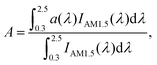 | (2) |
where IAM1.5 (λ) is the standard solar spectral radiation power of AM1.5. The infrared emissivity of the atmospheric window band ε is defined as the weighted average emissivity calculated using spectral reflectance data between 8 μm and 13 μm, calculated by the following formula:| | 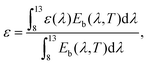 | (3) |
where Eb is the spectral emission power of the blackbody, according to Planck's law:| |  | (4) |
where k0 and h are the Boltzmann constant and Planck constant, respectively, with k0 = 1.381 × 10⁻²³ J K−1, h = 6.626 × 10⁻³⁴ J s, T is temperature, and c0 is the speed of light in a vacuum.
To evaluate the cooling performance of a heat emitter, it is essential to determine its net radiative cooling power (Pnet). This is typically influenced by four factors in a daytime environment: the infrared radiation, solar irradiance, atmospheric thermal radiation, and nonradiative radiation of the radiation cooler. The definition of net radiative cooling power Pnet is:13
| | Pnet = Prad − Patm − Psun − Pcond![[thin space (1/6-em)]](https://www.rsc.org/images/entities/char_2009.gif) +conv, +conv, | (5) |
where
Prad is the radiation power on the surface of the radiative cooler, as follows:
| |  | (6) |
and
Patm is the energy absorbed from atmospheric thermal radiation,
| |  | (7) |
where
T is the temperature of the radiation cooling device, and
Tamb is the ambient temperature. The ambient temperature is the average temperature of the atmosphere.
Psun is absorbed solar energy,
| |  | (8) |
Pcond+conv is the power absorbed by conduction and convection,
| |  | (9) |
where
hc is the coefficient of conduction and convection, and the difference between the effective cooling efficiency
T and
Tamb is quantified to evaluate the cooling capacity.
3. Results and discussion
Fig. 4 illustrates the emissivity spectra of the designed temperature-adaptive radiative cooling device across the solar spectrum and atmospheric transmission windows. It can be observed from Fig. 4 that within the atmospheric window band, the emissivity is relatively high when VO2 is in the metallic state, while the emissivity is relatively low when VO2 is in the dielectric state. The phase-change characteristic of VO2 enables temperature-dependent switching between radiative cooling and heating modes. When the ambient temperature exceeds the transition threshold, VO2 adopts a metallic state, activating the cooling mode. According to formula (2)–(4), the solar absorption rate AC is 0.44 and the emissivity within the atmospheric transmission window εc is 0.87. In contrast, at lower temperatures, VO2 reverts to its insulating state, initiating heating mode with values of Ah = 0.43 and εh = 0.03. The emissivity tunability (Δε = εc − εh = 0.84) demonstrates that the designed metamaterial can dynamically modulate its thermal emission via temperature-induced phase switching, fulfilling the goals of our temperature-adaptive radiative cooling device.
 |
| | Fig. 4 Emissivity spectra of a temperature-adaptive radiative cooling device in the solar irradiation and atmospheric window bands. The red and blue lines represent the emissivity spectra of the device in low and high temperature modes, respectively. | |
To evaluate the net cooling power of the designed radiation cooling device, one can observe from formula (4)–(8) that hc, Tamb and T have an influence on the net cooling power of the entire device. Fig. 5 shows the variation of radiative cooling power with different values of hc and ΔT (where ΔT = Tamb − T) when vanadium dioxide is in its metallic state, with T set as 341 K. It can be clearly seen that as the ΔT gradually decreases, the cooling power gradually increases. Furthermore, when the temperature of the radiation cooling device is higher than the ambient temperature (ΔT < 0), the cooling power increases with the enhancement of the coefficient of conduction convection. Conversely, and when the device temperature is below ambient temperature (ΔT > 0), the radiative cooling power decreases because the temperature gradient favors heat gain from the environment, and increased hc accelerates this undesired heat transfer. At thermal equilibrium, that is Tamb = T, the device achieves a steady-state cooling power of 277 W m−2, which remains unaffected by hc. These results indicate that the proposed device has excellent cooling performance compared to previously reported devices.28,34Table 1 presents a comparative analysis between our proposed temperature-adaptive radiative cooling device and previously reported designs, focusing on structural design, thermal emission across heating and cooling modes, and emissivity tunability. Notably, our design demonstrates superior radiative regulation compared to existing approaches, achieving a more advanced thermal control emitter.
 |
| | Fig. 5 The effect of temperature difference ΔT on net cooling power of the radiation cooling device with different hc in high temperature mode. | |
Table 1 Comparison with reported VO2-based radiative cooling devices
| Ref. |
Structure design |
ε
h
|
ε
c
|
Δε |
|
28
|
(Filter)/VO2/MgF2/W |
0.054 |
0.63 |
0.58 |
|
33
|
VO2/Ge/VO2/Ag |
0.10 |
0.78 |
0.68 |
|
45
|
(Filter)/VO2/Si/Ag |
0.18 |
0.78 |
0.60 |
|
46
|
BaF2/VO2/Si/Al |
0.27 |
0.95 |
0.68 |
|
47
|
Si/VO2/BaF2/Au |
0.12 |
0.64 |
0.52 |
| This work |
VO2/Si/Ag |
0.03 |
0.87 |
0.84 |
To thoroughly investigate the absorption mechanism of the radiative cooling device within the atmospheric window under high-temperature mode, further analysis is performed on the electric field intensity distribution in both the x–z plane and the x–y surface of the structure at wavelengths of 8 μm, 10.6 μm, and 13 μm, as depicted in Fig. 6. From Fig. 6(a) and (d), it can be observed that the electric field excitation at shorter wavelengths is mainly localized between the unit cells. This suggests that intercellular coupling significantly contributes to the absorption process at this wavelength. From Fig. 6(b) and (e), it is shown that the electric field at the absorption peak is predominantly concentrated on the outer side of the VO2 ring, indicative of edge-dominated plasmonic resonance. In Fig. 6(c) and (f), at longer wavelengths, the electric field shifts to both sides of the VO2 ring. Notably, as the wavelength increases, the excitation electric field transitions from the outer ring towards the inner ring, indicating a wavelength-dependent shift in resonance localization. In addition, Fig. 6(a)–(c) illustrates the formation of a Fabry–Pérot-like cavity resonance resulting from the interaction between the VO2 and Ag layers within the dielectric medium. The resonant cavity supports multiple reflections and standing wave formations, further amplifying absorption within the desired spectral range. Therefore, the high absorption observed within the atmospheric window can be primarily attributed to the local surface plasmon resonance generated in the metallic ring-shaped VO2, as well as the Fabry–Pérot-like cavity resonance.
 |
| | Fig. 6 Electric field distribution of the radiative cooling device in the x–z (a)–(c) plane and x–y (d)–(f) plane at 8 μm (a) and (d), 10.6 μm (b) and (e), and 13 μm (c) and (d) in high temperature mode. | |
Fig. 7 analyzes the effect of incident angle on the cooling performance and absorption characteristics of the radiation cooling device. Fig. 7(a) presents the alterations in the absorption spectrum and average emissivity of the radiation cooling device in the atmospheric transmission window when the incident angle changes from 0° to 40°. It can be discerned that as the incident angle increases, the average emissivity of the radiative cooling device in the atmospheric window escalates gradually, and the absorption spectrum experiences a blue shift. Fig. 7(b) elucidates the impact of incident angle on the cooling power of the designed radiation cooling device. It can be observed that the cooling power remains relatively stable when the incident angle varies. When the incident angle is 10°, the radiation cooling power reaches a maximum of 284 W m−2. When the incident angle is 40°, the radiation cooling power drops to a minimum of 272 W m−2. Although it can be observed from the inset that the average emissivity of the radiation cooling device within the atmospheric window reaches its peak when the incident angle is 40°, its radiation cooling power is at the minimum. This is primarily ascribed to the influence of the absorption characteristics within the solar radiation band. The designed metamaterial radiative cooling device exhibits minimal variation in the cooling power as the incident angle changes, indicating its strong angular insensitivity. This characteristic makes it well-suited for practical applications where incident light can come from various angles.
 |
| | Fig. 7 (a) The influence of incident angle variation on the emission spectra in the atmospheric window. The inset represents alterations in the average emissivity of the radiation cooling device. (b) The influence of cooling power with the incident angle. | |
Fig. 8 elucidates the influence of geometric parameters on radiative cooling device's spectral response and net cooling power. From Fig. 8(a), it can be observed that as H2 increases, the absorption rate of short wavelengths gradually decreases, while the absorption rate of long wavelengths gradually increases, with the average emissivity rate reaching its highest at H2 = 760 nm. The corresponding cooling power likewise first increases with H2 and then declines, mirroring the emissivity trend, as shown in Fig. 8(d). Fig. 8(b) demonstrates that the absorption spectrum and average emissivity of the radiative cooling device within the atmospheric window undergo changes with the variation of H3. The device achieves its maximum average emissivity when H3 = 60 nm. From Fig. 8(e), it can be observed that the cooling power initially increases with the thickness H3, reaching its peak at H3 = 60 nm before decreasing due to suppressed Fabry–Pérot resonance efficiency in thicker layers. The VO2 ring width (W = R1 − R2) further modulates performance. Fig. 8(c) shows that the emittance decreases as the VO2 ring width W increases in the short wavelength range, while in the long wavelength range, the emittance increases with an increase in W, and the average emissivity attains its maximum when W = 1.24 μm. The geometric tuning balances the localized plasmonic resonance and cavity-mode broadening. Fig. 8(f) depicts the variation of the cooling power of the designed radiation cooling device with respect to the width W of the VO2 ring. It can be noted that as the width increases, the cooling power initially increases and then decreases, reaching its peak at W = 1.24 μm. Therefore, based on these results, the optimal geometric parameters synergistically maximize emissivity within the atmospheric window while minimizing solar absorption, ensuring robust cooling performance across thermal and solar spectra.
 |
| | Fig. 8 (a)–(c) The influence of H2, H3 and W on the emission spectrum within the atmospheric window. The insets illustrate the variation in average emissivity. (d)–(f) The effect of cooling power with H2, H3, and W. | |
Conclusions
In conclusion, we demonstrate a dynamically tunable radiative cooling emitter based on vanadium dioxide metamaterials, achieving switchable atmospheric window emissivity from 0.3 to 0.87 in response to temperature variations. This self-regulating functionality enables efficient radiative cooling at high temperatures for heat dissipation while automatically deactivating cooling at low temperatures to prevent overcooling. At 341 K, the cooling power reaches 277 W m−2, accounting for atmospheric and solar absorption. Electric field analysis reveals the enhanced absorption mechanism underlying high emissivity in the metallic phase. Additionally, the effects of incident angle and geometric parameters on emissivity and radiative power are investigated, demonstrating excellent robustness. This temperature-adaptive metamaterial platform offers promising applications in passive building cooling systems, spacecraft thermal control, and other energy-efficient thermal management solutions.
Author contributions
Zicheng Lin: conceptualization, validation, visualization, methodology, writing – review & editing, and writing – original draft. Bin Tang: validation, formal analysis, writing – review & editing, and writing – original draft, funding acquisition, supervision, project administration.
Data availability
All data generated or analyzed during this study are included in the present article.
Conflicts of interest
There are no conflicts to declare.
Acknowledgements
This work was supported by the Natural Science Foundation of Jiangsu Province (BK20201446) and the State Key Laboratory of Photonics and Communications, Shanghai Jiao Tong University (2025QZKF024).
References
- J. Song, W. Zhang, Z. Sun, M. Pan, F. Tian, X. Li, M. Ye and X. Deng, Nat. Commun., 2022, 13, 4805 CrossRef CAS PubMed.
- B. Zhao, M. Hu, X. Ao, N. Chen and G. Pei, Appl. Energy, 2019, 236, 489–513 Search PubMed.
- L. Zhu, A. Raman, K. X. Wang, M. A. Anoma and S. Fan, Optica, 2014, 1, 32–38 Search PubMed.
- J. Sui, T. Yao, J. Zou, S. Liao and H.-F. Zhang, Int. J. Heat Mass Trans., 2025, 241, 126783 CrossRef.
- I. Sarbu and C. Sebarchievici, Energy Build., 2013, 67, 286–297 CrossRef.
- X. Lu, P. Xu, H. Wang, T. Yang and J. Hou, Renewable Sustainable Energy Rev., 2016, 65, 1079–1097 CrossRef.
- Y. Wang, H. Ji, B. Liu, P. Tang, Y. Chen, J. Huang, Y. Ou and J. Tao, J. Mater. Chem. A, 2024, 12, 9962–9978 RSC.
- M. Lee, G. Kim, Y. Jung, K. R. Pyun, J. Lee, B.-W. Kim and S. H. Ko, Light: Sci. Appl., 2023, 12, 134 CrossRef CAS PubMed.
- C. Wang, H. Chen and F. Wang, Prog. Mater. Sci., 2024, 144, 101276 CrossRef.
- X. Li, J. Peoples, Z. Huang, Z. Zhao, J. Qiu and X. Ruan, Cell Reports Phys. Sci., 2020, 1, 100221 CrossRef CAS.
- K. L. Uemoto, N. M. Sato and V. M. John, Energy Build., 2010, 42, 17–22 CrossRef.
- D. Chae, M. Kim, P.-H. Jung, S. Son, J. Seo, Y. Liu, B. J. Lee and H. Lee, ACS Appl. Mater. Interfaces, 2020, 12, 8073–8081 CrossRef CAS PubMed.
- A. P. Raman, M. A. Anoma, L. Zhu, E. Rephaeli and S. Fan, Nature, 2014, 515, 540–544 CrossRef CAS PubMed.
- H. Zhang, K. C. Ly, X. Liu, Z. Chen, M. Yan, Z. Wu, X. Wang, Y. Zheng, H. Zhou and T. Fan, Proc. Natl. Acad. Sci. U. S. A., 2020, 117, 14657–14666 CrossRef PubMed.
- N. N. Shi, C.-C. Tsai, F. Camino, G. D. Bernard, N. Yu and R. Wehner, Science, 2015, 349, 298–301 CrossRef CAS PubMed.
- Y. Jiang, J. Wang, Y. Zhou, J. Li, Z. Chen, P. Yao, H. Ge and B. Zhu, Nanophotonics, 2023, 12, 2213–2220 CrossRef CAS PubMed.
- W. Ma, W. Chen, D. Li, Y. Liu, J. Yin, C. Tu, Y. Xia, G. Shen, P. Zhou and L. Deng, Nanophotonics, 2023, 12, 3589–3601 CrossRef CAS PubMed.
- T. Li, Y. Zhai, S. He, W. Gan, Z. Wei, M. Heidarinejad, D. Dalgo, R. Mi, X. Zhao and J. Song, Science, 2019, 364, 760–763 CrossRef CAS PubMed.
- J. Liu, Z. Zhou, J. Zhang, W. Feng and J. Zuo, Mater. Today Phys., 2019, 11, 100161 CrossRef.
- Z. Xu, Q. Li, K. Du, S. Long, Y. Yang, X. Cao, H. Luo, H. Zhu, P. Ghosh and W. Shen, Laser Photon. Rev., 2020, 14, 1900162 CrossRef CAS.
- K. Zhang, Q. Hu, B. Wu, K. Yu, Y. Liu and X. Wu, Opt. Express, 2024, 32, 35243–35255 CrossRef CAS.
- Y. Ren and B. Tang, J. Light Technol., 2021, 39, 5864–5868 CAS.
- J. Gu, H. Wei, F. Ren, H. Guan, S. Liang, C. Geng, L. Li, J. Zhao, S. Dou and Y. Li, ACS Appl. Mater. Interfaces, 2022, 14, 2683–2690 CrossRef CAS PubMed.
- A. Seeboth, D. Lotzsch, R. Ruhmann and O. Muehling, Chem. Rev., 2014, 114, 3037–3068 CrossRef CAS PubMed.
- M. K. Dietrich, F. Kuhl, A. Polity and P. J. Klar, Appl. Phys. Lett., 2017, 110, 141907 CrossRef.
- M. Li, X. Wu, L. Li, Y. Wang, D. Li, J. Pan, S. Li, L. Sun and G. Li, J. Mater. Chem. A, 2014, 2, 4520–4523 RSC.
- S.-H. Wu, M. Chen, M. T. Barako, V. Jankovic, P. W. Hon, L. A. Sweatlock and M. L. Povinelli, Optica, 2017, 4, 1390–1396 CrossRef CAS.
- M. Ono, K. Chen, W. Li and S. Fan, Opt. Express, 2018, 26, A777–A787 CrossRef CAS PubMed.
- W.-W. Zhang, H. Qi, A.-T. Sun, Y.-T. Ren and J.-W. Shi, Opt. Express, 2020, 28, 20609–20623 CrossRef CAS PubMed.
- Y. Liu and Y. Zheng, Nanophotonics, 2024, 13, 701–710 CrossRef CAS PubMed.
- K. Tang, K. Dong, J. Li, M. P. Gordon, F. G. Reichertz, H. Kim, Y. Rho, Q. Wang, C.-Y. Lin and C. P. Grigoropoulos, Science, 2021, 374, 1504–1509 CrossRef CAS PubMed.
- J. Yang, Q. Li, S. Liu, D. Fang, J. Zhang, H. Jin and J. Li, Adv. Photon., 2024, 6, 046006 CAS.
- S. Liang, F. Xu, W. Li, W. Yang, S. Cheng, H. Yang, J. Chen, Z. Yi and P. Jiang, Appl. Therm. Eng., 2023, 232, 121074 CrossRef CAS.
- B. Wang, L. Li, H. Liu, T. Wang, K. Zhang, X. Wu and K. Yu, Solar Energy Mater. Solar Cells, 2025, 280, 113291 CrossRef CAS.
- X. Xu, J. Gu, H. Zhao, X. Zhang, S. Dou, Y. Li, J. Zhao, Y. Zhan and X. Li, ACS Appl. Mater. Interfaces, 2022, 14, 14313–14320 CrossRef CAS PubMed.
- M. Yang, H. Zhong, T. Li, B. Wu, Z. Wang and D. Sun, ACS Nano, 2023, 17, 1693–1700 CrossRef CAS PubMed.
- M. Kamalisarvestani, R. Saidur, S. Mekhilef and F. Javadi, Renewable Sustainable Energy Rev., 2013, 26, 353–364 CrossRef CAS.
- A. Seeboth, R. Ruhmann and O. Mühling, Materials, 2010, 3, 5143–5168 CrossRef CAS PubMed.
- S. Wang, T. Jiang, Y. Meng, R. Yang, G. Tan and Y. Long, Science, 2021, 374, 1501–1504 CrossRef CAS PubMed.
-
E. D. Palik, Handbook of optical constants of solids, Academic press, 1998 Search PubMed.
- H. W. Verleur, A. BarkerJr and C. Berglund, Phys. Rev., 1968, 172, 788 CrossRef CAS.
- H. U. Yang, J. D. Archangel, M. L. Sundheimer, E. Tucker, G. D. Boreman and M. B. Raschke, Phys. Rev. B, 2015, 91, 235137 CrossRef.
- L. Wu, S. Chen and C. Lin, Opt. Express, 2024, 32, 41213–41229 CrossRef CAS PubMed.
- M. Chen, D. Pang, J. Mandal, X. Chen, H. Yan, Y. He, N. Yu and Y. Yang, Nano Lett., 2021, 21, 1412–1418 CrossRef CAS PubMed.
- M. Kim, D. Lee, Y. Yang and J. Rho, Opto-Electron. Adv., 2021, 4, 200006 CAS.
- Y. Sun, G. Chen, Q. Chen, H. Fu, B. Min, Z. Tao, T. Yue, J. Zhao and J. Qiu, J. Quant. Spectrosc. Radiat. Transfer, 2025, 333, 109325 CrossRef CAS.
- H. Kim, K. Cheung, R. C. Auyeung, D. E. Wilson, K. M. Charipar, A. Piqué and N. A. Charipar, Sci. Rep., 2019, 9, 11329 CrossRef PubMed.
|
| This journal is © The Royal Society of Chemistry 2025 |
Click here to see how this site uses Cookies. View our privacy policy here. 

 *
*


