DOI:
10.1039/D5TA06247K
(Paper)
J. Mater. Chem. A, 2025,
13, 42215-42228
An anion-sorted Li-ion electrolyte and flexible MnVO@SWCNT hybrid electrode for an efficient supercapacitor system
Received
1st August 2025
, Accepted 3rd November 2025
First published on 4th November 2025
Abstract
Portable and wearable electronics create a wide application opportunity for flexible energy storage materials. This study focuses on electrode and electrolyte modification to fabricate a highly flexible energy storage device with exceptional performance characteristics. Herein, a binary transition metal oxide (BTMO), leveraging the combined advantages of manganese (Mn) and vanadium (V) with their diverse oxidation states, was selected as the electrode material. To construct a flexible and efficient hybrid electrode (MnVO@SWCNT), the BTMO was integrated in the mesh of highly conductive and ductile single-walled carbon nanotubes (SWCNT). Consequently, the impact of electrolyte anions, such as OH−, SO42−, Cl−, and NO3−, on the electrochemical efficiency of a MnVO@SWCNT electrode was analyzed in detail to boost the supercapacitor performance. The selection of anion species strongly influenced the fundamental capacitance due to the dissimilarities in ionic mobility and size of anions. As a result, the hybrid electrode operating in an aqueous electrolyte containing Li+ and OH− ions exhibited superior capacitive performance and attained a maximum areal capacitance of 1886 mF cm−2. To demonstrate the high application potential of such a material, a free-standing binder-free hybrid electrode devoid of an extra counter electrode was used to synthesize a flexible planar supercapacitor, MVO//OH@SWCNT (FpSC), which offered 718 mF cm−2 capacitance and 105.79 µWh cm−2 energy density.
1. Introduction
The electronics industry is gradually shifting to sustainable power sources, creating a need for high-performance, lightweight, and eco-friendly energy storage devices like supercapacitors and batteries. These devices can power various electronics, from flexible portable devices to electric vehicles. However, their development poses technological challenges, such as the design of electrodes and electrolytes,1–5 which should exhibit high and ideally time-invariant electrochemical properties. As an electrode material, transition metal oxides, such as vanadium, nickel, molybdenum, cobalt, and ruthenium, have garnered significant attention as active materials for electrochemical energy storage devices due to their high theoretical specific capacitance. Despite their outstanding promise, the experimental capacitive values of these systems still require optimization, which can be improved by adding dual distinct metals in the oxide matrix and developing binary transition metal oxides (BTMO). The BTMOs are unique in this respect due to the coexistence of multiple cations of distinct metals within a single crystal structure, which can enhance the capacitive performance and widen the potential window.6,7 BTMOs provide an appreciable number of electrons, which can participate in electrochemical processes and have high porosity,7 leading to better electrical properties compared to metal oxides composed of a single element. For example, spinel oxides like NiCo2O4 have two to three orders of magnitude higher conductivity than NiO and Co3O4.6,8 These advances of BTMO prove to be beneficial for energy storage and offer pseudo-capacitive mechanisms to store charge.9,10 At the same time, single-walled carbon nanotubes (SWCNTs) are flexible and conductive materials, which are employed for energy storage by electric double-layer charge (EDLC) storage.7,11 Hence, they can be used as a framework to complement the BTMO material, providing the possibility of preparing free-standing sheet electrodes without any binders, which is crucial for making supercapacitor electrodes. Besides that, low-density SWCNTs can reduce the weight of the device by acting as a current collector and also providing high conductivity to the oxide electrode material for rapid ion and electron transportation.12,13 This final electrode can utilize the intrinsic charge storage mechanism of BTMO as well as SWCNT, as a hybrid combination of pseudo-capacitive and EDLC mechanisms.14 Recent studies on hybrid architectures, including the SWCNT/ZnO nanocomposite, CoMn–N-doped CNT, and In2O3-SWCNT composites, have shown significantly improved electrochemical performance compared to pristine pseudocapacitive or EDLC materials.15–17 Such a hybrid electrode, with the right electrolyte, has the potential to offer superior capacity for energy storage.14,18 As per the existing research on electrolytes, an aqueous solution can be a perfect choice for developing energy storage devices, which provides the possibility of establishing high ionic conductivity and high concentrations of ions.19,20 In particular, aqueous electrolytes formed by simple salt solutions (LiA, NaA, and KA where A = Cl−, NO3−, OH−, and SO42−) reduce the need for extensive purification or handling under a controlled atmosphere, eliminating the requirement for a dry room or glovebox, which ultimately simplifies the fabrication process. Furthermore, using water-based electrolytes provides cost and safety benefits as an advantage over energy storage technologies that use non-aqueous electrolytes.21 After carefully considering all the limitations in current state-of-the-art supercapacitors, this research focuses on the development of stable, porous, and highly conductive hybrid sheet electrodes exploiting Mn and V-based BTMO integrated with the SWCNT framework (MnVO@SWCNT). MnVO combines the advantages of Mn and V oxides in a single particle. As a single-phase compound, Mn and V are uniformly distributed in the lattice, enabling synergistic redox activity. When integrated with SWCNTs, MnVO particles are evenly dispersed, ensuring consistent electrochemical behavior, unlike the non-uniform distribution of MnO2 or V2O5 particles. The uneven distribution of metal oxide particles in the SWCNT matrix can lead to phase separation and uneven redox activity, reducing performance due to poor contact and mismatched kinetics.22–25Fig. 1 shows the schematic of the facile process used to fabricate the MnVO@SWCNT hybrid electrode with a top-view SEM micrograph, revealing an interconnected network of SWCNTs with homogeneously distributed metal particles. Li-ions were selected as the electrolyte cation because of their diffusion enhancement mechanism, while the anion was chosen after detailed experimental investigations.3,26 A thorough study was conducted on anion-sorted Li+-based aqueous electrolytes to optimize the performance of the fabricated electrode material and the flexible supercapacitor device. Considering the recorded performance, the chosen electrode material and electrolyte hold promise as a viable option for next-generation energy storage devices.
 |
| | Fig. 1 Synthesis of the BTMO material and free-standing MnVO@SWCNT hybrid electrodes. | |
2. Experimental section
2.1 BTMO powder preparation
The BTMO material was prepared using a simple method involving dry grinding and a calcination process. First, a mixture of MnO2 and V2O5 in a 2![[thin space (1/6-em)]](https://www.rsc.org/images/entities/char_2009.gif) :1 ratio was prepared. These powders were procured from Sigma-Aldrich. After 2 hours of dry grinding, the resulting yellow powder was transferred to a furnace and calcined at 650 °C in an argon (Ar) gas atmosphere for 5 hours. A black powder was obtained and removed from the furnace after the calcination process. This black powder was then subjected to another 2-hour dry grinding process and transferred to the furnace to remove humidity in an argon gas atmosphere at 300 °C for 3 hours. After these procedures, a dark brown powder of BTMO (Mn2V2O7) was obtained.
:1 ratio was prepared. These powders were procured from Sigma-Aldrich. After 2 hours of dry grinding, the resulting yellow powder was transferred to a furnace and calcined at 650 °C in an argon (Ar) gas atmosphere for 5 hours. A black powder was obtained and removed from the furnace after the calcination process. This black powder was then subjected to another 2-hour dry grinding process and transferred to the furnace to remove humidity in an argon gas atmosphere at 300 °C for 3 hours. After these procedures, a dark brown powder of BTMO (Mn2V2O7) was obtained.
2.2 MnVO@SWCNT sheet electrode fabrication
To prepare a hybrid electrode, 75 mg of MnVO and 75 mg of SWCNTs were added to a beaker. Then, 15 cm3 of a mixture of solvents containing 2-propanol and toluene in equal parts was introduced and stirred overnight. Subsequently, an ultrasonic homogenizer (Hielscher UP200St) was used to homogenize the mixture with concurrent magnetic stirring to improve the SWCNT dispersion homogeneity. The mixture was processed twice for 20 minutes (with a delay of 5 minutes in between) at 100% amplitude with 30 W power while keeping it in an ice bath to prevent heating and the resulting potential degradation of the material. After homogenization, the produced black paste was transferred to a 3D-printed PP Mold (9 cm × 9 cm × 0.6 cm) containing a nomex substrate. The paste was spread in the mold uniformly and then left overnight under a fume hood to allow the solvent to evaporate. The as-obtained free-standing sheet was peeled off the Nomex substrate, transferred to a furnace, and heated for 2 hours in an Ar atmosphere at 300 °C to remove traces of solvents and water vapor present in the environment, which could have deposited on the surface of the material. As a result, a mechanically stable and flexible 9 cm × 9 cm sheet with a thickness of 0.048 mm, suitable for electrochemical applications, was produced. Fig. 1 shows the schematic of the process used to fabricate the MnVO@SWCNT hybrid electrode with a top-view SEM micrograph. It revealed an interconnected network of SWCNTs with homogeneously distributed metal particles.
2.3 Flexible supercapacitor device fabrication
To utilize this research work in practical application, a flexible planar symmetric supercapacitor, MVO//OH@SWCNT (FpSC), was assembled using an MnVO@SWCNT hybrid electrode as a cathode and an anode, separated by a GF/C glass microfiber soaked in anion-optimized 1 M LiOH aqueous electrolyte. The LiOH-soaked microfiber sheet was sandwiched between the hybrid electrodes to construct a 1 × 1 cm2 FpSC device with a thickness of around ∼0.098 mm. Further, this device was pressed between external uniform forces to reduce any gap or gas bubbles between the electrode and electrolyte. This step creates better contact between the electrode surface and the aqueous electrolyte, ensuring easy movement of ions in the device from one electrode to another through the electrolyte medium.
3. Characterization methods
The electrode surface underwent crystallographic structure analysis by X-ray diffraction (XRD, Rigaku Smart Lab XRD). X-ray photoelectron spectroscopy (XPS) measurements were performed using PHI Versa Probe III electron spectrometers in an ultrahigh vacuum with a base pressure of ∼2 × 10⁻⁷ Pa. High-resolution measurements were obtained at 25 eV, while survey scans were carried out at a constant energy of 200 eV. The multipack software was used to examine the composition of the synthesized MnVO and MnVO@SWCNT. The specific surface area and pore characteristics were determined by N2 adsorption–desorption isotherms using a Quantachrome Brunauer–Emmett–Teller (BET) analyzer. Samples were degassed at 200 °C under vacuum for 6 h before analysis. Raman spectra were acquired using a Renishaw inVia Raman microscope (Leica) equipped with a 532 nm excitation laser. Additionally, the surface morphologies and topographies of the prepared samples were examined by field emission scanning electron microscopy (FE-SEM) with a Carl Zeiss ultra plus system and a Scanning-Transmission Electron Microscope, S/TEM 80–300 kV (FEI), equipped with an Energy Dispersive X-ray (EDX) detector. An electrochemical investigation of the electrodes in various electrolytes with fabricated planar symmetric devices was conducted using an Autolab PGSTAT302N potentiostat/galvanostat electrochemical workstation.
4. Results and discussion
4.1 X-ray analysis
XPS was used in this study to get a deeper understanding of the chemical compositions of both BTMO (MnVO) and MnVO@SWCNT. Fig. 2(a) displays the XPS survey spectra of MnVO and MnVO@SWCNT, wherein the C 1s, Mn 2p, O 1s, V 3p, V 2p, OKLL, and VLMM features were observed. The C 1s peak intensity was notably higher for MnVO@SWCNT than MnVO, attributed to the presence of SWCNTs in the composite. SWCNTs, known for their larger surface area and efficient electron emission, result in a higher detection rate of carbon atoms in the XPS analysis compared to bare MnVO powder survey spectra. Fig. 2(b) shows the deconvoluted V 2p and O 1s spectra. The V 2p spectrum includes peaks at 516.31, 517.77, and 518.23 eV corresponding to V 2p3/2, and a peak at 523.23 eV along with peaks at 525.43 and 527.35 eV associated with V 2p1/2. These peaks indicate the presence of vanadium in the +3, +4, and +5 oxidation states. Multiple oxidation states (+3, +4, +5) found in XPS data highlight that vanadium (V) can undergo various redox processes. These multiple oxidations are promising for reaching better capacitive performance of the electrode. In the O 1s spectra, peaks at approximately 530.6 and 532.5 eV are attributed to metal–oxygen (V/Mn–O) and O–H bonds, respectively, which confirms the formation of metal oxide, along with the presence of some atmospheric humidity.27,28
 |
| | Fig. 2 X-ray study of the electrode material: (a) XPS survey spectra of electrodes and (b–d) deconvolution of elements associated with MnVO@SWCNT. | |
The Mn2p spectrum, shown in Fig. 2(c), also displays mixed valence states. Peaks at 641.0 eV and 653.0 eV correspond to the Mn 2p3/2 and Mn 2p1/2 of Mn2+, while peaks at 642.1 eV and 653.6 eV correspond to the Mn 2p3/2 and Mn 2p1/2 of Mn3+. Another pair of peaks at 643.6 eV and 654.6 eV is associated with Mn4+. These peaks confirm the presence of Mn2+, Mn3+, and Mn4+. Additionally, the presence of a 2+ satellite peak indicates multiplet splitting caused by the spin–orbit coupling of the electrons at the Mn 2p core level, which can provide further insights into the electronic structure of the manganese atoms in the material. The mixed valence states of manganese (Mn2+, Mn3+, Mn4+) again suggest the material's capability to engage in multiple redox reactions, enhancing its pseudocapacitive properties, which would manifest as broad redox peaks in CV due to the overlapping contributions from the different manganese oxidation states.29,30Fig. 2(d) presents deconvoluted spectra of C 1s, highlighting the carbon bonding and metal oxide interactions. The calibration of the C 1s peak for the reference SWCNT was set at 284.6 eV relative to the sp2 carbon phase. The deconvolution of the C 1s peak for these samples was challenging due to the presence of the p–p* shake-up feature. The deconvoluted C 1s peaks were observed at 284.5, 285.9, 286.6, 288.5, and 291.4 eV, corresponding to C![[double bond, length as m-dash]](https://www.rsc.org/images/entities/char_e001.gif) C, C–C/C–H, C–O/C–O–C, CO, and shake-up satellite (π → π*) process, respectively. The CC and C–C/C–H indicate the presence of sp2 and sp3 carbon atoms, respectively. The peaks attributed to C–O/C–O–C and CO suggest the existence of covalently bonded oxygen atoms with carbon, which may come from the used isopropanol or a combination of metal oxide with SWCNTs.31,32 The XPS analysis confirms the successful fabrication of MnVO and MnVO@SWCNT, with all relevant peaks present in the material. Further, XRD spectra of the hybrid electrode with MnVO materials exhibit relevant diffractogram peaks associated with the monoclinic crystal system of Mn2V2O7, with XRD peaks representing SWCNT presence, as shown in the inset of Fig. S1(a).
C, C–C/C–H, C–O/C–O–C, CO, and shake-up satellite (π → π*) process, respectively. The CC and C–C/C–H indicate the presence of sp2 and sp3 carbon atoms, respectively. The peaks attributed to C–O/C–O–C and CO suggest the existence of covalently bonded oxygen atoms with carbon, which may come from the used isopropanol or a combination of metal oxide with SWCNTs.31,32 The XPS analysis confirms the successful fabrication of MnVO and MnVO@SWCNT, with all relevant peaks present in the material. Further, XRD spectra of the hybrid electrode with MnVO materials exhibit relevant diffractogram peaks associated with the monoclinic crystal system of Mn2V2O7, with XRD peaks representing SWCNT presence, as shown in the inset of Fig. S1(a).
4.2 Surface analysis
Fig. 3(a and b) displays the surface morphology of the fabricated sheet electrode, including a close-up view of the MnVO nanoparticles. The MnVO powder grew as cube-like nanoparticles composed of combined oxide elements of Mn and V, as revealed in the surface micrograph of the powder in the inset of Fig. 3(a). The as-prepared sheet of MnVO@SWCNT exhibits well-connected tubes with attached nanoparticles of MnVO at the wall of the tube or tightly squeezed nanoparticles between SWCNTs to form a hybrid electrode. A clear and interconnected nanostructure exhibiting a certain degree of porosity is advantageous in electrochemical applications because it supports effective ion diffusion and promotes efficient charge transfer during electrochemical reactions. Also, this self and tightly interlinked structure provides a free-standing electrode without a current collector or binder. In addition, EDS analysis was conducted to get a brief understanding of the elements present in the sheet and their distribution with interlinked SWCNT.
 |
| | Fig. 3 Surface morphology of MnVO@SWCNT: (a) SEM top view image (with a SEM micrograph of MnVO powder in the inset), (b) surface micrograph at high magnification, and (c and d) EDS analysis with elemental spectra at different spots and magnifications, (e and f) color mapping overlay micrographs. | |
Fig. 3(c and d) presents an EDS analysis, where spectra were obtained from localized points (spots 1 and 2) at different resolutions, detailing the elemental composition of the MnVO@SWCNT hybrid electrode material. These spectra indicate the presence of Mn, V, O, and C elements, which are in accordance with the above-discussed XPS findings. The low oxygen concentration detected in EDS can be impacted by the inherent limitations of the EDS method to quantify light elements.33–35 The EDS spectra display MnVO elements even for a selected tiny spot on the wall of the SWCNT for analysis (spot 2), in Fig. 3(d), revealing the presence of MnVO throughout the SWCNT mesh. The presence of Mn and V suggests their involvement in the electrochemical redox processes during charge and discharge, while O and C contribute to the material's structural integrity and conductivity. Color mapping overlay displayed both with and without carbon elements. Carbon is predominantly concentrated (derived from SWCNTs) and covers all colors representing various elements (illustrated in Fig. 3(e)), so an overlay without carbon is also present in Fig. 3(f). This validation confirms the uniform distribution of elements on the material surface, ensuring consistent electrochemical performance throughout the electrode surface. In addition, the structure of the MnVO powder was analyzed using TEM, as depicted in Fig. S2(a and d). The TEM analysis was consistent with the XRD and SEM results and confirmed the growth of the monoclinic system MnVO with a cube-like nanostructure.
4.3 BET and Raman study of the electrodes
The specific surface area and pore volume characteristics of the synthesized SWCNT and MnVO@SWCNT sheet electrodes were analyzed using Brunauer–Emmett–Teller (BET) surface area measurements. Fig. 4(a and b) depicts the N2 adsorption–desorption isotherms of the SWCNT and MnVO@SWCNT samples, respectively, both exhibiting type IV isotherms with mesoporous features. However, MnVO@SWCNT reveals a noticeably higher nitrogen uptake at high relative pressure (P/P0 ≈ 1.0), indicating a significantly larger total pore volume and a hierarchical meso/macroporous structure, which can be attributed to the integrated particle of MnVO in the SWCNT mesh. SWCNT, with a BET surface area of 131 m2 g−1 and an average pore diameter of 3.41 nm, has narrower mesopores that limit electrolyte penetration and restrict charge storage primarily to EDLC, which is also reflected in the CV curve shapes. In contrast, MnVO@SWCNT shows a slightly higher surface area (138.9 m2 g−1) and a similar pore diameter (3.06 nm), but with much greater pore accessibility. This improves LiOH infiltration and accelerates ion transport. However, the key enhancement in the electrochemical performance of the hybrid electrode will be due to the presence of multivalent Mn2+/Mn3+/Mn4+ and V3+/V4+/V5+ species. MnVO@SWCNT thus develops numerous surface redox centers that enable rapid pseudocapacitive reactions, working together with the conductive SWCNT network to achieve extremely high capacitance.36–40
 |
| | Fig. 4 Nitrogen adsorption–desorption isotherms of (a) SWCNT and (b) MnVO@SWCNT, with the corresponding pore volume distributions shown in the inset. Raman spectra of (c) SWCNT and (d) MnVO@SWCNT. | |
Raman spectra of the pristine SWCNT and MnVO@SWCNT sheet electrodes are shown in Fig. 4(c and d), displaying the carbon bands along with new features from the oxide. In both spectra, the SWCNT D-band (∼1350 cm−1) and G-band (∼1590 cm−1), as well as a G′ overtone (∼2670 cm−1) are present. In the SWCNT sample, the D-band is very weak (ID/IG ≈ 0.012), while in MnVO@SWCNT, the ID/IG ratio increases (∼0.036), indicating a small amount of defect sites created by MnVO decoration.41,42 Furthermore, in the Raman spectra of MnVO@SWCNT (Fig. 4(d)), the strong band at ∼868 cm−1 corresponds to O–Mn–O–V–O stretching vibrations in manganese vanadate oxide, and broad modes around 430–470 cm−1 confirm the presence of vanadate vibrations. These oxide-related bands and the lack of significant shifts in the SWCNT G-band confirm the successful integration of BTMO in the mesh of SWCNTs.40,43
4.4 Electrode ion kinematics in various electrolytes
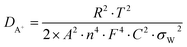
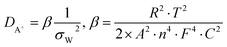
As a hybrid electrode possessing both EDLC and pseudo-capacitance charge–discharge nature, it was important to select an appropriate electrolyte capable of minimizing the internal electrical resistance to support both behaviors to achieve a high-power performing supercapacitor. Here, a systematic study was done to adjust the electrolyte characteristics by choosing the optimal type of anion. To understand the effect of anions on the electrochemical properties of hybrid electrodes, a series of electrochemical studies was performed as depicted in Fig. 5. The cyclic voltammetry (CV) experiments were performed in various electrolytes having a range of anions (Cl−, NO3−, OH−, and SO42−) and Li+ as the counter-ion in all the cases considered, as shown in Fig. 5(a). The hybrid electrode displayed superior capacitive performance with LiOH compared to other electrolytes, taking into account the wide integrated area of the CV curve for LiOH. The electrodes worked at different voltage window ranges depending on the anion-selected electrolyte. In the case of LiOH, the electrode exhibited a 0.8 V working voltage. These voltage windows of the electrode with electrolytes were optimized after considering and balancing the current values of the cathode and anode (Ia and Ic) with the same magnitude. A CV study in LiOH of a bare SWCNT sheet was also done to see the influence of BTMO particles in hybrid electrodes, as presented in Fig. S3(a and b), which revealed that including BTMO particles in SWCNT increased the capacitive performance by five times. The higher capacitance can be attributed to multiple oxidation states and increased active sites provided by BTMO particles for chemical reactions to store charge.44 Further, a CV kinematic study of bare SWCNT with a hybrid electrode was performed using eqn S(1–4) and presented in Fig. S4(a and b). CV kinematics revealed that hybrid electrodes had good capacitive stability and stored maximum charge by surface phenomena, possibly because of the high surface area and pseudo-capacitive behavior acquired from inserted BTMO particles. Fig. S5(a–d) shows galvanostatic charging–discharging (GCD) curves at various current densities with anion-sorted electrolytes. The capacitance values as a function of current density are plotted and shown in Fig. 5(b), calculated from the GCD curves using eqn (S5). The hybrid electrode in LiOH electrolyte offered a high areal capacitance of about 1886 mF cm−2 at the current density of 1 mF cm−2, which was 5–6 times higher compared to electrolytes with Cl−, NO3−, and SO42− anions. To better understand the anion effect, ion transport properties and kinematics were evaluated using impedance spectroscopy (EIS). The Nyquist plots of the electrode with anion-selected electrodes are shown in Fig. 5(c), with data fitted to an electronic circuit model. All the Nyquist plots had a linear pattern developing in the lower-frequency region, which confirmed that the hybrid electrode exhibited ideal capacitive behavior for all the Li-based electrolytes. Further, the effect of anions on the ion intercalation of the Li+ cation was observed by the chemical diffusion coefficient (DA+) and Warburg impedance coefficient (σw), calculated from the frequency response data and using eqn (1)–(3) (with other constants), as shown in Fig. 5(d).45,46| | | Z′ = Rs + Rct + σWω−1/2 | (1) |
| |  | (2) |
| |  | (3) |
Eqn (1) was plotted as a straight line in the Z′ versus ω−1/2 graph, and the slope of the fitted straight line gave the value of σw. The calculated values of σw of Li+ for the different anions Cl−, NO3−, OH−, and SO42− were found to be 2.35, 1.59, 0.90, and 1.34, by fitting a straight line. Further, DA+ was obtained using the values of σw in eqn (2) and (3). The DA+ of Li+ exhibited a higher value with OH− anions (β* 1.21 cm2 s−1) than Cl− (β* 0.179 cm2 s−1), NO3− (β* 0.393 cm2 s−1), and SO42− (β* 0.556 10−5 cm2 s−1). The higher value of diffusion-coefficient for the OH− anion revealed that the MnVO@SWCNT hybrid electrode with the Li+ cation and OH−1 anion had lower ion diffusion resistance and shorter diffusion distance compared to Cl−, NO3−, and SO42− anions. The ion interaction with the surface of the electrode became more prominent as the ion diffusion coefficient increased, implying higher capacitance. The estimated parameters from the impedance study are depicted in Fig. 5(e). The hybrid electrode showed the lowest resistance value and the highest chemical diffusion coefficient for OH− anions compared to electrolytes with Cl−, NO3−, and SO42− Anions. This suggests efficient charge transport and electrochemical kinetics of the hybrid electrode in a 1 M LiOH environment, as indicated by the shifted intersection at real impedance in the Nyquist plot. The better electrochemical performance of the MnVO@SWCNT electrode, confirmed by CV and impedance analysis (LiOH > LiNO3 > LiCl > Li2SO4), can be attributed to the differences in the ion diffusion coefficients and anion ionic size/mobility. The ion hydrated diameters (ionic conductivity) of Cl−, NO3−, OH−, and SO42− ions are 3.32 Å (76.31 S cm2 mol−1), 3.16 Å (72 S cm2 mol−1), 3.00 Å (198 S cm2 mol−1), and 3.79 Å (79.8 S cm2 mol−1), respectively.47,48 The small ionic size prompted the fast intercalation/deintercalation reactions and high ionic conductivity led to rapid transportation of ions, which resulted in better capacitive performance for the LiOH electrolyte.
 |
| | Fig. 5 Electrochemical study of the prepared MnVO@SWCNT hybrid electrode in Li-based electrolyte and elucidation of the effect of anions, (a) CV curves at a scan rate of 100 mV s−1, (b) calculated areal capacitance values by using GCD curves, (c) Nyquist plot, (d) Warburg coefficient and diffusion coefficient calculation, and (e) calculated parameters from EIS. | |
Further, the hybrid electrode subjected to electrochemical tests was analyzed by XPS to elucidate the effect of the reaction occurring at the electrode surface with an anion-selected electrolyte. The deconvoluted high-resolution spectra of the elements are depicted in Fig. 6(a–c). The spectra of V and O, in Fig. 6(a), exhibited a visible variation confirming the major effect of anion changes. These changes may be linked to the expansion/compression of planes during the charge/discharge process, due to the intercalation/deintercalation of ions into/from the V-oxide lattice.49 In Fig. 6(b), the binding energy difference between Mn 2p3/2 and Mn 2p1/2 slightly decreased to around 11.11 eV after electrochemical testing in LiOH (11.74 eV, 11.5 eV, and 11.78 eV for Li2SO4, LiNO3, and LiCl, respectively) compared to the pristine sample (ΔBE = 12.17 eV). This is likely due to chemical reactions during charging and discharging. Compared to other anions, OH− exhibits the largest reduction in ΔBE, indicating higher electrochemical activity, which correlates with its superior performance in the LiOH electrolyte.15,50 Concomitantly, the spectra of C, as depicted in Fig. 6(c), had almost identical shapes, indicating no effect of the anion. This behavior can be attributed to the porous architecture of the MnVO-based electrode, which accommodates volume changes during ion intercalation/deintercalation. This helps to mitigate stress and preserve the integrity of the monoclinic crystal structure, reducing the risk of distortion or degradation over cycling.49
 |
| | Fig. 6 XPS peak deconvolution of post-electrochemical tested electrode elements, in 1 M aqueous solution of LiCl, LiNO3, Li2SO4, and LiOH electrolyte. Deconvoluted spectra and deconvoluted peak area ratios (a and d) of vanadium and oxygen, (b and e) manganese, and (c and f) carbon. | |
Further, SEM surface micrographs of the electrochemically treated electrodes still displayed a spaghetti-type structure, as shown in Fig. S6(a–d). The structural integrity of the SWCNT confirmed that the SWCNT did not exhibit any discernible chemical changes during the process7 since the spectra of carbon presented in Fig. 6(c) appeared analogous. The deconvoluted peak area ratios of the elements subjected to the electrochemical study of the anions with elements of the pristine electrode are depicted in Fig. 6(d–f). The vanadium peak ratio reduced considerably for OH− compared to other anion-based electrolytes, as analyzed in Fig. 6(d). This indicated that the split doublet state of vanadium took the lead in element conversion during charging–discharging or redox reactions with the anion. The M–O peak had a maximum area ratio for OH− (67.7%). At the same time, pristine (37.63%), Cl− (28.64%), NO3− (38.23%), and SO42− (36.92%) had lower peak ratios, indicating the excessive presence of OH− anions in the electrolyte, with fast kinematics in OH based solvent (H2O) rapidly reacting and producing more conversion element from the metal of M–O. Possible electrochemical reactions may occur during charging–discharging and could lead to different products and outcomes, which is also consistent with the previous explanation of the electrochemical process for hybrid electrodes.49,51
| | | Mn2V2O7 + 10OH− ↔ 2VO4 + 2MnO2 + 5H2O + 10e− | (4) |
| | | MnO2 + Li+ + e− ↔ MnOOLi | (5) |
In Fig. 6(e), the deconvoluted peak area ratios associated with the Mn element are consistent for every case. This can be attributed to the stability of MnOx during the charging–discharging reaction, leading to the production of MnOx as the elemental conversion product of electrochemical reactions. Carbon peaks come from the SWCNT, taking part in the charging–discharging by forming EDLC layers and providing easy facilitation of electrons and electrolyte ions. As shown in Fig. 6(f), there is an increase in the deconvoluted peak area of C–C/C–H after the electrochemical process, which can be attributed to the presence of hydroxide in an aqueous or humid environment. The OH− hydration sphere had a narrower radius compared to the Cl−, NO3−, and SO42− hydration spheres, increasing the number of ion accessing pores and the formation of a lower electric double layer, evidenced by the deconvoluted spectra of vanadium. Also, interactions with OH− ions can lead to the formation of conductive surface layers (for example, Mn–OH or V–OH). These layers improve surface conductivity, decrease overall resistance, and enhance charge transfer. Additionally, relative to other anions, OH− ions exhibited better conductivity and ionic mobility, which also helped in improving electrochemical reactions to get better capacitive performance.52 Considering appropriate porosity of the flexible MnVO@SWCNT hybrid electrode (Fig. 4(b)) and suitable mechanical properties making the material flexible (vide infra), its combination with the anion-sorted Li-ion electrolyte can be regarded as synergistic.
4.5 Capacitive performance of the fabricated FpSC
Further, to utilize the findings from the above analysis and combine the hybrid electrode with the optimized electrolyte, a flexible supercapacitor MVO//OH@SWCNT-FpSC was fabricated for the practical application, as shown in Fig. 7(a). The fabricated FpSC worked with a voltage of 1.0 V and had an ideal bending performance confirmed by CV curves shown in Fig. 7(b). The CV curves obtained in the flat and bent states on a circular surface were symmetrical in shape, indicating that the fabricated device could be a good option for energy storage in flexible electronics. CV curves taken after unbending the device exhibit a similar shape to the flat device, confirming the good flexible stability of the device. Fig. 7(c) depicts GCD curves at various current densities. These curves had symmetric triangular shapes, confirming that the device offered good rate capability. The areal capacitance (Ca) and coulombic efficiency (η%) of the device were calculated from the GCD curves after considering IR drop and presented in Fig. 7(d). The device attained a high areal capacitance of about 718 mF cm−2 and around 90% coulombic efficiency at 1 mA cm−2 current density.
 |
| | Fig. 7 (a) Graphical illustration of the constructed MVO//OH@SWCNT FpSC device. (b) CV curves for flexibility, (c) GCD curves at various current densities, (d) capacitive performance calculated by GCD, (e) cycling stability for 5000 GCD cycles in the bent state, (f) Nyquist plot with the Ragone plot in the inset, and 3 cell assembly. (g) CV at 100 mV s−1 and (h) GCD at 5 mA cm−2. | |
Regarding stability, this device was tested for several GCD cycles at a current density of 15 mA cm−2, as depicted in Fig. 7(e), and the device retained 74.8% capacitance even after 5000 cycles, indicating good stability and a long lifespan. The iR drop in Fig. 7(f) of the GCD curves may be due to the high current density of 15 mA cm−2, where the slow irreversible faradic reaction could not match the fast charge–discharge process.53Fig. 7(g) shows the ion kinematics of the device in the flat and bent states with an electrochemically tested device. The Nyquist plot of the device in all cases tended to a straight line in low-frequency regions, confirming the device's good capacitive behavior. The electrochemical series resistance, obtained by fitting data with an electronic circuit and intersection on the real axis, had very low resistance values, confirming that this device with LiOH electrolyte transports ions rapidly and offers a good capacitive response. The device's energy and power density were also calculated using eqn (S6) and (S7), which are present in the inset of Fig. 7(h), as the Ragone plot. This device offered a good energy density of ∼105.79 µWh cm−2 with optimum power density (∼509 µW cm−2) at 1 mA cm−2 current density. Further, a three-device assembly was also fabricated to achieve a wide voltage window, as shown in Fig. 7(g). The assembly of the device enabled a wide 3 V operating voltage, confirmed by CV and GCD (Fig. 7(h)). The device displayed higher electrochemical stability and performance compared to previous reports. For comparison, the capacitive parameters of several recent works are tabulated in Table 1. The assembly of the three devices and a single device with outstanding performance is a promising potential choice for high-voltage and flexible electronics. The improved performance can be credited to the exceptional electrical conductivity of SWCNT and the increased surface area with various oxidation states of MnVO in the hybrid electrode. Additionally, the chosen electrolyte with highly mobile anions (OH−) substantially enhanced electron transport efficiency and improved the electrochemical rate capability.
Table 1 Comparison of previously reported supercapacitor performance with this worka
| No. |
Fabricated device |
Max. attained areal capacitance (mF cm−2) |
Energy density (µWh cm−2) |
Power density (µW cm−2) |
Cyclability (number of cycles) |
Reference |
|
CF-Carbon Fiber, ASC-asymmetric supercapacitor, PMMPA/PMPA-polymerized micropillar array, CNT-carbon nanotube, LDH-Layered Double Hydroxide, PEDOT-conductive poly 3,4-ethylenedioxythiophene, GF-Graphene Flakes, CC-Carbon Cloth.
|
| 1 |
Ni wire/Co3O4@MnO2//CF/graphene ASC |
13.9 |
4.34 |
750 |
82% (1000) |
54
|
| 2 |
RuO2//Ti3C2Tx |
60 |
45 |
6000 |
86% (2000) |
55
|
| 3 |
PMMPA//PMPA |
66.9 |
18.22 |
420 |
88.3% (10000) |
56
|
| 4 |
VN//Na-MnOx |
109.5 |
87.62 |
12110 |
— |
57
|
| 5 |
MnO2/CNT/nylon fiber |
40.9 |
2.6 |
66.5 |
— |
58
|
| 6 |
Ti3C2//Co–Al-LDH |
28.5 |
8.84 |
230 |
92% (1000) |
59
|
| 7 |
MnO2/V2O5/PEDOT@GF |
89.3 |
24 |
350 |
82% (2500) |
60
|
| 8 |
α-MnO2//γ-MnO2@CNT |
— |
93.8 |
193 |
98% (1000) |
61
|
| 9 |
Ag @Ni–Co LDHs/CC//ASC |
230 |
78.33 |
785 |
80.47% (2000) |
62
|
| 10 |
ZnCo2O4–Ni foams/solid electrolyte/ZnCo2O4–Ni |
94 |
— |
— |
98% (1000) |
63
|
| 11 |
Graphene/amorphous carbon/Mn3O4 ASC |
285.5 |
120 |
1800 |
88% (10000) |
64
|
| 12 |
Lignin-based carbon fibre/PANI |
34.3 |
3.051 |
44.18 |
— |
65
|
| 13 |
Carbon fibre multilayer@MnO2 |
218 |
18 |
391 |
— |
66
|
| 14 |
rGO CNT-c film supercapacitor |
233 |
10.4 |
1113 |
90% (200) |
67
|
|
15
|
MVO//OH@SWCNT (FpSC)
|
718 (149.6 F cm−
3
)
|
105.79
|
525
|
74.6% (5000)
|
This work
|
5. Conclusion
In conclusion, this study demonstrates that a high surface area is not the sole crucial aspect for achieving high capacitance values. Instead, specific capacitance depends on a range of factors, including redox stability, conductivity, connected framework, and the selection of electrolytes, particularly the conductive salt of the anion and cation. These factors significantly influence the power performance of any energy storage system. To address these factors, this research used a free-standing, binder-free, and cost-effective hybrid electrode (MnVO@SWCNT) fabricated by a facile process. To achieve high-power performance, an electrolyte with an optimized combination of the cation (Li+) and anion (OH−) was selected by a thorough study for the hybrid electrode. The hybrid electrode with LiOH electrolyte delivers a high area capacitance of about 1886 mF cm−2. Further, a flexible supercapacitor, MVO//OH@SWCNT (FpSC), was constructed with the hybrid electrode and anion-sorted electrolyte. The FpSC offers good bending performance and works on 1 V with a maximum attained areal capacitance of about 718 mF cm−2. This device showed good stability, retained 74.8% capacitance even after 5000 GCD cycles, and displayed an optimum areal energy density of 105.79 µWh cm−2 with a power density of 811 µWh cm−2.
Conflicts of interest
There are no conflicts to declare.
Data availability
The data that support the findings of this study are available within the article and its supplementary information (SI). Supplementary information: analysis and equations used to calculate the capacitive parameters of hybrid electrodes and MVO//OH@SWCNT FpSC, along with supporting electrochemical and physical analysis. See DOI: https://doi.org/10.1039/d5ta06247k.
Acknowledgements
The authors would like to thank the Polish National Science Center (UMO-2020/39/D/ST5/00285) and National Agency for Academic Exchange (BPI/PST/2021/1/00039) for funding the research.
References
- M. Winter and R. J. Brodd, What are batteries, fuel cells, and supercapacitors?, Chem. Rev., 2004, 104, 4245–4269, DOI:10.1021/cr020730k.
- J. Libich, J. Máca, J. Vondrák, O. Čech and M. Sedlaříková, Supercapacitors: Properties and applications, J. Energy Storage, 2018, 17, 224–227, DOI:10.1016/j.est.2018.03.012.
- R. Adalati, S. Sharma, M. Sharma, P. Kumar, A. Bansal, A. Kumar and R. Chandra, Li Salt Assisted Highly Flexible Carbonaceous Ni3N@polyimide Electrode for an Efficient Asymmetric Supercapacitor, Nano Lett., 2024, 24, 362–369, DOI:10.1021/acs.nanolett.3c04128.
- S. Khasim, A. Pasha, N. Badi, M. Lakshmi and Y. K. Mishra, High performance flexible supercapacitors based on secondary doped PEDOT-PSS-graphene nanocomposite films for large area solid state devices, RSC Adv., 2020, 10, 10526–10539, 10.1039/d0ra01116a.
- O. Parlak, Y. Kumar Mishra, A. Grigoriev, M. Mecklenburg, W. Luo, S. Keene, A. Salleo, K. Schulte, R. Ahuja, R. Adelung, A. P. F. Turner and A. Tiwari, Hierarchical Aerographite nano-microtubular tetrapodal networks based electrodes as lightweight supercapacitor, Nano Energy, 2017, 34, 570–577, DOI:10.1016/j.nanoen.2017.03.004.
- Y. Zhang, L. Li, H. Su, W. Huang and X. Dong, Binary metal oxide: Advanced energy storage materials in supercapacitors, J. Mater. Chem. A, 2015, 3, 43–59, 10.1039/c4ta04996a.
- M. S. Iyer and I. Rajangam, Hybrid nanostructures made of porous binary transition metal oxides for high performance asymmetric supercapacitor application, J. Energy Storage, 2023, 67, 107530, DOI:10.1016/j.est.2023.107530.
- B. Liu, B. Liu, Q. Wang, X. Wang, Q. Xiang, D. Chen and G. Shen, New energy storage option: Toward ZnCo2O4 nanorods/nickel foam architectures for high-performance supercapacitors, ACS Appl. Mater. Interfaces, 2013, 5, 10011–10017, DOI:10.1021/am402339d.
- K. Vanasundari, P. Sureka and G. Mahalakshmi, ZnFe2O4 nanorods encapsulated in reduced graphene oxide sheets as advanced electrodes for supercapacitor applications, Bull. Mater. Sci., 2024, 47, 71, DOI:10.1007/s12034-024-03148-w.
- O. Popovych, I. Budzulyak, V. Vashchynskyi, M. Khemii, R. Ilnytskyi and L. Yablon, Microwave-assisted synthesis of nanocrystalline NiMoO4 for hybrid supercapacitor applications, Appl. Nanosci., 2023, 13, 6803–6809, DOI:10.1007/s13204-023-02789-3.
- Z. Chen, Y. Qin, D. Weng, Q. Xiao, Y. Peng, X. Wang, H. Li, F. Wei and Y. Lu, Design and synthesis of hierarchical nanowire composites for electrochemical energy storage, Adv. Funct. Mater., 2009, 19, 3420–3426, DOI:10.1002/adfm.200900971.
- Q. Zhang, Y. Jin, S. Qi, Q. Ma, Z. Wang, P. Lv, F. Shi and W. Wei, Overview of fiber-shaped energy storage devices: From fabrication to application, Nano Energy, 2024, 128, 109896, DOI:10.1016/j.nanoen.2024.109896.
- L. Dong, L. Zhang, S. Lin, Z. Chen, Y. Wang, X. Zhao, T. Wu, J. Zhang, W. Liu, H. Lu and K. P. Loh, Building vertically-structured, high-performance electrodes by interlayer-confined reactions in accordion-like, chemically expanded graphite, Nano Energy, 2020, 70, 104482, DOI:10.1016/j.nanoen.2020.104482.
- W. Raza, F. Ali, N. Raza, Y. Luo, K. H. Kim, J. Yang, S. Kumar, A. Mehmood and E. E. Kwon, Recent advancements in supercapacitor technology, Nano Energy, 2018, 52, 441–473, DOI:10.1016/j.nanoen.2018.08.013.
- R. Sinha, N. Roy and T. K. Mandal, SWCNT/ZnO nanocomposite decorated with carbon dots for photoresponsive supercapacitor applications, Chem. Eng. J., 2022, 431, 133915, DOI:10.1016/j.cej.2021.133915.
- S. Qiang, J. Chen, S. Huang, H. Xu, X. Zhuo, H. Zhou, A. Yuan, H. Zhou and Y. Qiao, Hierarchically porous CoMn-N-doped carbon nanotubes as efficient electrocatalyst for oxygen reduction reaction, J. Colloid Interface Sci., 2026, 701, 138722, DOI:10.1016/j.jcis.2025.138722.
- R. K. Mishra, J. H. Ryu, H.-I. Kwon and S. H. Jin, A new strategy for integrating semiconducting SWCNTs into pseudo-cubic In2O3 heterostructures for solid-state symmetric supercapacitors with a superior stability and specific-capacitance, J. Mater. Chem. A, 2018, 6, 15253–15264, 10.1039/C8TA01563E.
- A. Muzaffar, M. B. Ahamed, K. Deshmukh and J. Thirumalai, A review on recent advances in hybrid supercapacitors: Design, fabrication and applications, Renew. Sustain. Energy Rev., 2019, 101, 123–145, DOI:10.1016/j.rser.2018.10.026.
- B. Pal, S. Yang, S. Ramesh, V. Thangadurai and R. Jose, Electrolyte selection for supercapacitive devices: A critical review, Nanoscale Adv., 2019, 1, 3807–3835, 10.1039/c9na00374f.
- K. Fic, G. Lota, M. Meller and E. Frackowiak, Novel insight into neutral medium as electrolyte for high-voltage supercapacitors, Energy Environ. Sci., 2012, 5, 5842–5850, 10.1039/c1ee02262h.
- R. Adalati, M. Sharma, S. Sharma, A. Kumar, G. Malik, R. Boukherroub and R. Chandra, Metal nitrides as efficient electrode material for supercapacitors: A review, J. Energy Storage, 2022, 56, 105912, DOI:10.1016/j.est.2022.105912.
- B. N. V. Krishna, S. K. Hussain and J. S. Yu, Chelate mediated synthesis of novel Mn2V2O7 and MnV2O6 materials with hierarchical morphological structures and improved redox behavior via multi-walled carbon nanotubes for asymmetric supercapacitors, J. Power Sources, 2021, 506, 230193, DOI:10.1016/j.jpowsour.2021.230193.
- V. Sethuraman, R. D. Kumar, A. Prabhakaran, P. Rajkumar, K. Diwakar, M. Senthilkumaran, M. Saravanan, R. Sasikumar, K. Aravinth, P. Ramasamy and R. Manigandan, Synthesis of Mn2V2O7 nanopebbles via hydrothermal method and its high-efficiency energy storage for supercapacitors, J. Energy Storage, 2022, 55, 105553, DOI:10.1016/j.est.2022.105553.
- S. Ezhil Arasi, R. Ranjithkumar, P. Devendran, M. Krishnakumar and A. Arivarasan, Investigation on electrochemical behaviour of manganese vanadate nanopebbles as potential electrode material for supercapacitors, J. Alloys Compd., 2021, 857, 157628, DOI:10.1016/j.jallcom.2020.157628.
- Y. Zhang, L. Li, H. Su, W. Huang and X. Dong, Binary metal oxide: Advanced energy storage materials in supercapacitors, J. Mater. Chem. A, 2015, 3, 43–59, 10.1039/c4ta04996a.
- Y. Zhu, H. Pham and J. Park, A New Aspect of the Li Diffusion Enhancement Mechanism of Ultrathin Coating Layer on Electrode Materials, ACS Appl. Mater. Interfaces, 2019, 11, 38719–38726, DOI:10.1021/acsami.9b12740.
- F. Ureña-Begara, A. Crunteanu and J. P. Raskin, Raman and XPS characterization of vanadium oxide thin films with temperature, Appl. Surf. Sci., 2017, 403, 717–727, DOI:10.1016/j.apsusc.2017.01.160.
- N. T. Hong Trang, N. Lingappan, I. Shakir and D. J. Kang, Growth of single-crystalline β-Na0.33V2O 5 nanowires on conducting substrate: A binder-free electrode for energy storage devices, J. Power Sources, 2014, 251, 237–242, DOI:10.1016/j.jpowsour.2013.11.041.
- X. Xing, R. Liu, K. Cao, U. Kaiser, G. Zhang and C. Streb, Manganese Vanadium Oxide-N-Doped Reduced Graphene Oxide Composites as Oxygen Reduction and Oxygen Evolution Electrocatalysts, ACS Appl. Mater. Interfaces, 2018, 10, 44511–44517, DOI:10.1021/acsami.8b16578.
- A. K. Shukla, P. Krüger, R. S. Dhaka, D. I. Sayago, K. Horn and S. R. Barman, Understanding the 2p core-level spectra of manganese: Photoelectron spectroscopy experiments and Anderson impurity model calculations, Phys. Rev. B: Condens. Matter Mater. Phys., 2007, 75, 1–6, DOI:10.1103/PhysRevB.75.235419.
- G. Stando, S. Han, B. Kumanek, D. Łukowiec and D. Janas, Tuning wettability and electrical conductivity of single-walled carbon nanotubes by the modified Hummers method, Sci. Rep., 2022, 12, 4358, DOI:10.1038/s41598-022-08343-5.
- Y. Munaiah, S. Suresh, S. Dheenadayalan, V. K. Pillai and P. Ragupathy, Comparative Electrocatalytic performance of single-walled and multiwalled carbon nanotubes for zinc bromine redox flow batteries, J. Phys. Chem. C, 2014, 118, 14795–14804, DOI:10.1021/jp503287r.
- D. E. Newbury and N. W. M. Ritchie, Performing elemental microanalysis with high accuracy and high precision by scanning electron microscopy/silicon drift detector energy-dispersive X-ray spectrometry (SEM/SDD-EDS), J. Mater. Sci., 2014, 50, 493–518, DOI:10.1007/s10853-014-8685-2.
-
M. Morita, Scanning Electron Microscope Energy Dispersive X-Ray Spectrometry, in Compendium of Surface and Interface Analysis, Springer, Singapore, 2018, pp. 557–561, DOI:10.1007/978-981-10-6156-1_90.
- K. E. Macarthur, A. B. Yankovich, A. Béché, M. Luysberg, H. G. Brown, S. D. Findlay, M. Heggen and L. J. Allen, Optimizing Experimental Conditions for Accurate Quantitative Energy-Dispersive X-ray Analysis of Interfaces at the Atomic Scale, Microsc. Microanal., 2021, 27, 528–542, DOI:10.1017/S1431927621000246.
- I. Melián-Cabrera, J. J. Mercadal, A. Mayoral and J. L. G. Fierro, On the surface area per volumetric loading: Its pronounced improvement in densely-packed SWCNT by double-function purification, Microporous Mesoporous Mater., 2024, 366, 112940, DOI:10.1016/j.micromeso.2023.112940.
- N. Jha, P. Ramesh, E. Bekyarova, X. Tian, F. Wang, M. E. Itkis and R. C. Haddon, Functionalized single-walled carbon nanotube-based fuel cell benchmarked against US DOE 2017 technical targets, Sci. Rep., 2013, 3, 2257, DOI:10.1038/srep02257.
- S. Zhang, S. Gai, F. He, S. Ding, L. Li and P. Yang, In situ assembly of well-dispersed Ni nanoparticles on silica nanotubes and excellent catalytic activity in 4-nitrophenol reduction, Nanoscale, 2014, 6, 11181–11188, 10.1039/c4nr02096k.
- Y. Zheng, Z. Lin, W. Chen, B. Liang, H. Du, R. Yang, X. He, Z. Tang and X. Gui, Flexible, Sandwich-Like CNTs/NiCo2O4 Hybrid Paper Electrodes for All-Solid State Supercapacitors, J. Mater. Chem. A, 2017, 5(12), 5886–5894, 10.1039/C7TA00491E.
- B. N. V. Krishna, S. K. Hussain and J. S. Yu, Chelate mediated synthesis of novel Mn2V2O7 and MnV2O6 materials with hierarchical morphological structures and improved redox behavior via multi-walled carbon nanotubes for asymmetric supercapacitors, J. Power Sources, 2021, 506, 230193, DOI:10.1016/j.jpowsour.2021.230193.
- M. G. Burdanova, G. M. Katyba, R. Kashtiban, G. A. Komandin, E. Butler-Caddle, M. Staniforth, A. A. Mkrtchyan, D. V. Krasnikov, Y. G. Gladush, J. Sloan, A. G. Nasibulin and J. Lloyd-Hughes, Ultrafast, high modulation depth terahertz modulators based on carbon nanotube thin films, Carbon, 2021, 173, 245–252, DOI:10.1016/j.carbon.2020.11.008.
- X. Liu, J. Choi, Z. Xu, C. P. Grey, S. Fleischmann and A. C. Forse, Raman Spectroscopy Measurements Support Disorder-Driven Capacitance in Nanoporous Carbons, J. Am. Chem. Soc., 2024, 146, 30748–30752, DOI:10.1021/jacs.4c10214.
- C. Zheng, B. Jian, J. Zhong and S. Huang, Single-crystalline Mn2V2O7 anodes with high rate and ultra-stable capability for sodium-ion batteries, J. Alloys Compd., 2023, 934, 168018, DOI:10.1016/j.jallcom.2022.168018.
- C. An, Y. Zhang, H. Guo and Y. Wang, Metal oxide-based supercapacitors: progress and prospectives, Nanoscale Adv., 2019, 1, 4644–4658, 10.1039/c9na00543a.
- H. Gao, L. Song, J. Niu, C. Zhang, T. Kou, Y. Sun, J. Qin, Z. Peng and Z. Zhang, Understanding the boosted sodium storage behavior of a nanoporous bismuth-nickel anode using: Operando X-ray diffraction and density functional theory calculations, J. Mater. Chem. A, 2019, 7, 13602–13613, 10.1039/c9ta03810h.
- R. Adalati, M. Sharma, A. Kumar, S. Sharma and R. Chandra, Metal nitride composite based nanostructured sheet-electrodes alternately stacked in asymmetric configuration towards robust flexible supercapacitor, J. Energy Storage, 2022, 55, 105617, DOI:10.1016/j.est.2022.105617.
- X. Zhang, X. Wang, L. Jiang, H. Wu, C. Wu and J. Su, Effect of aqueous electrolytes on the electrochemical behaviors of supercapacitors based on hierarchically porous carbons, J. Power Sources, 2012, 216, 290–296, DOI:10.1016/j.jpowsour.2012.05.090.
- A. Olean-Oliveira, G. A. Oliveira Brito, C. X. Cardoso and M. F. S. Teixeira, Role of anion size in the electrochemical performance of a Poly(thionine) redox conductive polymer using electrochemical impedance spectroscopy, Polymer, 2022, 258, 125291, DOI:10.1016/j.polymer.2022.125291.
- T. Nguyen and M. d. F. Montemor, Metal Oxide and Hydroxide–Based Aqueous Supercapacitors: From Charge Storage Mechanisms and Functional Electrode Engineering to Need-Tailored Devices, Adv. Sci., 2019, 6, 1801797, DOI:10.1002/advs.201801797.
- S. Huang, Y. Shen, A. Li, H. Zhou, Y. Qiao, A. Yuan, H. Zhou and S. Zheng, Dual-template synthesis of CoNi alloy nanoparticles anchored on N-doped carbon nanotubes for efficient oxygen reduction reaction, Int. J. Miner., Metall. Mater., 2025 DOI:10.1007/s12613-025-3190-y.
- S. Ezhil Arasi, R. Ranjithkumar, P. Devendran, M. Krishnakumar and A. Arivarasan, Investigation on electrochemical behaviour of manganese vanadate nanopebbles as potential electrode material for supercapacitors, J. Alloys Compd., 2021, 857, 157628, DOI:10.1016/j.jallcom.2020.157628.
- M. Sajjad, M. I. Khan, F. Cheng and W. Lu, A review on selection criteria of aqueous electrolytes performance evaluation for advanced asymmetric supercapacitors, J. Energy Storage, 2021, 40, 102729, DOI:10.1016/j.est.2021.102729.
- X. Zhou, H. Chen, D. Shu, C. He and J. Nan, Study on the electrochemical behavior of vanadium nitride as a promising supercapacitor material, J. Phys. Chem. Solids, 2009, 70, 495–500, DOI:10.1016/j.jpcs.2008.12.004.
- X. Niu, G. Zhu, Z. Yin, Z. Dai, X. Hou, J. Shao, W. Huang, Y. Zhang and X. Dong, Fiber-based all-solid-state asymmetric supercapacitors based on Co3O4 @MnO2 core/shell nanowire arrays, J. Mater. Chem. A, 2017, 5, 22939–22944, 10.1039/c7ta07899d.
- Q. Jiang, N. Kurra, M. Alhabeb, Y. Gogotsi, H. N. Alshareef, Q. Jiang, N. Kurra, H. N. Alshareef Materials Science, M. Alhabeb and Y. Gogotsi, All Pseudocapacitive MXene-RuO2 Asymmetric Supercapacitors, Adv. Energy Mater., 2018, 8, 1703043, DOI:10.1002/AENM.201703043.
- Y. Zhang, H. Zhang, M. Liu, P. Huo, L. Feng, Y. Ren, J. Xu, W. Zhou and T. Xu, Vertically Aligned Micropillar Arrays Coated with a Conductive Polymer for Advanced Pseudocapacitance Energy Storage, ACS Appl. Mater. Interfaces, 2022, 14, 10805–10814, DOI:10.1021/ACSAMI.1C21947.
- Q. Zhang, J. Zhang, Z. Zhou, L. Wei and Y. Yao, Flexible quasi-solid-state 2.4 V aqueous asymmetric microsupercapacitors with ultrahigh energy density, J. Mater. Chem. A, 2018, 6, 20145–20151, 10.1039/c8ta07727d.
- C. Choi, S. H. Kim, H. J. Sim, J. A. Lee, A. Y. Choi, Y. T. Kim, X. Lepró, G. M. Spinks, R. H. Baughman and S. J. Kim, Stretchable, Weavable Coiled Carbon Nanotube/MnO2/Polymer Fiber Solid-State Supercapacitors, Sci. Rep., 2015, 5, 9387, DOI:10.1038/srep09387.
- S. Xu, Y. Dall'Agnese, G. Wei, C. Zhang, Y. Gogotsi and W. Han, Screen-printable microscale hybrid device based on MXene and layered double hydroxide electrodes for powering force sensors, Nano Energy, 2018, 50, 479–488, DOI:10.1016/J.NANOEN.2018.05.064.
- H. U. Lee, J. H. Jin and B. G. Chung, High-capacity three-dimensional solar rechargeable micro-supercapacitor using MnO2/V2O5-based binary metal oxide nanocomposite ink, J. Ind. Eng. Chem., 2022, 115, 544–553, DOI:10.1016/j.jiec.2022.08.042.
- J.-H. Jeong, J. Woo park, D. Weon Lee, R. H. Baughman and S. Jeong Kim, Electrodeposition of α-Mno 2/γ-Mno 2 on carbon nanotube for Yarn Supercapacitor, Sci. Rep., 2019, 9, 11271, DOI:10.1038/s41598-019-47744-x.
- S. C. Sekhar, G. Nagaraju and J. S. Yu, Conductive silver nanowires-fenced carbon cloth fibers-supported layered double hydroxide nanosheets as a flexible and binder-free electrode for high-performance asymmetric supercapacitors, Nano Energy, 2017, 36, 58–67, DOI:10.1016/J.NANOEN.2017.04.019.
- B. Liu, B. Liu, Q. Wang, X. Wang, Q. Xiang, D. Chen and G. Shen, New energy storage option: Toward ZnCo2O4 nanorods/nickel foam architectures for high-performance supercapacitors, ACS Appl. Mater. Interfaces, 2013, 5, 10011–10017, DOI:10.1021/am402339d.
- L. Li, Y. Jiang, C. Guo, K. Han, X. Cui, C. He, Y. Chen and Y. Yang, Mechanochemical production of graphene/amorphous carbon/Mn3O4 nanocomposites for asymmetric supercapacitor, Appl. Surf. Sci., 2024, 653, 159388, DOI:10.1016/j.apsusc.2024.159388.
- W. Qu, P. Hu, J. Liu, H. Jin and K. Wang, Lignin-based carbon fiber: A renewable and low-cost substitute towards featured fiber-shaped pseudocapacitor electrodes, J. Cleaner Prod., 2022, 343, 131030, DOI:10.1016/j.jclepro.2022.131030.
- Z. Sha, Y. Zhou, F. Huang, W. Yang, Y. Yu, J. Zhang, S. Wu, S. A. Brown, S. Peng, Z. Han and C. H. Wang, Carbon fibre electrodes for ultra long cycle life pseudocapacitors by engineering the nano-structure of vertical graphene and manganese dioxides, Carbon, 2021, 177, 260–270, DOI:10.1016/j.carbon.2021.01.155.
- D. Y. Wu, W. H. Zhou, L. Y. He, H. Y. Tang, X. H. Xu, Q. S. Ouyang and J. J. Shao, Micro-corrugated graphene sheet enabled high-performance all-solid-state film supercapacitor, Carbon, 2020, 160, 156–163, DOI:10.1016/j.carbon.2020.01.019.
|
| This journal is © The Royal Society of Chemistry 2025 |
Click here to see how this site uses Cookies. View our privacy policy here. 

 *ab,
Somdatta
Singh
b,
Jakub
Ćwiertnia
a,
Dariusz
Łukowiec
c,
Dushyant
Choudhary
b,
Marta
Wala-Kapica
a,
Wojciech
Simka
a,
Ramesh
Chandra
*ab,
Somdatta
Singh
b,
Jakub
Ćwiertnia
a,
Dariusz
Łukowiec
c,
Dushyant
Choudhary
b,
Marta
Wala-Kapica
a,
Wojciech
Simka
a,
Ramesh
Chandra


