
Polyanionic surfactant modulates the substrate surface energy to achieve crystallization control for efficient perovskite solar cells

Xinpei Huang ab, Jidong Deng ab, Shiyu Wang ab, Longjie Deng ab, Qingyuan Li ab, Xiaofeng Li ab, Li Yang *abc and Jinbao Zhang *ab
aCollege of Materials, Fujian Key Laboratory of Advanced Materials, Xiamen Key Laboratory of Electronic Ceramic Materials and Devices, Key Laboratory of High-Performance Ceramics Fibers (Ministry of Education), Xiamen University, Xiamen, 361005, China. E-mail: li.yang@xmu.edu.cn; jinbao.zhang@xmu.edu.cn
bShenzhen Research Institute of Xiamen University, Shenzhen, 518000, China
cJiujiang Research Institute of Xiamen University, Jiujiang, 332000, China

Received 2nd July 2025 , Accepted 21st August 2025

First published on 22nd August 2025


Abstract

The crystallization process remains critical for fabricating polycrystalline perovskite thin films, however, challenges in controlling this process often induce substantial defects at the substrate/perovskite interfaces, thereby compromising device efficiency and long-term stability. Herein, we introduce a polyanionic surfactant strategy to modulate the heterogeneous crystallization kinetics by tailoring the surface energy of the underlying substrate. Specifically, the incorporation of poly(sodium 4-styrenesulfonate) (PSS-Na) into SnO2 elevates the surface energy of the electron transport layer, thereby triggering rapid nucleation while inhibiting crystal growth via interactions with organic cations in the perovskite solution. The controlled crystallization process enables the fabrication of high-quality perovskite films characterized by exceptional crystallinity, superior optical absorbance, and optimal interface contact. Consequently, the devices show a notable efficiency improvement from 20.75% to 22.75%. More encouragingly, unencapsulated devices based on PSS-Na exhibit remarkable stability, retaining over 86% of their initial PCE after nearly 1600 hours under a nitrogen atmosphere at room temperature. This strategy offers a promising approach to regulate perovskite crystallization and fabricate efficient, stable perovskite solar cells.

1 Introduction

The variation of crystallization conditions gives rise to differences in crystal size, morphology, and crystallinity.1 Understanding the underlying crystallization mechanisms and optimizing the crystallization kinetics are fundamental to the development of high-performance materials and devices for diverse applications.2–6 For instance, the continuous crystallization optimization of metal halide perovskite materials has driven a remarkable efficiency boost in perovskite solar cells (PSCs), from 3% to 26%, over the past decades. This progress has established perovskites as one of the most promising materials for light-absorbing functional layers in solar cell applications.7–9

Following classical crystal growth theory, perovskite formation involves nucleation and growth processes.7 Previous studies have demonstrated that optimizing parameters such as temperature,10 concentration11 and additives12,13 represents effective ways to control the crystallization kinetics during perovskite formation. The surfactant strategies have been often investigated to optimize perovskite crystallization.14,15 Notably, most of previous studies mainly focused on the effect of surfactants on the perovskite crystallization, but overlooked their impacts on the interfacial properties between substrate and perovskite. Achieving fine control over perovskite crystallization in anti-solvent fabrication processes remains challenging due to the excessively rapid reaction kinetics inherent to this method. Therefore, there is a critical need for in-depth understanding and effective strategies to modulate this process, which is pivotal for further enhancing the quality of perovskite films.

The perovskite crystallization for thin-film solar cells is achieved via a solution process on a glass substrate, where an anti-solvent is deployed to induce supersaturation and initiate film formation. Owing to the presence of solid–liquid interfaces, both homogeneous and heterogeneous nucleation take place during the film formation. According to Young's equation and Thomson–Gibbs equation,16 the homogeneous nucleation in solution bulk can be thermodynamically described by an energy barrier of image file: d5ta05343a-t1.tif (eqn (S1)).17 In contrast, heterogeneous nucleation preferentially occurring on the substrate surface typically involves a lower free energy barrier of image file: d5ta05343a-t2.tif (eqn (S2)).18 Thus, a factor (f(θ)) associated with the contact angle is frequently introduced to characterize the relationship between image file: d5ta05343a-t3.tif and image file: d5ta05343a-t4.tif, enabling qualitative analysis of the nucleation process (eqn (S3)).19,20 As depicted in Fig. 1a, the substrate surface energy plays a pivotal role in governing the solution wetting behavior, where a substrate with high surface energy promotes solution spreading and results in a lower contact angle.21 Therefore, variations in substrate surface energy can not only dictate the macroscopic coverage of perovskite films but also influence the nucleation process by altering the solution's contact angle.22


image file: d5ta05343a-f1.tif
Fig. 1 (a) Schematic diagram of the spreading behavior on the substrates with different surface energy. (b) Schematic diagram of three stages for perovskite during crystallization process. (c) Gibbs energy of homogeneous nucleation (ΔGhomo) and heterogeneous nucleation (ΔGheter) in different contact angles. (d) Schematic diagram of growth process.

Three distinct stages are involved in the perovskite transformation from solution to solid-state film (Fig. 1b), including solution stage (stage I), nucleation and growth stage (stage II), and crystal maturation stage (stage III).23 These stages are largely governed by antisolvent engineering and post-annealing treatment in device fabrication protocols (Fig. S1). Therein, the manipulation of heterogeneous nucleation at the substrate/solution interface stands as one of the most effective approaches to precisely govern the crystallization kinetics. As shown in Fig. 1c, a decrease in contact angle induces reductions in both image file: d5ta05343a-t5.tif and f(θ) (Fig. S2), leading to heterogenous nucleation dominating the perovskite nucleation process. Apart from nucleation, the growth process represents a critical stage in crystallization, which is primarily controlled by diffusion kinetics (Fig. 1d).7 It has been reported that fast nucleation coupling with slow growth is essential for fabricating high-quality perovskite film with large grains and dense buried surface.24

In typical n-i-p PSCs, tin dioxide (SnO2) is commonly used as an electron transport layer (ETL), serving as a substrate for perovskite crystallization.25 However, hydroxyl groups (–OH) and Sn dangling bonds on the SnO2 surface not only severely deteriorate interfacial contact but also influence perovskite crystallization kinetics due to the uneven distribution of surface defects.22,23,26 These surface defects further induce unfavorable energy level alignment, severe carrier recombination losses and poor interfacial stability,27 giving rise to substantial voltage loss and device degradation.26,28 Although various strategies, such as bilayer strategy29 and additive strategy,30 have been devised for interface engineering, the induced significant charge transfer resistance and carrier recombination continue to impede PSC performance.31 There remains an urgent need to further optimize these interfaces.

In this work, we develop a polyanionic surfactant strategy to regulate heterogeneous crystallization at solid–liquid interfaces. The incorporation of PSS-Na into SnO2 enhance the surface energy of electron transport layers, leading to significant reduction in contact angles at the interfaces. This strategy enables tailored crystallization kinetics with fast nucleation and slow growth, resulting in the formation of high-quality perovskite thin films featuring large grains, low defect density and superior uniformity. After meticulous optimization of PSS-Na concentrations, the optimal device exhibits improved carrier collection efficiency and suppressed carrier recombination losses, enabling a significant enhancement in PCE from 20.5% to 22.75%, accompanied by a remarkable open-circuit voltage (VOC) of 1.17 V. More importantly, the unencapsulated devices retain 86% of their initial PCEs after 1600 hours under a N2 atmosphere. Furthermore, the devices exhibit superior stability under thermal and humid conditions. This work presents an effective approach to modulating substrate surface properties for achieving a controllable perovskite crystallization process, which can further enhance perovskite film quality and interface contact integrity.

2 Results and discussion

2.1 Effects of PSS-Na on SnO2 surface properties

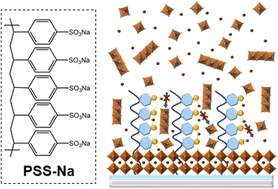
PSS-Na, a typical polyanionic surfactant, was selected to regulate the surface energy of SnO2 substrate. As shown in Fig. 2a, PSS-Na comprises multifunctional groups, including flexible long carbon chains, sulfonic acid groups (–SO3) and sodium ions (Na+). The PSS-Na was firstly added into aqueous SnO2 dispersion, followed by spin coating to form a solid-state hybrid thin film. According to previous work, Na+ ions could diffuse from ETLs to the perovskite layer, leading to suppressed hysteresis in the devices.32,33 Therefore, we suggest that PSS polyanions improves the dispersion of SnO2 nanoparticles and alters the surface properties of substrate (Fig. S29). To analyze the chemical interaction between PSS-Na and SnO2, Fourier transform infrared (FTIR) of the mixture was measured (Fig. 2b). Specifically, the characteristic stretching vibration peak of S[double bond, length as m-dash]O in –SO3 groups, initially located at 1186.02 cm−1, shifted to 1188.56 cm−1 after incorporating PSS-Na into SnO2.34 This interaction mostly arises from the adsorption of long-chain PSS-Na onto the SnO2 surface, forming polymer-wrapped nanoparticles, as depicted in Fig. S3.35 To gain deeper insight into the interaction mechanism between them, we performed dynamic light scattering (DLS) and Zeta potential (ζ) measurements. The distinct peaks in DLS spectra reflects particle distributions of SnO2 clusters with different sizes (Fig. S4).36 Notably, the addition of PSS-Na induced a reduction in SnO2 cluster size, suggesting the roles of PSS-Na in inhibiting particle's aggregation. Meanwhile, the ζ values increased from 23.74 mV to 36.18 mV upon PSS-Na incorporation, indicating that the ionic surfactant modifies the electrical double layer of SnO2 particles (Fig. S5). These results demonstrate that the steric effect produced by long-chain molecules effectively suppresses SnO2 aggregation and enhances the stability of SnO2 dispersions, thereby laying a foundation for fabricating uniform and dense films.
image file: d5ta05343a-f2.tif
Fig. 2 (a) Chemical structure diagram of PSS-Na. (b) FTIR spectra of SnO2, PSS-Na and PSS-SnO2 films deposited on FTO. (c) Optical transmittance spectra of SnO2 and PSS-SnO2 films deposited on FTO. (d) Contact angle measurement of perovskite solution on SnO2, PSS-Na and PSS-SnO2 substrates. (e) Schematic diagram of the morphology and surface chemical state for SnO2 film with and without modification.

As exhibited in Fig. 2c, the incorporation of PSS-Na enhanced the optical transmittance of the hybrid film across the 400 to 800 nm compared to the pristine one, which could be attributed to a higher crystallinity and uniform microstructure in the PSS-SnO2 film (Fig. S6 and S7).37 The electrical conductivity of PSS-Na modified SnO2 thin films was improved, indicating that PSS-Na has positive influences on the charge transportation (Fig. S8).

To further investigate the surface properties of substrates and their effects on perovskite crystallization, we measured the contact angle of perovskite solution on different substrates (Fig. 2d). It is observed that the contact angles on bare SnO2 substrate and PSS-Na were 15.7° and 8.4°, respectively. Interestingly, the contact angle of perovskite solution on the PSS-Na modified SnO2 substrate (PSS-SnO2) was 5.1°, significantly smaller than previous two values. According to OWRK method,38 the surface energy of these substrates was estimated (Fig. S9 and Table S2). SnO2-based substrates showed a surface energy of 53.19 N m−1, which is smaller than the ones with PSS-Na (71.16 N m−1). As expected, the incorporation of PSS-Na in SnO2 enables the surface energy elevated to 71.20 N m−1 (Fig. 2d). These results confirm that PSS-Na plays a dominant role in modulating the surface energy of substrates. We hypothesize that the incorporation of PSS-Na in SnO2 modifies the surface properties of the hybrid film. For instance, the PSS polyanions are dispersed on the gas–liquid interface and abundant surface-active –SO3 groups face toward the air. After annealing process, the hybrid thin film was formed with the –SO3 groups exposed at the surface, which in turn significantly alters the surface energy of substrates (Fig. 2e).28

2.2 Effects of PSS-Na on the perovskite crystallization

To visualize the influences of SnO2 surface properties on perovskite crystallization kinetics, in situ photoluminescence (PL) characterization was conducted. The evolution of PL intensity during the crystallization process provides direct evidence of heterogeneous nucleation occurring in the spin-coating procedure. As shown in Fig. 3a and b, no PL signals were detected within the first 22 s. In contrast, a sharp PL signal emerged immediately upon anti-solvent application at 22 s, indicating that supersaturation was reached and nucleation initiated in the perovskite solution.39 Notably, the PL peak exhibited a red shift from approximately 750 to 770 nm in both SnO2 and PSS-SnO2 based samples, indicating the progression of the nucleation process and the alleviation of quantum confinement effect (Fig. S12).40 We also monitored the evolution of PL intensity at 770 nm to gain deeper insights into crystallization kinetics (Fig. S13). For the SnO2 substrate, the PL intensity at 770 nm began to increase at 46 s, which was significantly later than the PSS-Na modified substrate (23 s). When the spinning process concluded, the PL intensity of the PSS-SnO2 sample exceeded that of the pristine SnO2, indicating more rapid and dense nucleation. These results further emphasize that high surface energy induced by PSS-Na incorporation facilitates the nucleation process, beneficial to form high-quality perovskite films.
image file: d5ta05343a-f3.tif
Fig. 3 (a and b) In situ PL spectra of perovskite on (a) SnO2 and (b) PSS-SnO2 substrates during spin-coating process. (d and e) In situ PL spectra of perovskite on (d) SnO2 and (e) PSS-SnO2 substrates during annealing process. (c and f) Mechanism diagram of growth process on (c) SnO2 and (f) PSS-SnO2 substrates. (g and h) Fluorescence polarizing microscope of perovskite on (g) SnO2 and (h) PSS-SnO2 after spin-coating.

Following the spin-coating procedure, the wet film was transferred onto a hotplate, where in situ PL spectroscopy was employed to monitor the grow process. As displayed in Fig. 3d and e, the PL intensity at 767 nm decreased for both SnO2 and PSS-SnO2 samples during the initial 35 s (Fig. S14) and their peak positions shifted from 767 nm to 600 nm (Fig. S15). This transformation could be attribute to the dissolution of α-phase perovskite during solvent evaporation.41,42 Furthermore, a slower evolution of PL intensity during 35–112 s for PSS-SnO2 compared to SnO2 demonstrated that a sluggish growth process occurred on the PSS-SnO2 substrate. Between 112 s and 200 s, the PSS-SnO2 substrate exhibited a higher PL intensity than the SnO2 substrate. Coupled with the earlier peak position shift from 600 to 776 nm, this confirms the formation of high-quality perovskite films with fewer defects.12,43

To further elucidate the working mechanism of PSS-Na, FTIR was utilized to investigate the chemical interaction between FAI and PSS-Na. The characteristic C[double bond, length as m-dash]N stretching peak of FAI shifted from 1716.72 cm−1 to 1727.14 cm−1 upon the addition of PSS-Na (Fig. S16),12 suggesting the organic cations (FA+) are attracted to the surface of PSS-Na. This electrostatic interaction restricts FA+ diffusion toward crystal nucleus, thereby inhibiting the crystal growth process (Fig. 3f). Fluorescence polarizing microscope further corroborates the growth process (Fig. 3g and h), where the luminescence signal emerged much slower for PSS-SnO2 sample compared to SnO2. This implies delayed crystallization due to retarded growth kinetics.

2.3 Effects of PSS-Na on the quality of perovskite films

To investigate the impact of PSS-Na on perovskite film quality, X-ray diffraction (XRD) and Ultraviolet-visible spectroscopy (UV-Vis) were employed. Fig. 4a demonstrates that the perovskite film deposited on PSS-SnO2 substrate achieves higher absorbance in the range of 550–800 nm compared to SnO2, indicating superior optical absorbance performance. XRD was further conducted to study the crystal structure and perovskite crystallinity (Fig. 4b). All samples displayed primary diffraction peaks at 13.89° and 28.22°, corresponding to (110) and (220) lattice planes of perovskite phase.44 Additionally, PSS-SnO2 based sample exhibited higher diffraction peak intensity and a narrow full width at half maximum, indicating enhanced crystallinity (Fig. S17 and Table S4). To further validate the quality of perovskite films, PL and TRPL spectra were measured for devices with a glass/ETL/perovskite structure (Fig. S18 and S19). The device based on PSS-SnO2 exhibited a higher PL intensity and a longer carrier lifetime (τaverage = 185.59 ns) compared to the reference (τaverage = 50.96 ns) (Table S5), suggesting that PSS-Na incorporation promotes the formation of high-quality perovskite films by reducing nonradiative recombination losses.36 We also measure the PL characteristics of the device with an FTO/ETL/perovskite structure (Fig. 4c). A weaker PL signal was obtained for PSS-SnO2 compared to SnO2, indicating PSS-SnO2 favors more efficient carrier extraction at the interfaces.
image file: d5ta05343a-f4.tif
Fig. 4 (a) UV-Vis spectra of the perovskite film on different substrates. (b) XRD spectra of the perovskite film on different substrates. (c) PL spectra of the perovskite film on different substrates based on FTO. (d and g) SEM images of top surfaces for perovskite films deposited on (d) SnO2 and (g) PSS-SnO2. (e and h) SEM images of the buried surface for perovskite films deposited on (e) SnO2 and (h) PSS-SnO2. (f and i) PL mapping of buried surface for perovskite films deposited on (f) SnO2 and (i) PSS-SnO2.

To visualize the morphologic properties of the perovskite films, top-view scanning electron microscope (SEM) of these films were measured (Fig. 4d–g). The perovskite films grown on PSS-SnO2 substrate exhibited larger grains with an average size of 0.55 μm compared to 0.41 μm for the reference sample (Fig. S20). The superior perovskite morphology is primarily attributed to rapid nucleation and retarded growth induced by PSS-SnO2.45 Additionally, the perovskite film on PSS-SnO2 exhibited a highly uniform PL intensity distribution over a large area, confirming the high uniformity of the films (Fig. S21).

The properties of the perovskite buried interface were also investigated by exfoliating the perovskite film from the substrates (Fig. S22 and S23).46 Evidently, the SnO2-based sample exhibited extensive pin-holes on the buried surface (Fig. 4e). In contrast, the PSS-SnO2 based sample displayed a dense and uniform morphology without discernible pinholes at the buried interfaces (Fig. 4h). The PL mapping of buried perovskite interface further demonstrated a higher and more uniform PL intensity distribution compared to the reference (Fig. 4f and i), which collectively contributes to superior interfacial contact for enhancing device performance.47,48

2.4 Effects of PSS-Na on the device performance

To test the photovoltaic performance of different ETLs, we fabricated n-i-p PSCs with a configuration of FTO/SnO2/Cs0.07(FA0.09MA0.03)0.93Pb(I0.92Br0.08)3/iBA-Br/Spiro-OMeTAD/Ag (Fig. 5a). Firstly, the concentration of PSS-Na in SnO2 was optimized, and an optimal concentration of 2.5 mg mL−1 was selected for further investigation based on the device performance (Fig. S24 and Table S6). As seen from current density–voltage (JV) curves in Fig. 5b and Table S7, the optimal device based on SnO2 showed a PCE of 20.75% with a VOC of 1.08 V, a JSC of 23.39 mA cm−2 and an FF of 81.73%. In contrast, the devices based on PSS-Na achieved a significantly higher PCE of 22.75%, along with a VOC of 1.17 V, a JSC of 23.18 mA cm−2 and an FF of 83.87%. The statistical summaries of all photovoltaic parameters were compared (Table S8, S9 and Fig. 5c), confirming high reproducibility of this strategy. The reverse and forward JV scans of PSCs proved that the hysteresis effect was reduced after PSS-Na modification, which could be attributed to the diffusion of Na+ ions into perovskite film and the improved crystal quality of perovskite film (Fig. S28 and Table S12).
image file: d5ta05343a-f5.tif
Fig. 5 (a) Schematic diagram of n-i-p PSCs configuration. (b) JV curves of devices based on SnO2 and PSS-SnO2. (c) Box plots of VOC, JSC, FF and PCE for the PSCs fabricated on SnO2 or PSS-SnO2. (d) Mott–Schottky plots of devices based on SnO2 and PSS-SnO2. (e) Transient photovoltage decay plots of devices based on SnO2 and PSS-SnO2. (f) The photovoltage decay versus light intensity based on SnO2 and PSS-SnO2.

To elucidate the pivotal role of PSS-Na in modulating carrier transport kinetics within the devices, Mott–Schottky plots of devices were characterized to estimate the build-in electric field (Vbi) (Fig. 5d) which was derived from C−2V curves.45 The devices based on PSS-Na exhibited a much higher Vbi of 1.13 V than the ones with SnO2 (1.05 V), which facilitates more efficient carrier separation and transportation, thereby reducing non-radiative recombination losses. As depicted in Fig. 5e, the device based on PSS-SnO2 showed a delayed photovoltage decay compared to the reference device, indicating a significant reduction in non-radiative carrier recombination at the interface.49 The dependence of VOC on the light intensity was examined (Fig. 5f), from which the ideal factor can be derived. A smaller ideal factor of 1.68 kT/q obtained for PSS-SnO2 based devices modified device compared to 1.71 kT/q for SnO2-based devices suggests PSS-Na strategy effectively suppresses the trap-assisted non-radiative recombination in the devices.50

2.5 Effects of PSS-Na on the device stability

We further explored the impacts of PSS-Na on the stability of PSCs under various conditions. The stability of devices under humid condition was firstly assessed by storing the unencapsulated devices under an atmospheric environment with a relative humidity (RH) of 70% and room temperature (Fig. 6a). The devices based on PSS-SnO2 maintained 80% of its initial values after 650 h, in contrast to 60% for the reference. As shown in the photographs of the devices, the SnO2-based devices degraded starting from the edges, with the perovskite film color shifting from black to yellow after 40 days (Fig. 6c). Whereas, the PSS-Na based devices showed negligible degradation after 60 days under identical conditions (Fig. 6d). We also measured the device stability under an atmospheric environment with 30% RH at 85 °C (Fig. 6b). Benefitting from PSS-Na, the devices with PSS-SnO2 demonstrated less degradation than the SnO2-based ones, further confirming the positive effect of PSS-Na on thermal stability (Fig. S26 and S27). Additionally, long-term stability of devices under a N2 atmosphere in dark condition was monitored (Fig. 6e). Specifically, the unencapsulated PSS-SnO2-based devices retained 86% of their initial PCE after approximately 1600 hours, whereas the pristine SnO2-based devices only maintained 75% of their initial PCE. These results demonstrate that the incorporation of PSS-Na simultaneously improves device stability under various conditions, primarily attributed to the formation of high-quality perovskite films and superior buried interfaces.
image file: d5ta05343a-f6.tif
Fig. 6 (a) Humidity stability of unencapsulated devices kept under a condition with 70% RH in room-temperature air atmosphere. (b) Contour map of UV aging for the perovskite films deposited on different substrates under an atmospheric environment with a humidity of 30% and a temperature of 85 °C. (c and d) Photographs of unencapsulated devices based on (c) SnO2 and (d) PSS-SnO2 kept under a condition with 70% RH in room-temperature air atmosphere. (e) Long-term stability of unencapsulated devices stored under a N2 atmosphere at room temperature.

3 Conclusion

We develop an efficient polyanionic surfactant strategy to regulate perovskite crystallization. By incorporating PSS-Na into SnO2 colloids, a stable, non-aggregating dispersion was formed. The spin-coated PSS-SnO2 film exhibited excellent optical transmittance, crystallinity, and surface microstructure. More importantly, tuning the substrate surface energy altered the perovskite solution contact angle, thereby influencing the energy barrier for heterogeneous nucleation. Additionally, the interaction between PSS-Na and organic cations hindered continuous cation supply and retarded the crystallization process. This resulted in high-quality perovskite films featuring strong optical absorbance, superior crystallinity, prolonged carrier lifetime, large grains, and a dense buried surface.

The PSS-SnO2-based PSCs with optimal performance achieved a significantly improved power conversion efficiency (PCE) of 22.75% compared to the reference (20.75%). More significantly, this strategy enhanced device stability under thermal and humid conditions, ensuring the environmental and operational reliability of PSCs. This study provides valuable insights into regulating substrate surface properties to control perovskite crystallization, thereby paving the way for high-efficiency and stable perovskite solar cells.

Conflicts of interest

The authors declare no conflict of interests.

Data availability

The data supporting this article have been included as part of the SI. See DOI: https://doi.org/10.1039/d5ta05343a.

Acknowledgements

This work was financially supported by National Natural Science Foundation of China (22379126, 22309154), Shenzhen Science and Technology Program (JCYJ20220530143201004, JCYJ20220530143214032), Jiangxi Provincial Natural Science Foundation (20242BAB20173). The authors thank the Tan Kah Kee Innovation Laboratory (IKKEM) of Xiamen University for the assistance on measurements.

References

  1. L. Aspillaga, D. Jan Bautista and S. N. Daluz, et al., Nucleation and Crystal Growth: Recent Advances and Future Trends, Eng. Proc., 2023, 56(1), 22 Search PubMed .
  2. C. Wang, C. Y. Ma and R. S. Hong, et al., Influence of Solvent Selection on the Crystallizability and Polymorphic Selectivity Associated with the Formation of the “Disappeared” Form I Polymorph of Ritonavir, Mol. Pharm., 2024, 21(7), 3525–3539 CrossRef CAS PubMed .
  3. M. F. W. Jumaeri and E. F. Rahayu, et al., Recovery of high purity sodium chloride from seawater bittern by precipitation-evaporation method, J. Phys.: Conf. Ser., 2021, 1918(3), 032023 CrossRef .
  4. E. M. Castro-Alayo, C. R. Balcázar-Zumaeta and L. Torrejón-Valqui, et al., Effect of tempering and cocoa butter equivalents on crystallization kinetics, polymorphism, melting, and physical properties of dark chocolates, LWT--Food Sci. Technol., 2023, 173, 114402 CrossRef CAS .
  5. H. Lu, J. Wang and T. Wang, et al., Crystallization techniques in wastewater treatment: An overview of applications, Chemosphere, 2017, 173, 474–484 CrossRef CAS PubMed .
  6. L. Li, T. Gao and Y. Gao, et al., Study of High-Quality GaN Growth and Fracture Mechanisms: Insights from Molecular Dynamics, Cryst. Growth Des., 2024, 24(2), 792–803 CrossRef CAS .
  7. Z. Wu, S. Sang and J. Zheng, et al., Crystallization Kinetics of Hybrid Perovskite Solar Cells, Angew. Chem., Int. Ed., 2024, 63(17), e202319170 CrossRef CAS PubMed .
  8. E. Gutierrez-Partida, H. Hempel and S. Caicedo-Dávila, et al., Large-Grain Double Cation Perovskites with 18 μs Lifetime and High Luminescence Yield for Efficient Inverted Perovskite Solar Cells, ACS Energy Lett., 2021, 6(3), 1045–1054 CrossRef CAS .
  9. S. D. Stranks, G. E. Eperon and G. Grancini, et al., Electron-Hole Diffusion Lengths Exceeding 1 Micrometer in an Organometal Trihalide Perovskite Absorber, Science, 2013, 342(6156), 341–344 CrossRef CAS PubMed .
  10. H. Zhang, C. Zhao and D. Li, et al., Effects of substrate temperature on the crystallization process and properties of mixed-ion perovskite layers, J. Mater. Chem. A, 2019, 7(6), 2804–2811 RSC .
  11. G. Zhang, B. Ding and Y. Ding, et al., Suppressing interfacial nucleation competition through supersaturation regulation for enhanced perovskite film quality and scalability, Sci. Adv., 2024, 10(32), eadl6398 CrossRef CAS PubMed .
  12. M. Li, R. Sun and J. Chang, et al., Orientated crystallization of FA-based perovskite via hydrogen-bonded polymer network for efficient and stable solar cells, Nat. Commun., 2023, 14(1), 573 CrossRef CAS PubMed .
  13. T. Wang, Y. Li and Q. Cao, et al., Deep defect passivation and shallow vacancy repair via an ionic silicone polymer toward highly stable inverted perovskite solar cells, Energy Environ. Sci., 2022, 15(10), 4414–4424 RSC .
  14. J. Yan, X. Zhao and M. Li, et al., Sulfonic Surfactant Promises Uniform Wide-Bandgap Perovskite Solar Modules for All-Perovskite Tandem Photovoltaics, Adv. Energy Mater., 2025, 2501871 CrossRef CAS .
  15. T. Kong, Y. Liu and Z. Zhao, et al., Perfluorinated Anionic Surfactant Assisted Homogeneous Crystallization for Efficient and Stable Formamidinium-Based Sn-Pb Perovskite Solar Cells, Adv. Funct. Mater., 2025, 35(24), 2421416 CrossRef CAS .
  16. I. V. Markov, Crystal Growth for Beginners, 2003 Search PubMed .
  17. M. Jung, S.-G. Ji and G. Kim, et al., Perovskite precursor solution chemistry: from fundamentals to photovoltaic applications, Chem. Soc. Rev., 2019, 48(7), 2011–2038 RSC .
  18. D.-K. Lee, D.-N. Jeong and T. K. Ahn, et al., Precursor Engineering for a Large-Area Perovskite Solar Cell with >19% Efficiency, ACS Energy Lett., 2019, 4(10), 2393–2401 CrossRef CAS .
  19. J.-W. Lee, D.-K. Lee and D.-N. Jeong, et al., Control of Crystal Growth toward Scalable Fabrication of Perovskite Solar Cells, Adv. Funct. Mater., 2019, 29(47), 1807047 CrossRef CAS .
  20. X. Tang, Z. Wang and D. Wu, et al., In Situ Growth Mechanism for High-Quality Hybrid Perovskite Single-Crystal Thin Films with High Area to Thickness Ratio: Looking for the Sweet Spot, Adv. Sci., 2022, 9(13), 2104788 CrossRef CAS PubMed .
  21. O. Carrier and D. Bonn, Contact Angles and the Surface Free Energy of Solids, in Droplet Wetting and Evaporation, Academic Press, Oxford, 2015, ch. 2, pp.15–23 Search PubMed .
  22. C. Bi, Q. Wang and Y. Shao, et al., Non-wetting surface-driven high-aspect-ratio crystalline grain growth for efficient hybrid perovskite solar cells, Nat. Commun., 2015, 6(1), 7747 CrossRef CAS PubMed .
  23. S. Wang, X. Sun and J. Shi, et al., Additive-Driven Enhancement of Crystallization: Strategies and Prospects for Boosting Photoluminescence Quantum Yields in Halide Perovskite Films for Light-Emitting Diodes, Adv. Mater., 2024, 36(52), 2413673 CrossRef CAS PubMed .
  24. Z. Wang, X. Duan and J. Zhang, et al., Manipulating the crystallization kinetics of halide perovskites for large-area solar modules, Commun. Mater., 2024, 5(1), 131 CrossRef CAS .
  25. L. Sun, T. Wang and Y. Wang, et al., Enhanced Performance and Stability of Perovskite Solar Cells Through Modification of SnO2 Electron Transport Layer with Stable Conformation Surfactant, Adv. Energy Mater., 2025, 15, 2405581 CrossRef CAS .
  26. B. Xu, G. Liu and P. Wang, et al., Interfacial Proton Precompensation: Suppressing Deprotonation-Driven Lattice Collapse for Enhanced Efficiency and Stability in Perovskite Solar Cells, Angew. Chem., Int. Ed., 2025, 64(5), e202417262 CrossRef CAS PubMed .
  27. M. Liu, Y. Wang and C. Lu, et al., Localized Oxidation Embellishing Strategy Enables High-Performance Perovskite Solar Cells, Angew. Chem., Int. Ed., 2024, 63(10), e202318621 CrossRef CAS PubMed .
  28. W. Dong, C. Zhu and C. Bai, et al., Low-Cost Hydroxyacid Potassium Synergists as an Efficient In Situ Defect Passivator for High Performance Tin-Oxide-Based Perovskite Solar Cells, Angew. Chem., Int. Ed., 2023, 62(25), e202302507 CrossRef CAS PubMed .
  29. L. Gu, J. Su and R. Chen, et al., Modifying buried heterogeneous contacts to promote efficient carrier extraction for efficient perovskite solar cells, Chem. Eng. J., 2025, 509, 161387 CrossRef CAS .
  30. Y. Wang, M. Feng and H. Chen, et al., Highly Crystalized Cl-Doped SnO2 Nanocrystals for Stable Aqueous Dispersion Toward High-Performance Perovskite Photovoltaics, Adv. Mater., 2024, 36(5), 2305849 CrossRef CAS PubMed .
  31. Z.-W. Gao, Y. Wang and W. C. H. Choy, Buried Interface Modification in Perovskite Solar Cells: A Materials Perspective, Adv. Energy Mater., 2022, 12(20), 2104030 CrossRef CAS .
  32. R. Wu, J. Meng and Y. Shi, et al., Multifunctional buried interface modification for efficient and stable SnO2-based perovskite solar cells, J. Mater. Chem. A, 2024, 12(21), 12672–12680 RSC .
  33. Y. Sun, Z. Pang and Y. Quan, et al., A synchronous defect passivation strategy for constructing high-performance and stable planar perovskite solar cells, Chem. Eng. J., 2021, 413, 127387 CrossRef CAS .
  34. C. O. M'Bareck, Q. T. Nguyen and M. Metayer, et al., Poly (acrylic acid) and poly (sodium styrenesulfonate) compatibility by Fourier transform infrared and differential scanning calorimetry, Polymer, 2004, 45(12), 4181–4187 CrossRef .
  35. Y. Sun, R. Xu and L. Yang, et al., In situ Ligand-Managed SnO2 Electron Transport Layer for High-Efficiency and Stable Perovskite Solar Cells, Adv. Funct. Mater., 2024, 34(51), 2410165 CrossRef CAS .
  36. J. Deng, H. Zhang and K. Wei, et al., Molecular Bridge Assisted Bifacial Defect Healing Enables Low Energy Loss for Efficient and Stable Perovskite Solar Cells, Adv. Funct. Mater., 2022, 32(52), 2209516 CrossRef CAS .
  37. X. Miao, D. Qu and D. Yang, et al., Synthesis of Carbon Dots with Multiple Color Emission by Controlled Graphitization and Surface Functionalization, Adv. Mater., 2018, 30(1), 1704740 CrossRef PubMed .
  38. T. Xiao, M. Hao and T. Duan, et al., Elimination of grain surface concavities for improved perovskite thin-film interfaces, Nat. Energy, 2024, 9(8), 999–1010 CrossRef CAS .
  39. Y. Chen, Y. Tong and F. Yang, et al., Modulating Nucleation and Crystal Growth of Tin Perovskite Films for Efficient Solar Cells, Nano Lett., 2024, 24(18), 5460–5466 CrossRef CAS PubMed .
  40. Z. Kang, Y. Tong and K. Wang, et al., Tailoring Low-Dimensional Phases for Improved Performance of 2D–3D Tin Perovskite Solar Cells, ACS Mater. Lett., 2024, 6(1), 1–9 CrossRef CAS .
  41. X. Chen, W. Cai and T. Niu, et al., Crystallization control via ligand–perovskite coordination for high-performance flexible perovskite solar cells, Energy Environ. Sci., 2024, 17(17), 6256–6267 RSC .
  42. S. Du, W. Yang and W. Hao, et al., Ordered crystal growth of 2D Ruddlesden–Popper perovskites via synergistic fluorination and chlorination for efficient and stable 2D/3D heterostructure perovskite solar cells, Chem. Eng. J., 2025, 512, 162545 Search PubMed .
  43. H. Aqoma, S.-H. Lee and I. F. Imran, et al., Alkyl ammonium iodide-based ligand exchange strategy for high-efficiency organic-cation perovskite quantum dot solar cells, Nat. Energy, 2024, 9(3), 324–332 CrossRef CAS .
  44. H. Zhang, W. Xiang and X. Zuo, et al., Fluorine-Containing Passivation Layer via Surface Chelation for Inorganic Perovskite Solar Cells, Angew. Chem., Int. Ed., 2023, 62(6), e202216634 CrossRef CAS PubMed .
  45. H. Su, C. Liu and H. Fan, et al., Multifunctional sodium phytate as buried interface Passivator for high efficiency and stable planar perovskite solar cells, Chem. Eng. J., 2024, 500, 157212 CrossRef CAS .
  46. K. Wei, L. Yang and J. Deng, et al., Facile Exfoliation of the Perovskite Thin Film for Visualizing the Buried Interfaces in Perovskite Solar Cells, ACS Appl. Energy Mater., 2022, 5(6), 7458–7465 CrossRef CAS .
  47. X. He, H. Chen and J. Yang, et al., Enhancing Hole Transport Uniformity for Efficient Inverted Perovskite Solar Cells through Optimizing Buried Interface Contacts and Suppressing Interface Recombination, Angew. Chem., Int. Ed., 2024, 63(52), e202412601 CrossRef CAS PubMed .
  48. X. Wang, L. Yang and Y. Li, et al., Amine-rich polyethyleneimine enhanced vapor processed hole contacts for efficient and stable perovskite solar cells, J. Alloys Compd., 2025, 1022, 179811 CrossRef CAS .
  49. M. Abdel-Shakour, J. Wang and J. Huang, et al., 6H-Intermediate Phase Enabled Slow Crystal Growth of Tin Halide Perovskites for Indoor Photovoltaics, Angew. Chem., Int. Ed., 2025, 64, e202421547 CrossRef CAS PubMed .
  50. Q. Zhang, J. Zhang and X. Chen, et al., Strain Relaxation via Lattice Matching Effect for Highly Efficiency Stable Perovskite Solar Cells, Adv. Funct. Mater., 2025, 2507369 CrossRef .

This journal is © The Royal Society of Chemistry 2025
Click here to see how this site uses Cookies. View our privacy policy here.