Soumadip
Das†
,
Vinod B.
Vanarse†
* and
Omkar S.
Deshmukh
*
Department of Chemical Engineering, Indian Institute of Technology, Guwahati 781039, Assam, India. E-mail: vanarse@iitg.ac.in; o.deshmukh@iitg.ac.in
First published on 26th September 2025
Capillary-driven transport is central to soft and biological matter, from plant-xylem water ascent to autonomous flows in microfluidic networks. Here, we systematically investigate autonomous capillary filling dynamics in microchannels combining geometric tapering and spatially variable wettability. Using high-resolution computational fluid dynamics (Navier–Stokes equations and the level-set method), we quantify the impact of stepwise, linear, and quadratic contact-angle profiles on the Laplace pressure, interface morphology, and flow velocity. For uniform channels and contact angles, the simulations reproduce the classical Lucas–Washburn regime, characterized by a viscous slowdown. In contrast, geometric tapering amplifies the capillary pressure gradient, sustaining or accelerating interface advancement. Tailored wettability gradients enable further control: decreasing the contact angle maintains flow, while increasing the angle toward 90° robustly halts motion, enabling on-demand interface arrest. These results reveal how geometric and interfacial patterning can be coupled for precision fluid manipulation, offering broadly applicable design principles for advanced passive microfluidic systems and programmable soft-matter transport.
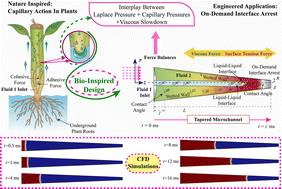
Furthermore, passive microfluidic pumps utilize natural forces such as capillary action,9–12 gravity-driven flow,13–15 vacuum suction,16–18 and osmosis19–21 to drive fluid movement. Inspired by energy-efficient natural systems such as plant vasculature, these methods eliminate the need for external actuators or complex control systems, enabling autonomous fluid transport. Passive pumping technologies are inherently portable, low-cost, and easily scalable, making them particularly suited for point-of-care diagnostics and applications in resource-limited settings, where simplicity and reliability are paramount.22 Consequently, passive microfluidic pumps have become integral to a wide array of applications, including biomedical diagnostics,23 drug delivery,11 chemical sensing,9 and integrated lab-on-a-chip platforms.22
Among the various autonomous fluid-transport mechanisms, capillary-driven motion stands out for its simplicity, reliability, and ease of integration into microfluidic systems.24 This mechanism relies on surface tension as the primary driving force, where adhesive forces between the liquid and the channel surface dominate over cohesive forces within the liquid, enabling spontaneous fluid movement. The classical Lucas–Washburn law provides the foundational description for capillary filling in uniform channels, predicting that the interface position grows as
and that the velocity decays as
due to increasing viscous resistance with filling length.25,26 This regime, validated in numerous experimental and theoretical studies, sets the benchmark for understanding capillary transport in confined geometries.
Before delving deeper into the specifics of autonomous fluid motion driven by surface tension, it is essential to appreciate the rich body of foundational and contemporary research that has shaped this area of study. Pioneering studies on surface tension-driven motion include the work of Brochard,27 which elucidated the role of surface-tension gradients in liquid spreading, and Chaudhury and Whitesides,28 who demonstrated spontaneous droplet motion on surfaces with wettability gradients. Sandre et al.29 further advanced this understanding by analyzing contact line dynamics in wetting-driven flows. Recent work has further highlighted how channel geometry, such as tapering, convergent/divergent sections, and non-circular cross-sections, can generate Laplace pressure gradients that enhance or modulate capillary action.30–34 These studies collectively emphasize that both channel shape and surface properties are critical handles for optimizing capillary-driven filling, particularly in microfluidic applications.
Autonomous fluid motion driven by surface tension typically occurs in two forms: wicking through porous substrates and filling within solid microchannels. In porous materials, wicking persists as long as the substrate remains hydrophilic to the liquid,21,35–40 whereas in solid-based systems, fluid motion is confined to narrow channels or capillaries, driven by surface tension gradients.41–43 This latter process, referred to as capillary filling, forms the basis of the functioning of capillary-driven passive micropumps discussed earlier. Extensive experimental and numerical research has explored capillary filling dynamics,12,24,44–49 with studies examining diverse channel geometries, such as square, triangular, convergent/divergent, and circular capillaries, to enhance flow performance.30 Notably, while forces like gravity may contribute, research demonstrates that channel geometry alone, through curvature-induced Laplace pressure differences, is often sufficient to drive fluid motion via surface tension.31–33 These investigations highlight the critical role of channel shape and surface properties in optimizing capillary-driven filling, particularly in microfluidic applications.
Capillary filling motions encounter notable challenges that impact efficiency and scalability despite their numerous advantages. One primary challenge lies in achieving consistent flow velocities and precise control over fluid dynamics, primarily due to the inherent variability of surface-tension forces.45,50 This is coupled to the emergence of multiple regimes during capillary filling, each characterized by distinct interfacial and flow behaviors.51 Consequently, both these effects lead to inaccuracies, particularly in applications requiring precise fluid handling and control. Researchers have investigated various strategies to regulate capillary-driven fluid filling to address these limitations. For instance, various studies have investigated the impact of different factors on capillary-driven filling, such as channel dimensions and configurations,49,52,53 patterned wall structures,54 contact-angle gradients,34,50 contact-line dynamics,45,55 and the application of pressure head at the inlet.56 Significantly, these studies highlight how these parameters impact the surface-tension force driving the fluid motion in the microchannels. Additionally, some works have also attempted to appropriately regulate the capillary-driven filling by refilling the inlet droplet57 or intermittently stopping and restarting the inlet flow.53
Despite ongoing efforts to achieve consistent flow velocities in capillary-driven microfluidic systems, research aimed at regulating capillary filling dynamics through a combination of geometric modifications and axially varying wall wettability, particularly using high-fidelity numerical models, remains relatively limited. The key limitations in capillary-driven microfluidics persist, including an emphasis on uniform wettability and simple geometries while neglecting the combined effects of tapering and spatially varying wettability for enhanced flow control. Such regulation involves not only maintaining steady flow velocities, but also enabling precise control over the flow, including the ability to increase, decrease, or halt it at specific locations within the microchannel. This capability facilitates on-demand capillary filling. Furthermore, the physics underlying the transition from classical Lucas–Washburn behavior to regimes governed by geometry- or wettability-induced pressure gradients remains incompletely understood.33,49,55,58
The present study introduces a unique approach that combines a tapered capillary design with axially varied wall contact angles to enhance and precisely control the filling of a fluid in a microchannel to address this gap. The proposed design features a microfluidic channel with a gradually narrowing width lined by solid walls, as illustrated in Fig. 1. Initially, the microchannel is filled with one fluid displaced by another less dense fluid. This geometry induces an additional pressure drop that drives the flow. At the same time, the axial variation in wall contact angles modifies the surface tension force, providing a robust mechanism to regulate capillary filling dynamics. One can establish a framework for achieving precise fluid control during the capillary filling of fluids inside capillaries by systematically tuning these parameters.
In this regard, a computational fluid dynamics (CFD) model is developed by coupling the continuity and Navier–Stokes equations with the level-set method. Our motivations for adopting this approach are to resolve the interface position (global dynamics) between the displacing and displaced fluids at various time intervals and the local physics, such as interface shape, viscous dissipation, pressure profiles, and transient forces.59,60 Moreover, CFD helps to overcome limitations of analytical models, such as the inability to capture transient interface deformation, pressure and force resolution, and the static contact-angle assumption. Initially, a uniform contact angle is applied along the microchannel walls to quantitatively demonstrate the benefits of the tapered geometry using axial velocity profiles. Subsequently, the impact of non-uniform contact-angle variations along the microchannel walls on capillary filling dynamics is investigated. Three types of contact-angle variations, namely stepwise, linear, and quadratic, are analyzed, focusing on scenarios where the contact angle progressively decreases. Finally, a gradually increasing contact angle is applied to halt fluid motion at a specific point within the capillary. This ability to stop fluid motion on demand at desired locations provides a powerful mechanism for achieving precise control over capillary filling flow. The findings of this work provide valuable insights into tailoring capillary filling dynamics in tapered capillaries. These insights pave the way for precise and on-demand fluid motion control in microfluidic systems. Such control enhances the performance of passive microfluidic pumps, enabling more efficient and reliable fluid transport. This work bridges classical capillarity with modern microfluidic engineering, offering a fresh perspective for scalable, energy-efficient fluid manipulation by unifying geometric and surface-chemical strategies.
The system is modeled using two control volumes, each containing a single-phase incompressible fluid, as depicted in Fig. 2. The interfacial tension force, acting at the boundary separating the two control volumes, is incorporated implicitly through the boundary conditions, thereby eliminating the need for its explicit inclusion in the governing equations. The motion of the interface is governed by a balance between the capillary pressure gradient, induced by surface tension, and the viscous resistance exerted by both fluids. These dynamics are described by the incompressible Navier–Stokes equations, which account for the interplay of these forces. The governing motion of the fluids is described by the incompressible N–S equations, given in compact vector form as
![]() | (v1) |
| ∇·u = 0, | (v2) |
Incorporating the above assumptions, the governing equations in radial and axial forms can thus be described as
![]() | (1) |
![]() | (2) |
The incompressible Navier–Stokes eqn (1)and (2) are simplified by assuming that the radial component of velocity is negligible, ur = 0. The additional term −ur/r2 in eqn (2) arises from the vector Laplacian in cylindrical coordinates. Furthermore, extensional dissipation is neglected, as characterized by ∂uz/∂z = 0, implying that the axial velocity component uz is uniform along the length of the microchannel. This assumption is validated by prior studies for tapered microchannels where the channel length substantially exceeds the average diameter and the taper angle is sufficiently small.48,49 After incorporating these assumptions at a specific time instant during the flow, eqn (2) reduces to the following expression:
![]() | (3) |
It is important to note here that under the applied assumptions, the left-hand side (LHS) terms in eqn (1)and (2) become zero, indicating that inertial effects are entirely neglected in deriving the reduced analytical model. This simplification is supported by the high Ohnesorge number, defined as
, where Ravg is the average radius of the microchannel. The small value of Ravg results in a large Oh, indicating the dominance of viscous forces over inertial and cohesive forces. This assumption is further corroborated by experimental studies on surface-tension-driven flows, which demonstrate that inertial effects are significant only during a transient initial phase following flow onset.48,49 Beyond this initial phase, viscous forces dominate the flow dynamics, and the system transitions into a viscous-dominated regime.
In the case of a fully developed flow, the axial velocity uz = U(1 − r2/R2), where U and R are the mean velocity of the fluid and the radius of the microchannel at a distance z from the inlet of the microchannel, respectively. Upon substituting the value of uz in eqn (3), the following expression is obtained:
![]() | (4) |
It is evident that all the terms in the above equation are functions of z. Therefore, upon integrating this equation across the two control volumes and then summing the results, we obtain the following expression:
![]() | (5) |
Assuming a constant flow rate at a given time and expressing U = Q(t)/A(z), where A(z) = πR2(z) is the local cross-sectional area, we can further simplify in the following manner to obtain the expression below:
![]() | (6) |
The interface velocity is related to the volumetric flow rate through the expression dl/dt = Q(t)/πR22. Since the flow is driven purely by the interfacial surface tension force, the boundary pressures at the inlet and outlet are set to zero, i.e., p0 = pL = 0. The pressure jump across the interface, governed by the Young–Laplace equation, is given by pl+ − pl− = 2γ
cos(θw − β)/R2. Substituting these relations into eqn (6) and eliminating Q(t), we arrive at the following expression for the rate of change of the interface position:
![]() | (7) |
The above analytical equation is verified in the asymptotic case for a straight microchannel with a uniform radius. In the case of uniform radius (R = R1 = R2 = R3) and a water–air system, β = 0 and μ2 = 0. Hence, eqn (7) reduces to
![]() | (8) |
Integrating eqn (8) yields
, which is the classical Lucas–Washburn equation for describing the surface-tension-driven movement of water in an air-filled microchannel.47 Therefore, the correctness of our analytical model is established.
On the other hand, for the tapered case, the microchannel radius changes along its length. At any given position within the tapered tube, the radius can be expressed as R = R1 − z
tan
β, where β = tan−1(L/(R1 − R3)). Substituting this expression into eqn (7) and performing the integration yields the final equation as follows:
![]() | (9) |
Eqn (9) describes the rate of change of the interface position or the velocity of the interface (uinterface = dl/dt). The velocity of the fluid at the inlet and the outlet can be obtained using the continuity equation, utilizing the equation for the velocity of the interface:
![]() | (10) |
The final eqn (10) is employed for estimating the velocity of the fluid at the inlet and the outlet of the microchannel from the interface velocity.
Here, the viscous dissipation losses may offer elevated resistances resulting in slowing down the fluid motion along the way, which necessitates quantifying them. Therefore, the viscous dissipation is also estimated to explain capillary filling dynamics in different scenarios. The local viscous dissipation per unit volume, denoted as Φ, is given by69
![]() | (11) |
The total viscous dissipation Ediss(t) at any time t is calculated by integrating Φ over the entire domain Ω, wherein the factor 2πr accounts for the axisymmetric volume element in cylindrical coordinates and the expression for the same is read as
![]() | (12) |
| ∇·u = 0, | (13) |
![]() | (14) |
![]() | (15) |
The LHS of eqn (15) represents the material derivative showing the advection of mass with the local velocity field. The right-hand side includes a regularization term with two components: (1) the diffusion term εls∇ϕ, which maintains a finite interface thickness for numerical stability, and (2) the nonlinear term −ϕ(1 − ϕ)∇ϕ/|∇ϕ|, which reinitializes ϕ to approximate a signed-distance function, preventing excessive diffusion or distortion of the interface during advection. Here, εls is a small parameter controlling the artificial interface thickness, while χ is known as the reinitialization parameter. Typically, the reinitialization parameter is set to match the maximum possible fluid velocity within the microchannel, while the interface width is approximately equal to the largest mesh element size.71,72 In this regard, the artificial interface thickness is taken as 0.7 μm, corresponding to the size of the largest mesh element. Similarly, we have adopted 100 cm s−1 as the reinitialization parameter, determined after conducting multiple test runs with extremely low contact angles (0 to 5 degrees). Based on the value of ϕ, the fluid properties are approximated using standard interpolation assumptions in the level-set method as:
| ρ = ρ1 + (ρ2 − ρ1)ϕ, | (16) |
| μ = μ1 + (μ2 − μ1)ϕ. | (17) |
The scalar function ϕ, obtained by solving the level-set transport equation (eqn (15)), is then used for tracking the fluid–fluid interface in the multiphase system and estimating the surface tension force Fst. This force, arising from interfacial tension at the boundary between two immiscible fluids, is modeled as:
| Fst = γκδ(ϕ)∇ϕ + γδ(ϕ)(nwall·nint − cos(θw))nint, | (18) |
The second term, γδ(ϕ)(nwall·nint − cos(θw))nint, incorporates wall wettability effects. In particular, it enforces the prescribed static contact angle θw at the fluid–solid boundary by penalizing deviations between the actual orientation of the interface (nwall·nint) and the desired orientation defined by (cos(θw)). The regularized delta function ensures that the interfacial force Fst acts only in the vicinity of the fluid–fluid interface, thereby preventing spurious force contributions in the bulk regions.
The interface normal is obtained from the level-set function ϕ as
![]() | (19) |
| δ(ϕ) = 6|ϕ(1 − ϕ)||∇ϕ|, | (20) |
The multiphase system is solved by coupling eqn (13)–(20) with the Navier–Stokes equations under the following conditions: zero pressure at both ends of the channel (p(r, z = 0) = p(r, z = L) = 0), no slip at the walls, and a quiescent initial velocity field. The phase-field variable is initialized such that fluid 1 (olive oil) enters from the inlet (ϕ = 1 at z = 0), while fluid 2 (water) fills the remainder of the channel (ϕ = 0 for z > 0). For uniform wettability, θw is constant, whereas for non-uniform wettability, it varies along z.
The primary fluid pair considered is olive oil (fluid 1) and water (fluid 2), with ρ1 = 920 kg m−3, μ1 = 0.083 Pa s, ρ2 = 1000 kg m−3, μ2 = 0.001 Pa s, and γ = 0.023 N m−1. Additional cases involving olive oil–seawater, sunflower oil–water, and sunflower oil–seawater are examined in the SI to assess the role of fluid properties on capillary filling dynamics.
The coupled partial differential equations (PDEs) (13)–(20) are solved in the commercial CFD software COMSOL Multiphysics 5.3a. The software employs the finite-element method to solve the non-linear PDEs. The PDEs are discretized using the Galerkin least-squares (GLS) method, resulting in a set of algebraic equations. The velocity and pressure fields were discretized using Taylor–Hood elements, with second-order (P2) interpolation for velocity and first-order (P1) interpolation for pressure. For the phase-field variable, first-order (P1) elements were employed to capture the interface evolution. Within COMSOL, the laminar-flow and level-set modules are specifically utilized to model and simulate the problem. In order to track the fluid–fluid interface, the position is determined at each time step by identifying the axial coordinate x and corresponding y-coordinate along the central axis of the microchannel where the phase-field variable ϕ = 0.5. The interface velocity is then extracted directly from COMSOL's velocity-field data at this (x, y)-coordinate pair, using a custom MATLAB script integrated with the COMSOL model via the COMSOL LiveLink interface. A parallel direct sparse solver (PARDISO) is employed for transient numerical computations. All the initial and boundary conditions discussed above are incorporated into the model. The maximum relative error between successive iterations is maintained at 0.005 to ensure solution convergence. The computational domain is discretized into 12
860 grid elements, determined through a grid independence study. Additional details of this study, including the mesh resolution and the distribution of grid element sizes, are provided in the SI. An adaptive time-stepping method, with a maximum step size of 10−2 ms, is used for the transient solver. The time-step selection method and convergence tolerance are discussed in the SI. The temporal discretization is performed using the second-order backward difference formula (BDF) for enhanced accuracy.
![]() | ||
| Fig. 3 Comparison of capillary filling dynamics from numerical, analytical, and experimental results. Plots (a)–(c) present the deviation of the numerical solutions for uinterface, uinlet, and uoutlet from their corresponding analytical predictions given in eqn (9) and (10). The values of R1, R3, L, and θw are considered as 7.5 μm, 2.5 μm, 250 μm, and 45°, respectively. Plot (d) shows the deviation of the interface position l from experimental data reported in ref. 73. The values of R1, R3, L, and θw are considered as 0.078 μm, 0.078 μm, 100 μm, and 0°, respectively. | ||
Fig. 5 plots the axial pressure variation along the central longitudinal axis of the microchannel at different time intervals during the filling process. A distinct pressure dip is observed at the interface location, followed by a pressure increase across the interface. This dip is responsible for driving the forward motion of the fluid within the microchannel, countering the opposing viscous forces. As time progresses, the position of the pressure dip advances, reflecting the movement of the fluid interface. The advantages of tapering are quite evident in this plot, as the magnitude of the negative pressure increases with the progression of the interface. This increasingly pronounced dip is a direct consequence of the rising capillary pressure gradient as the microchannel radius decreases (Δp(z) ∝ 1/R(z)). This amplified pressure dip effectively counteracts the growing viscous dissipation. This case is also compared for the further examination of a straight microchannel with a constant radius, and the results are provided in the SI, highlighting why tapered microchannels achieve superior performance. Fig. 6(a) and (b) plot the temporal variation of uinterface and l for different wall contact angles during the filling process. It is evident that the interface moves more slowly as the contact angle becomes less acute and moves more rapidly for sharper angles. This behavior arises from the Fst, whose horizontal component diminishes with increasing contact angle, despite the overall magnitude of the force remaining unchanged.
A common trend observed across all cases is the reduction in initial velocity due to viscous dissipation as the interface progresses through the microchannel, eventually leading to saturation in fluid movement. In the following section, a varying contact angle, increasing along the microchannel length, is introduced to mitigate the effects of viscous dissipation.
![]() | (21) |
The range of contact angle variation is carefully selected to ensure that the capillary walls remain in the wetting regime throughout the microchannel. The upper limit of 75° and the lower limit of 15° are chosen to maintain sufficient wettability for effective capillary-driven flow while avoiding non-wetting conditions that could hinder fluid motion.
Fig. 7(a) presents the ϕ contours at different time intervals, while Fig. 7(b) illustrates the axial variation of the wall contact angle within the microchannel. It is important to note that zoomed-in views of the contact line are not shown in this and subsequent figures, as the interface thickness remains constant, as pre-defined in the numerical model formulation. Only the shape of the meniscus changes in response to variations in wall wettability. A key observation in this case is the increasing concavity of the interface meniscus as it advances along the microchannel. This is a direct consequence of the stepwise reduction in the contact angle, which progressively enhances the wettability of the microchannel walls and promotes more rapid fluid displacement. Unlike the uniform-contact-angle case, where viscous dissipation causes significant slowing of the interface motion near the outlet, the stepwise variation in wettability sustains interface movement along the microchannel. This is achieved by counteracting the viscous resistance through successive increases in capillary pressure gradient associated with each stepwise decrease in contact angle. The combination of geometric tapering and enhanced wettability yields a progressively increasing capillary pressure gradient, which maintains forward interface motion. Further, in Fig. 7(c)–(e), the temporal evolution of uinterface, uinlet, uoutlet, l, and Ediss are plotted to quantitatively describe the interface motion. The interface velocity exhibits step-like increases corresponding to each stepwise decrease in contact angle, reflecting the five distinct steps in the contact angle variation. Also, the interface position follows a temporal scaling of ∝ t1.05, indicating an enhanced filling rate in this configuration. This scaling behavior reinforces the role of stepwise wettability combined with geometric tapering in accelerating interface motion beyond the classical capillary dynamics observed in uniformly wetting systems. The total viscous dissipation shows a marked increase over time, closely following the stepwise acceleration pattern of the interface. Each stepwise drop in contact angle raises the capillary pressure, momentarily boosting the driving force and increasing shear rates, which amplify losses due to viscous resistance.
Fig. 7(f) shows the axial pressure distribution along the central longitudinal axis of the microchannel at various time intervals. Similar to the case of a uniform contact angle, a distinct pressure drop is observed at the interface, followed by a subsequent pressure rise across it. However, in this scenario, the surface-tension force increases due to a simultaneous reduction in radius and contact angle, leading to a more pronounced pressure drop compared to the case of a uniform contact angle. Additionally, a more negative pressure value is observed as the interface progresses towards the outlet of the microchannel, highlighting the advantages of employing a non-uniform, decreasing contact angle variation along with a tapered geometry. This analysis is extended in the next section, where a linear variation in the contact angle is applied to explore its impact on capillary filling dynamics.
| θw(z) = −0.3z + 75, | (22) |
Fig. 8(a) presents the ϕ contours at different time intervals, while Fig. 8(b) shows the axial variation of the wall contact angle in the microchannel. Similar to the previous case of stepwise variation, the interface meniscus becomes increasingly concave as it progresses through the microchannel, a result of the gradual enhancement in the wetting nature of the walls. Contrary to the uniform contact angle case, where the interface motion slows down near the outlet, the linear variation in wettability ensures sustained interface progression along the microchannel. The gradual reduction in contact angle results in a continuously increasing capillary pressure gradient, which effectively balances the growing viscous resistance imposed by the narrowing geometry. The linear variation in the contact angle offers a notable advantage by ensuring that the interface advances almost equal distances over equal time intervals, as demonstrated by the contour plots. Additionally, a slightly higher velocity is observed in the microchannel compared to the previous case. This demonstrates the effectiveness of the linear variation in maintaining more consistent and controlled capillary filling dynamics, particularly when compared to the stepwise variation. Fig. 8(c)–(e) present the temporal evolution of uinterface, uinlet, uoutlet, l, and Ediss providing a quantitative analysis of the interface motion within the microchannel. Notably, the stepwise jumps in the interface velocity plot, as observed in the previous case, are smoothed out under the linear variation in contact angle, resulting in a nearly constant velocity throughout the capillary, counteracting the effects of viscous dissipation. Furthermore, the interface position exhibits a temporal scaling of ∝ t0.93, approaching a near-linear trend with a slope close to π/4, which is indicative of uniform filling. This is a marked improvement over the stepwise case, promoting steadier interface advancement and reducing fluctuations in filling rate. Moreover, similar to the previous cases, the total viscous dissipation increases almost linearly as the contact angle linearly drops, increasing capillary pressure and also viscous losses as the interface progresses in the microchannel.
Fig. 8(f) plots the axial pressure distribution along the central longitudinal axis of the microchannel at various time intervals. As observed in the case of non-uniform stepwise contact-angle variation, the magnitude of the most negative pressure intensifies as the interface advances. In this case, slightly more negative pressure values are recorded over time as the interface approaches the microchannel outlet. This behavior is attributed to the linear contact-angle variation, which leads to a continuous increase in surface tension force in contrast to the stepwise increments observed previously, effectively mitigating viscous dissipation. The following section introduces a quadratic variation in the contact angle, and its impact on the interface dynamics is analyzed in detail.
![]() | (23) |
Fig. 9(a) presents the ϕ contours at different time intervals, while Fig. 9(b) shows the axial variation of the wall contact angle in the microchannel. A notable increase in fluid velocity is observed within the microchannel, driven by the quadratic variation of the contact angle along the wall. This variation enables the interface to traverse from the inlet to the outlet in 20 ms. In contrast to the linear wettability case, where the capillary pressure gradient increased uniformly and maintained nearly constant interface velocity, the quadratic variation introduces a non-monotonic profile. Initially, the increasing wettability enhances the capillary pressure gradient and supports interface advancement. However, as the interface progresses toward the outlet, the contact angle begins to increase again, as shown in Fig. 9(b), leading to a reduction in the capillary driving force. This results in a slight decline in interface velocity, as the growing viscous resistance is no longer fully balanced by the surface tension force. The deceleration observed toward the end of the channel reflects this competing influence between viscous dissipation and the spatially varying capillary pressure gradient. This behavior is quantitatively shown in Fig. 9(c)–(e), which plot the temporal evolution of uinterface, uinlet, uoutlet, l, and Ediss. The interface notably moves faster compared to the two previous cases of non-uniform wettability, where linear and stepwise variations in the contact angle were studied. Moreover, the interface position exhibits a temporal scaling of ∝ t0.84, reflecting a parabolic trend that lies between the linear and stepwise wettability cases. This intermediate scaling behavior indicates a more balanced interplay between increasing viscous resistance and the spatially varying capillary pressure gradient. The total viscous dissipation closely follows the velocity profile. It increases as capillary forces accelerate the flow, reflecting greater work done against viscous resistance, and decreases as the interface slows down.
Fig. 9(f) shows the axial pressure distribution along the central longitudinal axis of the microchannel at various time intervals. A similar trend was observed in previous cases. Still, the magnitude of the negative pressure at the interface position increases more rapidly with time, reaching higher values at a faster rate. This is due to the quadratic variation in the contact angle, which causes a faster rise in surface-tension force compared to other variations, effectively counteracting viscous dissipation. Therefore, based on specific requirements, the variation in the contact angle can be tailored to achieve the desired velocity of the autonomous capillary filling motion inside the microchannel.
| θw(z) = 0.3z + 60, | (24) |
Fig. 10(a) presents the ϕ contours at different time intervals, while Fig. 10(b) shows the axial variation of the wall contact angle in the microchannel. A noticeable deceleration of the interface occurs as it progresses towards the midpoint of the microchannel, driven by viscous dissipation and the rising contact angle. This deceleration corresponds to the contact angle approaching 90°, transitioning the wall to a non-wetting state. Although the overall magnitude of Fst increases along the microchannel length due to the decreasing capillary radius, its horizontal component diminishes with the increasing contact angle. Consequently, the horizontal motion of the fluid slows down, eventually halting when the horizontal component of Fst reduces to zero as the contact angle nears a right angle, exacerbated by viscous dissipation. This phenomenon is quantitatively presented in Fig. 10(c)–(e), which plot the temporal evolution of uinterface, uinlet, uoutlet, l, and Ediss. The velocities of the inlet, interface, and outlet decrease steadily, nearing zero as the interface reaches the midpoint of the microchannel. Similarly, the interface position follows a parabolic trend (∝ 0.30), plateauing as it approaches the midsection. The total viscous dissipation also diminishes over time, ultimately vanishing as the interface velocity approaches zero. The deceleration of fluid within the microchannel is quantitatively illustrated in the pressure variation plot along the central longitudinal axis (Fig. 10(f)). A pressure dip is observed at the interface position, consistent with previous cases. Initially, the magnitude of this negative pressure increases up to 10 ms due to the tapered capillary geometry, which enhances Fst. However, as the interface advances after 10 ms, the magnitude of the pressure dip diminishes, influenced by the increasing contact angle and viscous dissipation, which outweigh the effect of the decreasing capillary radius caused by tapering. These results demonstrate that a reverse linear variation in the wall contact angle effectively decelerates fluid motion within the microchannel, providing a robust mechanism to regulate and control capillary filling dynamics.
Footnote |
| † These authors contributed equally to this work. |
| This journal is © The Royal Society of Chemistry 2025 |