DOI:
10.1039/D5QO01336D
(Research Article)
Org. Chem. Front., 2025,
12, 6394-6400
Pd-catalysed flow Tsuji–Trost allylation of phenols: continuous-flow, extraction-free synthesis of esmolol via allylation, epoxidation, and aminolysis
Received
21st September 2025
, Accepted 20th October 2025
First published on 21st October 2025
Abstract
We report a method for the continuous flow Tsuji–Trost allylation of phenols using a heterogeneous Pd/PNP-PS catalyst and allyl methyl carbonate that does not require the use of aryl halides or bases. This base-free protocol enables the efficient conversion of various phenols into allyl aryl ethers without post-reaction purification. The resulting reaction solution then directly undergoes a titanium-silicate-1-zeolite-catalysed epoxidation step using H2O2, followed by Nb2O5-catalysed aminolysis with isopropylamine to afford 3-amino-1,3-propanediol derivatives. The integration of these three catalytic steps under continuous-flow conditions enables the synthesis of esmolol, a cardioselective β1-adrenergic receptor antagonist, in high yield and purity without an extraction step. Further, the final crystallization of esmolol hydrochloride is achieved without chromatographic purification. The overall process is a sustainable and scalable strategy for the synthesis of fine chemicals and pharmaceuticals, highlighting the potential of continuous-flow methodologies in modern chemical manufacturing.
Introduction
Allyl aryl ethers are important synthetic intermediates widely used in the manufacture of pharmaceuticals, fine chemicals, and related compounds.1–6 Traditionally, these compounds are synthesised via nucleophilic substitution between phenols and allyl halides in the presence of bases.7,8 However, such methods often require labor-intensive extraction for product purification, increasing operational costs, energy consumption, waste generation, and environmental burden. Therefore, a more sustainable alternative, the Tsuji–Trost allylation employing Pd catalysts and allyl sources, such as allyl acetate or allyl methyl carbonate (AMC), has drawn significant attention.9–18 Notably, AMC has a cleaner reaction profile, generating only CO2 and MeOH as byproducts, eliminating the need for extraction-based purification. Despite these advantages, homogeneous Pd catalysts require additional separation steps to remove the dissolved metal species, complicating the process.19–23 To overcome this limitation, heterogeneous Pd-catalysed systems have been developed to enable facile catalyst recovery via simple filtration.24–26 For example, Baba and coworkers reported heterogeneous Pd catalysts bearing diamine or bisphosphine ligands for Tsuji–Trost allylation using AMC.27–29 These systems have high catalytic activity and recyclability and achieve high yields over multiple cycles. Nevertheless, their activation requires excess potassium carbonate and AMC, followed by aqueous extraction, which partially offsets the benefits of the heterogeneous reaction. Therefore, the development of a base-free Tsuji–Trost allylation protocol using heterogeneous Pd catalysts and stoichiometric amounts of AMC is highly desirable.
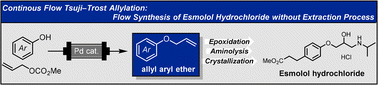
Continuous-flow methodologies, particularly those employing packed-bed reactors with heterogeneous catalysts, offer advantages in terms of reliability, energy and cost efficiency, safety, and scalability.30–34 Although sequential flow synthesis incorporating inline extraction is feasible,35–48 a fully integrated multi-step flow process that eliminates extraction steps is preferable to minimise operational complexity and resource consumption. The Tsuji–Trost reaction under flow conditions using palladium catalysts has been previously reported, however, these systems typically exhibit only moderate catalytic activity or suffer from gradual catalyst deactivation.49–51 We hypothesised that a continuous-flow Tsuji–Trost allylation system using a packed column of heterogeneous Pd catalyst could enable the downstream transformation of allyl aryl ethers without intermediate extraction. Specifically, this strategy could facilitate the synthesis of 3-amino-1,3-propanediol derivatives, key structural motifs in β-blocker pharmaceuticals, via subsequent epoxidation and aminolysis steps.52–56 If the flow allylation can proceed without the use of allyl halides or bases, the fully continuous synthesis of these derivatives would become feasible (Fig. 1). Therefore, we investigated the development of the efficient heterogeneous Pd-catalysed continuous-flow Tsuji–Trost allylation of phenols using AMC.
 |
| | Fig. 1 Extraction-free continuous-flow Tsuji–Trost allylation, epoxidation, and aminolysis for 3-amino-1,3-propanediol derivatives. | |
Results and discussion
Optimization of the continuous-flow Tsuji–Trost allylation of phenols using AMC
To optimise the reaction conditions, we started with 4-(2-methoxyethyl)phenol (1a) as a model substrate (Table 1). A solution of 1a (0.25 M) and AMC (2, 1.1 equiv.) in MeCN was passed through a stainless-steel column (inner diameter (ID): 10 mm; length (L): 10 cm) packed with Pd catalyst and Celite at 80 °C, which afforded the allylated product 3a. Details of the experimental setup and data are provided in the Supplementary Information (SI). Among the screened catalysts, Pd/C and Pd/Al2O3 showed no activity (entries 1 and 2), and Pd/DA-Et2N-SiO2
28 similarly failed to promote the reaction (entry 3). A polystyrene-supported phosphine-type Pd catalyst (Pd/PPh3-PS)57 showed moderate initial activity but underwent gradual deactivation, resulting in only 12% yield of 3a after 12 h (entry 4). In contrast, a polystyrene (PS)-supported PNP pincer-type Pd catalyst (Pd/PNP-PS)58 showed excellent performance, affording 3a in 81% yield while maintaining catalytic activity (entry 5). Screening revealed MeCN to be the most effective solvent; alternatives such as 4-methyl tetrahydropyran (4-Me THP), butyl acetate (AcOnBu), and toluene led to significantly reduced conversions and yields (entries 6–8). The evaluation of column diluents indicated that Celite and polytetrafluoroethylene (PTFE) powder were suitable (entries 5 and 9), whereas silica gel negatively impacted the reaction efficiency (entry 10). Furthermore, increasing the catalyst loading resulted in improved conversion and product yield (entry 11).
Table 1 Optimisation of Pd-catalysed allylation of phenols under continuous-flow conditions
|

|
| Entry |
Pd cat. |
Solvent |
Diluent |
Conversiona (%) |
Yield of 3aa (%) |
|
Conversion and yield are based on the values achieved after 12 h of flow reaction.
[Pd] = 0.162 mmol.
|
| 1 |
Pd/C |
MeCN |
Celite |
0 |
0 |
| 2 |
Pd/Al2O3 |
MeCN |
Celite |
0 |
0 |
| 3 |
Pd/DA-Et2N-SiO2 |
MeCN |
Celite |
2 |
2 |
| 4 |
Pd/PPh3-PS |
MeCN |
Celite |
12 |
12 |
| 5 |
Pd/PNP-PS |
MeCN |
Celite |
84 |
81 |
| 6 |
Pd/PNP-PS |
4-Me THP |
Celite |
20 |
13 |
| 7 |
Pd/PNP-PS |
AcOnBu |
Celite |
35 |
29 |
| 8 |
Pd/PNP-PS |
toluene |
Celite |
34 |
27 |
| 9 |
Pd/PNP-PS |
MeCN |
PTFE powder |
83 |
82 |
| 10 |
Pd/PNP-PS |
MeCN |
Silica-gel |
32 |
30 |
| 11b |
Pd/PNP-PS |
MeCN |
Celite |
99 |
95 |
Substrate scope for flow Tsuji–Trost allylation
Next, using the optimised flow conditions and Pd/PNP-PS as the catalyst, we investigated the substrate scope (Table 2). Phenols bearing alkyl substituents at the para, meta, and ortho positions (1a–1e) were efficiently converted to the corresponding allyl aryl ethers (3a–3e) in good to excellent yields. Electron-rich phenols containing methoxy (1f), acetamide (1g), and dimethylamino (1h) functionalities, as well as aryl halide-substituted phenols (1i), also underwent smooth allylation to afford products 3f–3i. In contrast, phenols bearing electron-withdrawing groups (1j and 1k) provided moderate yields, indicating reduced reactivity under the current conditions. Notably, a tyrosine-derived substrate (1l) was successfully transformed into the corresponding allyl ether (3l), demonstrating applicability to amino-acid derivatives. In contrast, benzyl alcohol (1m) remained unreactive, highlighting the selectivity of the system toward phenolic hydroxyl groups. The selective allylation of the phenolic moiety was achieved in 4-hydroxybenzyl alcohol (1n), further confirming the chemoselectivity of the developed flow protocol. However, some limitations were observed. Phenols containing carboxylic acid functionalities (1o and 1p), as well as aliphatic alcohols, such as 1-octanol (1q), were recovered unchanged after the flow reaction, indicating poor compatibility with these substrates. Additionally, 2-naphthol (1r) failed to yield the desired allylated product because of competing side reactions, including Claisen rearrangement.
Table 2 Substrate scope for the continuous-flow allylation catalysed by Pd/PNP-PSa
|
Yield range determined by 1H NMR. Isolated yields shown in parentheses.
0.1 M of substrate (1) solution used.
|
|
Continuous-flow synthesis of esmolol hydrochloride
Esmolol hydrochloride is a cardioselective β1-adrenergic receptor antagonist widely employed for the treatment of acute tachyarrhythmia and perioperative hypertension.59–61 Its rapid onset and short elimination half-life (approximately 9 min) are attributed to its efficient hydrolysis by esterases in red blood cells, providing high clinical safety and controllability. Racemic esmolol hydrochloride is used as the active pharmaceutical ingredient in Brevibloc®. Consequently, the development of an efficient and scalable synthetic method for esmolol hydrochloride is of significant interest. Therefore, we pursued a continuous-flow synthesis of esmolol hydrochloride based on the strategy for constructing 3-amino-1,3-propanediol derivatives, as outlined in the Introduction, integrating flow allylation, epoxidation, and aminolysis steps. Conventionally, allylation reactions utilise allyl halides and require post-reaction extraction. In contrast, our developed allylation method uses AMC as the allyl source, generating only CO2 and MeOH as byproducts, eliminating the need for extraction. To establish a seamless flow process, we first connected the allylation and epoxidation steps. The epoxidation was performed using titanium-silicate-1 (TS-1)-zeolite-catalysed flow reaction with H2O2 as the oxidant.62 Although previous reports employed a mixture of MeCN and MeOH for epoxidation, our allylation step uses MeCN alone. To enable the direct integration of the two steps without intermediate extraction or solvent exchange, H2O2 was dissolved in MeOH and introduced directly to the flow system. Under these conditions, the flow allylation of 3-(4-hydroxyphenyl)propionic acid methyl ester (1e) was carried out using the Pd/PNP-PS catalyst, generating a solution of allylated product 3e in MeCN (Fig. 2). This solution was then combined with a MeOH solution of H2O2 (2 equiv.) and passed through a column packed with TS-1 to afford epoxide intermediate 4e in 89–92% yield, denoted solution A.
 |
| | Fig. 2 Connection experiment for flow allylation and epoxidation. | |
Next, we investigated the aminolysis of epoxide intermediate 4e under batch conditions (Table 3). A mixture of solution A (containing 4e) and isopropylamine (1.1 equiv.) was stirred at 70 °C for 6 h, affording esmolol (5e) (yields determined by gas chromatography). For the continuous-flow aminolysis of solution A, the choice of solvent was critical because of the need to dissolve isopropylamine. Toluene (entry 1), 4-Me THP (entry 2), and AcOEt (entry 3) were unsuitable, but MeCN improved the yield to 47% (entry 4). Increasing the amount of isopropylamine to 4 equiv. further enhanced the reaction efficiency, ultimately achieving 97% yield after 6 h (entry 7) and 60% yield after 4 h (entry 8). To accelerate the aminolysis step, various additives were evaluated. Silica gel showed no effect (entry 9), whereas sulfated zirconia (SO3H–ZrO2) improved the yield to 68% (entry 10). Notably, Nb2O5 provided the highest yield of 75% under comparable conditions (entry 11). Based on these findings, we optimised the continuous-flow aminolysis of solution A using a reaction column packed with Nb2O5 and isopropylamine to synthesise esmolol (5e). Detailed reaction parameters and results are provided in the SI.
Table 3 Optimization for aminolysis of 4e under batch conditionsa
|

|
| Entry |
Additive |
Solvent |
Amine equiv. |
Time (h) |
Yield of 5e (%) |
|
Yields determined by gas chromatography.
|
| 1 |
None |
Toluene |
1.1 |
6 |
43 |
| 2 |
None |
4-Me THP |
1.1 |
6 |
41 |
| 3 |
None |
AcOEt |
1.1 |
6 |
38 |
| 4 |
None |
MeCN |
1.1 |
6 |
47 |
| 5 |
None |
MeCN |
2.0 |
6 |
73 |
| 6 |
None |
MeCN |
3.0 |
6 |
89 |
| 7 |
None |
MeCN |
4.0 |
6 |
97 |
| 8 |
None |
MeCN |
4.0 |
4 |
60 |
| 9 |
Silica-gel |
MeCN |
4.0 |
4 |
60 |
| 10 |
SO3H-ZrO2 |
MeCN |
4.0 |
4 |
68 |
| 11 |
Nb2O5 |
MeCN |
4.0 |
4 |
75 |
Finally, we performed the integrated continuous-flow synthesis of 5e by sequentially connecting the following steps: Tsuji–Trost allylation catalysed by Pd/PNP-PS, epoxidation catalysed by TS-1, and aminolysis catalysed by Nb2O5. The results of the integrated flow reactions at small-scale using a column (ID: 10 mm, L: 10 cm) are provided in the SI. In this study, we describe scale-up experiments for the integrated flow process using a larger column (ID: 37 mm, L: 30 cm), corresponding to an approximately 40-fold scaleup (Fig. 3). Compound 1e was converted to allyl ether 3evia flow allylation, followed by epoxidation to afford epoxide 4e. The resulting solution of 4e in MeCN/MeOH was introduced into a reaction column packed with Nb2O5, activated carbon (AC), and Celite (35.8, 35.8, and 88.6 g, respectively) at 110 °C, along with a MeCN solution of isopropylamine (4 equiv.). AC and Celite were added to prevent the leaching of Nb2O5 from the column. The desired product 5e was obtained in 85–91% yield over 3.0 h as a continuous solution output. Subsequently, we investigated the purification of esmolol hydrochloride (5e·HCl) via salt formation. Because of the high solubility of 5e·HCl in MeOH and MeCN, direct crystallization from the reaction solution was not feasible. Therefore, the solution was first concentrated, and crystallization was carried out using 4 M HCl in cyclopentyl methyl ether (CPME) mixed with AcOnBu and 2-propanol in a volumetric ratio of 5
:
5
:
1. The resulting precipitate was filtered and washed with CPME to afford 5e·HCl in 69% isolated yield with 98.2% purity, as determined by HPLC. Energy-dispersive X-ray spectroscopy analysis of the obtained crystals revealed that the residual Pd content was below the detection limit of 0.1 ppm. Thus, these findings indicate the successful synthesis of esmolol hydrochloride via a continuous-flow process involving allylation, epoxidation, and aminolysis, followed by batch crystallization without the need for intermediate extraction steps.
 |
| | Fig. 3 Continuous-flow process for 5e and purification of 5e·HCl by crystallisation. | |
Conclusions
In conclusion, we have developed a Tsuji–Trost allylation protocol for phenols using a heterogeneous Pd catalyst and AMC, eliminating the need for allyl-halide-based reagents and bases. This approach enables the efficient conversion of a wide range of phenols into their corresponding allyl ethers without requiring extraction-based purification. Further, the resulting reaction solution can be directly transferred to a TS-1-catalysed epoxidation step using H2O2, followed by Nb2O5-catalysed aminolysis to afford 3-amino-1,3-propanediol derivatives. Through this integrated continuous-flow process, comprising allylation, epoxidation, and aminolysis, we synthesised esmolol hydrochloride, a cardioselective β1-adrenergic receptor antagonist, in high yield and purity. We believe that this modular and extraction-free continuous synthetic strategy is a valuable platform for the streamlined production of fine chemicals and pharmaceuticals, contributing to the advancement of sustainable and scalable flow chemistries.
Conflicts of interest
There are no conflicts to declare.
Data availability
The data supporting this article have been included as part of the supplementary information (SI): experimental procedure, characterization data, optimizations, 1H and 13C spectra. Supplementary information is available. See DOI: https://doi.org/10.1039/d5qo01336d.
Acknowledgements
This study was partially supported by the New Energy and Industrial Technology Development Organization (JPNP19004).
References
- X. Han and D. W. Armstrong, Using Geminal Dicationic Ionic Liquids as Solvents for High-Temperature Organic Reactions, Org. Lett., 2005, 7, 4205–4208 CrossRef CAS PubMed.
- K. Wang, C. J. Bungard and S. G. Nelson, Stereoselective Olefin Isomerization Leading to Asymmetric Quaternary Carbon Construction, Org. Lett., 2007, 9, 2325–2328 CrossRef CAS PubMed.
- J. P. Reid, C. A. McAdam, A. J. S. Johnston, M. N. Grayson, J. M. Goodman and M. J. Cook, Base-Mediated Cascade Rearrangements of Aryl-Substituted Diallyl Ethers, J. Org. Chem., 2015, 80, 1472–1498 CrossRef CAS PubMed.
- B. M. Trost and D. L. Van Vranken, Asymmetric Transition Metal-Catalyzed Allylic Alkylations, Chem. Rev., 1996, 96, 395–422 CrossRef CAS PubMed.
- S. G. Nelson and K. Wang, Asymmetric Claisen Rearrangements Enabled by Catalytic Asymmetric Di(allyl) Ether Synthesis, J. Am. Chem. Soc., 2006, 128, 4232–4233 CrossRef CAS PubMed.
- D. R. Vutukuri, P. Bharathi, Z. Yu, K. Rajasekaran, M.-H. Tran and S. Thayumanavan, A Mild Deprotection Strategy for Allyl-Protecting Groups and Its Implications in Sequence Specific Dendrimer Synthesis, J. Org. Chem., 2003, 68, 1146–1149 CrossRef CAS PubMed.
- D. W. Kim, C. E. Song and D. Y. Chi, Significantly Enhanced Reactivities of the Nucleophilic Substitution Reactions in Ionic Liquid, J. Org. Chem., 2003, 68, 4281–4285 CrossRef CAS PubMed.
- S. Mandal, S. Mandal, S. K. Ghosh, P. Sar, A. Ghosh, R. Saha and B. Saha, A review on the advancement of ether synthesis from organic solvent to water, RSC Adv., 2016, 6, 69605–69614 RSC.
- B. R. Vaddula, A. Saha, R. S. Varma and J. Leazer, Tsuji–Trost N-Allylation with Allylic Acetates by Using a Cellulose–Palladium Catalyst, Eur. J. Org. Chem., 2012, 6707–6709 CrossRef CAS.
- N. R. Lee, F. A. Moghadam, F. C. Braga, D. J. Lippincott, B. Zhu, F. Gallou and B. H. Lipshutz, Sustainable Palladium-Catalyzed Tsuji–Trost Reactions Enabled by Aqueous Micellar Catalysis, Org. Lett., 2020, 22, 4949–4954 CrossRef CAS PubMed.
- A. Saha, J. Leazer and R. S. Varma, O-Allylation of phenols with allylic acetates in aqueous media using a magnetically separable catalytic system, Green Chem., 2012, 14, 67–71 RSC.
- M. Billamboz, F. Mangin, N. Drillaud, C. Chevrin-Villette, E. Banaszak-Léonard and C. Len, Micellar Catalysis Using a Photochromic Surfactant: Application to the Pd-Catalyzed Tsuji–Trost Reaction in Water, J. Org. Chem., 2014, 79, 493–500 CrossRef CAS PubMed.
- A. Llevot, B. Monney, A. Sehlinger, S. Behrens and M. A. R. Meier, Highly efficient Tsuji–Trost allylation in water catalyzed by Pd-nanoparticles, Chem. Commun., 2017, 53, 5175–5178 RSC.
- M. Yoshida, T. Terumine, E. Masaki and S. Hara, Direct Asymmetric α-Allylation of α-Branched Aldehydes by Two Catalytic Systems with an Achiral Pd Complex and a Chiral Primary α-Amino Acid, J. Org. Chem., 2013, 78, 10853–10859 CrossRef CAS PubMed.
- M. Kitamura, K. Miyata, T. Seki, N. Vatmurge and S. Tanaka, CpRu-catalyzed asymmetric dehydrative allylation, Pure Appl. Chem., 2013, 85, 1121–1132 CrossRef CAS.
- M. Faltracco, S. Cotogno, C. M. L. V. Velde and E. Ruijter, Catalytic Asymmetric Synthesis of Diketopiperazines by Intramolecular Tsuji–Trost Allylation, J. Org. Chem., 2019, 84, 12058–12070 CrossRef CAS PubMed.
- R. A. Fernandes and J. L. Nallasivam, Catalytic allylic functionalization via π-allyl palladium chemistry, Org. Biomol. Chem., 2019, 17, 8647–8672 RSC.
- A. T. Dickschat, F. Behrends, S. Surmiak, M. Weiß, H. Eckert and A. Studer, Bifunctional mesoporous silica nanoparticles as cooperative catalysts for the Tsuji–Trost reaction – tuning the reactivity of silica nanoparticles, Chem. Commun., 2013, 49, 2195 RSC.
- F. B. Biswas, M. Endo, S. Rahman, I. M. M. Rahman, K. Nakakubo, A. S. Mashio, T. Taniguchi, T. Nishimura, K. Maeda and H. Hasegawa, Recovery of rhodium from glacial acetic acid manufacturing effluent using cellulose-based sorbent, Sep. Purif. Technol., 2024, 328, 124995 CrossRef CAS.
- C. J. Pink, H. Wong, F. C. Ferreira and A. G. Livingston, Organic Solvent Nanofiltration and Adsorbents; A Hybrid Approach to Achieve Ultra Low Palladium Contamination of Post Coupling Reaction Products, Org. Process Res. Dev., 2008, 12, 589–595 CrossRef CAS.
- H. Miyamoto, C. Sakumoto, E. Takekoshi, Y. Maeda, N. Hiramoto, T. Itoh and Y. Kato, Effective Method To Remove Metal Elements from Pharmaceutical Intermediates with Polychelated Resin Scavenger, Org. Process Res. Dev., 2015, 19, 1054–1061 CrossRef CAS.
- E. J. Flahive, B. L. Ewanicki, N. W. Sach, S. A. O'Neill-Slawecki, N. S. Stankovic, S. Yu, S. M. Guinness and J. Dunn, Development of an Effective Palladium Removal Process for VEGF Oncology Candidate AG13736 and a Simple, Efficient Screening Technique for Scavenger Reagent Identification, Org. Process Res. Dev., 2008, 12, 637–645 CrossRef CAS.
- T. Yamada, T. Matsuo, A. Ogawa, T. Ichikawa, Y. Kobayashi, H. Masuda, R. Miyamoto, H. Bai, K. Meguro, Y. Sawama, Y. Monguchi and H. Sajiki, Application of Thiol-Modified Dual-Pore Silica Beads as a Practical Scavenger of Leached Palladium Catalyst in C–C Coupling Reactions, Org. Process Res. Dev., 2019, 23, 462–469 CrossRef CAS.
- R. J. White, R. Luque, V. L. Budarin, J. H. Clark and D. J. Macquarrie, Supported metal nanoparticles on porous materials. Methods and applications, Chem. Soc. Rev., 2009, 38, 481–494 RSC.
- P. Munnik, P. E. De Jongh and K. P. De Jong, Recent Developments in the Synthesis of Supported Catalysts, Chem. Rev., 2015, 115, 6687–6718 CrossRef CAS PubMed.
- B. A. T. Mehrabadi, S. Eskandari, U. Khan, R. D. White and J. R. Regalbuto, A Review of Preparation Methods for Supported Metal Catalysts, Adv. Catal., 2017, 61, 1–35 CAS.
- H. Noda, K. Motokura, A. Miyaji and T. Baba, Heterogeneous Synergistic Catalysis by a Palladium Complex and an Amine on a Silica Surface for Acceleration of the Tsuji–Trost Reaction, Angew. Chem., Int. Ed., 2012, 51, 8017–8020 CrossRef CAS PubMed.
- H. Noda, K. Motokura, A. Miyaji and T. Baba, Efficient Allylation of Nucleophiles Catalyzed by a Bifunctional Heterogeneous Palladium Complex–Tertiary Amine System, Adv. Synth. Catal., 2013, 355, 973–980 CrossRef CAS.
- K. Motokura, K. Saitoh, H. Noda, W.-J. Chun, A. Miyaji, S. Yamaguchi and T. Baba, A Pd–bisphosphine complex and organic functionalities immobilized on the same SiO2 surface: detailed characterization and its use as an efficient catalyst for allylation, Catal. Sci. Technol., 2016, 6, 5380–5388 RSC.
- C. G. Thomson, A.-L. Lee and F. Vilela, Heterogeneous photocatalysis in flow chemical reactors, Beilstein J. Org. Chem., 2020, 16, 1495–1549 CrossRef CAS PubMed.
- A. Tanimu, S. Jaenicke and K. Alhooshani, Heterogeneous catalysis in continuous flow microreactors: A review of methods and applications, Chem. Eng. J., 2017, 327, 792–821 CrossRef CAS.
- K. Masuda, T. Ichitsuka, N. Koumura, K. Sato and S. Kobayashi, Flow fine synthesis with heterogeneous catalysts, Tetrahedron, 2018, 74, 1705–1730 CrossRef CAS.
- J. C. Pastre, D. L. Browne and S. V. Ley, Flow chemistry syntheses of natural products, Chem. Soc. Rev., 2013, 42, 8849 RSC.
- J. N. Appaturi, R. Ratti, B. L. Phoon, S. M. Batagarawa, I. U. Din, M. Selvaraj and R. J. Ramalingam, A review of the recent progress on heterogeneous catalysts for Knoevenagel condensation, Dalton Trans., 2021, 50, 4445–4469 RSC.
- I. V. Gürsel, S. K. Kurt, J. Aalders, Q. Wang, T. Noël, K. D. P. Nigam, N. Kockmann and V. Hessel, Utilization of milli-scale coiled flow inverter in combination with phase separator for continuous flow liquid–liquid extraction processes, Chem. Eng. J., 2016, 283, 855–868 CrossRef.
- M. O'Brien, D. A. Cooper and P. Mhembere, The continuous-flow synthesis of carbazate hydrazones using a simplified computer-vision controlled liquid–liquid extraction system, Tetrahedron Lett., 2016, 57, 5188–5191 CrossRef.
- I. Facchin, J. W. Martins, P. G. P. Zamora and C. Pasquini, Single-phase liquid-liquid extraction in monosegmented continuous-flow systems, Anal. Chim. Acta, 1994, 285, 287–292 CrossRef CAS.
- L. Vinet, L. Di Marco, V. Kairouz and A. B. Charette, Process Intensive Synthesis of Propofol Enabled by Continuous Flow Chemistry, Org. Process Res. Dev., 2022, 26, 2330–2336 CrossRef CAS.
- J. Britton and C. L. Raston, Multi-step continuous-flow synthesis, Chem. Soc. Rev., 2017, 46, 1250–1271 RSC.
- P. S. Fedotov, W. J. Fitz, R. Wennrich, P. Morgenstern and W. W. Wenzel, Fractionation of arsenic in soil and sludge samples: continuous-flow extraction using rotating coiled columns versus batch sequential extraction, Anal. Chim. Acta, 2005, 538, 93–98 CrossRef CAS.
- K. Kobayashi, J. Matsuzawa, H. Kawanami and N. Koumura, Continuous-inline extraction of polar co-solvent during sequential flow reactions, React. Chem. Eng., 2024, 9, 3116–3121 RSC.
- R. Lebl, T. Murray, A. Adamo, D. Cantillo and C. O. Kappe, Continuous Flow Synthesis of Methyl Oximino Acetoacetate: Accessing Greener Purification Methods with Inline Liquid–Liquid Extraction and Membrane Separation Technology, ACS Sustainable Chem. Eng., 2019, 7, 20088–20096 CrossRef CAS.
- J.-F. Liu, J.-B. Chao and G.-B. Jiang, Continuous flow liquid membrane extraction: a novel automatic trace-enrichment technique based on continuous flow liquid–liquid extraction combined with supported liquid membrane, Anal. Chim. Acta, 2002, 455, 93–101 CrossRef CAS.
- M. O'Brien, D. A. Cooper and J. Dolan, Continuous flow iodination using an automated computer-vision controlled liquid-liquid extraction system, Tetrahedron Lett., 2017, 58, 829–834 CrossRef.
- T. Tricotet and D. F. O'Shea, Automated Generation and Reactions of 3-Hydroxymethylindoles in Continuous–Flow Microreactors, Chem. – Eur. J., 2010, 16, 6678–6686 CrossRef CAS PubMed.
- T. Nakazato, M. Akasaka and H. Tao, A rapid fractionation method for heavy metals in soil by continuous-flow sequential extraction assisted by focused microwaves, Anal. Bioanal. Chem., 2006, 386, 1515–1523 CrossRef CAS PubMed.
- A. Valotta, D. Stelzer, T. Reiter, W. Kroutil and H. Gruber-Woelfler, A multistep (semi)-continuous biocatalytic setup for the production of polycaprolactone, React. Chem. Eng., 2024, 9, 713–727 RSC.
- T. Ichitsuka, T. Fujii, M. Kobune, T. Makino and S. Kawasaki, A continuous flow process for biaryls based on sequential Suzuki–Miyaura coupling and supercritical carbon dioxide extraction, React. Chem. Eng., 2021, 6, 2248–2252 RSC.
- S. Santos, F. Quignard, D. Sinou and A. Choplin, Allylic substitution catalysed by silica-supported aqueous phasepalladium(0) catalysts, Top. Catal., 2000, 13, 311 CrossRef.
- C. Cazorla, M. Billamboz, H. Bricout, E. Monflier and C. Len, Green and Scalable Palladium-on-Carbon-Catalyzed Tsuji–Trost Coupling Reaction Using an Efficient and Continuous Flow System, Eur. J. Org. Chem., 2017, 1078 CrossRef CAS.
- K. Stagel, Á. M. Pálvölgyi, C. Delmas, M. Schnürch and K. Bica-Schröder, Supported Ionic Liquid Phase (SILP) Allylic Alkylation of Amines in Continuous Flow, ChemCatChem, 2023, 15, e202300381 CrossRef CAS PubMed.
- G. Chaudhary, N. Gupta and A. P. Singh, Synthesis and application of Cu(II) immobilized MCM-41 based solid Lewis acid catalyst for aminolysis reaction under solvent-free condition, Polyhedron, 2021, 207, 115348 CrossRef CAS.
- F. E. Held, S. Wei, K. Eder and S. B. Tsogoeva, One-pot route to β-adrenergic blockers via enantioselective organocatalysed epoxidation of terminal alkenes as a key step, RSC Adv., 2014, 4, 32796–32801 RSC.
- P. J. Cossar, J. R. Baker, N. Cain and A. McCluskey,
In situ epoxide generation by dimethyldioxirane oxidation and the use of epichlorohydrin in the flow synthesis of a library of β-amino alcohols, R. Soc. Open Sci., 2018, 5, 171190 CrossRef PubMed.
- D. Li, J. Wang, S. Yu, S. Ye, W. Zou, H. Zhang and J. Chen, Highly regioselective ring-opening of epoxides with amines: a metal- and solvent-free protocol for the synthesis of β-amino alcohols, Chem. Commun., 2020, 56, 2256–2259 RSC.
- M. Kumar, R. I. Kureshy, A. K. Shah, A. Das, N. H. Khan, S. H. R. Abdi and H. C. Bajaj, Asymmetric Aminolytic Kinetic Resolution of Racemic Epoxides Using Recyclable Chiral Polymeric Co(III)-Salen Complexes: A Protocol for Total Utilization of Racemic Epoxide in the Synthesis of (R)-Naftopidil and (S)-Propranolol, J. Org. Chem., 2013, 78, 9076–9084 CrossRef CAS PubMed.
- T. Ichitsuka, N. Suzuki, M. Sairenji, N. Koumura, S. Onozawa, K. Sato and S. Kobayashi, Readily Available Immobilized Pd Catalysts for Suzuki–Miyaura Coupling under Continuous–flow Conditions, ChemCatChem, 2019, 11, 2427–2431 CrossRef CAS.
- N. Sakurada, K. Kawai, Y. Abe, K. Kobayashi, S. Mine, N. Miyamoto, T. Yamada, T. Ikawa and H. Sajiki, Durable Heterogeneous Pd-PNP Pincer Complex for Carbon–Carbon Bond Formation in Continuous-Flow Systems, ChemSusChem, 2025, 18, e202501205 CrossRef CAS PubMed.
- R. Sato, S. Messina, D. Hasegawa, C. Santonocito, G. Scimonello, G. Sanfilippo, A. Morelli, S. Dugar and F. Sanfilippo, Mortality in Patients With Sepsis Treated With Esmolol or Landiolol: A Systematic Review and Meta-Analysis of Randomized Controlled Trials With Trial Sequential Analysis, Chest, 2025, 167, 121–138 CrossRef CAS PubMed.
- C. Y. Sum, A. Yacobi, R. Kartzinel, H. Stampfli, C. S. Davis and C. M. Lai, Kinetics of esmolol, an ultra-short-acting beta blocker, and of its major metabolite, Clin. Pharmacol. Ther., 1983, 34, 427–434 CrossRef CAS PubMed.
- C. Arar, A. Colak, A. Alagol, S. S. Uzer, T. Ege, N. Turan, E. Duran and Z. Pamukcu, The use of esmolol and magnesium to prevent haemodynamic responses to extubation after coronary artery grafting, Eur. J. Anaesthesiol., 2007, 24, 826–831 CrossRef CAS PubMed.
- Y. Kon, T. Nakashima, Y. Makino, H. Nagashima, S. Onozawa, S. Kobayashi and K. Sato, Continuous Synthesis of Epoxides from Alkenes by Hydrogen Peroxide with Titanium Silicalite-1 Catalyst Using Flow Reactors, Adv. Synth. Catal., 2023, 365, 3227–3233 CrossRef CAS.
|
| This journal is © the Partner Organisations 2025 |
Click here to see how this site uses Cookies. View our privacy policy here.