DOI:
10.1039/D5PY00738K
(Paper)
Polym. Chem., 2025,
16, 5132-5142
Preparation and performance evaluation of rare earth metal Eu(III)-mediated docosahexaenoic acid-imprinted microspheres
Received
24th July 2025
, Accepted 14th October 2025
First published on 24th November 2025
Abstract
Docosahexaenoic acid (DHA), widely found in marine organisms, is subject to continuously growing demand in the fields of pharmaceuticals, infant nutrition, and biomaterials. However, due to the low content of DHA in biological samples and the complexity of the matrices, a complicated extraction process is required to obtain a high-purity product. In this experiment, an imprinted polymer microsphere with specific selectivity for DHA was successfully synthesized using a rare earth metal ion-mediated strategy with europium(III) acetate hydrate (Eu(CH3COO)3·4H2O) as the mediator, DHA as the template molecule, and methacrylic acid (MAA) as the functional monomer. The imprinted polymer microsphere was used for the enrichment and purification of DHA from Antarctic krill meal (AKM). Through systematic optimization of key synthesis parameters, including mediating ion species and concentration, functional monomer content, etc., the adsorption capacity of the developed molecular-imprinted polymers (MIPs) has been enhanced to 0.054 g g−1, with an imprinting factor reaching 4.203. Physical characterization methods, such as scanning electron microscopy, Fourier transform infrared spectroscopy, and X-ray photoelectron spectroscopy, were used to confirm the successful preparation of the porous imprinted microspheres. The solid phase extraction of AKM under the optimal adsorption conditions yielded DHA with 62.18% purity, while the total purity of DHA + EPA could reach 95.98%, which was a 2.4-fold increase in purity, and the recoveries of MIPs ranged from 86.58% to 93.35% (RSD = 3.19%). The linear range of the method was 58.77–100
000 μg mL−1, the limit of detection was 19.40 μg mL−1, and the limit of quantification was 58.77 μg mL−1. In summary, the imprinted microspheres prepared in this experiment demonstrate the selective enrichment and purification of DHA from AKM, offering a novel extraction method for isolating DHA.
Introduction
Docosahexaenoic acid (DHA) is a long-chain polyunsaturated fatty acid belonging to the omega-3 family, which is widely found in marine organisms, such as deep-sea fish, microalgae, and some marine mammals.1 DHA is highly abundant in neuronal cell membrane phospholipids and can play many physiological roles, including regulation of membrane fluidity, neurotransmitter release, and gene expression.2 In addition, DHA reduces chronic inflammation,3 lowers the risk of atherosclerosis,4 and is associated with age-related degenerative disease prevention.5 The level of DHA in the body is mainly determined by dietary DHA intake, and fish, as well as fish oil supplements, are the main dietary sources of DHA.6 Therefore, many organizations around the world have issued recommendations for DHA supplementation through diet. Currently, commercially available DHA supplements comprise fish oil capsules, infant formulas, and the pharmaceutical product Omacor®, and the demand for high-purity DHA is steadily increasing in the fields of pharmaceuticals, infant nutrition, and biomaterials.6,7 Due to the low DHA concentration in biological samples and the complexity of the matrix, the actual production often requires the use of cumbersome extraction processes to obtain high purity DHA. Currently, the extraction processes mainly comprise solvent extraction, supercritical fluid extraction (SFE), molecular distillation, and silver nitrate complexation.8–11 Of these, the most widely used methods are SFE and silver nitrate complexation. X. Li et al. achieved DHA separation, extraction, and purification by integrating SFE with chromatography, leveraging the solubility differential between the mobile phase and fatty acids/fatty acid methyl esters, but SFE has limited the industrial application due to the large investment for the equipment and high operating pressure.12,13 The silver nitrate complexation method demonstrates strong specificity, excellent separation efficiency and high product purity; however, the corrosive properties of silver nitrate and challenges in its recovery have restricted widespread application.8,14 Therefore, the development of efficient, highly selective and environmentally friendly materials for DHA enrichment and separation represents significant research value.
Molecular imprinting technology (MIT), based on a similar “lock-and-key” principle,15 involves the combination of template molecules with functional monomers through covalent or non-covalent interactions, taking place under the action of cross-linker agents to form a kind of polymer network with specific recognition sites for the target molecules. Such networks are called molecularly imprinted polymers (MIPs).16 These polymers exhibit high recognition capability and selectivity for template molecules, and have been extensively applied in solid-phase extraction pretreatment of target molecules from various complex matrices. Representative applications include the isolation, enrichment, and detection of (1) protein biomarkers in blood samples,17 (2) aflatoxins in traditional Chinese medicinal materials,18 and (3) trace paralytic shellfish toxins (e.g., saxitoxins, gonyautoxins) in marine products,19,20 where these MIPs achieve similar or better extraction results than commercially available extraction materials. However, there are few research reports on MIPs used for the extraction and separation of DHA. Documented cases of the preparation and application of imprinted polymers with similar structures to DHA can be found: (1) MIPs have been prepared using oleic acid (OA) or palmitic acid (PA) as templates with allyl thiourea as the functional monomer for extracting OA and PA from palm fatty acid distillate wastes;21 (2) MIPs have been synthesized with sciadonic acid (SCA) as the template, methacrylic acid as the functional monomer, and silver nitrate as the complexing agent for the extraction and separation of SCA with 93.11% purity and 65.03% recovery;22 (3) lipopolysaccharide (LPS) was used as a template molecule to prepare imprinted polymers, enabling efficient separation of outer membrane vesicles from 100 μL of culture medium in under 40 minutes with recovery exceeding 95%;23 and (4) the tetrabutylammonium (TBA) salt of fingolimod phosphate or phosphatidic acid was used as a template molecule to prepare core–shell MIPs for fluorescence sensing of sphingosine-1-phosphate in serum, achieving a linear range of 18–60 μM and a detection limit of 5.6 μM.24 Consequently, developing MIPs with specific recognition for DHA is warranted to facilitate the extraction and separation of DHA in industry.
In recent years, ion-mediated strategies for preparing highly specific MIPs have found widespread application. This technique involves incorporating metal ions into the MIP pre-polymerization solution to improve the imprinting effect through the strong coordination between the metal ions and the template molecules and functional monomers, which play the role of bridging and reinforcing the binding sites. Currently, numerous studies have successfully applied ion-mediated strategies to the extraction and separation of peptides, proteins, aflatoxins, etc.18,25,26 Furthermore, silver nitrate complexation is the main technical means for extracting and separating DHA, which is the result of utilizing the coordination effect between metal ions and DHA to achieve efficient extraction. Consequently, the design and development of DHA-imprinted polymeric materials based on ion-mediated strategies holds significant research potential. Unlike silver ions, the rare earth metal europium exhibits high chemical reactivity, undergoing rapid reactions with oxygen and water to form oxides through combustion, while also demonstrating high solubility in acids. Eu(III), characterized by a high coordination number (typically 6–9: Eu(CH3COO)3·4H2O) and strong Lewis acidity, readily forms stable coordination complexes with multidentate ligands,27 and has become a novel mediating center for MIP preparation. According to the molecular structure of DHA, Eu(III) preferentially forms octahedral coordination complexes with carboxylic acid groups and may polarize the conjugated double bond system in the molecule through secondary interactions.28 Compared with conventional hydrogen-bonding systems, Eu(III)–carboxyl coordination bonds exhibit higher bond energies and enhanced solvent stability.29,30 For DHA template molecules, Eu(III) coordination not only endows the imprinted cavity with specific recognition capability for carboxyl groups, but may also facilitate synergistic recognition of polyene structures via metal–π interactions.
In this study, a rare earth metal ion-mediated strategy was employed to design and synthesize a DHA-imprinted polymer microsphere utilizing Eu(CH3COO)3·4H2O as the mediator, DHA as the template, MAA as the functional monomer, ethylene glycol dimethacrylate (EDMA) as the cross-linker agent, and azobisisobutyronitrile (AIBN) as the initiator. Gas chromatography was employed to evaluate the preparation conditions of the molecularly imprinted microspheres, including the proportion of functional monomers, the cross-linker agent content, the proportion of porogen, polymerization temperature, etc. Furthermore, the polymer's physicochemical and adsorption characteristics were comprehensively evaluated. Finally, the synthesized MIPs under the optimized conditions can efficiently achieve the selective purification and extraction of DHA in Antarctic krill meal.
Experimental section
Materials and reagents
Methanol (MeOH, 99.9%), ethanol (EtOH, 99.7%), acetonitrile (ACN, 99.5%), methacrylic acid (MAA, 99%), citric acid (CA, 97%), formic acid (FA, 88%), sulfuric acid (H2SO4, 95%–98%), and hydrochloric acid (HCl, 36%–38%) were purchased from Sinopharm Chemical Reagent Co., Ltd (Shanghai, China). Azobisisobutyronitrile (AIBN, 98%), acetic acid (HAC, 99.5%), and n-hexane (97%) were acquired from Yungtay Reagent Co., Ltd (Tianjin, China). Europium acetate hydrate (Eu(CH3COO)3·4H2O, 99.9%), silver acetate (AgCH3COO, 99.5%), lanthanum chloride hexahydrate (LaCl3·6H2O, 99.9%), cobalt(II) acetate (Co(CH3COO)2, 98%), and ethylene glycol dimethacrylate (EDMA, 98%) were obtained from Macklin Biochemical Technology Co., Ltd (Shanghai, China). Docosahexaenoic acid (DHA, 80%) was purchased from Shanghai Jizhi Biochemical Science and Technology Co., Ltd (Shanghai, China). Antarctic krill meal was obtained from Jiangsu Deep Blue Pelagic Fisheries Co. (Jiangsu, China).
A thermostatic water bath (Model DF-101S, Gong Yi Chuang Yuan Instrument Co., China), a heated magnetic stirrer (Model DF-101S, Gong Yi Chuang Yuan Instrument Co., China), a zeta potential analyzer (BeNano 90, Dandong Baxter Instrument Co., China), an electric drying oven (Model DHG-9080A, Shanghai Bozhen Instrument Co., China), a high-speed centrifuge (Gao Ke series, Changzhou Jin Tan Gao Ke Instrument Co., China), and a gas chromatograph (Shimadzu, Japan; Shanghai branch) were used.
Chromatographic conditions
Gas chromatography analysis was performed using a Shimadzu GC-2014 system equipped with an OV-17 capillary column (25 m × 0.25 mm, ID × 0.33 μm). The temperature program was initiated at 180 °C (5 min hold), followed by a ramp to 220 °C at 10 °C min−1, then to 250 °C at 8 °C min−1, with a final hold at 250 °C for 13 min (total run time: 18 min). The injector and detector temperatures were maintained at 250 °C and 270 °C, respectively. Samples and standards (1 μL injection volume) were analyzed at a constant flow rate of 1.0 mL min−1 with a 10
:
1 split ratio.
Preparation of MIPs
The MIPs were synthesized through the following procedure. First, a mixture containing DHA (0.06 mmol, 20.0 μL), MAA (0.24 mmol, 20.4 μL), Eu(CH3COO)3·4H2O (0.06 mmol, 19.75 mg), MeOH (3.0 mL) and ACN (2.0 mL) was prepared in a reaction flask, sonicated to dissolve the solids, and allowed to rest for 2 h to allow for full binding. Subsequently, EDMA (1.2 mmol, 238 μL) and AIBN (0.04 g) were introduced, followed by brief sonication (2 min) to ensure homogeneity. The reaction system was sealed, purged with nitrogen for 5 min, and polymerized at 65 °C in a water bath for 12 h. The polymer obtained at the end of the reaction was eluted with methanol/acetic acid (9
:
1, v/v) to remove DHA and excess reagents. 25 mL of eluate was added at a time and shaken on a constant temperature shaker for 3 h, followed by centrifugation (10
000 rpm, 5 min). The washing process continued until GC analysis of the supernatant showed no detectable DHA peaks. The process of preparing non-imprinted polymers (NIP) was the same as that of MIP, except that no template was added. The polymer particles were dried in an oven at 60 °C, ready for use.
Characterization of MIPs
Fourier transform infrared spectroscopy (Thermo, Nicolet iS5) and X-ray photoelectron spectroscopy (Shimadzu AXIS SUPRA+) were used to evaluate the functional group characteristics and major element contents of MIPs and NIPs. The morphological characteristics of MIPs and NIPs were analyzed by scanning electron microscopy (FE-SEM, ZEISS Sigma 360) and a particle size analyzer (V-SorbX800). The thermal stability of MIPs and NIPs was evaluated using a thermogravimetric analyzer (Netzsch, TA TGA55). The specific surface area, pore volume, and nitrogen adsorption–desorption isotherm information of MIPs and NIPs were evaluated using a fully automated specific surface area pore size analyzer (PhysiMaster).
Adsorption experiments
The adsorption properties of MIPs and NIPs were evaluated by the adsorption equilibrium method. The dried samples (12 mg) were accurately weighed and dissolved in 3 mL of DHA–hexane solution (concentration: 0.03 g mL−1), respectively. The quantitative analysis was performed according to the standard curve method using GC detection, and the adsorption amount (Qe) of the imprinted microspheres was calculated using eqn (1):| |  | (1) |
where C0 and Ce represent the initial and equilibrium concentrations of DHA in solution (g mL−1), respectively, V is the volume of solution (mL), and M denotes the mass of the polymer (mg).
The results of the adsorption isotherm experiments were fitted using the Langmuir–Freundlich (LF) model (eqn (2)):
| |  | (2) |
where
Qmax is the apparent maximum number of template binding sites and
K is the equilibrium constant (mL mg
−1).
The imprinting effect of the MIPs was assessed using the imprinting factor (IF):
| |  | (3) |
where
QMIP represents the adsorption capacity of MIP and
QNIP represents the adsorption capacity of NIP.
Sample pre-processing
AKM was selected as the actual sample to evaluate the adsorption effect of MIPs. Antarctic krill oil (AKO) was extracted from AKM by a modified organic solvent extraction method.31 Specifically, AKM (1.5 g) was weighed into a 50 mL centrifuge tube, followed by the addition of 95% EtOH (1 mL) and deionized water (2 mL) with vigorous shaking; then, 6 mol L−1 HCl solution (5 mL) was added and mixed well. The centrifuge tube was hydrolyzed in a constant temperature water bath at 80 °C for 30 min and cooled to room temperature. Then, 8 mL of EtOH–hexane (1
:
1, v/v) was added for extraction, vortexed for 5 min, and centrifuged at 10
000 rpm for 5 min. The upper organic phase was extracted three times consecutively, and the extracts were then combined and concentrated to 10% of the original solution by nitrogen blow drying. Deionized water was added in equal proportions, the mixture vortexed and then centrifuged. The lower aqueous phase was discarded, and the aqueous wash was repeated 3 times, before the upper organic phase was collected. Finally, the organic solution was evaporated by rotary evaporation under reduced pressure to obtain the red high-purity AKO.
Sample adsorption experiments
A mixed solution of 0.03 g mL−1 AKO–hexane was prepared at a 1
:
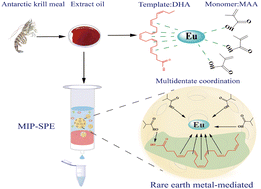
10 (w/v) ratio. MIPs or NIPs (200 mg) were weighed and mixed with the above solution (6 mL); then, the mixture was shaken at room temperature for 3 h. After adsorption was completed, the mixed solution was transferred to a solid-phase extraction device (SPE) (Fig. S1), and under gravity, the unadsorbed impurities were allowed to flow out through a 0.45 μm hydrophobic sieve plate, while the DHA was retained on top of the plate. The column was rinsed with 2 mL of methanol, eluted with 3 mL of hexane–acetic acid (8
:
2, v/v), and the eluate was collected. The extraction process and the recognition mechanism of the actual samples are shown in Fig. 1. The content and recovery values were calculated according to the standard curve (Fig. 7a), and the adsorption performance of NIPs was evaluated by the same method. The extraction recovery (R%) of DHA was calculated according to eqn (4):| |  | (4) |
VW denotes the volume of eluent (mL); VS denotes the volume of loading solution (mL); CW,final denotes the final concentration of the analyte to be analyzed in the eluent (g mL−1); and CS,initial denotes the initial concentration of the analyte to be analyzed in the loading solution (g mL−1).
 |
| | Fig. 1 Experimental principle and flow chart. | |
Results and discussion
Optimization of preparation parameters
To achieve enhanced adsorption capacity for the target molecule, multiple factors influencing its specific recognition must be optimized, such as the functional monomer selection, template-to-monomer ratio, cross-linker molar quantity, porogen composition, and reaction duration/temperature. For adsorption performance testing, this experiment directly employed eluted MIP or NIP particles for DHA adsorption without subjecting them to Eu(III) pre-saturation treatment. This decision was based on observations (Fig. S2) indicating that Eu(III) pre-saturation slightly reduced MIP adsorption capacity while marginally increasing NIP adsorption capacity, which was deemed unfavorable for evaluating MIP adsorption performance. A possible reason is that during pre-saturation, excess Eu(III) may occupy additional methacrylate binding sites on the surface of the MIP cavity, leading to a slight reduction in adsorption capacity.
Effect of different metal ions
AgCH3COO, Co(CH3COO)2, LaCl3·6H2O, and Eu(CH3COO)3·4H2O were selected to examine the influence of different metal ion-mediated imprinted polymer microspheres on DHA adsorption. DHA contains multiple carbon–carbon double bonds (C
C) that form stable complexes with metal ions through π-coordination bonds. Consequently, the imprinted polymer microspheres formed by the four metal-mediated ions selected for this experiment all showed some adsorption effect on DHA. Depending on their hybridized orbitals, Ag, Co(II), Eu(III), and La(III) can form monodentate, bidentate, or multidentate complexes with DHA carboxyl groups via oxygen atom coordination. Eu(III)-mediated imprinted polymer microspheres exhibited optimal adsorption performance, achieving the maximum adsorption capacity of 0.032 g g−1 and IF of 2.855, which were significantly higher than those mediated by the other three ions (Fig. 2a). Therefore, Eu(CH3COO)3·4H2O was chosen as the metal ion mediator for this experiment.
 |
| | Fig. 2 Optimization of preparation parameters. (a) Metal ion type, (b) Eu(CH3COO)3·4H2O molar amount, (c) functional monomer ratio, (d) cross-linker amount. | |
Effect of the molar amount of Eu(III)
This study further investigated the influence of Eu(III) content on the adsorption performance and IF of MIPs. The adsorption and IF showed a trend of increasing and then decreasing with increasing molar amount (Fig. 2b). When the molar amount of Eu(III) was 0 mmol (i.e., the polymer contained no Eu(III)), the adsorption capacity of the MIP was 0.026 g g−1, and the IF was 1.586. When 0.06 mmol of Eu(III) was added (i.e., a molar ratio of Eu(III) to DHA of 1
:
1), both the adsorption capacity and IF of the MIP significantly increased and reached their maximum values. This indicates that incorporating an appropriate amount of Eu(III) during MIP polymerization enhances adsorption performance. This phenomenon may be related to the interaction between Eu(III) and the template molecules as well as the mechanism of site formation, and the appropriate ratio of Eu(III) and the template molecules can form a stable ligand interaction, and at the same time synergistically interact with the MAA to form an effective and sufficiently imprinted cavity, which can increase the selective recognition of the template by MIPs. With further increases of content to 0.18 mmol and 0.24 mmol, excess Eu(III) may lead to the imprinted sites being excessively cross-linked or aggregated, resulting in decreases of adsorption capacity to 0.025 g g−1 and 0.019 g g−1, and the simultaneous decrease of the IF value from 2.855 to 1.217 and 1.185. Therefore, the optimal dosage of Eu(III) was finally selected to be 0.06 mmol.
Effect of the ratio of functional monomers
In the case of fixed template dosage, the effect of functional monomer MAA and template on the adsorption effect of MIPs under different ratios was investigated (Fig. 2c). When the ratio of template to functional monomer was 1
:
2 (mmol
:
mmol), the total amount of functional monomer is insufficient and leads to fewer binding sites, resulting in wastage of template molecules, low adsorption capacity and a lower IF value. When the molar ratio was increased to 1
:
4 (mmol
:
mmol), the adsorption capacity of MIPs exhibited a notable improvement from 0.025 g g−1 to 0.032 g g−1, accompanied by a substantial increase in IF value, reaching 2.855. This was due to the increase in the total amount of functional monomers, whereupon the number of recognition sites was increased and the template molecules were fully polymerized, resulting in an increase in adsorption capacity. However, when the ratio continued to increase to 1
:
5 and 1
:
6 (mmol
:
mmol), the excess of functional monomers led to an increase in the interaction between monomers, resulting in a decrease in the number of effective imprinting sites, which led to a decrease in the specific adsorption capacity of the MIPs. The adsorption capacity of the imprinted microspheres was reduced to 0.024 g g−1, and the IF value was reduced to 1.380. Therefore, the ratio of template to functional monomer selected in this study was 1
:
4 (mmol
:
mmol).
Effect of the amount of cross-linker
In the preparation process of MIPs, the amount of cross-linker is one of the key parameters affecting the performance of the material. The addition of a cross-linker can increase the number of specific binding sites and enhance the selective adsorption capacity of the polymer. Under the condition of fixed functional monomer amount, the effect of cross-linker dosage on MIPs was investigated (Fig. 2d). When the dosage increased in the range of 0.72 mmol to 1.2 mmol, the adsorption performance showed a significant upward trend, with the adsorption capacity of MIPs rising to 0.029 g g−1, and the IF enhanced to 3.873. This was attributed to the fact that the elevation of the cross-linker dosage resulted in a more stabilized structure of the imprinted cavities of the MIPs, which produced stronger adsorption. When the cross-linker amount was increased to 1.44 mmol, the adsorption and IF values of MIPs exhibited a decreasing trend. This may be because an excessive amount of cross-linker increases the density of the three-dimensional spatial structure of MIPs, which produces a larger spatial site resistance and hinders the effective binding of the target molecules to the binding sites. The results indicated that 1.2 mmol was the optimal amount of cross-linker.
Effect of porogenic agent proportion
The pore structure characteristics of MIPs largely depend on the type and amount of porogen. It was found that a small amount of the ACN–MeOH binary porogen system could dissolve all the components better, so in this study, ACN–MeOH was chosen as the porogen and the effect of different volume ratios on MIPs was investigated (Fig. 3a). With the gradual increase of the proportion of ACN in the porogen system, its composition changes from a single MeOH system to an ACN–MeOH binary mixed system. This change prompted MIPs to form a richer pore structure, which in turn significantly affected their adsorption performance. As the volume ratio of ACN–MeOH was adjusted from 0
:
5 to 2
:
3 (v/v), the adsorption capacity of MIPs increased significantly to 0.054 g g−1, and the IF also reached its maximum value of 4.203. When the ratio reached 5
:
0 (v/v), the adsorption capacity of MIPs decreased to 0.023 g g−1, and IF also decreased to 1.280. Therefore, the final ratio of porogen was determined to be ACN–MeOH (2
:
3, v/v).
 |
| | Fig. 3 Optimization of preparation parameters. (a) The proportion of porogenic agent, (b) the polymerization temperature, and (c) the polymerization reaction time. | |
Effect of reaction temperature
The adsorption performance of MIPs was affected by the reaction temperature. Since the porogen components were ACN and MeOH, the temperature range of the polymerization reaction was kept at 50 °C–70 °C (Fig. 3b). The weak adsorption performance of MIPs at 55 °C with an adsorption capacity of 0.018 g g−1 could be attributed to the incomplete polymerization reaction due to the reaction temperature being too low to provide stable and sufficient numbers of specific binding sites. With the increase in temperature, the adsorption capacity of MIPs increased significantly and reached the maximum IF value of 4.203 at 65 °C. Increasing the temperature to 70 °C led to a reduction in both adsorption capacity and IF value, attributable to the thermal degradation tendency of the DHA template. The higher the temperature, the faster the reaction, resulting in fewer binding sites and a denser structure of MIPs. Consequently, 65 °C was identified as the optimum temperature for polymerization.
Effect of polymerization time
Polymerization reaction time is an important parameter affecting the properties of MIPs. In this study, the effects of four different polymerization times, 10 h, 12 h, 18 h and 24 h, on the material properties were systematically investigated (Fig. 3c). The adsorption capacity showed an increasing trend with the increase of polymerization time. When the reaction time reached 12 h, the interaction between the functional monomer and the template molecules tended to be complete, and the best adsorption performance and the highest IF value were achieved. When the time was increased to 18 h and 24 h, due to the prolonged high temperature reaction not being conducive to the stability of the template molecule structure, and overreaction of the polymer, which reduces the number of binding sites, resulting in a significant decrease in the adsorption amount and IF, the adsorption amount was reduced to 0.009 g g−1, and the IF was reduced to 1.916. The experimental data revealed that 12 h represented the most favorable reaction duration.
Physical characterization of MIPs and NIPs
Morphological characterization
Morphological and structural features of MIPs and NIPs can be observed according to scanning electron microscopy (SEM) (Fig. 4a–d). The polymers showed a microsphere-like aggregation morphology with rough and uneven surfaces, indicating the formation of abundant microporous structure on the surface of the material. It was observed that a tight and uniform interconnected porous structure was formed between the microsphere particles, which ensured that the DHA-imprinted microspheres had good permeability and excellent extraction properties. Particle size analysis revealed that both MIPs and NIPs exhibited near-Gaussian distributions, with the average particle size of MIPs (328.17 nm) being significantly smaller than that of NIPs (782.71 nm). This study also examined the effect of different molar amounts of functional monomer on polymer particle size (Fig. S4–S8 and Table S2). Results showed that MIP particle sizes were predominantly distributed between 328.17 and 437.91 nm, while NIP sizes ranged from 782.71 to 833.98 nm. Although the particle size distributions of these polymers differed only slightly, their adsorption capacities and imprinting factors exhibited distinct variations (Fig. 2c). This indicates that the adsorption capacity and imprinting factor of imprinted polymers are jointly determined by particle size, functional monomer molar ratio, and other preparation parameters.
 |
| | Fig. 4 Morphological characterization of MIPs and NIPs. (a) SEM of MIPs, (b) particle size distribution of MIPs, (c) SEM of NIPs, and (d) particle size distribution of NIPs. | |
Infrared spectroscopy and elemental analysis
Fourier transform infrared (FT-IR) spectroscopy analysis revealed the structural features of MIPs, NIPs, MAA and Eu(CH3COO)3·4H2O (Fig. 5a). The characteristic peaks of MIPs and NIPs were highly similar due to the use of the same functional monomer. In the hydroxyl vibrational region, both MIPs (3440 cm−1) and NIPs (3430 cm−1) showed obvious broad O–H stretching vibrational peaks; the occurrence of the characteristic peaks at 616 cm−1 and 618 cm−1 confirmed the formation of the Eu–O bond, indicating that MAA and Eu(CH3COO)3·4H2O were involved in the reaction. The C
O stretching vibrational peaks of MAA and Eu(CH3COO)3·4H2O (1605 cm−1 and 1556 cm−1) were significantly shifted in the polymer (MIPs: 1730 cm−1; NIPs: 1735 cm−1). This was mainly due to the merging of the characteristic C
O peaks on the carboxyl group when MAA and Eu(CH3COO)3·4H2O were involved in the polymerization, resulting in a blue shift of the maximum absorption peak. The results of elemental analysis also further confirmed the existence of europium. The content of europium in MIPs was 0.13%, while europium was not detected in NIPs, which indicated that the addition of template molecules allowed europium ions to form a stable multidentate coordination structure with template molecules and functional monomers, resulting in MIPs. This indicated that the combined europium element was stronger than NIPs. After multiple elutions of NIPs, europium was dispersed in the polymer and its content was very small, and was not easily detected. Moreover, the small Eu–O vibrational peaks in the infrared spectrogram of NIPs also reflect this possibility.
 |
| | Fig. 5 Physical characterization of MIPs and NIPs. (a) FTIR of MIPs, NIPs, MAA, Eu(CH3COO)3·4H2O, (b) thermogravimetric curves of MIPs and NIPs, and (c) nitrogen adsorption–desorption isotherms of MIPs and NIPs. | |
Thermogravimetric analysis
The synthesized MIPs and NIPs were tested for thermal stability using a thermogravimetric analyzer (Netzsch TA TGA55) with a temperature range of 30–800 °C and a 10 °C min−1 ramp rate. The TGA curves (Fig. 5b) showed that MIPs and NIPs underwent a slight loss of mass (approximately 5%) during the 30–300 °C phase, which was mainly due to residual solvents and moisture volatilization in the materials. When the temperature increased to 300–450 °C, the samples underwent significant thermal decomposition, with 85.63% and 83.44% mass loss for MIPs and NIPs, respectively, and this stage corresponded to the sub-pyrolysis of the polymer organic skeleton. In the high-temperature interval of 600–800 °C, the material mass stabilized, and the final residual amounts of MIPs and NIPs were 6.85% and 4.26%, respectively. These results not only confirm the excellent thermal stability of the materials but also provide strong evidence for the successful synthesis of the polymers.
Nitrogen adsorption–desorption characterization
According to the N2 adsorption–desorption results (Table S3), the specific surface area of MIPs was 1.1033 m2 g−1, and the total pore volume was 0.0031 cm3 g−1, which were higher values than those of NIPs, i.e. specific surface area of 0.6194 m2 g−1, and total pore volume of 0.0018 cm3 g−1. This difference confirmed that the introduction of template molecules effectively increased the porosity of the polymers and promoted the formation of microporous structures. Both materials showed typical type IV adsorption isotherm characteristics with obvious hysteresis loops, indicating that they have mesoporous structural properties (Fig. 5c). The MIPs exhibited more significant hysteresis phenomena, which indicated that the MIPs had better mesoporous structures, providing an important guarantee for good adsorption performance.
Optimization of adsorption conditions for MIPs
Sample concentration
The loading concentration of DHA had a significant effect on the adsorption performance and IF value of MIPs (Fig. 6a). The adsorption amounts of both MIPs and NIPs showed an increasing trend with the increase of the loading concentration from 0.004 g mL−1 to 0.04 g mL−1, reaching a maximum at 0.03 g mL−1, at which point the IF also reached a peak. When the concentration continued to increase to 0.04 g mL−1, the adsorption amount and IF stabilized, indicating that the imprinting sites had reached adsorption saturation. According to the Langmuir–Freundlich (LF) model fitting results (Fig. 6b), MIPs exhibited rapid adsorption characteristics for DHA in the range of 0.004–0.03 g mL−1, followed by a gradual stabilization of the adsorption rate, whereas the NIPs approached the adsorption equilibrium at 0.02 g mL−1, and the theoretical maximal adsorption amounts of the MIPs and NIPs were 0.895 g g−1 and 0.159 g g−1, respectively, and the calculated theoretical maximum IF value was 6.743, which further confirmed that MIPs had superior specific recognition ability.
 |
| | Fig. 6 Optimization of adsorption conditions. (a) Examination of loading concentration; (b) adsorption fitting curves for MIPs and NIPs; (c) examination of rinse volume; and (d) examination of eluent type, 1: MeOH–HAc (9 : 1, v/v), 2: n-hexane–HAc (9 : 1, v/v), 3: n-hexane–HA (8 : 2, v/v), 4 : MeOH–ACN–FA (8 : 2 : 0.5, v/v), and 5: MeOH–CA (9 : 1, v/v). | |
Volume of the rinsing agent
There are physically adsorbed or weakly bound residual substances on the surface of MIPs, and the rinsing agent can remove the interfering substances of nonspecific adsorption and improve the accuracy of the assay. Therefore, the rinsing volumes of 1 mL, 2 mL, 3 mL, and 4 mL MeOH were examined to reduce the interference of nonspecific adsorption in this experiment (Fig. 6c). With the increase of rinsing volume, the amount of template washed down gradually increases, reaching the maximum at a rinsing volume of 2 mL, at which point the amount of template washed away is 0.028 g g−1. When the volume was increased to 3 mL and 4 mL, the amount of elution template tended to stabilize, indicating that the rinse had reached saturation. At this time, the percentage of the eluted template with respect to the total adsorption amount was 3.13%, indicating that MeOH as a rinsing agent can effectively remove the interference without causing excessive loss of the template. Therefore, 2 mL of MeOH was selected as the rinsing agent volume for the experiment.
Selection of eluents
The type and proportion of eluents determine whether the template molecules can be successfully eluted from the MIPs, and the choice of eluents directly affects the recovery of the template and the structural integrity of the MIPs. In this experiment, 6 mL of n-hexane–HAc (9
:
1, v/v), n-hexane–HAc (8
:
2, v/v), MeOH–HAc (9
:
1, v/v), MeOH–ACN–FA (8
:
2
:
0.5, v/v), and MeOH–CA (9
:
1, v/v) were selected to investigate the effects of different eluents on adsorption performance (Fig. 6d). Hexane–HAc (8
:
2, v/v) exhibited the best elution performance, and could elute 0.241 g g−1 of DHA in MIPs in a 6 mL volume with the elution percentage of 26.93%, and after 15 mL total volume elution, the elution percentage reached 86.37%–93.29%. Therefore, n-hexane–HAc (8
:
2, v/v) was finally selected as the eluent.
Selective adsorption evaluation
This experiment selected α-linolenic acid (Analog 1), linoleic acid (Analog 2), and arachidonic acid (Analog 3) as structural analogues of template molecules to evaluate the selective adsorption performance of MIPs. The calibration curves for DHA and its three structural analogues are shown in Fig. 7 and Fig. S3. Selectivity experiments demonstrated that the adsorption capacity of MIPs for DHA was significantly higher than that for the three structural analogues, and also markedly exceeded the adsorption capacities of NIP for both DHA and the three analogues (Fig. 7b). The selectivity factors (α) of the MIPs for α-linolenic acid, linoleic acid, and arachidonic acid were 1.61, 2.18, and 3.46, respectively, which were generally higher than the selectivity factors (α) of NIP for the three structural analogues (0.98, 1.24, and 1.11, respectively). Compared to DHA (Table S4), these structural analogues all contain carboxyl groups but have fewer double bonds or none at all, preventing them from forming multidentate coordination complexes with the mediating Eu(III) ion, thereby reducing the adsorption capacity.
 |
| | Fig. 7 Evaluation of adsorption performance. (a) Standard curve of template DHA, (b) evaluation of structural analogues, (c) purification of MIPs, and (d) recovery of MIPs and NIPs. | |
Evaluation of solid-phase extraction performance
The purity and recovery of DHA in AKM extracted by MIPs were evaluated using a self-made solid phase extraction device (Fig. S1). After loading, rinsing and elution, the concentration of DHA in the eluent was quantitatively determined by GC. The composition of AKM was more complex with many interfering components, among which DHA accounted for a relatively large proportion, followed by eicosapentaenoic acid (EPA) (Fig. 7c). After passing through the MIPs-SPE column, the sample was significantly purified, and only DHA and EPA remained in the chromatogram, and the rest of the interfering components were effectively removed. The purity of DHA in the original AKM was 24.19%, which was enhanced to 62.18% after extraction by MIPs-SPE (Table S5). Due to the high similarity between the structures of EPA and DHA, which both have carboxyl groups and a large number of double bonds, the MIPs synthesized in this experiment also had a better specific adsorption effect on EPA, and the purity of EPA in the samples was increased from 15.31% to 33.80% after purification by MIPs-SPE, and the total purity of DHA and EPA was increased from 39.53% to 95.98%. The above results indicate that the MIPs synthesized in this experiment can be well used for the extraction and separation of DHA and EPA from AKM. These results are consistent with the purification results reported in the existing literature (Table 1), such as the purity of DHA in tuna oil (68.4%),32 the purity of DHA + EPA in sardine oil ethyl ester (74.3%–83.6%),33 and the purification of fish oil by enzymatic ethanolysis resulting in a DHA + EPA purity of 91.59%.34
Table 1 Comparison with DHA assays reported in the literature
| Sample |
Analytical method |
Purification methods |
Purity |
Recovery |
Ref. |
| Note: TLC: thin-layer chromatography; HPLC: high-performance liquid chromatography; UC: urea complexation; MD: molecular distillation technology; SPD: vacuum short-process distillation. |
| Tuna oil |
GC, TLC |
Bilipase-catalyzed |
DHA: 68.4% |
— |
32
|
| Ethyl sardine oil |
GC |
UC and MD |
DHA + EPA: 74.3%–83.6% |
30.82%–103.32% |
33
|
| Fish oil |
GC, HPLC |
Enzymatic ethanolysis |
DHA + EPA: 91.59% |
— |
34
|
| Tuna oil |
GC |
Lipase-catalyzed and SPD |
DHA + EPA: 40%–94.5% |
44%–90% |
35
|
| Fresh fish processing waste |
GC |
Lipase-bioblotting |
DHA: 41% |
85.7% |
36
|
| Antarctica krill meal |
GC |
MIPs |
DHA + EPA: 95.98% |
86.58%–93.35% |
This work |
| DHA: 62.18% |
DHA in AKM was extracted by MIPs-SPE and determined three times in parallel, and the recovery amount was calculated (Table S6 and Fig. 7d). AKM was better enriched and separated by MIPs compared with NIPs, and the recoveries of MIPs reached 86.58%–93.35% with the relative standard deviation (RSD%) of less than 3.19%, while the recovery values of NIPs were only 63.99%–68.21%. These results are closer to the results of the recovery methods reported in the literature (Table 1), such as 44%–90% for DHA in tuna oil,35 82.79%–103.32% for DHA and EPA in sardine oil ethyl ester,33 and 85.7% for DHA and EPA in fresh fish processing waste.36 Therefore, the MIPs-SPE prepared in this study can achieve satisfactory purification and extraction results for solid-phase extraction of AKM samples.
Conclusions
In this study, DHA molecularly imprinted polymers were prepared using a rare earth metal ion-mediated strategy. By optimizing the preparation parameters, the optimal ratio of template molecule
:
mediator ion
:
functional monomer
:
cross-linker was 1
:
1
:
4
:
20 (mmol
:
mmol
:
mmol
:
mmol), and the reaction temperature and time were 65 °C and 12 h. The maximum adsorption amount of the obtained MIPs was 0.054 g g−1, and the IF was 4.203. The analysis of the physical properties showed that the prepared MIPs have a large number of cavities, uniform size and large specific surface area. Through the optimization of adsorption conditions, the optimal loading concentration was 0.03 g g−1, for the rinse solvent it was 2 mL of MeOH, and for the elution solvent it was n-hexane–HAc (8
:
2, v/v), while the static adsorption conformed to the Langmuir–Freundlich (LF) nonlinear model. The optimal MIPs were packed into the SPE column, and the enrichment and purification of the actual sample AKM revealed that the purity of DHA was 62.18%, and the total purity of DHA + EPA could reach 95.98%, while the extraction recoveries of MIPs were 86.58%–93.35%. The above results show that the europium ion-mediated imprinted microspheres prepared in this study have specific adsorption for DHA, and are expected to be used as a new solid-phase extraction material for enrichment and separation of samples containing polyunsaturated fatty acids.
Author contributions
ZHW: writing – review & editing, project administration, methodology, funding acquisition, and conceptualization. SXY: writing – review & editing, writing – original draft, validation, investigation, and data curation. JLY: investigation. YC: investigation, formal analysis, and data curation. SXG: formal analysis. YKH: investigation and data curation. WLW: supervision. MT: supervision, resources, project administration, and funding acquisition.
Conflicts of interest
There are no conflicts to declare.
Data availability
Data supporting this article have been supplied within the supplementary information (SI). Supplementary information is available. See DOI: https://doi.org/10.1039/d5py00738k.
Acknowledgements
This study was supported by the Science and Technology Program Project of Jiangsu Marine Resources Development Technology Innovation Center (LWKJ-07), the Open Project of Jiangsu Province Key Laboratory for Active Molecular Screening of Marine Drugs (HY202202), the Jiangsu Ocean University Talent Introduction Research Fund (KQ21027), the National Traditional Chinese Medicine Characteristic Technology Inheritance Talent Training Project (T20234832005), and the Jiangsu Province Advanced Study Program for Key Personnel in Traditional Chinese Medicine (Su TCM Science-Education [2022] No. 11). The authors are grateful to the Lianyungang Key Laboratory of Marine Drugs and Biological Products for its support of this research.
References
- D. Swanson, R. Block and S. A. Mousa, Adv. Nutr., 2012, 3, 1–7 Search PubMed.
- J. P. SanGiovanni and E. Y. Chew, Prog. Retinal Eye Res., 2005, 24, 87–138 CrossRef.
- H. Lv, S. Jia, Y. Sun, M. Pang, E. Lv, X. Li, Q. Meng and Y. Wang, Brain Res. Bull., 2023, 199, 110660 CrossRef.
- S. Karbasforush, A. Nourazarian, M. Darabi, R. Rahbarghazi, F. Khaki-Khatibi, Ç. Biray Avci, L. Salimi, B. Goker Bagca, T. Novin Bahador, A. Rezabakhsh and M. Khaksar, Cell Biochem. Funct., 2018, 36, 203–211 CrossRef PubMed.
- J. Xia, L. Yang, C. Huang, S. Deng, Z. Yang, Y. Zhang, C. Zhang and C. Song, Mar. Drugs, 2023, 21, 398 CrossRef PubMed.
- C. Richard and J. M. Monk, Adv. Nutr., 2024, 15, 100161 CrossRef.
- Z. Ali, M. A. Al-Ghouti, H. Abou-Saleh and M. M. Rahman, Mar. Drugs, 2024, 22, 446 CrossRef PubMed.
- M. J. González-Fernández, R. P. Ramos-Bueno, I. Rodríguez-García and J. L. Guil-Guerrero, Biochimie, 2017, 139, 107–114 CrossRef.
- J. He, B. Hong, R. Lu, R. Zhang, H. Fang, W. Huang, K. Bai and J. Sun, Food Sci. Nutr., 2020, 8, 2234–2241 CrossRef.
- E. Karrar, Z. Albakry, I. A. Mohamed Ahmed, L. Zhang, C. Chen, D. Wu and J. Li, Algal Res., 2024, 77, 103365 CrossRef.
- R. Song, W. Li, S. Deng, Y. Zhao and N. Tao, Front. Nutr., 2023, 10, 2023 Search PubMed.
- E. Kalkan, H. Keskin Çavdar and M. Maskan, Eur. J. Lipid Sci. Technol., 2025, 127, e202400171 CrossRef.
- X. Li, J. Liu, G. Chen, J. Zhang, C. Wang and B. Liu, Algal Res., 2019, 43, 101619 CrossRef.
- U. N. Wanasundara, J. Wanasundara and F. Shahidi, Seafoods – Qual., Technol. Nutraceutical Appl., 2002, 157–174, DOI:10.1007/978-3-662-09836-3_14.
- S. M. Merdas, Univ. Thi-Qar J., 2021, 16, 19–51 Search PubMed.
- L. Chen, S. Xu and J. Li, Chem. Soc. Rev., 2011, 40, 2922–2942 RSC.
- Z. Wei, W. Liu, J. Zhang, X. Dong, S. Yan, Y. Cheng, P. Wei, S. Wang and M. Tian, J. Pharm. Biomed. Anal., 2025, 254, 116577 CrossRef.
- Z. Wei, J. Zhang, W. Liu, X. Dong, Y. Cheng, S. Yan, X. Dong, S. Wang and M. Tian, Microchim. Acta, 2024, 191, 607 CrossRef PubMed.
- L. Wu, Y. Li, Y. Han, X. Liu, B. Han, H. Mao and Q. Chen, J. Food Compos. Anal., 2024, 130, 106190 CrossRef.
- H. Xu, Z. Lian, X. Hao, F. Li and R.-C. Yu, Sci. Total Environ., 2024, 912, 169056 CrossRef.
- S. M. A. Azhar, B. S. Muyang, G. P. Maniam and N. A. Samah, Key Eng. Mater., 2022, 932, 71–76 Search PubMed.
- C. Jin, S. Chen, J. Ding, Q. Ye and X. Meng, Microchem. J., 2025, 212, 113529 CrossRef.
- X. Li, X. Qi, X. Liu, J. Zhu and L. Hu, Anal. Chem., 2024, 96, 19803–19811 CrossRef.
- Q. Li, S. Shinde, G. Grasso, A. Caroli, R. Abouhany, M. Lanzillotta, G. Pan, W. Wan, K. Rurack and B. Sellergren, Sci. Rep., 2020, 10, 9924 CrossRef.
- T. Di Giulio, A. Barca, T. Verri, M. De Gennaro, G. Giancane, E. Mazzotta and C. Malitesta, Sens. Actuators, B, 2023, 383, 133589 CrossRef.
- Q. Li, F. Shen, X. Zhang, Y. Hu, Q. Zhang, L. Xu and X. Ren, Anal. Chim. Acta, 2013, 795, 82–87 CrossRef PubMed.
- L. Zeybel and D. A. Köse, Turk. J. Chem., 2021, 45, 1004–1115 CrossRef.
- J.-Q. Du, J.-L. Dong, F. Xie, R.-X. Yang, H.-M. Lan and D.-Z. Wang, J. Mol. Struct., 2020, 1202, 127345 CrossRef.
- P. P. Ferreira da Rosa, S. Miyazaki, H. Sakamoto, Y. Kitagawa, K. Miyata, T. Akama, M. Kobayashi, K. Fushimi, K. Onda and T. Taketsugu, J. Phys. Chem. A, 2021, 125, 209–217 CrossRef PubMed.
- O. G. Wood, L. Jones and C. S. Hawes, CrystEngComm, 2023, 25, 6371–6378 RSC.
- H. Meng-ling, Z. Shuai, F. Yi, F. Shuang-qi and Z. Xiao-jun, Chin. J. Anal. Lab., 2019, 38, 569–574 Search PubMed.
- Y. Cho, B. H. Kim, Y. Kim and I.-H. Kim, Food Chem., 2024, 458, 140253 CrossRef PubMed.
- W. Lin, F. W. Wu, L. Yue, Q. G. Du, L. Tian and Z. X. Wang, J. Am. Oil Chem. Soc., 2014, 91, 687–695 CrossRef.
- J. Yu, Y. Fu, X. Tang, W. Bao, Z. Li, X. Wang and X. Wang, Food Chem., 2025, 463, 141226 CrossRef.
- L. Martín, P. A. González, A. Robles, A. Rodríguez, M. J. Jiménez, E. Hita, L. Esteban and E. Molina, New Biotechnol., 2009, 25, S156 CrossRef.
- J. Yan, L. Li, Q. Tang, M. Jiang and S. Jiang, Appl. Biochem. Biotechnol., 2010, 162, 757–765 CrossRef.
Footnote |
| † These authors contributed equally to this work and share first authorship. |
|
| This journal is © The Royal Society of Chemistry 2025 |
Click here to see how this site uses Cookies. View our privacy policy here.