

 Open Access Article
 This Open Access Article is licensed under a
 Creative Commons Attribution 3.0 Unported Licence
Iodine-mediated synthesis of indole-fused benzothiazepinones through intramolecular C2-amidation of amide-tethered C3-sulfenylindoles
Gargi
Singh
,
Mariyaraj
Arockiaraj
and
Venkatachalam
Rajeshkumar
 *
*
Organic Synthesis & Catalysis Lab, Department of Chemistry, National Institute of Technology Warangal, Hanumakonda - 506004, Telangana, India. E-mail: rajeshv@nitw.ac.in
First published on 8th August 2025
Abstract
A transition-metal-free, iodine-mediated strategy has been developed for the synthesis of biologically significant indole-fused benzothiazepinones. This method involves an initial electrophilic C3 iodination of indole, followed by intramolecular C2 amidation of readily accessible amide-tethered C3-sulfenylindoles to afford indole-fused benzothiazepinones in good yields. The protocol exhibits broad substrate compatibility, high functional group tolerance, and scalability. Additionally, the synthetic versatility of the resulting indole-fused benzothiazepinones was demonstrated through their transformation into the corresponding sulfoxides and sulfones.
Introduction
Indole-fused heterocycles are crucial structural motifs found in many natural products and pharmaceuticals.1,2 These indole-based annulated heterocycles exhibit a broad spectrum of biological activities, including antimicrobial,3 anticancer,4 antihypertensive,5 antiviral,2d and anti-inflammatory properties.6 Notably, azepinoindole alkaloids, such as paullones, are renowned natural products with significant antitumor activity.7 Furthermore, ibogaine and its derivatives are therapeutically utilized for the treatment of neurological and psychiatric disorders.8 In this context, thiazepine and its derivatives serve as crucial structural motifs in a wide range of medicinally significant compounds with diverse pharmacological activities. These heterocyclic frameworks contribute to the development of antitumor, antimicrobial, anti-inflammatory, and CNS-active agents, among others.9 This scaffold is also present in the structures of several commercially available drugs, including diltiazem, a marketed medicine used to treat hypertension, also a common calcium channel blocker,10 and thiazesim, an antidepressant drug.11 Several dibenzothiazepines, such as metiapine and clotiapine, are potential antipsychotic drugs used to treat schizophrenia and schizoaffective disorders.12 Additionally, temocapril is an angiotensin-converting enzyme (ACE) inhibitor primarily used for the treatment of hypertension and heart failure13 (Fig. 1). Various synthetic methodologies have been developed to construct indole-fused benzoazepines. For example, substituted paullones have been synthesized through a one-pot Suzuki–Miyaura cross-coupling of o-aminoarylboronic acid and C2-iodoindoleacetic acid, followed by intramolecular amide formation to yield the 7,12-dihydroindolo[3,2-d][1]benzazepine-6(5H)-one scaffold (Scheme 1a).14 Jia and coworkers reported the synthesis of benzazepinoindoles by Pd-catalyzed C(sp2)–H imidoylative cyclization of 3-(2-isocyanobenzyl)-1H-indoles (Scheme 1b).15 | ||
| Fig. 1 Representative bioactive motifs containing azepinoindoles and thiazepine framework. | ||
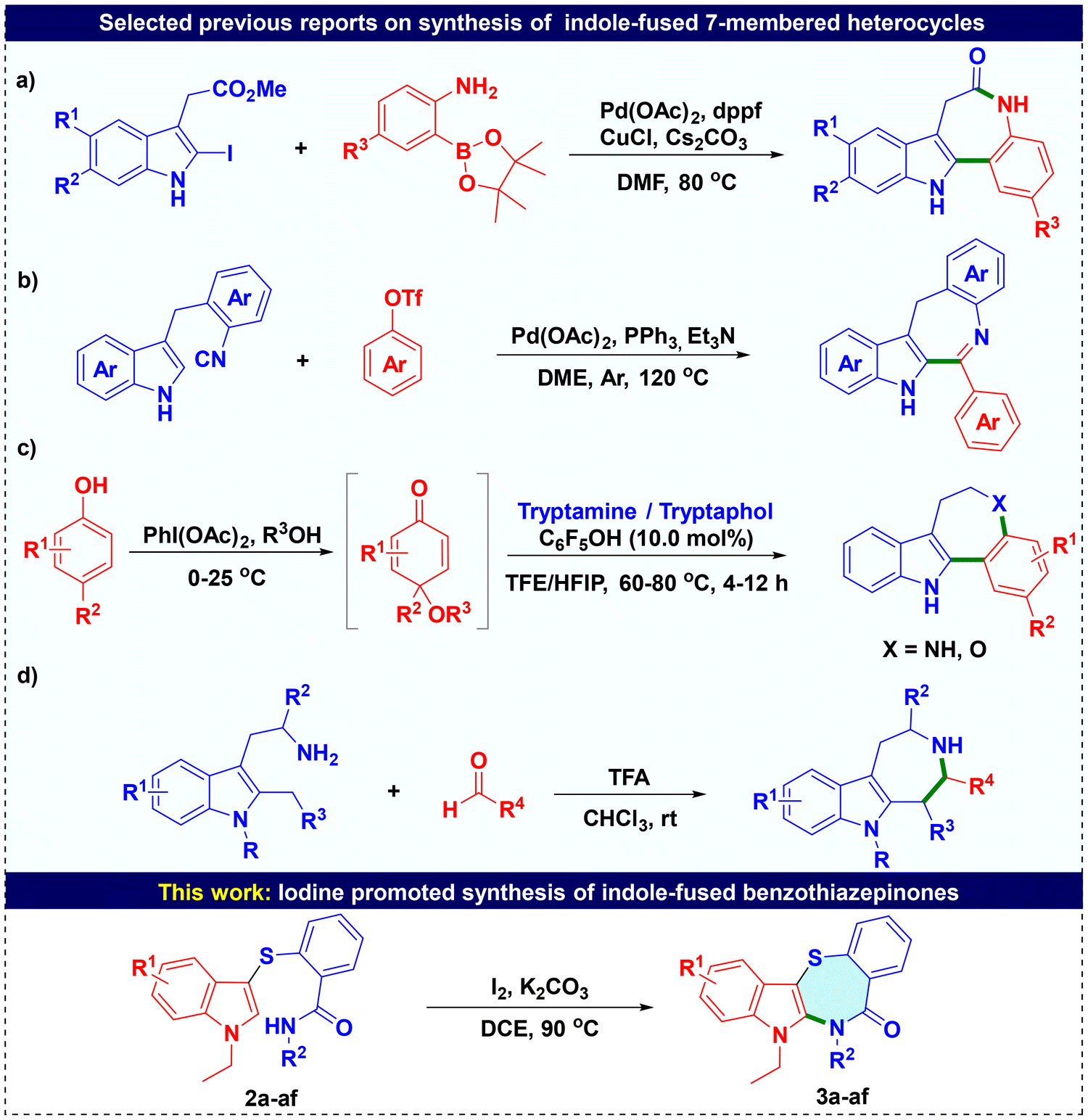 | ||
| Scheme 1 Reported methods for the synthesis of azepinoindoles. | ||
Recently, the synthesis of azepinoindole and oxepinoindole skeletons was reported using a mild acid-catalyzed cyclization of dearomatized phenols with tryptamines or tryptophols (Scheme 1c).16 More recently, a trifluoroacetic acid-mediated direct assembly of azepino[4,5-b]indoles was achieved via C–H functionalization and annulation of 2-alkyl tryptamines with aldehydes (Scheme 1d).17 Despite significant progress in the synthesis of azepinoindoles,18 a protocol for the synthesis of indole-fused benzothiazepines has yet to be developed. In our initial attempts to synthesize indole-fused benzothiazepines using 2-(1H-indol-3-ylsulfanyl)-phenylamines and aryl methyl ketones, the reaction unexpectedly yielded benzo-β-carbolines through a desulfurative cyclization pathway.19
With the continuation of our effort, here we report a successful approach to the synthesis of seven membered indole-fused benzothiazepinones through iodine mediated an intramolecular C2 amidation of amide-tethered C3 sulfenylindoles (Scheme 1).
Results and discussion
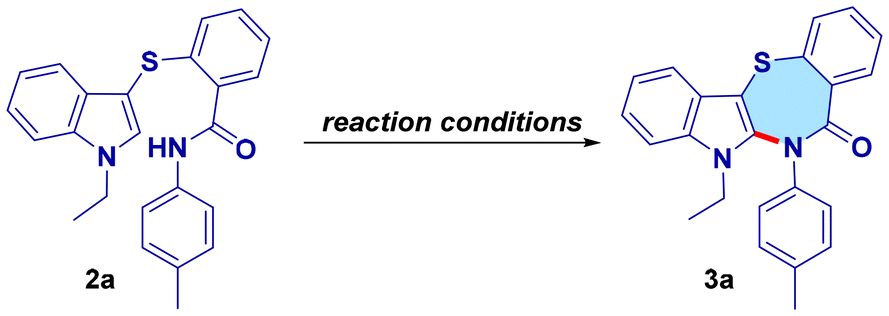
We started our investigation by choosing 2-((1-ethyl-1H-indol-3-yl)thio)-N-(p-tolyl)benzamide 2a as a model substrate to synthesize a indole-fused benzothiazepinone 5-ethyl-6-(p-tolyl)-5,6-dihydro-7H-benzo[6,7][1,4]thiazepino[3,2-b]indol-7-one 3a. As depicted in Table 1, the initial reaction was conducted using the substrate 2a (100 mg, 0.268 mmol) in the presence of I2 (1.5 equiv.) and K2CO3 (3.0 equiv.) in DCE solvent at room temperature and the desired product 3a was isolated in 75% yield (Table 1, entry 1). Gratifyingly, when the reaction was conducted at 60 °C, the yield was improved to 78% (entry 2). Next, when we increased the reaction temperature to 80 °C, the product 3a was obtained in 80% yield (entry 3). Further increasing the temperature to 90 °C yielded the desired product 3a in 84% (entry 4). However, increasing the temperature to 100 °C resulted in a reduced yield of 76% (entry 5). Thus, the reaction temperature was set at 90 °C for further optimization of the reaction conditions. Next, we examined the effect of iodine loading on the reaction. Reducing the iodine amount significantly lowered the reaction yield (entries 6 and 7) and prolonged the reaction time. The reaction was further tested with various bases such as Cs2CO3, Na2CO3 and NaHCO3 using 1.5 equivalents of I2. However, these attempts resulted in the poor yields (entries 8–10). Moreover, the reaction did not proceed when bases such as NaOAc, DABCO, DBU, DIPEA, and Et3N were used (entries 11–15). After evaluating various bases, we next investigated the effect of different solvents to present reaction. The product yield was significantly lower when the reaction was carried out in other solvents such as CH3CN and 1,4-dioxane (entries 16 and 17). Moreover, no reaction occurred when THF, DMF, or DMSO were used as solvents (entries 18–20). Next, reagents like NIS and NBS were also evaluated for the present reaction but ineffective to produce the desired outcome (entries 21 and 22). Furthermore, the reaction did not proceed in the absence of either a base or iodine (entries 23 and 24). After systematic investigations, the optimized reaction conditions were identified as entry 4, where the reaction was performed with 1.5 equivalent of iodine, along with 3.0 equivalents of K2CO3 in 2 mL of DCE at 90 °C.|
|
||||||
|---|---|---|---|---|---|---|
| Entry | Reagent | Base (3 equiv.) | Solvent | Temp (°C) | Time (h) | Yield 3a![[thin space (1/6-em)]](https://www.rsc.org/images/entities/char_2009.gif) b (%) b (%) |
| a Reaction conditions: all the reactions were performed using 2a (100 mg, 0.268 mmol) in 2 mL of DCE solvent with different conditions mentioned in the table. b Isolated yields are reported. | ||||||
| 1 | I2 (1.5 eq.) | K2CO3 | DCE | rt | 30 | 75 |
| 2 | I2 (1.5 eq.) | K2CO3 | DCE | 60 | 26 | 78 |
| 3 | I2 (1.5 eq.) | K2CO3 | DCE | 80 | 20 | 80 |
| 4 | I2 (1.5 eq.) | K2CO3 | DCE | 90 | 15 | 84 |
| 5 | I2 (1.5 eq.) | K2CO3 | DCE | 100 | 15 | 76 |
| 6 | I2 (1.2 eq.) | K2CO3 | DCE | 90 | 20 | 80 |
| 7 | I2 (1.0 eq.) | K2CO3 | DCE | 90 | 23 | 79 |
| 8 | I2 (1.5 eq.) | Cs2CO3 | DCE | 90 | 24 | 24 |
| 9 | I2 (1.5 eq.) | Na2CO3 | DCE | 90 | 24 | 20 |
| 10 | I2 (1.5 eq.) | NaHCO3 | DCE | 90 | 24 | 19 |
| 11 | I2 (1.5 eq.) | NaOAc | DCE | 90 | 24 | NR |
| 12 | I2 (1.5 eq.) | DABCO | DCE | 90 | 24 | NR |
| 13 | I2 (1.5 eq.) | DBU | DCE | 90 | 24 | NR |
| 14 | I2 (1.5 eq.) | DIPEA | DCE | 90 | 24 | NR |
| 15 | I2 (1.5 eq.) | Et3N | DCE | 90 | 24 | NR |
| 16 | I2 (1.5 eq.) | K2CO3 | CH3CN | 90 | 24 | 25 |
| 17 | I2 (1.5 eq.) | K2CO3 | Dioxane | 90 | 24 | 22 |
| 18 | I2 (1.5 eq.) | K2CO3 | THF | 90 | 24 | NR |
| 19 | I2 (1.5 eq.) | K2CO3 | DMF | 90 | 24 | NR |
| 20 | I2 (1.5 eq.) | K2CO3 | DMSO | 90 | 24 | NR |
| 21 | NIS (1.5 eq.) | K2CO3 | DCE | 90 | 24 | 30 |
| 22 | NBS (1.5 eq.) | K2CO3 | DCE | 90 | 24 | Trace |
| 23 | I2 (1.5 eq.) | — | DCE | 90 | 24 | NR |
| 24 | — | K2CO3 | DCE | 90 | 24 | NR |
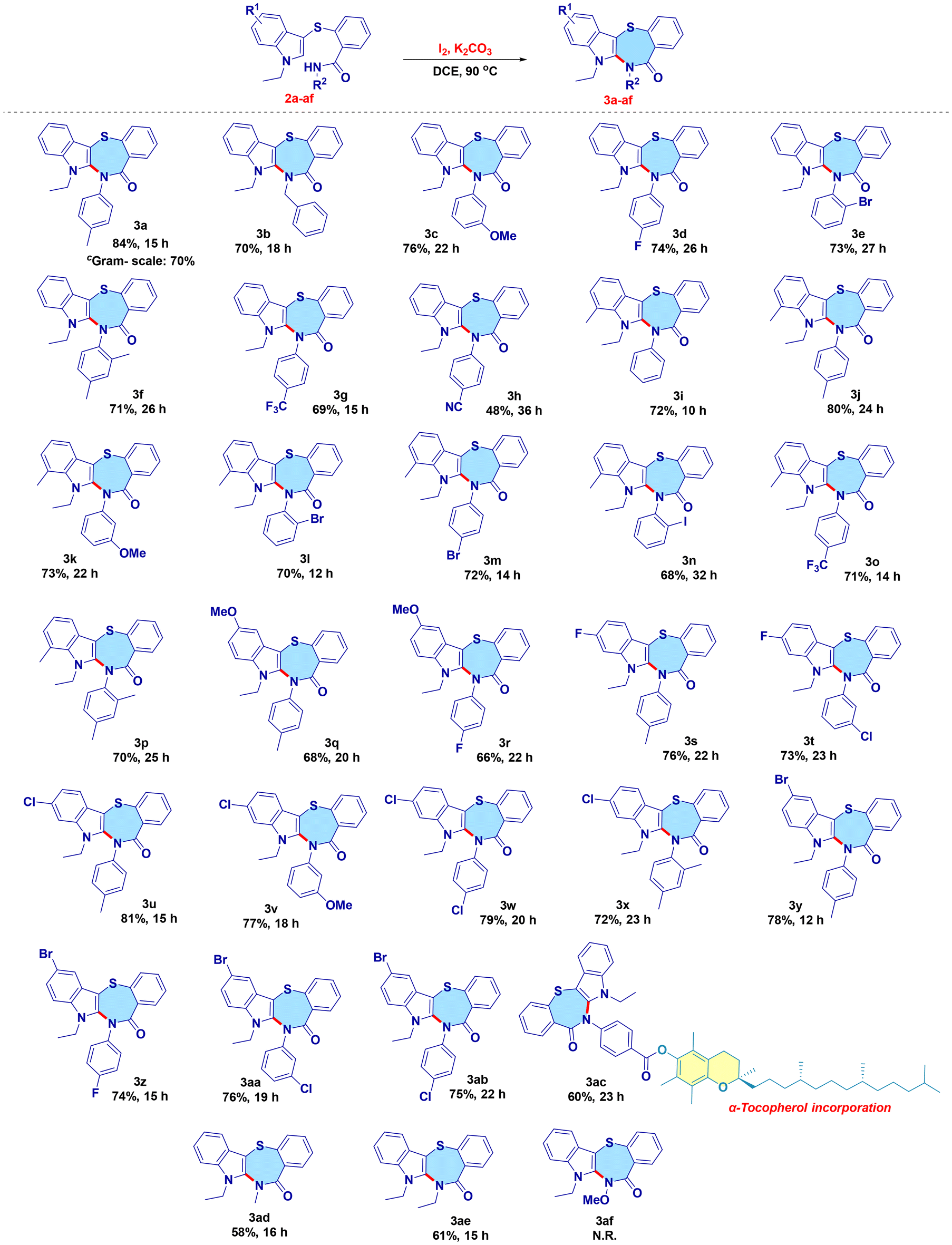
With the optimized reaction conditions in hand, we next explored the substrate scope of this protocol to synthesize a variety of indole-fused benzothiazepinones, as shown in Table 2. All the reactions proceeded well to synthesize the library of substrates 3a–z in good yields. Initially, we investigated the unsubstituted indole ring with different substituents at the R2 position under the optimized reaction conditions. The benzyl group was tested, resulting in the formation of the desired cyclized product 3b in 70% yield. Then, the incorporation of electron-donating methoxy group resulted in yielding the product 3c in 76% yield. Subsequently, we investigated the influence of fluoro and bromo substituents on the reaction and observed that the cyclized products 3d–e were obtained in excellent yields of 74 and 73% respectively. The substrate 2f, featuring a 2,4-dimethylphenyl group on the amide nitrogen, underwent annulation under the optimized reaction conditions, leading to the formation of the desired cyclized product 3f in 71% yield. Further, we examined the substrates containing electron-withdrawing –CF3 and –CN groups at the para position of the aryl ring attached to the nitrogen of the amide group. The reactions proceeded smoothly to give the corresponding products 3g and 3h 48–69% yield. Next, we examined indole substrates bearing electron-donating groups, such as methyl (–CH3) and methoxy (–OMe), to the reaction. The 7-methylindole substrate 2i, featuring a phenyl group on the amide nitrogen, was well-tolerated under the optimized conditions, affording the cyclized product 3i in 72% yield. Similarly, substrates bearing p-tolyl and 3-methoxyphenyl groups underwent smooth cyclization, producing the corresponding products 3j and 3k in 80 and 73% yields, respectively. The substrates featuring halogen substitutions (o-Br, p-Br, and o-I) on the phenyl ring attached to the amide nitrogen underwent cyclization, affording the desired products 3l–n in the range of 68–72% yields. In addition, the presence of an electron-withdrawing –CF3 group was tested, and to our delight, the corresponding product 3o was obtained in 71% yield. Furthermore, the presence of a 2,4-dimethylphenyl group on the amide nitrogen led to the formation of the corresponding cyclized product 3p in 70% yield. Next, substitution of the C5 position of indole with an –OMe group, along with p-tolyl or 4-fluorophenyl on the amide nitrogen, successfully led to the formation of cyclized products 3q and 3r in 66–68% yields. Further exploration of the substrate scope revealed that halogen substitutions on the indole ring was well-tolerated, facilitating the efficient synthesis of indole-fused benzothiazepinones. The 6-fluoroindole substrates 2s–t, bearing p-Me and m-Cl phenyl groups on the amide, underwent cyclization smoothly to afford the respective products 3s and 3t in 73–76% yield. Next, chloro-substituted indole substrates were subjected to the standard conditions, delivering the desired cyclized products 3u–x in good yields ranging from 72–81%. Similarly, bromo-substituted indole substrates exhibited excellent compatibility with various substitutions on amide such as p-Me, p-F, m-Cl, and p-Cl phenyl, yielding the corresponding products 3y–ab in 74–78% yields. Furthermore, the successful incorporation of an α-tocopherol moiety into the substrate led to the efficient synthesis of the cyclized product 3ac, which was obtained in 60% yield. This demonstrates the broad applicability of the reaction conditions in accommodating biologically relevant functional groups. Similarly, alkyl groups were well tolerated in the substrate scope, including methyl and ethyl substituents at the amide nitrogen, which afforded the desired products 3ad–3ae in 58–61% yield. However, the product 3af was not obtained when a methoxy group was present on the amide nitrogen. Further, the exact structure of compound 3a was unambiguously confirmed through single-crystal X-ray analysis (CCDC 2426072; Fig. 2).
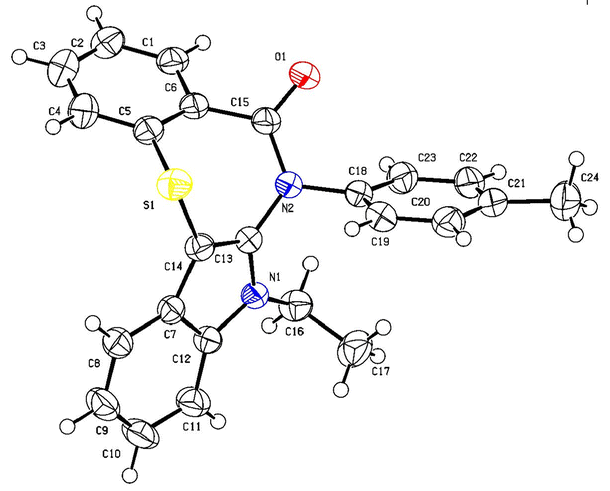 | ||
| Fig. 2 Single-crystal X-ray structure of 3a (CCDC 2426072). | ||
| a Reaction conditions: all the reactions were performed using substrates 2a–af (100 mg, 1.0 equiv.) in the presence of I2 (1.5 equiv.) and K2CO3 (3.0 equiv.) in 2 mL of 1,2-dichloroethane solvent at 90 °C. b Isolated yields are reported. c Yield of gram-scale reaction of substrate 2a (1.0 g, 2.68 mmol) under optimized reaction conditions. |
|---|
|
To showcase the potential applicability of this synthetic approach, a reaction was conducted on a gram scale using 2-((1-ethyl-1H-indol-3-yl)thio)-N-(p-tolyl)benzamide 2a (1.0 g, 2.68 mmol) under the standard reaction conditions. Gratifyingly, the transformation proceeded efficiently, affording 3a in 70% yield as illustrated in Table 2. Furthermore, we demonstrated the synthetic versatility of indole-fused benzothiazepinones by oxidizing sulfur atom present in the ring20 using m-CPBA under mild conditions. The corresponding sulfoxides and sulfones were obtained using 1 eq. and 4 eq. of m-CPBA, respectively, as illustrated in Scheme 2. To gain further insight into the proposed mechanism, a control experiment was conducted using a substrate 2ag derived from 2-phenylindole. However, when this substrate was subjected to the standard reaction conditions, the corresponding cyclized product was not obtained (Scheme 3a). Based on this observation and prior literature reports,21 a plausible reaction mechanism is proposed using substrate 2a, as illustrated in Scheme 3b. Initially, the substrate 2a undergoes iodination at the C3 position of the indole, leading to the formation of an iminium ion intermediate I.
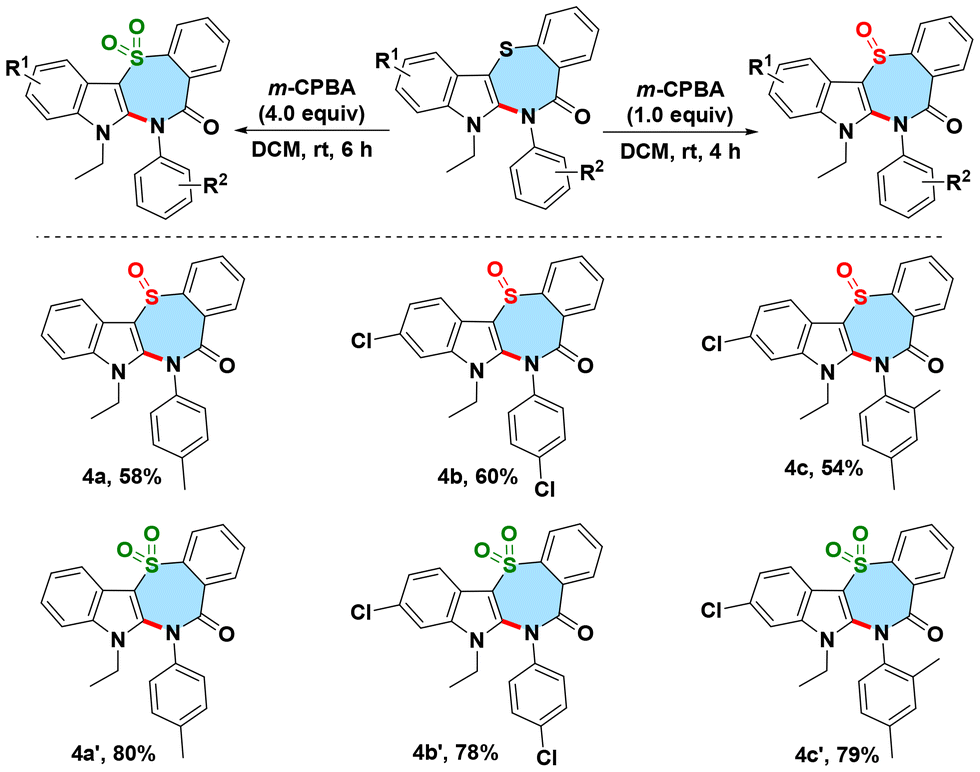 | ||
| Scheme 2 Synthetic transformation of indole-fused benzothiazepinones to corresponding sulfoxides and sulfones. | ||
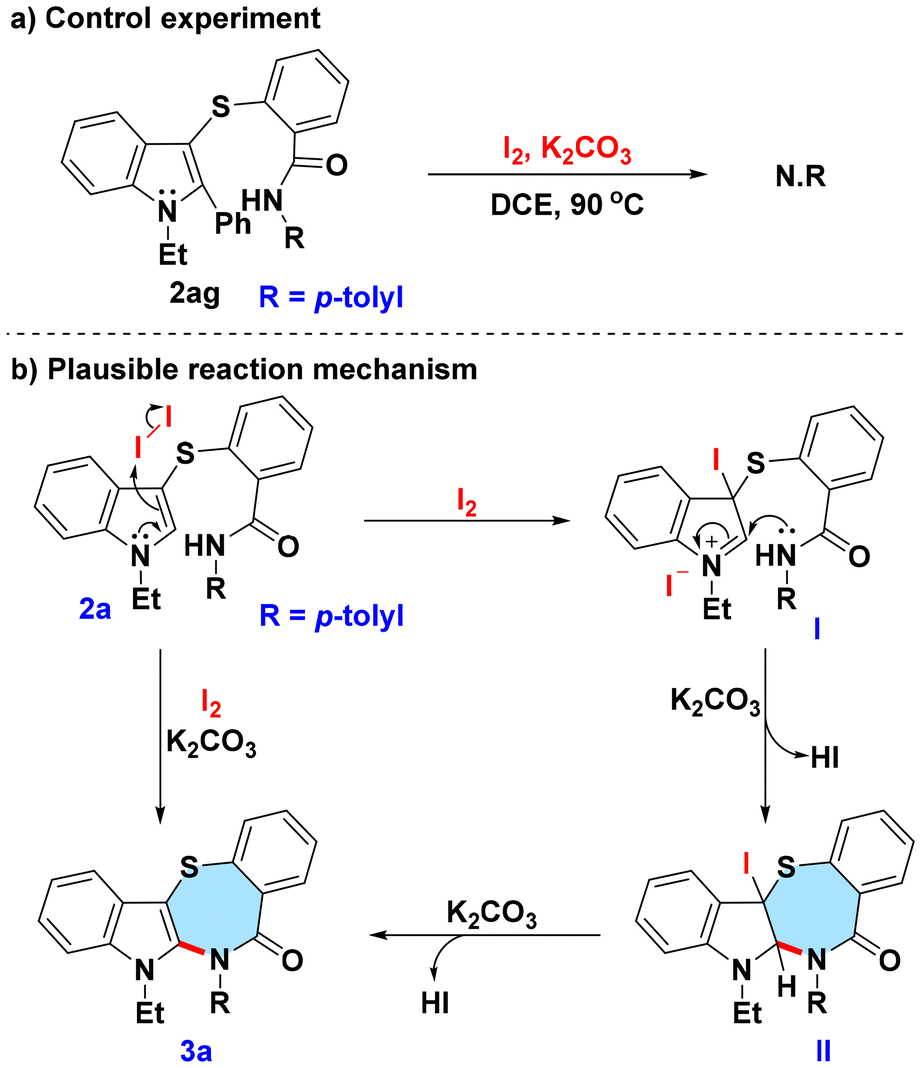 | ||
| Scheme 3 Control experiment and plausible reaction mechanism. | ||
Subsequently, the amide nitrogen undergoes an intramolecular nucleophilic attack at the C2 position of the indole, generating the seven-membered intermediate II. This intermediate then undergoes aromatization in the presence of a base, yielding the desired cyclized product, indole-fused benzothiazepinone 3a.
Conclusions
In conclusion, we have successfully developed a transition-metal-free, iodine-mediated protocol for the synthesis of biologically significant indole-fused benzothiazepinones through intramolecular C2 amidation of readily accessible amide-tethered C3-sulfenylindoles. This transformation proceeds via an electrophilic C3 iodination of indole, facilitating intramolecular cyclization to afford the target benzothiazepinones in good yields. The developed protocol is compatible with a broad substrate scope, demonstrating high functional group tolerance and scalability. Furthermore, the synthetic versatility of the obtained indole-fused benzothiazepinones was explored through their transformation into the corresponding sulfoxides and sulfones. Given the structural relevance of benzothiazepinone scaffolds in medicinal chemistry, this approach provides a valuable synthetic tool for the development of bioactive molecules and pharmaceutical intermediates.Conflicts of interest
There are no conflicts to declare.Data availability
The data supporting this article have been included as part of the SI: experimental procedures, characterization data, and copies of the 1H and 13C {1H} spectra of all new compounds are included. See DOI: https://doi.org/10.1039/d5ob00842e.CCDC 2426072 contains the supplementary crystallographic data for this paper.22
Acknowledgements
We thank the Department of Science and Technology (DST), New Delhi, India for the financial support for this work under a DST-SERB Start-up Research Grant SRG/2020/001836 and DST-INSPIRE Faculty Scheme DST/INSPI RE/04/2016/000295.References
- (a) S. Lepri, F. Buonerba, L. Goracci, I. Velilla, R. Ruzziconi, B. D. Schindler, S. M. Seo, S. Kaatz and G. Cruciani, J. Med. Chem., 2016, 59, 867–891 CrossRef CAS PubMed; (b) S. Pathania, R. K. Narang and R. K. Rawal, Eur. J. Med. Chem., 2019, 180, 486–508 CrossRef CAS PubMed; (c) M. F. Khan, M. M. Alam, G. Verma, W. Akhtar, M. Akhter and M. Shaquiquzzaman, Eur. J. Med. Chem., 2016, 120, 170–201 CrossRef CAS PubMed; (d) K. Laxmikeshav, P. Kumari and N. Shankaraiah, Med. Res. Rev., 2022, 42, 513–575 CrossRef CAS PubMed; (e) M. M. Heravi and V. Zadsirjan, RSC Adv., 2020, 10, 44247–44311 RSC; (f) Y. P. Zheng, J. X. Li, W. Q. Wu, C. R. Qi and H. F. Jiang, Org. Process Res. Dev., 2024, 28, 2988–3025 CrossRef CAS.
- (a) S. Han and M. Movassaghi, J. Am. Chem. Soc., 2011, 133, 10768–10771 CrossRef CAS PubMed; (b) J. Dai, W. Dan, U. Schneider and J. Wang, Eur. J. Med. Chem., 2018, 157, 622–656 CrossRef CAS PubMed; (c) C. Zheng and S.-L. You, Nat. Prod. Rep., 2019, 36, 1589–1605 RSC; (d) M. Z. Zhang, Q. Chen and G. F. Yang, Eur. J. Med. Chem., 2015, 89, 421–441 CrossRef CAS PubMed; (e) A. Dorababu, RSC Med. Chem., 2020, 11, 1335–1353 RSC; (f) A. Beato, A. Gori, B. Boucherle, M. Peuchmaur and R. Haudecoeur, J. Med. Chem., 2021, 64, 1392–1422 CrossRef CAS PubMed.
- H. L. Qin, J. Liu, W. Y. Fang, L. Ravindar and K. P. Rakesh, Eur. J. Med. Chem., 2020, 194, 112245 CrossRef CAS PubMed.
- K. Kaur, H. Verma, P. Gangwar, M. Dhiman and V. Jaitak, RSC Med. Chem., 2024, 15, 1329–1347 RSC.
- A. V. Danilenko, A. N. Volov, N. A. Volov, Y. B. Platonova and S. V. Savilov, Bioorg. Med. Chem. Lett., 2023, 90, 129349 CrossRef CAS PubMed.
- L. G. Humber, E. Ferdinandi, C. A. Demerson, S. Ahmed, U. Shah, D. Mobilio, J. Sabatucci, B. D. Lange, F. Labbadia, P. Hughes, J. DeVirgilio, G. Neuman, T. T. Chau and B. M. Weichman, J. Med. Chem., 1988, 31, 1712–1719 CrossRef CAS PubMed.
- C. Schultz, A. Link, M. Leost, D. W. Zaharevitz, R. Gussio, E. A. Sausville, L. Meijer and C. Kunick, J. Med. Chem., 1999, 42, 2909–2919 CrossRef CAS PubMed.
- R. B. Kargbo, ACS Med. Chem. Lett., 2022, 13, 888–890 CrossRef CAS PubMed.
- (a) N. Garg, T. Chandra, Archana, A. B. Jain and A. Kumar, Eur. J. Med. Chem., 2010, 45, 1529–1535 CrossRef CAS PubMed; (b) T. X. Li, J. Zhang, J. K. Pan, Z. X. Wu, D. Hu and B. Song, Eur. J. Med. Chem., 2017, 125, 657–662 CrossRef CAS PubMed; (c) J. B. Bariwal, K. D. Upadhyay, A. T. Manvar, J. C. Trivedi, J. S. Singh, K. S. Jain and A. K. Shah, Eur. J. Med. Chem., 2008, 43, 2279–2290 CrossRef CAS PubMed; (d) G. Campiani, S. Butini, C. Fattorusso, B. Catalanotti, S. Gemma, V. Nacci, E. Morelli, A. Cagnotto, I. Mereghetti, T. Mennini, M. Carli, P. Minetti, M. A. Di Cesare, D. Mastroianni, N. Scafetta, B. Galletti, M. A. Stasi, M. Castorina, L. Pacici, M. Vertechy, S. di Serio, O. Ghirardi, O. Tinti and P. Carminati, J. Med. Chem., 2004, 47, 143–157 CrossRef CAS PubMed.
- (a) B. B. Lohray, B. Jayachandran, V. Bhushan, E. Nandanan and T. Ravindranathan, J. Org. Chem., 1995, 60, 5983–5985 CrossRef CAS; (b) E. Carosati, R. Budriesi, P. Ioan, G. Cruciani, F. Fusi, M. Frosini, S. Saponara, F. Gasparrini, A. Ciogli, C. Villani, P. J. Stephens, F. J. Devlin, D. Spinelli and A. Chiarini, J. Med. Chem., 2009, 52, 6637–6648 CrossRef CAS PubMed.
- (a) J. Krapcho, E. R. Spitzmiller and C. F. Turk, J. Med. Chem., 1963, 6, 544–546 CrossRef CAS PubMed; (b) J. Krapcho and C. F. Turk, J. Med. Chem., 1966, 9, 191–195 CrossRef CAS PubMed; (c) J. Krapcho, C. F. Turk and J. J. Piala, J. Med. Chem., 1968, 11, 361–364 CrossRef CAS PubMed.
- (a) S. K. Bagal, A. D. Brown, P. J. Cox, K. Omoto, R. M. Owen, D. C. Pryde, B. Sidders, S. E. Skerratt, E. B. Stevens, R. I. Storer and N. A. Swain, J. Med. Chem., 2013, 56, 593–624 CrossRef CAS PubMed; (b) J. B. Bariwal, K. D. Upadhyay, A. T. Manvar, J. C. Trivedi, J. S. Singh, K. S. Jain and A. K. Shah, Eur. J. Med. Chem., 2008, 43, 2279–2290 CrossRef CAS PubMed.
- K. Yasunari, K. Maeda, M. Nakamura, T. Watanabe, J. Yoshikawa and A. Asada, Cardiovasc. Drug Rev., 2004, 22, 189–198 CrossRef CAS PubMed.
- S. Soto, E. Vaz, C. Dell'Aversana, R. Álvarez, L. Altucci and Á. R. de Lera, Org. Biomol. Chem., 2012, 10, 2101–2112 RSC.
- J. Wang, P. Z. Ren, G. P. Gu, Z. Y. Jiang, B. L. Xiang, S. Tang and A. Q. Jia, J. Org. Chem., 2022, 87, 9663–9674 CrossRef CAS PubMed.
- R. Mahato, N. Yadav and C. K. Hazra, Org. Lett., 2024, 26, 3911–3916 CrossRef CAS PubMed.
- K. Xie, Z. Shen, P. Cheng, H. Dong, Z. X. Yu and L. Zu, Chem. Sci., 2024, 15, 12732–12738 RSC.
- (a) W. J. Chiu, T. Y. Chu, I. J. Barve and C. M. Sun, Org. Lett., 2023, 25, 6246–6250 CrossRef CAS PubMed; (b) S. Biswas and S. Batra, Adv. Synth. Catal., 2011, 353, 2861–2867 CrossRef CAS; (c) T. U. Thikekar and C.-M. Sun, Adv. Synth. Catal., 2017, 359, 3388–3396 CrossRef CAS; (d) L. Xiao, B. Li, F. Xiao, C. Fu, L. Wei, Y. Dang, X.-Q. Dong and C.-J. Wang, Chem. Sci., 2022, 13, 4801–4812 RSC; (e) A. N. Singh Chauhan, G. Mali, G. Dua, P. Samant, A. Kumar and R. D. Erande, ACS Omega, 2023, 8, 27894–27919 CrossRef CAS PubMed; (f) T. U. Thikekar, M. Selvaraju and C.-M. Sun, Org. Lett., 2016, 18, 316–319 CrossRef CAS PubMed; (g) M. Kadagathur, S. Patra, D. K. Sigalapalli, N. Shankaraiah and N. D. Tangellamudi, Org. Biomol. Chem., 2021, 19, 738–764 RSC; (h) A. S. K. Hashmi, W. Yang and F. Rominger, Adv. Synth. Catal., 2012, 354, 1273–1279 CrossRef CAS; (i) H. L. Hua, B. S. Zhang, Y. T. He, Y. F. Qiu, J. Y. Hu, Y. C. Yang and Y. M. Liang, Chem. Commun., 2016, 52, 10396–10399 RSC; (j) T. Oishi, T. Uchikura and T. Akiyama, Chem. Commun., 2025, 61, 2576–2579 RSC.
- S. S. Marupalli, M. Arockiaraj and G. Singh, J. Org. Chem., 2023, 88, 12783–12791 CrossRef CAS PubMed.
- (a) V. Rajeshkumar, C. Neelamegam and S. Anandan, Org. Biomol. Chem., 2019, 17, 982–991 RSC; (b) M. Arockiaraj and V. Rajeshkumar, Adv. Synth. Catal., 2024, 366, 2557–2564 CrossRef CAS.
- (a) Y.-X. Li, H.-X. Wang, S. Ali, X.-F. Xia and Y.-M. Liang, Chem. Commun., 2012, 48, 2343–2345 RSC; (b) S. Badigenchala, V. Rajeshkumar and G. Sekar, Org. Biomol. Chem., 2016, 14, 2297–2305 RSC; (c) S. Badigenchala and G. Sekar, J. Org. Chem., 2017, 82, 7657–7665 CrossRef CAS PubMed; (d) H. M. Nelson, S. H. Reisberg, H. P. Shunatona, J. S. Patel and F. D. Toste, Angew. Chem., Int. Ed., 2014, 53, 5600–5603 CrossRef CAS PubMed; (e) W. Xie, G. Jiang, H. Liu, J. Hu, X. Pan, H. Zhang, X. Wan, Y. Lai and D. Ma, Angew. Chem., Int. Ed., 2013, 52, 12924–12927 CrossRef CAS PubMed.
- V. Rajeshkumar, CCDC 2426072: Experimental Crystal Structure Determination, 2025, DOI:10.5517/ccdc.csd.cc2mfjd0.
| This journal is © The Royal Society of Chemistry 2025 |