The role of molecular ambient adsorption on light–matter interactions of 2D few-layered ReSe2 photodiodes

Nitzan Cohen , Yarden Mazal Jahn , Nathan Samuel Shultzman and Assaf Ya'akobovitz *
Department of Mechanical Engineering, Faculty of Engineering Sciences, Ben-Gurion University of the Negev, Israel. E-mail: assafyaa@bgu.ac.il

Received 24th July 2025 , Accepted 29th October 2025

First published on 12th November 2025


Abstract

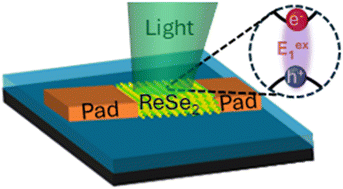
Photodiodes and transistors are key building blocks of optoelectronic devices. Two-dimensional rhenium diselenide (ReSe2) offers new prospects in such devices due to its moderate and direct bandgap. We show here that ambient conditions, specifically the interactions with oxygen atoms, play an instrumental role in enhancing the conductivity of positive charge carriers (holes) and photoconductivity in ReSe2. We characterized the electrical and optoelectrical responses of few-layered ReSe2 and ReSe2/hexagonal boron-nitride (hBN) heterostructures under different conditions of gating and illumination. We show that while the hBN encapsulation did not change the excitonic nature and atomic bonds of the ReSe2, it prevented its exposure to ambient oxygen, and as a result, dramatically deteriorated its conductivity, as the carrier mobility was reduced by two orders of magnitude. ReSe2 photodetectors that were exposed to the ambient atmosphere, on the other hand, experienced a gating-like effect and presented excellent performances with high currents (hundreds of nano-amps), responsivity (reaching ∼100 A W−1), detectivity, and external quantum efficiency (EQE, up to ∼104%). Therefore, we shed light on the fundamentals of the light–matter interactions of ReSe2 and demonstrate its ability to operate as a high-end electronic and optoelectronic component.

1. Introduction

Photodiodes are essential optoelectronic devices that convert incident photons into electrical signals through the photoelectric effect. Their rapid response, sensitivity to light of different wavelengths, and high external quantum efficiency (EQE) make them vital components in a wide range of applications, ranging from optical communication and environmental photodetection sensing to biomedical imaging and wearable optics. The increasing demand for high-performance and miniaturized photodiodes has boosted the research of new materials beyond traditional semiconductors like silicon. Two-dimensional (2D) transition metal dichalcogenide (TMD) materials have emerged as promising candidates for next-generation photodiodes due to their remarkable properties, including tunable bandgaps, strong light–matter interactions, and compatibility with flexible substrates.

Rhenium diselenide (ReSe2), a member of the 2D TMD family, has attracted growing attention due to its distinctive structural and electronic properties.1 Unlike many TMDs with a hexagonal isotropic lattice structure, ReSe2 crystallizes in a distorted 1T′ structure (triclinic asymmetry) due to Re–Re atomic bonding, which forms a Re4 diamond chain pattern along the b-axis. This structure results in in-plane anisotropy and weak interlayer coupling. Importantly, few-layered ReSe2 structures exhibit a moderate and thickness-independent p-type direct bandgap (∼1.3 eV),2 high chemical stability, and high mechanical stretchability.3 Moreover, the Re–Re diamond chain bond interactions induce highly oriented optical behavior with several excitonic emission peaks (most of which are observable at low temperatures) due to the non-bonded electrons related to the diamond chain Re atoms that dictate an internal electric field. The weak decoupling between ReSe2 monolayers further reduces the dielectric screening effect and allows this rich excitonic spectrum.4 These characteristics make ReSe2 an intriguing platform for electronic5,6 and optoelectronic7 applications.

ReSe2 is, therefore, a promising electrical and optical material as it displays several appealing features that distinguish it from other 2D semiconductors. Its intrinsic anisotropy leads to polarization-sensitive optical responses.4 Additionally, ReSe2 demonstrates broadband photoresponse from the visible to near-infrared regime with relatively high photoresponsivity and a long carrier lifetime.8 When a few-layered structure is considered, it has a thickness-independent bandgap, and its weak interlayer coupling ensures that even multi-layered ReSe2 structures demonstrate an optical response with minimal interlayer recombination losses. Furthermore, a previous study has shown the possible alloying of Re-dichalcogenides (i.e., replacement of atoms in the 2D lattice)9 and the building of Re-dichalcogenide heterostructures10 to further enrich their optical properties. Altogether, these characteristics position ReSe2 as a compelling material for photodiodes and other high-end optical applications.

Despite its promising potential, experimental understanding of the crosstalk between ReSe2 and the ambient atmosphere has remained unknown – a knowledge gap we intend to close in this work and emphasize its critical importance. We show here that few-layered ReSe2 devices demonstrate outstanding optoelectronic behavior, while benefiting from the stability and robustness of a few-layered structure. We encapsulated ReSe2 within hBN, which showed no excitonic and vibrational changes compared to ReSe2. However, the hBN encapsulation prevented the ambient oxygen from interacting with ReSe2. As oxygen adsorption showed dramatic enhancement of the conductivity of ReSe2 in a gating-like phenomenon,11 we show that the hBN encapsulation prevents the oxygen from interacting with ReSe2, thereby deteriorating its electrical and optoelectrical properties. Thus, the proper operation of ReSe2 functional devices relies on these interactions with the ambient atmosphere.

2. Results

2.1. Sample preparation and material characterization

We used Si/SiO2 wafers (highly doped n-type Si with resistivity < 0.005 Ω cm and thermal 280 nm thick SiO2) as a substrate for our devices. We photolithographically patterned Ti/Au electrodes in a lift-off process (evaporation of 5 nm and 50 nm thickness, respectively). We then mechanically transferred thin layers (∼10 nm thick) of ReSe2via a deterministic (under a microscope) dry exfoliation process such that the flakes are in contact with two electrodes, Fig. 1c. To improve the adhesion between the ReSe2 and the metal and the quality of the electrical contact, we annealed the chip at ∼80 °C for several minutes, as a previous study showed that such a process reduces contact resistance.10 We conducted an additional annealing process when we transferred the hBN layer, thus further improving the quality. We conducted experiments under standard room temperature conditions. Notably, the annealing processes enhance the removal of ambient absorbance molecules, including oxygen.
image file: d5nr03140k-f1.tif
Fig. 1 (a) High-resolution TEM image of ReSe2. Scale bar: 1 nm. (b) Illustration of the atomic structure of ReSe2. The Re diamond chain structures are emphasized. Optical image of (c) ReSe2 and (d) ReSe2/hBN heterostructures (the hBN layer is marked with a dashed line). Scale bars: 10 µm. Normalized Raman spectra of (e) ReSe2 and (f) ReSe2/hBN heterostructures. Normalized PL emission of (g) ReSe2 and (h) ReSe2/hBN heterostructure.

We first verified the atomic structure of our devices. We present a high-resolution transmission electron microscopy (TEM) image of ReSe2 in Fig. 1a and an illustration of its atomic structure in Fig. 1b. In both images, we emphasize the diamond chain structure. The TEM image also confirms the lattice parameters of 3.4 Å in the [1 0 0] direction and 3.1 Å in the [0 1 0] direction.

We optoelectrically characterized the devices as explained below, after which we encapsulated/covered them with a thin layer of hBN, Fig. 1d. The encapsulation process was also conducted deterministically via mechanical exfoliation under the microscope to improve the yield of the ReSe2/hBN heterostructures. The material characterization of the ReSe2 and ReSe2/hBN heterostructures included Raman and photoluminescence (PL) acquisitions, as well as topographic thickness measurements using AFM. The AFM scan showed that the thicknesses of our samples are ∼10 nm, see the SI. While ReSe2 is an anisotropic material, our samples’ thickness (exceeding 15 layers, each with a thickness of ∼0.65 nm) results in effective isotropic behavior since each layer is oriented differently. Overall, we characterized several tens of devices, all showing similar behavior. In the following, we present the characterization results of representative devices.

The Raman emission of ReSe2 was investigated thoroughly in a previous study.12 It was found that the distorted atomic structure of ReSe2 and the Re4 diamond chain result in a complex Raman spectrum with multiple active modes (i.e., 18 active Ag modes, including three active zero frequency modes), many of which overlap. Although the intensity of the peaks depends on the thickness and direction of the lattice, it was reported that a stable spectrum is maintained in mono-, few-layered, and bulk ReSe2. Indeed, we present the normalized Raman spectra of ReSe2 and ReSe2/hBN heterostructures in Fig. 1e and f, respectively. Both spectra demonstrated the multiple mode peaks, most noticeably the Eg-like mode at around 124 cm−1 and the Ag-like mode at around 159 cm−1 and 170 cm−1. Comparing the Raman spectrum of ReSe2 to that of the ReSe2/hBN heterostructure revealed that the two are similar, as both showed the same Raman mode peaks, although different intensities were observed. The different intensities are attributed to changes in layer thickness (encapsulated samples are thicker) and laser operation parameters. Importantly, the fact that no shift was observed in the peak positions demonstrates that no new atomic bonding, chemical doping, or mechanical strain took place due to the hBN encapsulation.

The normalized PL spectra of ReSe2 and ReSe2/hBN heterostructures are shown in Fig. 1g and h, respectively, and they show emissions similar to those shown elsewhere under room temperature and ambient conditions (see the discussion below).13 Notably, again, the emissions of ReSe2 and ReSe2/hBN heterostructures are similar, which indicates that the interaction with the hBN did not change the excitonic behavior of ReSe2.

2.2. Electrical characterization

We connected the electrodes to a source measurement unit (SMU) and applied drain–source voltage to ReSe2, while measuring the drain–source current. In addition, we applied a bias voltage to the wafer, serving as the gate electrode, Fig. 2a. Namely, the ReSe2 and ReSe2/hBN heterostructure devices operated as back-gated field-effect transistors (FET). We first acquired the current voltage (IV) characteristics of our samples under varying gate voltages, Fig. 2b and c. Notably, the IV curves imply p-type behavior of our samples, as increasing the gate voltage decreased the source current. Similar behavior was reported for ReSe2 in the literature.5
image file: d5nr03140k-f2.tif
Fig. 2 (a) Illustration of the electrical circuit setup. IV characteristics of (b) ReSe2 and (c) ReSe2/hBN devices. Insets: transfer curves.

Both ReSe2 and ReSe2/hBN transistors showed zero current under reverse bias voltage and hysteretic behavior under forward bias, as we observed different curves while increasing and decreasing the source voltage. Notably, while some samples showed small hysteresis, others showed a more significant one. This hysteresis is attributed to multiple defect sites (e.g., vacancies and stacking flaws) that induce electron traps. Among these defects, a previous study showed that the interface between ReSe2 and hBN layers is prone to electron traps that induce hysteresis and dramatically affect its operation when serving as a memory device. The defect state in the hBN also contributes to the trapping of charge carriers.14 Furthermore, more significant hysteresis was observed under large gate voltages due to enhanced electron–hole recombination processes. A comparison between the IV curves of the ReSe2 and the ReSe2/hBN heterostructures reveals that the former yielded significantly higher currents, as discussed below.

We further investigated the electrical behavior of the devices by acquiring their transfer curve, namely, by scanning the gate voltage while maintaining a fixed source–drain voltage, insets of Fig. 2b and c. More transfer curves are shown in the SI, which show significant hysteresis between the curves associated with increasing and decreasing gate voltages. We acquired a rough estimation for the transconductance slope and calculated the carrier mobility of our devices (more information regarding this calculation is given in the SI), which reached values of ∼10−1 cm2 V−1 s−1 for ReSe2. This value is comparable to values obtained at room temperature in other transition metal selenides.15 Notably, the mobility calculation is most probably an underestimation due to the effect of the metal–ReSe2 contacts and the fact that the contribution of the oxygen gating is not directly included in transconductance calculation. We obtained relatively high currents in the ReSe2 devices owing to their large thickness. The ReSe2/hBN heterostructure devices, on the other hand, showed an estimated carrier mobility of ∼10−3 cm2 V−1 s−1 and currents about an order of magnitude lower than the ReSe2 devices, indicating that the hBN encapsulation considerably reduced the conductivity of the devices.

2.3. Electro-optical characterization

We illuminated the devices using a 532 nm green light source while measuring their source currents, as illustrated in Fig. 3a. The IV characteristics of a device under different intensities of illumination are shown in Fig. 3b and c. The photocurrent, shown in Fig. 3d and e, was calculated as the difference between the source currents measured under illumination and dark conditions (Ilight and Idark, respectively), namely
 
Iph = IlightIdark(1)

image file: d5nr03140k-f3.tif
Fig. 3 (a) Illustration of the experiments conducted under illumination. IV characteristics of (b) ReSe2 and (c) ReSe2/hBN heterostructures subjected to varying illumination intensities. Photocurrent as a function of the source voltage for (d) ReSe2 and (e) ReSe2/hBN heterostructures.

Our measurements show that under low intensity illumination, increasing the laser power of the illumination increases the magnitude of the photocurrent. However, under high power illumination, this trend changes in both ReSe2 and ReSe2/hBN heterostructures, as we observe a reduction or saturation of the photocurrent (see the relationship between the maximal photocurrents and the illumination power in the SI). We investigate this observation in the following.

Responsivity, defined as the ratio between the photocurrent and the illumination power, is among the most important parameters of photodiodes defined as

 
image file: d5nr03140k-t1.tif(2)
where [P with combining circumflex] and S are the illumination power density and area of the illuminated sample, respectively. We have shown the responsivity in Fig. 4a and b. Importantly, ReSe2 presents high responsivity values, reaching 330 A W−1, Fig. 4a. These values are significantly higher than those reported for many 2D materials, such as GaSe16 and graphene,17 and comparable to the state-of-the-art values of other 2D materials.15 Importantly, the responsivity of ReSe2 is considerably higher than that of the commonly used Si or GaAs (both below 1, namely, several orders of magnitude lower than our measurements).16 A comparison between the responsivity of ReSe2 and ReSe2/hBN heterostructures again shows that the latter exhibits significantly lower values.


image file: d5nr03140k-f4.tif
Fig. 4 Responsivity of (a) ReSe2 and (b) ReSe2/hBN heterostructures. EQE of (c) ReSe2 and (d) ReSe2/hBN heterostructures.

The EQE indicates the number of electrons generated by an incident photon (EQE of 100% means that each photon induced a single electron–hole pair), while the detectivity, D, is the ability of the devices to detect small optical signals. They are defined as

 
image file: d5nr03140k-t2.tif(3)
 
image file: d5nr03140k-t3.tif(4)

Here h is the Planck constant, c is the speed of light, Rλ is the responsivity introduced in eqn (2), e is the elementry charge of an electron, Idark is the dark current, and λ is the incident light wavelength. The EQE is shown in Fig. 4c and d for ReSe2 and ReSe2/hBN heterostructures, respectively. Our ReSe2 samples showed high values of EQE reaching 7.5 × 10⁴%. The responsivity and EQE of several other ReSe2 devices subjected to a maximal source voltage of 20 V are shown in the SI, showing values between 10–250 A W−1 and 103%–5.8 × 10⁴%, respectively.

We calculated the detectivity to be ∼108 Jones. Here again, the ReSe2/hBN heterostructures showed significantly lower values than ReSe2, as the latter presented an EQE lower by about a factor of 2 and D about two orders of magnitude lower. Moreover, in some cases, illuminated ReSe2/hBN heterostructures demonstrated current saturation when subjected to large gate voltages (namely, constant drain–source current under increasing gate voltages), see the SI.

2.4. X-ray photoelectron spectroscopy study

We studied the atomic bonding and elemental composition of ReSe2 and ReSe2/hBN heterostructures using X-ray photoelectron spectroscopy (XPS), as shown in Fig. 5. Notably, both ReSe2 and ReSe2/hBN heterostructures showed similar XPS signals, as described in Fig. 5a (low resolution XPS scan) and Fig. 5b and c, which present the high resolution XPS scans of the Re 4f double peaks and the Se 3d peak – both are typical for ReSe2. A detailed analysis of the XPS signal of ReSe2 was given in our previous publication.3 We focus here on the deconvolution of the Re 4f double peak of ReSe2 and ReSe2/hBN heterostructures, which is composed of several sub-peaks. We observed a Re 4f7/2 sub-peak at 40.7 eV and a Re 4f5/2 sub-peak at 43.1 eV – both corresponding to Re–Se bonds. Additionally, a Re 4f7/2 sub-peak at 41.2 eV and a Re 4f5/2 sub-peak at 43.7 eV are related to Re–O bonds.
image file: d5nr03140k-f5.tif
Fig. 5 XPS measurements of ReSe2 devices. (a) Low resolution scan. (b) Scan of Re 4f. (c) Scan of Se 3d. Deconvolution of the Re 4f double peaks for (d) ReSe2 and (e) ReSe2/hBN heterostructures.

Fig. 5d and e show the deconvolution of Re 4f double peaks in ReSe2 and ReSe2/hBN heterostructures, respectively. Notably, we detected a similar background signal of about 400–600 counts in both measurements, and the signal in the case of ReSe2 was stronger. However, when comparing the ratios between the intensities of subpeaks related to Re–Se peaks to those associated with Re–O bonds, we find that the latter is more significant in the case of ReSe2. This observation indicates that more oxygen atoms exist in the pure ReSe2 measurement. Also, we observed subtle negative shifts of the ReSe2/hBN heterostructure subpeaks, which implies enhanced charge transfer due to the oxidation process of the ReSe2.

3. Discussion

A comparison between the Raman spectra of ReSe2 and ReSe2/hBN heterostructures demonstrated that the same vibrational mode peak positions appeared in both cases. The differences in the Raman peak intensities are associated with the modified absorption spectrum resulting from the hBN encapsulation.18 However, we noticed no shifts in the Raman peak positions, indicating no atomic bonding change, chemical doping, or mechanical strain occurred due to the hBN encapsulation. Analysis of the PL spectra of ReSe2 and ReSe2/hBN heterostructures shows a PL peak at ∼1.3 eV, which corresponds to the E1ex dipole excitation mode. This exciton appears in a direction parallel to the Re atom diamond chain and can be observed at room temperature. It was previously reported that hBN encapsulation enhanced the optical properties of some 2D materials, for example, by assisting in insulating 2D materials from the environment (i.e., it prevents interactions with humidity, contaminants, etc.),19 as the ambient atmosphere is often prone to alter the optical properties of TMDs.20,21 Also, hBN mitigates the effect of surface roughness of 2D materials that can operate as electron traps or stress concentration sites.22 Here, on the other hand, the PL spectrum of the ReSe2/hBN heterostructure showed PL emission with no observable difference compared to that of ReSe2. This finding indicates that the hBN encapsulation did not change the excitonic behavior of the ReSe2, with E1ex as the room temperature dominating dipole exciton.

Excitons play an instrumental role in the photoconductivity of optoelectrical devices. Specifically, TMDs demonstrate stable and strong room-temperature excitons since they have relatively large binding energies. For example, the binding energy of the ReSe2 E1ex excitons was reported to be ∼35 meV.4,22 In general, excitons can affect the carrier mobility, modify the band structure, and interact with phonons. When illuminated and subjected to an electric field (i.e., when operated as photodiodes), some excitons are dissociated into free charge electron–hole carriers, thereby contributing to photoconductivity.

The interaction between ReSe2 and hBN is complicated. Previous work has shown that hBN encapsulation induces an interface dipole and charge compression between the hBN and ReSe2 layers.23 As a result, charge depletion layer occurs near the interface, while excessive charge is accumulated far from the interface – this behavior is known as the quasibonding mechanism in heterointerfaces of the 2D materials (see more information regarding the ReSe2–hBN interlayer interactions elsewhere23). In our devices, we observed that the encapsulation did not change the excitonic behavior and atomic bonding, indicating that the conductivity change observed due to the encapsulation did not stem from the excitonic characteristic or chemical doping of the devices. On the other hand, it was reported that ambient oxygen has a considerable gating-like effect on ReSe2, which improves its conductivity via enrichment of positive charge carriers.22 This effect was also observed in ReS2; however, due to its n-type behavior, it reduced its conductivity. We, therefore, conclude that the reduction in conductivity and photoconductivity of ReSe2/hBN heterostructures is attributed to the lack of oxygen p-doping that occurred in ReSe2 devices exposed to the ambient atmosphere. Indeed, we confirmed the enhanced oxidation of ReSe2 compared to that of the ReSe2/hBN heterostructure by means of XPS measurements, Fig. 5.

We schematically describe oxygen molecule interactions with ReSe2 in Fig. 6a and further confirmed the oxygen p-doping effect in a separate set of experiments, in which we applied IV measurements to a ReSe2 device exposed to varying oxygen concentrations. In these experiments, the devices were placed under high-vacuum conditions for several hours to desorb oxygen and ambient contaminants. Then, we exposed the devices to varying oxygen concentrations (starting from low oxygen concentrations and slowly increasing). The acquired IV curves are shown in Fig. 6b, and the corresponding maximal currents are depicted in the inset of Fig. 6b. The linearized slopes of the IV curves, roughly representing the resistance of the device, are shown in Fig. 6c. Indeed, these results show that despite subtle differences in the oxygen concentrations (we changed the concentration from ∼10−4 mol L−1 to ∼3 × 10⁻⁴ mol L−1), we observed significant resistance and current changes, reaching 250%.


image file: d5nr03140k-f6.tif
Fig. 6 (a) Illustration of the interactions of O2 molecules with ReSe2. Re, S, and O atoms are depicted as blue, yellow, and red colored spheres, respectively. Inset: enlarged view of the interaction between the ReSe2 and an oxygen molecule. Measurements under varying concentrations of oxygen: (b) IV curves. Inset: maximal current acquired under different concentrations of oxygen. (c) Resistance as a function of oxygen concentration.

Furthermore, we show several transfer curves of ReSe2 devices subjected to fixed source–drain voltages in the SI. We observed significant hysteresis when comparing the forward and backward bias voltage sweeps. Previous studies correlated this hysteresis to the accumulation of oxidation traps in TMDs.24,25 Indeed, the voltage difference we observed between the forward and backward voltage sweeps is on the order of ∼10 V (compared to ∼1 V reported elsewhere). Therefore, this hysteretic behavior provides additional evidence of the significant role played by ReSe2–oxide interactions. On the other hand, we showed the impact of the lack of the oxygen gating-like effect in ReSe2/hBN heterostructures that demonstrated lower carrier mobility and photocurrent saturation under a large gate voltage and high illumination power (see the SI), while ReSe2 exposed to the ambient atmosphere presented high mobility and current enhancement across the entire operation range. Altogether, our observations emphasize the importance of the ReSe2–oxygen interactions in the desired operation of these devices.

Under low-intensity illumination, our devices showed increased photocurrent with the increase of illumination power due to increased excitation of charge carriers. However, this trend changed in some cases, as high illumination power resulted in a reduction/saturation of the photocurrent (Fig. 3d and the SI). Moreover, the responsivity and EQE demonstrated maximal values for low power illumination (Fig. 4), indicating more efficient operation of the devices when fewer excitons were excited. Exciton–exciton annihilation (EEA) is a non-emissive process in which excitons interact with each other, resulting in their enhanced thermal relaxation and reduced light emission. Indeed, photocurrent and EQE reductions are also reported elsewhere26 and are associated with multiple excitons and the increased probability of the EEA process.27 Similarly, in our devices, since high illumination power induced multiple excitons, it encouraged non-radiative exciton–exciton interactions, which reduced the Rλ, EQE, and consequently, the photocurrent.

Lastly, our devices showed excellent performance compared to other studies of 2D photodiodes. Indeed, the responsivity values obtained for our devices (on the order of several hundreds) and the EQE values (on the order of 104%) are comparable to state-of-the-art 2D monolayers. The fact that the EQE is larger than 100% and the high responsivity value indicate that the charge multiplication (CM) process occurred. While reported in semiconductors like silicon28 and nanomaterials like nanotubes and quantum dots, CM was recently demonstrated in 2D materials.29 In this process, high-energy free carriers, which are subjected to an electronic field, relax by generating an additional electron–hole pair (sometimes referred to as “impact ionization”28). Furthermore, a recent study has shown that due to the strong electron–hole interactions in thin layered TMDs, CM originating from excited electrons is highly probable, and enhances electronic and photoelectronic transport,30 as we observed in the present work. Additionally, it is shown elsewhere that the bandgap of ReSe2 presents a small variation with respect to its thickness, which is highly advantageous, as our few-layered structures allow high design flexibility and benefit from improved robustness. Taken together, the few-layered ReSe2 samples demonstrate outstanding optoelectronic behavior while allowing operation in the visible wavelength range.

4. Conclusions

To conclude, we built ReSe2 and ReSe2/hBN transistors and photodetectors. We then characterized their optoelectronic performances under different conditions. We found that these p-type devices showed high responsivity, outstanding EQE, and detectivity. We showed that interactions with ambient oxygen play an essential role in enhancing the conductivity and photoconductivity of these devices due to their gating-like p-type enhancement effect. We found that hBN encapsulation does not change the excitonic behavior of the ReSe2 nor its atomic bonding. However, it prevents its interactions with oxygen, and thus it limits its conductivity and photoconductivity, deteriorates its responsivity, and sometimes saturates the devices’ currents. Therefore, we uncovered the light–matter interactions of ReSe2, enabling their future integration into advanced optoelectronic devices, such as photovoltaic cells, electronic components, and more.

Conflicts of interest

There are no conflicts to declare.

Data availability

The data supporting this article are available within this article and as part of the supplementary information (SI). Supplementary information is available. See DOI: https://doi.org/10.1039/d5nr03140k.

Acknowledgements

The authors acknowledge the support of the Israeli Ministry of Science and Technology (MOST), grant number 6013. Also, we thank Dr Alex Upcher for his assistance with the TEM measurements. We acknowledge Dr Lee Shelly for assistance in XPS measurements. Finally, we thank Guy Alboteanu for his useful advice.

References

  1. M. M. A. Mahmoud and D. P. Joubert, First principles study of the structural, stability properties and lattice thermal conductivity of bulk ReSe2, Mater. Today: Proc., 2018, 5, 10424–10430,  DOI:10.1016/j.matpr.2017.12.201.
  2. S. Tongay, H. Sahin, C. Ko, A. Luce, W. Fan, K. Liu, J. Zhou, Y. S. Huang, C. H. Ho, J. Yan, D. F. Ogletree, S. Aloni, J. Ji, S. Li, J. Li, F. M. Peeters and J. Wu, Monolayer Behaviour in Bulk ReS2 Due to Electronic and Vibrational Decoupling, Nat. Commun., 2014, 5, 3252,  DOI:10.1038/ncomms4252.
  3. G. Alboteanu and A. Ya'akobovitz, Exceptionally Large Fracture Strength and Stretchability of 2D ReS2 and ReSe2, Nanoscale, 2024, 16(7), 3454–3461,  10.1039/d3nr03670g.
  4. C. H. Ho and Z. Z. Liu, Complete-Series Excitonic Dipole Emissions in Few Layer ReS2 and ReSe2 Observed by Polarized Photoluminescence Spectroscopy, Nano Energy, 2019, 56, 641–650,  DOI:10.1016/j.nanoen.2018.12.014.
  5. C. M. Corbet, S. S. Sonde, E. Tutuc and S. K. Banerjee, Improved Contact Resistance in ReSe2 Thin Film Field-Effect Transistors, Appl. Phys. Lett., 2016, 108(16), 162104,  DOI:10.1063/1.4947468.
  6. E. Faella, K. Intonti, L. Viscardi, F. Giubileo, A. Kumar, H. T. Lam, K. Anastasiou, M. F. Craciun, S. Russo and A. Di Bartolomeo, Electric Transport in Few-Layer ReSe2 Transistors Modulated by Air Pressure and Light, Nanomaterials, 2022, 12(11), 1886,  DOI:10.3390/nano12111886.
  7. F. Liu, S. Zheng, A. Chaturvedi, V. Zólyomi, J. Zhou, Q. Fu, C. Zhu, P. Yu, Q. Zeng, N. D. Drummond, H. J. Fan, C. Kloc, V. I. Fal'ko, X. He and Z. Liu, Optoelectronic Properties of Atomically Thin ReSSe with Weak Interlayer Coupling, Nanoscale, 2016, 8(11), 5826–5834,  10.1039/c5nr08440g.
  8. J. Kim, K. Heo, D. H. Kang, C. Shin, S. Lee, H. Y. Yu and J. H. Park, Rhenium Diselenide (ReSe2) Near-Infrared Photodetector: Performance Enhancement by Selective p-Doping Technique, Adv. Sci., 2019, 6(21), 1901255,  DOI:10.1002/advs.201901255.
  9. W. Wen, Y. Zhu, X. Liu, H. P. Hsu, Z. Fei, Y. Chen, X. Wang, M. Zhang, K. H. Lin, F. S. Huang, Y. P. Wang, Y. S. Huang, C. H. Ho, P. H. Tan, C. Jin and L. Xie, Anisotropic Spectroscopy and Electrical Properties of 2D ReS2(1−x)Se2x Alloys with Distorted 1T Structure, Small, 2017, 13(12), 1–9,  DOI:10.1002/smll.201603788.
  10. Y. C. Li, X. X. Li, G. Zeng, Y. C. Chen, D. B. Chen, B. F. Peng, L. Y. Zhu, D. W. Zhang and H. L. Lu, High Optoelectronic Performance of a Local-Back-Gate ReS2/ReSe2heterojunction Phototransistor with Hafnium Oxide Dielectric, Nanoscale, 2021, 13(34), 14435–14441,  10.1039/d1nr02728j.
  11. S. Yang, S. Tongay, Y. Li, Q. Yue, J. B. Xia, S. S. Li, J. Li and S. H. Wei, Layer-Dependent Electrical and Optoelectronic Responses of ReSe2 Nanosheet Transistors, Nanoscale, 2014, 6(13), 7226–7231,  10.1039/c4nr01741b.
  12. D. Wolverson, S. Crampin, A. S. Kazemi, A. Ilie and S. J. Bending, Raman Spectra of Monolayer, Few-Layer, and Bulk ReSe2: An Anisotropic Layered Semiconductor, ACS Nano, 2014, 8(11), 11154–11164,  DOI:10.1021/nn5053926.
  13. B. Jariwala, D. Voiry, A. Jindal, B. A. Chalke, R. Bapat, A. Thamizhavel, M. Chhowalla, M. Deshmukh and A. Bhattacharya, Synthesis and Characterization of ReS2 and ReSe2 Layered Chalcogenide Single Crystals, Chem. Mater., 2016, 28(10), 3352–3359,  DOI:10.1021/ACS.CHEMMATER.6B00364.
  14. M. Y. Tsai, C. T. Huang, C. Y. Lin, M. P. Lee, F. S. Yang, M. Li, Y. M. Chang, K. Watanabe, T. Taniguchi, C. H. Ho, W. W. Wu, M. Yamamoto, J. L. Wu, P. W. Chiu and Y. F. Lin, A Reconfigurable Transistor and Memory Based on a Two-Dimensional Heterostructure and Photoinduced Trapping, Nat. Electron., 2023, 6(10), 755–764,  DOI:10.1038/S41928-023-01034-7 , SUBJMETA.
  15. F. Reale, P. Palczynski, I. Amit, G. F. Jones, J. D. Mehew, A. Bacon, N. Ni, P. C. Sherrell, S. Agnoli, M. F. Craciun, S. Russo and C. Mattevi, High-Mobility and High-Optical Quality Atomically Thin WS2, Sci. Rep., 2017, 7(1), 1–10,  DOI:10.1038/s41598-017-14928-2.
  16. P. Hu, Z. Wen, L. Wang, P. Tan and K. Xiao, Synthesis of Few-Layer GaSe Nanosheets for High Performance Photodetectors, ACS Nano, 2012, 6(7), 5988–5994,  DOI:10.1021/nn300889c.
  17. F. Xia, T. Mueller, Y. M. Lin, A. Valdes-Garcia and P. Avouris, Ultrafast Graphene Photodetector, Nat. Nanotechnol., 2009, 4(12), 839–843,  DOI:10.1038/nnano.2009.292.
  18. G. R. Bhimanapati, N. R. Glavin and J. A. Robinson, 2D Boron Nitride: Synthesis and Applications. In Semiconductors and Semimetals, Academic Press Inc., 2016, vol. 95, pp 101–147.  DOI:10.1016/bs.semsem.2016.04.004.
  19. D. H. Lee, N. H. Kim, S. Jung, J. Park, B. K. Kim, M. H. Bae, Y. J. Yun, S. N. Yi and D. H. Ha, HBN Encapsulation Effects on the Phonon Modes of MoS2 with a Thickness of 1 to 10 Layers, Adv. Mater. Interfaces, 2023, 10(10), 2300002,  DOI:10.1002/admi.202300002.
  20. A. Pradhan, G. Alboteanu, A. Ya'akobovitz and A. Niv, Toward Monolayered Solar Cells: Luminescence Properties and Light Soaking in TMDs, ACS Appl. Mater. Interfaces, 2024, 16(22), 28435–28440,  DOI:10.1021/acsami.4c02368.
  21. S. Vandana, V. Kochat, J. Lee, V. Varshney, S. Yazdi, J. Shen, S. Kosolwattana, S. Vinod, R. Vajtai, A. K. Roy, C. S. Tiwary and P. M. Ajayan, 2D Heterostructure Coatings of HBN-MoS2 Layers for Corrosion Resistance, J. Phys. D: Appl. Phys., 2016, 50(4), 045301,  DOI:10.1088/1361-6463/aa5001.
  22. G. H. Lee, X. Cui, Y. D. Kim, G. Arefe, X. Zhang, C. H. Lee, F. Ye, K. Watanabe, T. Taniguchi, P. Kim and J. Hone, Highly Stable, Dual-Gated MoS2 Transistors Encapsulated by Hexagonal Boron Nitride with Gate-Controllable Contact, Resistance, and Threshold Voltage, ACS Nano, 2015, 9(7), 7019–7026,  DOI:10.1021/acsnano.5b01341.
  23. J.-H. Ko, G. Lee, W. Jang and A. Soon, Illustrating the Pertinacious Interlayer Charge Compression Effect in van der Waals Heterointerfaces, 2024.  DOI:10.5281/zenodo.10651766.
  24. Y. Park, H. W. Baac, J. Heo and G. Yoo, Thermally Activated Trap Charges Responsible for Hysteresis in Multilayer MoS2 Field-Effect Transistors, Appl. Phys. Lett., 2016, 108(8), 1,  DOI:10.1063/1.4942406.
  25. Y. Guo, X. Wei, J. Shu, B. Liu, J. Yin, C. Guan, Y. Han, S. Gao and Q. Chen, Charge Trapping at the MoS2-SiO2 Interface and Its Effects on the Characteristics of MoS2 Metal-Oxide-Semiconductor Field Effect Transistors, Appl. Phys. Lett., 2015, 106(10), 43,  DOI:10.1063/1.4914968.
  26. E. Linardy, D. Yadav, D. Vella, I. A. Verzhbitskiy, K. Watanabe, T. Taniguchi, F. Pauly, M. Trushin and G. Eda, Harnessing Exciton-Exciton Annihilation in Two-Dimensional Semiconductors, Nano Lett., 2020, 20(3), 1647–1653,  DOI:10.1021/acs.nanolett.9b04756.
  27. Y. Hoshi, T. Kuroda, M. Okada, R. Moriya, S. Masubuchi, K. Watanabe, T. Taniguchi, R. Kitaura and T. Machida, Suppression of Exciton-Exciton Annihilation in Tungsten Disulfide Monolayers Encapsulated by Hexagonal Boron Nitrides, Phys. Rev. B:Condens. Matter Mater. Phys., 2017, 95(24), 241403,  DOI:10.1103/PhysRevB.95.241403.
  28. G. Casse, D. Forshaw, T. Huse, I. Tsurin, M. Wormald, M. Lozano and G. Pellegrini, Charge Multiplication in Irradiated Segmented Silicon Detectors with Special Strip Processing, Nucl. Instrum. Methods Phys. Res., Sect. A, 2013, 699, 9–13,  DOI:10.1016/J.NIMA.2012.04.033.
  29. J. H. Kim, M. R. Bergren, J. C. Park, S. Adhikari, M. Lorke, T. Frauenheim, D. H. Choe, B. Kim, H. Choi, T. Gregorkiewicz and Y. H. Lee, Carrier Multiplication in van Der Waals Layered Transition Metal Dichalcogenides, Nat. Commun., 2019, 10(1), 1–9,  DOI:10.1038/S41467-019-13325-9 , TECHMETA.
  30. F. Barati, M. Grossnickle, S. Su, R. K. Lake, V. Aji and N. M. Gabor, Hot Carrier-Enhanced Interlayer Electron-Hole Pair Multiplication in 2D Semiconductor Heterostructure Photocells, Nat. Nanotechnol., 2017, 12(12), 1134–1139,  DOI:10.1038/NNANO.2017.203 , TECHMETA.

This journal is © The Royal Society of Chemistry 2025
Click here to see how this site uses Cookies. View our privacy policy here.