


 PLATFORM UPDATE:


Structures, biosynthetic pathways, and biological significance of bacterial aryl-heterocycle metallophores with emphasis on yersiniabactin-type derivatives

Abstract
Covering: up to 2025
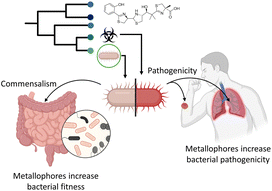
Metallophores are metal-chelating natural products produced by microorganisms to scavenge essential metal ions in nutrient-limited environments. Among them, yersiniabactin-type metallophores (YTMs) represent a structurally and functionally distinct subgroup with a growing role in host–microbe and microbe–microbe interactions. In contrast to flexible hydroxamate- and carboxylate-type siderophores, YTMs feature a linear, pre-organized arrangement of aryl and five-membered heterocycles, often derived from modular nonribosomal peptide synthetase (NRPS) pathways in combination with polyketide synthase (PKS) domains. Their biosynthesis is encoded by gene clusters that integrate precursor formation, assembly line machinery, and metal transport components. Salicylic acid-derived aryl units and cysteine/serine-derived heterocycles are tailored through oxidation, methylation, and glycosylation, giving rise to complex chelators with a broad metal-binding profile—including Cu(II), Co(II), Ni(II), and Zn(II)—but weaker Fe(III) affinity. Due to structural ambiguity in current terminology, we propose a refined definition for YTMs based on specific connectivity of aryl and heterocyclic units and demonstrated metal chelation. We distinguish YTMs from simpler aryl-hetaryl siderophores such as anguibactin and pre-acinetobactin, and argue against broader umbrella terms like “mixed” or “salicyl-capped” siderophores. This review provides a comprehensive overview of the structural, biosynthetic, and genomic features of YTMs and introduces a classification framework based on a comprehensive biosynthetic pathway survey to facilitate the comparisons across natural product families. Given their prevalence in pathogens prioritized by the World Health Organization, including Pseudomonas aeruginosa and Mycobacterium tuberculosis, YTMs represent promising targets for both ecological and therapeutic exploration.
 Please wait while we load your content...


