


 PLATFORM UPDATE:


Functional organic binder-enhanced vertical graphene–silicon-based anodes for high-performance lithium-ion batteries
Abstract
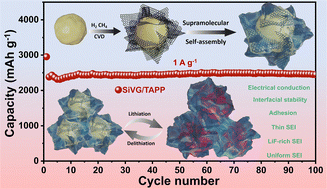
Vertical graphene (VG) possesses high intrinsic electrical conductivity and superior mechanical buffering, which endow silicon–vertical graphene (SiVG) anodes with a rapid electron transport channel and effective suppression of volumetric expansion. However, challenges persist due to weak interfacial interactions (particle–particle and particle–conductive agent) and the formation of unstable solid–electrolyte interphase (SEI) layers. To address these limitations, we developed a supramolecular cross-linked conductive polymer binder by combining hyperbranched tannic acid (TA) with the conductive polymer poly(3,4-ethylenedioxythiophene):polystyrene sulfonate (PEDOT:PSS). Through hydrogen bonding and π–π conjugation, this binder significantly enhances the interfacial adhesion between the binder and SiVG particles, thereby integrating active materials, binders, and current collectors into a robust conductive network. Crucially, the polyphenolic functional groups from TA synergize with conductive polymer chains to simultaneously stabilize SEI formation and accelerate interfacial electron transfer kinetics. As a result, the SiVG/TAPP composite anode delivers a reversible specific capacity of 2449.3 mAh g−1 after 100 cycles at 1.0 A g−1 (86.9% capacity retention), while maintaining 1091.2 mAh g−1 at a high current density of 8.0 A g−1.
 Please wait while we load your content...


