


Microengineered diabetic wound-on-a-chip model for emulating chronic wound dynamics
 ab
and
ab
and
Abstract
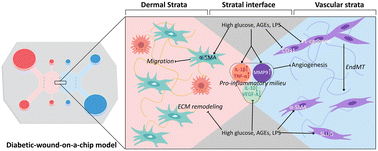
Diabetic wounds, which affect 19–34% of individuals with diabetes mellitus, remain a serious complication due to their chronic, non-healing nature and high risk of limb amputation. Traditional 2D in vitro systems and animal models often fail to replicate the intricate cellular interactions and microenvironmental complexity of human diabetic wounds. To address this gap, a humanized 3D diabetic wound-on-a-chip (DWOC) model was developed to simulate key aspects of diabetic wound pathology under physiologically relevant conditions. This four-channel microfluidic platform integrates human dermal fibroblasts and macrophages within a collagen I matrix to mimic the dermis, alongside endothelial cells embedded in Matrigel to represent the vascular compartment. The system was subjected to hyperglycemic conditions with added advanced glycation end-products (AGEs) and lipopolysaccharide (LPS), alongside normoglycemic controls. Cellular viability, extracellular matrix (ECM) remodeling, myofibroblast differentiation, angiogenesis, and intercellular signaling were assessed using immunofluorescence markers (CD68, α-SMA, CD31, VE-cadherin, SLUG). Cytokine profiling (ELISA, multiplex assays) evaluated inflammatory responses. The DWOC effectively replicated hallmarks of diabetic wound pathology, including impaired ECM remodeling, disrupted dermal–vascular cell crosstalk, defective angiogenesis, and signs of endothelial-to-mesenchymal transition (EndMT) in endothelial cells under diabetic stress. Elevated pro-inflammatory markers (IL-1β, TNF-α, MMP9) and reduced anti-inflammatory/angiogenic factors (IL-10, VEGF-A) reflected the chronic inflammatory and angiogenic imbalance characteristic of non-healing diabetic ulcers. This advanced DWOC platform offers a physiologically relevant, human-specific model for studying diabetic wound healing, highlighting endothelial-to-mesenchymal transition as a critical pathological feature and enabling preclinical evaluation of targeted therapies.
 Please wait while we load your content...


