An astronomically validated U–Pb reference material for dating Quaternary speleothems

Jian Wang a, Le Kang a, Xiaowen Niu a, Haiwei Zhang a, Youwei Li ab, Jingyao Zhao a, Rishui Chen a, Jon Woodhead c, Liang-Liang Zhang d, Shitou Wu e, Feng Liang f, Xuexue Jia a, Xiyu Dong a, Youfeng Ning a and Hai Cheng *ag
aInstitute of Global Environmental Change, Xi'an Jiaotong University, Xi'an, 712000, China. E-mail: cheng021@xjtu.edu.cn; Tel: +86-029-88965119
bInstitute of Mountain Resources, Guizhou Academy of Sciences, Guiyang, 550001, China
cSchool of Geography, Earth and Atmospheric Sciences, The University of Melbourne, VIC 3010, Australia
dState Key Laboratory of Geological Processes and Mineral Resources, Institute of Earth Sciences, China University of Geosciences, Beijing 100083, China
eState Key Laboratory of Lithospheric and Environmental Coevolution, Institute of Geology and Geophysics, Chinese Academy of Sciences, Beijing, 100029, China
fKey Laboratory of Carbonate Reservoirs, CNPC, Hangzhou, 310023, China
gInstitute of Earth Environment, Chinese Academy of Sciences, State Key Laboratory of Loess and Quaternary Geology, Xi'an, 710061, China

Received 22nd June 2025 , Accepted 1st September 2025

First published on 4th September 2025


Abstract

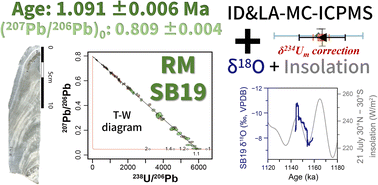
Well-characterized reference materials (RMs) are essential for advancing laser ablation (LA) U–Pb carbonate geochronology, yet Quaternary carbonate RMs with stringent accuracy constraints are still lacking. Here, we present a comprehensive inter-laboratory study of the speleothem sample SB19 (U: 3.5 ± 1.8 μg g−1) employing both LA and isotope dilution (ID) methods. LA-MC-ICPMS analyses of the stratigraphically distinct subsamples demonstrate excellent inter- and intra-laboratory reproducibility. High-precision measured δ234U data were also obtained for SB19, allowing accurate corrections for the initial disequilibrium. The resultant chronology reveals a robust correlation between the SB19 δ18O record and theoretical solar insolation curves on the precession scale, providing a verification of its age accuracy (±6 kyr, 2σ). Notably, (207Pb/206Pb)0 ratios are quite similar among subsamples (RSD < 0.5%), which can be used as a monitoring reference for studying the initial lead isotope composition and is applicable to related research such as paleoclimate reconstruction. Syntheses of ID (n = 15) and LA datasets of the SB19 yield recommended values: age = 1.091 ± 0.006 Ma and (207Pb/206Pb)0 = 0.809 ± 0.004. SB19 meets the stringent requirements of LA carbonate U–Pb dating RMs (∼0.5% relative uncertainty in age and initial Pb isotopic ratios at 2σ), particularly for dating Quaternary speleothem samples. This integrated work establishes a new paradigm for carbonate RM validation by combining radiometric dating, geochemical proxies, and insolation tuning.

1 Introduction

U–Pb dating of carbonates is widely used in research fields of paleoclimate, paleoenvironment, biological evolution, Earth's crustal processes, ore-forming mechanisms, etc.1–4 Early U–Pb dating of carbonates mainly relied on isotope dilution (ID) methods, which generally required large sample sizes (multiple aliquots of ∼0.1 g) due to low U and often gave high common Pb contents.4 These limitations, together with high demands for ultraclean laboratory environments especially with a low Pb background, retarded progress in ID U–Pb dating of carbonates over the past few decades.3 In recent years, the continuous development of in situ techniques, especially laser ablation inductively coupled plasma mass spectrometry (LA-ICPMS), has propelled U–Pb dating of carbonates to the forefront of the field.5–8 The LA method can make full use of the non-uniform distribution of U content in samples and quickly obtain a larger number of data points, thereby producing well-defined isochrons that are essential for U–Pb dating.3,9

One key necessity for further development of the LA method lies in the establishment of a series of matrix-matched reference materials (RMs) that meet stringent criteria of homogeneity, have suitable U concentrations and ages,10–12 and provide sufficient material for long-term availability. There have been a number of studies of this type providing carbonate RMs, such as WC-1 (254.4 ± 6.4 Ma),10 ASH15 (2.965 ± 0.011 Ma),13,14 JT (13.797 ± 0.031 Ma),15 AHX-1a (209.8 ± 1.3 Ma),16 PTKD-2 (153.7 ± 1.7 Ma),17 TARIM (208.5 ± 0.6 Ma),12 Duff Brown Tank (64.04 ± 0.67 Ma),18 and RA138 (321.99 ± 0.65 Ma).19 However, there are still some deficiencies,12 especially the lack of RMs for the Quaternary period (2.588 Ma to present). The RM ASH15, the youngest RM currently, dated at 2.965 Ma (revised from 3.005 Ma), still predates the Quaternary and has uncertain stratigraphic homogeneity due to its pedogenic origin (Negev Desert, Israel). As such, there remains an urgent need for developing Quaternary-specific carbonate RMs.

Quaternary carbonate U–Pb geochronology has emerged as a pivotal tool for reconstructing high-resolution paleoclimate records from speleothems (aragonite/calcite), particularly for resolving dynamics of climate variability on orbital-to-millennial timescales. While U–Th dating remains the gold standard for late Quaternary studies, its applicability is fundamentally limited by an upper limit of ∼600 ka (kilo-annum), when the 230Th–238U system is essentially close to the secular equilibrium state.3,20 U–Pb chronometry overcomes this temporal barrier, enabling absolute dating of speleothem samples to unveil a number of important climate mysteries older than ∼600 ka, such as millennial-scale climate variability and the Middle Pleistocene Transition (MPT).3,20–22 In this regard, selecting appropriate speleothem samples as RMs can minimize the impact of matrix effects on dating of Quaternary speleothem samples. Notably, speleothem samples from the Asian summer monsoon domain have a particular advantage as RMs because their oxygen isotope records exhibit pronounced precession cycles that closely follow the summer insolation,20,23,24 thereby providing additional confirmation of the samples' chronologies and growth durations.

Accurate determination of U–Pb ages of Quaternary speleothem samples requires corrections for the initial isotopic disequilibrium, especially for the initial 234U correction.3,25,26 Given that Quaternary speleothems formed over timescales comparable to or multiples of the half-life of 234U (245.5 ka), high-precision 234U/238U (or δ234U in δ notation) measurements are essential. The commonly used secondary electron multiplier (SEM) peak-jumping method typically yields measured δ234U (δ234Um) uncertainties exceeding 1‰. The conventional Faraday cup method can achieve high precision (<0.3‰) for δ234U measurements, but requires relatively large sample sizes,27 whereas the higher-resistance Faraday cup technique28 is expected to achieve comparable precision with smaller sample sizes.

In this study, we characterized the mid-Quaternary stalagmite SB19 and provided the recommended age, the initial Pb ratio and associated uncertainties. The age determination was implemented through collaborative interlaboratory measurements combining ID and LA U–Pb techniques. Particularly, the accuracy of our age results was rigorously validated by the correlation between the summer insolation and the SB19 δ18O record, whose chronology confirms the corrected U–Pb ages with high precision δ234U measured by the cup method. Additionally, we also preliminarily explored the role of the common lead and initial lead isotope ratios, providing critical insights for LA dating of young carbonates.

2 Materials and methods

2.1 Sample preparation

The sample SB19 is a calcite stalagmite collected from Sanbao Cave, Hubei, central China,23,29 with a height of ca. 24 cm. The entire sample weighs over 5 kg with no visible diagenesis or recrystallization, making it ideal as a RM. For the ID U–Pb analysis, a set of chips were drilled along the same growth layer, and for the LA U–Pb analysis, subsamples were cut into pieces, fixed in epoxy resin, and polished before analysis.

There is a visible growth hiatus near the top of the sample (Fig. 1). Therefore, in this study, the subsamples below the hiatus at 1 cm from the top were used, so the depth scale was set to 0 cm at the stalagmite depth (distance from the top) of 1 cm from the top of the sample.


image file: d5ja00244c-f1.tif
Fig. 1 Photos of the sample SB19. (a) Cross-section of the sample after cutting in the middle, and the red dotted box indicates the core part of the sample used in the study. (b) Ellipses mark the sampling areas for the ID analysis (blue – measured at the University of Melbourne and black – measured at Xi'an Jiaotong University). (c) Subsamples for the LA analysis.

2.2 Analytical procedures

2.2.1 U–Pb ID-ICPMS. U–Pb ID ages were obtained from the University of Melbourne (UniMelb), Australia, and Xi'an Jiaotong University (XJTU), China. The UniMelb lab used the method initially described in Woodhead et al. (2006),25 with later chemical separation improvements reported in Engel et al. (2020).30 Mixed 233U–205Pb tracer solution was used as a spike and the isotopic ratios were measured on a Nu Instruments Plasma multi-collector-inductively coupled plasma mass spectrometer (MC-ICPMS). The NIST SRM981 reference material for Pb and an internal 238U/235U ratio of 137.818 for U were used for mass-fractionation corrections, together with blank corrections for Pb (10 ± 5 pg) and negligible U, employing in-house developed software. The chemical separation and purification steps of the XJTU lab are similar to Woodhead et al. (2006)25 and the details are as follows. Bulk samples weighing about 100 mg were ultrasonicated for about 1 min with diluted HCl and ultrapure water to remove possible Pb contamination on the surface and then air-dried in a clean fume hood, weighed into a Savillex PFA beaker, immersed in ultrapure water, which has been 2 times distilled, and dissolved with 6 M HCl. The 205Pb–233U–236U spike was added after the samples were completely dissolved. After drying at 190 °C for about 3 hours, the samples were dissolved with 0.6 M HBr and passed through an AG1-X8 resin column (column volume ca. 0.4 mL) to obtain U and Pb aliquots. 0.6 M HBr (2–3 mL) was added to remove components other than Pb (containing U, Th, etc., component A), and 6 M HCl (2–3 mL) was used for the Pb aliquots elution. Component A was dried and redissolved with 2 M HCl, Ca and Mg were removed by Fe co-precipitation, and then U was purified using AG1-X8 resin.27,31 The total Pb blank is about 10 pg, and 10 ± 5 pg was used for the chemistry blank correction. The typical U blank is less than 1 pg and negligible for our U measurements. The U aliquots were measured by SEM using the peak jump mode: 233U, 234U, 235U, and 236U were analyzed with different integration times during one cycle, and the 233U–236U ratio was used for the mass fractionation correction, along with tailing and blank correction.27,31 For Pb aliquots, the model of static multi-collection was adopted. 205Pb was measured at the center by SEM or using a Faraday cup according to its beam, while 206Pb, 207Pb, and 208Pb were measured using Faraday cups on H1, H2, and H3, respectively.32 During the sample measurements, the 208Pb/206Pb value of the standard NBS981 was used to correct Pb isotope mass fractionation effects based on the exponential fractionation law. The isotopic ratios and correlation coefficients were calculated offline. The U–Pb ages were obtained through the Tera–Wasserburg (T–W) diagram33 using the IsoplotR algorithm.34
2.2.2 U–Pb LA-ICPMS. U–Pb LA ages reported in this study were obtained at the Isotope Laboratory in XJTU and the Mineral Laser Microprobe Analysis Laboratory in China University of Geosciences, Beijing (CUGB). The XJTU LA dating system consists of a 193 nm ArF excimer laser source (ASI-RESOlution-S155) coupled with MC-ICPMS (Neptune XT). A line scan of NIST SRM 616 with a 43 μm diameter circle, 3 J cm−2, 5 Hz, and 0.005 mm s−1 was used for instrument tuning while the cleaning and ablation of age points were performed using spot mode. Considering low Pb contents of young samples, the Pb signal and background are the main concerns during parameter adjustments. Typically used LA and MC parameters can be found in Table 1. The line scan of NIST SRM 616 should generate 208Pb signals no less than ∼160[thin space (1/6-em)]000 cps and the background 207Pb less than 50 cps. The Pb isotopes and U were measured on different ion counters (ICs), and the yield parameters of different ICs are determined manually by measuring the same 208Pb signal ∼450[thin space (1/6-em)]000 cps on the center Faraday cup and different ICs. It should be noted that 238U is obtained from the measured 235U because the signal of 238U might be above the IC's counting limit, using the natural ratio of 238U/235U = 137.818.35 The NIST SRM 614 and other RMs (e.g., ASH1514 and TARIM12) were run alternately every 6–10 samples for signal and 238U/206Pb fractionation corrections.32 Iolite software36 was used for background reduction and downhole fractionation correction, as well as for calculations of the isotope ratios, errors, correlation coefficients and other information required for the T–W plot.33 NIST SRM 614 was used as the primary standard to correct the drift of the instrument and the isotope ratios of 207Pb/206Pb and 238U/206Pb, and additional errors (∼1% for 238U/206Pb and 0.15% for 207Pb/206Pb) were introduced into the exported propagated errors to represent the RM uncertainties. The ages of the matrix-matched RMs were calculated using IsoplotR,34 the 238U/206Pb ratios were corrected with a factor based on the ASH15 lower intercept, and the ages of the other RMs (e.g., TARIM) should be within their uncertainties. The LA-ICPMS U–Pb dating method of CUGB using MC-ICP-MS is described in Zhang et al. (2021).37
Table 1 Operation parameters for LA-MC-ICPMS U–Pb measurements in XJTU
MC-ICPMS (Neptune XT)
RF power ∼1300 W
Cooling gas flow rate 16 L min−1
Auxiliary gas flow rate ∼0.8 L min−1
Argon make-up gas flow rate ∼0.9 L min
Nitrogen gas flow rate ∼0.6 mL min−1
Interface cones Jet sample cone + X skimmer cone
Instrument resolution Low, ∼400
Analysis mode Static
Detection system 9 Faraday collectors + 8 ICs
Collector configuration IC1B (207Pb), IC2 (206Pb), IC6 (208Pb), IC7 (232Th), H4/IC8 (238U/235U)
Integration time 0.131 s per cycle, one block of 15[thin space (1/6-em)]000 cycles
[thin space (1/6-em)]
Laser ablation system (RESOlution + S155)
Laser type ArF excimer laser
Wavelength 193 nm
Pulse length 20 ns
Energy density ∼2.5 J cm−2
Ablation mode Baseline time 30 s, 10 cleaning pulses with 5 s washout time, single hole drilling for 25 s
Spot diameter 100 (120) μm for the signal (cleaning)
Repetition rate ∼10–15 Hz
Helium carrier gas flow rate ∼0.45 L min−1


2.2.3 δ 234U measurement. The δ234U values for disequilibrium correction in LA U–Pb geochronology were determined by two analytical methods: SEM and cup. The grouped δ234U datasets acquired during U measurements in the ID U–Pb dating procedure at XJTU, along with other individual analyses, were obtained through the SEM method employing the peak-jump mode described by Cheng et al. (2013).27 The cup methodology incorporated a novel chemical separation protocol modified from Cheng et al. (2013)27 and optimized for static multi-collection measurements using 1013 Ω amplifiers to precisely quantify the relatively low-abundance 234U signals following Pythoud (2022).38 The details of the modified procedure are as follows.

U was separated and purified using the UTEVA resin39 through the following sequential protocol: sample dissolution in concentrated nitric acid, addition of IRMM3636[thin space (1/6-em)]40 as a spike, oxidative removal of organic constituents via 1 drop of HClO4, evaporation to dryness and reconstitution in 3 M HNO3, loading onto pre-conditioned UTEVA columns (50–100 μm particle size and ca. 200 μL bed volume), matrix element elution (Mg2+ and Ca2+) with 1.5 mL 3 M HNO3, resin phase conversion using 1 mL 3 M HCl, and uranium collection via 1.5 mL ultrapure H2O elution. Purified U fractions were dried down and stored in a 2% HNO3–0.1% HF (v/v) matrix prior to MC-ICPMS analysis.

Isotopic measurements (excluding the measurement at mass 237 via SEM without retardation potential quadrupole) were conducted on Faraday cups with the following amplifier configuration: 234U on L3 (1013 Ω), 238U on H1 (1010 Ω), and the remaining isotopes through standard 1011 Ω amplifiers. Tailing corrections were implemented through a two-stage protocol: (1) pre-analysis determination of X/237 ratios (X = 236U, 235U, 234U, 233U) using un-spiked U isotopic standard CRM-112A[thin space (1/6-em)]27 and (2) real-time tailing compensation via simultaneous 237-238U monitoring during sample acquisition. Samples yielded 238U signals >50 V, measured for ∼10 minutes (2.097 s integration time) interspersed with CRM-112A (δ234U = −38.5[thin space (1/6-em)]27) and in-house standard SAR (δ234U ≈ 0) analyses. Final δ234U values were normalized against CRM-112A, with SAR serving as a quality control to monitor potential systematic drift.

2.2.4 Disequilibrium correction and age model. Considering that Th and Pa tend to adsorb onto particulate matter rather than dissolve in water and 232Th in the clean stalagmite samples is very low, we assumed that the initial 230Th and 231Pa were 0 when calibrating the age of SB19. Due to the relatively small influence of 226Rainitial and the difficulty in its precise measurement, we used an empirical value of 1.6 ± 0.6[thin space (1/6-em)]3 for the correction. The most critical correction for Quaternary samples lies in the initial 234U. Given 234Um precision differences measured by the SEM and cup methods and spatial disparities in subsample positions, we adopted the estimated values based on the test results and set the error uniformly at 1‰ (errors of the SEM and cup methods are ∼1.7‰ and <0.5‰, respectively) to account for possible 234Um variations. The final T–W diagrams and calculations were completed by using IsoplotR.34

The chronology model was established using the corrected ages, with the help of the MOD-AGE41 and StalAge42 packages. Considering that the corrected ages have asymmetric plus/minus uncertainties, and the software only accepts a single combined error value (rather than different plus/minus errors derived from lower intercept ages from T–W diagrams), we adopted the median value of T–W age distributions with symmetrized uncertainty propagation (2σ equivalent) to meet the software input requirements. This approach preserves the essential age-probability structure while enabling the cross-platform compatibility. The final chronology model was synthesized based on the results of both MOD-AGE and StalAge, as well as the growth pattern of the sample.

2.2.5 Stable isotope measurements. δ 18O data on SB19 were obtained at Xi'an Jiaotong University through analyses conducted on a Thermo-Scientific Delta-V (or MAT-253 plus) isotope ratio mass spectrometer coupled with a Kiel-IV online carbonate device. All results are reported relative to the Vienna Pee Dee Belemnite (VPDB) through calibration with TTB1 (Chinese limestone standard material GB4112 with a δ18O value of −8.49‰), and the precision is better than 0.1‰ (1σ).

3 Results and discussion

3.1 U–Pb ages of SB19 and their uniformity

Inter-laboratory U–Pb geochronological analyses employing distinct methodological approaches (ID and LA) demonstrate good reproducibility. Comparative ID U–Pb dating conducted at UniMelb and XJTU yields consistent results within analytical uncertainties (1.114 ± 0.048 Ma vs. 1.142 ± 0.030 Ma, Fig. 2b and c, data in Table 2). The possible reasons for the age difference might arise from the small amount of radiogenic Pb and Pb background fluctuations during the chemical processes. The integrated age derived from the combined datasets (Fig. 2a) from the two laboratories is 1.118 ± 0.024 Ma, with a 207Pb/206Pb upper intercept value of 0.8094 ± 0.0022 (n = 15, MSWD = 5.2, and the uncertainties are 2SE). U concentrations range from 2.0 to 5.8 μg g−1 (3.5 ± 1.8 μg g−1, 2SD, n = 15, data can be found in Table 2), favorable for U–Pb dating. Likewise, the LA-ICPMS U–Pb dating results from different laboratories show a high degree of consistency: XJTU: 1.094 ± 0.007 Ma (n = 106/120, MSWD = 1.9, Fig. 2d); CUGB: 1.090 ± 0.015 Ma (n = 40, MSWD = 1.6, Fig. 2e). The larger uncertainty in the ID age reflects fewer data points (n = 15 for ID vs. n > 40 for LA), especially the lack of precise data points close to the lower intercept. Importantly, the inter-laboratory age agreement (1.09–1.12 Ma) is within uncertainty (≤2.4% RSD), reinforcing the robustness of the SB19 chronology, which in turn suggests that the sample SB19 is suitable as a potential RM for the U–Pb dating of Quaternary carbonates.
image file: d5ja00244c-f2.tif
Fig. 2 Inter-laboratory comparison of ID and LA U–Pb results of the sample SB19. Composite ID U–Pb results (a, black) from Xi'an Jiaotong University (XJTU, b, gray) and the University of Melbourne (UniMelb, c, blue). (d) LA U–Pb results from XJTU: the reported ages in gray and black include and exclude the data points shown by the hollow ellipses, respectively. (e) LA U–Pb results from CUGB. U concentrations obtained through LA U–Pb analyses show the relative (rather than absolute) values, affected by the inherent matrix heterogeneity. Ellipses depict 2SE errors. The uncertainties of ages and (207Pb/206Pb)0 are 2SE containing the dispersion.
Table 2 SB19 U–Pb ID dating results. The errors are 2SEa
Sample ID Weight (mg) 238U (μg g−1) Total Pb (ng g−1) 238U/206Pb 207Pb/206Pb Corr. coef. 8/6–7/6
a More data about Pb isotopic composition could be found in Table S7.
Mel_1 112 3.38 43.0 257.31 ± 2.75 0.7737 ± 0.0016 −0.225
Mel_2 85 3.31 17.8 585.71 ± 14.86 0.7316 ± 0.0019 −0.239
Mel_3 84 3.34 44.6 245.28 ± 2.61 0.7755 ± 0.0016 −0.249
Mel_4 229 2.04 0.8 4231.42 ± 135.98 0.2364 ± 0.0205 −0.946
Mel_5 101 2.79 5.3 1467.35 ± 29.70 0.6234 ± 0.0052 −0.859
XJTU_1 106 4.85 56.9 278.75 ± 5.09 0.7744 ± 0.0185 0.651
XJTU_2 124 3.80 43.0 288.98 ± 2.01 0.7724 ± 0.0018 0.136
XJTU_3 160 4.01 48.9 268.31 ± 1.79 0.7749 ± 0.0018 0.144
XJTU_4 153 5.82 7.9 1887.58 ± 20.04 0.5562 ± 0.0079 0.334
XJTU_5 108 2.51 0.6 5299.40 ± 299.31 0.1497 ± 0.0491 −0.044
XJTU_6 104 3.89 13.1 888.15 ± 8.22 0.6884 ± 0.0069 0.375
XJTU_7 95 3.41 4.1 2075.26 ± 43.60 0.5256 ± 0.0191 0.365
XJTU_8 168 3.06 7.6 1156.49 ± 11.18 0.6531 ± 0.0067 0.334
XJTU_9 133 3.08 4.0 1931.03 ± 37.06 0.5441 ± 0.0181 0.423
XJTU_10 113 3.43 8.4 1166.61 ± 16.87 0.6511 ± 0.0140 0.494


3.2 Long-term reproducibility and the homogeneity in SB19 U–Pb ages

Long-term LA analyses of SB19 in our laboratory demonstrate good reproducibility. The analytical results from 2021 to 2024, where SB19 is used as a secondary in-house RM (>40 ablation points per session, with statistical outliers excluded based on predefined criteria), yield a mean age of 1.0904 ± 0.0168 Ma (2σ, data in Table S2). The record of data shown in Fig. 3a demonstrates robust long-term reproducibility.
image file: d5ja00244c-f3.tif
Fig. 3 Long-term reproducibility and uniformity of SB19 U–Pb dating results. (a) U–Pb ages of SB19 from 2021 to 2024 by the LA method in the XJTU lab. (b) The LA ages and (207Pb/206Pb)0 values of subsamples from different depths and the red triangle is excluded as the outlier because of the large error and high common Pb. The error bars are 2SE containing the dispersion. Bold black (blue) lines are the mean value of the ages ((207Pb/206Pb)0), and the related shadow represents 2SD uncertainties.

Regarding the homogeneity, subsamples from different depths of SB19 (Fig. 1c) were tested using the LA method, and the results are shown in Fig. 3b and S1. Results of all subsamples exhibit remarkable chronological consistency within analytical uncertainties, with slightly elevated age errors in specific specimens potentially attributable to the inherent variability in common Pb concentrations. Notably, the (207Pb/206Pb)0 values show exceptional uniformity among subsamples (2RSD ≈ 0.5%, MSWD = 2.6, Fig. 3b), though systematic discrepancies exist between absolute values and ID results – deviations that may originate from matrix effects and/or systematic biases in the correction procedures. These may include the inhomogeneity of glass reference material results and the strategy used in Iolite calibration and/or the in-house correction.

3.3 δ 234Um values for U–Pb disequilibrium corrections

Corrections for the initial isotopic disequilibrium are crucial for accurate determination of the U–Pb age, especially for most Quaternary samples.3,26 The δ234Um values of SB19 are non-zero, allowing a proper correction of the initial disequilibrium. Given significant method specific spatial disparities between LA data spots and ID powder drilling positions and considerable precision distinctions between SEM and cup measurements of δ234Um, we employed a synthesis approach to achieve optimal δ234Um values for the final age correction. The δ234Um measurements show that the SEM and cup analyses yield uncertainties of 1.4–2.1‰ (median 1.7‰) and 0.3–0.7‰ (median 0.4‰), respectively (Table S3). Based on precision weighting, we preferentially use cup δ234Um values for final age calculations while conservatively applying an uncertainty envelope of 1‰ to accommodate potential spatial and methodological disparities (Fig. 4).
image file: d5ja00244c-f4.tif
Fig. 4 δ 234Um results. The δ234Um data are depicted by error bars (2σ). The different legends in the figure indicate the δ234Um results obtained by different methods and the final values used.

3.4 Age model and validation

A set of corrected U–Pb ages obtained from SB19 were used to construct its age model by using MOD-AGE and StalAge algorithms (Table 3 and Fig. 5a). Overall, both algorithms yield similar age models. Subtle differences within uncertainty mean that StalAge yields slightly older ages between 0 and 19 cm, while MOD-AGE yields older ages below 19 cm characterized by a faster age increase. Considering the visually steady growth of the stalagmite, the final chronology model arbitrarily adopted is as follows: (1) the average MOD-AGE and StalAge results for 0–19 cm and (2) the StalAge results for 19–24 cm.
Table 3 SB19 U–Pb age results and the δ234Um values used for disequilibrium correction
Deptha (cm) Corrected age (ka) Uncorrected age (ka) δ 234Um usedb Points MSWD (207Pb/206Pb)0
Mean +2σ −2σ Mean 2σ 2σmc Mean 2σ Mean 2σ 2σmc
a Distance from the top. b Data used in Fig. 4 and the errors are set to 1.0‰. c 2σ error considering the dispersion.
2 1148.2 8.2 8.9 1090.8 4.1 6.4 6.0 1.0 140 2.42 0.7969 0.0009 0.0014
4 1143.7 10.2 19.8 1081.0 19.6 19.6 5.5 1.0 66 0.92 0.7985 0.0013 0.0013
6 1151.0 11.3 11.7 1084.8 9.6 15.6 5.0 1.0 97 2.63 0.7981 0.0007 0.0011
8 1176.7 11.9 27.8 1114.2 29.9 29.9 5.0 1.0 69 1.02 0.7997 0.0014 0.0014
10 1152.8 10.3 22.0 1086.9 22.1 22.1 5.0 1.0 63 1.09 0.7963 0.0015 0.0015
12 1160.7 9.2 9.9 1096.9 5.4 6.4 5.1 1.0 70 1.41 0.7949 0.0014 0.0016
13 1159.0 11.3 11.7 1095.9 9.6 15.7 5.2 1.0 94 2.69 0.7926 0.0008 0.0013
14 1165.1 7.9 20.3 1103.8 26.1 26.1 5.3 1.0 36 1.02 0.7940 0.0011 0.0011
16 1154.0 11.4 11.4 1098.4 10.5 14.0 6.1 1.0 36 1.77 0.7942 0.0010 0.0013
18 1149.0 10.3 10.9 1091.6 8.4 8.4 6.0 1.0 35 1.18 0.7960 0.0019 0.0019
19 1153.9 12.1 6.9 1097.4 15.7 35.9 6.0 1.0 92 5.27 0.7941 0.0004 0.0010
20 1149.2 12.0 11.8 1082.8 10.9 15.5 5.0 1.0 32 2.05 0.7944 0.0009 0.0013
22 1160.7 9.4 10.2 1086.5 5.4 6.5 4.0 1.0 74 1.49 0.7947 0.0009 0.0011


image file: d5ja00244c-f5.tif
Fig. 5 Age models and δ18O record of SB19. (a) Corrected ages with 2σ uncertainties (black dots with vertical error bars). Lines show age models constructed using MOD-AGE41 (gray) and StalAge42 (blue), and the composite age model (navy blue) that was finally adopted. Light blue lines and gray shading denote the 2σ uncertainty envelope for StalAge and MOD-AGE models, respectively. The red dot was considered as an outlier. (b) The SB19 δ18O record (dark blue) and 30°N minus 30°S insolation on 21st July (gray).43

As expected, there is good coherence between the reconstructed SB19 δ18O time series and the summer insolation (Fig. 5b), consistent with the orbital relationship well-established previously over the past 690 ka.20,23 This coherence provides a pivotal chronological validation, suggesting that the age accuracy of SB19 is likely better than 5 ka (constrained by the minimal orbital calculation errors for the insolation over the past 1.5 Ma).43 Of note is that the SB19 δ18O record on the corrected U–Pb chronology corresponds to approximately half of a precession cycle (Fig. 5b and Table S4), and thus, the time span of SB19 is about half a precession cycle or <12 ka. These observations make SB19 the first U–Pb age RM successfully verified by mathematically calculated astronomical ages.

3.5 (207Pb/206Pb)0 correction for the Pb matrix effect in carbonate LA U–Pb dating

In carbonate LA U–Pb dating protocols, researchers correct the matrix-induced U/Pb differentiation by using carbonate RMs, while the correction for 207Pb/206Pb relies mostly upon homogeneous glass (e.g., NIST614) without considering the matrix difference. The neglect of the matrix effect of 207Pb/206Pb may stem from two considerations: (1) the relatively lower matrix sensitivity of 207Pb/206Pb compared with the 238U/206Pb ratio,9 due to the same elements and relatively small mass difference; (2) Typically, carbonate RMs are unable to clearly distinguish the 207Pb/206Pb matrix difference.2,12,18 It is very difficult to find carbonate samples with good 207Pb/206Pb homogeneity and sufficient Pb content to achieve high precision analytical results. Previously, U–Pb dating was mainly applied to high U and low common Pb samples, which facilitate viable age correction through either empirical anchoring of (207Pb/206Pb)0 values or application of Pb isotopic evolution models.44 Nevertheless, considering the distinct isotope geochemical characteristics of carbonate systems, the method of anchoring (207Pb/206Pb)0 may lead to age deviations. The multi-stage geological processes (such as diagenesis and metamorphism) can lead to (207Pb/206Pb)0 exhibiting certain mixed characteristics that are different from the conventional empirical or model results, which especially affects the (207Pb/206Pb)0 of speleothems involving water–rock interaction. Additionally, most carbonate systems typically exhibit high common lead content and lack precise lower intercept constraints, further exacerbating the uncertainty in age determination by anchoring (207Pb/206Pb)0.

The 207Pb/206Pb matrix correction can not only improve LA U–Pb dating, but also potentially open up additional geochemical applications. For example, information on the initial 207Pb/206Pb can be applied to a number of research areas, including paleo-hydrological cycle reconstruction and diagenetic environment characterization. Therefore, we suggest incorporating the initial 207Pb/206Pb constraint to resolve the 207Pb/206Pb matrix effect in LA U–Pb dating of carbonates and promoting applications of (207Pb/206Pb)0 in relevant research fields. Analytical results of SB19 show remarkable stability of (207Pb/206Pb)0 values with a relatively small uncertainty of <0.5% (Fig. 3b), indicating the potential of SB19 to be used as a monitoring RM for the Pb isotopic matrix effect.

3.6 Recommended U–Pb age and (207Pb/206Pb)0

The U–Pb ages of SB19 provided here were primarily derived from the ID results. However, in contrast to the excellent stability and consistency of LA U–Pb results, the ID ages have relatively large uncertainties, which are attributed largely to low radiogenic Pb in this relatively young sample and Pb blank uncertainties in the chemical process. As such, this study prioritizes the LA data while considering the coupling of its δ18O time series with the theoretically calculated summer insolation. The final median age was determined through differential adjustment between the corrected ages and the δ18O record age model. The refined ages yield a statistical result of 1.091 ± 0.010 Ma (2SD, n = 13, and detailed data could be found in Table S5), which has excellent long-term reproducibility in terms of the pre-revision results (Fig. 3a). By using SB19 δ234Um results (5.3 ± 1.4‰, 2SD, n = 12, Table S3), the corrected age was calculated to be 1.153 +0.010/−0.011 Ma. Under constraints of corrected ages, the SB19 δ18O time series is in good agreement with the mathematically calculated summer insolation curve, with a time span of ∼12 ka (excluding the bottom 2 cm with fewer age constraints), which is close to half of the precession cycle (Fig. 5b). Therefore, on the basis of the growth interval of ∼12 ka, we suggest a 2σ uncertainty of 6 ka to cover the entire sample excluding the bottom 2 cm. At last, SB19 is assigned a recommended apparent age of 1.091 ± 0.006 Ma, with a maximum uncertainty of 0.010 Ma for use in auxiliary standardization. Regarding (207Pb/206Pb)0, we suggest a mean value of 0.809 ± 0.004 for SB19, which was derived from the ID results to avoid potential systematic biases with the LA results, but the uncertainty also incorporates depth-dependent variations in the LA measurements (Fig. 3b).

4 Conclusion

On the basis of multiple analytical approaches, we developed a new RM, stalagmite SB19, for the LA U–Pb dating of carbonates, especially for young speleothems. The inter-laboratory multi-method comparison, coupled with the correlation between the δ18O time series and summer insolation, ensured high levels of dating precision and accuracy. Based on the results obtained from both the ID and the LA methods, we recommend that the age and the (207Pb/206Pb)0 value of the RM SB19 are 1.091 ± 0.006 Ma (2σ) and 0.809 ± 0.004 (2σ), respectively. Given the excellent age reproducibility (RSD ∼ 0.5%) and accuracy of the RM SB19, we anticipate that it can be used as a reliable standard for LA U–Pb dating of carbonates, particularly for Quaternary speleothem samples.

Author contributions

Conceptualization, investigation and writing – original draft: Hai Cheng and Jian Wang. Methodology and writing: Hai Cheng, Jian Wang, Le Kang, Xiaowen Niu, Rishui Chen, Liang-Liang Zhang, Shitou Wu, Feng Liang, Xuexue Jia, Youfeng Ning and Jon Woodhead. Resources: Hai Cheng, Jian Wang, Youwei Li, Jingyao Zhao and Xiyu Dong. Funding acquisition: Hai Cheng, Haiwei Zhang and Jon Woodhead. All authors contributed to the validation, review and editing.

Conflicts of interest

The authors have no conflict of interest to declare.

Data availability

Availability of RM SB19: Pieces of the RM SB19 are prepared in the isotope lab of XJTU and we are willing to distribute it to the scientific community on request (Hai Cheng: E-mail: cheng021@xjtu.edu.cn; , Jian Wang: wangjian_1231@foxmail.com).

The data supporting this article have been included as part of the SI. See DOI: https://doi.org/10.1039/d5ja00244c.

Acknowledgements

This work was financially co-supported by the National Natural Science Foundation of China (42488201 to Hai Cheng, 42261144753 to Haiwei Zhang), the grant from the Ministry of Science and Technology of the People's Republic of China (SKLLQGZR2401) to Hai Cheng through the State Key Laboratory of Loess Science. U–Pb measurements at the University of Melbourne were supported by the Australian Research Council (FL160100028 to Jon Woodhead). We thank the following people for their help in our study: Zhiyuan Yu, Baoyun Zong and the other colleagues for helping with the lab work; Pu Zhang, Zhuyin Chu, Jinghui Guo, Honglin Yuan, Zhian Bao, Kaiyun Chen, Xianglei Li, Yanguang Li and others for helping with the method establishment; Joe Petrus and Bence Paul for their help on the Iolite forum; Jonathan Baker for providing the near-equilibrium sample SAR used in the δ234U cup method; Victor Polyak for providing the Duff Brown Tank; Anton Vaks and Nuriel Perach for the ASH15. The authors thank reviewers Don Davis and Ryan Ickert and editors for their constructive comments.

References

  1. E. T. Rasbury, G. Piccione, W. Holt and W. B. Ward, Earth-Sci. Rev., 2023, 243, 104495 CrossRef .
  2. N. M. W. Roberts, K. Drost, M. S. A. Horstwood, D. J. Condon, D. Chew, H. Drake, A. E. Milodowski, N. M. McLean, A. J. Smye, R. J. Walker, R. Haslam, K. Hodson, J. Imber, N. Beaudoin and J. K. Lee, Geochronology, 2020, 2, 33–61 CrossRef .
  3. J. Wang, X. Niu, L. Kang and H. Cheng, Natl. Sci. Rev., 2025, 12, nwaf078 CrossRef PubMed .
  4. J. Woodhead, J. Hellstrom, R. Pickering, R. Drysdale, B. Paul and P. Bajo, Quat. Geochronol., 2012, 14, 105–113 CrossRef .
  5. Q. Li, R. R. Parrish, M. S. A. Horstwood and J. M. McArthur, Chem. Geol., 2014, 376, 76–83 CrossRef .
  6. N. M. W. Roberts and R. J. Walker, Geology, 2016, 44, 531–534 CrossRef .
  7. B. W. Goodfellow, G. Viola, B. Bingen, P. Nuriel and A. R. C. Kylander-Clark, Terra Nova, 2017, 29, 321–328 CrossRef .
  8. R. J. Hansman, R. Albert, A. Gerdes and U. Ring, Geology, 2018, 46, 207–210 CrossRef .
  9. J. Woodhead and J. Petrus, Geochronology, 2019, 1, 69–84 CrossRef .
  10. N. M. W. Roberts, E. T. Rasbury, R. R. Parrish, C. J. Smith, M. S. A. Horstwood and D. J. Condon, Geochem., Geophys., Geosyst., 2017, 18, 2807–2814 Search PubMed .
  11. S. Wu, Y. Yang, N. M. W. Roberts, M. Yang, H. Wang, Z. Lan, B. Xie, T. Li, L. Xu, C. Huang, L. Xie, J. Yang and F. Wu, Sci. China: Earth Sci., 2022, 65, 1146–1160 CrossRef .
  12. L.-L. Zhang, D.-C. Zhu, J.-C. Xie, Q. Wang, S. Kamo, H. Rochín-Bañaga and Y. Xiao, J. Anal. At. Spectrom., 2023, 38, 2302–2312 RSC .
  13. P. Nuriel, R. Weinberger, A. R. C. Kylander-Clark, B. R. Hacker and J. P. Craddock, Geology, 2017, 45, 587–590 CrossRef .
  14. P. Nuriel, J.-F. Wotzlaw, M. Ovtcharova, A. Vaks, C. Stremtan, M. Šala, N. M. W. Roberts and A. R. C. Kylander-Clark, Geochronology, 2021, 3, 35–47 CrossRef CAS .
  15. M. Guillong, J.-F. Wotzlaw, N. Looser and O. Laurent, Geochronology, 2020, 2, 155–167 CrossRef .
  16. T. Cheng, J. Zhao, Y. Feng, W. Pan and D. Liu, Sci. Bull., 2020, 65, 150–154,  DOI:10.1360/TB-2019-0355 .
  17. J. Rembe, R. Zhou, E. R. Sobel, J. Kley, J. Chen, J.-X. Zhao, Y. Feng and D. L. Howard, Geochronology, 2022, 4, 227–250 CAS .
  18. C. A. Hill, V. J. Polyak, Y. Asmerom and P. P. Provencio, Tectonics, 2016, 35, 896–906 CrossRef .
  19. M. Guillong, E. Samankassou, I. A. Müller, D. Szymanowski, N. Looser, L. Tavazzani, Ó. Merino-Tomé, J. R. Bahamonde, Y. Buret and M. Ovtcharova, Geochronology, 2024, 6, 465–474 CAS .
  20. X. Niu, J. Wang, L. Kang, Y. Li, H. Zhang, X. Dong, H. Li, L. Sha, L. Yi, A. Sinha, Y. Ning, X. Jia, B. Zong, F. Zhang, Y. Cai, J. Woodhead, F. Liang, Z. Chu, J. Guo, R. L. Edwards and H. Cheng, Sci. Bull., 2025, 70, 1513–1522 CrossRef PubMed .
  21. P. Bajo, R. N. Drysdale, J. D. Woodhead, J. C. Hellstrom, D. Hodell, P. Ferretti, A. H. L. Voelker, G. Zanchetta, T. Rodrigues, E. Wolff, J. Tyler, S. Frisia, C. Spötl and A. E. Fallick, Science, 2020, 367, 1235–1239 CrossRef CAS .
  22. A. Vaks, A. J. Mason, S. F. M. Breitenbach, A. M. Kononov, A. V. Osinzev, M. Rosensaft, A. Borshevsky, O. S. Gutareva and G. M. Henderson, Nature, 2020, 577, 221–225 CrossRef CAS .
  23. H. Cheng, R. L. Edwards, A. Sinha, C. Spötl, L. Yi, S. Chen, M. Kelly, G. Kathayat, X. Wang, X. Li, X. Kong, Y. Wang, Y. Ning and H. Zhang, Nature, 2016, 534, 640–646 CrossRef CAS .
  24. H. Cheng, H. Li, L. Sha, A. Sinha, Z. Shi, Q. Yin, Z. Lu, D. Zhao, Y. Cai, Y. Hu, Q. Hao, J. Tian, G. Kathayat, X. Dong, J. Zhao and H. Zhang, Innovation, 2022, 3, 100338 Search PubMed .
  25. J. Woodhead, J. Hellstrom, R. Maas, R. Drysdale, G. Zanchetta, P. Devine and E. Taylor, Quat. Geochronol., 2006, 1, 208–221 CrossRef .
  26. T. Pollard, J. Woodhead, J. Hellstrom, J. Engel, R. Powell and R. Drysdale, Geochronology, 2023, 5, 181–196 CrossRef CAS .
  27. H. Cheng, R. Lawrence Edwards, C.-C. Shen, V. J. Polyak, Y. Asmerom, J. Woodhead, J. Hellstrom, Y. Wang, X. Kong, C. Spötl, X. Wang and E. Calvin Alexander, Earth Planet. Sci. Lett., 2013, 371–372, 82–91 CAS .
  28. J. M. Koornneef, C. Bouman, J. B. Schwieters and G. R. Davies, Anal. Chim. Acta, 2014, 819, 49–55 CAS .
  29. Y. Wang, H. Cheng, R. L. Edwards, X. Kong, X. Shao, S. Chen, J. Wu, X. Jiang, X. Wang and Z. An, Nature, 2008, 451, 1090–1093 CrossRef CAS PubMed .
  30. J. Engel, R. Maas, J. Woodhead, J. Tympel and A. Greig, Chem. Geol., 2020, 531, 119311 CrossRef CAS .
  31. H. Cheng, R. L. Edwards, J. Hoff, C. D. Gallup, D. A. Richards and Y. Asmerom, Chem. Geol., 2000, 169, 17–33 CrossRef CAS .
  32. J. Wang, X. Niu, L. Kang, H. Zhang, P. Zhang, Y. Ning, X. Jia, F. Liang, Y. Cai, Z. Chu, J. Guo and H. Cheng, Quat. Sci., 2022, 42, 1410–1419,  DOI:10.11928/j.issn.1001-7410.2022.05.14 .
  33. F. Tera and G. J. Wasserburg, Earth Planet. Sci. Lett., 1972, 14, 281–304 CrossRef CAS .
  34. P. Vermeesch, Geosci. Front., 2018, 9, 1479–1493 CAS .
  35. J. Hiess, D. J. Condon, N. McLean and S. R. Noble, Science, 2012, 335, 1610–1614 CrossRef CAS PubMed .
  36. C. Paton, J. Hellstrom, B. Paul, J. Woodhead and J. Hergt, J. Anal. At. Spectrom., 2011, 26, 2508–2518 CAS .
  37. L. L. Zhang, D. C. Zhu, Y. H. Yang, Q. Wang, J. C. Xie and Z. D. Zhao, At. Spectrosc., 2021, 42, 335–348 CAS .
  38. M. Pythoud, Master’s theses, University of Minnesota Twin Cities, 2022,  DOI:10.13140/RG.2.2.20434.84164 .
  39. E. P. Horwitz, M. L. Dietz, R. Chiarizia, H. Diamond, S. L. Maxwell and M. R. Nelson, Anal. Chim. Acta, 1995, 310, 63–78 CAS .
  40. S. Richter, A. Alonso-Munoz, R. Eykens, U. Jacobsson, H. Kuehn, A. Verbruggen, Y. Aregbe, R. Wellum and E. Keegan, Int. J. Mass Spectrom., 2008, 269, 145–148 CAS .
  41. H. Hercman and J. Pawlak, Quat. Geochronol., 2012, 12, 1–10 Search PubMed .
  42. D. Scholz and D. L. Hoffmann, Quat. Geochronol., 2011, 6, 369–382 Search PubMed .
  43. J. Laskar, P. Robutel, F. Joutel, M. Gastineau, A. C. M. Correia and B. Levrard, Astron. Astrophys., 2004, 428, 261–285 CrossRef .
  44. J. S. Stacey and J. D. Kramers, Earth Planet. Sci. Lett., 1975, 26, 207–221 CrossRef CAS .

This journal is © The Royal Society of Chemistry 2025
Click here to see how this site uses Cookies. View our privacy policy here.