


 PLATFORM UPDATE:


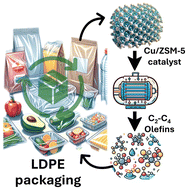
Conversion of waste plastic into low-carbon olefins: directly producing C2–C4 light olefins from low-density polyethylene waste using a Cu/ZSM-5 catalyst

Abstract
Light olefins are fundamental components for petrochemical production and serve as important intermediates in the chemical industry. At present, over 50% of these compounds are produced through naphtha steam cracking, which is considered one of the most energy-intensive industrial operations. Thermo-catalytic cracking of waste plastic to produce light olefins is an emerging method but remains in the early stage of development, with no commercial applications currently available. Low-density polyethylene (LDPE) waste is now the second-largest source of plastic waste in municipal solid waste (MSW) after polypropylene (PP). Finding methods to utilise this waste and enhance resource efficiency is a current research focus. Ongoing studies aim to optimise catalysts and processes for a single-step conversion strategy. In this study, a zeolite (MFI) was employed both as a support and a catalyst, with various Si/Al ratios and textural properties. The effects of Si/Al ratio and metal oxide promoters on catalyst acidity were studied during LDPE catalytic cracking to light olefins (C2—C4) in a two-stage semi-batch reactor at atmospheric pressure. The process produced a higher gas fraction (∼80 wt%), with a C2–C4 light olefin yield of approximately 60 wt%. Copper oxide-supported ZSM-5 increased the light olefin yield (∼65.9% of feed) and kept the liquid yields low with little char and wax formation at 450–550 °C.
 Please wait while we load your content...


