Xianda
Zhang
,
Yaotian
Yan
*,
Yangshuo
Liu
,
Chun
Li
,
Jian
Cao
and
Junlei
Qi
*
State Key Laboratory of Precision Welding & Joining of Materials and Structures, Harbin Institute of Technology, Harbin 150001, China. E-mail: ytyanhit@163.com
First published on 22nd October 2025
The CO2 reduction reaction (CO2RR) is considered a promising process that can compensate for CO2 emissions by converting them into value-added chemicals. In the preparation of the CO2RR catalytic electrode, Nafion is a common binder, but its effect in the catalytic process is usually ignored. Herein, we proposed the bifunctionality of Nafion in the CO2RR based on its molecular structure and successfully developed a CO2-affinitive surface of micro-Ag/Nafion by controlling the content of Nafion, which exhibited a superior CO faradaic efficiency (FECO) of 95.07% at −0.9 V (vs. RHE). This excellent FECO and a partial current density (jCO) twice that of CO in the flow-cell proved its industrial prospects. Its splendid selectivity for the CO2RR was attributed to the selective polarization of CO2 molecules on Nafion, which resulted in a 6.8 times higher adsorption energy (Eads) of CO2 than that of H2O. Therefore, the CO2RR gained an advantage in the competitive reaction. Nafion was recognized as a favorable transporter for CO2 on the surface of the metal catalyst. Our work describes the bifunctional role of Nafion in the CO2RR electrode, and it will contribute to optimize the design of the metal/Nafion catalytic material for the CO2RR.
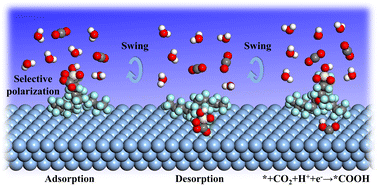
Green foundation1. We proposed the selective polarization behavior of CO2 molecules at the surface of metal/Nafion. Its novelty lies in the presentation of the bifunctionality of Nafion in CO2 reduction, which not only bonded with the catalyst but also enhanced the CO2 adsorption. Based on this mechanism, Nafion can be effectively regulated to enhance CO2 reduction and achieve the green chemical goal of reducing carbon emissions and developing renewable feedstocks.2. By adjusting the content of Nafion, hydrogen evolution was restrained, and the surface of micro-Ag/Nafion achieved a superior CO Faraday efficiency of 95.07% at −0.9 V (vs. RHE) in both the H-cell and flow-cell. 3. Future research includes achieving a high current density and high stability on the basis of high selectivity, realizing the module integration of CO2 reduction systems, reducing the costs, and promoting industrial and commercial applications. |
In the electrocatalytic reduction process, the rational designing of the structures and components of the catalytic surface can tune its electroactive sites and induce ideal products.16–21 It has been demonstrated that a hydrophobic surface can successfully inhibit the HER and raise the competitive position of the CO2RR.22–24 Xing et al. dispersed polytetrafluoroethylene (PTFE) nanoparticles in commercial copper nanoparticles, which achieved a greatly improved activity and faradaic efficiency for CO2 reduction, with an inspiring partial current density (>250 mA cm−2, around twice that without PTFE).25 Wakerley et al. treated hierarchically structured Cu dendrites with 1-octadecanethiol to increase the concentration of CO2 at the electrode-solution interface and consequently increase the CO2 reduction selectivity.12 Therefore, slight organic doping is proved as a feasible strategy to construct a hydrophobic and gas-affinitive catalytic surface so as to restrain the HER and promote the CO2RR.
Perfluorosulfonic acid (PFSA, trade name Nafion) is a popular membrane material and adhesion promoter in electrochemical engineering because of its intrinsic ion transport properties.26–28 We note that the Nafion molecule has the same main chain (MC) structure as PTFE (Fig. S1), making it exhibit similar hydrophobic and gas-affinitive properties as those of PTFE. Besides, as the functional group of the Nafion molecule, the sulfonic acid group (SAG) on the side chain (SC) shows a particular polarity.29,30 This inequality in molecule polarity at different positions of Nafion inspired us to think that it might cause an inequality in the adsorption of CO2 and H2O and thus lead to an unfair competition between the CO2RR and HER. However, in most research on the CO2RR, which takes Nafion as a binder on the electrode, its influence is not taken in account in either the experiments or calculations.
Herein, on the basis of the excellent CO selectivity of the Ag catalyst,31–35 we combined micro-Ag (MAg) with Nafion and constructed a CO2-affinitive metal/organic surface. In this context, the Nafion molecule played a bifunctional role with both adhesion and CO2 affinity. Consequently, the MAg/Nafion surface achieved a superior FECO of 95.07% at −0.9 V (vs. RHE) in the H-cell and an equivalent level in the flow cell. Further analysis and density functional theory (DFT) calculations demonstrated that the Nafion molecules contribute to a kinetic effect rather than a thermodynamic effect. The selective CO2 polarization with Nafion molecules resulted in a local high concentration of CO2 at the surface of the catalyst. This effect suppressed the HER and enhanced the CO2RR. Therefore, this work proposes the selective polarization function of Nafion and explains its bifunctional role in the complex CO2RR process, which will contribute to the exploration of high-efficiency CO2RR.
| E(vs. RHE) = E(vs. Ag/AgCl) + 0.0592pH + 0.197 |
| E(vs. RHE) = E(vs. Hg/HgO) + 0.0592pH + 0.098 |
In situ surface-enhanced Raman spectroscopy (SERS) was conducted for the CO2RR using a 532 nm laser under the same electrochemical conditions as the H-cell. The in situ SERS spectra were recorded from −0.8 V to −1.2 V (vs. RHE).
At the same time, the gas product measured by gas chromatography (GC) was used to compare the FE in the range of −0.8 V to −1.2 V (vs. RHE). The FE of the gas product was calculated as follows:
In this formula, n represents the number of electrons transferred for one product molecule; u represents the gas flow rate (L s−1), whose value is 30 mL min−1 in this experiment; V represents the product gas concentration (%); F represents the Faraday constant (C mol−1), whose value is 96500 C mol−1; I represents the average current under the 2000 s test (A); Vm represents the molar volume of the gas (L mol−1), whose value is 22.4 L mol−1.
After electroreduction, the composition of the liquid product in the cathode electrolyte was measured by nuclear magnetic resonance (NMR) with D2O as the solvent and dimethyl sulfoxide (DMSO) as the internal standard. The FE of the liquid product was calculated as follows:
In this formula, n represents the number of electrons transferred for one product molecule; c represents the concentration of liquid product in the cathode electrolyte (mol L−1); Vol represents the volume of the cathode electrolyte (L), whose value is 0.02 L in this experiment; F represents the Faraday constant (C mol−1), whose value is 96
500 C mol−1; I represents the average current under the 2000 s test (A); t represents the reaction time (s), whose value is 2000 s in this experiment.
All product data were obtained in three independent measurements.
The change in the Gibbs free energy (ΔG) for each state in the reaction was calculated based on the standard hydrogen electrode (SHE) model proposed by Nørskov. The ΔG of the intermediates was calculated as follows:
In this formula, ΔE represents the difference in the intrinsic energy between two intermediates, ΔZPE represents the zero-point vibration energy difference of adsorbed atoms, T represents the temperature (298.15 K), ΔS represents the entropy change, represents the enthalpic temperature correction, kB represents the Boltzmann constant (1.38 × 10²³ J K−1), pH is set to 0 according to SHE model, e represents the elementary charge quantity (1.6 × 10⁻¹⁹ C) and U represents the work electrode potential.
As shown in Table S1, the free energies of gas molecules (CO2, H2) were calculated at a standard pressure of 100 kPa, and the free energy of the liquid molecule H2O was calculated at a pressure of 3169 Pa (saturated vapor pressure of H2O). The entropy and formation energy data for small molecules (H2O, CO2, CO, H2) were obtained from the CRC Handbook of Chemistry and Physics, 97th Edition.36
Since the CO2RR occurs at the active sites on the catalyst surface, the component and structure of MAg are essential. The surface scanning electronic microscopy (SEM) and Energy Dispersive Spectroscopy (EDS) analysis of the prepared MAg electrode are shown in Fig. 1b. The MAg particles (largest diameter about 2 μm) were uniformly distributed on the electrode surface. There was no obvious rich or poor area, which improved the stability of the electrode. Gaps among large particles might provide channels for gas diffusion so that the MAg inside had the chance to adsorb more CO2 molecules and contribute to the increase in the number of CO2RR active sites. As the main component elements of Nafion molecules, C and F were not obvious in EDS, indicating that the Nafion content was much lower when compared to MAg. As a result, it played an auxiliary modification role rather than a catalyst. TEM was used to further explore the crystal structure of MAg, as shown in Fig. 1c. The smallest size of MAg was approximately 0.5 μm without agglomeration. This micro-level size effect enriched the surface area and reaction sites, providing kinetic conditions for the CO2RR. High-resolution TEM (HRTEM) analysis further indicated that the interplanar lattice fringe spacing of MAg was 0.236 nm, which matched the crystal face orientation of the face-centered cubic Ag (1 1 1) plane (Fig. 1d).37 At the same time, distorted lattice fringes (red curve) indicate the presence of abundant Ag crystal edge sites, which are commonly known as highly active sites for the CO2RR.38 This crystal structure can contribute to strong CO2 activation and fast CO desorption.
X-ray diffraction (XRD) patterns (Fig. 1e and f) showed that the main diffraction peak of the MAg electrode at 38.1° matched the Ag (1 1 1) plane, consistent with the result in Fig. 1d. Compared with the diffraction peak of the MAg powder, only the C diffraction peak was observed in the XRD of the MAg electrode, which was attributed to the carbon paper substrate. The absence of oxide peaks suggests the pure phase structure; this was also proven by XPS survey spectra (Fig. 1g). Two characteristic peaks with the same full width at half maximum and suitable area ratio were attributed to Ag 3d3/2 (374.7 eV) and Ag 3d5/2 (368.6 eV).39–42 No electron transfer indicated that no extra reduction reaction would occur in the subsequent CO2RR, which would retain a stable electrochemical activity.43,44 The high ratio of F atoms confirmed the stable presence of Nafion on the electrode surface (Table S2).
For all MAg/Nafion samples, noteworthily, the FECO remained at a high level for all MAg/Nafion samples from −0.8 to −1.0 V (vs. RHE, the same below). As for the MAg-Nf20, its FECO was up to 95.07% at the potential of −0.9 V, which was 3.4 times that of Ag foil at the same reduction potential. However, not only the foil, but for all MAg/Nafion samples, when the potential was higher than −1.0 V, the FECO showed a continuous decline. This phenomenon is explained in Fig. 2c. Considering the jCO, it was found that when the potential was lower than −1.0 V, jCO increased with the increase in potential. However, when the reduction potential increased above −1.0 V, jCO began to hold constant, indicating that it had reached the limit of the system. This indicates that when the potential was above −1.0 V, the original competitive situation between CO2RR and HER was broken, and the HER could continue to expand while the CO2RR could not. This can be attributed to the concentration limit of CO2 in the aqueous solution system, which kinetically hindered the further expansion of the CO2RR.
In order to verify the stability of the MAg/Nafion electrode, the above Ag-Nf20 sample was tested for 12 h, and the test results are shown in Fig. 2d. In the stability test period, the current density gradually became stable, and the FECO decreased slightly, by 10.19% within 12 h. The SEM and XPS analyses in Fig. S5 proved the stability of its surface structure and chemical state.
To verify its feasibility in operando conditions, a flow-cell was assembled and tested in further experiments, as shown in Fig. 2e. A similar FECO was obtained in the flow-cell for MAg-Nf20, demonstrating its industrial application prospects. Moreover, at the same potential as the H-cell, the jCO in the flow-cell was almost 2 times that in the H-cell. This suggests that a flow-cell structure can efficiently reduce the solution resistance and enhance CO2 diffusion to increase its concentration at the surface of the catalyst.
The electrochemical resistance (EIS) test in Fig. 3a revealed that the resistance of MAg/Nafion was significantly lower than that of Ag foil, and proved that our electrode achieved rapid charge transfer at the interface between the electrode and electrolyte. Moreover, the short, low-frequency region (arc region) revealed that most electrons were donated to mass transfer, rather than electron transfer at the interface capacitance. This also indicated the CO2-affinity of the surface. LSV curves in Fig. 3b showed that the current density increased with an increase in the cathodic potential. Under the same potential, Ag-Nf20 had the lowest current density. A lower current density usually indicates lower electrocatalytic activity. However, this electrocatalytic activity was the result of the accumulation of all catalytic reactions, including the CO2RR and HER. Compared with Fig. 2b, the high current density at the same reduction potential meant low selectivity of CO. Compared with the strong HER, the jCO progressively approached a plateau despite further increases in cathodic potential. This saturation signified that the thermodynamic driving force, dictated by electronic energy, no longer served as the rate-determining factor for the CO2RR, and the reaction kinetics became increasingly governed by the supply of CO2 or diffusion of CO. Consequently, the mass transfer process emerged as the most plausible bottleneck, restricting further enhancement of the CO2RR performance. Further insight was gained by comparing the jCO recorded in the H-cell and the flow cell. The pronounced enhancement of jCO in the flow cell can be ascribed to its excellent delivery of CO2 to the catalytic sites and CO from it. In contrast, in the H-cell, the low solubility and slow diffusion of CO2 in the aqueous electrolyte led to severe mass transfer limitations. Therefore, under elevated reduction potentials, the overall performance of the CO2RR was primarily constrained by mass transfer rather than thermodynamic or intrinsic kinetic barriers.
To further verify the CO2RR process, Tafel slopes were calculated, as shown in Fig. 3c. The Tafel slope of the MAg-Nafion electrode was significantly lower than that of Ag foil (838.3 mV dec−1), which demonstrated the lower activation energy and initial kinetic barrier of the CO2RR. It reduced the dependence of jCO on the overpotential, which was more conducive to the CO2RR dominating the competitive reactions. At low overpotentials, the reaction rate is highly sensitive to this initial kinetic barrier. The optimized kinetics of the MAg-Nafion electrode ensured that at any given moment, especially with low overpotential, FE is skewed towards the CO2RR rather than the HER.45 Consequently, this kinetic superiority directly translates to a higher selectivity for the CO2RR and improved overall energy efficiency as the system can operate effectively at a lower whole voltage.
The double-layer capacitances (Cdl) were determined to characterize the electrochemically active area (ECSA). Fig. 3d shows that the Cdl values of the MAg/Nafion electrodes were similar. This may be explained by the insufficiency of the binding strength due to less Nafion. Meanwhile, the low Cdl of silver foil (39.6 F cm−2) explained its low FECO. To eliminate the effect of the electrochemical area on the catalytic activity, the normalized current density and partial current density were determined as shown in Fig. 3e and f. The general trend of the curve is consistent with that before normalization, which indicates that the ESCA made almost no contribution in the CO2RR.
The in situ SERS spectra in Fig. 3g revealed the variation of the reaction intermediates of MAg-Nafion20 in the CO2RR. The Raman peaks below 1000 cm−1 and at 1520 cm−1 (black dashed lines) were attributed to the intrinsic MAg. The intensities of these peaks, along with the HCO3− signal at 1068 cm−1 (orange dashed line), remained constant as the reduction potential increased. In contrast, the Raman peaks at 1360 and 1590 cm−1 (green dashed lines), which were assigned to the adsorbed *CO2 intermediates on the catalyst surface, exhibited a pronounced potential dependence.46,47 These signals were relatively weak at lower reduction potentials but underwent significant enhancement when the potential exceeded −0.95 V. Under these conditions, the peaks showed increased intensity and broader half-width, even surpassing the intensity of the adjacent Ag peak. This phenomenon indicated a substantial enhancement in CO2 adsorption on the Ag surface at this specific potential, which is aligned with the observed maximum CO Faraday efficiency (FECO) near this value in Fig. 2b. The broad feature peaks in the 3000 to 3800 cm−1 range are typically associated with the O–H stretching vibrations of interfacial water molecules.48 The intensity variation within this region (blue dashed line) suggests a change in the coordination environment of water molecules at the catalyst surface, thereby confirming the occurrence of the HER.
Noteworthily, the Nafion ionomer also played a pivotal role in modulating the local microenvironment at the electrode–electrolyte interface, which significantly influenced the selectivity of the CO2RR.49 In this study, the observed peak in the FECO of 95.07% at approximately −0.9 V (vs. RHE) is likely attributable to an optimal local microenvironment established at this potential, mediated by Nafion. This microenvironment provided sufficient local alkalinity to promote the CO2RR while avoiding issues such as carbonate precipitation or mass transfer limitations that can arise from excessively high pH.8,50,51 Concurrently, the mass transfer resistance of Nafion towards reactants (CO2, H2O) and the product (CO) may also contribute to the observed potential-dependent selectivity.52–54 Therefore, the catalytic performance reported by us was not solely a manifestation of the intrinsic activity of the Ag-based catalyst, but also a result of the specific local microenvironment created by the composite catalytic layer comprising both the catalyst and the Nafion ionomer.
![]() | ||
| Fig. 4 (a) Eads of CO2 and H2O at different positions of Nafion. (b ) Mulliken population. (c) Electron density location. (d) Charge density difference of CO2 and H2O adsorbed to Nafion. | ||
Mulliken population analysis indicated that there was little charge transfer or bond order change for H2O after adsorption to SAG (Fig. 4b and S9). The distance between H in H2O and O in SAG was approximately 2.6 Å, longer than most hydrogen bonds.55–57 Therefore, the Eads of the H2O molecule can be attributed to this weak van der Waals interaction. However, after adsorption, the bond angle of O
C
O changed to 128.9° and this polarization of the CO2 molecule broke its intrinsic symmetry. This was inspiring because the electronic symmetry of the CO2 molecule is an important reason for the high bond energy of C
O (750 kJ mol−1).58,59 Since one of the O atoms in CO2 was adsorbed to SAG, its Mulliken charge significantly decreased to −0.146e, compared with −0.242e of the farther O atom. The decrease in its C
O bond order also proved the C
O bond to be more delicate. Different from H2O to Nafion, this selective CO2 polarization behavior may provide an advantage for the formation of the *COOH intermediate during the CO2RR process.
Noteworthily, the distance between the CO2 molecule and SAG was less than 2 Å when adsorbing, which was close enough to form covalent interactions. The location of electron density in Fig. 4c illustrates that the presence of heteroatoms led to the rearrangement of electrons in CO2. It was observed that there were more delocalized electrons between O and O, C and S. In contrast, almost no electron cloud was distributed between H2O and SAG. This difference in electron distribution proved the stronger interaction of Nafion with CO2 than with H2O and explained the difference in Eads. However, the charge density difference (Fig. 4d) indicated that the charge accumulation region (red region) was still distributed around the O atom as a ring. Depleted electrons suggest that this covalent interaction is not as strong as a covalent bond like O
O in O2, allowing CO2 to desorb from Nafion and adsorb to Ag.
To further research the selective polarization function of Nafion, according to the characterization result in Fig. 1d, we built the Ag (111) surface with and without Nafion (Fig. 5a and b) under RHE conditions to compare the difference in Gibbs free energy (ΔG) via DFT calculations in catalytic steps. Fig. 5c reveals that it was the most endothermic step from CO2 to *COOH for its high energy barrier. When adsorbing to the Ag surface, the interaction between CO2 and SAG was broken. There was a similar adsorption structure of *COOH with and without Nafion, which explained why they had a similar energy barrier. Moreover, the formation energy of the *COOH intermediate (about 1.6 eV) was dramatically higher than that of the *H intermediate (about 0.4 eV), indicative that the HER intrinsically (in the case at open circuit potentials) proceeds more easily than the CO2RR, leading to a decrease in FECO. However, the experimental results proved that CO2RR took the dominant position. This indicates that under a potential higher than that of the intrinsic CO2RR, it was kinetics and not thermodynamics that drove the reaction. This may be due to the selective polarization effect, which indicates that it was easier for SAG to capture a CO2 molecule rather than H2O (Fig. 5d).
Considering the flexibility of SC in high-humidity conditions,60–62 the captured CO2 molecules should be easily transferred to the surface of Ag by swinging SC. A high concentration of CO2 adsorbed by SAG and a low concentration of H2O excluded by MC led to the kinetic preponderant position of the CO2RR. Consequently, the formation of *H was kinetically limited, and the limited numbers of *H were likely to combine with rich *CO2 nearby to form the *COOH intermediate, rather than couple into H2. Therefore, this behavior of suppressing the HER and enhancing the CO2RR was legitimately attributed to the selective polarization function of Nafion molecules.
| This journal is © The Royal Society of Chemistry 2025 |