


 PLATFORM UPDATE:

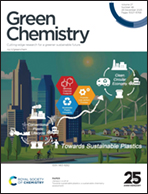
Towards sustainable plastics: a sustainable chemistry assessment
 *ab
*ab
Abstract
The expansion of plastic production and consumption has exacerbated the triple planetary crisis of climate change, biodiversity loss and pollution, posing severe threats to global ecosystems and human health. The ongoing global plastics treaty negotiations underscore the urgent need for systematic transformation to drive the plastics industry towards sustainable production and consumption. This study develops an integrated assessment framework from a sustainable chemistry perspective, quantifying the environmental impacts of hazardous additives and polymers using Chemical Footprint (ChF) and Greenhouse Gas Emission (GHG) and the economic effects of plastics circularity via Waste Management Input (WMI). A case study of China's plastics industry reveals a decline in the Sustainable Chemistry Index (SCI) from 0.679 to 0.519 between 2000 and 2011, primarily driven by the expansion of plastic production and consumption. However, between 2011 and 2020, reduced net imports of plastic waste and increased recycling rates slowed the decline, with the SCI reaching 0.492 in 2020. Scenario analysis (2021–2060) is conducted to explore the impact and interactions of four key plastic management policies. Among them, reducing plastic consumption (Scenario 2) has the strongest effect on sustainable chemistry, increasing the SCI to 0.636 by 2060. Conversely, promoting recycling alone (Scenario 5) has a limited impact, with the SCI stabilizing at 0.47–0.50, due to the unintentional recycling of hazardous additives. The increase of ChF offsets the benefits of reduced GHG and WMI. Notably, combining promoted recycling with strict additive control (Scenario 7) significantly improves the SCI, reaching 0.631 in 2060, which is comparable to Scenario 2, indicating a similar policy effect. This study presents a quantitative framework for assessing the performance of sustainable chemistry of the plastics industry and reveals key policy synergies, offering scientific insights to support effective policymaking and global plastics treaty negotiations.

- This article is part of the themed collection: 2025 Green Chemistry Covers
 Please wait while we load your content...


