

 Open Access Article
 This Open Access Article is licensed under a Creative Commons Attribution-Non Commercial 3.0 Unported Licence
Solvent exchange method in the food industry
Nikita S.
Bhatkar
ab,
Vimal
Challana
 cb,
Shivanand S.
Shirkole
*bd and
Benu
Adhikari
e
cb,
Shivanand S.
Shirkole
*bd and
Benu
Adhikari
e
aDepartment of Chemical and Materials Engineering, Faculty of Engineering, The University of Auckland, Auckland, 1142, New Zealand
bDepartment of Food Engineering and Technology, Institute of Chemical Technology Mumbai, IndianOil Odisha Campus, Bhubaneswar, 751013, India. E-mail: shivanandshirkole@gmail.com
cDepartment of Processing and Food Engineering, Punjab Agricultural University, Ludhiana, 141001, India
dDepartment of Food Technology, School of Engineering and Technology, D. Y. Patil Agriculture and Technical University, Talsande, 416112, India
eSchool of Science, RMIT University, Melbourne, VIC 3083, Australia
First published on 15th October 2025
Abstract
Solvent exchange is a promising method for developing structured materials like oleogels and aerogels. The method can potentially be used in other food processes, such as microencapsulation, modification of biopolymers, development of novel packaging materials, etc. However, the literature on such studies in food applications is limited. The present review discusses these applications where the solvent exchange process can be implemented. It explores the current challenges and potential of solvent exchange methods in the food system. The sustainability of this method is highly dependent on the solvent used and the efficiency of solvent recovery. The scalability of the process is compromised due to the complexities involved in the solvent handling and its economic cost. This review discusses critical parameters for solvent selection, including regulatory considerations and physicochemical properties, and highlights the need for further research to improve industrial applicability.
Sustainability spotlightThe solvent exchange method can be sustainable, as, unlike other methods, it does not involve processing at higher temperatures and harsh environmental conditions, causing lower energy consumption. It involves using solvents, which can help achieve a sustainable and greener process. The two main features of the solvent exchange method are the selection of solvents and the recovery of these solvents, which can determine the sustainability of the process. It aligns with the UN Sustainable Development Goals (SDGs), particularly Goal 3 (Good Health and Well-being), Goal 9 (Industry, Innovation, and Infrastructure), and Goal 12 (Responsible Consumption and Production), by promoting the solvent exchange method in the food industry as a sustainable process. |
1. Introduction
Intermediate processes during the formation or extraction of the desired product are common in the food industry. Some examples of intermediate steps include vacuum evaporation, precipitation, filtration, size reduction, extraction, and so on. These methods have been instrumental in the food industry for ages and are widely studied and reported in the literature for their principles, applications, process parameters, challenges, and advancements. With the advent of the drift of the research community toward the development of nutraceutical formulation, the intermediate process, such as solvent exchange, came into light. Specifically, the pioneering work on gels with the solvent exchange process was done by Kistler in 1932.1 From there, it has become one of the known methods for producing oleogels and aerogels.Apart from the production of oleogels and aerogels, the solvent exchange phenomenon is found in other applications in the food industry, such as encapsulation, purification, modifications of biopolymers, and so on. As the name suggests, the solvent exchange method replaces one solvent with another in the matrix to get the desired effect. The matrix solvent interaction, solvent–solvent interactions, and environmental properties such as temperature, pressure, ionic strength, pH, and chemical presence govern the process's thermodynamics and kinetics. The thermodynamics, as well as the kinetics of the solvent exchange method, are important in deciding the fate of the final product.2 The phenomenon is instrumental on a large scale in various chemical operations, and the research and advancement are now more on the path of sustainable approaches.3 However, when it comes to applications in the food industry, the method is still primitive. The solvent exchange or solvent swap method is predominantly used in producing aerogels or oleogels in the food industry. These gel-based matrices are becoming quite popular as a carrier agent for pharmaceutical and nutraceutical ingredients in functional foods. Sensitive compounds such as fish oils and resveratrol have been encapsulated into the aerogels and oleogels synthesized using the solvent exchange method.4–6 The structural integrity of the aerogels and the oleogels on production using the solvent exchange method makes it an ideal method for these gels. Most of the work carried out in the food domain for the solvent exchange method revolves around the applications in gel synthesis. Apart from this, the solvent exchange as a method has also extended its foray into encapsulation, modification of biopolymers, especially starches, and some analytical procedures. For instance, Park et al.7 encapsulated a protein into capsules using this method. The method encapsulated protein without aggregation, showed a protective effect, and sustained protein release.
Similarly, this method is quite popular for imparting physical changes, namely, the porosity in the starches, changes in the density and surface area, and developing starch-based foams.8 Foam-based materials, such as packaging and petroleum-based foam products, are part and parcel of many industries that have raised societal concerns due to their environmental effects. To this, starch-based foams provide a sustainable solution. The solvent exchange method is one of the many methods for producing starch foams. Nevertheless, the method provides an edge over others regarding control over the foam's porosity and environmental implications.
Though the solvent exchange method is quite promising in some applications in the food industry, it is never highlighted in the literature. Many factors, such as the parameters of the method, the challenges, the advancement, and the future scope, are under the shadow. The United Nations has laid down 17 sustainable development goals (SDGs). In the context of the solvent exchange process, SDGs 3, 9, and 12, related to good health and well-being, industry, innovation, and infrastructure, and responsible consumption and production, are important. The questions on the sustainability of the solvent exchange method against the other methods for specific applications are unanswered in the literature. This article attempts to discuss the applications of the solvent exchange method in the food industry, the scope of the method, and its sustainability in the food industry.
2. General principles
In literature, solvent exchange is not highlighted exclusively; however, it can be defined as the process by which one solvent replaces the other within a given system matrix. Considering this, it can also be termed a simultaneous adsorption and diffusion or penetration process. Subrahmanyam et al. (2015) have described the process in terms of pseudo-second-order kinetics. The interactions among the solvent, antisolvent, and the matrix govern the process. Many studies have reported the interaction primarily of dispersion, dipole–dipole, and hydrogen bonding.9 Thus, these interactions between the solvent, antisolvent, and the matrix form the basis of the solvent exchange process. Studies suggest that hydrogen bonding, among all other interactions, is dominant in determining the kinetics and the characteristics of the final product formed.10 The solubility parameter of the solvent considers all the interaction terms. The equation for the total solubility parameter for the solvent is given by the Hildebrand solubility parameter (δt2)| δt2 = δd2 + δp2 + δh2 | (1) |
3. Application in the food industry
3.1 Oleogel formation
Bioactive gels such as oleogels and hydrogels are gaining huge interest in research work and industrial applications. Though the hydrogels are easy to form and flexible, the oleogels often show higher stability over temperatures and shelf life. The use of these oleogels as fat replacers and in frying applications is also found to be quite promising. However, it is quite a well-known fact that the formation of oleogels is difficult because of the poor solubility of the biopolymers in the apolar solvents. Nevertheless, the biopolymers' modifications have always helped improve the solubility in apolar solvents. The modifications, however, affect the structural properties and functionality, especially in the case of proteins. The solvent exchange method to develop the oleogel from hydrogels has been extensively studied to help with this problem.11Adding to this, the solvent exchange method also provides better control over the gelation process and gives a clean label to the process. The method is one of the most employed indirect methods for forming gels, as the shrinkage incurred during the process is less (as low as 4%).12 Also, studies have shown that the method is superior in generating a larger surface area than the freeze-drying method.13 However, one should note that the method can be carried out using stepwise and single-step methods, and the former offers a lower shrinkage than the latter.5 The general process of formation of oleogel with the solvent exchange process is depicted in Fig. 1. It involves the addition of biopolymers into the polar solvent (usually water) for dissolution, followed by gelation upon the appropriate step employed to trigger the gelation. The hydrogels, once formed, are then suspended in the intermediate solvents, followed by the hydrophobic apolar solvent, usually oil, to form the oleogels.
 | ||
| Fig. 1 Steps to form oleogels from hydrogel by the solvent exchange method. | ||
In most cases, water is the initial polar solvent used for the hydrogel formation. Alcohols with varying chain lengths and acetone are used as intermediate solvents, and liquid oils are mostly used as apolar solvents. Table 1 gives the list of ingredients used for making the hydrogel (solvents, biopolymer, and gelling agent), along with the intermediate solvents and oil used in the literature for the formulation of oleogel through the solvent exchange method.
| Hydrogel/emulgel components | Intermediate solvent | Oil | Reference |
|---|---|---|---|
| Whey protein isolate (20% w/w) and water | Acetone and tetrahydrofuran (30, 50, 70, and 100%) | Sunflower oil (30, 50, 70, and 100%) | 14 |
| Konjac glucomannan (0.8 wt%), water, paraffin oil (20 wt%), sodium carbonate (0.16 wt%) | Methanol, ethanol, propanol, ethylene glycol, propylene glycol, trihydric glycerol (gel![[thin space (1/6-em)]](https://www.rsc.org/images/entities/char_2009.gif) :intermediate solvent = 1:8 (v/v)) :intermediate solvent = 1:8 (v/v)) |
Paraffin oil (oil:intermediate solvent = 2:8 (v/v)) |
16 |
| Cellulose nanofiber (2 wt%), water | Methanol (methanol:hydrogel = 3:1) |
Castor oil | 18 |
| Whey protein isolate, water | Acetone | Sunflower oil | 11 |
| Egg white, water | Ethanol | Soybean oil | 19 |
| Whey protein isolate, water | Acetone | Sunflower, olive oil, castor oil, and medium-chain triglycerides | 20 |
| Whey protein isolate, water | Acetone | Sunflower oil | 21 |
| Protein isolates from whey, egg, pea, potato, and soy | Acetone | Sunflower oil | 17 |
| Sucrose esters (contains 50% monoester), rapeseed oil, and water | Ethanol (97%) | Monoglycerides, lecithin | 22 |
| Soy protein isolate, water, and tannic acid | Acetone | Pine nut oil | 23 |
| Cellulose nanofiber (2% w/w), water | Methanol | Castor oil | 24 |
| Konjac glucomannan (0.8% w/w), water | Methanol, ethanol, or 1-propanol | Paraffin oil | 16 |
| Egg white (3:1 v/v) with water |
Ethanol (3-step solvent exchange, 1, 3, and 5 h) | Soybean oil | 25 |
The solvent exchange process in the oleogel formation case depends on the intermediate solvent used to replace the polar solvent. The characteristics of the final oleogel formed depend on the structure of the gel, oil holding capacity, shrinkage, and so on. It is well-reported in the literature that these factors depend on the solvent exchange's properties and kinetics. The differences in the characteristics of the oleogel formed can be attributed to the polarity of the solvent and dielectric properties. In a study to develop protein-based oleogels from whey protein isolate, it was observed that the two solvents used for the solvent exchange process resulted in different levels of shrinkage of the oleogel. The authors reported that the oleogel formed using tetrahydrofuran showed a higher shrinkage than that formed using acetone. This was attributed to the lower dielectric constant of tetrahydrofuran than acetone.14
Similarly, within a given class of solvents, the characteristics are dependent on the polarity of the solvents.15 Li et al. (2023) observed that the alcohols with varying chain lengths, such as methanol, ethanol, ethylene glycol, propylene glycol, and trihydric glycerol, showed differences in the oleogels formed.16 The same study also highlighted a critical criterion for selecting the intermediate solvent: the miscibility with the oil or the apolar solvent in the solvent exchange process. The study suggested that the lower the solubility of the intermediate solvent with the oil, the higher the oil's strength, resistance, and distribution of the oil during the process of solvent exchange. Along similar lines, the interaction between the biopolymer matrix and the solvent also influences the nature of the gels formed and the solvent exchange process. A recent study observed that the nature of the gels formed, i.e., the size of the aggregates formed from different sources, influenced the gel strength. Smaller aggregates led to a more extensive network formation than the larger aggregates.17
As previously mentioned, the process's kinetics, that is, the rate at which the solvent exchange progresses, is another influencing factor. A faster solvent exchange rate observed led to more structural damage to the oleogel, and vice versa.14 This could be attributed to the concentration gradient created during the process; a sudden change in the concentration gradients leads to the collapse of the gel network, leading to shrinkage, whereas a slow solvent exchange rate provides ample time for the gel structure to get acquainted and maintain structure.
Though the solvent exchange process is a prospectus candidate for the formation of the oleogel, problems such as the residual presence of intermediate solvent and lack of control over the textural properties are some of the problems that still need to be resolved. Another class of gel matrices that are trending are aerogels and cryogels. These gels are characterized by a high area, usually more than 150 m2 s−1, low density, and a highly porous structure with a 95–99% porosity.26 These characteristics have made these gels quite popular for drug delivery systems, biomedical applications, pharmaceutical applications, and food-related applications. The formation of aerogel and cryogels can be carried out using the solvent exchange method. The steps are similar to those of oleogels, with an additional step of supercritical carbon dioxide drying or freeze drying for aerogels and cryogels, respectively (Fig. 2). The different matrices used for forming aerogels and cryogels available in the literature, along with the solvents used for the process, are provided in Table 2.
 | ||
| Fig. 2 Steps for the formation of aerogel using solvent exchange method. | ||
| Components of hydrogel | Intermediate solvent | Supercritical carbon dioxide or freeze-drying | Reference |
|---|---|---|---|
| Alginate (3, 1, and 0.5 wt%), water, calcium carbonate | Alcohols, ketones and glycol (solution-to-gel weight ratio 5:1) (30 and 50 wt%) |
Supercritical CO2 (333–338 K, 12 MPa, 24 h) | 9 |
| Sodium alginate (1% (w/w)), calcium chloride, water | Ethanol (10, 30, 50, 70, 90, and 100%) | Supercritical CO2 (74 bar, 31.5 °C) | 12 |
| Pectin (2.0%), calcium carbonate, water | Ethanol (ethanol to water was 10:90, 30:70, 50:50, 70:30, 90:10, and 100% (w/w)) |
Supercritical CO2 drying (323 K, 12 MPa, 6 h) | 27 |
| Polyhydroxybutyrate, chloroform, or tetrahydrofuran | Methanol | Freeze drying | 28 |
| β-Glucan, flaxseed mucilage, water | Ethanol | Supercritical CO2 | 29 |
| Low and high methoxy pectin, xanthan gum, alginate, and guar gum (4%), water | Ethanol (2-step solvent exchange) | Supercritical CO2 (40 °C, 150 bar, 6 h) | 30 |
| Corn starch (3, 5, 7.5, 10, and 15 wt%), water, dimethyl sulfoxide (solvent:DMSO was 20:80, 30:70, 50:50, 70:30, 50:50, 70:30, and 80:20 w/w) |
Ethanol gel:ethanol was 1:20 (v/v) |
Supercritical CO2 (12 MPa, 50 °C for 3 h) | 31 |
| A pea starch or cornstarch [7, 10, or 15% (w/w)] | Ethanol (99.8%, single step solvent exchange) | Supercritical CO2 (318 K, 11.0 MPa for 1, 2, 4, or 8 h) | 32 |
| Barley β-glucan (5, 6, and 7% (w/v)) and water | Ethanol (20, 40, 60, 80, and 100% (v/v)) | Freeze drying (frozen at –18 °C overnight, freeze dried at 85 Pa for 24 hours with shelf temp of –3 °C) | 33 |
| Wheat starch (10%) and water | Ethanol (5-step solvent exchange) | Supercritical CO2 (10 MPa, 40 °C for 4 h) | 34 |
| Corn starch or sodium alginate (10 g in 100 mL water) | Ethanol (5-step solvent exchange) | Supercritical CO2 (100 bar, 45 °C) | 35 |
| Cellulose nanofiber (1, 1.5, 2% w/w) | Ethanol and acetone | Freeze drying in vacuum at −110 °C, over a period of 72 h | 36 |
| Potato starch (10% w/w), vinegar, and glycerol | Ethanol | Supercritical CO2 (78 bar, 35 °C) | 37 |
| Bacterial cellulose (0.4%) | Glutaraldehyde solution diluted 200 times with ethanol (3-step solvent exchange) | Atmospheric pressure at 60 °C for 3 h | 38 |
| Whey protein and spirulina (20% w/w, different ratios) | Ethanol (25, 50, 75, 100, and 100% v/v) multistep | Supercritical CO2 (11 N m−2, 45 °C) | 39 |
3.2 Microencapsulation
Stability of the active compound, as well as controlled and site-specific release, is highly important in the delivery system for food. Among the sensitive compounds, such as enzymes, vitamins, essential oils, active drug ingredients, and many more, the encapsulation problems with the protein susceptible to the harsh encapsulation process are still persistent. The proteins easily undergo denaturation on exposure to the solvent during emulsification, shear stress experienced during the encapsulation process, acidic environment, temperature, and the hydrophobic nature of the polymer used for encapsulation.40 Microencapsulation of bioactive compounds has become the need of the time, and various advancements and innovations are being carried out to incorporate the drug or active compound within the capsules. Yeo et al. (2003) have developed a new process of microencapsulation based on the solvent exchange phenomenon, where these issues are overcome using a simple encapsulation process.41 The process involves atomising the two solutions, namely, the aqueous solution with the active compound and the polymeric solution, followed by the collision of the two solutions. The process of solvent exchange is the primary phenomenon involved during the mechanism of the formation of the microcapsules, which are eventually collected in the water bath. In this microencapsulation technique, the solvent exchange acts as an interfacial process, and the capsule's formation depends on the solvents used for the atomization purpose. The method requires the spreading of the polymer over the aqueous droplet, which depends on the solvent property, such as the surface tension and miscibility of the solvent. Fig. 3 gives the schematic of the process for microencapsulation via the solvent exchange method. The solvent should be such that it possesses lower interfacial tension and is also miscible with the aqueous solvent to a certain extent.41 In this case, the selection criteria of the solvent are required.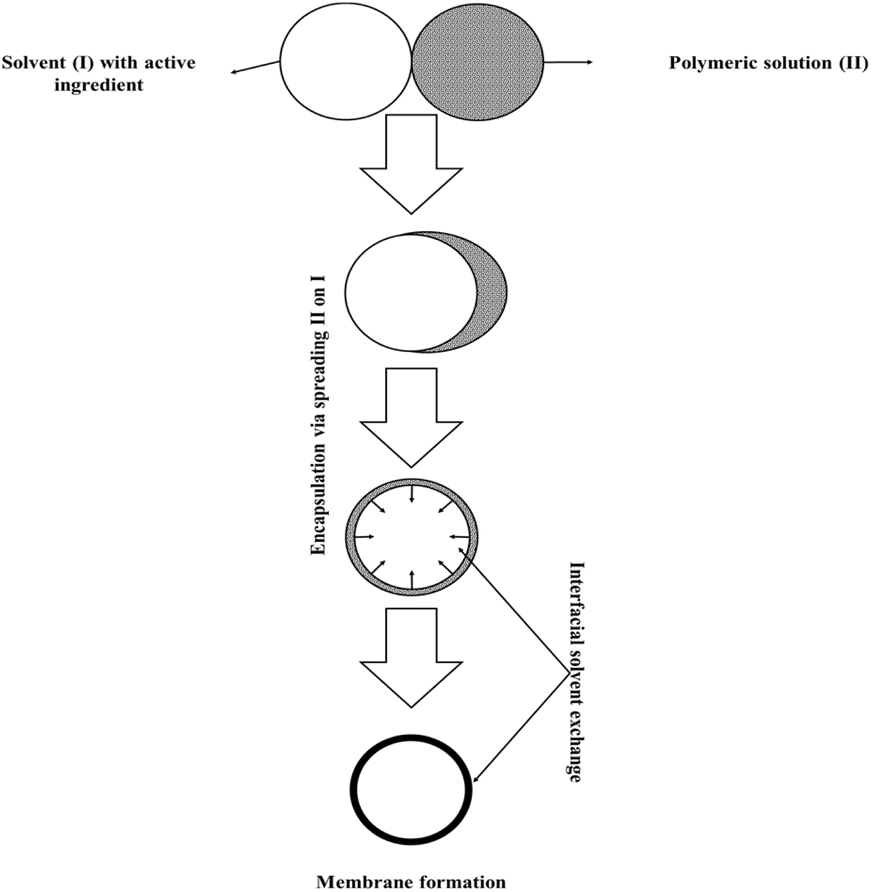 | ||
| Fig. 3 Microencapsulation using the solvent exchange method. | ||
The solvent selection can be based on the Hildebrand solubility parameter, Hansen's multicomponent parameter, solubility in water, and surface tension. The authors have demonstrated the screening of the solvent based on the criteria mentioned.41,42 Further, ethyl acetate was selected for the encapsulation of lysozyme. Several studies were further conducted by the same research group, where the advancement in the atomization technique was varied.7,43,44 The study demonstrated that the solvent exchange method for microencapsulation can effectively preserve sensitive proteins such as lysozyme. The study also revealed that the size and morphology of the capsules formed and the encapsulation efficiency depend on the solvent exchange rate. A lower solvent exchange rate led to a smaller size of the capsule formed and enhanced protein stability.7 It is worth highlighting that the presence of the other components of the formulation, such as the mannose and sodium chloride (excipients), also plays a crucial role in deciding the fate of the capsule formed and the stability of the protein.
3.3 Purification/crystallization
The crystallization or purification of any compound is associated with the supersaturation of the solute, followed by the nucleation and crystal growth; however, the solvent exchange method can also be employed for this purpose. A limited literature is available on the crystallization using this method. Moreover, the method can be of huge importance to get the desired characteristics of crystals. The method is usually used for pharmaceutical ingredients. However, a research group has demonstrated the oiling of β-alanine using this method.45Similarly, the oiling out of vanillin and lauric acid can be carried out using this method.46 The crystallization process is characterized by the solvent, solute, and antisolvent (in the presence of the solute crystals), the channel height, and the flow rates of the antisolvent. The entire droplet creation process, crystal growth, and number of crystals, their shape, and size are highly governed by the antisolvent's flow rate and the channel's height provided for the solvent exchange process. The flow rate of the antisolvent determines the array of the solute oiling out; a faster flow rate induces the formation of a crystal film with large and regular holes in the array, and a slow flow rate induces the formation of small crystals, which are numerous as observed in a study conducted by Choi et al.47 In the same study, it was observed that the shape of the crystals formed can be polygonal, diamond-shaped, or completely irregular based on the flow rate of the antisolvent. The channel's distance or height for the solvent exchange also governs the nature of the crystals formed. For instance, the size of the droplet is small when the height is smaller for a given flow rate of the antisolvent. The influence of these parameters on the nature of the product formed can be explained based on the relative affinity of the solute in the solvent and antisolvent and the kinetics of the interaction between them. This could be studied in more detail based on the ternary phase diagram of the three components, namely, solute, solvent, and antisolvent. These studies suggest that the solvent exchange process can help to get the desired shape of the crystal; however, the potential of the solvent exchange method in crystallization is not fully explored yet. This gap can be because of the complexity of food matrices; further research is needed to open new avenues for this method in the crystallization process, especially in food systems.
3.4 Packaging
The non-biodegradable nature of petroleum-based packaging material is one of the world's main challenges. The biodegradable packaging materials are an excellent antidote to this problem. However, shortcomings like poor physical strength, thermal stability, and permeability still limit its applications. Incorporating nanoparticles in the packaging materials has enabled them to impart improved barrier properties and physical strength to the packaging material. Nowadays, food waste-based nanoparticles, especially cellulose-based, are in trend for this purpose.48 The reinforcement of cellulose-based nanomaterials has reasonably solved the problems associated with biodegradable packaging materials. Yet, the hydrophilicity of the cellulose nanoparticles renders a lower reinforcement efficiency and is incompatible with the biodegradable packaging material due to poor dispersibility. To solve this issue, the method of solvent exchange is used. The process involves the solubilization of cellulosic nanoparticles into the hydrophilic solvent, amidst the hydrophilic nature of the nanoparticles.Further, the solvent (hydrophobic) compatible with the biodegradable polymeric material and the nanoparticle is added to the dispersion, and the hydrophilic solvent is removed by evaporation or other suitable method. The dispersion of the nanoparticles and the hydrophobic solvent is then used to cast a film or a packing material49 [acetone is the first solvent usually used]. There are several articles in search where the solvent exchange method is used to develop the nanoparticle-reinforced food packaging material. Bhardwaj et al. developed polyhydroxyalkanoates nano-cellulose-based nanocomposites using a solvent exchange method.50 Similarly, polyhydroxybutyrate and cellulose-based nano films are also developed for food packaging applications.51 The solvent exchange method was effective in increasing the reinforcement efficiency at the same time and was able to disperse the nanoparticles without agglomerating them.
3.5 Modification of biopolymers
Biopolymers, especially starches, celluloses, and seaweed-based biopolymers, find a wider application in modifications of their natural structures. The modifications can be carried out using different methods, from chemical, physical, microbiological, and enzymatic ones, based on the desired characteristics of the biopolymers. One such physical modification can be carried out using solvent exchange when the porosity of the biopolymer is desired to be improved. The porosity or the desired structural changes can be obtained by merely drying the biopolymer and the hydrophilic solvents. However, the solvent exchange process helps to overcome the pore collapse phenomenon observed in such processes. In the case of atmospheric drying, the pressure gradient in the pore wall is in the range of 100 to 200 MPa, which can potentially lead to the destruction of the structure, shrinkage, and cracking.52 Also, it is reported that the solvent exchange method provides 40 to 60% higher porosity than the air-dried samples.53 This method is instrumental in developing porous starches for different applications. The starches such as corn, potato, and tapioca have been modified physically using this method.53,54 Apart from these, other biopolymers such as agar, alginate, and proteins such as gelatine are physically modified with this method.55–57 The process involves the gelatinization of the starches in a polar solvent, followed by the replacement of the solvent with the antisolvent, which eventually gives porous starch granules. Fig. 4 shows the structural changes induced in the biopolymer by the solvent exchange method. | ||
| Fig. 4 Biopolymer modification by the solvent exchange process. | ||
The foamed starches or modified polymers provide higher adsorption capacities and enlarged pore cavities.58 The formed product has immense applications as a carrier agent and drug delivery system. For instance, poorly water-soluble flavonoids were encapsulated using mesoporous starch developed by solvent exchange using ethanol as an antisolvent. Apart from this, it is worth mentioning that the solvent exchange process increased the amount of resistant starch than porous starches prepared by other methods.52 Different factors can alter the final product's porosity and structural characteristics. The shear rate applied during the process plays an important role in the characteristics of the modified biopolymer.59 A higher shear rate ensures a highly porous structure of the starch particles obtained.
Similarly, another study suggested that the rate of solvent exchange governs the opacity as well as the density of the modified biopolymers.53 A faster rate of solvent exchanges leads to a consistency in the density of the biopolymer. Table 3 gives the different modifications carried out and their effect on the biopolymer using the solvent exchange method.
| Initial solvent and biopolymer | Antisolvent | Effect of modification | Reference |
|---|---|---|---|
| Corn starch (24 g) and water (276 g) | Ethanol (20, 40, 70, 90, and 100%) | Low density and high brightness of the microcellular structure formed | 53 |
| Corn starch (5%) and water | Ethanol (ethanol/water ratio was 100/0, 80/20, 60/40 and 40/60%) | Porous starch with the incorporation of halloysite nanotube | 58 |
| Corn starch with 25–28% of amylose | Ethanol (100%) | Starch particles with a higher specific surface area | 59 |
| Hyacinth bean starch and water | Ethanol | Starch was porous and also had resistance to starch | 52 |
| Agarose (0.8 g) and water (100 mL) | Ethanol (70, 80, 90, and 100%) and octanol | Biopolymer to be used as a sorbent in different applications | 60 |
| Cellulose (1:10) |
Acetone (cellulose to acetone – 1:10) and maleic anhydride (cellulose to maleic anhydride – 4:1) |
It can be further used for a polymer composite | 61 |
4. Selection of solvent
The solvent selection is crucial to ensure the desired characteristics of the process and sustainable process development. The product's characteristics influenced by the solvent used are the shape, colour, texture, transparency, and strength. The selection procedure's general criteria are availability, cost, handling, reusability, disposal, and handling. The most commonly used intermediate solvent is ethanol. Still, a study suggested that dimethyl sulfoxide as a solvent for the solvent exchange process was found to be better regarding the shrinkage of the matrix.62 However, there are known toxic effects of dimethyl sulfoxide on humans.63 Hence, the toxicity of the solvent is the most important criterion. The other specific criteria for the selection are based on the interaction between the matrix and intermediate solvent and the polarity of the intermediate solvent in relation to the initial solvent. The intermediate solvent should have a lower surface tension to replace the initial solvent from the matrix.59Different regulatory bodies worldwide have specified the list of solvents permitted to be used in food and their limits to be present in the final food product or food ingredients. The US FDA has classified the solvents as class 1, 2, and 3, with unacceptable toxicities, less severe toxicity, and low toxicity potential, respectively.64 Similarly, other regulatory bodies such as the Food and Agriculture Organization, European Union Legislation, the Food Safety and Standard Authority of India, the Canadian Food Inspection Agency, and Japan External Trade Organization have listed the list of solvents to be used at GMP levels, and some solvents with limits.65–68Table 4 gives the list of permitted solvents by the Food and Agriculture Organization, along with the specifications to be used in the food products or food ingredients, along with their surface tension. It should be noted that the permitted levels provided for the respective solvents are user-specific. The uses specified by the Food and Agriculture Organization are related to the extraction of compounds. An exclusive permitted level for the solvent residue after the solvent exchange process is still awaited. It would be recommended to be established considering the products developed by the process, such as the packaging materials, gels, porous matrix, foams, etc. The surface tension and the polarity of the solvent can provide an idea about the interaction of the solvent with the initial solvent and the matrix. Table 4 provides the surface tension and polar surface area of the solvents specified by the Food and Agriculture Organization. The reported values are retrieved from the Royal Society of Chemistry – ChemSpider database.
| Solvent | Permitted levels | Surface tension (dyne per cm) | Polar surface area (Å2) |
|---|---|---|---|
| Ethanol | GMP | 22.4 ± 3 | 20 |
| Acetone | GMP | 18.8 ± 3 | 17 |
| Ethyl acetate | GMP | 23.6 ± 3 | 26 |
| Propane | GMP | 14.2 ± 3 | 0 |
| Butane | GMP | 16.7 ± 3 | 0 |
| Methyl acetate | 20 mg kg−1 | 21.8 ± 3 | 26 |
| Ethyl methyl ketone | 20 mg kg−1 | 21.0 ± 3 | 17 |
| Dichloromethane | 2 mg kg−1 | 23.2 ± 3 | 0 |
| Methanol | 10 mg kg−1 | 18.9 ± 3 | 20 |
| Propan-2-ol | 10 mg kg−1 | 22.6 ± 3 | 20 |
| Diethyl ether | 2 mg kg−1 | 19.1 ± 3 | 9 |
| Butan-1-ol | 1 mg kg−1 | 26.1 ± 3 | 20 |
| Butan-2-ol | 1 mg kg−1 | 24.4 ± 3 | 20 |
| Propan-1-ol | 1 mg kg−1 | 24.6 ± 3 | 20 |
| 1,1,1,2-Tetrafluoroethane | 0.02 mg kg−1 | 9.10 ± 3 | 0 |
Considering the interaction between the intermediate solvent and matrix, having a higher affinity between the intermediate solvent and matrix is desirable to have minimal structural changes in the final product.9 The solvent selection should be process-specific; for instance, in the case of aerogel formation with a supercritical carbon dioxide drying step, a solvent with miscibility both in water (initial solvent) and supercritical carbon dioxide is the minimum requirement. The solubility of the solvent is the governing factor in any solvent exchange procedure. The solvent interactions, such as the dispersion, dipole–dipole, and hydrogen bonding, can help identify the solvents. The Hildebrand solubility parameter can be used as the criterion for selection. Some studies have revealed that the hydrogen bonding of the solvent is the most dominating parameter contributing to the solvent's overall solubility, i.e., the Hildebrand solubility parameter. This suggests that the solvent's polarity, which determines the solvent's surface tension, is the deciding factor in the selection of solvent and the anti-solvent during the solvent exchange process.
5. Challenges with solvent recovery
Solvent recovery and reusing are essential for environmental sustainability as well as the economic feasibility of the process, given the high cost of industrial solvents. However, recovery is often complicated because of the formation of complexes between solvents and process constituents. For instance, most alcohols tend to form an azeotrope with water, which makes it very difficult to recover.69Among various recovery methods, distillation is the most widely used method. However, it is an energy-intensive step in solvent exchange-mediated processes. The efficiency of solvent recovery is influenced by several factors, including process design, the physical and chemical properties of the solvent, and the separation method employed.70 Moreover, the flammable nature of many solvents, the presence of impurities, and limitations in distillation efficiency pose significant challenges to scaling up solvent exchange processes. These issues not only affect operational safety but also hinder the economic viability of large-scale implementation. Hence, precautions need to be ensured while solvent recovery to confirm its sustainable and safe usage/applications.
6. Sustainability of the solvent exchange method
As seen in the above sections, the solvent exchange method produces oleogels, aerogels, modified biopolymers, etc. The researchers are now extending this technique to microencapsulation, crystallization, and other solvent-related processes in terms of the product quality obtained. Looking at the benefits it offers over the conventional methods, its utilization is expected to increase in the coming years. The method can be sustainable as, unlike other methods, it does not involve processing at higher temperatures and harsh environmental conditions. However, the longer process time and solvent recovery step can potentially increase the energy consumption. The feasibility of the process, both economical and industrial scalability, is highly dependent on the solvent selected.Moreover, the selection of the solvents is already narrowed down by the criteria mentioned in Section 4; the sustainability of the process depends on the solvent's recovery from the process. Fig. 5 gives the decision tree for the selection of the solvent, considering all the aspects mentioned in Section 4 and the sustainability of the process.
 | ||
| Fig. 5 Decision tree for steps involved in solvent selection. | ||
7. Comparison of the solvent exchange method with alternative methods
Solvent exchange as a process is gentler and can potentially provide better structural properties to the final product. However, the present alternative methods tend to offer better economic and technical feasibility compared to this method.The formation of oleogels with the direct method is simple and offers better industrial scalability as it involves dissolving the gelator at an elevated temperature (80–300 °C), followed by cooling.71 While this method is simple and solvent-free, the high energy demands have a moderate environmental impact.72 Notably, another alternate method for oleogel formation based on emulsion-based oleogelation provides a sustainable approach. The method utilizes water as a solvent, operates at a low temperature (<100 °C), and minimizes energy and solvent usage.73,74 Though a bit complex than the direct method, it offers lower energy and cost requirements and better industrial scalability than the solvent exchange process. Alternatively, solvent exchange relies on the organic solvents with large volumes for the production period extending from 8 to 16 h, along with complex solvent recovery systems. These factors contribute to high environmental impacts as well as economic expenses despite the ability to form the desired morphological characteristics of the gels.
Likewise, for aerogel formation, alternative methods such as supercritical carbon dioxide extraction and ambient pressure drying are available options. Among these, supercritical carbon dioxide takes longer process times (48–72 h), demands specialized infrastructure, and is energy intensive.75 Besides these, the ambient pressure methods are more viable as they eliminate the need for a pressure controlling system, reduce the energy consumption by 90–95%, reduce the solvent use, carbon dioxide emissions, and the processing time by 56% compared to supercritical methods.75–77 On the flip the solvent exchange method poses a higher environmental impact due to solvent utilization and also hinders the scalability.
Furthermore, for methods such as crystallization and microencapsulation, solvent exchange is a relatively new approach and would provide a higher environmental impact and expenses amidst the use of solvent. However, this method can be utilized for fine-tuning the desired characteristics of the product.
8. Current challenges and future prospects
Obtaining the desired characteristics of the product with a gentler process is one of the main advantages of the solvent exchange method. However, the selection of the solvent, considering the compatibility of the solvent along with the toxicity, availability, regulatory aspect, economic constraints, and handling, limits the utilization and scale-up of this process. The residual solvent in the final product is another challenge to be resolved by optimising the processing conditions for the removal of the selected solvent.78 Moreover, the residual of the first or the initial solvent in the matrix is also undesirable; an incomplete solvent exchange process in some cases can lead to the residual of the initial solvent, which is water in most cases, and this, in turn, can hinder the removal of the intermediate solvent in the later stages. The initial solvent's presence reduces the intermediate solvent's overall diffusion coefficient, leading to the residue in the final product.79 In the context of the solvents available from the domain, as specified by the regulatory bodies, the solvents provided are especially for the extraction process of the compounds in the food ingredients, and no special efforts are made for the list of solvents regarding their use in the solvent exchange process. Similarly, a comprehensive LCA comparison between solvent exchange and conventional methods is currently limited by the lack of standardized data and context-specific variables. Future studies should aim to generate detailed process-level data to enable robust environmental assessments of solvent exchange applications and compare them with conventional approaches. This is because the solvent exchange process is not carried out on a large scale.Additionally, the method requires the transfer of the intermediate products from one vessel or, at a commercial level, from one reactor to another, owing to the process's multiple steps.80 have successfully implemented the solvent exchange process in a single vessel with a higher efficiency of loading the active compound in an aerogel. However, limited such studies are available in the literature. Thus, the commercialization of the process on a larger scale is another challenge to be worked on.
Conflicts of interest
There are no conflicts to declare.Data availability
No primary research results, software, or code are included in this article. This review is entirely based on previously published studies, and no new data were generated or analyzed as part of the work.References
- S. S. Kistler, J. Phys. Chem., 2002, 36, 52–64 CrossRef.
- J. A. Schellman, Biopolymers, 1994, 34, 1015–1026 CrossRef CAS PubMed.
- N. G. Chemmangattuvalappil, Curr. Opin. Chem. Eng., 2020, 27, 51–59 CrossRef.
- P. Selvasekaran and R. Chidambaram, Trends Food Sci. Technol., 2021, 112, 455–470 CrossRef CAS.
- P. dos Santos, J. Viganó, G. de Figueiredo Furtado, R. L. Cunha, M. D. Hubinger, C. A. Rezende and J. Martinez, J. Supercrit. Fluids, 2020, 163, 104882 CrossRef.
- I. Selmer, J. Karnetzke, C. Kleemann, M. Lehtonen, K. S. Mikkonen, U. Kulozik and I. Smirnova, J. Food Eng., 2019, 260, 1–11 Search PubMed.
- J. H. Park, M. Ye, Y. Yeo, W.-K. Lee, C. Paul and K. Park, Mol. Pharm., 2006, 3, 135–143 CrossRef CAS.
- N. Soykeabkaew, C. Thanomsilp and O. Suwantong, Composites, Part A, 2015, 78, 246–263 Search PubMed.
- R. Subrahmanyam, P. Gurikov, P. Dieringer, M. Sun and I. Smirnova, Gels, 2015, 1, 291–313 Search PubMed.
- E. Antoniou, C. F. Buitrago, M. Tsianou and P. Alexandridis, Carbohydr. Polym., 2010, 79, 380–390 CrossRef CAS.
- A. de Vries, A. Wesseling, E. van der Linden and E. Scholten, J. Colloid Interface Sci., 2017, 486, 75–83 Search PubMed.
- M. Robitzer, L. David, C. Rochas, F. Di Renzo and F. Quignard, Langmuir, 2008, 24, 12547–12552 CAS.
- H. Jin, Y. Nishiyama, M. Wada and S. Kuga, Colloids Surf., A, 2004, 240, 63–67 CAS.
- A. De Vries, J. Hendriks, E. Van Der Linden and E. Scholten, Langmuir, 2015, 31, 13850–13859 CrossRef CAS PubMed.
- A. Gravelle, M. Davidovich-Pinhas, A. Zetzl, S. Barbut and A. Marangoni, Carbohydr. Polym., 2016, 135, 169–179 CAS.
- S. Li, Q. Song, K. Liu, Y. Zhang, G. Zhao and Y. Zhou, LWT--Food Sci. Technol., 2023, 176, 114545 Search PubMed.
- A. Feichtinger, D. G. Nibbelink, S. Poppe, L. Bozzo, J. Landman and E. Scholten, Food Hydrocolloids, 2022, 132, 107821 Search PubMed.
- C. Roman, M. García-Morales, M. E. Eugenio, D. Ibarra, R. Martín-Sampedro and M. A. Delgado, J. Cleaner Prod., 2021, 319, 128673 Search PubMed.
- B. Liu, L. Sun, F. Jin, Y. Wan, X. Han, T. Fu, Y. Guan, Z. Xie, L. Cheng and B. Tian, Food Hydrocolloids, 2023, 144, 109049 CrossRef CAS.
- A. de Vries, Y. L. Gomez, E. van der Linden and E. Scholten, RSC Adv., 2017, 7, 11803–11812 RSC.
- A. de Vries, D. Jansen, E. van der Linden and E. Scholten, Food Hydrocolloids, 2018, 79, 100–109 CrossRef CAS.
- T. L. T. da Silva and S. Danthine, Gels, 2023, 9, 399 CrossRef CAS PubMed.
- Y. Guo, X. Yang, Y.-h. Bao, X.-l. Zhao, L. Huang, Z.-x. Chen, Y. Ma and W.-h. Lu, LWT--Food Sci. Technol., 2022, 164, 113660 CrossRef CAS.
- M. García-Pérez, C. Roman, S. D. Fernández-Silva, M. A. Delgado and M. García-Morales, Gels, 2024, 10, 690 CrossRef PubMed.
- B. Liu, L. Sun, F. Jin, Y. Wan, X. Han, T. Fu, Y. Guan, Z. Xie, L. Cheng, B. Tian and Z. Feng, Food Hydrocolloids, 2023, 144, 109049 CrossRef CAS.
- L. Manzocco, K. S. Mikkonen and C. A. García-González, Food Struct., 2021, 28, 100188 CrossRef CAS.
- R. Subrahmanyam, P. Gurikov, I. Meissner and I. Smirnova, J. Visualized Exp., 2016, e54116, DOI:10.3791/54116.
- J. Kang and S. I. Yun, Carbohydr. Polym., 2022, 284, 119184 CrossRef CAS PubMed.
- L. M. Comin, F. Temelli and M. D. Saldaña, Innovative Food Sci. Emerging Technol., 2015, 28, 40–46 CrossRef CAS.
- G. Tkalec, Ž. Knez and Z. Novak, RSC Adv., 2015, 5, 77362–77371 RSC.
- M. Dogenski, P. Gurikov, V. Baudron, J. V. d. Oliveira, I. Smirnova and S. R. Ferreira, Gels, 2020, 6, 32 CrossRef CAS.
- C. A. García-González and I. Smirnova, J. Supercrit. Fluids, 2013, 79, 152–158 CrossRef.
- L. M. Comin, F. Temelli and M. D. Saldaña, Food Res. Int., 2012, 48, 442–448 CrossRef CAS.
- A. Ubeyitogullari and O. N. Ciftci, RSC Adv., 2016, 6, 108319–108327 RSC.
- M. Lucic Skoric, I. Lukic, M. Pantic, M. Kalagasidis Krusic, Z. Novak and S. Milovanovic, Int. J. Biol. Macromol., 2025, 309, 142774 CrossRef CAS.
- F. Baraka, K. Ganesan, B. Milow and J. Labidi, Cellulose, 2024, 31, 9699–9713 Search PubMed.
- J. Staker, G. M. White, S. Pasilova, D. A. Scheiman, H. Guo, A. Tovar and A. P. Siegel, Macromol, 2025, 5, 28 CAS.
- X. Hu, S. Zhang, B. Yang, M. Hao, Z. Chen, Y. Liu, X. Wang and J. Yao, Chem. Eng. J., 2023, 477, 147044 CrossRef CAS.
- L. De Berardinis, S. Plazzotta, M. Magnan and L. Manzocco, LWT--Food Sci. Technol., 2024, 213, 117078 Search PubMed.
- Y. Yeo, A. U. Chen, O. A. Basaran and K. Park, Pharm. Res., 2004, 21, 1419–1427 Search PubMed.
- Y. Yeo, O. A. Basaran and K. Park, J. Controlled Release, 2003, 93, 161–173 CrossRef CAS PubMed.
- Y. Yeo, K. Park, A New Microencapsulation Technique Based on the Solvent Exchange Method, ACS Publications, 2006, DOI:10.1021/bk-2006-0923.ch017.
- Y. Yeo and K. Park, J. Controlled Release, 2004, 100, 379–388 CrossRef CAS PubMed.
- Y. Yeo and K. Park, AAPS PharmSciTech, 2004, 5, 10–17 CrossRef.
- X. Zhang, Z. Wei, H. Choi, H. Hao and H. Yang, Adv. Mater. Interfaces, 2021, 8, 2001200 CrossRef CAS.
- H. Zhao, C. Xie, Z. Xu, Y. Wang, L. Bian, Z. Chen and H. Hao, Ind. Eng. Chem. Res., 2012, 51, 14646–14652 CrossRef CAS.
- H. Choi, Z. Wei, J. B. You, H. Yang and X. Zhang, Langmuir, 2021, 37, 5290–5298 CrossRef CAS PubMed.
- J. Li, F. Zhang, Y. Zhong, Y. Zhao, P. Gao, F. Tian, X. Zhang, R. Zhou and P. J. Cullen, Polymers, 2022, 14, 4025 CrossRef CAS PubMed.
- M. Mariano, N. El Kissi and A. Dufresne, J. Polym. Sci., Part B:Polym. Phys., 2014, 52, 791–806 CrossRef CAS.
- U. Bhardwaj, P. Dhar, A. Kumar and V. Katiyar, in Food Additives and Packaging, ACS Publications, 2014, pp. 275–314, DOI:10.1021/bk-2014-1162.ch019.
- P. Dhar, U. Bhardwaj, A. Kumar and V. Katiyar, Polym. Eng. Sci., 2015, 55, 2388–2395 CrossRef CAS.
- N. Mohan and J. J. Mellem, Int. J. Food Sci. Technol., 2022, 57, 2356–2364 CrossRef CAS.
- S. Patel, R. A. Venditti, J. J. Pawlak, A. Ayoub and S. S. Rizvi, J. Appl. Polym. Sci., 2009, 111, 2917–2929 CrossRef CAS.
- M. Soleimanpour, A. M. Tamaddon, M. Kadivar, S. S. Abolmaali and H. Shekarchizadeh, Int. J. Biol. Macromol., 2020, 159, 1031–1047 CrossRef CAS.
- T. C. Ho, J.-S. Lim, S.-J. Kim, S.-Y. Kim and B.-S. Chun, Mar. Drugs, 2023, 21, 287 CrossRef CAS PubMed.
- M. Francavilla, A. Pineda, C. S. Lin, M. Franchi, P. Trotta, A. A. Romero and R. Luque, Carbohydr. Polym., 2013, 92, 1555–1560 CrossRef CAS PubMed.
- M. M. Sanagi, S. H. Loh, W. N. Wan Ibrahim, N. Pourmand, A. Salisu, W. A. Wan Ibrahim and I. Ali, J. Sep. Sci., 2016, 39, 1152–1159 CrossRef CAS PubMed.
- N. Oliyaei, M. Moosavi-Nasab, A. Tamaddon and M. Fazaeli, Int. J. Biol. Macromol., 2019, 123, 682–690 CrossRef CAS PubMed.
- K. El-Tahlawy, R. A. Venditti and J. J. Pawlak, Carbohydr. Polym., 2007, 67, 319–331 CrossRef CAS.
- S. H. Loh, M. M. Sanagi, W. A. W. Ibrahim and M. N. Hasan, J. Chromatogr. A, 2013, 1302, 14–19 CrossRef CAS PubMed.
- S. Cichosz, A. Masek and A. Rylski, Materials, 2020, 13, 5519 CrossRef CAS PubMed.
- A. Ghafar, P. Gurikov, R. Subrahmanyam, K. Parikka, M. Tenkanen, I. Smirnova and K. S. Mikkonen, Composites, Part A, 2017, 94, 93–103 CrossRef CAS.
- M. Verheijen, M. Lienhard, Y. Schrooders, O. Clayton, R. Nudischer, S. Boerno, B. Timmermann, N. Selevsek, R. Schlapbach and H. Gmuender, Sci. Rep., 2019, 9, 4641 CrossRef CAS PubMed.
- ICH, International Council for Harmonisation Guideline for Residual Solvents Q3C (R8), 2021, available online: https://database.ich.org/sites/default/files/ICH_Q3C-R8_Guideline_Step4_2021_0422_1.pdf, accessed on 03 March 2025 Search PubMed.
- C. Alimentarius, General Standard for Food Additives, available online: https://www.fao.org/gsfaonline/docs/CXS_192e.pdf, accessed on 08 August, 2025 Search PubMed.
- JETRO, Specifications and Standards for Foods, Food Additives, etc. Under the Food Sanitation Act (Abstracts) 2010, 2011, available online: https://www.jetro.go.jp/ext_images/en/reports/regulations/pdf/foodext2010e.pdf, accessed on 05 March, 2025 Search PubMed.
- Food Safety and Standards Authority of India, Food Safety and Standards (Food Products Standards and Foodadditives) Regulations, 2011, 2020, available online: https://fssai.gov.in/upload/uploadfiles/files/Compendium_Food_Additives_Regulations_08_09_2020-compressed.pdf, accessed on 05 March, 2025 Search PubMed.
- European Union, DIRECTIVE 2009/32/EC OF THE EUROPEAN PARLIAMENT AND OF THE COUNCIL of 23 April 2009 on the approximation of the laws of the Member States on extraction solvents used in the production of foodstuffs and food ingredients (Recast), 2009, available online: https://eur-lex.europa.eu/legal-content/EN/TXT/?uri=CELEX:02009L0032-20100916, accessed on 05 March, 2025 Search PubMed.
- S. C. Lee, H. W. Oh, H. C. Woo and Y. H. Kim, Biomass Convers. Biorefin., 2023, 13, 15815–15826 CrossRef CAS.
- E. A. Aboagye, J. D. Chea and K. M. Yenkie, iScience, 2021, 24, 1–29 CrossRef PubMed.
- R. T. Ergun, S. Bradley, D. E. Wallick and D. M. Meunier, WO2014004018A1, 2013.
- D. Bharti, D. Kim, I. Banerjee and K. Pal, in Adv. in Biopoly. for Food Sci. and Tech., ed. K. Pal, P. Sarkar and M. Â. Cerqueira, Elsevier, 2024, pp. 89–118, DOI:10.1016/B978-0-443-19005-6.00005-0.
- Q. Lin, C. Wang, Z. Jin, L. Jiang, J. Wen, D. J. McClements and C. Qiu, Food Hydrocolloids, 2024, 155, 110163 CrossRef CAS.
- T. C. Pinto, A. J. Martins, L. Pastrana, M. C. Pereira and M. A. Cerqueira, Gels, 2021, 7, 86 CrossRef CAS PubMed.
- Z. Guo, R. Yang, T. Wang, L. An, S. Ren and C. Zhou, J. Manuf. Sci. Eng., 2020, 143, 1–10 Search PubMed.
- T. Wang, J. Xu, Y.-j. Zhan, L. He, Z.-C. Fu, J.-N. Deng, W.-L. An, H.-B. Zhao and M.-J. Chen, Int. J. Biol. Macromol., 2024, 273, 132811 CrossRef CAS PubMed.
- L. Ren, Y. Dong, L. Dong, T. Liu and W. Tan, Adv. Mater. Technol., 2023, 8, 2202078 CrossRef CAS.
- M. Abdollahi, S. A. H. Goli and N. Soltanizadeh, Eur. J. Lipid Sci. Technol., 2020, 122, 1900196 CrossRef CAS.
- M. Dirauf, P. Wagner and A. Braeuer, J. Supercrit. Fluids, 2022, 191, 105762 CrossRef CAS.
- M. Villegas, A. L. Oliveira, R. C. Bazito and P. Vidinha, J. Supercrit. Fluids, 2019, 154, 104592 CrossRef CAS.
| This journal is © The Royal Society of Chemistry 2026 |