DOI:
10.1039/D3GC05089K
(Tutorial Review)
Green Chem., 2024,
26, 3595-3626
Photocatalyzed Minisci-type reactions for late-stage functionalization of pharmaceutically relevant compounds
Received
22nd December 2023
, Accepted 23rd February 2024
First published on 23rd February 2024
Abstract
The Minisci-type reaction, as a versatile tool in the construction of substituted N-heteroarenes, has evolved rapidly since it was first realized and defined. The last decade has witnessed tremendous advances in Minisci-type reactions due to the advent of photoredox catalysis, reflected both in more abundant radical precursors and mild reaction conditions, which offers new opportunities for the functionalization of complex heteroarene-containing scaffolds. This review mainly focuses on the application of photocatalyzed Minisci-type reactions in the late-stage functionalization (LSF) of drugs and drug candidates, and it also includes mechanistic investigations concerning the generation of diverse radicals, aiming to accelerate the discovery of drug candidates and provide medicinal chemists with a comprehensive toolbox and guidance.
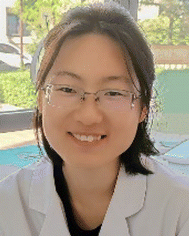 Xiaotong Zhang | Xiaotong Zhang received her BSc degree from Shenyang Pharmaceutical University in 2020. She has been pursuing her MSc degree under the supervision of Dr Penghao Jia in Tianjin University of Traditional Chinese Medicine. Her research interests are mainly focused on photoredox catalysis and medicinal chemistry. |
 Shuqi Li | Shuqi Li is an undergraduate student at the School of Chinese Materia Medica, Tianjin University of Traditional Chinese Medicine. She completed a college students’ innovative entrepreneurial training plan program on photocatalytic modification of drugs under the supervision of Dr Penghao Jia in 2023. |
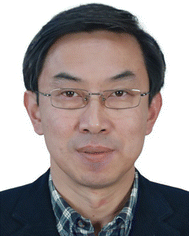 Feng Qiu | Feng Qiu received his Ph.D. degree from Hokkaido Pharmaceutical University, Japan, in 1996. After completing post-doctoral research with Prof. Xinsheng Yao at Shenyang Pharmaceutical University from 1996 to 1998, he joined the School of Traditional Chinese Materia Medica at the same institution. In 2005–2006, he was a visiting scientist at Osaka University, Japan. He is mainly focused on the discovery and related molecular mechanisms of bioactive natural products from traditional medicinal plants. |
 Hwee Ting Ang | Born in Penang, Malaysia, Hwee Ting Ang earned her Ph.D. in organic chemistry from the University of Alberta in September 2021, mentored by Prof. Dennis G. Hall. Currently, she serves as a postdoctoral researcher under the guidance of Prof. Wu Jie at the National University of Singapore. In this role, she is actively involved in advancing the field of flow chemistry, particularly in the realm of safe manufacturing with a focus on energetic intermediates under photochemistry. |
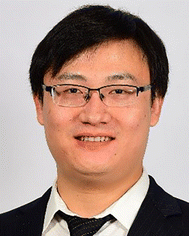 Jie Wu | Associate Prof. Wu Jie obtained his bachelor's degree in chemistry at Beijing Normal University in 2006. He then pursued his PhD study with Prof. James S. Panek at Boston University. In his postdoctoral research at MIT with Prof. Timothy Jamison and Prof. Alan Hatton, Jie was exposed to the significant aspects of continuous flow chemistry. Since joining NUS in July 2015, his research group focuses on synthetic methodology development and on-demand synthesis of functionalized organic molecules assisted by flow technologies. In July 2021, Jie was promoted to tenured associate professor. Jie is a recipient of Dean's Chair Professor (2022), the Tokyo Chemical Industry-SNIC Industry Award in Synthetic Chemistry (2021), NUS Young Research Award (2021), Yong Scientist Award (2020), Asian Core Program Lectureship Award (2017–2022), and Thieme Chemistry Journal Award (2019). |
 Penghao Jia | Penghao Jia received her Ph.D. degree from Nankai University under the supervision of Prof. You Huang. She then joined the group of Prof. Jie Wu at the National University of Singapore for postdoctoral studies. In 2019, she started her independent career in Tianjin University of Traditional Chinese Medicine. Her principal research interest is in photoredox catalysis methodologies and biomolecule modifications. |
Introduction
The Minisci-type reaction, pioneered by Minisci in the 1960s,1–5 involves the selective C–H functionalization of basic heteroarenes via a radical pathway. For over half a century, these reactions have continuously evolved and now involve a wide range of radicals beyond conventional alkyl radicals, expanding their utility in C–H bond functionalization of heteroarenes.6–11 While various Minisci-type reactions have been developed, their mechanism typically begins with the addition of a nucleophilic radical to a protonated electron-deficient heteroarene, forming radical intermediate 1 (Fig. 1). Subsequently, intermediate 1 can either lose its α-proton through a direct hydrogen atom transfer (HAT) process and then undergo rearomatization (pathway 1) or undergo deprotonation and single electron transfer (SET) oxidation (pathway 2) to yield the protonated product.
 |
| | Fig. 1 Mechanism of Minisci-type reactions. | |
N-heteroarenes are ubiquitous in pharmaceuticals, agrochemicals and natural products.12–14 The structural analysis of the database of U.S. FDA-approved pharmaceuticals indicates that N-heteroarenes are highly prevalent in drug architectures, among which pyridines, thiazoles, imidazoles, indoles, and pyrimidines are the most common cores.15,16 Consequently, late-stage functionalization (LSF) of complex scaffolds containing N-heteroarenes is of crucial importance in modern drug design and discovery.17–20 Compared to the traditional electrophilic Friedel–Crafts-type reactions, Minisci-type reactions involving nucleophilic radicals display contrasting selectivity and reactivity, offering an alternative tactic for heteroarene modification. Moreover, transition-metal (TM)-free Minisci-type reactions are particularly suitable for the LSF of pharmacologically active compounds in medicinal chemistry.
In light of the potential of these reactions in providing diverse heteroarene analogues, this review will emphasize their applications in LSF of drugs and drug-like molecules, categorized by functional groups, aiming to provide medicinal chemists with a comprehensive toolbox and guidance. Although this topic was reviewed from a medicinal chemistry perspective by Duncton in 2011, the key nucleophilic radicals are typically generated using a combination of TMs and oxidants (e.g., Ag(I)/S2O82− or Fe(II)/H2O2) at elevated temperatures.6 In addition, the traditional Minisci-type reactions typically suffer from moderate isolated yields and poor regioselectivity,21,22 limiting their application in the structural modification of complex molecules. With the advent of photocatalysis, recent advances in Minisci-type reactions have enabled the use of more abundant radical resources under mild reaction conditions without the need for stoichiometric TMs or oxidants, offering a robust strategy for installing diverse substituent groups on heteroarenes in a selective and atom-economical manner.23–29 Our review will focus on the progress in photocatalyzed Minisci-type reactions for the LSF of pharmaceutically relevant compounds over the last decade, encompassing up to 58 diverse biologically active molecules bearing 12 kinds of heteroarenes (Fig. 2) and will delve into mechanistic insights regarding the generation of radicals.
 |
| | Fig. 2 List of pharmaceuticals that undergo LSF with Minisci-type reactions. | |
Introduction of alkyl and cycloalkyl groups
Carboxylic acids and activated carboxylic acids as precursors
The original Minisci alkylation of heteroarenes, developed by Minisci and co-workers, utilized aliphatic carboxylic acids as alkyl radical precursors.3 The use of stoichiometric Ag(I) salts, persulfate oxidants, strong inorganic acids, and elevated temperatures for the radical generation via an oxidative decarboxylative process (Fig. 3) limits its application in the LSF of complex molecular architectures.
 |
| | Fig. 3 Traditional Minisci alkylation reaction with carboxylic acids. | |
In the last decade, notable advances in visible-light-mediated Minisci alkylation with carboxylic acids have been achieved.30 In 2017, Glorius and co-workers reported the use of 0.5 mol% Ir(III) complex as a photocatalyst along with persulfate as an oxidant, enabling the alkylation of various heteroarenes with primary, secondary, and tertiary carboxylic acids at room temperature (Fig. 4).31 Mechanistic studies revealed that photo-excited *Ir(III) species reduces persulfate to produce sulfate radical anions, which then abstract hydrogen atoms from carboxylic acids, generating alkyl radicals through decarboxylation. Moreover, this approach has proven its effectiveness in LSF, as exemplified by the successful alkylation of fasudil, a potent vasodilator, at C1, to yield 1aa in 50% yield within 16 hours under standard conditions.
 |
| | Fig. 4 Photoredox Minisci alkylation with carboxylic acids. | |
In 2018, the Chen and Frenette groups independently reported a hypervalent iodine-mediated photo-alkylation of heteroarenes using benziodoxole acetate (BI-OAc) and phenyliodine(III) bis(trifluoroacetate) (PIFA), respectively (Fig. 5).32,33 Alkyl radicals were generated via reduction of an in situ formed iodonium ester (from carboxylic acid and hypervalent iodine reagent) by the excited photocatalyst followed by decarboxylation. Various biologically active molecules containing N-heteroarenes were successfully modified using these methods. For example, fasudil and quinoxyfen were selectively alkylated, yielding 1ba and 2a with high efficiency. The versatility and robustness of these methods, even in the presence of amino and hydroxyl groups, was demonstrated by alkylating the antifungal voriconazole, the smoking-cessation drug varenicline, and the antimalarial quinine to yield 3a, 4a and 5aa, respectively.
 |
| | Fig. 5 Hypervalent iodine-promoted Minisci alkylations. | |
In 2020, Xu and Song disclosed an oxidant-free electrophotocatalytic Minisci alkylation using catalytic CeCl3·7H2O, representing a high atom-economy approach in the LSF of heteroarenes (Fig. 6).34 The radical generation process begins with anodic oxidation of Ce(III) to Ce(IV), facilitating coordination with carboxylic acids, followed by a photoinduced ligand-to-metal charge transfer (LMCT) of the complex to generate Ce(III) and carboxyl radicals, which then undergo decarboxylation to yield the alkyl radicals. Various N-heteroarene containing drug molecules, such as fasudil, quinoxyfen, voriconazole, and quinine, were well-tolerated to form 1ba, 2a, 3b and 5ab in good to excellent yields. Moreover, pesticides diflufenican and chloantraniliprole as well as antihistamine drug loratadine were selectively alkylated at C-2 of pyridines to afford 6a, 7a and 8aa. However, in the case of phosphodiesterase-3 inhibitor milrinone, a mixture of mono- and bis-alkylated products (9a and 9b) was generated.
 |
| | Fig. 6 Electrophotocatalytic Minisci alkylation of heteroarenes with carboxylic acids. | |
In 2018, Sherwood and co-workers developed an oxidant-free photoredox Minisci alkylation with carboxylic acids via in situ-generated N-(acyloxy)phthalimides (NAPs), where the alkyl radical was reductively generated from NAPs via the excited photocatalyst (Fig. 7).35 This method exhibited tolerance towards various functional groups, as demonstrated by the successful alkylation of nucleosides and drug molecules, including quinine, camptothecin with a quinoline scaffold, nebularine, peracetylated nebularine, adenosine, and anticancer drug vemurafenib, with moderate to good yields. Despite the lower yield of adenosine (11%), which is likely due to the presence of an electron-donating amino substituent at C-6, this example highlighted the suitability of unprotected nucleosides with free hydroxyl and amines for this method. Additionally, alkylation of anticancer agent imatinib yielded a mixture of regioisomeric mono- and bis-alkylated products (13a–13f) in a combined yield of 48%.
 |
| | Fig. 7 Photoredox Minisci alkylation with carboxylic acids via in situ-formation of NAPs. | |
With the advantages of not requiring external oxidants and ease of synthesis from carboxylic acids, NAPs have been widely employed in Minisci-type reactions.36–39 In 2021, Zheng and co-workers reported a Minisci-type alkylation using NAPs in conjunction with diphenyl phosphate (PA) as the catalyst under metal- and photocatalyst-free conditions, where a photosensitive intermediate I, derived from PA and heteroarenes via hydrogen bonding, acts as a potent reducing agent to reduce NAPs to form alkyl radicals (Fig. 8, condition 1).40 This method was effectively applied to quinoxyfen, producing 2b in 54% yield. Similarly, Chan and co-workers introduced another approach facilitated by Hantzsch ester (HE), in which EDA complex II, formed via non-covalent interaction between HE and NAPs, plays a pivotal role in the generation of alkyl radicals under photoirradiation (Fig. 8, condition 2).41 This approach yielded 68% yield of cyclohexylated quinine analogue 5ab, outperforming the in situ generated NAPs in Sherwood's study.
 |
| | Fig. 8 Photoredox Minisci-type alkylations with NAPs. | |
Organic peroxides as precursors
Besides carboxylic acids, organic peroxides can also serve as alkyl radical precursors. In 2014, DiRocco and co-workers reported photoredox catalyzed LSFs of biologically active N-heteroarenes with small alkyl groups (e.g., methyl, ethyl, and cyclopropyl) using stable organic peroxides (Fig. 9).42 Complex molecules containing quinoline or isoquinoline moeities were selectively functionalized to generate 1bb, 1bc, 1bd, 10b, and 18a. Furthermore, structures containing 6-membered heterocycles like pyrazines, pyrimidines, and pyridines reacted smoothly to yield methylated or cyclopropylated derivatives (3c, 3d, 4b, 4c, 6b, 8ab, 14a, 14b, 15a, 16a, and 16b). Even caffeine, which contains an imidazole unit (an electron-rich 5-membered heterocycle), was compatible with this method, yielding 17aa with 52% yield. However, the use of such small alkyl radicals often leads to multiple alkylations.
 |
| | Fig. 9 Photoredox Minisci alkylation using organic peroxides. | |
Alcohols and activated alcohols as precursors
Recent advances in photocatalysis have expanded the scope of alkyl radical precursors for Minisci alkylation to include abundant alcohols and activated alcohols. In 2015, MacMillan and co-workers utilized the synergistic merger of photoredox and thiol HAT organocatalysis, enabling primary alcohols to act as alkylating agents in Minisci-type reactions (Fig. 10).43 α-Oxy radicals are generated from alcohols via the HAT process with a thiyl radical (from the SET event between thiol and Ir(IV) species) and add to heteroarenes in the Minisci pathway. After deprotonation and spin-center shift (SCS), which forms benzylic radicals by eliminating a water molecule, the radicals are protonated and undergo a SET event with the excited photocatalyst, producing the alkylated product. The utility of this protocol in LSF was demonstrated by methylating fasudil with 82% yield using methanol and alkylation of milrinone with 3-phenylpropanol in 43% yield.
 |
| | Fig. 10 Photoredox Minisci alkylations with alcohols via a SCS process. | |
In 2019, Chen and co-workers also used alcohols as alkylating agents with hypervalent iodine BI-OAc as the oxidant under photoredox catalysis, compatible with primary, secondary, and tertiary alcohols (Fig. 11, condition 1).44 Unlike MacMillan's work, alkyl radicals herein are generated via β-scission of alkoxy radical intermediates. Drug molecules like the fasudil derivative, quinine, and camptothecin were successfully alkylated with cyclohexylmethanol in good to high yields. In the same year, Liu and co-workers revealed another hypervalent iodine-mediated strategy using PIFA (Fig. 11, condition 2), allowing the LSF of a plethora of natural products and drug molecules with alcohols.45 The fasudil derivative, quinoxyfen, quinine, and fenazaquin (a quinazoline-based insecticide) reacted smoothly yielding 1cb, 2d, 5ac, and 19a in good yields. However, the famciclovir derivative resulted in a mixture of monoalkylated and dialkylated products (17ba and 17bb). More recently, in 2022, Zhu and Li developed a similar reaction in stop-flow microtubing (SFMT) reactors, where quinoxyfen and voriconazole were functionalized with 2-methylpropan-1-ol to give 2c and 3a in moderate yields (Fig. 11, condition 3).46
 |
| | Fig. 11 Photoredox Minisci alkylations with alcohols via β-scission of alkoxy radical intermediates. | |
In 2019, Overman and co-workers described the use of tert-alkyl oxalates (activated alcohols derived from tertiary alcohols) as alkylating agents under photocatalytic conditions (Fig. 12, condition 1).47 Later in the same year, Wang and co-workers also employed alkyl oxalates derived from primary, secondary, and tertiary alcohols in a similar Minisci reaction under thermal conditions, without the need for a photocatalyst or light (Fig. 12, condition 2).48 Alkyl radicals are generated from oxalates by oxidation with either the photo-excited catalyst or the sulfate radical anion (from persulfate via decomposition under thermal conditions). The versatile approach successfully functionalized complex natural products and drug molecules, yielding the alkylated products in moderate to good yields under both conditions (1be, 1bf, 2e, 5ad, 5ae, 9d, 11bb, 17ab, 17ca, and 20a).
 |
| | Fig. 12 Minisci alkylations with oxalates as alkylating agents. | |
Ketones or aldehydes as precursors
Researchers have explored using ketones and aldehydes as alkyl radical precursors in Minisci alkylation. In 2019, Wang and co-workers developed a photocatalytic strategy to generate α-oxy radicals from these compounds through reductive proton-coupled electron transfer (PCET) with a strongly reducing Ir(III) species, generated from the excited photocatalyst and tris(trimethylsilyl)silane (TTMSS) (Fig. 13, condition 1).49 The α-oxy radicals subsequently add to heteroarenes via a Minisci-type pathway, and the final product is formed from benzylic radicals through a series of SCS and HAT processes. Natural products and drug molecules, such as loratadine, milrinone, etofibrate, and the steroidogenesis inhibitor metyrapone, were successfully alkylated with various ketones in moderate yields. Later, Huang and co-workers also reported a photocatalysis protocol in which both aliphatic and aromatic aldehydes were effective alkylating reagents (Fig. 13, condition 2).50 Using slightly modified reaction conditions, biologically active molecules were functionalized with isobutyraldehyde or benzaldehyde with moderate to good yields (1cc, 2f, 2g, and 5ba).
 |
| | Fig. 13 Photoredox Minisci alkylations with carbonyls via PCET and SCS mechanism. | |
In 2019, Huang and co-workers developed an alternative approach under ambient air conditions, where alkyl radicals are generated from aldehydes through a HAT process (Fig. 14, condition 1).51 In 2022, Zhu and co-workers also revealed a similar approach in the presence of PIFA (Fig. 14, condition 2).52 Notably, quinoxyfen, quinine, and voriconazole were alkylated with aliphatic aldehydes in good to excellent yields. Noteworthily, these reactions can be operated in open air without the need for inert gas protection, making them particularly suitable for the LSF of pharmaceutically relevant compounds.
 |
| | Fig. 14 Photoredox Minisci alkylations with carbonyls via HAT and decarbonylation. | |
In 2017, Molander and co-workers presented an indirect utilization of aldehydes as alkyl radical precursors by employing 1,4-dihydropyridines (DHPs) as masked aldehydes and persulfate as the oxidant without light irradiation.53 Building on this, in 2020, Wang and co-workers demonstrated photocatalytic Minisci alkylation with DHPs using O2 as a green oxidant (Fig. 15).54 In this strategy, DHPs are oxidized by the photoexcited *Ir(III) complex to generate alkyl radicals and substituted pyridines. Various complex molecules were functionalized using this method, yielding the corresponding products in moderate to good yields (1bg, 2c, 5bb, 9f, and 20a).
 |
| | Fig. 15 Photoredox Minisci alkylations with DHPs. | |
Organoboron as a precursor
In the past decade, organoboron compounds have also emerged as versatile radical precursors for Minisci-type alkylation. In 2010, Baran and co-workers first showed the use of arylboronic acids for Minisci alkylation using Ag(I)/S2O82− as an oxidant.55 Later, in 2016, Chen and co-workers developed a photoredox alternative for primary and secondary alkylboronic acids using BI-OAc as an oxidant (Fig. 16, condition 1).56 The ortho-iodobenzoyloxy radical, generated from BI-OAc via a SET process with the excited photocatalyst, reacts with alkylboronic acids to generate alkyl radicals for the Minisci-type reaction. Various natural products and drug molecules with diverse functional groups were alkylated with alkylboronic acids in moderate to good yields (1bc, 5ab, 5af, 10a, 10c, 16c–16e, 17ac, 17ad, and 17bc–17bf). Notably, famciclovir, a guanine analogue antiviral drug, could be functionalized with alkyl chains bearing an alkynyl or alkyl bromide group in good yields. In 2020, Wang and co-workers reported another strategy using molecular O2 as a clean oxidant, particularly suitable for the LSF of complex molecules (Fig. 16, condition 2, 1ba, 2a, 8aa, 10a, 17da, and 20d).57
 |
| | Fig. 16 Photoredox Minisci-type alkylations with alkylboronic acids. | |
Trifluoroborates can also be employed in Minisci-type reactions, first introduced by Molander and colleagues in 2011 by using excess Mn(OAc)3 as the oxidant.58 In 2017, they refined the method, enabling the use of primary, secondary, and tertiary alkyltrifluoroborates as alkyl radical precursors under mild photoredox conditions (Fig. 17, condition 1).59 Here, trifluoroborates undergo single-electron oxidation to generate alkyl radicals in the presence of catalytic amounts of Fukuzumi's organophotocatalyst (MesAcr) and stoichiometric persulfate at room temperature. In 2019, Xu and co-workers reported another approach by merging electro- and photoredox catalysis, enabling an oxidant-free approach for alkyl radical generation from trifluoroborates (Fig. 17, condition 2).60 Various alkyltrifluoroborates were successfully applied in the LSF of bioactive compounds under these conditions, with Molander's strategy with persulfates giving higher yields than the photoelectrochemical conditions.
 |
| | Fig. 17 Photoredox Minisci alkylations with trifluoroborates. | |
In 2021, Li and co-workers reported a synergistic merger of a novel quinoline-based organophotoredox catalyst, namely 2,4-bis(4-methoxyphenyl)quinoline (DPQN2,4-di-OMe), and chloro(pyridine)cobaloxime catalyst for the oxidant-free generation of alkyl radicals from trifluoroborates (Fig. 18).61 The alkylation of substrates with high molecular complexity was explored, yielding the desired products, such as 1ba, 3b, 5ca, 8aa, 17eb, 22a, and 23a, in moderate to good yields.
 |
| | Fig. 18 A quinolinium/cobaloxime dual photocatalytic system for Minisci alkylations with trifluoroborates. | |
Alkyl halides as precursors
Alkyl halides can serve as alkyl radical precursors through halogen atom abstraction (XAT) in Minisci alkylation. In 2017, Fadeyi and co-workers employed Mn2(CO)10 as a catalyst to generate alkyl radicals from alkyl iodides under photoirradiation, where the Mn–Mn bond in Mn2(CO)10 undergoes photochemical homolytic cleavage and facilitated the subsequent iodine atom abstraction (Fig. 19).62 The utility of this protocol was demonstrated by the LSF of the highly functionalized peptidic drug saguinavir with iodocyclopentane and iodoisopropane, as well as the biotinylation of bosutinib with iodobiotin, albeit in a low yield.
 |
| | Fig. 19 Photocatalyzed Minisci alkylations with alkyl iodides. | |
In 2019, Wang and co-workers utilized alkyl bromides as alkyl radical sources under photocatalytic conditions, with tris(trimethylsilyl) silane (TTMSS) as the XAT agent and molecular O2 as the oxidant (Fig. 20, condition 1).63 In the same year, ElMarrouni and co-workers reported a similar protocol by using persulfate as the oxidant instead (Fig. 20, condition 2).64 It was proposed that a bromine radical, formed through the oxidation of Br− by the photocatalyst, undergoes HAT with TTMSS to provide silyl radical species, which then abstract a bromine atom from alkyl bromides, forming alkyl radicals. The LSF of drug molecules containing N-heteroarenes proceeded smoothly, affording the alkylated products in moderate to good yields, with ElMarrouni's protocol requiring shorter reaction times (4 h vs. 24 h).
 |
| | Fig. 20 Photocatalyzed Minisci alkylations with alkyl bromides. | |
Alkanes as precursors
Direct utilization of alkanes as alkyl radical sources represents the most straightforward and atom-economical approach in Minisci alkylations. Numerous HAT reagents have been applied to generate alkyl radicals via C(sp3)–H abstraction.65 In 2019, Li and co-workers employed diacetyl (2,3-butanedione) as the energy transfer (ET) reagent and di-tert-butyl peroxide (DTBP) as the HAT reagent to generate alkyl radicals from otherwise unactivated alkanes (Fig. 21).66 Promisingly, valuable substrates including quinine and nicotine were effectively functionalized using cyclohexane.
 |
| | Fig. 21 Minisci alkylations of alkanes with diacetyl as the photosensitizer. | |
In 2019, both the Lei and Jin groups independently reported a photocatalyst-free strategy using Selectfluor as both the HAT reagent and oxidant (Fig. 22, condition 1).67,68 Under photoirradiation, Selectfluor undergoes N–F homolytic cleavage to give N-radical cation intermediate III, which serves as a HAT reagent to deliver alkyl radicals from unactivated alkanes. In the same year, Jin and co-workers also utilized H2O2 as both the HAT reagent and oxidant (Fig. 22, condition 2).69 Similarly, upon photoirradiation, hydroxyl radical IV is formed via homolytic O–O bond cleavage and serves as the HAT reagent. Notably, complex molecules including fasudil, quinoxyfen, voriconazole, and roflumilast readily underwent alkylation under these two photocatalyst-free protocols.
 |
| | Fig. 22 Photocatalyst-free Minisci alkylations with alkanes. | |
Due to the relatively large bond dissociation energies (BDE) of HCl (102 kcal mol−1),70 the use of the chlorine radical (Cl˙) as the HAT reagent for unactivated alkanes in Minisci reactions has been explored. In 2020, Xu and co-workers reported an oxidant-free approach by merging electrochemistry and photochemistry, where Cl˙ is generated by the anodic oxidation of Cl− followed by the light-promoted homolytic cleavage of the resultant Cl2 (Fig. 23).71 This photoelectrochemical method was successfully applied to alkylate purine derivatives and bioactive compounds. In 2021, Li and co-workers developed another oxidant-free protocol using catalytic tert-butylammonium chloride and a cobaloxime catalyst under photoirradiation (Fig. 24).72 Acetylated fasudil, caffeine, purine, and nicotine were alkylated with moderate yields. Hydrocinchonine, a commonly used chiral ligand in synthetic chemistry, underwent alkylation while preserving its hydroxy group. Also in 2021, Liu and Zhang disclosed another protocol under an aerobic atmosphere with cerium chloride as the photocatalyst and air as the oxidant, enabling the alkylation of quinoxyfen and theophylline in moderate yields (Fig. 25).73
 |
| | Fig. 23 Photoelectrochemical Minisci alkylations with alkanes via Cl˙. | |
 |
| | Fig. 24 Photoinduced Minisci alkylations with alkanes using catalytic chloride and cobalt catalyst. | |
 |
| | Fig. 25 Photocatalyzed Minisci alkylations using alkanes under an aerobic atmosphere. | |
In 2020, Li and An reported a photo-induced ET approach using 4-CzIPN as the catalyst, where ET occurs from the photo-excited 4-CzIPN* to (NH4)2S2O8, resulting in the homolysis of peroxydisulfate into the sulfate radical anion that serves as the HAT reagent (Fig. 26).74 The robustness of this protocol was demonstrated by the LSF of complex molecules, such as fasudil, hydroquinine, and cinchonine, affording the alkylated products in moderate yields.
 |
| | Fig. 26 Minisci alkylations with alkanes via an ET process. | |
In 2022, Deng and Wu introduced an oxidant-free, SFMT reactor-assisted approach, in which the HAT reagent, diphenylphosphate radical, was generated from diphenylphosphate anion via SET with the photoexcited acridinium photocatalyst (Fig. 27).75 Various complex bioactive molecules underwent the LSF smoothly, highlighting the effectiveness of this approach.
 |
| | Fig. 27 Photocatalyzed Minisci alkylations with alkanes assisted by SFMT reactors. | |
Introduction of ethers, alcohols, amines, and amides
Moving beyond the introduction of alkyl groups, the range of Minisci reactions has extended to incorporate diverse functional groups, such as ethers, alcohols, amines, and amides, in N-heteroarenes.
Ethers, alcohols, amines, and amides as precursors
In 2015, MacMillan and co-workers pioneered a photoredox Minisci reaction with ethers, both cyclic and acyclic, using Ir[dF(CF3)ppy]2(dtbbpy)PF6 as the photoredox catalyst and Na2S2O8 as the oxidant (Fig. 28).76 The α-oxyalkyl radicals are produced from ether through a HAT process with the sulfate radical anion, produced by the SET process between Na2S2O8 and the photo-excited photocatalyst.
 |
| | Fig. 28 Photoredox Minisci reactions with ethers. | |
Using a similar strategy, in 2018 and 2019 respectively, Wang and Johnson research groups independently reported the use of amines as radical precursors to introduce an N-protected amine functionality (Fig. 29).77,78 The α-aminoalkyl radicals are generated from amine through HAT with tert-butoxy radical (Fig. 29, condition 1) or sulfate radical anion (Fig. 29, condition 2). This strategy enabled the selective aminoalkylation of pentoxifylline at C2 with 52% yield, and fasudil was also successfully functionalized using both methods in moderate yields.
 |
| | Fig. 29 Photoredox Minisci aminoalkylation with amines. | |
In 2019, another approach for the Minisci oxyalkylation was reported by Li and co-workers, using diacetyl as both a triplet-state photosensitizer and HAT reagent to generate the alkyl radicals from ethers (Fig. 30).66 Moderate to good yields were obtained in the functionalization of complex molecules under this approach.
 |
| | Fig. 30 Minisci oxyalkylations using diacetyl as the photosensitizer and HAT reagent. | |
In 2021, Guin and co-workers developed a general protocol under air that can incorporate both oxygen and nitrogen functionalities (ethers, amides, and alcohols) in N-heteroarenes (Fig. 31).79 It utilizes singlet oxygen, generated in situ upon irradiation of air with a 370 nm LED lamp, as the HAT reagent. The robustness of the method was demonstrated by the LSF of biologically relevant natural products with ethers and amides.
 |
| | Fig. 31 Photoinduced Minisci reaction via aerobic oxidation of ethers, amides, and alcohols. | |
In 2016, DiRocco and Krska disclosed a photoredox Minisci hydroxymethylation with methanol using an iridium photocatalyst and benzoyl peroxide (BPO) as the HAT reagent precursor, which generates the HAT reagent (phenyl radical) from BPO via SET with the photoexcited *Ir(III) complex and decomposition (Fig. 32).80 With this method, the hydroxymethylation of fasudil and torsemide, a loop diuretic, afforded 1bl and 27a as a single regioisomer, while modification of voriconazole, with a pyrimidine core, resulted in a mixture of regioisomers.
 |
| | Fig. 32 Photoredox Minisci hydroxymethylation with methanol. | |
Another strategy based on the regioselective 1,5-HAT process has also been developed to introduce distal alcohol or amide functionalities to N-heteroarenes via the Minisci reaction. In 2018, Zhu and co-workers introduced a metal-free approach using PIFA as the sole reagent in DCM (Fig. 33, condition 1).81 They later reported a greener variant in 2022, using MeCN as the solvent and SFMT reactor (Fig. 33, condition 2).82 In 2019, Chen and co-workers employed perfluorinated hydroxybenziodoxole (PFBI-OH) as the oxidant for this strategy (Fig. 33, condition 3).83 This strategy generally involves the generation of alkoxy radicals from free alcohols under photoirradiation and subsequent 1,5-HAT reactions that furnish carbon-centered radicals for Minisci reactions. This approach efficiently coupled alcohols with complex drug molecules, yielding the desired products. Notably, tarocin A1, an inhibitor of TarO enzyme, reacted with 1-butanol to yield 28a bearing a distal alkyl alcohol handle in 78% yield.
 |
| | Fig. 33 Minisci-type alcohol-directed remote C(sp3)–H functionalization with heteroaryls via a 1,5-HAT process. | |
In 2019, Yu and co-workers expanded this strategy to introduce a distal amide group on N-heteroarenes, using hydroxamide as a precursor (Fig. 34, condition 1).84 The amidyl radical, derived from hydroxamide through SET with the photo-excited photocatalyst, undergoes a 1,5-HAT process to yield alkyl radicals for the Minisci reaction. Famciclovir was successfully modified to give 17bh in a 51% yield with this protocol. Also in 2019, Chen and colleagues developed another protocol using sulfonyl-protected primary aliphatic amines (Fig. 34, condition 2), enabling the efficient introduction of a distal sulfonyl-protected amine to N-heteroarenes, such as fasudil derivatives.85
 |
| | Fig. 34 Minisci-type amide-directed remote C(sp3)–H functionalization of heteroaryls via a 1,5-HAT. | |
Amino acid derivatives as precursors
Amino acids have been used to introduce α-amine moieties to N-heteroarenes via Minisci-type reactions by leveraging the well-established generation of alkyl radicals from carboxylic acids. In 2017, using a combination of photoredox and Brønsted acid catalysis, Fu and Shang reported an α-aminoalkylation of complex N-heteroarenes, such as fasudil, caffeine, and famciclovir, with amino acid-derived NAPs (Fig. 35, condition 1).86 In 2018, Phipps and co-workers demonstrated an enantioselective variant of this transformation using an enantiopure chiral Brønsted acid catalyst (R)-TCYP for the asymmetric induction (Fig. 35, condition 2).87 This method enabled excellent regio- and enantioselective functionalization of etofibrate and metyropone (20e, 93% ee; 21b, 95% ee).
 |
| | Fig. 35 Minisci α-aminoalkylation of N-heteroarenes with NAPs. | |
In 2019, Wang and co-workers described another strategy using easily reduced N-hydroxybenzimidoyl chloride (NHBC) esters as the radical precursor under photoredox conditions without the need for a Brønsted acid catalyst (Fig. 36).88 This protocol was effective in modifying etofibrate, yielding 20f with 75% yield.
 |
| | Fig. 36 Photoredox Minisci α-aminoalkylation with NHBC esters. | |
Aldehydes as precursors
In 2020, the use of aldehydes as a precursor for Minisci α-hydroxyalkylation was reported by Kanai and Mitsunuma, using an acridinium photocatalyst and a thiophosphoric acid (TPA) organocatalyst (Fig. 37).89 Mechanistic studies indicated that the thiyl radical (generated from TPA via SET with the excited photocatalyst) initiates a HAT process with aldehydes to produce acyl radicals, which then undergo Minisci reactions, yielding the final products after a sequence of deprotonation, SCS, SET, and protonation processes. Notably, the reaction conditions enabled efficient α-hydroxyalkylation of a fasudil derivative and camptothecin within 3 hours.
 |
| | Fig. 37 Photocatalytic Minisci α-hydroxyalkylation with aldehydes. | |
In 2019, Melchiorre and co-workers described a photocatalyst- and oxidant-free α-hydroxyalkylation by using 4-acyl-1,4-dihydropyridines (acyl-DHPs), which can be prepared in one-step from alkyl- and aryl-glyoxals, as acyl radical precursors (Fig. 38).90 Upon photoirradiation, acyl-DHPs generated acyl radicals through facile SET reduction and homolytic cleavage. This approach efficiently functionalized complex molecules with quinoline cores, demonstrating its synthetic potential with moderate to good yields.
 |
| | Fig. 38 Photo-mediated Minisci α-hydroxyalkylation with acyl-DHPs. | |
Introduction of aryl groups
Aryl-heteroaryl skeletons, known for their significant biological and medicinal properties,91 can also be constructed through photocatalyzed Minisci reactions. In 2014, Xue and co-workers generated aryl radicals from aryldiazonium salts through SET reduction by the photo-excited *Ru(II) complex and extrusion of N2 in aqueous formic acid (Fig. 39).92 Using this method, caffeine was modified using various aryldiazonium tetrafluoroborates, both electron-poor and electron-rich, affording 17am–17ax in good yields.
 |
| | Fig. 39 Photocatalytic Minisci arylation with aryldiazonium salts. | |
Introduction of acyl groups
Researchers have also extended Minisci-type reactions to incorporate acyl groups into diverse N-heteroarenes through acyl radicals, expanding the toolbox for complex molecule functionalization.
Aldehydes as precursors
In 2023, Fang and colleagues reported a photo-induced Minisci acylation between aldehydes and purine nucleosides, showing high selectivity for the C6 position of purine (Fig. 40).93 Mechanistic investigations revealed that the purine nucleoside first interacts with TFA and TBHP to form a photo-active complex, which under light irradiation, produces protonated purine nucleoside, a tert-butyl-oxygen radical, and a hydroxyl radical. These radicals can serve as the HAT reagent to generate acyl radicals. This method is valuable for synthesizing C6-acylated purine nucleosides that display diverse biological activities, using both aromatic and aliphatic aldehydes to yield products 11bd–11bz in good yields.
 |
| | Fig. 40 Photo-induced Minisci acylation of purine nucleosides with aldehydes. | |
α-Keto acids as precursors
Drawing from the straightforward generation of radicals from carboxylic acids via SET and subsequent decarboxylation, in 2018, both Xia and Delord groups independently reported photo-triggered Minisci acylation with α-keto acids (Fig. 41).94,95 Notably, under both conditions, benzoylformic acid reacted smoothly with caffeine to afford 17a1 in moderate yields.
 |
| | Fig. 41 Photo-triggered Minisci acylation with α-keto acids. | |
Acetals as precursors
Formylated heterocycles—versatile skeletons in natural products and pharmaceuticals—can be synthesized via Minisci formylation. In their work in 2018, Xia and co-workers also achieved this transformation using glyoxylic acid diethyl acetal as the formyl source and (NH4)2S2O8 as the oxidant, affording formylated caffeine 17a2 with 20% yield (Fig. 42, condition 1).94 Then in 2020, Wang and co-workers developed an oxidant-free approach using 1,3-dioxoisoindolin-2-yl 2,2-diethoxyacetate as the formyl source, which was applicable for formylating fasudil with 60% yield (Fig. 42, condition 2).96 Mechanistically, acetyl radicals are generated from the precursor via SET and subsequent decarboxylation and undergo the Minisci reaction then acid hydrolysis to form the desired products.
 |
| | Fig. 42 Photo-mediated Minisci formylation with acetals. | |
Introduction of carbamoyl groups
In addition to acetyl and formyl groups, carbamoyl groups have also been incorporated into N-heteroarenes via Minisci-type reactions.
Formamides as precursors
In 2016, Ji and co-workers disclosed a benzaldehyde-mediated photoredox method using formamide as the carbamoyl source and (NH4)2S2O8 as a radical initiator, successfully applicable to 3-(ethoxy-carbonyl)-β-carboline (β-CCE), a common scaffold in drug discovery, affording 33a in 50% yield (Fig. 43).97 Upon illumination, photoexcited benzaldehyde triggers persulfate decomposition to form sulfate radicals that subsequently generate carbamoyl radicals from formamide via a HAT process with formamide.
 |
| | Fig. 43 Benzaldehyde-mediated photocatalyzed Minisci carbamoylation with formamide. | |
Oxamic acids as precursors
Again, leveraging the facile radical generation from carboxylic acids, oxamic acids were employed as carbamoyl radical precursors in this transformation. In 2019, Kong and Jouffroy reported a photocatalyzed protocol using oxamic acids or potassium oxamates as the carbamoyl sources, which can be applied in carbamoylating caffeine and cinchonine (Fig. 44, condition 1).98 The electrophotocatalysis approach of Xu and Song in 2020 was also compatible with oxamic acids (Fig. 44, condition 2), enabling the carbamoylation of voriconazole, quinine, loratadine, tropicamide (a potent anticholinergic and muscarinic receptor antagonist), and bisacodyl (a stimulant laxative) in moderate to good yields.34 In both cases, the requisite carbamoyl radical is generated through the SET oxidation of oxamates by the excited photocatalyst, followed by decarboxylation.
 |
| | Fig. 44 Photoredox Minisci carbamoylation with oxamic acids. | |
Introduction of fluorinated groups
Small, fluorinated groups, particularly trifluoromethyl (CF3), often exert a strong impact on the physiochemical properties and biological activities of drug molecules, due to their lipophilicity, electron-withdrawing characteristic and metabolic stability.99,100 It is notable that reactions involving electrophilic CF3 or CF2H groups discussed here differ from conventional ‘Minisci-type’ chemistry but are included as they yield ‘Minisci-type’ products through radical addition.
Sulfonyl chlorides and sodium sulfinates as precursors
In 2011, MacMillan and co-workers pioneered photoredox trifluoromethylation of heteroarenes using CF3SO2Cl as the CF3 source, which was effective in functionalizing a DNA base analogue, uracil, in good yield (Fig. 45).101 Mechanistically, the reduction of CF3SO2Cl by the photoexcited *Ir(III) complex followed by extrusion of SO2 and the chloride anion generates CF3˙, which adds to the most electron-rich position in the N-heteroarene. To address cost-effectiveness and practicality in trifluoromethylations, in 2017, Noël and co-workers revealed a continuous-flow protocol using inexpensive and more stable CF3SO2Na (Langlois reagent) as the CF3 radical precursor via reductive quenching of the excited photocatalyst.102 Notably, this system achieved the trifluoromethylation of caffeine, yielding 17a4 in 45% yield within a residence time of 30 minutes.
 |
| | Fig. 45 Photoredox trifluoromethylation of heterocycles with CF3SO2Cl and CF3SO2Na. | |
Building upon Noël's work, other fluorine-containing sulfinate salts have been used for photoredox perfluoroalkylation and difluoromethylation of heteroarenes under aerobic conditions, where atmospheric oxygen serves as a crucial oxidant. In 2019, Duan, Xia, and co-workers utilized sodium perfluoroalkanesulfinates with eosin Y as the photocatalyst, enabling perfluoroalkylation of caffeine with C4F9SO2Na, C6F13SO2Na, and C8F17SO2Na to afford products 17a4–17a7 with 25–35% yields (Fig. 46, condition 1).103 Furthermore, in 2020, recognizing the substantial potential of the difluoromethyl (CF2H) group in drug scaffolds, Li, Meng, and colleagues disclosed a difluoromethylation using CF2HSO2Na as the CF2H source and rose bengal as the photocatalyst (Fig. 46, condition 2).104 This protocol was effective in the LSF of complex nitrogen-containing bioactive molecules, including purine-based species like caffeine, pentoxifylline, and theophylline, furnishing 17a8, 17cc and 17db with selective functionalization in the imidazole moiety and moderate to good yields. Notably, the difluoromethylated product 36ba, derived from deoxyuridine, exhibits promising anti-cancer activity against some cancer cell lines. In addition to transition metal complexes and organic dyes as photocatalysts, König and Antonietti introduced mesoporous graphitic carbon nitride (mpg-CN) as a heterogeneous semiconductor catalyst for the late-stage fluoroalkylation of heteroarenes in 2019 (Fig. 47).105 Using Langlois reagent or zinc sulfinates as fluoroalkyl radical precursors, various pharmaceuticals and bioactive molecules with purine, pyrimidine, and indole cores displayed good reactivity in trifluoromethylation, difluoromethylation, and 2,2,2-trifluoroethylation. Notably, this protocol demonstrated excellent scalability, enabling efficient reactions on a gram scale, exemplified by successful synthesis of 17a4, 17db and 36aa.
 |
| | Fig. 46 Photoredox perfluoroalkylation and difluoromethylation of heterocycles with sodium sulfinates. | |
 |
| | Fig. 47 Organic semiconductor photoredox fluoroalkylation of heterocycles. | |
Anhydrides as precursors
In 2015, the use of trifluoroacetic anhydride (TFAA) as the CF3 radical precursor was reported by Stephenson and co-workers, using pyridine N-oxide as an electron-poor auxiliary to facilitate the mild decarboxylation of TFAA via formation of reducible intermediate (Ered½ = −1.10 V versus SCE) (Fig. 48, condition 1).106 Reduction of the intermediate by a common photoredox catalyst, such as Ru(bpy)3, and the subsequent extrusion of pyridine and CO2 generate CF3 radicals. Notably, a gram-scale trifluoromethylation of caffeine was achieved with 54% yield. Similarly, in 2018, Qing and co-workers utilized trifluoromethanesulfonic anhydride (Tf2O) as the CF3 radical precursor with pyridine as the activating reagent, forming a reducible pyridinium complex (Fig. 48, condition 2).107 This protocol effectively trifluoromethylated pentoxifylline, affording 17cd in a 50% yield.
 |
| | Fig. 48 Photoredox trifluoromethylation of heterocycles with TFAA and Tf2O. | |
Bromides as precursors
The incorporation of a difluoroacetamide moiety on N-heteroarenes can be achieved by using bromodifluoroacetamides as electrophilic α-difluorocarbonyl radical sources through photocatalysis, as disclosed by Liu and co-workers in 2014 (Fig. 49).108 This protocol is applicable to complex heteroaromatics, as exemplified by the successful functionalization of pentoxifylline with 82% yield.
 |
| | Fig. 49 Photocatalyzed difluoroacetamidation of N-heteroarenes with bromodifluoroacetamides. | |
Introduction of trialkylsilyl groups
The potential of heteroaryltrialkylsilanes as promising therapeutic agents has sparked considerable interest in their synthesis.109,110 In 2019, Zhang, Wang and co-workers developed a photocatalytic Minisci silylation approach with trialkylhydrosilanes (Fig. 50, condition 1), effectively enabling the silylation of complex molecules like camptothecin, pentoxifylline, carboline, tropicamide analogue, cloquintocet-mexyl, and imiquimod analogue, using radical initiators Na2S2O8, bis(trimethylsilyl)peroxide (BTMSPO), or iPr3SiSH.111 More recently, in 2023, Wang, Hou and co-workers reported an organoelectrophotocatalytic approach using tert-butyldimethylsilane as the silyl source and 9,10-phenanthrenequinone (PQ) as both the organophotosensitizer and HAT reagent, where silyl radicals are generated via a HAT process between the excited PQ and silanes (Fig. 50, condition 2).112 Notably, this strategy is applicable to the late-stage silylation of bioactive molecules, including the fasudil analogue, quinine, desloratadine, famciclovir, purine, and fenazaquin.
 |
| | Fig. 50 Photocatalyzed Minisci silylation with trialkylhydrosilanes. | |
Introduction of boron functional groups
The introduction of boron groups to N-heteroarenes is highly promising due to their significance as building blocks in synthetic chemistry and potential drug candidates in medicinal chemistry.113 In 2021, Leonori and co-workers introduced a photoredox Minisci borylation strategy using simple amine-borane reagents as boryl radical precursors, (NH4)2S2O8 as the HAT reagent, and 4CzIPN as the photocatalyst (Fig. 51).114 Boryl radicals are generated through a polarity-matched HAT process of amine-borane with sulfate radical anion. This method is applicable to the borylation of complex pharmaceuticals and agrochemicals, including fasudil, fasudil analogue, quinoxyfen, voriconazole, cinchonine, and famciclovir.
 |
| | Fig. 51 Photoredox Minisci borylation with amine-boranes. | |
Introduction of glycosyl groups
C-Glycosyl compounds, valued for their stability and potential in drug discovery, are a focus of interest.115 In 2021, Yu and co-workers revealed a photoredox Minisci glycosylation using glycosyl bromides to synthesize potential C-nucleoside analogues with anticancer or antiviral properties (Fig. 52).116 Mechanistically, the reaction is initiated by SET with the photoexcited *Ir(III) complex with Et3N to give Ir(II) and Et3N+˙. Then galactosyl bromides are reduced by Ir(II) to give galactosyl radicals, which perform nucleophilic attack on N-heteroarenes, followed by oxidation and deprotonation with Et3N+˙ to produce the final C-nucleoside analogues. His method exhibits α-stereoselectivity and allows for the direct galactosylation of biologically relevant molecules like nebularine, famciclovir, theophylline, and adenine.
 |
| | Fig. 52 Photoredox Minisci glycosylation with glycosyl bromides. | |
Summary and outlook
This review highlights diverse approaches for photo-induced Minisci-type reactions in the LSF of N-heteroarenes, revealing significant advancements in radical generation—alkyl, aryl, acyl, carbamoyl, fluoroalkyl, boryl, silyl and glycosyl—from various precursors under photoirradiation since Duncton's review in 2011 (Fig. 53).6 Recognizing the established power and versatility of LSF methodologies in drug discovery, it is evident that these photocatalyzed Minisci-type reactions will play a pivotal role in accelerating drug discovery in the future.
 |
| | Fig. 53 Overview of diverse approaches for photo-induced Minisci-type reactions in the LSF of N-heteroarenes. | |
While considerable strides have been made in advancing Minisci-type reactions for LSF of pharmaceutically relevant compounds, several challenges underscore the need for further exploration and innovation to fully unlock the tremendous potential of Minisci-type reactions in drug discovery. First, achieving good regioselectivity remains a hurdle, particularly for complex natural skeletons with multiple reactive sites which often result in the formation of regioisomers and multisubstituted products. The second challenge pertains to achieving enantioselectivity, a critical aspect given the prevalence of chiral centres in biologically active molecules. Despite the development of some enantioselective variants,11 their application to complex molecules remains limited. Additionally, our review reveals a concentration on specific substrates, such as pyridine, quinoline, isoquinoline, and purine moieties, while neglecting the modification of other heterocycles commonly found in pharmaceuticals and alkaloids. Lastly, the lack of standardized setups and difficulties in scaling-up of the photocatalysis methodology pose potential hurdles in the process development in drug discovery, emphasizing the need for the development of advanced technologies. Scrutinizing these limitations is crucial, particularly for identifying the current gaps in knowledge and laying the foundation for future research directions.
Looking ahead, as organic chemistry continues to evolve dynamically, the integration of technological advancements, such as flow apparatuses and high-throughput platforms, holds promise for addressing these challenges. We anticipate a future where prospective drug candidates can undergo established LSF procedures, offering substantial cost and time savings for practitioners in both academia and the pharmaceutical industry.
Author contributions
Conceptualization, F. Qiu, J. Wu and P. Jia; investigation, X. Zhang and S. Li; writing – original draft, X. Zhang, S. Li and P. Jia; writing – review and editing, X. Zhang, H.T. Ang, J. Wu and P. Jia; project administration, P. Jia; supervision, J. Wu and P. Jia.
Conflicts of interest
There are no conflicts to declare.
Acknowledgements
We are grateful for the financial support from the National Natural Science Foundation of China (no. 22201214) and the Scientific Research Project of Tianjin Education Commission (no. 2021KJ125).
References
- F. Minisci, R. Galli, M. Cecere, V. Malatesta and T. Caronna, Tetrahedron Lett., 1968, 9, 5609–5612 CrossRef.
- F. Minisci, R. Galli, V. Malatesta and T. Caronna, Tetrahedron, 1970, 26, 4083–4091 CrossRef CAS.
- F. Minisci, R. Bernardi, F. Bertini, R. Galli and M. Perchinummo, Tetrahedron, 1971, 27, 3575–3579 CrossRef CAS.
- F. Minisci, E. Vismara and F. Fontana, Heterocycles, 1989, 28, 489–519 CrossRef CAS.
- F. Minisci, F. Fontana and E. Vismara, J. Heterocycl. Chem., 1990, 2, 79–96 CrossRef.
- M. A. J. Duncton, MedChemComm, 2011, 2, 1135–1161 RSC.
- J. Tauber, D. Imbri and T. Opatz, Molecules, 2014, 19, 16190 CrossRef PubMed.
- R. S. J. Proctor and R. J. Phipps, Angew. Chem., Int. Ed., 2019, 58, 13666–13699 CrossRef CAS PubMed.
- J. Dong, Y. Liu and Q. Wang, Chin. J. Org. Chem., 2021, 41, 3771–3791 CrossRef CAS.
- W. Wang and S. Wang, Curr. Org. Chem., 2021, 25, 894–934 CrossRef CAS.
- P. D. Bacos, A. S. K. Lahdenperä and R. J. Phipps, Acc. Chem. Res., 2023, 56, 2037–2049 CrossRef CAS PubMed.
- M. Baumann and I. R. Baxendale, Beilstein J. Org. Chem., 2013, 9, 2265–2319 CrossRef PubMed.
- N. Kerru, L. Gummidi, S. Maddila, K. K. Gangu and S. B. A. Jonnalagadda, Molecules, 2020, 25, 1909 CrossRef CAS PubMed.
- M. M. Heravi and V. Zadsirjan, RSC Adv., 2020, 10, 44247–44311 RSC.
- E. Vitaku, D. T. Smith and J. T. Njardarson, J. Med. Chem., 2014, 57, 10257–10274 CrossRef CAS PubMed.
- P. Bhutani, G. Joshi, N. Raja, N. Bachhav, P. K. Rajanna, H. Bhutani, A. T. Paul and R. Kumar, J. Med. Chem., 2021, 64, 2339–2381 CrossRef CAS PubMed.
- T. Cernak, K. D. Dykstra, S. Tyagarajan, P. Vachal and S. W. Krska, Chem. Soc. Rev., 2016, 45, 546–576 RSC.
- J. Borgel and T. Ritter, Chem, 2020, 6, 1877–1887 Search PubMed.
- R. Cannalire, S. Pelliccia, L. Sancineto, E. Novellino, G. C. Tron and M. Giustiniano, Chem. Soc. Rev., 2021, 50, 766–897 RSC.
- L. Guillemard, N. Kaplaneris, L. Ackermann and M. J. Johansson, Nat. Rev. Chem., 2021, 5, 522–545 CrossRef CAS PubMed.
- F. Minisci, E. Vismara, F. Fontana, G. Morini, M. Serravalle and C. Giordano, J. Org. Chem., 1987, 52, 730–736 CrossRef CAS.
- F. O'Hara, D. G. Blackmond and P. S. Baran, J. Am. Chem. Soc., 2013, 135, 12122–12134 CrossRef PubMed.
- C. K. Prier, D. A. Rankic and D. W. C. MacMillan, Chem. Rev., 2013, 113, 5322–5363 CrossRef CAS PubMed.
- N. A. Romero and D. A. Nicewicz, Chem. Rev., 2016, 116, 10075–10166 CrossRef CAS PubMed.
- L. Marzo, S. K. Pagire, O. Reiser and B. König, Angew. Chem., Int. Ed., 2018, 57, 10034–10072 CrossRef CAS PubMed.
- F. Strieth-Kalthoff, M. J. James, M. Teders, L. Pitzer and F. Glorius, Chem. Soc. Rev., 2018, 47, 7190–7202 RSC.
- R. C. McAtee, E. J. McClain and C. R. J. Stephenson, Trends Chem., 2019, 1, 111–125 CrossRef CAS PubMed.
- Q.-Q. Zhou, Y.-Q. Zou, L.-Q. Lu and W.-J. Xiao, Angew. Chem., Int. Ed., 2019, 58, 1586–1604 CrossRef CAS PubMed.
- G. E. M. Crisenza, D. Mazzarella and P. Melchiorre, J. Am. Chem. Soc., 2020, 142, 5461–5476 CrossRef CAS PubMed.
- J. Xuan, Z.-G. Zhang and W.-J. Xiao, Angew. Chem., Int. Ed., 2015, 54, 15632–15641 CrossRef CAS PubMed.
- R. A. Garza-Sanchez, A. Tlahuext-Aca, G. Tavakoli and F. Glorius, ACS Catal., 2017, 7, 4057–4061 CrossRef CAS.
- J. Wang, G. Li, G. He and G. Chen, Asian J. Org. Chem., 2018, 7, 1307–1310 CrossRef CAS.
- J. Genovino, Y. Lian, Y. Zhang, T. O. Hope, A. Juneau, Y. Gagné, G. Ingle and M. Frenette, Org. Lett., 2018, 20, 3229–3232 CrossRef CAS PubMed.
- X.-L. Lai, X.-M. Shu, J. Song and H.-C. Xu, Angew. Chem., Int. Ed., 2020, 59, 10626–10632 CrossRef CAS PubMed.
- T. C. Sherwood, N. Li, A. N. Yazdani and T. G. M. Dhar, J. Org. Chem., 2018, 83, 3000–3012 CrossRef CAS PubMed.
- W.-M. Cheng, R. Shang, M.-C. Fu and Y. Fu, Chem. – Eur. J., 2017, 23, 2537–2541 CrossRef CAS PubMed.
- L. M. Kammer, A. Rahman and T. Opatz, Molecules, 2018, 23, 764–779 CrossRef PubMed.
- M.-C. Fu, R. Shang, B. Zhao, B. Wang and Y. Fu, Science, 2019, 363, 1429–1434 CrossRef CAS PubMed.
- X. L. Lyu, S. S. Huang, H. J. Song, Y. X. Liu and Q. M. Wang, Org. Lett., 2019, 21, 5728–5732 CrossRef CAS PubMed.
- S. Jin, X. Geng, Y. Li and K. Zheng, Eur. J. Org. Chem., 2021, 969 CrossRef.
- J. Li, S. S. Tan, S. H. Kyne and P. W. H. Chan, Adv. Synth. Catal., 2022, 364, 802–810 CrossRef CAS.
- D. A. DiRocco, K. Dykstra, S. Krska, P. Vachal, D. V. Conway and M. Tudge, Angew. Chem., Int. Ed., 2014, 53, 4802–4806 CrossRef CAS.
- J. Jin and D. W. C. MacMillan, Nature, 2015, 525, 87–90 CrossRef CAS.
- X. Hu, G.-X. Li, G. He and G. Chen, Org. Chem. Front., 2019, 6, 3205–3209 RSC.
- Y. Wang, L. Yang, S. Liu, L. Huang and Z.-Q. Liu, Adv. Synth. Catal., 2019, 361, 4568–4574 CrossRef CAS.
- Z. Cao, M. Ji, X. Wang, X. Wu, Y. Li and C. Zhu, Green Chem., 2022, 24, 4498–4503 RSC.
- S. P. Pitre, M. Muuronen, D. A. Fishman and L. E. Overman, ACS Catal., 2019, 9, 3413–3418 CrossRef CAS.
- J. Dong, Z. Wang, X. Wang, H. Song, Y. Liu and Q. Wang, J. Org. Chem., 2019, 84, 7532–7540 CrossRef CAS PubMed.
- J. Dong, Z. Wang, X. Wang, H. Song, Y. Liu and Q. Wang, Sci. Adv., 2019, 5, eaax9955 CrossRef CAS PubMed.
- Z. Wang, Q. Liu, X. Ji, G. Deng and H. Huang, ACS Catal., 2020, 10, 154–159 CrossRef CAS.
- Z. Wang, X. Ji, J. Zhao and H. Huang, Green Chem., 2019, 21, 5512–5516 RSC.
- X. Wang, X. Shao, Z. Cao, X. Wu and C. Zhu, Adv. Synth. Catal., 2022, 364, 1200–1204 CrossRef CAS.
- Á. Gutiérrez-Bonet, C. Remeur, J. K. Matsui and G. A. Molander, J. Am. Chem. Soc., 2017, 139, 12251–12258 CrossRef.
- J. Dong, F. Yue, W. Xu, H. Song, Y. Liu and Q. Wang, Green Chem., 2020, 22, 5599–5604 RSC.
- I. B. Seiple, S. Su, R. A. Rodriguez, R. Gianatassio, Y. Fujiwara, A. L. Sobel and P. S. Baran, J. Am. Chem. Soc., 2010, 132, 13194–13196 CrossRef CAS PubMed.
- G.-X. Li, C. A. Morales-Rivera, Y. Wang, F. Gao, G. He, P. Liu and G. Chen, Chem. Sci., 2016, 7, 6407–6412 RSC.
- J. Dong, F. Yue, H. Song, Y. Liu and Q. Wang, Chem. Commun., 2020, 56, 12652–12655 RSC.
- G. A. Molander, V. Colombel and V. A. Braz, Org. Lett., 2011, 13, 1852–1855 CrossRef CAS PubMed.
- J. K. Matsui, D. N. Primera and G. A. Molander, Chem. Sci., 2017, 8, 3512–3522 RSC.
- H. Yan, Z.-W. Hou and H.-C. Xu, Angew. Chem., Int. Ed., 2019, 58, 4592–4595 CrossRef CAS PubMed.
- J. Li, C.-Y. Huang, J.-T. Han and C.-J. Li, ACS Catal., 2021, 11, 14148–14158 CrossRef CAS.
- P. Nuhant, M. S. Oderinde, J. Genovino, A. Juneau, Y. Gagné, C. Allais, G. M. Chinigo, C. Choi, N. W. Sach, L. Bernier, Y. M. Fobian, M. W. Bundesmann, B. Khunte, M. Frenette and O. O. Fadeyi, Angew. Chem., Int. Ed., 2017, 56, 15309–15313 CrossRef CAS PubMed.
- J. Dong, X. Lyu, Z. Wang, X. Wang, H. Song, Y. Liu and Q. Wang, Chem. Sci., 2019, 10, 976–982 RSC.
- J. J. Perkins, J. W. Shubert, E. C. Streckfuss, J. Balsells and A. ElMarrouni, Eur. J. Org. Chem., 2020, 1515–1522 CrossRef CAS.
- H. Cao, X. Tang, H. Tang, Y. Yuan and J. Wu, Chem. Catal., 2021, 1, 523–598 CrossRef CAS.
- C.-Y. Huang, J. Li, W. Liu and C.-J. Li, Chem. Sci., 2019, 10, 5018–5024 RSC.
- X.-A. Liang, L. Niu, S. Wang, J. Liu and A. Lei, Org. Lett., 2019, 21, 2441–2444 CrossRef CAS PubMed.
- H. Zhao and J. Jin, Org. Lett., 2019, 21, 6179–6184 CrossRef CAS PubMed.
- H. Zhao, Z. Li and J. Jin, New J. Chem., 2019, 43, 12533–12537 RSC.
-
Y.-R. Luo, Handbook of Bond Dissociation Energies in Organic Compounds. CRC, Boca Raton, 2002 Search PubMed.
- P. Xu, P.-Y. Chen and H.-C. Xu, Angew. Chem., Int. Ed., 2020, 59, 14275–14280 CrossRef CAS PubMed.
- C.-Y. Huang, J. Li and C.-J. Li, Nat. Commun., 2021, 12, 4010 CrossRef CAS PubMed.
- J. Xu, H. Cai, J. Shen, C. Shen, J. Wu, P. Zhang and X. Liu, J. Org. Chem., 2021, 86, 17816–17832 CrossRef CAS PubMed.
- H. Tian, H. Yang, C. Tian, G. An and G. Li, Org. Lett., 2020, 22, 7709–7715 CrossRef CAS PubMed.
- D.-S. Li, T. Liu, Y. Hong, C.-L. Cao, J. Wu and H.-P. Deng, ACS Catal., 2022, 12, 4473–4480 CrossRef CAS.
- J. Jin and D. W. C. MacMillan, Angew. Chem., Int. Ed., 2015, 54, 1565–1569 CrossRef CAS.
- J.-Y. Dong, Q. Xia, X.-L. Luy, C.-C. Yan, H.-J. Song, Y.-X. Liu and Q.-M. Wang, Org. Lett., 2018, 20, 5661–5665 CrossRef CAS PubMed.
- R. Grainger, T. D. Heightman, S. V. Ley, F. Lima and C. N. Johnson, Chem. Sci., 2018, 10, 2264–2271 RSC.
- M. Bhakat, P. Biswas, J. Dey and J. Guin, Org. Lett., 2021, 23, 6886–6890 CrossRef CAS PubMed.
- C. A. Huff, R. D. Cohen, K. D. Dykstra, E. Streckfuss, D. A. DiRocco and S. W. Krska, J. Org. Chem., 2016, 81, 6980–6987 CrossRef CAS.
- X. Wu, H. Zhang, N. Tang, Z. Wu, D. Wang, M. Ji, Y. Xu, M. Wang and C. Zhu, Nat. Commun., 2018, 9, 3343 CrossRef PubMed.
- Z. Cao, M. Ji, X. Wang, X. Wu, Y. Li and C. Zhu, Green Chem., 2022, 24, 4498–4503 RSC.
- G.-X. Li, X. Hu, G. He and G. Chen, Chem. Sci., 2019, 10, 688–693 RSC.
- H. Chen, W. Fan, X.-A. Yuan and S. Yu, Nat. Commun., 2019, 10, 4743 CrossRef PubMed.
- Z. Deng, G.-X. Li, G. He and G. Chen, J. Org. Chem., 2019, 84, 15777–15787 CrossRef CAS PubMed.
- W.-M. Cheng, R. Shang and Y. Fu, ACS Catal., 2017, 7, 907–911 CrossRef CAS.
- R. S. J. Proctor, H. J. Davis and R. J. Phipps, Science, 2018, 360, 419–422 CrossRef CAS PubMed.
- X. Li, Q. Zhang, W. Zhang, Y. Wang and Y. Pan, J. Org. Chem., 2019, 84, 14360–14368 CrossRef CAS PubMed.
- H. Fuse, H. Nakao, Y. Saga, A. Fukatsu, M. Kondo, S. Masaoka, H. Mitsunuma and M. Kanai, Chem. Sci., 2020, 11, 12206–12211 RSC.
- B. Bieszczad, L. A. Perego and P. Melchiorre, Angew. Chem.,
Int. Ed., 2019, 58, 16878–16883 CrossRef CAS PubMed.
- J. Yamaguchi, A. D. Yamaguchi and K. Itami, Angew. Chem., Int. Ed., 2012, 51, 8960–9009 CrossRef CAS PubMed.
- D. Xue, Z.-H. Jia, C.-J. Zhao, Y.-Y. Zhang, C. Wang and J. Xiao, Chem. – Eur. J., 2014, 20, 2960–2965 CrossRef CAS PubMed.
- L. Li, H. Zheng, F. Guo, Z. Fang, Q. Sun, J. Li, Q. Gao, T. Zhang and L. Fang, Chem. Commun., 2023, 59, 3910–3913 RSC.
- W. Jia, Y. Jian, B. Huang, C. Yang and W. Xia, Synlett, 2018, 29, 1881–1886 CrossRef CAS.
- L. Guillemard, F. Colobert and J. Wencel-Delord, Adv. Synth. Catal., 2018, 360, 4184–4190 CrossRef CAS.
- J. Dong, X. Wang, H. Song, Y. Liu and Q. Wang, Adv. Synth. Catal., 2020, 362, 2155–2159 CrossRef.
- Y. Zhang, K. B. Teuscher and H. Ji, Chem. Sci., 2016, 7, 2111–2118 RSC.
- M. Jouffroy and J. Kong, Chem. – Eur. J., 2019, 25, 2217–2221 CrossRef CAS PubMed.
- T. Liang, C. N. Neumann and T. Ritter, Angew. Chem., Int. Ed., 2013, 52, 8214–8264 CrossRef CAS PubMed.
- J. Wang, M. Sánchez-Roselló, J. L. Aceña, C. del Pozo, A. E. Sorochinsky, S. Fustero, V. A. Soloshonok and H. Liu, Chem. Rev., 2014, 114, 2432–2506 CrossRef CAS PubMed.
- D. A. Nagib and D. W. C. MacMillan, Nature, 2011, 480, 224–228 CrossRef CAS PubMed.
- I. Abdiaj, C. Bottecchia, J. Alcazar and T. Noël, Synthesis, 2017, 49, 4978–4985 CrossRef CAS.
- Z. Wei, S. Qi, Y. Xu, H. Liu, J. Wu, H. Li, C. Xia and G. Duan, Adv. Synth. Catal., 2019, 361, 5490–5498 CrossRef CAS.
- W. Zhang, X.-X. Xiang, J. Chen, C. Yang, Y.-L. Pan, J.-P. Cheng, Q. Meng and X. Li, Nat. Commun., 2020, 11, 638 CrossRef CAS PubMed.
- I. Ghosh, J. Khamrai, A. Savateev, N. Shlapakov, M. Antonietti and B. König, Science, 2019, 365, 360–366 CrossRef CAS PubMed.
- J. W. Beatty, J. J. Douglas, K. P. Cole and C. R. J. Stephenson, Nat. Commun., 2015, 6, 7919 CrossRef.
- Y. Ouyang, X. H. Xu and F. L. Qing, Angew. Chem., Int. Ed., 2018, 57, 6926–6929 CrossRef CAS PubMed.
- L. Wang, X.-J. Wei, W.-L. Jia, J.-J. Zhong, L.-Z. Wu and Q. Liu, Org. Lett., 2014, 16, 5842–5845 CrossRef CAS PubMed.
- A. K. Franz and S. O. Wilson, J. Med. Chem., 2013, 56, 388–405 CrossRef CAS PubMed.
- R. Ramesh and D. S. Reddy, J. Med. Chem., 2018, 61, 3779–3798 CrossRef CAS.
- S. Liu, P. Pan, H. Fan, H. Li, W. Wang and Y. Zhang, Chem. Sci., 2019, 10, 3817–3825 RSC.
- Q. Wan, Z.-W. Hou, X.-R. Zhao, X. Xie and L. Wang, Org. Lett., 2023, 25, 1008–1013 CrossRef CAS PubMed.
- I. A. I. Mkhalid, J. H. Barnard, T. B. Marder, J. M. Murphy and J. F. Hartwig, Chem. Rev., 2010, 110, 890–931 CrossRef CAS PubMed.
- J. H. Kim, T. Constantin, M. Simonetti, J. Llaveria, N. S. Sheikh and D. Leonori, Nature, 2021, 595, 677–683 CrossRef CAS PubMed.
- É. Bokor, S. Kun, D. Goyard, M. Tóth, J.-P. Praly, S. Vidal and L. Somsák, Chem. Rev., 2017, 117, 1687–1764 CrossRef PubMed.
- L. Xia, W. Fan, X.-A. Yuan and S. Yu, ACS Catal., 2021, 11, 9397–9406 CrossRef CAS.
|
| This journal is © The Royal Society of Chemistry 2024 |
Click here to see how this site uses Cookies. View our privacy policy here. 

 ac,
Hwee Ting
Ang
ac,
Hwee Ting
Ang


