


Iron selenide nanorods for light-activated anticancer and catalytic applications†
 *a
*a
Abstract
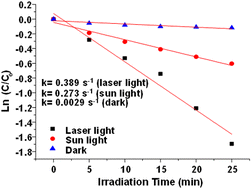
Photoresponsive nanoparticles are capable of converting light energy into heat and generate reactive oxygen species (ROS) to exert a variety of applications. In this study, we report a simple approach for the synthesis of iron selenide nanorods (FeSe NRs) that show dual-applications, namely red laser-induced photothermal therapy (PTT) and ROS-induced photocatalysis. These NRs have a high visible and near-infrared (NIR) absorption and may be stimulated using a 635 nm red diode laser, resulting in a strong photothermal effect (ΔT = 15.5 °C). These NRs also show oxidase-like behavior in aqueous dispersion. Upon treatment of pancreatic cancer (Panc-I) cells with these NRs in vitro, followed by irradiation of light, substantial cell death occurred. Approximately 32% cell viability was observed at the optimum concentration of NRs. The laser-induced photocatalytic ability of these NRs has further been investigated. Photocatalytic dye degradation was attributed to both the oxidase-like behavior of the NRs and their ability to produce ROS. The degradation reaction follows first order kinetics with the rate constant of 0.389 s−1. These observations show that these NRs serve as a promising platform for phototherapeutic and photocatalytic applications.
 Please wait while we load your content...


