

Ln3@C80+ (Ln = lanthanide): a new class of stable metallofullerene cations with multicenter metal–metal bonding in the sub-nanometer confined space†
Yuhang
Jiang
,
Zisheng
Li
,
Yabei
Wu
and
Zhiyong
Wang
 *
*
Key Laboratory of Advanced Light Conversion Materials and Biophotonics, Department of Chemistry, Renmin University of China, Beijing 100872, PR China. E-mail: zhiyongwang@ruc.edu.cn
First published on 15th March 2022
Abstract
Among the large number of members in the metallofullerene family, the nitride clusterfullerene M3N@C80 (M = trivalent metal) is a special one with extraordinarily high stability. It is generally thought that the molecule would be unstable without the nitrogen ion N3− in the center of the M3 moiety, because N3− can compensate for the Coulomb repulsion between the metal ions M3+. Indeed, the tri-metallofullerenes Ln3@C80 (Ln = trivalent lanthanide) are missing in the family of metallofullerenes to date. In this paper, we provide new insights into the stability of Ln3@C80 by a combined experimental and theoretical study. Density functional calculations demonstrate that Ln3@C80 are thermodynamically stable molecules. However, their small HOMO–LUMO gaps can induce severe kinetic instability. Meanwhile, Ln3@C80 has the smallest ionization energy among the metallofullerene molecules reported so far. Experimental and theoretical studies prove that the Ln3@C80 molecules can be greatly stabilized by chemical oxidation, because the Ln3@C80+ cation has a large HOMO–LUMO gap comparable to that of Ln3N@C80. Furthermore, Ln3@C80+ and Ln3N@C80 have similar molecular geometries and electronic structures. There is a three-center two-electron σ bond in the center of the Ln3 cluster in Ln3@C80+. This special metal–metal bond significantly compensates for the electrostatic repulsion between the Ln ions and thus stabilizes the cation Ln3@C80+. In previous studies, there are very few examples of metallofullerene cations, because most of the metallofullerene cations are highly unstable. This study provides a strategy for obtaining a new class of stable metallofullerene cations, which can be used to construct a variety of novel ionic compounds Ln3@C80+X−.
1 Introduction
As unique core–shell structured clusters, endohedral metallofullerenes (EMFs) have been intensively investigated due to their tunable physicochemical properties. In recent decades, a variety of metallofullerenes, such as mono-metallofullerenes (M@C2n), di-metallofullerenes (M2@C2n) and endohedral clusterfullerenes (MxAy@C2n (A = nonmetal element)), have been synthesized and theoretically investigated.1–4 Among these metallofullerenes, the C80-containing ones are attractive compounds, not only because of the high symmetry of Ih-C80 but also for its ability to accommodate two metal atoms or a mixed metal/nonmetal cluster.5–13On one hand, the outer C80 fullerene cage provides a sub-nanometer confined space to capture and stabilize the originally unstable cluster with novel chemical bonding types. For instance, a two-center one-electron metal–metal bond has been discovered in M2@C80 (M = Y or lanthanides).14–17 The radical bridge between the two metals is well-protected by the fullerene cage, and it leads to strong magnetic exchange coupling between lanthanide ions in Ln2@C80.18 On the other hand, electron transfer from the encapsulated metal species to the outer C80 cage results in a strong Coulomb repulsion between the highly charged metal ions. Although the fullerene cage restricts the dissociation of the encapsulated metal cluster, the metal atoms still tend to be as far from each other as possible. When three or more metal atoms are encapsulated in the fullerene cage, introducing one or more non-metal atoms is usually necessary to partially compensate for the Coulomb repulsion between the metal atoms. One typical example is the nitride clusterfullerene M3N@C80, which can be described as (M3+)3N3−@C806−.19
In contrast to the well-studied nitride clusterfullerene M3N@C80 (M = trivalent metal), much less is known about the corresponding tri-metallofullerene M3@C80. Although the synthesis of Tb3C80 has been reported previously,20 it is not clear whether Tb3C80 is the conventional metallofullerene Tb3@C80 or carbide clusterfullerene Tb3C2@C78. A theoretical study on Y3@C80 suggests that Y3@C80 is more stable than Y3C2@C78 and that Y3@C80 mimics Y3N@C80 with a pseudoatom instead of the nitrogen atom in the center of the molecule.21 Shi and coworkers have reported the crystal structure characterization of Sm3@Ih-C80.22 It should be noted that the oxidation state of Sm in the metallofullerene is +2, which is different from that of the metals in M3N@C80. Thus, the Sm element cannot form a nitride clusterfullerene. Other reports on metallofullerenes containing three metal atoms include the synthesis of Er3C74![[thin space (1/6-em)]](https://www.rsc.org/images/entities/char_2009.gif) 23 and Dy3C98.24 The bonding character of the Er3 cluster in C74 has been studied theoretically.25 The metallofullerenes mentioned above were produced by vaporizing metal/graphite composite rods with a Krätschmer–Huffman fullerene generator. Tri-metallofullerenes with larger sizes were observed in the gas phase by the method of laser ablation.26–29
23 and Dy3C98.24 The bonding character of the Er3 cluster in C74 has been studied theoretically.25 The metallofullerenes mentioned above were produced by vaporizing metal/graphite composite rods with a Krätschmer–Huffman fullerene generator. Tri-metallofullerenes with larger sizes were observed in the gas phase by the method of laser ablation.26–29
For the lanthanide elements that can form nitride clusterfullerenes (such as Gd, Dy, Er, Tm, Lu, etc.), it is still an open question whether they can form tri-metallofullerenes Ln3@C80. If the formation of Ln3@C80 is possible, several questions would be raised: (i) which lanthanide elements prefer to form stable tri-metallofullerenes Ln3@C80? (ii) How the electronic and chemical properties of Ln3@C80 are affected by different lanthanide metal atoms? (iii) How to stabilize or capture such Ln3@C80 molecules? To address these issues, we conducted a theoretical investigation on Ln3@C80 (Ln = La, Nd, Gd, Tb, Dy, Ho, Er, Tm, Lu) by employing density functional theory (DFT) calculations. The molecular structures, stabilities, electronic properties and bonding features of Ln3@C80 were investigated. DFT calculations reveal that the Ln3@C80 compounds have small ionization energies and that they are prone to lose an electron to form a stable cation. We have obtained the cation Ln3@C80+ in experiments through the chemical oxidation of Ln3@C80. In the research field of metallofullerenes, most studies were conducted on neutral metallofullerene molecules. The knowledge on metallofullerene cations is very limited, because most of them are not stable. The only example of a stable metallofullerene cation reported so far is [Li@C60]+. It can be used to construct a variety of ionic compounds [Li@C60]+X− (X = SbCl6, PF6, etc.), which have unique structures and fascinating properties.30–33 The tri-metallofullerenes Ln3@C80+ reported in this paper represent a new class of stable metallofullerene cations with unique metal–metal bonding features.
2 Methods
2.1 Computational details
Previous studies have demonstrated that density functional calculations using PBE34 and PBE035 functionals can give reasonable results on the geometries and energies of metallofullerenes.9,15,21,36–38 In this study, the geometrical structures of Ln3@C80 (Ln = La, Nd, Gd, Tb, Dy, Ho, Er, Tm, Lu) and their cations were optimized using the PBE and PBE0 functionals. It should be noted that some of these molecules contain a partially-filled 4f-shell. It is difficult to treat such electronic configurations by single-determinant DFT calculations. Considering that the 4f electrons of lanthanide atoms are usually not involved in the chemical bonding of metallofullerenes, we employed ECPnMWB (n is the number of core electrons) with 4f-in-core effective core potentials and the corresponding valence basis sets for the lanthanide atoms. In a recent work by Popov and coworkers,39 the results of DFT calculations on Dy3C2@C80 with a similar 4f-in-core treatment are consistent with the experimental results, confirming the reliability of such a calculation method.
For geometry optimization, the 6-31G(d) basis set40 was used for the carbon atom. For single-point energy calculations, the extended basis set 6-311G(d)41 was used instead. Vibrational frequency analyses were performed on the optimized structures to ensure that they are local minima on the energy potential surface. To investigate the bonding nature of the Ln3@Ih-C80 molecules, the Mayer bond order (MBO),42 multicenter bond order (MCBO)43 and electron localization function (ELF)44 were examined using the MULTIWFN 3.7 program.45 All the DFT calculations in this study were carried out using the Gaussian 16 Rev. A03 package.46 The calculated results were visualized using visual molecular dynamics (VMD).47
2.2 Experimental section
Trimetallofullerene Tm3@C80 was prepared by using the arc-discharge method. A hollow graphite rod filled with a mixture of Tm2O3 and graphite powder (molar ratio of Tm:C = 1:15) was used as the anode, and a pure graphite rod was used as the cathode. The arc discharge was performed at a current of 100 A under a He atmosphere (200 Torr). The arc-produced raw soot was oxidized by AgSbF6 in dichloromethane (DCM) in a nitrogen-filled glove box for 24 h. After the oxidation reaction, the solution was separated from the insoluble soot residue by centrifugation. The resulting dark-brown solution was filtered through a membrane filter (pore diameter = 0.22 μm), and it was vacuum-evaporated to remove the solvent. Then the solid was dissolved in a mixed solvent of toluene and acetonitrile (1:1). The composition of the solution was characterized by using laser desorption ionization time of flight (LDI-TOF) mass spectrometry (AB Sciex 5800 mass spectrometer).
3 Results and discussion
3.1 Stability of Ln@C80
For C80-based clusterfullerenes containing three metal atoms, such as M3N@C80,19 M3C2@C80,39,48 Sc3CH@C8010 and Ti3C3@C80,49 it is generally accepted that the encapsulated cluster transfers six electrons to the fullerene cage. On the other hand, for trimetallofullerenes without any non-metal mediator, such as Y3@C8021 and Er3@C74,25 the inner metal atoms are also thought to donate six electrons in total to the outer cage. Therefore, the stability of these metallofullerenes is related to the stability of the fullerene cage in the hexaanionic state C2n6−.
In a previous study by Popov and coworkers, the relative energy of C806− isomers has been calculated theoretically.36 In order to determine which isomer is most preferable in energy for encapsulation of three lanthanide atoms to form Ln3@C80, we used the nine lowest energy isomers of C806− as the candidates for the host fullerene cage. Three lanthanide atoms were encapsulated in these fullerene cages to form nine isomers of Ln3@C80. The calculated relative energies based on PBE and PBE0 functionals are summarized in Table S1.† It can be found that Ln3@C80 based on Ih and D5h cage structures are the two lowest energy isomers. In this work, Tm3@C80 was selected as a representative compound for further discussion. The relative energies and HOMO–LUMO gaps of Tm3@C80 isomers are listed in Table 1. It is found that the most stable isomer of Tm3@C80 is Tm3@Ih (31924)-C80, which is more stable than the others by at least 13 kcal mol−1. The second most stable isomer is Tm3@D5h (31923)-C80. The stability order of Tm3@C80 is similar to that of Tm3N@C80.50 Further theoretical studies in this work were conducted on the most stable isomer, i.e. Tm3@Ih-C80.
| Tm3C80 (spiral number) | PBE0 | PBE | ||
|---|---|---|---|---|
| ΔE | H–L gap | ΔE | H–L gap | |
| a HOMO–LUMO gap for α spin orbitals. b HOMO–LUMO gap for β spin orbitals. | ||||
| Tm3@Ih (31924)-C80 |
0.00 | 1.50a/2.70b | 0.00 | 0.28a/1.43b |
| Tm3@D5h (31923)-C80 |
14.08 | 0.28a/1.43b | 13.32 | 0.28a/1.38b |
| Tm3@C2v (31922)-C80 |
23.89 | 1.41a/1.59b | 21.65 | 0.47a/0.59b |
| Tm3@C2v (31920)-C80 |
37.40 | 0.95a/1.54b | 34.54 | 0.09a/0.52b |
| Tm3@C1 (28319)-C80 |
41.63 | 1.19a/1.81b | 36.56 | 0.32a/0.78b |
| Tm3@C1 (28324)-C80 |
42.91 | 1.56a/1.44b | 38.98 | 0.52a/0.40b |
| Tm3@C1 (28325)-C80 |
31.18 | 1.34a/2.30b | 29.62 | 0.27a/1.16b |
| Tm3@C2 (29591)-C80 |
36.42 | 1.40a/2.49b | 35.20 | 0.24a/1.38b |
| Tm3@C1 (31876)-C80 |
38.68 | 1.60a/1.25b | 34.04 | 0.59a/0.30b |
It is known that some metal carbide clusterfullerenes MxCy@C2n are lower in energy as compared with their metallofullerene form Mx@C2n+y.48,51–54 To compare the stability of Tm3@Ih-C80 and Tm3C2@C78, we also performed calculations on Tm3C2@C78. The calculated results reveal that Tm3C2@C78 has a higher energy than Tm3@Ih-C80 (see Table S2†). Therefore, it can be concluded that Tm3@Ih-C80 is thermodynamically more stable than its carbide form.
In previous studies, the stability of the nitride clusterfullerene M3N@C80 for various metals has been investigated.36,55,56 It has been found that some lanthanide atoms such as La and Nd are too large to be encapsulated in the Ih-C80 fullerene cage. For the metallofullerene Ln3@Ih-C80, the size of the encapsulated atom may have a similar effect on the stability of the metallofullerene. In this work, the stability of Ln3@Ih-C80 for various lanthanide elements was evaluated by calculating the following energetic parameters. The first one is the formation energy (ΔEf), which was calculated based on the hypothetical reaction (1). In addition, we also calculated the binding energy (ΔEb) and the encapsulation energy (ΔEencap) based on hypothetical reactions (2) and (3). Previous studies have demonstrated that large binding energy and encapsulation energy values suggest high stability of metallofullerenes.57 Meanwhile, the cluster formation energy (ΔEcluster) based on reaction (4) could be obtained by subtracting the binding energies (ΔEb) from the encapsulation energies (ΔEencap).
| 3M + 80C → M3@C80 ΔEf | (1) |
| M3 + C80 → M3@C80 ΔEb | (2) |
| 3M + C80 → M3@C80 ΔEencap | (3) |
| 3M → M3 ΔEcluster | (4) |
According to the calculation results (Fig. 1a–c), the values of the formation energy, the binding energy and the encapsulation energy become more negative from early lanthanide elements to late lanthanide elements. This trend is consistent with the decreasing order of the ionic radius of lanthanide elements. Therefore, the encapsulation of three lanthanide atoms with smaller sizes in Ih-C80 is more favorable in energy than the encapsulation of lanthanide atoms with larger sizes such as La and Nd, which is similar to the case of M3N@C80. Among all these compounds, Tm3@Ih-C80 has the largest binding energy and encapsulation energy, indicating that the formation of Tm3@Ih-C80 is more favorable than other Ln3@Ih-C80 compounds. The binding energy has been used to interpret the stability of metallofullerenes.36,57 For the lanthanide elements with a relatively small ionic radius such as Tm and Lu, their nitride clusterfullerenes Ln3N@C80 can be produced in high yields experimentally. We calculated the binding energies of Ln3N@C80 (Ln = La, Gd, Tm, Lu) and compared them with that of Ln3@C80 (Fig. 1b). It is found that the binding energies of Ln3@Ih-C80 compounds are larger than those of Ln3N@Ih-C80, implying that it is possible to obtain the metallofullerenes Ln3@Ih-C80 in experiments.
 | ||
| Fig. 1 The calculated (a) formation energies (ΔEf), (b) binding energies (ΔEb), and (c) encapsulation energies (ΔEencap) of Ln3@Ih-C80 (Ln = La, Nd, Gd, Tb, Dy, Ho, Er, Tm, Lu) and (d) the metal cluster formation energies (ΔEcluster) using the PBE functional. | ||
Fig. 1d shows the metal cluster formation energy (ΔEcluster) for various lanthanide metals. It can be seen that ΔEcluster becomes less negative on going from early lanthanide elements to late lanthanide elements. Although the cluster formation energy for Tm is the smallest among the metal elements, the encapsulation energy for Tm3@Ih-C80 is the largest due to a strong interaction between the Tm3 cluster and the Ih-C80 fullerene cage. Therefore, the interaction between the Ln3 metal cluster and the fullerene cage contributes significantly to the driving force for the formation of Ln3@Ih-C80 compounds.
3.2 Geometric structures of Ln3@Ih-C80
Fig. 2 and Fig. S1† show the optimized structures of Ln3@Ih-C80 (Ln = La, Nd, Gd, Tb, Dy, Ho, Er, Tm, Lu) using PBE and PBE0 functionals, respectively. The encapsulated triangular metal cluster deforms the carbon cage and further causes symmetry reduction of the molecule. The structures of the Ln3 cluster with the coordinated fullerene fragments are displayed in the figure for clarity. The Ln–Ln bond lengths of Ln3@Ih-C80 in the ground states are summarized in Table 2. In most cases, the Ln–Ln distance is longer than that of a typical Ln–Ln single bond. When La3 and Nd3 clusters are encapsulated in Ih-C80, each metal atom coordinates with a hexagonal carbon ring of the cage. The La or Nd metal atoms almost form an equilateral triangle with metal–metal distances of 3.274 Å–3.277 Å and 3.494 Å–3.499 Å in the case of La and Nd, respectively. As for the encapsulated Gd3 and Tb3 clusters, each metal atom is located near the junctions of three hexagons (penalene). In the case of Dy3@C80, three Dy atoms are non-equivalent. One Dy atom resides under a hexagonal ring, and the other two Dy atoms are located near the junctions of two hexagons (naphthalene). The Dy atoms in Dy3@C80 form an isosceles triangle with Dy–Dy distances of 3.437/3.470/3.470 Å, which are longer than the Dy–Dy distances in Dy3C2@C80 (3.440/3.382/3.408 Å).39 For the Ho3, Er3 and Tm3 clusters, the metal atoms are situated at the junctions of one pentagon and two hexagons (acenaphthylene) as shown in the figure. In the situation of Lu3@C80, the three Lu atoms of the Lu3 cluster show different characteristics. One Lu atom resides under a hexagon, and the other two Lu atoms are near the “naphthalene” and “acenaphthylene” fragments, respectively. | ||
| Fig. 2 The upper part shows the front view and side view of the optimized geometric structures of Ln3@Ih-C80 (Ln = La, Nd, Gd, Tb, Dy, Ho, Er, Tm, Lu) using the PBE functional. The lower part shows the coordinated environments of the Ln3 clusters inside the fullerene cage. | ||
| Ln3@C80 | RE (in kcal mol−1) | Ln–Ln (in Å) | Mayer bond order | Spin population of the metal cluster | |||||||
|---|---|---|---|---|---|---|---|---|---|---|---|
| Metal atom | Doublet | Quartet | 1 | 2 | 3 | Average | Ln3 | Ln(1) | Ln(2) | Ln(3) | |
| La | 0 | 6.28 | 3.269 | 3.277 | 3.272 | 3.273 | 5.006 | 1.658 | 1.673 | 1.676 | 1.045 |
| Nd | 0 | 7.94 | 3.499 | 3.499 | 3.494 | 3.496 | 5.565 | 1.856 | 1.851 | 1.857 | 0.624 |
| Gd | 0 | 10.20 | 3.490 | 3.481 | 3.273 | 3.415 | 4.815 | 1.624 | 1.602 | 1.589 | 0.556 |
| Tb | 0 | 13.34 | 3.433 | 3.473 | 3.472 | 3.459 | 4.531 | 1.495 | 1.545 | 1.492 | 0.542 |
| Dy | 0 | 16.00 | 3.437 | 3.470 | 3.470 | 3.459 | 4.423 | 1.448 | 1.511 | 1.465 | 0.570 |
| Ho | 0 | 6.18 | 3.448 | 3.454 | 3.451 | 3.451 | 4.320 | 1.443 | 1.437 | 1.440 | 0.521 |
| Er | 0 | 21.53 | 3.437 | 3.465 | 3.434 | 3.445 | 4.054 | 1.361 | 1.375 | 1.318 | 0.697 |
| Tm | 0 | 23.32 | 3.443 | 3.466 | 3.457 | 3.455 | 4.219 | 1.425 | 1.402 | 1.392 | 0.576 |
| Lu | 0 | 28.47 | 3.319 | 3.568 | 3.575 | 3.487 | 4.263 | 1.314 | 1.311 | 1.638 | 0.636 |
3.3 Electronic structure and bonding feature of Ln3@Ih-C80
The relative energies of Ln3@Ih-C80 with different spin multiplicities are summarized in Table 2 and S3.† The calculations reveal that all the compounds have doublet ground states. The unpaired spin density distributions for the ground states of Ln3@Ih-C80 compounds calculated using the PBE functional are shown in Fig. 3. The unpaired electron in La3@Ih-C80 is mostly localized on the La3 cluster, corresponding to a singly occupied three-center π bonding orbital. For the other Ln3@Ih-C80 compounds, unpaired electron distributions both on the inner metal cluster moiety and on the fullerene cage can be observed. The calculated spin populations of the metal clusters are listed in Table 2. The La3 cluster has a spin population of 1.045, while the spin population for other clusters is in the range of 0.5–0.7. | ||
| Fig. 3 The calculated spin density distributions of Ln3@Ih-C80 (isovalue = 0.001). | ||
The neutral Ih-C80 molecule has almost degenerate LUMO/LUMO+1/LUMO+2 orbitals and a significantly large LUMO+2–LUMO+3 energy gap. Hence, the Ih-C80 cage prefers to accept six electrons to form a stable electronic configuration. Fig. 4 shows the energy levels of the canonical molecular orbitals (CMOs) for Ln3 units and empty Ih-C80. There are seven electrons that have close energy levels in the frontier molecular orbitals of the metal cluster. When the metal cluster is encapsulated into the Ih-C80 cage, six electrons are transferred to the LUMO/LUMO+1/LUMO+2 orbitals of Ih-C80, and one unpaired electron is left on the metal cluster. The energy level of this singly occupied orbital is close to that of the LUMO+3 of Ih-C80, resulting in a narrow HOMO–LUMO gap of Ln3@C80. The electronic configuration of Ln3@C80 can be described as Ln36+@C806−. The unpaired electron in Ln3@C80 occupies a molecular orbital with a relatively high energy. Consequently, the Ln3@C80 molecules have small ionization energies. Our DFT calculations reveal that the ionization energies of Ln3@C80 are in the range of 5.22–5.65 eV (Table S4†), which are much smaller than the calculated ionization energies of C60 (7.76 eV), C70 (7.56 eV) and Ln3N@C80 (around 6.79 eV). It has been reported that Li@C60 can be oxidized to Li@C60+ and that it can form a variety of stable ionic compounds.30–32 The calculated ionization energy of Tm3@C80 (5.50 eV) is smaller than that of Li@C60 (5.73 eV). Therefore, it can be deduced that the Tm3@C80 molecule could be oxidized chemically to its cation Tm3@C80+.
 | ||
| Fig. 4 The calculated canonical molecular orbital (CMO) energy level of Ih-C80 compared to those of Nd3, Gd3, Tm3 and Lu3 clusters in their ground states. The occupied and unoccupied molecular orbitals are denoted in black and blue lines, respectively. The CMOs corresponding to 3c-2e metal–metal bonding in Ln3 clusters are encircled with orange dotted lines. As an example, the spatial distribution of the 3c-2e metal–metal bonding orbital for Nd3 is shown in the bottom left corner of the figure. | ||
For bare Ln3 clusters, there are molecular orbitals that correspond to three-center two-electron (3c-2e) bonding (encircled with orange dotted lines in Fig. 4). Because of the relatively low energy of these molecular orbitals, the 3c-2e bonding is preserved after the metal cluster is encapsulated in Ih-C80. This is confirmed by examining the spatial distribution of molecular orbitals for Ln3@C80. As an example, the molecular orbital corresponding to 3c-2e bonding in Tm3@C80 is shown in Fig. 5a. ELF analysis also reveals that there exists three-center metal–metal bonding in Tm3@C80 (Fig. 5b). We found that the ELF for the encapsulated Tm3 cluster is very different from the ELF for the bare Tm3 cluster. In the case of the bare Tm3 cluster, Tm–Tm bonding is observed at the edge rather than in the center of the cluster (Fig. 5b). Therefore, the bonding feature of the Tm3 cluster is changed after being encaged in the sub-nanometer confined space of Ih-C80. Moreover, our calculations reveal that the bonding feature of other Ln3 clusters undergoes similar changes in Ih-C80.
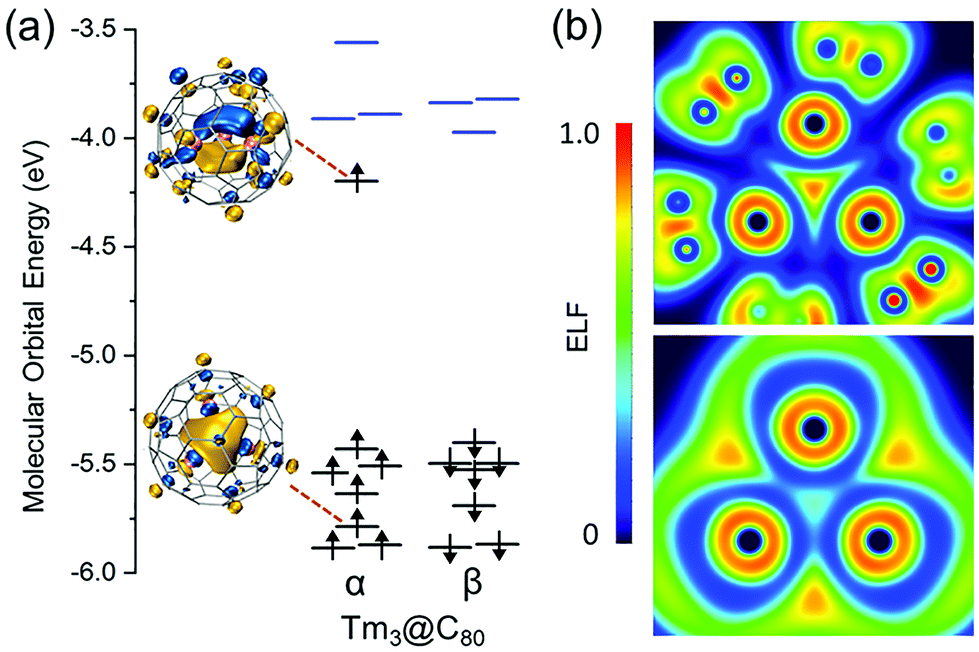 | ||
| Fig. 5 (a) The molecular orbital energy diagram of the Tm3@Ih-C80 molecule. The energy levels of the occupied and unoccupied CMOs are denoted in black and blue, respectively. The HOMO of Tm3@Ih-C80 corresponds to a singly occupied π bonding orbital and the HOMO−5 corresponds to the 3c-2e metal–metal bonding orbital. (b) Color filled two-dimensional ELF maps of the metal cluster plane for Tm3@Ih-C80 (upper part) and the bare Tm3 cluster (lower part). | ||
3.4 Chemical oxidation of Tm3@C80
As we discussed above, Tm3@C80 has large encapsulation and binding energies, implying that it is possible to obtain Tm3@C80 in experiments. Therefore, we performed arc-discharge synthesis of Tm-metallofullerenes. It has been reported that AgSbF6 can be used to oxidize metallofullerenes into their cations.58 Considering that Tm3@C80 has a small ionization energy, we treated the arc-discharge produced soot with AgSbF6 in DCM. As a result, some Tm-metallofullerenes were oxidized into cations and they were solubilized in the solvent. Then, the solvent was evaporated and the resultant solid was redissolved in a mixture of toluene and acetonitrile (1:1). The mass spectrum of the solution (Fig. 6a) confirms that Tm3@C80 has been extracted from the raw soot. We ascribed the signal of Tm3@C80 to its cation, because no signal of Tm3@C80 was observed without using AgSbF6.
 | ||
| Fig. 6 (a) The experimental LDI-TOF mass spectrum of Tm3@C80+ as well as the measured and calculated isotope distributions of the corresponding sample. (b) Three-dimensional ELF isosurface and color filled two-dimensional ELF maps of the metal cluster plane for the Tm3@Ih-C80 cation (left) and Tm3N@Ih-C80 molecule (right). (c and d) The molecular orbital energy diagrams of the Tm3@Ih-C80 cation and Tm3N@Ih-C80. The energy levels of the occupied and unoccupied CMOs are denoted in black and blue, respectively. | ||
The structure and electronic properties of the Tm3@C80 cation were studied using DFT calculations. Since the Tm3 cluster may have different orientations inside the fullerene cage, we calculated the energies of different conformations of Tm3@C80+. Their relative energies and geometrical parameters are listed in Table S6.†Fig. 6b shows the most stable structure of Tm3@C80+ and the ELF distribution. The Tm–Tm distance in Tm3@C80+ is in the range of 3.511–3.529 Å, which is longer than that in neutral Tm3@C80 (3.443 Å on average). Accordingly, the distance between the Tm atoms and the C80 cage gets shorter, leading to a stronger interaction between the Tm atoms and the fullerene cage. The total Mayer bond order between the Tm3 cluster and the C80 cage increases from 4.219 to 4.777 after oxidation. As shown in Fig. 5a, the HOMO of Tm3@C80 corresponds to a singly occupied π bonding orbital. The removal of the electron in this orbital weakens the bonding between the Tm atoms. We examined the multi-center bond order (MCBO) for the Tm3 cluster in Tm3@C80 and Tm3@C80+. The MCBO index between the three Tm atoms in Tm3@C80 is 0.344, while that in Tm3@C80+ is 0.331, indicating that the three-center bond between Tm atoms in Tm3@C80 is stronger than that in Tm3@C80+. Both the MCBO indices for the Tm3 cluster in Tm3@C80 and Tm3@C80+ are larger than that of the bare Tm3 cluster (0.294). It should be noted that the average oxidation state of the Tm atom increases from +2 to +7/3 after oxidation of Tm3@C80. This change leads to a stronger electrostatic repulsion between the Tm ions inside the fullerene cage. In this situation, the cation Tm3@C80+ can still survive because the 3c-2e bonding between the Tm ions significantly compensates for the repulsion effect. As shown in Fig. 6b, the ELF distribution of Tm3@C80+ reveals that there exists three-center bonding between the Tm ions. Fig. 6c shows the molecular orbitals of Tm3@C80+. It can be seen that the molecular orbital HOMO−3 corresponds to a three-center σ bond.
It is known that Tm3N@C80 is a clusterfullerene with high stability. In this study, we found that both the molecular geometry and the electronic structure of Tm3@C80+ resemble that of Tm3N@C80. The Tm–Tm distance in Tm3@C80+ (3.511–3.529 Å) is very close to that in Tm3N@C80 (around 3.55 Å). Meanwhile, the ELF distribution of Tm3@C80+ is also similar to that of Tm3N@C80 (Fig. 6b). In the case of Tm3N@C80, the formal charge of the Tm atom is +3, and there is a strong electrostatic repulsion between the Tm3+ ions. The central N3− ion serves as a mediator and it reduces the repulsion between the Tm3+ ions. In the case of Tm3@C80+, the three-center σ bond plays a similar role to the N3− ion in Tm3N@C80. As a result, three Tm ions can be accommodated inside the C80 cage without a nonmetal mediator. Therefore, the three-center σ bond is a critical factor that stabilizes the tri-metallofullerene cation. Furthermore, we found that Tm3@C80+ and Tm3N@C80 have similar Frontier molecular orbitals. The energy diagrams and spatial distributions of the frontier molecular orbitals of Tm3@C80+ and Tm3N@C80 are shown in Fig. 6c and d. It can be seen that the molecular orbitals including the LUMO, HOMO and HOMO−1 for Tm3@C80+ and Tm3N@C80 are very similar in shape. Meanwhile, the calculated HOMO–LUMO gap of Tm3@C80+ (1.46 eV) using the PBE functional is close to that of Tm3N@C80 (1.58 eV). Among all the reported metallofullerenes, M3N@C80 is a kind of metallofullerenes that have large HOMO–LUMO gaps. DFT calculations in this work reveal that Tm3@C80+ also has a large HOMO–LUMO gap, implying that this cation has high stability. It should be noted that the neutral Tm3@C80 has a rather small HOMO–LUMO gap (0.28 eV), indicating that it is a chemically reactive molecule. Because Tm3@C80+ has a much larger HOMO–LUMO gap, the chemical stability of Tm3@C80 can be enhanced greatly upon oxidation. The change in the HOMO–LUMO gap explains the following facts: (1) the neutral Tm3@C80 is not observed in the extract of raw soot by using conventional fullerene solvents such as toluene and xylene; (2) Tm3@C80 can be chemically oxidized to a stable cation Tm3@C80+. Besides Tm3@C80+, tri-metallofullerene cations containing other metals such as Er3@C80+ and Dy3@C80+ can also be obtained through a similar oxidation method (Fig. S2†).
4 Conclusions
DFT calculations demonstrated that tri-metallofullerenes Ln3@C80 are thermodynamically stable molecules. The binding energy of Ln3@C80 is larger than that of the nitride clusterfullerene Ln3N@C80, revealing that encapsulation of a Ln3 cluster in C80 is favorable in energy. DFT calculations also revealed that Ln3@C80 has the smallest ionization energy among the metallofullerene molecules reported so far. We used AgSbF6 to oxidize the arc-discharge-produced soot containing Tm3@C80 and obtained the cation Tm3@C80+. We found that both the molecular geometry and the electronic structure of Tm3@C80+ resemble that of Tm3N@C80. In particular, both of them have large HOMO–LUMO gaps, implying that Tm3@C80+ has high stability as Tm3N@C80 does. There is a three-center two-electron σ bond in the center of the Tm3 cluster in Tm3@C80+. This special metal–metal bond compensates for the electrostatic repulsion between the Tm ions and thus greatly stabilizes the cation Tm3@C80+. The metallofullerene cations Ln3@C80+ can be used as building blocks to construct a variety of novel ionic compounds Ln3@C80+X− in future studies.Conflicts of interest
There are no conflicts to declare.Acknowledgements
We are grateful for the support from the Outstanding Innovative Talents Cultivation Funded Programs 2021 of Renmin University of China, the Beijing Municipal Natural Science Foundation (grant no. 2212030), and the National Natural Science Foundation of China (grant no. 22175199). Resources supporting this work were provided by the Public Computing Cloud Platform of Renmin University of China.Notes and references
- A. A. Popov, S. Yang and L. Dunsch, Endohedral fullerenes, Chem. Rev., 2013, 113, 5989–6113 CrossRef CAS PubMed.
- H. Cong, B. Yu, T. Akasaka and X. Lu, Endohedral metallofullerenes: An unconventional core–shell coordination union, Coord. Chem. Rev., 2013, 257, 2880–2898 CrossRef CAS.
- S. Yang, T. Wei and F. Jin, When metal clusters meet carbon cages: endohedral clusterfullerenes, Chem. Soc. Rev., 2017, 46, 5005–5058 RSC.
- M. N. Chaur, F. Melin, A. L. Ortiz and L. Echegoyen, Chemical, electrochemical, and structural properties of endohedral metallofullerenes, Angew. Chem., Int. Ed., 2009, 48, 7514–7538 CrossRef CAS PubMed.
- T. Wang and C. Wang, Endohedral Metallofullerenes Based on Spherical Ih-C80 Cage: Molecular Structures and Paramagnetic Properties, Acc. Chem. Res., 2014, 47, 450–458 CrossRef CAS PubMed.
- X. Zhang, Y. Wang, R. Morales-Martínez, J. Zhong, C. de Graaf, A. Rodríguez-Fortea, J. M. Poblet, L. Echegoyen, L. Feng and N. Chen, U2@Ih(7)-C80: Crystallographic Characterization of a Long-Sought Dimetallic Actinide Endohedral Fullerene, J. Am. Chem. Soc., 2018, 140, 3907–3915 CrossRef CAS PubMed.
- X. Li, Y. Roselló, Y.-R. Yao, J. Zhuang, X. Zhang, A. Rodríguez-Fortea, C. de Graaf, L. Echegoyen, J. M. Poblet and N. Chen, U2N@Ih(7)-C80: Fullerene Cage Encapsulating an Unsymmetrical U (IV) = N = U (V) Cluster, Chem. Sci., 2021, 12, 282–292 RSC.
- X. Zhang, W. Li, L. Feng, X. Chen, A. Hansen, S. Grimme, S. Fortier, D.-C. Sergentu, T. J. Duignan and J. Autschbach, et al., A diuranium carbide cluster stabilized inside a C80 fullerene cage, Nat. Commun., 2018, 9, 1–8 Search PubMed.
- J. Zhuang, R. Morales-Martínez, J. Zhang, Y. Wang, Y.-R. Yao, C. Pei, A. Rodríguez-Fortea, S. Wang, L. Echegoyen and C. de Graaf, et al., Characterization of a strong covalent Th3+-Th3+ bond inside an Ih(7)-C80 fullerene cage, Nat. Commun., 2021, 12, 1–8 Search PubMed.
- K. Junghans, M. Rosenkranz and A. A. Popov, Sc3CH@C80: selective 13C enrichment of the central carbon atom, Chem. Commun., 2016, 52, 6561–6564 RSC.
- C. Zhao, K. Tan, M. Nie, Y. Lu, J. Zhang, C. Wang, X. Lu and T. Wang, Scandium Tetrahedron Supported by H Anion and CN Pentaanion inside Fullerene C80, Inorg. Chem., 2020, 59, 8284–8290 CrossRef CAS PubMed.
- C. Fuertes-Espinosa, A. Gómez-Torres, R. Morales-Martínez, A. Rodríguez-Fortea, C. García-Simón, F. Gándara, I. Imaz, J. Juanhuix, D. Maspoch and J. M. Poblet, et al., Purification of Uranium-based Endohedral Metallofullerenes (EMFs) by Selective Supramolecular Encapsulation and Release, Angew. Chem., Int. Ed., 2018, 57, 11294–11299 CrossRef CAS PubMed.
- Z. Wei, L. Yang, J. Ji, Q. Hou, L. Li and P. Jin, Undiscovered Effect of C↔N Interchange Inside the Metal Carbonitride Clusterfullerenes: A Density Functional Theory Investigation, Inorg. Chem., 2020, 59, 6518–6527 CrossRef CAS PubMed.
- T. Suzuki, Y. Maruyama, T. Kato, K. Kikuchi, Y. Nakao, Y. Achiba, K. Kobayashi and S. Nagase, Electrochemistry and ab initio study of the dimetallofullerene La2@C80, Angew. Chem., Int. Ed. Engl., 1995, 34, 1094–1096 CrossRef CAS.
- Z. Wang, R. Kitaura and H. Shinohara, Metal-dependent stability of pristine and functionalized unconventional dimetallofullerene M2@Ih-C80, J. Phys. Chem. C, 2014, 118, 13953–13958 CrossRef CAS.
- F. Liu, L. Spree, D. S. Krylov, G. Velkos, S. M. Avdoshenko and A. A. Popov, Single-electron lanthanide-lanthanide bonds inside fullerenes toward robust redox-active molecular magnets, Acc. Chem. Res., 2019, 52, 2981–2993 CrossRef CAS PubMed.
- Y. Jiang, Z. Li, J. Zhang and Z. Wang, Endohedral metallofullerene M2@C80: A new class of magnetic superhalogen, J. Phys. Chem. C, 2019, 124, 2131–2136 CrossRef.
- F. Liu, G. Velkos, D. S. Krylov, L. Spree, M. Zalibera, R. Ray, N. A. Samoylova, C.-H. Chen, M. Rosenkranz and S. Schiemenz, et al., Air-stable redox-active nanomagnets with lanthanide spins radical-bridged by a metal–metal bond, Nat. Commun., 2019, 10, 1–11 CrossRef PubMed.
- L. Dunsch and S. Yang, Metal nitride cluster fullerenes: their current state and future prospects, Small, 2007, 3, 1298–1320 CrossRef CAS PubMed.
- Y. Lian, Z. Shi, X. Zhou and Z. Gu, Different extraction Behaviors between divalent and trivalent endohedral metallofullerenes, Chem. Mater., 2004, 16, 1704–1714 CrossRef CAS.
- A. A. Popov, L. Zhang and L. Dunsch, A pseudoatom in a cage: Trimetallofullerene Y3@C80 mimics Y3N@C80 with nitrogen substituted by a pseudoatom, ACS Nano, 2010, 4, 795–802 CrossRef CAS PubMed.
- W. Xu, L. Feng, M. Calvaresi, J. Liu, Y. Liu, B. Niu, Z. Shi, Y. Lian and F. Zerbetto, An Experimentally Observed Trimetallofullerene Sm3@Ih-C80: Encapsulation of Three Metal Atoms in a Cage without a Nonmetallic Mediator, J. Am. Chem. Soc., 2013, 135, 4187–4190 CrossRef CAS PubMed.
- N. Tagmatarchis, E. Aslanis, K. Prassides and H. Shinohara, Mono-, di- and trierbium endohedral metallofullerenes: Production, separation, isolation, and spectroscopic study, Chem. Mater., 2001, 13, 2374–2379 CrossRef CAS.
- S. Yang and L. Dunsch, Di-and tridysprosium endohedral metallofullerenes with cages from C94 to C100, Angew. Chem., Int. Ed., 2006, 45, 1299–1302 CrossRef CAS PubMed.
- Y.-J. Guo, H. Zheng, T. Yang, S. Nagase and X. Zhao, Theoretical Insight into the Ambiguous Endohedral Metallofullerene Er3C74: Covalent Interactions among Three Lanthanide Atoms, Inorg. Chem., 2015, 54, 8066–8076 CrossRef CAS PubMed.
- Y. Wang, L. Ma, L. Mu, J. Ren and X. Kong, A systematic study on the generation of multimetallic lanthanide fullerene ions by laser ablation mass spectrometry, Rapid Commun. Mass Spectrom., 2018, 32, 1396–1402 CrossRef CAS PubMed.
- Y. Wang, J. Ren, L. Mu and X. Kong, Metallofullerene ions of LunC2m+ (1≤n≤9, 50≤2m≤198) generated by laser ablation of graphene/LuCl3, Int. J. Mass Spectrom., 2017, 422, 105–110 CrossRef CAS.
- L. Mu, S. Yang, R. Feng and X. Kong, Encapsulation of Platinum in Fullerenes: Is That Possible?, Inorg. Chem., 2017, 56, 6035–6038 CrossRef CAS PubMed.
- X. Kong and X. Bao, Formation of endohedral metallofullerene (EMF) ions of (M = La, Y, n≤6, 50≤2m≤194) in the laser ablation process with graphene as precursor, Rapid Commun. Mass Spectrom., 2017, 31, 865–872 CrossRef CAS PubMed.
- S. Aoyagi, E. Nishibori, H. Sawa, K. Sugimoto, M. Takata, Y. Miyata, R. Kitaura, H. Shinohara, H. Okada and T. Sakai, et al., A layered ionic crystal of polar Li@C60 superatoms, Nat. Chem., 2010, 2, 678–683 CrossRef CAS PubMed.
- S. Aoyagi, Y. Sado, E. Nishibori, H. Sawa, H. Okada, H. Tobita, Y. Kasama, R. Kitaura and H. Shinohara, Rock-Salt-Type Crystal of Thermally Contracted C60 with Encapsulated Lithium Cation, Angew. Chem., Int. Ed., 2012, 51, 3377–3381 CrossRef CAS PubMed.
- H. Okada, T. Komuro, T. Sakai, Y. Matsuo, Y. Ono, K. Omote, K. Yokoo, K. Kawachi, Y. Kasama and S. Ono, et al., Preparation of endohedral fullerene containing lithium (Li@C60) and isolation as pure hexafluorophosphate salt ([Li+@C60][PF6−]), RSC Adv., 2012, 2, 10624–10631 RSC.
- H. Okada and Y. Matsuo, Anion exchange of Li+@C60 salt for improved solubility, Fullerenes, Nanotubes, Carbon Nanostruct., 2014, 22, 262–268 CrossRef CAS.
- J. P. Perdew, K. Burke and M. Ernzerhof, Generalized gradient approximation made simple, Phys. Rev. Lett., 1996, 77, 3865 CrossRef CAS PubMed.
- C. Adamo and V. Barone, Toward reliable density functional methods without adjustable parameters: The PBE0 model, J. Chem. Phys., 1999, 110, 6158–6170 CrossRef CAS.
- A. A. Popov and L. Dunsch, Structure, Stability, and Cluster-Cage Interactions in Nitride Clusterfullerenes M3N@C2n (M = Sc, Y; 2n = 68–98): a Density Functional Theory Study, J. Am. Chem. Soc., 2007, 129, 11835–11849 CrossRef CAS PubMed.
- Q. Meng, L. Abella, W. Yang, Y.-R. Yao, X. Liu, J. Zhuang, X. Li, L. Echegoyen, J. Autschbach and N. Chen, UCN@Cs(6)-C82: An Encapsulated Triangular UCN Cluster with Ambiguous U Oxidation State [U (III) versus U (I)], J. Am. Chem. Soc., 2021, 143, 16226–16234 CrossRef CAS PubMed.
- X. Ge, X. Dai, H. Zhou, Z. Yang and R. Zhou, Stabilization of Open-Shell Single Bonds within Endohedral Metallofullerene, Inorg. Chem., 2020, 59, 3606–3618 CrossRef CAS PubMed.
- F. Jin, J. Xin, R. Guan, X.-M. Xie, M. Chen, Q. Zhang, A. A. Popov, S.-Y. Xie and S. Yang, Stabilizing a three-center single-electron metal–metal bond in a fullerene cage, Chem. Sci., 2021, 12, 6890–6895 RSC.
- P. C. Hariharan and J. A. Pople, The Influence of Polarization Functions on Molecular Orbital Hydrogenation Energies, Theor. Chim. Acta, 1973, 28, 213–222 CrossRef CAS.
- R. Krishnan, J. S. Binkley, R. Seeger and J. A. Pople, Self-Consistent Molecular Orbital Methods. XX. A Basis Set for Correlated Wave Functions, J. Chem. Phys., 1980, 72, 650–654 CrossRef CAS.
- I. Mayer, Charge, Bond Order and Valence in the Ab Initio SCF Theory, Chem. Phys. Lett., 1983, 97, 270–274 CrossRef CAS.
- M. Giambiagi, M. S. de Giambiagi and K. C. Mundim, Definition of a multicenter bond index, Struct. Chem., 1990, 1, 423–427 CrossRef CAS.
- A. Savin, R. Nesper, S. Wengert and T. F. Fässler, ELF: The electron localization function, Angew. Chem., Int. Ed. Engl., 1997, 36, 1808–1832 CrossRef CAS.
- T. Lu and F. Chen, Multiwfn: a multifunctional wavefunction analyzer, J. Comput. Chem., 2012, 33, 580–592 CrossRef CAS PubMed.
- M. J. Frisch, G. W. Trucks, H. B. Schlegel, G. E. Scuseria, M. A. Robb, J. R. Cheeseman, G. Scalmani, V. Barone, G. A. Petersson, H. Nakatsuji, X. Li, M. Caricato, A. V. Marenich, J. Bloino, B. G. Janesko, R. Gomperts, B. Mennucci, H. P. Hratchian, J. V. Ortiz, A. F. Izmaylov, J. L. Sonnenberg, D. Williams-Young, F. Ding, F. Lipparini, F. Egidi, J. Goings, B. Peng, A. Petrone, T. Henderson, D. Ranasinghe, V. G. Zakrzewski, J. Gao, N. Rega, G. Zheng, W. Liang, M. Hada, M. Ehara, K. Toyota, R. Fukuda, J. Hasegawa, M. Ishida, T. Nakajima, Y. Honda, O. Kitao, H. Nakai, T. Vreven, K. Throssell, J. A. Montgomery Jr., J. E. Peralta, F. Ogliaro, M. J. Bearpark, J. J. Heyd, E. N. Brothers, K. N. Kudin, V. N. Staroverov, T. A. Keith, R. Kobayashi, J. Normand, K. Raghavachari, A. P. Ren-dell, J. C. Burant, S. S. Iyengar, J. Tomasi, M. Cossi, J. M. Millam, M. Klene, C. Adamo, R. Cammi, J. W. Ochterski, R. L. Martin, K. Morokuma, O. Farkas, J. B. Foresman and D. J. Fox, Gaussian 16 Revision A.03, Gaussian Inc, Wallingford CT, 2016 Search PubMed.
- W. Humphrey, A. Dalke and K. Schulten, et al., VMD: Visual Molecular Dynamics, J. Mol. Graphics, 1996, 14, 33–38 CrossRef CAS PubMed.
- Y. Iiduka, T. Wakahara, T. Nakahodo, T. Tsuchiya, A. Sakuraba, Y. Maeda, T. Akasaka, K. Yoza, E. Horn and T. Kato, et al., Structural determination of metallofullerene Sc3C82 revisited: a surprising finding, J. Am. Chem. Soc., 2005, 127, 12500–12501 CrossRef CAS PubMed.
- P. Yu, W. Shen, L. Bao, C. Pan, Z. Slanina and X. Lu, Trapping an unprecedented Ti3C3 unit inside the icosahedral C80 fullerene: a crystallographic survey, Chem. Sci., 2019, 10, 10925–10930 RSC.
- T. Zuo, M. M. Olmstead, C. M. Beavers, A. L. Balch, G. Wang, G. T. Yee, C. Shu, L. Xu, B. Elliott and L. Echegoyen, et al., Preparation and Structural Characterization of the Ih and the D5h Isomers of the Endohedral Fullerenes Tm3N@C80: Icosahedral C80 Cage Encapsulation of a Trimetallic Nitride Magnetic Cluster with Three Uncoupled Tm3+ Ions, Inorg. Chem., 2008, 47, 5234–5244 CrossRef CAS PubMed.
- P. Jin, C. Tang and Z. Chen, Carbon atoms trapped in cages: metal carbide clusterfullerenes, Coord. Chem. Rev., 2014, 270, 89–111 CrossRef.
- B. Cao, M. Hasegawa, K. Okada, T. Tomiyama, T. Okazaki, K. Suenaga and H. Shinohara, EELS and 13 C NMR characterization of pure Ti2@C80 metallofullerene, J. Am. Chem. Soc., 2001, 123, 9679–9680 CrossRef CAS PubMed.
- H. Yang, C. Lu, Z. Liu, H. Jin, Y. Che, M. M. Olmstead and A. L. Balch, Detection of a Family of Gadolinium-Containing Endohedral Fullerenes and the Isolation and Crystallographic Characterization of One Member as a Metal-Carbide Encapsulated inside a Large Fullerene Cage, J. Am. Chem. Soc., 2008, 130, 17296–17300 CrossRef CAS PubMed.
- J. Zhang, T. Fuhrer, W. Fu, J. Ge, D. W. Bearden, J. Dallas, J. Duchamp, K. Walker, H. Champion and H. Azurmendi, et al., Nanoscale fullerene compression of an yttrium carbide cluster, J. Am. Chem. Soc., 2012, 134, 8487–8493 CrossRef CAS PubMed.
- J. M. Campanera, C. Bo and J. M. Poblet, General rule for the stabilization of fullerene cages encapsulating trimetallic nitride templates, Angew. Chem., Int. Ed., 2005, 44, 7230–7233 CrossRef CAS PubMed.
- M. Krause and L. Dunsch, Gadolinium nitride Gd3N in carbon cages: the influence of cluster size and bond strength, Angew. Chem., Int. Ed., 2005, 44, 1557–1560 CrossRef CAS PubMed.
- L. Bao, Y. Li, P. Yu, W. Shen, P. Jin and X. Lu, Preferential Formation of Mono-Metallofullerenes Governed by the Encapsulation Energy of the Metal Elements: A Case Study on Eu@C2n (2n = 74–84) Revealing a General Rule, Angew. Chem., Int. Ed., 2020, 59, 5259–5262 CrossRef CAS PubMed.
- R. D. Bolskar and J. M. Alford, Chemical oxidation of endohedral metallofullerenes: identification and separation of distinct classes, Chem. Commun., 2003, 1292–1293 RSC.
Footnote |
| † Electronic supplementary information (ESI) available: Additional calculation results and molecular coordinates. See DOI: https://doi.org/10.1039/d2qi00051b |
| This journal is © the Partner Organisations 2022 |