


 PLATFORM UPDATE:

Transcriptomic landscape of sodium butyrate-induced growth inhibition of human colorectal cancer organoids†
 *ac
Zhonghua
Liu
*a
*ac
Zhonghua
Liu
*a
Abstract
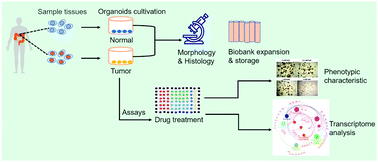
Butyrate, a short-chain fatty acid, is predominantly produced by the decomposition of dietary fiber in the colon. Recent studies have shown that sodium butyrate (NaB) can inhibit cell proliferation and stimulate cell apoptosis in colorectal cancer (CRC) cells. However, the molecular mechanism behind NaB is still elusive. In this study, we aimed to explore the deeper mechanism of NaB in CRC by establishing a novel model – organoid. Organoids were generated from healthy and cancerous sites of CRC patients. RNA-seq experiments were undertaken using RNA isolated from the CRC organoids treated with NaB. Gene ontology analyses suggested that cell adhesion, cell–cell signaling, and extracellular matrix (ECM) organization were significantly enriched, with the manifested ECM related to the cell morphology variation in NaB-induced CRC organoids. The KEGG pathway and PPI analysis mainly focused on ECM–receptor interactions, as well as the PI3K-Akt signaling pathway. Interestingly, further analysis suggested that the upregulation of the expression of ITGB7 and ITGA2B was significantly associated with death by NaB-induced CRC organoids. In addition, NaB might further induce cell cycle arrest via the PI3K-Akt pathway, and thus cause cell death. Cumulatively, these results provide evidence that the ECM-integrin/PI3K axis may mediate phenotypic changes in the NaB-treated CRC organoid, which provides a broader perspective of the treatment and prognosis monitoring of CRC.
 Please wait while we load your content...