

Five years of the #RSCPoster Twitter conference
Matthew J.
Baker
a,
Kathryn L.
Gempf
b,
Hannah
McDonald
b,
Hannah E.
Kerr
b,
Catherine
Hodges
b,
Athina
Anastasaki
c,
Timothy
Noel
d and
Edward P.
Randviir
*e
aWestCHEM, Department of Pure and Applied Chemistry, Technology and Innovation Centre, University of Strathclyde, Glasgow, G1 1RD, UK
bRoyal Society of Chemistry, Thomas Graham House, Science Park, Milton Road, Cambridge, CB4 0WF, UK
cLaboratory of Polymeric Materials, Department of Materials, ETH Zurich, Vladimir-Prelog-Weg 5, Zurich 8093, Switzerland
dFlow Chemistry Group, van’t Hoff Institute for Molecular Sciences (HIMS), Universiteit van Amsterdam (UvA), Science Park 904, 1098 XH, Amsterdam, The Netherlands
eDepartment of Natural Sciences, Faculty of Science and Engineering, Manchester Metropolitan University, Chester Street, Manchester M1 5GD, UK. E-mail: E.Randviir@mmu.ac.uk; Fax: +44 (0)1612476831; Tel: +44 (0)1612471188
First published on 22nd October 2020
Abstract
The #RSCPoster Twitter conference is an annual, 24 hour poster conference held each March on Twitter. This original conference format has enabled hundreds of participants to share their research, with 32 million measurable impressions of #RSCPoster in 2020, participation growing each year and inspiring new conferences. Here, we will give a brief outline of the history, technicalities and content of the event.
A potted history of #RSCPoster
In 2015 the Royal Society of Chemistry (RSC), Dr Matthew Baker (University of Strathclyde, UK) and Professor Craig Banks, Dr Edward Randviir and Dr Sam Illingworth (all Manchester Metropolitan University, UK) organized one of the world's first online-only conferences, hosted on Twitter.1 The event brought together participants across the field of analytical chemistry to present their latest research in “poster” format, by tweeting their work using the hashtag #RSCAnalyticalPoster within a specified time range.The event, the first of its kind on Twitter to the best of our understanding, had over 80 contributed posters, uploaded from across every continent except Antarctica and South America, spanning 21 countries. There were over 1700 “tweets” exchanged (see Fig. 1), that is measurable interactions with the appropriate hashtag, not including interactions where participants forgot to add the hashtag to their tweet. There was a potential audience of 375![[thin space (1/6-em)]](https://www.rsc.org/images/entities/char_2009.gif) 000 people, based upon the number of participants and their followers, and nearly 60% female participant registration. In many respects, the event was considered a success in terms of a new innovation in scientific communication that was green and inclusive. The event has been run every year since, with some modifications to the concept throughout the years to enhance overall experience.
000 people, based upon the number of participants and their followers, and nearly 60% female participant registration. In many respects, the event was considered a success in terms of a new innovation in scientific communication that was green and inclusive. The event has been run every year since, with some modifications to the concept throughout the years to enhance overall experience.
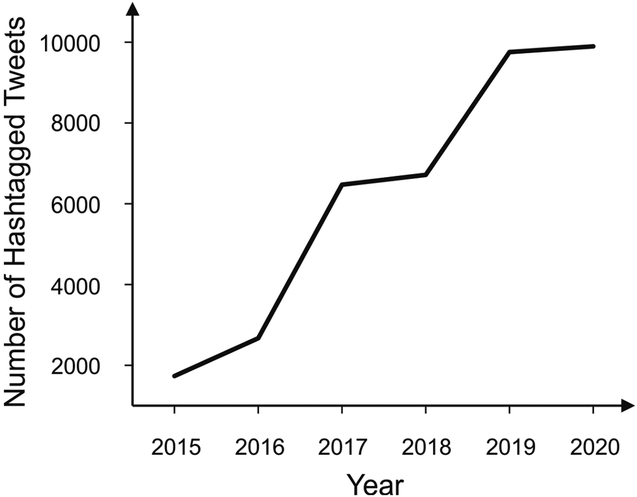 | ||
| Fig. 1 Number of measured tweets each year (either as #RSCAnalyticalPoster or #RSCPoster). | ||
Since the early successes, the concept has diversified and grown, to the point where the event has become a flagship event in the RSC's calendar. In 2017, the event changed its name to #RSCPoster and branched out into a range of themes, including materials, environment and engineering. These categories were decided based upon support gained from the RSC's journals and interest groups, who endorsed the event with prizes for the best contributions. This change bore witness to a significant rise in the number of measured tweets as seen in Fig. 1, which nearly tripled compared to 2015 figures, while the number of individual contributors to the hashtag quadrupled in size too. Around 40 countries participated worldwide in 2017 (see Fig. 2, a world map obtained from 2017's Twitter metrics system, “Followthehashtag”), including the breakthrough into South America with contributions from Brazil, Chile, Argentina, Colombia and Venezuela.
 | ||
| Fig. 2 A geolocation map of all participants in the 2017 edition of the #RSCPoster event. Major contribution zones were from Europe and North America. | ||
2018 saw a slight increase in tweets compared to 2017, with more contributions coming from Asia, and in particular India. Further categories such as education and nanotechnology were added to align with the subject areas as used by the RSC to categorise the topics within the core chemical sciences, proving to be popular additions to the event. In 2019 the RSC's in-house social media team provided the metrics, improving accuracy and consistency in the event statistics whilst also providing marketing assistance to expand the reach of the event, in particular by liaising with the Australian Chemical Society and the RSC's global teams and networks (e.g. in India and Africa). A growth in tweets were witnessed once more, with nearly 10000 tweets for #RSCPoster in 24 hours, over 500 participants across 12 categories, which are the same 12 categories used today. Additionally, video instructions were released on the day by the organizers, as well as a dedicated registration portal to manage the flow of contributors. The scientific committee for the day had a larger influence this year, tasked with keeping the conversation flowing throughout the day. In 2020, greater emphasis was given on inclusivity, with the scientific committee again leading the way in bringing the lesser engaged participants with contributions to the fore, in a concerted effort to circumvent Twitter's in-built biases (such as prioritising tweets with more followers). There was also a change in the start time to 12:00 UTC because data from previous events (e.g. #RSCPoster 2018, Fig. 3) showed that more tweets, and therefore opportunities for engagement, occurred at the start of the event. A change in start time to 12:00 UTC was employed to maximise the initial “buzz”, allowing more time zones to contribute at once to the beginning. The committee viewed this to be an effective way to start the event more strongly.
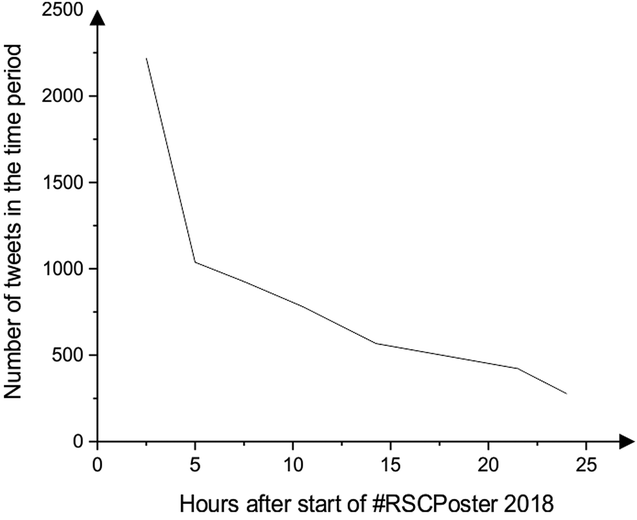 | ||
| Fig. 3 Number of tweets sent during #RSCPoster 2018, represented graphically as number of tweets during different time periods of the day. Data points were gathered at 1130, 1400, 1630, 1930, 2315 on 6th March 2018, and 0630 and 0900 on 7th March 2018. | ||
#RSCPoster 2020
2020's edition of the #RSCPoster event took place on 3rd March 2020 at 12:00 UTC for 24 hours. The event was promoted as a green and inclusive event that could be participated from anywhere in the world at any time. Fig. 4 depicts the number of countries represented by participants over the years, by way of illustration of how the event has increased its global appeal. Almost 800 participants presented their posters during the 24 hour period, resulting in nearly 10000 measurable engagements (tweets) over the period. Furthermore, the data suggested that there were 4700 individual attendees to the event producing 32 million impressions.
 | ||
| Fig. 4 Number of countries represented by the delegates each year of the event. The blue bars are measured statistics, while the purple bars are averages of the years either side due to missing data. | ||
Typical #RSCPosters
In this section a range of #RSCPoster contributions will be discussed, outlining the variety of poster types that are submitted, complete with a brief examination of how these poster types potentially arise in response to the nature of Twitter as a platform.Design key; text free
Fig. 5 is a reproduction of two posters from the 2020 event on the themes of hydrogen storage and biochar catalysis. Two immediately noticeable aspects of the poster are the effective designs and reduction in text. | ||
| Fig. 5 #RSCPoster contributions courtesy of Lizzie Ashton (left) and Juliana Vidal (right), reproduced with permission from the authors. | ||
In Lizzie Ashton's poster2 on solid-state hydrogen storage, the overall design, with the vibrant but carefully selected colour scheme, brings a certain warmth and sparks intrigue to the e-attendee within the Twitter conference. The elimination of text-heavy introductions, favouring instead a brief schematic and minimal text explanation of the concept of the fuel cell serves the purpose of explaining what is going on, but very quickly, much in the style of an actual tweet. The chemistry is communicated through an equation, whereby the process of hydride reduction is presented next to a graph of conversion efficiency during vapour hydrolysis of different solid-state forms of hydride.
In contrast, Juliana Vidal's contribution3 presents a comic strip approach to explaining the practical use of biochars obtained from liquefaction or pyrolysis processes. Her poster uses a wider range of colour but presents the work in a personified and relatable fashion, using imagery to link deforestation and global warming with approaches towards managing the wastes arising from industry, while showing the range of products from these processes. The use of faces in the liquefaction/pyrolysis products indicates where the issue lies, forming the basis of the work presented therein. Links to CO2 capture are made, highlighting a potential approach towards a key societal issue.
Mobile devices
Increasingly, #RSCPoster contributors are adapting to the Twitter landscape and taking into account that many users may access the event through their tablet or mobile device. While in principle, this is the same as accessing from the desktop version of Twitter, there are display and quality issues that arise from mobile devices, especially those that are using mobile internet services requiring smaller file sizes to get access to the content through 3/4/5G networks, and more appropriate designs for mobile phone screen dimensions. The #RSCPoster event is beginning to witness designs that take this into account, and are easily noticeable by observing the “stretched” dimensions of the contributions. Fig. 6 depicts one particular example of designing for mobile.4 The author, Kelly Brown, has sized the image in a relative 1:2.58 ratio such that the image will fit into a mobile phone screen. The relative height of the image is almost twice that of a traditional poster (ratios for A0, A1 and A2 are 1:1.41) that would not fit onto a mobile screen, which could lead to work being disregarded altogether during the event for those viewing on a mobile device (particularly those in a rush!). In a personal communication with Kelly, she said that she assumed most people would view on a mobile device and so made this a top priority for her contribution.
 | ||
| Fig. 6 Comic strip-style poster designed by Kelly Brown. The relative dimensions have been labelled. | ||
Video killed the poster star?
The Buggles mused of how television was making radio increasingly obsolete in their 1978 song “Video Killed the Radio Star”. In a similar vein, the chemical sciences may be on the frontier of a digital revolution in poster content, thanks in part to the #RSCPoster format. The 2020 edition of #RSCPoster saw more posters in GIF or video format, incorporating animated components, than any other year. Alan Quintal's GIF,5 depicted in Fig. 7, discussed a program that was developed to observe the intermediate reaction coordinates of chemical reactions, allowing researchers easier access to complex mechanistic information within their chemical studies. Within the animation are four iterations of the changes in potential energy, natural charge, bond length, and Wiberg bond indexes as a proton shift occurs between an oxygen and sulphur atom. | ||
| Fig. 7 GIF image of Alan Quintal's work, with a side-by-side representation of a proton shift model against bond length, natural charge, Wiberg index and potential energy. Animated version available on Alan's Twitter profile via the link.6 | ||
Analysis of #RSCPoster
Presented in Fig. 5–7 are examples of the way contributors think about their audience differently within the digital sphere in three different ways. The first example, focussing more heavily on design, could be argued to be used as a way to “hook” the audience in. This is similar to a regular poster conference; it is often said that in a poster session, a delegate will judge whether to read or not to read on within the first few seconds of looking at a poster. The same could be true for online events, though perhaps it could be even more important to consider the audience, since it is much easier for people to scroll and disregard work using a digital format for a number of reasons (e.g. no need to consider human interaction). This also works in a positive sense, however, since if work does capture the imagination, the format makes communicating that little bit easier with the removal of non-verbal communication. Many publications have been written to carry the message of enhanced poster design to speak to the to the target audience in many fields.7–11Fig. 5 highlights two examples in 2020 of the types of designs that attracted the most attention during the events and is by no means a pair of isolated cases. These are exemplars of a marked shift towards better, more professional designs with limited text, which has been consistently witnessed over the several years of hosting the #RSCPoster event, which may in part have been facilitated by the nature of Twitter as a hosting platform.The second example (Fig. 6), takes on the design concept too that plays a part in overcoming the psychological barrier to hook the audience in. But it also considers the technological platform, doubling up on added considerations when using the online poster format. There is evidence to suggest that taking mobile users into account could lead to elevated engagement with a poster in an online event. One study on mobile- and desktop-users of Twitter found that mobile users are more gratified by immediate interaction and feedback when engaging in social interactions on Twitter.12 Applying such ideas into the #RSCPoster format could lead to a conclusion that designing for mobile devices could lead to elevated interaction, if done correctly.
The third example of using animated imagery may be more of a profound shift in that it would not at all be possible without the digital nature of the event. Poster designs and sizes can be altered under normal circumstances, but videos cannot be printed onto paper in the same way. GIF images are at an early stage of introduction for the event but it is already apparent that these types of images are gaining more attention, broadly speaking, than non-animated posters.
Thematic diversity
The event is a champion of scientific diversity, showcasing the broad range of societal challenges that the chemical sciences are actively contributing towards. Taking previous winners as examples of the broad scope: in 2015, the overall #RSCAnalyticalPoster award for best contribution was given for work on the movement away from antibiotic therapies, demonstrating that sugars can play an active role in potentially reducing the likelihood of cholera contraction. On the other hand, in 2016 the same award was given for the degradation of taste and odour compounds in drinking water, having direct links to water quality and public health. Both examples were borne out of the original #RSCAnalyticalPoster event (tweets still available to see – search for the hashtag on Twitter!). Expansion of the themes has led to increased thematic diversity across the board, giving rise to more specialist interest in many areas, as well as highlighting some wider issues such as mental health (see later) and subsequently an expansion of the prize pool to include prizes for individual categories as well as an overall engagement award. Introduction of #RSCEdu, which has a strong following from collaborators across all continents, saw innovations such as the use of escape rooms in the teaching of chemical sciences. The work was the winner of the education category in 2018 and has since been presented at a conference in Singapore and been written about in Chemical & Engineering News.13 Today, the #RSCPoster event caters for 12 different areas of the chemical sciences (Table 1), each underpinned by one or more of the RSC's journals. The showcase in thematic diversity of the chemical sciences is undoubtedly one of the strengths of the online format.| Subject area | # |
|---|---|
| Organic | #RSCOrg |
| Inorganic | #RSCInorg |
| Physical | #RSCPhys |
| Analytical | #RSCAnalytical |
| Materials | #RSCMat |
| Engineering | #RSCEng |
| Education | #RSCEdu |
| Environment | #RSCEnv |
| Nanotechnology | #RSCNano |
| Catalysis | #RSCCat |
| Chemical biology | #RSCChemBio |
| Energy and sustainability | #RSCEnergy |
Benefits of the event
Post-event in 2020 the participants were asked to contribute to an exit survey consisting of ten questions. Of 27 respondents, 22 said they participated because of cost (presumably lack thereof since the event is free) while 21 said they participated because the subjects were relevant – which appears to be supportive of the style of event that encompasses a wide variety of topics. Third was the “location” of the event, with 16 people responding to say they had participated because it was an online event. Virtual events are on the rise (in spite of the Covid-19 crisis, not because of), with more innovative approaches being designed for meetings, events and webinars in general. The #RSCPoster concept is considerably unique in its own right, since it doesn’t necessitate a licence for the digital platform. Most attendees agreed that the range of subjects on offer and the registration process for the event were excellent, while the lesser appreciated aspects of the event were the networking opportunities presented and pre-event delegate information. This perhaps points to a void in abstract or delegate lists, which have not been provided for attendees since the event's conception. One reason for this is because the registration for the event traditionally isn’t closed until after the event finishes, allowing anyone to join even if they just happen to find the event by chance on the day. Despite the lack of organized networking opportunities, the open platform is there for anyone to contribute and begin engaging with new works, and therefore the event does encourage scientific discussion. Furthermore the event does not bar publication of results displayed because listing posters on Twitter does not count as a previously disclosure of novel results. Such a concern has been discussed many times in planning and may have been viewed as potentially prohibitive to some contributors, though it is not the case.The event then is unquestionably good for the delegate from a cost point of view because there are no registration fees. This precludes the need to raise money for event attendance, while still gaining access to the latest work available within their field. Students, early careers, full-fledged researchers, professionals, the public, and everyone else in-between can participate for free and don’t need to apply to their host institutions or membership organizations for funding to attend, removing a big concern, particularly for students and early careers. The event is also viewed to be good from a subject matter point of view and it was seen previously that the event, though it started within an analytical chemistry context, has manifested into a general chemistry event now due to the interest taken by RSC members. Today's event has 12 different hashtags and each year delegates request more to be added. The committee currently align the hashtags with the journal portfolio subject categories, because these generally encompass the broad subject areas within the chemical sciences, though as science progresses and becomes more multi-disciplinary, this may change in the future. In addition to the range of subject matter on offer, there is crossover between subjects areas, often emphasized by contributors who submit their work under more than one subject area hashtag. This is a clear advantage because it allows researchers to see clearly the crossover between subject areas and may even provide inspiration for researchers to work more closely on the interfaces between the disciplines. Such intra-disciplinary interfaces may be crucial for effective collaboration within future educational or research programmes. Perhaps one day a computational chemistry hashtag will appear, if a new common way of defining the ever changing subject areas within the chemical sciences emerges, or as the RSC redefine their subject areas in categorising their journal portfolio.
While #RSCPoster has enjoyed success in an online only format, it is recognised by the authors that online-only events shouldn’t necessarily replace the physical meeting and that there are clear advantages to both formats. It is not unusual to have physical meetings that have a supplementary hashtag (e.g. #IUPAC2019) where users can connect and discuss digitally as well as in person, and some smaller events too use hashtags with ranging success. It isn’t expected that the appetite for physical meetings will suddenly disappear as a result of increasing online-only events, rather the two formats can serve different purposes for different people. Personal communications between the committee and participants has revealed that some people prefer the Twitter event because it allows them to contribute in scientific discussion from home whilst being able to be with their families. Another advantage is that the event has built a bridge between researchers from the very beginning of their journey to those at the very top. The panel of chairs consists of researchers with high standings within their own particular field, including Nobel Laureates, and that in itself provides an excellent opportunity for the younger researchers, since they may even get asked questions by those they seek to follow in the footsteps of.
Wider issues highlighted by the event
An unintended consequence of the #RSCPoster event is that it has shed a light on the increasing concern of mental health, both in and out of scientific disciplines. Dr Zoë Ayres contributed her work14 to the #RSCPoster event in 2019, reproduced in Fig. 8. Dr Ayres creative design is used very effectively in order to communicate an increasingly concerning topic for society. In her work she covered a wide range of potential factors and feelings felt by those who are experiencing high stress levels, such as a competitive environment and the familiar “Imposter Syndrome” feeling that many people have encountered during their careers in and out of academia. Whether it be due to the general nature of the #RSCPoster event, or the online format, Dr Ayres felt the poster slotted into the event well, and this was received very gratefully by the community, evidenced in part by the high level of engagement witnessed on her contribution on the day. She even used her latest article in Chemistry World to describe feelings of uncertainty about broaching the topic through the #RSCPoster format,15 and was ultimately vindicated in bringing this important topic to the fore within our community. Through the #RSCPoster medium as a starting point, Dr Ayres has now become a true champion of mental health both in and out of the chemistry community. | ||
| Fig. 8 Dr Zoë Ayres 2019 contribution on mental health during your PhD. | ||
Future of online conferencing
The #RSCPoster event has become a diary event in the organization's schedule. Increasingly, more journals are lending their support to the concept, and the RSC themselves have in recent years dedicated specialist teams and deployed their marketing team to help promote the event. There is anecdotal evidence that participants support the introduction of keynote speakers through the use of an electronic meeting platform, e.g. GoToMeeting, as well as including other event-specific initiatives such as “Poster Pitch” whereby participants also record one minute videos to pitch their poster as if they were doing so at a conference. The Poster Pitch concept will make an appearance in future years once the committee agree on the most effective way to implement this. More broadly speaking, there has been an increasing uptake in online-only events in the past five years. One example, the World Seabird Union (WSU) have been running their Twitter-only event since 2015. WSU's event runs over a two-day period, whereby they provide delegates with a presentation schedule. Each individual “speaker” has around 15 minutes to send a series of tweets relating to their work. In a similar way to the #RSCPoster, their concept has given rise to more creative methods of pictorial communication. The committee have considered the future of the event for those who can't access Twitter. Obviously some people may not have Twitter altogether, whether that be by choice or otherwise. For example, there are countless chemical scientists in China who would undoubtedly contribute to the event if they could access, and as such the committee are working with overseas collaborators to try make the event even more accessible than it already is. The future appears to be bright for online events, and #RSCPoster intends to continue to lead the way in this innovative concept to rewrite the best practice for online academic events for many years to come.References
- E. Randviir, S. Illingworth, M. Baker, M. Cude and C. Banks, F1000Research, 2016, 4, 798 Search PubMed.
- L. Ashton, Hydrogen Storage for Mobile Applications, https://twitter.com/LizzieRAshton/status/1234795169310003205, accessed 2nd October, 2020.
- J. Vidal, Back in Black: Biochar as a Sustainable and Renewable Catalyst, https://twitter.com/juliana_lvidal/status/1234827214044176384, accessed 2nd October, 2020.
- K. Brown, Electrochemiluminescent Sensors: A Move in the Light Direction for New Drug Detection, https://twitter.com/kellybrown_94/status/1234811116204830726, accessed 2nd October, 2020.
- A. Quintal, May the Reaction Force be With You, https://twitter.com/alanqf22/status/1234813953294905349, accessed 2nd October, 2020.
- A. Quintal, May the Reaction Force be With You, https://twitter.com/alanqf22/status/1234813953294905349, accessed 2nd October, 2020.
- G. R. Hess, K. W. Tosney and L. H. Liegel, Med. Teach., 2009, 31, 319–321 CrossRef.
- T. C. Erren and P. E. Bourne, PLoS Comput. Biol., 2007, 3, e102 CrossRef.
- L. W. Moore, P. Augspurger, M. O. B. King and C. Proffitt, Appl. Nurs. Res., 2001, 14, 100–104 CrossRef CAS.
- D. C. Shelledy, Respir. Care, 2004, 49, 1213 Search PubMed.
- H. M. Taggart and C. Arslanian, Orthop. Nurs., 2000, 19, 47–49 CrossRef CAS.
- S. Han, J. Min and H. Lee, Int. J. Inf. Manage., 2015, 35, 459–471 CrossRef.
- T. Nguyen, Chemistry education moves from classroom to escape room, https://cen.acs.org/education/k12-education/Chemistry-education-moves-classroom-escape/96/i19, 2020.
- Z. Ayres, Mental Health During Your PhD, https://twitter.com/ZJAyres/status/1102861872137674752, accessed 2nd October, 2020.
- Z. J. Ayres, In-poster syndrome, https://www.chemistryworld.com/opinion/phd-researcher-mental-health-matters-now-more-than-ever/4011653.article, accessed 9th June, 2020.
| This journal is © The Royal Society of Chemistry 2020 |