

Highlights from the Faraday Discussion 296: quantum effects in small molecular systems, 10–12 September 2018, Edinburgh, United Kingdom
Loren
Ban
 a,
Matthieu
Besemer
b and
Halima
Mouhib
c
a,
Matthieu
Besemer
b and
Halima
Mouhib
c
aLaboratory of Physical Chemistry, Department of Chemistry and Applied Biosciences, ETH Zürich, Vladimir-Prelog-Weg 2, CH-8093 Zürich, Switzerland. E-mail: loren.ban@phys.chem.ethz.ch
bInstitute for Molecules and Materials, Spectroscopy of Cold Molecules, Radboud University, Huygens building, Heyendaalseweg 135, 6525 AJ Nijmegen, The Netherlands. E-mail: m.besemer@science.ru.nl
cUniversité Paris-Est Marne-la-Vallée, Laboratoire Modélisation et Simulation Multi Echelle, MSME UMR 8208 CNRS, 5 bd Descartes, 77454 Marne-la-Vallée, France. E-mail: Halima.mouhib@u-pem.fr
First published on 26th November 2018
Abstract
Exciting discussions on the impact of quantum effects in small molecular systems took place in the historical city of Edinburgh this fall 2018 in the unique conference format of the Faraday Discussions. During this three day conference meeting close to Holyrood Park, 65 leading experts from all over the world came together to discuss the developments, advances and challenges in the wide field of quantum effects in small molecular systems, either isolated or embedded into clusters, clathrates or cold matrices. The meeting clearly reflected the importance of the accurate description, characterization and prediction of quantum effects in isolated, solvated and complexed molecular systems, while allowing the community to crystallize future perspectives and directions in the field, as well as applications in chemistry, physics, biology, environmental sciences and industry.
The Faraday Discussions comprise a uniquely formatted conference series focusing on the rapidly developing areas of physical chemistry and its interfaces. Hereby, a number of innovative research articles are pre-selected by the scientific committee and peer-reviewed months prior to the meeting. During the meeting the speakers have exactly 5 minutes to present the main results of their research work before the chairman opens the discussion rounds of each session. Since all participants get access to the publications prior to the meeting, they can ask specific questions to each of the delegates and comment on the proposed research approaches and results. This format proved to be extremely successful as it nourishes scientific exchange and heightens the opportunities to establish new collaborations with world-leading experts in the field. This fall, on the 10th of September 2018 in Edinburgh, the Faraday Discussions reopened once again, this time, to address the topic of quantum effects in small molecular systems. Over past decades, this rapidly evolving field has spread to new application areas at the interface of physics and chemistry, and also impacts specific fields in biology.
Opening lecture
The Faraday Discussion was opened with the Spiers Memorial Lecture given by Sir David Clary (U. Oxford, UK). It was chaired by Majdi Hochlaf (U. Paris-Est Marne-la-Vallée, France). During his lecture, Sir David Clary reviewed the manifestations of quantum effects in chemical reactions involving small molecular systems. Those related to the spectroscopy and the characterisation of small molecules were also recently reviewed by Hochlaf.1 Hereby, he stressed the theoretical and experimental advances that were achieved in the field over the last decades, both from a theoretical and an experimental point of view. He specially reviewed the tens of Faraday Discussions relating to the topic of this Faraday, with an emphasis on the role played by such a conference format in promoting the field with the participation of prominent Chemists and Physicists (e.g. Nobel laureates). As a future perspective, these findings may enable the community to investigate quantum effects in reactions involving larger polyatomic molecules and move towards larger and more complex systems.Session 1: Precise characterization of isolated molecules
Ad van der Avoird (Radboud U. Nijmegen, Netherlands) chaired the first session of the Faraday Discussion. The first theme of this session was: “Accurate rovibronic spectroscopy of isolated molecular systems”. Joel Bowman (Emory U., The USA) started as the first speaker of session 1. His research dealt with a quantum mechanical description of vibrational dynamics and IR spectra of the formic acid dimer and various isotopologues (DOI: 10.1039/c8fd00077h). A good agreement between the standard classical and quasiclassical molecular dynamics calculations of the IR spectra of the formic acid dimer and the experimental spectra were found, except for the complex O–H stretch band which was upshifted compared to the experiment by about 300 cm−1. Results on the isotopologues show that the O–D stretch band sharpens compared to the O–H band. However, this was not found for the molecular dynamics O–D stretch band. The second contribution was by Roberto Linguerri (U. Paris-Est Marne-la-Vallée, France). The paper of Linguerri and co-workers was entitled “Disentangling the complex spectrum of the ethynyl cation” (DOI: 10.1039/c8fd00091c). In this work the low-lying electronic states of the ethynyl cation (C2H+) were studied using pure ab initio methods (see Fig. 1). By varying the stretching and bending coordinates, a high-density of electronic states was found that favours their mutual interactions. It was suggested that a (spin-)rovibronic spectrum of the ethynyl cation would be complicated due to the contributions of various couplings, such as Renner-Teller, vibronic and spin–orbit. Next, Paul Houston (Cornell U., The USA) addressed his paper named “Teaching vibrational spectra to assign themselves” (DOI: 10.1039/c8fd00075a). His paper presented a new way of assigning vibrational spectra. Instead of the normal procedure, going from potential to Hamiltonian to eigenvector/eigenvalues to intensities and finally to a spectrum, the proposed method operates in reverse, going from a spectrum to eigenvectors. It was discussed that the proposed algorithm can be used to assign complex vibrational spectra using only the information about eigenvalues and a harmonic basis set. The formic acid dimer was presented as an example. The last speaker before the discussion started was Ingo Fischer (U. Würzburg, Germany). Fischer and co-workers discussed the ultrafast dynamics of para-xylene (DOI: 10.1039/c8fd00083b). In this paper, the theoretical and experimental work on the excited-state dynamics of para-xylene was presented. Using simulations, Fischer and co-workers showed that ultrafast decays from the initially excited bright states (S2/S3) to the S1 state occur, which are then followed by a decay to the ground state. In their experiment para-xylene was prepared in the (S2/S3) bright state via a combination of pyrolysis and laser excitation. The dynamics were followed using both mass spectrometry and photoelectron spectroscopy. Excellent agreement between experiment and theory was found. After these presentations, the speakers were invited to form a panel on the main stage upon which the discussion started. It was encouraging to witness and participate in a real scientific debate, which really separates the Faraday Discussion from all other common scientific conferences. Most of the attendees continued discussions during the tea break. After the tea break, the presentations continued with the second theme of session 1: “State-to-state bimolecular quantum collisions”. The first speaker of the second theme was Thierry Stoecklin (U. Bordeaux, France). Stoecklin and co-workers reported: “On the gas-phase formation of the HCO− anion: accurate quantum study of the H− + CO radiative association and HCO radiative electron attachment” (DOI: 10.1039/c8fd00103k). A new 3D-potential energy surface was made and used to calculate radiative association rate coefficients for a range of temperatures (0.01–1000 K). Additionally, electron attachment rate coefficients were calculated and are found to be equal to the radiative association rate coefficients. Finally, it was concluded that this study shows two viable ways of producing HCO−: the radiative association pathway is dominant below 10 K and the electron attachment pathway is dominant above 10 K. The last speaker of the first day was Francesco Gianturco (U. Innsbruck, Austria), who presented his work on the dynamics of the rotational relaxation kinetics for ortho- and para-NH2− molecular anions by collision with He (DOI: 10.1039/c8fd00078f). Quantum dynamics calculations were performed to calculate state-to-state rate coefficients for ortho- and para-NH2− anions which are used to compute the state population evolution in the cold ion trap. Differences in loss kinetics between both the ortho- and para-species were studied both experimentally and theoretically. The final discussion covered different aspects of the last two talks. Next, Monica Favaro from the European Research Council (ERC) gave a presentation about the role of her agency in the European scientific community. Different aspects of European funding opportunities for research and international scientific exchange were treated, such as the ERC starting, advanced, consolidator and Synergy grants (https://erc.europa.eu/) and the European COST Actions (https://www.cost.eu/). For instance, several delegates who participated at this Faraday Discussion are members of European countries involved in the COST Action MOLIM or hold ERC grants. This was followed by one-minute flash presentations highlighting the selected posters for presentation. The poster presentations were held during the reception and many posters were quickly surrounded by interested attendees asking questions. The poster presentations covered a broad range of topics, ranging from highly accurate ab initio potential energy surfaces of van der Waals systems to molecules confined in clusters, solvents and matrices.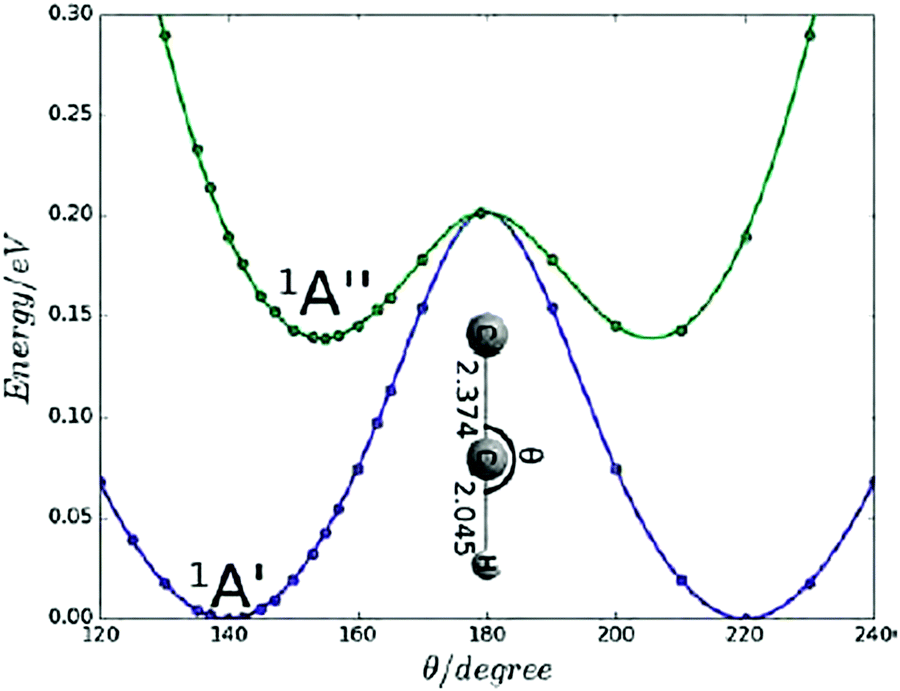 | ||
| Fig. 1 One-dimensional cut of the 3D PES of the C2H+(11Π) state along the bending coordinate. RCC and RCH are fixed at their equilibrium values. The reference energy is the energy of the 11Π(1A') component at equilibrium. (Reproduced from DOI: 10.1039/c8fd00091c with permission from the Royal Society of Chemistry.) | ||
Session 2: Quantum dynamics of isolated molecules
Tuesday morning started off with a time-perspective on exotic molecular systems. The session was chaired by Sir David Clary and included Stephen R. Leone (UC Berkeley, The USA), Adam Kirrander (U. Edinburgh, UK) and Graham A. Worth (UCL, UK) presenting their work on molecular nitrogen, molecular hydrogen and formamide with its acid analogue formimidic acid, respectively. While these systems are commonly encountered in chemical physics, the authors managed to highlight how exotic their dynamics can really be. In the first paper (DOI: 10.1039/c8fd00074c), Stephen R. Leone and co-workers discussed state-of-the-art attosecond four-wave mixing spectroscopy as a tool to probe double-well potentials. The authors have spectroscopically characterised the dark a’’ 1Σ+g state of N2 and demonstrated the ability to prepare the dark-state wave packet in either the inner or outer potential wells (Fig. 2). Staying with the double well potentials, Adam Kirrander introduced us to a truly exotic system – a hydrogen molecule with internuclear distances exceeding 10 a.u. (DOI: 10.1039/c8fd00096d). A hybrid log derivative/multichannel quantum defect theory was used to calculate heavy Rydberg states in the 1Σ+g manifold of H2. Graham A. Worth concluded the morning part of session 2 with a paper (DOI: 10.1039/c8fd00090e) studying photodissociation dynamics of formamide and formimidic acid. With their new on-the-fly diabatisation method and DD-vMCG2 they calculated complex dynamics involving eight excited states. A discussion followed, with many interesting questions and comments from the participants. Robert J. Donovan (Swansea U., UK) stepped up to elaborate on the heavy Rydberg states discussed by A. Kirrander. He highlighted the existence of large negative quantum defects in the heavy Rydberg states, first mentioned in the late 1980s,3,4 and presented some slides to illustrate why such values appear.5 S. R. Leone reflected upon curve crossings and conical intersections with his comment on the emerging experiments that visualise conical intersections. He further stressed the importance of theory to successfully analyse such experiments.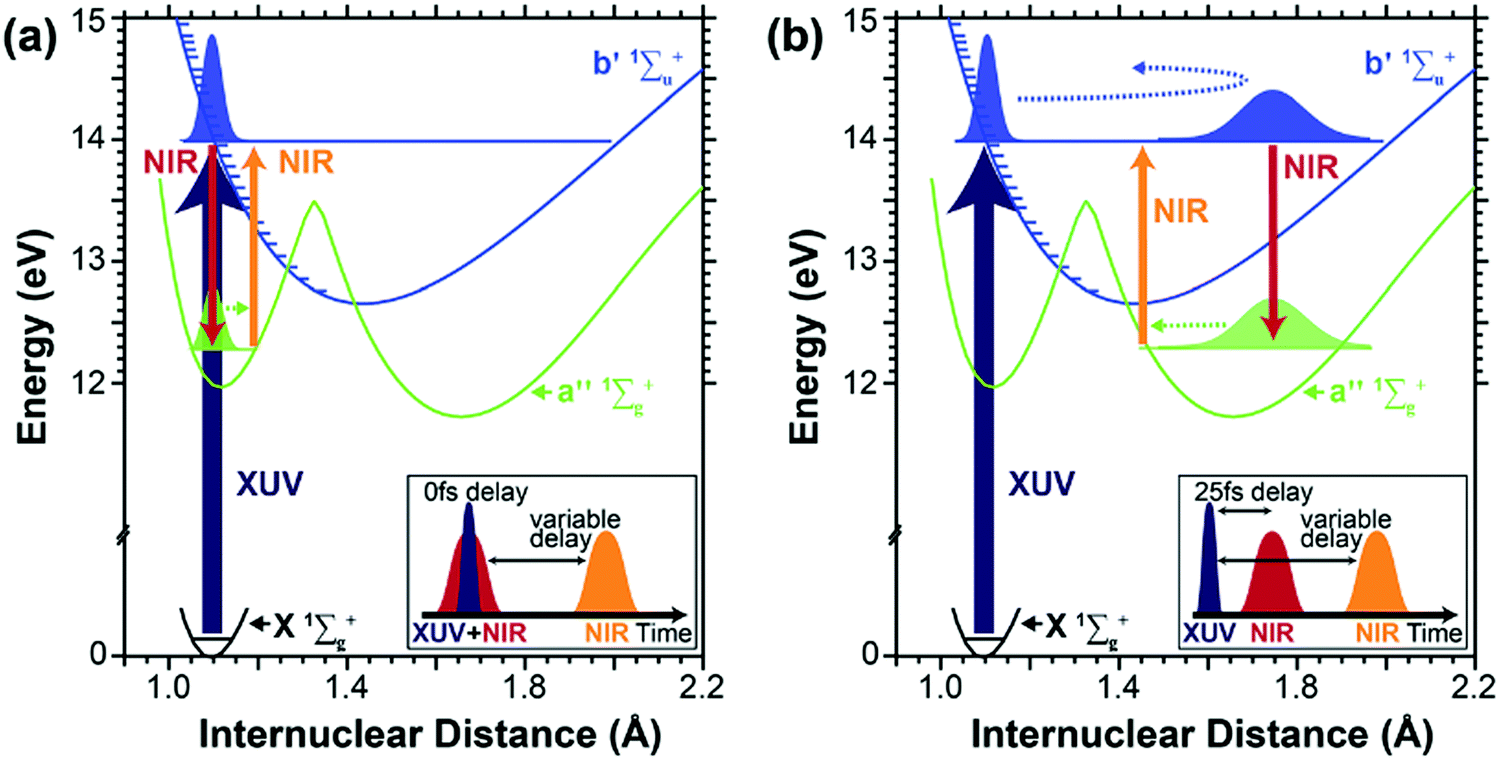 | ||
| Fig. 2 Schematics illustrating how the wave packet can be prepared in either the inner (a) or outer (b) potential well of N2 by changing the time delay between the laser pulses. Reproduced from DOI: 10.1039/c8fd00074c with permission from the Royal Society of Chemistry. | ||
Following a short tea break, the session continued with a theoretical perspective on barrier effects in chemical reactions. Uwe Manthe (U. Bielefeld, Germany) discussed the importance of symmetry in the reaction of methane with atomic hydrogen, in the framework of natural reaction channels and quantum transition state theory (DOI: 10.1039/c8fd00081f). The same reaction was studied by Jeremy Richardson (ETH Zürich, Switzerland) and co-workers (DOI: 10.1039/c8fd00085a). With their developments leading to a more efficient instanton rate theory, they advanced from this benchmark system to ethane. The implemented machine-learning approach treats the potential-energy surface locally around the instanton and leads to the same results as the full on-the-fly ab initio calculations. A shift to another benchmark system was made by Dmitri Babikov (Marquette U., The USA, DOI: 10.1039/c8fd00089a). The authors studied ozone recombination reactions and anomalous isotope effects by characterising the properties of Feshbach and shape resonances with their model including the effects of symmetry, scattering and tunnelling. Inspired by these new developments in bimolecular reactions, the discussion focused on the challenges in the quantum dynamics calculations. Approaches including on-the-fly ab initio, semi-classical and potential-energy surface fitting methods were mentioned, with an emphasis on the perspective of the emergent machine-learning based methodologies.
Session 3: Molecules in confinement in liquid solvents
In the afternoon, we had an opportunity to hear about the most recent research regarding the solvation of molecules in liquid solvents. The session was chaired by Gilberte Chambaud (French Chemical Society) and included contributions from both experimental and theoretical perspectives. Martin Dračínsky (Charles U. in Prague, Czech Republic) presented a paper (DOI: 10.1039/c8fd00070k) reporting on proton transfer in deuterated, hydrogen-bonded isocytosine dimers. In this optically-dominated meeting, he reported on interesting results obtained with the combination of NMR spectroscopy and path integral molecular dynamics (PIMD). The interplay between these techniques enabled the authors to address the influence of nuclear quantum effects on double-proton transfer. Mikołaj Jan Janicki (Wroclaw U. Science and Technology, Poland) continued discussing proton transfer, this time in biologically relevant 2-aminoimidazole (2-AIM, DOI: 10.1039/c8fd00086g). By performing non-adiabatic molecular dynamics, the authors found that electron-driven proton transfer in microhydrated 2-AIM-(H2O)5 leads to a radiationless deactivation of the excited 1πσ* state via the 1πσ*/S0 conical intersection (Fig. 3). This was the only channel found in the spectral region of around 4.6 eV, hinting at the potential photostability of 2-AIM. The last two contributions of this session concentrated on the details of the electronic structure and the influence of solvation. Petr Slavíček (U. Chemistry and Technology Prague, Czech Republic) presented a paper (DOI: 10.1039/c8fd00088c) underlying the importance of initially populated excited states in ab initio molecular dynamics (AIMD), used frequently to gain insight into laser-initiated photochemistry. As a result, the authors proposed routes to improve on the main issues with the excited-state simulations – electronic structure calculations and selection of the initial conditions. Lastly, Stephen E. Bradforth (U. Southern California, The USA) presented a paper (DOI: 10.1039/c8fd00123e) on photoelectron spectroscopy of indole in a liquid-jet. The paper touched upon the influence of water on both electronic structure and dynamics. The authors reported vertical ionization energies of indole and discussed in detail possible mechanisms of relaxation for different excitation energies. In short, they presented evidence of solvated electron formation and indications of a conical intersection involving a dissociative πσ* state. Although observed in the gas phase,6 this is a first attempt to address this state in solution. Similarly to the paper contributions, the discussion covered a wide range of topics from the gas phase to solutions. Anne Zehnacker-Rentien (U. Paris-Sud and CNRS, France) pointed out how the proposed photofragmentation mechanisms might differ in biologically relevant molecules, comparing gas-phase experiments to the microhydrated systems.7 Going towards bulk, Loren Ban (ETH Zürich, Switzerland) commented on the importance of inelastic scattering in the analysis and understanding of the liquid-jet photoelectron spectra.8 After further questions on excited-state dynamics, proton transfer and effects of solvation on the electronic structure, the discussion was concluded with an afternoon tea leading us to the last session of the meeting.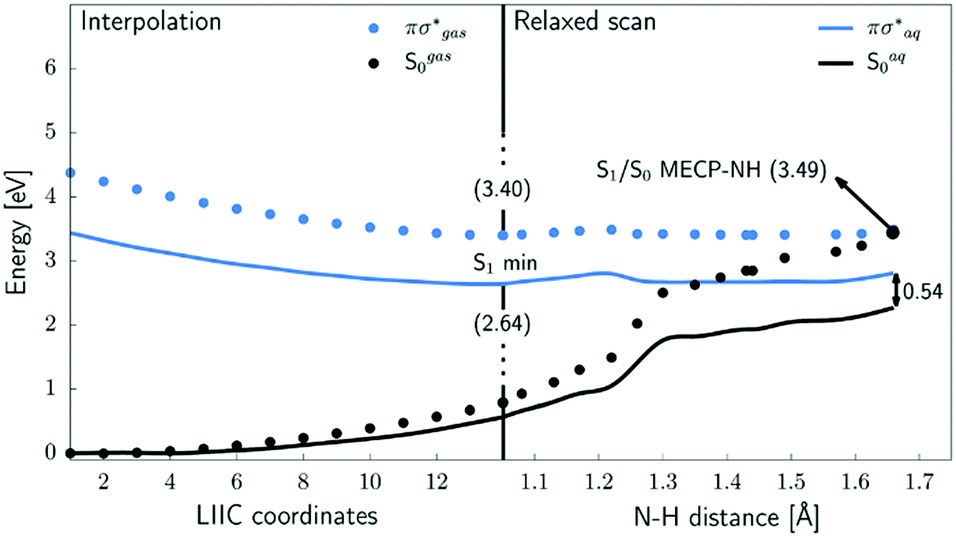 | ||
| Fig. 3 Photorelaxation of the πσ* state via the conical intersection with the ground S0 state for the case of 2-AIM (dotted line) and 2-AIM-(H2O)5 (full line). Reproduced from DOI: 10.1039/c8fd00086g with permission from the RSC. | ||
Session 4: Molecules in confinement in clusters, quantum solvents and matrices
The importance of non-covalent interactions such as van der Waals and hydrogen bonding was further stressed during the final session on Tuesday afternoon and Wednesday morning. The research papers presented by the eight delegates A. Zehnacker-Rentien, M. Biczysko, A. B. McCoy, K. Szalewicz, C. Crépin, K. Kouřil, D. Benoit and Z. Bačić completed the discussions on the effects of confinement of small molecules on their spectroscopy and dynamics. The discussions were focused on quantum effects associated with the confinement of molecules in clusters, cold matrices, and quantum or liquid solvents. Hereby indirect and direct solvent effects were treated explicitly, where the former addressed solvent effects affecting reaction barriers or conical intersections and the latter comprised mechanisms such as the transfer of protons along a chain of H2O molecules and the solvation of electrons. The presented research applications ranged from atmospheric systems (water clusters and aldehyde complexes) to biologically relevant entities (dipeptides and DNA base pairs).The first part of this session on large molecular systems was chaired by Gilberte Chambaud (French Chemical Society) on Tuesday afternoon sometime before the conference dinner at South Hall. It was opened by Anne Zehnacker-Rentien (U. Paris-Sud and CNRS, France) on a challenging molecular system comprising two cyclic dipeptides: (LD) and (LL) cyclo tyrosine–tyrosine. Using an interplay between experiments under molecular jet conditions and quantum chemical calculations, she and her team were able to address and characterize intramolecular stabilizing effects within the two systems and account for the weak London dispersion interactions within these systems (DOI: 10.1039/c8fd00079d). In their treatment of weakly bound complexes of atmospheric interests, Malgorzata Biczysko (U. Shanghai, China) and co-workers went beyond the harmonic approximation to account for the effects of weak intermolecular interactions on the electronic and vibrational excited states of the isolated molecules (DOI: 10.1039/c8fd00094h). She stressed the importance of including anharmonic and vibronic effects in computational procedures to accurately predict band positions and line intensities of medium-sized molecular systems.
The first session on Wednesday, chaired by Joel Bowman (Emory U., The USA), started with new insights on an intriguing molecular mechanism: Over 200 years after Theodor Grotthuss proposed a theory of water conductivity for the transport of protons by water molecules – Theory of decomposition of liquids by electrical currents – the fundamental description of the process remains a challenging task for theoreticians as well as experimentalists.9 The desire to understand in-depth how proton mobility occurs in solution was also one of the main goals of the paper by Anne B. McCoy (U. Washington, The USA) and her co-workers (DOI: 10.1039/c8fd00120k). Hereby, they explored couplings involving large amplitude motions in H+(H2O)n (n = 1–4) clusters using several theoretical approaches including vibrational perturbation theory and diffusion Monte Carlo. Going down one step deeper on the quantum effects on the properties of water, Krzysztof Szalewicz (U. Delaware, The USA) et al. presented their work on highly-accurate ab initio potentials (DOI: 10.1039/c8fd00092a). In their approach, they took into account quantum nuclear motion effects and monomer-flexibility effects to determine the second and third virial coefficients of water and its deuterated isotopologues. The session was concluded by Claudine Crépin (U. Paris-Sud and CNRS, France) on the experimental treatment of large amplitude motions of molecules trapped in solid parahydrogen, para-H2, (DOI: 10.1039/c8fd00080h). She and her team probed the interactions between the guest molecules (acetylacetone and 3-chloroacetyl acetone) and the environment (solid para-H2) with a special interest on the barrier height of the internal rotation motion of the methyl group and the herewith coupled intramolecular hydrogen transfer. The accurate prediction of such rotational barrier heights is highly challenging and currently not accessible with standard quantum chemical methods.10
Finally, after taking the morning tea break, the participants went on to the final session of the meeting treating molecules embedded into fullerenes and clathrates. Karen Kouřil (U. Southampton, UK) et al. presented their results on the alignment of 17O-enriched water-endofullerene (H2O@C60) dissolved in a nematic liquid crystal. The study allowed probing for different orientations of the water molecule within the host (DOI: 10.1039/c8fd00095f). For future perspectives, the authors considered to extend the approach to distinguish between two potential molecular mechanisms for the observed alignment: a direct and indirect mechanism. The former implying an immediate interaction of the water with the liquid, while the latter incorporates a geometric or electronic distortion of the host C60 cage. In the following contribution, David Benoit (U. Hull, UK) and his colleagues demonstrated the importance of the rotational degrees of freedom of the surrounding water on the translation-rotation levels of the guest molecule (H2). Fig. 4 shows three different clathrate hydrate domains included in their work (DOI: 10.1039/c8fd00095f). The question on the effects of encapsulation on the intrinsic properties of molecules was further pursued during the contribution of Zlatko Bačić (New York U., The USA) on the H2, F2 and H2O molecules embedded into C60 (DOI: 10.1039/c8fd00082d). In their theoretical study, the authors examined the symmetry breaking on the excited translation-rotation eigenstates of these species and their manifestation in their simulated low-temperature IR-spectra. The following discussions and comments made clear, that a fundamental understanding of molecules trapped within a host complex is extremely important as the encapsulation may have a tremendous effect on the guest as well as on the host molecule leading to exciting new insights, spectroscopy and dynamics.
 | ||
| Fig. 4 D. Benoit et al. investigated on three different clathrate hydrate domains including 1–3 layers of 20, 40, and 76 water molecules ((a), (b) and (c), respectively) around a hydrogen molecule (reproduced from DOI: 10.1039/c8fd00095f with permission from the Royal Society of Chemistry). | ||
Conference dinner and Loving Cup Ceremony
On Tuesday evening, after two days of interactive debates, two special events were celebrated during the conference dinner at the South Hall Dining room (Edinburgh): (i) the traditional Loving Cup Ceremony and (ii) the distinction of Gilberte Chambaud (President of the French Chemical Society) for her life-time contributions to the chemical community and more specifically to Physical Chemists. She was honoured by Christian Amatore from the French Academy of Science on the occasion of her 70th birthday. During the dinner, the participants were introduced to the traditional Loving Cup Ceremony to toast “in piam memoriam of G. S. Marlow and Angela and Tony Fish” by Claire Vallance (President of the Faraday Society). Hereby, a silver cup from 1728 was filled with port wine and passed around to all participants starting at the table of the organizing committee and president of the Faraday Society. The Loving Cup includes the traditional ‘bowing and sipping’ ceremony which positively contributed to the cordial and good-humoured atmosphere of the evening (see Fig. 5).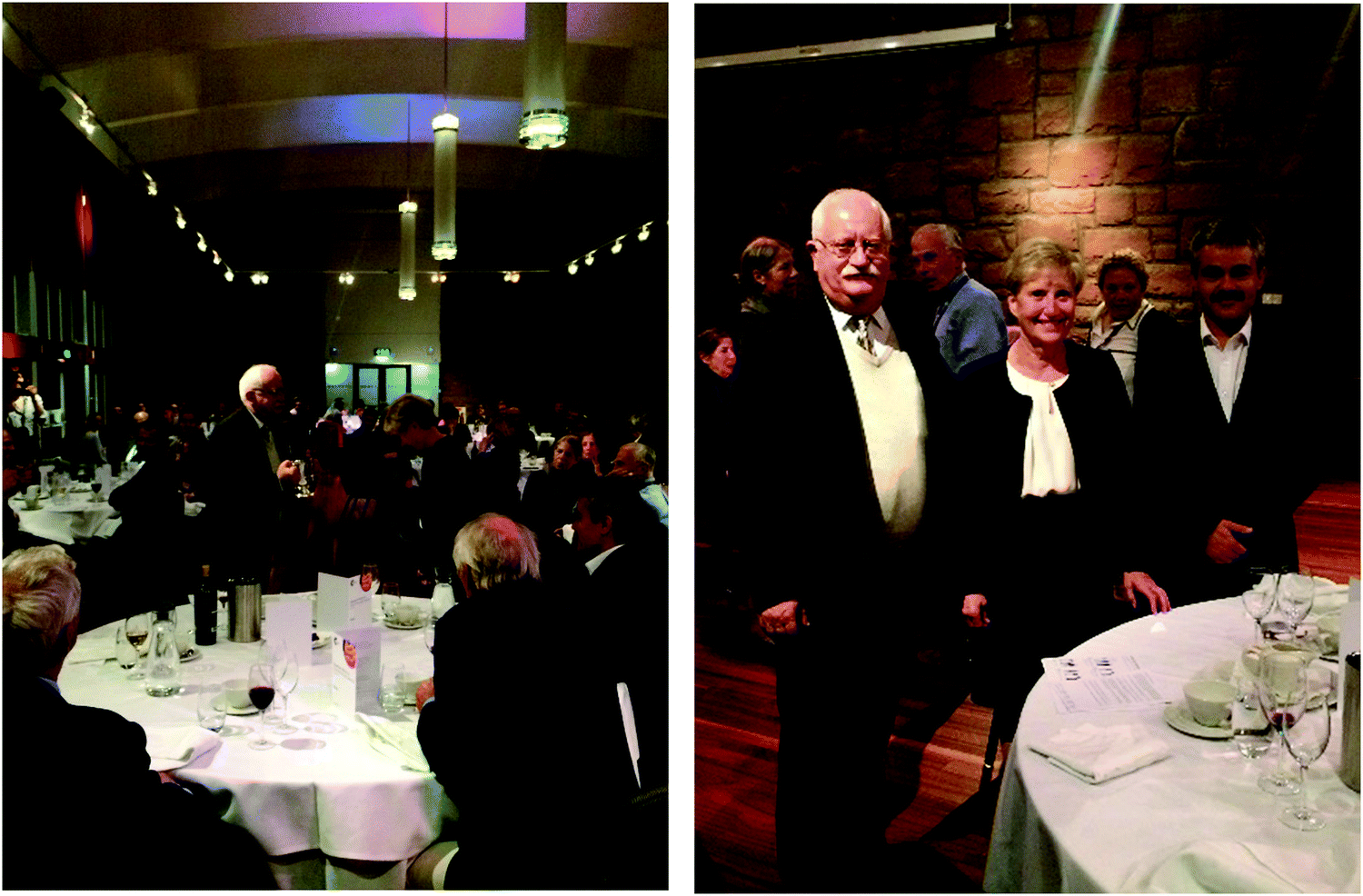 | ||
| Fig. 5 Conference dinner and Loving Cup Ceremony at the South Hall Dining Room (right-hand picture; from left to right: C. Amatore (French Academy of Sciences), G. Chambaud (President of the French Chemical Society) and M. Hochlaf (Chair of Faraday Discussions 296 on Quantum Effects in Small Molecular Systems)). Reproduced with permission from Susan Weatherby, Royal Society of Chemistry. | ||
Concluding remarks lecture
After three days of vivid discussions and scientific exchanges, the Faraday Discussion 296 on Quantum Effects in Small Molecular Systems was closed with a concluding remarks lecture by Ad van der Avoird (Radboud U. Nijmegen, Netherlands). The lecture highlighted the promising field of research on small molecular systems which is still very active and attractive to young students and showed the milestones for further developments in the field. Indeed, there is still the need to understand quantum effects of small molecules at the microscopic level in order to understand molecular phenomena at the macroscopic scale to push-forward future technological and biological applications. Looking back at the past 10 years in the fields of quantum effects, the Faraday Discussions clearly illustrated substantial progress achieved by the community, from the experimental side as well as from the theoretical side. With the achieved level of precision, more and more complex systems are becoming accessible and realistic simulations of their properties are possible. Future perspectives are exciting but still difficult to predict as new breakthroughs may arise from different directions such as quantum computing or the emerging field of machine learning. The Faraday Discussion was then closed by M. Hochlaf (U. Paris-Est Marne-La-Vallée, France), Chair of this meeting.Finally, after concentrated discussions and over 1000 questions and comments throughout the four sessions of the conference, the participants left Edinburgh in high spirits and with the perspective of a follow-up Faraday Discussion on Quantum effects in complex systems, to be held on from the 11th to the 13th of September 2019 in the small town Coventry in the United Kingdom, thus picking up on the exciting topics treated during this year's Faraday Discussion on Quantum effects in small molecular systems.
References
- M. Hochlaf, Advances in spectroscopy and dynamics of small and medium sized molecules and clusters, Phys. Chem. Chem. Phys., 2017, 19, 21236–21261 RSC.
- B. Lasorne, M. A. Robb and G. A. Worth, Direct quantum dynamics using variational multi-configuration Gaussian wavepackets. Implementation details and test case, Phys. Chem. Chem. Phys., 2007, 9(25), 3210–3227 RSC.
- S. H. Pan and F. H. Mies, Rydberg-like properties of rotational-vibrational levels and dissociation continuum associated with alkali-halide charge-transfer states, J. Chem. Phys., 1988, 89(5), 3096–3103 CrossRef CAS.
- C. Asaro and A. Dalgarno, Bound vibrational levels of the two lowest 1Σ+ states of LiF, Chem. Phys. Lett., 1985, 118(1), 64–66 CrossRef CAS.
- R. J. Donovan, K. P. Lawley and T. Ridley, Heavy Rydberg behaviour in high vibrational levels of some ion-pair states of the halogens and inter-halogens, J. Chem. Phys., 2015, 142(20), 204306 CrossRef PubMed.
- R. Livingstone, O. Schalk, A. E. Boguslavskiy, G. Wu, L. Therese Bergendahl, A. Stolow and D. Townsend, Following the excited state relaxation dynamics of indole and 5-hydroxyindole using time-resolved photoelectron spectroscopy, J. Chem. Phys., 2011, 135(19), 194307 CrossRef PubMed.
- S. Kumar, B. Lucas, J. Fayeton, D. Scuderi, I. Alata, M. Broquier and A. Zehnacker, Photofragmentation mechanisms in protonated chiral cinchona alkaloids, Phys. Chem. Chem. Phys., 2016, 18(32), 22668–22677 RSC.
- D. Luckhaus, Y. I. Yamamoto, T. Suzuki and R. Signorell, Genuine binding energy of the hydrated electron, Sci. Adv., 2017, 3(4), e1603224 CrossRef PubMed.
- C. J. T. de Grotthuss, Theory of Decomposition of Liquids by Electrical Currents, Ann. Chim., 1806, LVIII, 54–74 Search PubMed.
- R. Hakiri, N. Derbel, H. V. L. Nguyen and H. Mouhib, Communication through the furan ring: the conformational effect on the internal rotation of 5-methyl furfural studied by microwave spectroscopy, Phys. Chem. Chem. Phys., 2018, 20, 25577–25582 RSC.
| This journal is © The Royal Society of Chemistry 2018 |