

Effect of surface configurations on the room-temperature magnetism of pure ZnO
Yu-Chun
Chen
*a,
Zumin
Wang
bc,
Andreas
Leineweber
d,
Johannes
Baier
e,
Thomas
Tietze
a,
Fritz
Phillipp
f,
Gisela
Schütz
a and
Eberhard
Goering
a
aDepartment of Modern Magnetic Systems, Max-Planck-Institut für Intelligente Systeme, Heisenbergstraße 3, 70569 Stuttgart, Germany. E-mail: chen@is.mpg.de
bSchool of Materials Science and Engineering, Tianjin University, Tianjin 300072, China
cDepartment of Phase Transformations, Thermodynamics and Kinetics, Max-Planck-Institut für Intelligente Systeme, Heisenbergstraße 3, 70569 Stuttgart, Germany
dInstitute of Materials Science, Technische Universität Bergakademie Freiberg, Gustav-Zeuner-Strasse 5, 09599 Freiberg, Germany
eInstitut für Materialwissenschaft, Universität Stuttgart, Heisenbergstraße 3, 70569 Stuttgart, Germany
fStuttgart Center for Electron Microscopy, Max-Planck-Institut für Intelligente Systeme, Heisenbergstraße 3, 70569 Stuttgart, Germany
First published on 28th March 2016
Abstract
We unambiguously discovered the existence of room-temperature ferromagnetic-like behavior (RTFM) in pure ZnO pellets, which are made from the nanoparticles showing only paramagnetism and diamagnetism. In contrast to previous reports, our systematic work shows that thermal annealing of ZnO at different temperatures can either enhance or reduce ferromagnetic-like ordering regardless of post-treatment in argon and oxygen. After post-annealing under different conditions, the treated pellets show significant and complicated variation in surface configurations, including for example different levels of surface dehydrogenation, carbon adsorption, grain size and Zn/O ratio. The quantitative analysis indicates that the RTFM of ZnO is affected mainly by surface oxygen vacancies and hydrogenation. The observed dependence of intrinsic RTFM on the energy position of the Zn 3d photoemission peak suggests the presence of unpaired electrons leading to vacancy-mediated ferromagnetism. On the other hand, we also found that the RTFM of ZnO can be easily modified by adsorbed species, which give rise to charge-transfer at the surface. Based on this result, we further identified that surface carbon contamination is a potential source for the reported controversies, related to poor reproducibility of experimental results in the area of so-called d0 ferromagnetism.
1. Introduction
Room-temperature ferromagnetism has been observed in various pure oxides, which has attracted considerable interest over the past decades.1,2 Compared to the transmission-metal doped oxides, the existence of RTFM in pure oxides is even questionable due to the absence of magnetic ions. Several X-ray magnetic circular dichroism (XMCD) investigations have clearly shown that even the transition-metal ions in doped ZnO are only paramagnetic and no ferromagnetic source could be identified.3–5 Therefore, the possible origin of this unusual ferromagnetism in oxides remains controversial, and has been discussed by different research groups in diverse perspectives such as oxygen vacancies,6–8 oxygen interstitials,9 zinc vacancies,10,11 and zinc interstitials.12 It was also experimentally demonstrated that the average magnetization (magnetic moments per volume) decreases with increasing ZnO film thickness, implying that the nature of this unexpected FM is associated with surface or interface defects.4,10 More recently, Tietze et al. reported that a large magnetic volume fraction is actually present in the grain boundaries of undoped nanocrystalline ZnO films, studied by the μSR technique.13 Based on these experimental studies, it has been widely believed that the intrinsic RTFM in pure oxides originates from exchange interactions between isolated spin moments which are most likely from the oxygen vacancies at the surface or grain boundaries. Meanwhile, it was demonstrated that the magnetic properties of ZnO strongly depend on preparation parameters like synthesis temperature, substrate, film thickness or grain size.14,15Generally, the saturation magnetization (Ms) of all reported samples is at least two or three orders of magnitude smaller than that of conventional bulk magnets. For example, the magnetic signal (∼10−8 A m2) for typical thin film samples is equivalent to that of iron or magnetite nanoparticles with a diameter of just a few hundred nanometers.16 This tiny magnetic signal could also arise from extrinsic contamination. For this reason, clean samples and great care are required to avoid any experimental pitfalls.17,18
Additionally, it has been reported that the RTFM of ZnO nanosystems can be easily altered or induced by surface adsorbates.19–21 As magnetic ions need to have partially filled shells, the change in magnetic properties is likely due to electron redistribution between Zn and O atoms after surface modification. Among these chemicals, the RTFM induced by the molecules with a sulfhydryl group (–SH) has been so far investigated intensively. It is assumed that charge transfer from Zn to S atoms causes this exotic ferromagnetism similar to that in thiol-capped Au nanoparticles.22
In this study, a systematic investigation was carried out on both thermally annealed and chemically modified pellets to clarify the origin of the observed RTFM. Our previous report proved that RTFM exists unambiguously in pure ZnO pellets, which are made from non-ferromagnetic nanoparticles.23 Temperature-independent hysteresis loops observed in as-pressed pellets strongly and ‘directly’ support the idea that RTFM can be induced by isolated moments present in the grain-boundary between adjacent particles. Therefore, we believe that studying RTFM in pellet systems, instead of in powders or thin films, provides a new means to easily achieve effective surface modification and examine the location of magnetic moments in ZnO. We also checked the magnetic properties of Ar- or O2-annealed nanoparticles (without compaction) to make sure that the naive or newly formed bulk defects do not contribute to the observed FM response. The corresponding SQUID results show that no similar RTFM was observed in our nanoparticle systems even if they may contain some bulk defects. Therefore, we confirmed that the change in ferromagnetic signals is mainly connected to the modified 3D surface configurations, as proposed by the grain-boundary foam model.15 Great care was taken throughout the whole experiments – cleaning all tools with strong sulfuric acid before use. Magnetization curves combined with surface analysis show that the RTFM of annealed ZnO pellets is strongly connected to their complicated surface configurations. The variation in surface stoichiometry and adsorbed chemical species leads to vacancy-mediated ferromagnetism24 and charge-transfer ferromagnetism (or ligand-induced ferromagnetism)25 respectively. Due to the nonstoichiometric surface, the observed relation between intrinsic RTFM and Zn 3d binding energy from the annealed samples provides a clue for the occurrence of vacancy-mediated ferromagnetism in pure ZnO. This finding could be explained by Coey's model, where the hybridization of 3d bands of the transition metal with defect bands at Fermi level has been considered.16,26 Furthermore, our experimental results also suggest that the level of surface dehydrogenation and carbon adsorption must be also taken into account for the investigation of d0 ferromagnetism.26
2. Experimental details
2.1 Preparation of physically and chemically treated ZnO pellets
The pellets were carefully prepared from commercial ZnO powder (purity: 99.999%) in a clean environment to avoid unwanted contamination. All technical details of the pellet preparation procedure have been described in our earlier publication.23 To modify the surface configuration, the as-prepared pellets were treated physically or chemically as follows.For physical treatment (thermal annealing), the specimens were sealed in pre-evacuated quartz tubes under either an argon (Ar, 450 mbar, purity: 99.999%) or an oxygen atmosphere (O2, 450 mbar, purity: 99.9999%). Subsequently, the sealed ampoules were heated for two hours in a conventional furnace at different annealing temperatures (TA) ranging from 300 °C to 1000 °C in steps of 50 °C. The whole system was slowly cooled down to room temperature after thermal treatment. Note that all used quartz tubes were cleaned thoroughly with 3 M sulfuric acid to prevent unintentional surface carbon and metal contamination.
For chemical treatment, the as-prepared pellets were immersed in pure ethanol (ACS grade) and 1 M dodecanethiol (Thiol, 98%)/ethanol solution at 60 °C for two hours. The ethanol-treated samples were then dried directly in a vacuum oven at room temperature for 20 minutes. To remove the residual surfactant, thiol-treated pellets were rinsed thoroughly with warm ethanol after chemical reaction, and eventually dried in the same way.
Moreover, two batches of as-prepared pellets were sealed under Ar in ‘treated’ quartz tubes to study detrimental effects from unintentional carbon pollution. The treated tubes were intentionally prepared by rinsing the tubes with ethanol and isopropanol (VLSI grade), and post drying in a vacuum oven. The sealed ampoules were then annealed at 400 °C and 800 °C respectively following the same heating procedure.
2.2 Characterization methods
The microstructure and surface morphology of the as-prepared and annealed ZnO pellets were investigated by scanning electron microscopy (SEM, DSM 982 Gemini). The chemical composition of the specimens was analyzed by energy dispersive spectroscopy (EDX, JEOL 4000FX) and inductively coupled plasma optical emission spectroscopy (ICP-OES, Spectro Ciros CCD). X-ray diffraction (XRD, Panalytical X'Pert MPD) patterns were recorded using Cu Kα1 radiation (λ = 1.541 Å). Magnetization curves, M(H), were measured using a commercial superconducting quantum interference device magnetometer (SQUID, MPMS XL-7) with the reciprocating sample option (RSO). Self-designed quartz capsules were used to support specimens inside the standard drinking straws. The surface chemical composition was investigated by angle-resolved X-ray photoelectron spectroscopy (AR-XPS, Thermo VG Thetaprobe system) in the parallel detection mode employing monochromatic Al Kα radiation (hν = 1486.68 eV). The energy scale of the concentric hemispherical analyzer (CHA) was calibrated with high-purity, sputter-cleaned reference samples of Au, Ag and Cu, such that the corresponding Au 4f7/2, Ag 3d5/2 and Cu 2p3/2 main peaks were positioned at the recommended BE values of 83.98, 368.26 and 932.67 eV, respectively. RT-Fourier transform infrared (FTIR, Bruker IFS 66) spectra were recorded to identify the adsorbed species with a spectral resolution of 2 cm−1 in the transmittance mode. The specimens for FTIR measurements are Ar-/O2-treated ZnO nanoparticles (ca. 2 wt%) mixed with the KBr matrix.3. Results and discussion
3.1 Microstructure and crystal phase analysis
Fig. 1a shows the surface morphology of the as-prepared pellet, which indicates that the size distribution of the ZnO nanoparticles is quite broad ranging approximately from 30 to 300 nm. No obvious change in surface morphology can be observed in the pellets annealed under Ar or O2 at TA ≤ 500 °C (Fig. 1b). In contrast, significant grain growth is present at the surface of Ar-800 °C and O2-650 °C samples, as depicted in Fig. 1c and d. Because of this difference in microstructure, the samples annealed under Ar/O2 below and above 500 °C are divided into two groups in terms of the ‘grain-boundary foam model’, hereafter denoted as LTA-A/LTA-O (low temperature annealing in Ar/O2) and HTA-A/HTA-O (high temperature annealing in Ar/O2) respectively. The insets in the figures represent the chemical composition of the specimens verified by EDX spectra, from which the presence of any magnetic impurities can be excluded within the instrumental detection limit. Since the chemically modified specimens exhibit similar morphology and crystalline structure as found in as-prepared ones, their SEM images are not shown here.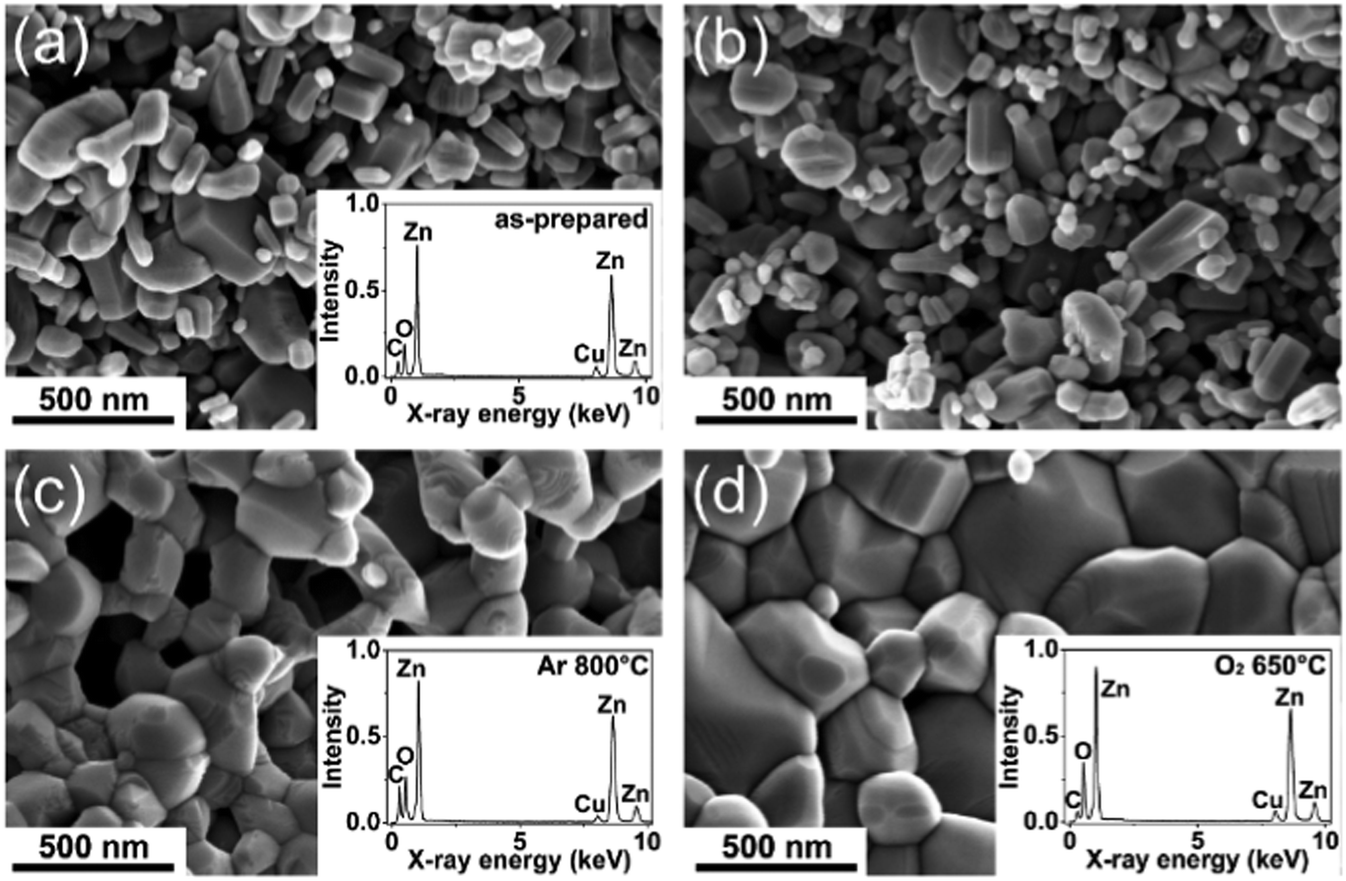 | ||
| Fig. 1 SEM images taken from the top surface of (a) as-prepared, (b) Ar-500 °C, (c) Ar-800 °C and (d) O2-650 °C pellets respectively. The insets are the corresponding EDX spectra, in which no signal from magnetic elements can be detected (C and Cu peaks are from copper TEM grids). | ||
XRD patterns of the ZnO samples are summarized in Fig. 2, where all resolved XRD peaks can be indexed to the wurtzite phase of ZnO (space group P63mc; lattice parameters a = 3.245 Å and c = 5.207 Å), consistent with the values in the standard card (JCPDS card No. 36-1451). No other phases from impurities were detected within the resolution limits.
 | ||
| Fig. 2 X-ray diffraction patterns of the as-received ZnO nanoparticles, as-prepared pellet, and annealed pellets. All diffraction peaks can be indexed to wurtzite-type ZnO phase. | ||
3.2 Chemical composition and surface adsorbed species
The elemental composition of the ZnO specimens was determined by ICP-OES, and the chemical analysis indicates that the concentration of trace magnetic elements, such as Fe and Ni, is below the instrument detection limit (detailed information in ref. 23). Even if we assume that some magnetic ions are present in the samples, the upper limit of expected magnetic moments from impurity ions, based on the ICP-OES results, is almost two orders of magnitude smaller than the detected FM signals presented below.27Besides total elemental analysis, it is crucial to identify the surface species adsorbed on the specimens since we have found that the ferromagnetic exchange coupling occurs at the surface.23 FTIR spectra were taken from both Ar- and O2-annealed nanoparticles (scratched from the corresponding pellet samples) to determine surface constitution. Fig. 3 shows the normalized transmission spectra of these samples recorded between 400 and 4000 cm−1. The carbon complexes are mainly from ethanol and isopropanol according to the FTIR database, and the assignment of each band is described in ref. 23. Although quantitative analysis is not practical for the FTIR technique, the raw spectra clearly show that the amount of carbon complexes and OH groups decreases after thermal treatment (either in Ar or O2).
 | ||
| Fig. 3 FTIR spectra of Ar- (a) and O2-annealed (b) nanoparticles. Note that the spectra shown here are normalized results, which can only be used to determine qualitatively the content of surface species. | ||
3.3 Magnetic properties
The magnetic properties of all ZnO specimens were systematically investigated using a SQUID magnetometer with a resolution better than 10−7 emu. The same method of data collection and treatment was carried out for all measured M(H) curves as described previously,23 in which we have already presented the magnetic properties of as-prepared ZnO pellets at different temperatures (see Fig. 4a). The average diamagnetic contribution in as-prepared pellets is ∼−2.45 × 10⁻⁷ emu g−1 Oe−1, in good agreement with other reported values obtained from ZnO nanoparticles.28 The saturation magnetization (Ms) of the recorded ferromagnetic-like loops at 300 K is ∼5.6 × 10⁻⁵ (±0.5) emu g−1 with a coercivity of about 350 (±50) Oe. The FM of as-prepared pellets seems to be temperature-independent over the scan temperature range, suggesting the Curie temperature well above room temperature similar to our μSR results in ref. 6. It is noted that the unpressed particles only exhibit diamagnetism and paramagnetism (detailed information provided in ref. 23). Therefore, this unusual RTFM behavior could be induced by exchange coupling of surface isolated spins located at the surface of individual nanoparticles (paramagnetic), while they are bonded together via cold-pressing. Fig. 4b and c summarize the measured RTFM curves from Ar- and O2-treated pellets. The clear difference in Ms demonstrates that ferromagnetic-like ordering can be enhanced or diminished after Ar- and O2-annealing at different TA. Surprisingly, the maximum Ms in both cases occurs at TA = 400 °C, but the RTFM signal of O2-treated samples drops faster and nearly disappears as TA exceeds 600 °C. This phenomenon matches well with the grain-boundary foam model, which suggests that the systems with larger average grain size exhibit less RTFM. In other words, stronger magnetic coupling is induced inside the regions between the small grains because of their large surface to volume ratio. | ||
| Fig. 4 (a) Temperature-dependent M(H) curves of the as-prepared ZnO pellet after subtracting diamagnetic contribution. The inset shows that diamagnetism is dominant in raw data. This is also the case for all treated pellets. (b–d) RTFM curves of all Ar-, O2- and chemically treated pellets. | ||
Besides thermal treatment, two organic reagents were utilized to tailor the RTFM of ZnO in order to investigate the ligand effect of surface adsorbed species. In Fig. 4d the RTFM curves indeed change after surface chemisorption in good agreement with ref. 20 and 21. Based on these SQUID measurements, it is evident that the origins of RTFM in as-prepared and treated ZnO must be located at the surface.
3.4 XPS surface analysis
The O 1s, C 1s, Zn 2p and Zn 3d core-level spectra of all ZnO samples were carefully investigated over the detection angles α with respect to the surface normal ranging between 34.25° and 71.75° (step size = 0.1 eV; pass energy = 50 eV). The procedures of peak fitting and elemental composition determination were described in detail elsewhere.23,32Fig. 5 shows, for example, the XPS spectra and peak-fitting curves of as-prepared and O2-400 °C pellets. The Zn 2p3/2 peak practically consists of only a single component located at ∼1022.0 eV, whereas two components could be resolved from the O 1s and C 1s spectra. The main peak in the O 1s spectrum centered at ∼530.8 eV corresponds to the lattice oxygen in ZnO, and the shoulder at ∼532.3 eV is often ascribed to surface hydroxyl groups (OH)31 as also observed in FTIR results. For the C 1s peak, the main component at ∼285.8 eV is ascribed to the adventitious aliphatic chain (C–C/C–H). The minor component at ∼290 eV may refer to carboxyl groups,33 which is nearly invisible in the as-prepared pellets. In the following, the two resolved components in O 1s and C 1s regions are designated as LBE (lower binding energy) and HBE (higher-binding energy) peaks, respectively. Sputter depth profiling combined with AR-XPS analysis indicates that the carbon and O 1s_HBE species exist mostly on the top surface (not shown here). It should be noted that no obvious charging effect was found in all XPS spectra as a result of the relatively high n-type conductivity of ZnO.34
 | ||
| Fig. 5 XPS spectra and their detailed fitting on the (a and d) Zn 2p, (b and e) O 1s and (c and f) C 1s regions of as-prepared (a–c) and O2-400 °C (d–f) pellets. Note that the C 1s_HBE peak is nearly absent in the O2-treated samples (TA ≥ 500 °C). This could be understood because the carbon species might fully react with oxygen during thermal treatment. | ||
Fig. 6 summarizes the variation in Ms and CZn/CO as a function of TA. The curves clearly reveal that the maximum Zn/O ratio and Ms occur at different TA for both annealing gases, although the overall tendency looks similar. The Zn/O ratio of as-prepared pellets is ∼1.17, showing that the starting material is nonstoichiometric at the surface (ZnO1−x, 0 < x < 1). This value implies the presence of intrinsic oxygen vacancies in good agreement with ref. 35. It is surprising that there is no obvious difference in the average Zn/O ratios between Ar- and O2-treated samples. The enhanced Zn/O ratio in the Ar-500 °C pellet suggests the formation of new oxygen vacancies, which is consistent with ref. 29. For the O2-500 °C specimen, the reason for the increased Zn/O ratio is not clear. According to the reported thermal desorption spectroscopy (TDS) spectra,36 Zn vapor can be significantly detected when TA is ≥500 °C. Therefore, Zn diffusion during thermal annealing may be the possible reason for the excess surface Zn atoms at the surface in the O2-500 °C case.
 | ||
| Fig. 6 Variations of the average Zn/O ratio (blue) and the corresponding Ms (black) are plotted from Ar- (a) and O2-treated (b) pellets as a function of annealing temperature. The LTA and HTA groups are divided by a vertical dashed line. Two horizontal lines (gray and cyan) refer to the Ms value and Zn/O ratio of the as-prepared pellet with the corresponding estimated error bar (stripes), respectively. | ||
Except for the 500 °C annealed pellets, the initial Zn/O ratio (i.e. the as-prepared pellet) is higher than that of the treated ones. It is obvious that the Zn/O ratios of the HTA samples reduce to ∼1, namely the stoichiometric state. The low Zn/O ratios for both HTA groups are clearly understood because the development of the observed grain growth and/or surface decomposition eliminates native oxygen surface defects at high annealing temperatures. Furthermore, it is believed that oxygen vacancies can be filled when oxides are annealed under an oxygen atmosphere. Therefore, it is reasonable that the O2-treated samples show lower Zn/O ratios (except the O2-500 °C pellet). However, the reason for lower Zn/O ratios in the LTA-A group is intriguing. Considering the stability of surface structure, it is likely that part of released oxygen atoms37 would combine with surface vacancies in a closed system. Possible evidence for this assumption is that much less ZnO condensed on the inner shell of quartz tubes after thermal annealing in the case of LTA groups. Combined with SQUID results, the HTA groups provide clear evidence that the samples with lower Zn/O ratios at the surface exhibit less ferromagnetic-like signals compared to the as-prepared pellet. This tendency is in good agreement with the grain-boundary foam model. Conversely, the LTA groups show much stronger Ms even though their Zn/O ratios are unexpectedly low. To clarify this discrepancy, we suppose that the RTFM of the LTA groups is mainly controlled by another underlying mechanism, which will be discussed in Section 3.4.3. Although it is inappropriate to determine the number of vacancies in terms of the Zn/O ratio, we still demonstrated that TA = 500 °C is really a critical condition to tailor the surface composition of ZnO.
 , (see Fig. 5), where IO1s_LBE and IO1s are the integrated intensities of the lattice oxygen component and the total O 1s peak. The large R value represents a high level of partial dehydrogenation at the surface and vice versa. Fig. 7 shows that the R and the corresponding Ms curves of the LTA groups reveal a similar trend and peak at the same TA (400 °C). In contrast, the effect of surface dehydrogenation is obviously not important for HTA groups, most likely due to larger grain size. The results here are in good agreement with the theoretical prediction given in ref. 27. Based on their model, surface dehydrogenation could induce electron redistribution between Zn and O atoms ‘only’ in the ZnO nanosystem, leading to ferromagnetic ordering at the surface. Note that the values presented here are taken from the spectra collected at α = 71.75° (more surface-sensitive). The error bars of ±10% represent the experimental uncertainty including fitting procedures and extrinsic carbon contamination (i.e. carbonyl group).
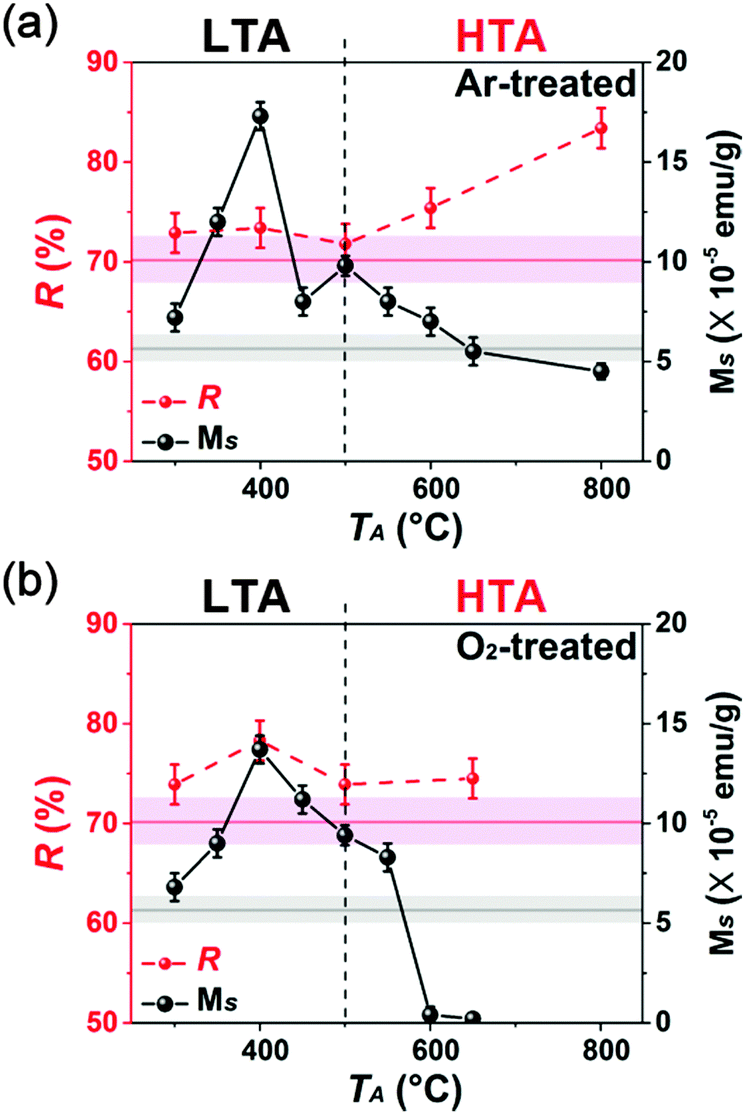 | ||
| Fig. 7 Variations of the average R ratio (red) and the corresponding Ms (black) as a function of TA obtained from Ar- (a) and O2-treated (b) pellets. Two horizontal lines (gray and pink) refer to the Ms value and the R ratio of as-prepared pellets with the corresponding estimated error bar (stripes), respectively. | ||
 | ||
| Fig. 8 Relation between the Zn/O value (a), Ms (b) and binding energy of the Zn 3d peak in physically treated samples. The error bars on binding energy represent the energy resolution of the XPS instrument. Note that the C 1s_LBE (285.8 eV) was used as a reference to calibrate Zn 3d peak position. | ||
3.5 Effect of surface contamination and chemical modification
In order to check the effect of carbon contamination on the RTFM of our ZnO pellets, the quartz tubes were intentionally contaminated by ethanol and isopropanol rinse, as described in the Experimental section. We prepared two batches of Ar-treated samples (400 °C and 800 °C) and subsequently examined them using SQUID and AR-XPS. A careful analysis shows that the RTFM is significantly reduced in the presence of surface carbon contamination, particularly the species which give rise to C 1s_HBE (see Table 1). The C 1s_HBE peaks are usually ascribed to the O–C![[double bond, length as m-dash]](https://www.rsc.org/images/entities/char_e001.gif) O bond,38 supported by our FTIR spectra. It was observed that the samples with reduced RTFM signals show higher BE of the Zn 3d peak, which matches the trend in Fig. 8 and implies that some electrons are transferred from ZnO to O–CO groups. The amount of carbon complexes is reduced in 800 °C annealed pellets but still exists inevitably, whereas we found that the O2-treated samples (TA ≥ 500 °C) have a very clean surface (not shown here). This result is not surprising because the carbon complexes could react fully in oxygen at high temperatures. Fig. 9 shows the XPS survey spectra of as-prepared, Ar-800 °C_a, and Ar-800 °C_c pellets collected without argon sputtering, which demonstrate that the studied samples are extremely pure and that even little carbon contamination can reduce RTFM significantly.
O bond,38 supported by our FTIR spectra. It was observed that the samples with reduced RTFM signals show higher BE of the Zn 3d peak, which matches the trend in Fig. 8 and implies that some electrons are transferred from ZnO to O–CO groups. The amount of carbon complexes is reduced in 800 °C annealed pellets but still exists inevitably, whereas we found that the O2-treated samples (TA ≥ 500 °C) have a very clean surface (not shown here). This result is not surprising because the carbon complexes could react fully in oxygen at high temperatures. Fig. 9 shows the XPS survey spectra of as-prepared, Ar-800 °C_a, and Ar-800 °C_c pellets collected without argon sputtering, which demonstrate that the studied samples are extremely pure and that even little carbon contamination can reduce RTFM significantly.
| Specimen | C 1s_HBE (%) | M s (emu g−1) |
|---|---|---|
| Ar-400 °C_a | 3.5 | 7.8 × 10⁻⁵ |
| Ar-400 °C_b | 2 | 12.6 × 10⁻⁵ |
| Ar-400 °C_c | 1.2 | 17.3 × 10⁻⁵ |
| Ar-800 °C_a | 7 | Paramagnetic |
| Ar-800 °C_b | 1.8 | 0.17 × 10⁻⁵ |
| Ar-800 °C_c | 0.5 | 4.5 × 10⁻⁵ |
 | ||
| Fig. 9 XPS survey spectra of as-prepared, Ar-800 °C_a, and Ar-800 °C_c pellets. Note that these XPS results were collected without Ar+ etching. The inset is the zoomed area of C 1s regions. | ||
The ethanol-treated samples show similar XPS spectra (not shown here) to those of the Ar-800 °C_b pellet. Since both of them exhibit lower ferromagnetic-like signals, we suggest that the RTFM in ZnO can be easily reduced by surface carbon adsorbates, especially the O–CO bonding. For the thiol-treated pellets, we did not observe the same characteristics in the O 1s and C 1s regions (not discussed here). But, only thiol-treated samples exhibit clear binding energy shifts of Zn and O core levels, particularly the Zn 2P3/2 peak shifted to a higher energy level by ∼1.2 eV. The presence of the S 2p peak from the sulfhydryl group (–SH) confirms that the dodecanethiol molecules bind to the Zn-terminated surface.39 The interaction between Zn and the sulfhydryl group leads to charge transfer (from the Zn to the S) that could induce RTFM as proposed in ref. 20. These XPS results unambiguously show that the surface adsorbates can have a huge impact on the electronic structure of Zn- and O-related core levels. The actual influence of this so-called ligand effect on magnetic properties requires more detailed investigations. Nevertheless, we demonstrated that just a tiny amount of carbon adsorbates could cause a huge difference in RTFM signals, especially for the samples with large grain size (e.g. Ar-800 °C pellets). As a result, it is very important to check surface conditions of specimens in order to provide convincing and reproducible evidence for the intrinsic RTFM of pure oxides.
The SQUID and XPS results shown above clearly indicate that the observed RTFM is intrinsic and controlled by surface Zn/O ratios, hydrogenation and adsorbates. However, we have to emphasize that the XPS technique is actually quite surface sensitive and therefore not suitable to directly study what is going on inside the grain boundaries. The spot size of the X-ray beam is around 200 μm throughout our XPS measurements, so the recorded XPS signals come from both bare grains and grain-boundary regions. Because the width of the grain-boundary in this studied system is very thin all of the XPS results shown above are mainly associated with the intrinsic and modified bare surfaces. To clarify the role of the grain-boundary, some nanoparticles were annealed under argon by the same procedure first, and then pressed into pellet samples. The XPS and SQUID analyses reveal that the annealed nanoparticles have similar surface stoichiometry as found in the corresponding post-annealed pellets, but they still are not ferromagnetic. The RTFM behaviour appears again after compaction, but the magnitude of Ms values is generally reduced and is enhanced only for the Ar-500 °C case in comparison with that of the post-annealed ones. For example, the pellets that were made by Ar-500 °C nanoparticles show much larger RTFM signals compared to Ar-500 °C pellets. Note that the Zn/O surface atomic ratio is increased only for samples that were annealed at 500 °C (detailed information provided in Fig. 5 of ref. 23). Therefore, it is understandable that the pellets prepared from annealed nanoparticles usually show less Ms values except the Ar-500 °C case. According to this extra test, we believe that the actual variation of chemistry in the grain-boundary regions is similar to that of the obtained XPS results, but probably slightly reduced due to higher oxygen diffusivity. In order to prevent surface contamination and monitor the change before and after post-treatments, we decided to study the annealed pellet system instead of the samples prepared from annealed nanoparticles.
Some samples were further studied by impedance and electron paramagnetic resonance (EPR) spectroscopy (detailed information will be provided elsewhere) to acquire more evidence to support the idea that the RTFM in ZnO is indeed related to the grain boundary and surface unpaired electrons. The DC and AC impedance measurements indicate that the as-prepared pellets are conducting and the free electron concentration is >5 × 109 cm−3 (mainly in the grain-boundary). Because of these free electrons, the surface charging effect is negligible in the XPS spectra. Furthermore, the preliminary EPR measurements reveal that the spin density estimated from the EPR signal with a g-factor of 1.96 increases from 9.0 × 10¹⁵ (for as-prepared) to 2.7 × 10¹⁶ (for Ar-300 °C) and 3.8 × 10¹⁶ g−1 (for Ar-500 °C). Therefore, the impedance and EPR results reveal that a significant amount of unpaired electrons are present at the surfaces or interfaces of the pellet samples, which are further enhanced after post-annealing. Besides, these electrons most likely originate from surface oxygen vacancies and dehydrogenation due to the g-value of 1.96 and our experimental conditions.40 From the corresponding Ms values, the estimated electron spin densities, assuming S = ½ for each spin, are around 6.0 × 10¹⁵, 7.8 × 10¹⁵ and 1.1 × 10¹⁶ g−1 for the as-prepared, Ar-300 °C and Ar-500 °C pellets, respectively. All of the mentioned results suggest that only parts of the unpaired electrons are exchange-coupled, and the origin for RTFM in pure ZnO is the charged surface state (unpaired electron shells) induced by surface oxygen vacancies and dehydrogenation. It is worth noting again that, in this study, the RTFM signal was only observed in the pellet samples, whereas the starting and annealed nanoparticles exhibit diamagnetism superimposed with a small amount of paramagnetism.
4. Conclusions
This systematic study experimentally demonstrates that RTFM in ZnO can be significantly affected by various post-treatments, especially after thermal annealing. Due to distinct and complicated surface modifications, we conclude that the origin of the observed RTFM should reside at the grain surface as proposed by the grain-boundary foam model. In contrast to previous reports, the variations of the surface Zn/O ratio, surface hydrogenation and RTFM in Ar-annealed pellets are quite similar to those in O2-annealed ones. This could be because all the samples were annealed in a closed system. Although the mechanism of grain growth in the annealed samples is not clear, apparently both oxygen vacancies within the grain-boundary regions and surface dehydrogenation have a great impact on the vacancy-mediated ferromagnetism of pure ZnO. Moreover, we observed that there is a potential connection between the observed saturated RTFM values and the corresponding Zn 3d binding energy. This interesting result could be experimental evidence for Coey's spin-split defect band model. Systematic investigations by techniques like Raman, impedance and EPR spectroscopy will be done in future to clarify the relation between the ferromagnetic-like signals, crystalline structure and/or conductivity. On the other hand, an enhanced RTFM signal was found in the thiol-capped ZnO pellets, which might correspond to another nature of ferromagnetism (charge-transfer ferromagnetism). Based on all of these results, we suggest that parts of the surface Zn or O atoms do not have permanently and fully filled electronic shells. Therefore, the exchange coupling between these magnetic moments (from unpaired electrons) located at the surface of neighboring particles can give rise to a different ferromagnetic-like response in pure ZnO.Acknowledgements
We would like to thank Dr Lars Jeurgens and Ms Michaela Wieland for numerous discussions and XPS measurements. SEM, FTIR, impedance and EPR studies were supported by Mr Peter Kopold, Mr Wolfgang König, Mr Chia-Chin Chen, and Dr Rotraut Merkle, respectively.References
- J. M. D. Coey, M. Venkatesan, P. Stamenov, C. B. Fitzgerald and L. S. Dorneles, Phys. Rev. B: Condens. Matter Mater. Phys., 2005, 72, 024450 CrossRef.
- A. Sundaresan, R. Bhargavi, N. Rangarajan, U. Siddesh and C. N. R. Rao, Phys. Rev. B: Condens. Matter Mater. Phys., 2006, 74, 161306 CrossRef.
- T. Tietze, M. Gacic, G. Schütz, G. Jakob, S. Brück and E. Goering, New J. Phys., 2008, 10, 055009 CrossRef.
- M. Gacic, G. Jakob, C. Herbort, H. Adrian, T. Tietze, S. Brück and E. Goering, Phys. Rev. B: Condens. Matter Mater. Phys., 2007, 75, 205206 CrossRef.
- T. S. Herng, D.-C. Qi, T. Berlijn, J. B. Yi, K. S. Yang, Y. Dai, Y. P. Feng, I. Santoso, C. Sánchez-Hanke, X. Y. Gao, A. T. S. Wee, W. Ku, J. Ding and A. Rusydi, Phys. Rev. Lett., 2010, 105, 207201 CrossRef CAS PubMed.
- D. Q. Gao, Z. H. Zhang, J. L. Fu, Y. Xu, J. Qi and D. S. Xue, J. Appl. Phys., 2009, 105, 113928 CrossRef.
- V. P. Thakare, O. S. Game and S. B. Ogale, J. Mater. Chem. C, 2013, 116, 1545–1557 RSC.
- P. Zhan, W. P. Wang, C. Liu, Y. Hu, Z. C. Li, Z. G. Zhang, P. Zhang, B. Y. Wang and X. Z. Cao, J. Appl. Phys., 2012, 111, 033501 CrossRef.
- H. You, J. C. Yang, J. Y. Zhu, W. F. Xu and X. D. Tang, Appl. Surf. Sci., 2012, 258, 4455–4459 CrossRef CAS.
- N. H. Hong, J. Sakai and V. Brizé, J. Phys.: Condens. Matter, 2007, 19, 036219 CrossRef.
- M. Khalid, M. Ziese, A. Setzer, P. Esquinazi, M. Lorenz, H. Hochmuth, M. Grundmann, D. Spemann, T. Butz, G. Brauer, W. Anwand, G. Fischer, W. A. Adeagbo, W. Hergert and A. Ernst, Phys. Rev. B: Condens. Matter Mater. Phys., 2009, 80, 035331 CrossRef.
- X. Zhang, Y. H. Cheng, L. Y. Li, H. Liu, X. Zuo, G. H. Wen, L. Li, R. K. Zheng and S. P. Ringer, Phys. Rev. B: Condens. Matter Mater. Phys., 2009, 80, 174427 CrossRef.
- T. Tietze, P. Audehm, Y.-C. Chen, G. Schütz, B. B. Straumal, S. G. Protasova, A. A. Mazilkin, P. B. Straumal, T. Prokscha, H. Luetkens, Z. Salman, A. Suter, B. Baretzky, K. Fink, W. Wenzel, D. Danilov and E. Goering, Sci. Rep., 2015, 5, 8871 CrossRef CAS PubMed.
- G. Z. Xing, Y. H. Lu, Y. F. Tian, J. B. Yi, C. C. Lim, Y. F. Li, G. P. Li, D. D. Wang, B. Yao, J. Ding, Y. P. Feng and T. Wu, AIP Adv., 2011, 1, 022152 CrossRef.
- B. B. Straumal, A. A. Mazilkin, S. G. Protasova, A. A. Myatiev, P. B. Straumal, G. Schütz, P. A. van Aken, E. Goering and B. Baretzky, Phys. Rev. B: Condens. Matter Mater. Phys., 2009, 79, 205206 CrossRef.
- J. M. D. Coey, P. Stamenov, R. D. Gunning, M. Venkatesan and K. Paul, New J. Phys., 2010, 12, 053025 CrossRef.
- M. A. Garcia, E. Fernandez Pinel, J. de la Venta, A. Quesada, V. Bouzas, J. F. Fernández, J. J. Romero, M. S. Martín González and J. L. Costa-Krämer, J. Appl. Phys., 2009, 105, 013925 CrossRef.
- M. Sawicki, W. Stefanowicz and A. Ney, Semicond. Sci. Technol., 2011, 26, 064006 CrossRef.
- J. F. Liu, E.-Z. Liu, H. Wang, N. H. Su, J. Qi and J. Z. Jiang, Nanotechnology, 2009, 20, 165702 CrossRef CAS PubMed.
- M. A. Garcia, J. M. Merino, E. F. Pinel, A. Quesada, J. de la Venta, M. L. R. González, G. R. Castro, P. Crespo, J. Llopis, J. M. González-Calbet and A. Hernando, Nano Lett., 2007, 6, 1489–1494 CrossRef PubMed.
- E.-Z. Liu and J. Z. Jiang, J. Phys. Chem. C, 2009, 113, 16116–16120 CAS.
- P. Crespo, R. Litrán, T. C. Rojas, M. Multigner, J. M. de la Fuente, J. C. Sánchez-López, M. A. García, A. Hernando, S. Penadés and A. Fernández, Phys. Rev. Lett., 2004, 93, 087204 CrossRef CAS PubMed.
- Y.-C. Chen, E. Goering, L. P. H. Jeurgens, Z. M. Wang, F. Phillipp, J. Baier, T. Tietze and G. Schütz, Appl. Phys. Lett., 2013, 103, 162405 CrossRef.
- X. Y. Xu, C. X. Xu, Y. Lin, J. T. Li and J. G. Hu, J. Phys. Chem. C, 2013, 117, 24549–24553 CAS.
- S.-Z. Deng, H.-M. Fan, M. Wang, M.-R. Zheng, J.-B. Yi, R.-Q. Wu, H.-R. Tan, C.-H. Sow, J. Ding, Y.-P. Feng and K.-P. Loh, ACS Nano, 2010, 4, 495–505 CrossRef CAS PubMed.
- J. M. D. Coey, Solid State Sci., 2005, 7, 660–667 CrossRef CAS.
- J.-I. Hong, J. Choi, S. S. Jang, J. Y. Gu, Y. L. Chang, G. Wortman, R. L. Snyder and Z. L. Wang, Nano Lett., 2012, 12, 576 CrossRef CAS PubMed.
- Q. Xu, S. Zhou and H. Schmidt, J. Alloys Compd., 2009, 487, 665–667 CrossRef CAS.
- S. Dutta, M. Chakrabarti, S. Chattopadhyay, D. Jana, D. Sanyal and A. Sarkar, J. Appl. Phys., 2005, 98, 053513 CrossRef.
- G. Ballerini, K. Ogle and M.-G. Barthés-Labrousse, Appl. Surf. Sci., 2007, 253, 6860–6867 CrossRef CAS.
- C. Wöll, Prog. Surf. Sci., 2007, 82, 55–120 CrossRef.
- M. S. Vinodh and L. P. H. Jeurgens, Surf. Interface Anal., 2004, 36, 1629–1636 CrossRef CAS.
- B. B. Zhang, T. Kong, W. Z. Xu, R. G. Su, Y. H. Gao and G. S. Cheng, Langmuir, 2010, 26, 4514–4522 CrossRef CAS PubMed.
- M. D. McCluskey and S. J. Jokela, J. Appl. Phys., 2009, 106, 071101 CrossRef.
- S. Mal, S. Nori, C. M. Jin, J. Narayan, S. Nellutla, A. I. Smirnov and J. T. Prater, J. Appl. Phys., 2010, 108, 073510 CrossRef.
- E. D. Batyrev and J. C. van den Heuvel, Phys. Chem. Chem. Phys., 2011, 13, 13127–13134 RSC.
- R. G. Xie, D. S. Li, D. R. Yang, T. Sekiguchi and M. H. Jiang, Nanotechnology, 2006, 17, 2789–2793 CrossRef CAS.
- D. R. Clarke, I. M. Ward, S. Suresh and D. Briggs, Surface analysis of polymers by XPS and static SIMS, Cambridge University Press, Cambridge, UK, 1998 Search PubMed.
- P. W. Sadik, S. J. Pearton, D. P. Norton, E. Lambers and F. Ren, J. Appl. Phys., 2007, 101, 104514 CrossRef.
- C. Drouilly, J.-M. Krafft, F. Averseng, S. Casale, D. Bazer-Bachi, C. Chizallet, V. Lecocq, H. Vezin, H. Lauron-Pernot and G. Costentin, J. Phys. Chem. C, 2012, 116, 21297–21307 CAS.
| This journal is © The Royal Society of Chemistry 2016 |