DOI:
10.1039/C6RA24654K
(Paper)
RSC Adv., 2016,
6, 98899-98907
The preparation of high-quality water-soluble silicon quantum dots and their application in the detection of formaldehyde†
Received
3rd October 2016
, Accepted 4th October 2016
First published on 11th October 2016
Abstract
This paper reports the synthesis of water-soluble fluorescence silicon quantum dots (Si QDs) through a hydrothermal route with urea propyl triethoxysilane (UPTES) as the source of silicon and sodium citrate as the deoxidizer. The UPTES was for the first time reported as the source of silicon. The preparation process is simple and green, and the prepared Si QDs exhibit high quantum yields, which would be ideal as a low-toxic material in biochemical applications. In addition, the prepared QDs emit excellent and stable fluorescence in a wide range of pH values (2–14), and show strong tolerance to salt and several common organic reagents, overcoming the weak anti-interference ability of traditional QDs and thus ensuring them as satisfactory candidates for biochemical detection. Using the prepared QDs as fluorescence probes, formaldehyde has been successfully detected in aqueous phase and acetonitrile through an electron transfer mechanism. The detection method is simple, sensitive and strongly anti-interfering, providing a new way for detecting formaldehyde in different solvents and expanding the potential applications of water-soluble low-toxic QDs in biochemical detection.
1. Introduction
The great development of water-soluble quantum dots (QDs) has shown their immense potential in biological imaging,1,2 drug delivery systems3 and detection.4,5 Apparently, their biological safety is still a hot topic.6 Si QDs have attracted more attention due to their good biocompatibility, environmental-friendliness, inexpensive raw materials and richness in their synthesis methods.
The common methods of preparing Si QDs can be classified into two types: two-step synthesis and one-step synthesis. The two-step synthesis procedures include liquid reduction methods,7 photochemical etching methods,8 high temperature pyrolysis methods9 and plasma synthesis.10 The universally-used silicon sources in two-step synthesis methods are silica powder, silicon halides, silicon Zintl salt (i.e. ASix, A = Na, K, Mg etc.), or silicon oxides,11 leading to poor water-solubility of the prepared Si QDs and inferior stability caused by easy oxidation tendency. Therefore, further modification is used to solve these problems,12,13 which would cause attendant problems like decreased fluorescence intensity of prepared QDs,14 aggregation of QDs in alkaline conditions15 and the time consuming synthesis process.16,17
On the other hand, the one-step synthesis methods contains microwave method,19 ultraviolet radiation method2 and hydrothermal route.4,5,20–22 Hydrothermal route requires no complicated and plentiful equipment, and is environmental friendly and convenient in operation, making it an appropriate method for Si QDs preparation. However, most of the fluorescence emissions of Si QDs prepared by hydrothermal route are blue, which can be easily interfered by tissue scatter and auto-fluorescence. Some team has already overcome the problem by coupling dye on the surface of Si QDs to make QDs suitable for biological imaging.18
The characteristics of the silicon source would greatly affect the synthesis factors of QDs. Recently, silicon sources for hydrothermal route are quite limited and the proposed synthesis process often take too long time (160–180 °C, 16–20 h).4,5 Filtering proper silicon sources would be significant to the shortening of interaction time, the simplification and efficiency of synthesis process. In addition, it has been proposed that silicon quantum dots synthesised by the silicon source containing two nitrogen atoms (such as N-[3-(trimethoxysilyl)propyl]ethylenediamine) possess higher quantum yield35 when compared with those prepared by APTMS, indicating that the proper nitrogen content of silicon sources will enhance the quality of prepared Si QDs. Therefore, it is necessary to develop a new silicon source containing two nitrogen atoms optimally. In addition, the diversity of silicon sources can also enriches the surface groups of Si QDs and thus extends their applications in the field of detection and analysis.
As we all known, silicon quantum dots has become an important tool in the field of biochemical detection.19–26 Since formaldehyde is harmful to both environment and human health,27 a fast, simple and sensitive detection of formaldehyde in organic reagents is essential to the purity examination of organic reagents as well as human health and natural environment protection. Many methods have been explored to realize the detection of formaldehyde, such as ultraviolet spectrophotometry,28 electrochemical sensor,29 Raman spectroscopy,30 capillary electrophoresis,31 high performance liquid chromatography,32 and fluorescent spectrometry.27,33 Some of these methods are time consuming and possess some drawbacks in selectivity and sensitivity. Therefore, a simple detection method of formaldehyde is challenging. Fluorescent spectrometry is an important research method in medicine, chemistry, biology, pharmacy and physics fields.24–26 Hitherto, the detection of formaldehyde by fluorescent probes are rarely reported, because of the necessity for the synthesis of formaldehyde-responding compounds,33 the complicated synthesis process and poor selectivity.34 In addition, most of the reports on the detection of formaldehyde focus on the interactions in aqueous and gaseous phases, and the detection in organic solvents are rarely seen in reports. Therefore, the detection of formaldehyde in organic reagents is still challenging.
This paper reports the synthesis of water-soluble Si QDs through hydrothermal route with urea propyl triethoxysilane as a new source of silicon, which greatly shortens the reaction time and enhances QYs. The prepared QDs exhibit strong salt tolerance and stability in wide range of pH values. Furthermore, with the as-prepared Si QDs as fluorescence probe, the formaldehyde has been successfully detected in aqueous phase and acetonitrile, offering new outlook for the preparation of low-toxic QDs and their applications.
2. Experimental
2.1 Chemicals
Urea propyl triethoxysilane (UPTES), 3-aminopropyltrimethoxy-silane (APTMS) and 3-aminopropyltriethoxysilane (APTES) were obtained from Aladdin Chemistry Co., Ltd (China); HCHO, Na2HPO4·12(H2O), KH2PO4, NaOH and sodium citrate were purchased from Sinopharm Chemical Reagent Co., Ltd (China); chromatographic grade acetonitrile were purchased from Tedia Company Inc (USA). All solutions were prepared using Milli-Q water as the solvent. L-929 cell line was obtained from Wuhan Bioyeargene Biotechnology Co., Ltd (China). Dulbecco's modified Eagle's medium (DMEM) and fetal bovine serum (FBS) were purchased from Hyclone Laboratories, Inc (USA). 1-Methyltetrazole-5-thiol (MTT) were purchased from Sigma Corporation (USA).
2.2 Synthesis of aqueous Si QDs
We used UPTES as the source of silicon, and trisodium citrate as the reduction reagent for the hydrothermal synthesis of the Si QDs. UPTES (1 mL) was added into sodium citrate solution (40 mM), followed by the removal of oxygen by purging with nitrogen gas for 20 min. The precursor solution was adjusted to specified pH value. Finally, the solution was transferred into a 50 mL Teflon-lined autoclave. It was loaded in an oven at 200 °C for different time and then cooled to room temperature naturally. The Si quantum dots synthetised by APTMS and APTES are performed according to the previous work.4,5
In order to purify as-prepared Si quantum dots, quadruple volume acetonitrile (volume ratio) were added into the solution of quantum dots and precipitated through centrifugation at 8000 rpm for 10 min.
2.3 Characterization
UV-visible absorption spectra were acquired with a Lambda-35 UV/visible spectrophotometer (PerkinElmer Company, USA) to determine the bandgap absorption of Si QDs. Fluorescence emission spectra were measured using LS55 spectrofluorometer (PerkinElmer Company, USA). X-ray photoelectron spectroscope (XPS) spectra were investigated at a VG Multilab 2000 X-ray photoelectron spectrometer (Thermo Electron Corporation, USA). Fourier transform infrared (FTIR) spectroscopy experiments were carried out for freeze-dried Si QDs. TEM image was obtained at 310 K magnification with an FEI Tecnai G2 20 s-twin transmission electron microscope (USA). SEM-EDS spectra were performed by the SEM-associated energy dispersive spectroscopy (EDAX GENSIS, AMETEK, USA). The relative PLQYs of as-prepared Si QDs were measured according to literatures with quinine sulfate in 0.1 M H2SO4 (QY = 58%) as a reference standard. All optical measurements were performed at room temperature under ambient conditions.
2.4 MTT
L-929 cells were trypsinized and resuspended in DMEM with 10% of FBS and 1% of penicillin/streptomycin. The cells were seeded in a 96 well microplate at a density of 1 × 10⁴ cells in 100 μL of complete DMEM culture medium, and incubated overnight at 37 °C under 5% CO2 atmosphere. The QDs were loaded in each well with a final concentration of 50, 100, 150, 200, 300, 400, 500 μg mL−1. After incubation for 24 h, 100 μL of MTT (0.5 mg mL−1) was added to each well. The medium was discarded by aspiration, and the intracellular purple formazan crystals were dissolved in 150 μL of dimethyl sulfoxide (DMSO). The plates were read for absorbance at 490 nm. Three duplicates were obtained for each concentration; the cell viability was calculated by normalizing with the results obtained with no QD-loading.
2.5 Detection of formaldehyde in aqueous solution and acetonitrile
Samples containing buffer solution (Tris–HCl, 20 mM, pH = 6.0), different amounts of formaldehyde and Si QDs (1.55 × 10⁻⁵ g mL−1) were made up to 1 mL. The emission spectrum of the solution was then measured 10 min later. All optical measurements were performed at room temperature under ambient conditions, and the excitation wavelength (λex) was 365 nm, slit width was set at 10–15.
Samples containing chromatographic grade acetonitrile, different amounts of formaldehyde and Si QDs (1.55 × 10⁻⁵ g mL−1) were made up to 1 mL. The fluorescence spectra were recorded 10 minutes later (λex = 365 nm).
3. Result and discussion
3.1 The synthesis of fluorescent Si QDs
Impact of temperature on synthesis. The optical properties of prepared QDs can be easily influenced by many factors, including temperature, reaction time, ratio of reactants, and pH value of precursors. To systematically examine the optimal factors of QDs synthesis, the above-mentioned factors have been carefully investigated. As shown in Fig. S1,† PL spectra of Si QDs grown at different heating temperatures indicate that the best reaction time should be 2 h. Then, the impact of temperature onto the QDs synthesis was investigated by setting reactant ratio at 1![[thin space (1/6-em)]](https://www.rsc.org/images/entities/char_2009.gif) :0.55 (UPTES/sodium citrate), reaction hour at 2 h and pH value at 10.0. Due to the extremely low synthesis efficiency under low temperature, the investigation mainly focused on the impact of higher temperatures (>180 °C). As shown in Fig. 1, the fluorescence intensity of prepared Si QDs enhances more than 100% when the reaction temperature rises from 180 °C to 185 °C, because of the fast core growth and the reduction of surface defects. The fluorescence intensity continues enhancing at slower pace when temperature raises from 185 °C to 200 °C. However, when reaction temperature keeps rising to above 200 °C, the fluorescence intensity greatly decreases. That is because of the existence of self-aggregation of silane37 during the process of QDs growth and the speed-up of the side-reaction caused by high temperature and the consequent deterioration of the fluorescence properties of prepared QDs. Therefore, the optimal reaction temperature is set at 200 °C.
:0.55 (UPTES/sodium citrate), reaction hour at 2 h and pH value at 10.0. Due to the extremely low synthesis efficiency under low temperature, the investigation mainly focused on the impact of higher temperatures (>180 °C). As shown in Fig. 1, the fluorescence intensity of prepared Si QDs enhances more than 100% when the reaction temperature rises from 180 °C to 185 °C, because of the fast core growth and the reduction of surface defects. The fluorescence intensity continues enhancing at slower pace when temperature raises from 185 °C to 200 °C. However, when reaction temperature keeps rising to above 200 °C, the fluorescence intensity greatly decreases. That is because of the existence of self-aggregation of silane37 during the process of QDs growth and the speed-up of the side-reaction caused by high temperature and the consequent deterioration of the fluorescence properties of prepared QDs. Therefore, the optimal reaction temperature is set at 200 °C.
 |
| | Fig. 1 PL spectra of Si QDs grown at different heating temperatures. | |
Influence of pH value of the precursor. With other factors fixed, the impact of pH value of the precursor onto the fluorescence intensity of prepared Si QDs was investigated. The experiments showed that when using sodium citrate as the deoxidizer and setting the feeding ratio of silicon source to sodium citrate at 1:0.55, the pH value of the precursor was 8.17, and the prepared Si QDs exhibit excellent optical property with some flocculent precipitate. Sodium hydroxide or hydrochloric acid was used to adjust the pH value of the precursor (6.5–11.4). As shown in Fig. 2, the fluorescence intensities of prepared Si QDs exhibit no obvious change when the pH value is in the range of 6.5 to 10.0, but the precipitate of the reaction reduced with the increase of pH value. The clear and transparent solution of QDs can be acquired with pH value at 10.0 (inset of Fig. 2). The flocculent precipitate might be the result of condensation reaction of ethoxysilane in the process of hydrolysis37 when pH value of the precursor is below 10.0. However, when further increases pH value, the fluorescence intensity exhibits obvious decrease. The intensity drops 87.6% when pH increases from 10.8 to 11.4. Therefore, the optimal pH value was set at 10.0.
 |
| | Fig. 2 PL spectra of Si QDs grown at different pH values; inset: images of as-prepared Si QDs illuminated under visible light (from left to right: pH = 6.5, 9.0 and 10.0). | |
The impact of reactants ratio. Since the process of QDs growth is firstly the formation of silanol group through the hydrolysis of silane, and then the formation of silicon–oxygen crosslinking core via the deoxidization of silanol by deoxidizer, the ratio of deoxidizer to the silicon source is also an important factor to the reaction. The ratio has been explored by setting reaction temperature at 200 °C, reaction time at 2 h and pH value of the precursor at 10.0. As shown in Fig. 3, with the ratio of sodium citrate to UPTES increases, the fluorescence intensity gradually enhances. The intensity stays stable when the ratio is above 1:0.55. That is because in a certain range of ratio, the increased presence of deoxidizer could promote the formation of QDs core and be beneficial to QDs growth. The abundant combination of deoxidizer and the silicon source could introduces new gap states in Si QDs so that more electrons transits from the lowest unoccupied molecular orbits to new energy gap states or the highest occupied molecular orbits, leading to the enhanced fluorescence intensity.2 The excess amount of deoxidizer does not produce negative effect to the synthesis system.
 |
| | Fig. 3 PL spectra of Si QDs grown at different molar ratios (UPTES/sodium citrate). | |
3.2 The characterization of fluorescent Si QDs
Fluorescence emission spectra and UV-Vis absorption spectra. Through the above optimization experiments, the fluorescent Si QDs with the best optical properties can be acquired by setting ratio of UPTES to deoxidizer sodium citrate at 1:0.55, pH value at 10.0, reaction temperature at 200 °C, and reaction time at 2 h. As shown in fluorescence emission spectra and UV-Vis absorption spectra of the as-prepared Si QDs in Fig. 4, the symmetrical fluorescence peak and the obvious UV absorption peak illustrate excellent fluorescence properties of prepared QDs. The fluorescence peak does not shift with the change of excitation wavelength, due to the homogeneous surface state formed under the high temperature and pressure in the process of hydrothermal route and the single transition mode with a certain energy rendering the emission independent from excitation wavelength.35 With quinoline sulfate as the reference (QY = 58%), the QY of prepared Si QDs reaches 27.0%.
 |
| | Fig. 4 PL spectra and UV-visible absorption spectra (inset) of as-prepared Si QDs. | |
FTIR spectrum. FTIR is a common characterization tool to judge the group types on the surface of the materials through the position, strength and number of the characteristic absorption peaks. As shown in Fig. 5, the peak at 2930 cm−1 stands for the C–H group; peaks at 680 and 1130 cm−1 stand for Si–O–Si group; peaks at 3370 and 1580 cm−1 stand for the stretching and deformation vibrations of N–H groups; the peak at 3000–3600 cm−1 stands for –OH group, resulting from the hydrolyzation of silane coupling agent under high temperature.35
 |
| | Fig. 5 FTIR spectra of the as-prepared Si QDs. | |
TEM. The TEM image of blue-emitting Si QDs (Fig. 6) shows that the resultant spherical Si QDs possess good monodispersity with the size distribution as 30 ± 0.5 nm.
 |
| | Fig. 6 TEM image of the as-prepared UPTES-Si QDs. | |
XPS. XPS is often used to analyze the valence state of elements, and surface chemical bonds of prepared QDs. As shown in Fig. 7a, the four obvious peaks at 284.6, 531.31, 101.94, 400.18 eV represent respectively for C1s, O1s, Si2p, N1s, illustrating the presence of C, O, Si and N in QDs. The high resolution XPS spectra (Fig. 7b) prove the amount of tetravalent silicon is far more than that of zero valence silicon, which is consistent with the reports in literatures.30 The result shows a three-dimensional growth of silicon nanoparticles.2 Fig. 7c exhibits the XPS spectra of N1s. From the wide peak and the existence of two sub-peaks at 399.86 eV and 400.2 eV, it can be inferred that there exists a small amount of C–NH2 besides C–N group. As shown in Fig. 7d, the combination of carbon illustrates the existence of basic carbon backbone C–C/C–H and C–Si bond. The C![[double bond, length as m-dash]](https://www.rsc.org/images/entities/char_e001.gif) O bonds mainly come from the silicon source urea propyl triethoxysilane. The results acquired from XPS spectra are identical to those from IR spectra.
O bonds mainly come from the silicon source urea propyl triethoxysilane. The results acquired from XPS spectra are identical to those from IR spectra.
 |
| | Fig. 7 XPS spectra of Si QDs: (a) overall picture, (b) Si (2p), (c) N (1s) and (d) C (1s). | |
The impacts of pH value and ion strength. For common Si QDs, their fluorescence intensities exhibit different behaviors at different pH values of the solution. One research group even designed a pH sensor based on the APTMS-prepared Si QDs, whose fluorescence intensity shows obvious changes at different pH values.22 However, as shown in Fig. 8, the Si QDs reported in this paper keep strong and stable fluorescence at pH value ranging from 4 to 14, which makes them satisfactory for the requirement of most chemical detections and biological applications. Thanks to the carbonyl groups and carbamido groups in UPTES, the richness of surface groups introduces more opportunities to form hydrogen bonds with water which may greatly strengthens QDs' tolerance to pH values and thus enhances their stability. The experiments also show that the fluorescence intensity exhibits no obvious change with sodium chloride even when its concentration reaches as high as 2 M, showing excellent tolerance to salts. This excellent stability originates from the hydrophobic alkyl chains and polar groups as hydroxyl group and amino group on the surface of Si QDs, working as a protecting shell to prevent QDs from oxidation and to stabilize them.13
 |
| | Fig. 8 pH (Left) and ionic intension (Right)-dependent PL intensity of Si QDs. | |
SEM-EDS. The EDS pattern (Fig. 9) reveals that the Si QDs contain Si, O, and N of 12.54, 32.42, and 5.56% wt concentration, respectively. In contrast, the as-prepared silicon quantum dot does contain a higher level of nitrogen when compared with that synthetised by APTMS.38
 |
| | Fig. 9 EDX pattern of Si QDs. Table in the inset presents the elemental ratios (weight and atom percentages) calculated by the EDX software (K-shell intensity ratios are indicated). | |
Cytotoxicity of the Si QDs. The biological security is always one of the important factors in the practical application of nanomaterial into biological systems. MTT assays were carried out to evaluate the potential cytotoxicity of Si QDs in vitro. The previous experiments showed that HepG2 cells viability treated by low concentration (10 μg mL−1) of CdTe QDs decreased to 70% after 24 h of incubation, and the viability greatly decreased with the enhancement of QDs concentration.36 As shown in Fig. S2,† the cell viability of Si QDs-treated L929 cells maintains above 90% even when QDs were at high concentrations (500 μg mL−1). This indicates that the Si QDs are non- or low-cytotoxic, better biocompatibility, and more suitable in the fields of biological detections.
3.3 The comparison of Si QDs synthesized through different silicon sources
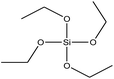
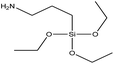
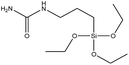
Synthesis conditions. The hydrothermal route to prepared Si QDs is appealing because of its simple requirement on equipment and excellent product properties. As can be seen in Table 1, the present hydrothermal synthesis processes of Si QDs usually require long reaction times, and synthetic efficiencies are not so satisfactory. Therefore, the filtration of ideal silicon source can not only optimize the properties of prepared Si QDs and enrich their surface groups, but also simplify the preparation procedure. Table 1 illustrates the QYs of Si QDs prepared by different silicon sources.
Table 1 QYs of Si QDs prepared by different silicon sources
| Silicon sources |
Water-solubility |
Structure |
Synthesis conditions |
QYs |
Ref. |
| SiO2 |
Not good |
 |
— |
0 |
5 |
| Si powder |
Excellent |
Si |
200 °C, 2–8 h |
12% |
21 |
| TEOS |
Excellent |
 |
— |
0 |
5 |
| APTMS |
Excellent |
 |
160 °C, 12 h |
22% |
4 |
| 180 °C, 20 h |
20.5% |
5 |
| 200 °C, 24 h |
21% |
20 |
| APTES |
Excellent |
 |
180 °C, 20 h |
17.8% |
5 |
| 200 °C, 3 h |
15% |
22 |
| UPTES |
Excellent |
 |
200 °C, 2 h |
27% |
This paper |
As an element with abundant reserve on earth, silicon exists mainly in the form of silicon dioxide, which cannot directly work as silicon source. The water-solubility of silicon sources determines their degree of participation in the reaction.5 In addition, one research group also used special silicon wafer (nitrogen-doped (n-type), 0.01–0.02 sensitivity), after being ground for one hour, to prepare Si QDs through hydrothermal route with QYs at 12%.21 Through comparing tetraethoxysilane (TEOS) and some silane coupling agents, it can be discovered that when rest of the structures are similar, the nitrogen content of silicon source would greatly influence the QYs of prepared Si QDs. Without nitrogen, TEOS could not be synthesized into fluorescent Si QDs. Since the UPTES used in our experiments contains two nitrogen atoms, the prepared Si QDs thus exhibit higher QYs than those prepared by APTMS and APTES, which contain only one nitrogen atom in their structures. Similarly, the Si QDs prepared by N-[3-(trimethoxysilyl)propyl]ethylenediamine (which also contains two nitrogen atoms) through microwave route exhibit high QYs.35 Therefore, the proper nitrogen content and space structure of the silicon source are beneficial to the formation of core and surface deactivation, leading to the enhancement of QYs of prepared Si QDs.
Yields of the products. As shown in Fig. S3,† the three silicon sources ATPMS, APTES, and UPTES themselves do not have UV absorptions. Therefore, the product yields synthesized by them can be judged by the intensity of the first exciton absorption peak of the prepared Si QDs. Three kinds of Si QDs were prepared under same optimal synthesis conditions with same amount of silicon sources. As shown in Fig. 10, the maximum absorption peaks of three Si QDs are all at 337 nm, while the absorbance value of Si QDs prepared by UPTES is 4 and 5.7 times higher than that of QDs prepared by APTMS and APTES. Therefore, it can be seen that the silicon source reported in this paper greatly enhances the yields of the products and property of prepared Si QDs, which makes it suitable for mass-production and meet the requirements of energy-saving and high-efficiency.
 |
| | Fig. 10 UV-visible absorption spectra of Si QDs synthesized by ATPMS, APTES and UPTES. | |
Growth mechanism. Through above characterization experiments, the mechanism of Si QDs prepared with UPTES as silicon source is quite similar to that of Si QDs prepared with other silane coupling agents.4,19,20,22,35 As shown in Scheme 1, in the hydrothermal process, the growth of Si QDs follows bottom-up synthesis mechanism, that is, UPTES first hydrolyzes into silanol, and then the silanol groups is three-dimensionally deoxidized2 by sodium citrate to form network-structured Si–O–Si core.35 After Ostwald ripening process, the crystal gradually grows into Si QDs, and the alkyl chain on the surface would deactivate the surface.35 What is a little different is that the silicon source UPTES used in our experiments is more prone to hydrolytic condensation and thus produces precipitate, while APTMS and APTES do not produce the similar phenomenon. This further proves, to some extent, that UPTES exhibits better reactivity, and thus shortens the reaction time and enhances QYs of prepared Si QDs.
 |
| | Scheme 1 Schematic illustration of the synthesis of Si QDs. | |
3.4 The detection of formaldehyde
The detection of formaldehyde in aqueous phase. Formaldehyde is a common and serious organic pollutant, and its harm has been penetrating into various fields of everyday life and work. The detection of formaldehyde is the base and precondition of controlling its harms. By using the prepared Si QDs as fluorescent probe, the fluorescence intensities of QDs after adding different amounts of formaldehyde have been measured. The effect of pH value on detection system is exhibited at Fig. S4,† as can be seen that the quenching degree is gradually increased with the decrease of pH value, so we fixed the pH value at 6.0. Fig. 10 shows the fluorescence spectra of QDs in the presence of various concentrations of formaldehyde in Tris–HCl buffer (20 mM, pH = 6.0). As shown from the standard curve of fluorescence intensities to formaldehyde concentration (λex = 445 nm, inset of Fig. 11), the fluorescence of QDs decreases with the enhancement of formaldehyde concentration. The quenching can be expressed with Stern–Volmer equation:
where F0 and F are the fluorescence intensity before and after the addition of formaldehyde, Ksv is the quenching constants and [c] is the concentration of formaldehyde. Through calculation, the Ksv of formaldehyde is 4.18 × 10³ L mol−1. As shown from the inset, the concentration of formaldehyde exhibits good linear relationship with fluorescence intensity in the range of 7.8 × 10⁻⁶ to 2.6 × 10⁻⁴ M, with correlation coefficient at R = 0.9990.
 |
| | Fig. 11 Emission spectra of Si QDs upon addition of formaldehyde ([HCHO] = 0, 7.8, 13.0, 19.5, 26.0, 39.0, 52.0, 97.5, 195.0, 214.5, 234.0, 260.0 × 10⁻⁶ mol L−1) with excitation at 365 nm. Inset: the linear relationship of peak intensity with respect to formaldehyde concentrations, the concentration of formaldehyde is 0 to 5.5 × 10⁻⁴ M and linear range is 7.8 × 10⁻⁶ to 2.6 × 10⁻⁴ M. | |
The interference experiments. The difficulty of formaldehyde detection lies in the exclusion of the response from interfering materials, especially those with similar structures as the target object. The method with good selectivity is thus of great significance in practical applications. Therefore, a series of common organic reagents with good water-solubility in aqueous phase have been used to examine the selectivity of our method. As shown in Fig. 12, when concentration of formaldehyde reaches 5.5 × 10⁻⁴ M, the fluorescence intensity of Si QDs has been quenching to 76.4% of their original intensity (F0/F reaches 4.24), while for acetonitrile, methanol, THF, ethanol, isopropanol, glycol, glycerin with concentration 10000 times higher than that of formaldehyde (1.5 M), their influences onto fluorescence are still negligible. For acetone with similar structure as formaldehyde, its impact is slight at the concentration 100 times higher than that of formaldehyde (4 × 10⁻² M). Although acetaldehyde has quite similar structure as formaldehyde, it exhibits no obvious impact on the fluorescence when its concentration is five times higher than that of formaldehyde (5.5 × 10⁻⁴ M). The results show that the prepared Si QDs reported in this paper exhibit excellent selectivity to formaldehyde.
 |
| | Fig. 12 Emission responses of Si QDs upon addition of different carbonyl compounds with excitation at 365 nm. The corresponding organic reagents are acetonitrile, methanol, THF, ethanol, isopropanol, glycol, glycerin (all are 1.5 M), acetone (4 × 10⁻² M), acetaldehyde (3 × 10⁻³ M), and formaldehyde (5.5 × 10⁻⁴ M). | |
The detection of formaldehyde in acetonitrile. It is known that the fluorescence intensity of water-soluble QDs can be greatly influenced by the organic reagent, often resulting in great fluorescence quenching or instability. Therefore, the common water-soluble QDs are not suitable for the detection in organic systems. However, the experiments show that Si QDs exhibit excellent and stable fluorescence in pure acetonitrile. The response of Si QDs to formaldehyde in acetonitrile was thus examined. As shown in Fig. 13, formaldehyde still possesses strong quenching ability to the fluorescence of Si QDs in acetonitrile. Through calculation, the quenching constant of formaldehyde to the fluorescence is 2.93 × 10⁵ L mol−1. Besides, the fluorescence intensity and formaldehyde concentration keep good linear relationships in the range of 3.9 × 10⁻⁷ to 1.0 × 10⁻⁵ M (11.7 ng mL−1 to 300 ng mL−1) with R at 0.9992. It is worth mentioning that we have make a comparison of different methods for detection of formaldehyde (Table 2). To date, most of the studies on the formaldehyde probes are stressed on the design of selective fluorescent probes dissolved in aqueous or gas, while the investigation of sensors in acetonitrile has never been studied. The results prove that this system can be directly applied in the detection of formaldehyde in organic reagent (acetonitrile) and even exhibits higher sensitivity than in aqueous phase.
 |
| | Fig. 13 Fluorescence spectra of the Si QD probe with addition of different formaldehyde concentrations ([HCHO] = 0, 3.9, 13.0, 26.0, 39.0, 52.0, 78.0, 104.0 × 10⁻⁷ mol L−1). Inset: relationship between fluorescence intensity ratio and various formaldehyde concentrations. | |
Table 2 Comparison of different methods for detection of formaldehyde
| Detecting medium |
Methods |
Sensing range |
Analysis time |
Ref. |
| Gas and aqueous solution |
Raman spectroscopy |
8.32 × 10⁻⁸ to 9.975 × 10⁻⁷ mol L−1 |
Incubate 12 h |
30 |
| Solid matrice and aqueous solution |
Fluorescence spectrometry |
900 nM to 1.3 × 10⁻⁴ M |
Unknown |
27 |
| Food |
HPLC |
About 1.0–100 mg L−1 |
12 min |
39 |
| Gas |
Physical method |
Unknown |
1 min |
40 |
| Gas |
UV-spectrophotometer |
0–6.4 ppm |
5 min |
28 |
| Aqueous solution |
Electrochemical method |
0.99–9.09 mmol L−1 |
Unknown |
29 |
| Aqueous solution and acetonitrile |
Fluorescence spectrometry |
7.8–260 × 10−6 mol L−1 |
10 min |
This work |
| 3.9–100 × 10−7 mol L−1 |
The quenching mechanism. Through the interfering experiments, it can be seen that even at high concentration, the reagents without carbonyl group set little impact on the system, while comparatively, the impact is greater for reagents with carbonyl group. It can be inferred that the carbonyl group can work as high-efficient electron acceptor to produce non-radiative transition through electron transfer with amido group on the surface of QDs, blocking the combination between the electron hole in valence band and the electron in conduction band, resulting in the fluorescence quenching.34 Though acetone and aldehyde have carbonyl group as formaldehyde, the existence of methyl group enhances the steric hindrance, which is harmful to the electron transfer and thus leads to inefficient fluorescence quenching of QDs. Exactly, this ensures the selectivity of the detection system.
4. Conclusion
With UPTES as the novel silicon source, this paper reports the preparation of amido-modified Si QDs. The preparation greatly shortens reaction time, improves QYs and productivity of prepared QDs. It is also simple, environment-friendly without complex deactivation and modification processes. The as-prepared Si QDs exhibit excellent tolerance to pH, salt and some organic reagents, which is beneficial to their applications in biochemical detections. Since formaldehyde could effectively quench the fluorescence of prepared Si QDs through electron transfer between the carbonyl group of formaldehyde and the amino group on the surface of QDs, the sensitive detection of formaldehyde has been realized. The interfering experiments show that this system possesses excellent selectivity to formaldehyde in both aqueous phase and acetonitrile.
Acknowledgements
This research was supported by Natural Science Foundation of Hubei Province (2016CFB615), the National Science Foundation of China (21105130), and the Fundamental Research Funds for the “Central Universities”, South Central University for Nationalities (CZY15020, CZW15017).
Notes and references
- S. J. Zhu, N. Zhou, Z. Y. Hao, S. Maharjan, X. H. Zhao, Y. B. Song, B. Sun, K. Zhang, J. H. Zhang, H. C. Sun, L. J. Lu and B. Yang, RSC Adv., 2015, 5, 39399–39403 RSC.
- Y. L. Zhong, X. T. Sun, S. Y. Wang, F. Peng, F. Bao, Y. Y. Su, Y. Y. Li, S.-T. Lee and Y. He, ACS Nano, 2015, 9(6), 5958–5967 CrossRef CAS PubMed.
- A. Paul, A. Jana, S. Karthik, M. Bera, Y. Zhao and N. D. Pradeep Singh, J. Mater. Chem. B, 2016, 4, 521–528 RSC.
- R. Ban, F. Zheng and J. Zhang, Anal. Methods, 2015, 7(5), 1732–1737 RSC.
- J. Lin and Q. Wang, RSC Adv., 2015, 5(35), 27458–27463 RSC.
- N. Chen, Y. He, Y. Su, X. Li, Q. Huang, H. Wang, X. Zhang, R. Tai and C. Fan, Biomaterials, 2012, 33(5), 1238–1244 CrossRef CAS PubMed.
- A. Shiohara, S. Hanada, S. Prabakar, K. Fujioka, T. H. Lim, K. Yamamoto, P. T. Northcote and R. D. Tilley, J. Am. Chem. Soc., 2010, 132(1), 248–253 CrossRef CAS PubMed.
- T. Matsumoto, M. Maeda, J. Furukawa, W. B. Kim and H. Kobayashi, J. Nanopart. Res., 2014, 16(3), 1–7 CrossRef.
- J. Ji, G. Wang, X. You and X. Xu, Nanoscale Res. Lett., 2014, 9(1), 1–7 CrossRef PubMed.
- D. Jurbergs, E. Rogojina, L. Mangolini and U. Kortshagen, Appl. Phys. Lett., 2006, 88(23), 233116 CrossRef.
- B. F. P. Mcvey and R. D. Tilley, Acc. Chem. Res., 2014, 47(10), 3045–3051 CrossRef CAS PubMed.
- Y. He, Y. Y. Su, X. B. Yang, Z. H. Kang, T. T. Xu, R. Q. Zhang, C. H. Fan and S. T. Lee, J. Am. Chem. Soc., 2009, 131, 4434–4438 CrossRef CAS PubMed.
- Y. L. Zhong, P. Fei, X. P. Wei, Y. F. Zhou, J. Wang, X. X. Jiang, Y. Y. Su, S. Su, S.-T. Lee and Y. He, Angew. Chem., 2012, 51(34), 8485–8489 CrossRef CAS PubMed.
- F. Erogbogbo, K. T. Yong, I. Roy, R. Hu, W. C. Law, W. W. Zhao, H. Ding, F. Wu, R. Kumar, M. Swihart and P. N. Prasad, ACS Nano, 2011, 5, 413–423 CrossRef CAS PubMed.
- Q. Li, Y. He, J. Chang, L. Wang, H. Z. Chen, Y. W. Tan, H. Y. Wang and Z. Z. Shao, J. Am. Chem. Soc., 2013, 135(40), 14924–14927 CrossRef CAS PubMed.
- J. A. Kelly and J. G. Veinot, ACS Nano, 2010, 4(8), 4645–4656 CrossRef CAS PubMed.
- M. Dasog, Z. Y. Yang, S. Regli, T. M. Atkins, A. Faramus, M. P. Singh, E. Muthuswamy, S. M. Kauzlarich, R. D. Tilley and J. G. C. Veinot, ACS Nano, 2013, 7(3), 2676–2685 CrossRef CAS PubMed.
- X. Cheng, E. Hinde, D. M. Owen, S. B. Lowe, P. J. Reece, K. Gaus and J. J. Gooding, Adv. Mater., 2015, 27(40), 6144–6150 CrossRef CAS PubMed.
- T. M. Atkins, T. Arthur, D. S. Larsen, S. Dey, N. D. Browning and S. M. Kauzlarich, J. Am. Chem. Soc., 2011, 133(51), 20664–20667 CrossRef CAS PubMed.
- J. Wu, J. Dai, Y. Shao and Y. Sun, RSC Adv., 2015, 5(102), 83581–83587 RSC.
- B. Liao, W. Wang, X. Deng, B. He, W. Zeng, Z. Tang and Q. Liu, RSC Adv., 2016, 6, 14465–14467 RSC.
- Y. Feng, Y. Liu, C. Su, X. Ji and Z. He, Sens. Actuators, B, 2014, 203(21), 795–801 CrossRef CAS.
- J. Zhang and S. H. Yu, Nanoscale, 2014, 6(8), 4096–4101 RSC.
- Y. Guo, L. Zhang, F. Cao, L. Mang, X. Lei, S. Cheng and J. Song, Anal. Methods, 2016, 8, 2723–2728 RSC.
- B. B. Campos, M. Algarra, B. Alonso, C. M. Casado, J. Jiménez-Jiménez, E. Rodríguez-Castellón and J. C. G. Esteves da Silva, Talanta, 2015, 144, 862–867 CrossRef CAS PubMed.
- J. Lin and Q. Wang, RSC Adv., 2015, 5(35), 27458–27463 RSC.
- C. Liu, C. Shi, H. Li, W. Du, Z. Li, L. Wei and M. Yu, Sens. Actuators, B, 2015, 219, 185–191 CrossRef CAS.
- A. Afkhami and H. Bagheri, Microchim. Acta, 2012, 176(1–2), 217–227 CrossRef CAS.
- T. D. Román, M. A. Alonso-Lomillo and O. Domínguez-Renedo, Talanta, 2011, 86, 324–328 CrossRef PubMed.
- Z. Y. Lv, L. P. Mei and W. Y. Chen, Sens. Actuators, B, 2014, 201(201), 92–99 CrossRef CAS.
- B. Deng, L. Yang, H. Yin, X. Ning and H. Lu, Talanta, 2012, 91(6), 128–133 CrossRef CAS PubMed.
- H. Wang, J. Ding, X. Du, X. Sun and L. Chen, Food Chem., 2012, 131(1), 380–385 CrossRef CAS.
- B. Dong, X. Song, Y. Tang and W. Lin, Sens. Actuators, B, 2016, 222, 325–330 CrossRef CAS.
- Q. Ma, H. Cui and X. Su, Biosens. Bioelectron., 2009, 25(4), 839–844 CrossRef CAS PubMed.
- F. G. Wu, X. Zhang, S. Kai, M. Zhang, H. Y. Wang, J. N. Myers, Y. Weng, P. Liu, N. Gu and Z. Chen, Adv. Mater. Interfaces, 2015, 2(16), 1–11 Search PubMed.
- S. B. Rizvi, L. Yildirimer, S. Ghaderi, B. Ramesh, A. M. Seifalian and M. Keshtgar, Int. J. Nanomed., 2012, 7, 3915–3927 Search PubMed.
- J. K. Premachandra, W. J. Van Ooij and J. E. Mark, Reaction kinetics of y – ureidopropyltrimethoxysilane in the water–methanol system studied by FTIR spectroscopy, J. Adhes. Sci. Technol., 1998, 12(12), 1361–1376 CrossRef CAS.
- Y. Zhong, F. Peng, F. Bao, S. Wang, X. Ji, L. Yang, Y. Su, S. Lee and Y. He, Large-scale aqueous synthesis of fluorescent and biocompatible silicon nanoparticles and their use as highly photostable biological probes, J. Am. Chem. Soc., 2013, 135(22), 8350–8356 CrossRef CAS PubMed.
- P. Wahed, M. A. Razzaq and S. Dharmapuri, Food Chem., 2016, 202, 476–483 CrossRef CAS PubMed.
- S. Antwi-Boampong and J. J. Belbruno, Sens. Actuators, B, 2013, 182(6), 300–306 CrossRef CAS.
Footnote |
| † Electronic supplementary information (ESI) available. See DOI: 10.1039/c6ra24654k |
|
| This journal is © The Royal Society of Chemistry 2016 |
Click here to see how this site uses Cookies. View our privacy policy here. 


