
Gold nanoparticles supported on nanoscale amine-functionalized MIL-101(Cr) as a highly active catalyst for epoxidation of styrene

Mrinal Saikiaab, Vasily Kaichevc and Lakshi Saikia*ab
aMaterials Science and Technology Division, CSIR-North East Institute of Science and Technology, Jorhat-785006, Assam, India. E-mail: lakshi_saikia@yahoo.com; Fax: +91 376 2370 011; Tel: +91 376 2370 081
bAcademy of Scientific and Innovative Research, Chennai, India
cSurface Science Laboratory, Boreskov Institute of Catalysis, Lavrentieva Ave. 5, 630090, Novosibirsk, Russia

Received 1st October 2016 , Accepted 2nd November 2016

First published on 2nd November 2016


Abstract

In this study, well dispersed gold nanoparticles (Au Nps) were embedded on an amine-functionalized nanoscale metal–organic framework MIL-101(Cr) via a simple solution approach. The resulting Au/NH2-MIL-101(Cr) exhibited a high isoelectric point (IEP) value with Brønsted basic sites that played an important role in determining the size and dispersion of Au Nps onto its matrix. In addition, the uniform nanomorphology of the catalyst provides the advantage of its good dispersion in aqueous media. The synthesized Au/NH2-MIL-101(Cr) catalyst was successfully characterized by different analytical techniques like powder X-ray diffraction, X-ray photoelectron spectroscopy, field emission scanning electron microscopy, transmission electron microscopy, Brunauer–Emmett–Teller (BET) surface area analysis, Fourier transform infrared spectroscopy (FT-IR), thermogravimetric analysis (TGA), zeta potential analysis and atomic absorption spectroscopy (AAS). The catalytic activity of the synthesized material was explored for the epoxidation of styrene using tert-butyl hydroperoxide as oxidant. The catalyst could easily be recovered and recycled up to the fourth catalytic cycle without any significant change in its catalytic activity.

1. Introduction

Metal nanoparticle (Np) catalyzed organic chemistry transformations have found much attention in recent years.1 Particularly, supported gold nanoparticles (Au Nps) have been accepted to be a very active catalyst for a number of important organic transformations such as selective oxidation reactions like oxidation of alcohols to aldehydes,2,3 oxidation of D-glucose,4 low temperature oxidation of CO,5 oxidation of ethylene glycol,6 epoxidation of propene7–9 as well as asymmetrically terminal alkenes.10–12 In addition, Au Nps have been involved as a catalyst in a wide range of non-oxidative processes such as selective hydrogenation of N–O bonds,13 hydrogenation of crotonaldehyde,14 addition to multiple C–C bonds, benzannulations,15 hydrochlorination of ethyne to vinyl chloride,16 etc. It is important to mention that catalytic activity of supported Au Nps is highly dependent upon certain key parameters like their size, dispersion, the nature of the support and its interaction with the Nps.17 Different materials such as TiO2,18 SiO2,17 Al2O3,19 CuO,18 MgO,10 Fe3O4,20 ZrO2,21 CeO2,22 CNT,23 HAP,24 SBA-15,25 HMS,26 MCM-41,27 MSU,28 TS-1,29 TS-1/SiO2,30 Ti–SiO2,31 Ti–SBA-15,32 MSN,33 Ti–MCM-41,34 TUD-1,35 TSG,36 Yb2O3,37 CaO37 and layered double hydroxide38 have already been used as catalytic supports for Au Nps to study their different catalytic activities. In this context, metal–organic frameworks (MOFs) can be used as a support for metal nanoparticles owing to its high surface area, porosity and tunable chemical properties.39,40 In fact, noble metal Nps have already been synthesized on MOFs41–43 and the combination of the porous framework structures of MOFs with metal Nps offers more efficient catalytic activities in terms of reaction times and recyclability over other catalysts.44–47

Among different MOFs, MIL-101(Cr) has already been employed as catalytic support for various noble metals Nps48 because of its hydrothermal stability, high surface area and chemical inertness. In particular, MOFs at nanoscale level having uniform and well-defined sizes and morphologies49,50 show excellent catalytic activities due to their better dispersion in aqueous and other solvents.51,52 These features of MIL-101(Cr) are also preserved in its amino analogue i.e. MIL-101-NH2 in which the amino groups are introduced into the MOF lattice either via linker modification53 or through post synthetic treatment.48 Reports are available for MIL-101(Cr) supported gold nanoparticles using different synthetic protocols like deposition–precipitation method,54 double solvent method (DSM)55,56 impregnation57 etc. Even though few reports have been available for MOF supported Au Nps,58 yet the deposition of Au Nps on MOF catalysts in solution is considered to be a challenging task.59,60 Furthermore, few studies have been carried out using nanoscale MOF as catalytic support.61,62 Therefore, applications of MOFs in heterogeneous catalysis have attracted extreme attention in recent times.63–65

Epoxidation of styrene is an important organic transformation for the synthesis of styrene oxide, an industrially important organic intermediate, widely employed for the production of valuable products such as perfumes, plasticizers, sweeteners, surfactants, paints, epoxy resins etc.66 In conventional way, epoxidation of styrene is carried out using stoichiometric amounts of peracids67 which acts as an oxidizing agent usually display some shortcomings like hazardous to handle, very expensive, non-selective toward epoxidation and lead to the formation of many undesirable products. Therefore, direct epoxidation of styrene has been found to be a promising alternative to this conventional route. Reports are available for the epoxidation of styrene by environ-friendly and safer oxidizing agents such as aqueous H2O2 or urea–H2O2 adduct,66 anhydrous H2O2[thin space (1/6-em)]68 or TBHP69,70 in presence of solid catalysts such as c-Al2O3,68 Ti–SiO2,69 TS-1[thin space (1/6-em)]67 and Ti-HMS70 yet the catalysts show low activity and selectivity towards epoxides67–70 or becomes deactivated in the presence of reaction water.68

Therefore, keep all that in mind, herein we report the synthesis of Au Nps deposited on nanosized amine functionalized MIL-101(Cr) i.e. Au/NH2-MIL-101(Cr) by employing a solution based approach and explore its catalytic activity for the epoxidation of styrene in presence of t-butyl hydroperoxide (TBHP). To the best of our knowledge there are no reports so far wherein NH2-MIL-101(Cr) is employed as support for Au NPs in epoxidation of styrene.

2. Experimental section

2.1 Materials and methods

All the chemicals are of analytical grade and used as purchased without further purification. Cr(NO3)3·9H2O and 2-aminoterephthalic acid, gold(III) chloride hydrate, sodium borohydride, are purchased from Sigma-Aldrich, USA. Tri-sodium citrate dihydrate, tert-butyl hydroperoxide (TBHP) are purchased from Spectrochem Pvt. Ltd Styrene, C2H5OH, DMF are purchased from Merck, Germany.

The X-ray diffraction (XRD) patterns of the samples are performed on Rigaku, Ultima IV X-ray diffractometer using Cu-Kα source (λ = 1.54 Å). Specific surface area, pore volume, average pore diameter are measured with the Autosorb-1 (Quantachrome, USA). X-ray photoelectron spectroscopy measurements are performed on an X-ray photoelectron spectrometer (SPECS Surface Nano Analysis GmbH, Germany) equipped with an X-ray source XR-50 with a twin Al/Mg anode, a hemispherical electron energy analyzer PHOIBOS-150. The size and morphology of the nanoparticles are observed by transmission electron microscopy (TEM) using JEOL (Model JEM-2011) equipment. Field-emission scanning electron microscopy (FE-SEM, SIGMA) is applied to investigate the size and morphology of the sample and EDS mapping was done in Oxford XMax 20 equipment. The basic property of the support is measured through CO2-TPD analysis which is carried out in an AutoChem II 2920 V4.02 instrument. The Au content of the catalyst is determined through Atomic absorption spectroscopy (AAS) measurement using PerkinElmer (Model-Analyst-700) spectrometer. TGA analysis of the material has been carried out in a TA SDT-Q600 instrument under N2 atmosphere. Gas-Chromatography (GC) analysis of the reaction is carried out in a gas chromatography (Thermo Scientific, TRACE 1300) equipped with a flame ionization detector (FID) and a Thermo Scientific (polyethylene glycol, 30 m × 0.32 mm × 0.25 μm) capillary column. Isoelectric point (IEP) value of the support are analyzed by carry out zeta potential in a Zetasizer (model no. Nano ZS), MPT-2 instrument using auto titration method. FT-IR spectra (4000–400 cm−1) are recorded on KBr discs in a Perkin-Elmer system 2000 FT-IR spectrophotometer.

2.2 Synthesis of NH2-MIL-101(Cr)

NH2-MIL-101(Cr) was synthesized according to the reported procedure by Chen et al.53 A mixture of Cr(NO3)3·9H2O (2 mmol), 2-aminoterephthalic acid (2 mmol) and sodium hydroxide (5 mmol) were dispersed and then stirring in 15 mL of de-ionized water for 5 minutes. The resulting solution was heated in a 100 mL Teflon-lined autoclave at 150 °C for 12 h. After cooling to room temperature, the green precipitate was collected by centrifugation, washed it with DMF to remove the unreacted 2-aminoterephthalic acid and then further purified by solvothermal treatment in ethanol at 100 °C for 24 h. Finally, the product was dried at 80 °C in air.

2.3 Synthesis of Au/NH2-MIL-101(Cr)

The activated NH2-MIL-101(Cr) (0.3 g) was dispersed in 50 mL of HAuCl4 (2.5 × 10⁻⁴ M) aqueous solution at a pH ∼ 3 for 10 minutes. The mixture was then stirred in a 100 mL round bottom flask for another 12 h followed by centrifugation and washed several times with de-ionized water. The resulting AuCl4NH3+-MIL-101(Cr) was then dispersed in 20 mL of de-ionized water with the addition of tri-sodium citrate dihydrate (0.0036 g) and NaBH4 (0.0056 g dissolved in 1.5 mL ice cold water) subsequently. After the addition of NaBH4, the solution was continuously stirred at room temperature for another 6 h to yield Au/NH2-MIL-101(Cr). It was observed that the colour of the resulting solid was changed from light green colour to dark green indicating the formation of Au Nps. The solid is then separated through centrifugation, repeatedly washed with de-ionized water and then dried under vacuum. The Au content (0.3 wt%) in the synthesized material was calculated from AAS technique.

2.4 Catalytic activity for epoxidation of styrene

A liquid reaction mixture containing styrene (1 mmol), TBHP (1.5 mmol) and toluene (5 mL) was stirred under reflux condition at 110 °C for a period of 8 h in presence of Au/NH2-MIL-101(Cr) (0.025 mol%). After the reaction, the reaction mixture was cooled to room temperature and the solid catalyst was separated through filtration. The products were analyzed by a Thermo Scientific, TRACE 1300 gas chromatograph equipped with a Thermo Scientific (polyethylene glycol, 30 m × 0.32 mm × 0.25 μm) capillary column and a flame ionization detector (FID).

3. Results and discussion

The synthesis of Au Nps on the amine functionalized MIL-101(Cr) was carried out using HAuCl4 as the gold precursor in presence of NaBH4 that acts as a reducing agent. Trisodium citrate was used as a stabilizer which provides the optimum citrate concentration necessary for the stabilization of the Nps. In addition, the MOF matrix, acting as a support plays its role by enhancing the distribution of HAuCl4 over its surfaces. The amine functionality of NH2-MIL-101(Cr) facilitate the absorption of [AuCl4] ions from the solution phase to the support through an electrostatic interaction between NH3+ and [AuCl4] that can be well demonstrated with UV-vis spectroscopy (Fig. S1, ESI). The peak of [AuCl4] ions at around 307 nm was completely disappeared as well as its yellow (Fig. S2, ESI) colour after the addition of the support (Fig. S1, ESI), conforming the absorption of [AuCl4] on to the support. In addition, we have calculated the isoelectric point (IEP) value of the sample by determining zeta potential as a function of pH using autotitration method (Fig. S3, ESI). The IEP value of the support was found to be 8.43, that confirms the positive surface charge of NH2-MIL-101(Cr) which facilitate the attraction of negatively charged species of [Au(OH)nCl4−n] (n = 1–4) from solution. Furthermore, the Brønsted basic sites of the support are advantageous for the formation and stabilization of small gold particles.71 We have measured the basic properties of NH2-MIL-101(Cr) by employing CO2-TPD analysis (Fig. S4, ESI). From the analysis the desorption amount of CO2 is found to be 0.1324 mmol g−1. Therefore both the IEP value of the support as well as the Brønsted basic sites plays a major role in the distribution of gold nanoparticles on NH2-MIL-101(Cr). The successful incorporation of Au Nps after the reduction of [AuCl4] to Au(0) on to the framework of NH2-MIL-101(Cr) was verified by employing different characterization techniques such as PXRD, N2-physisorption, FE-SEM, HRTEM, XPS, TGA, FT-IR analysis.

The PXRD pattern of the synthesized Au/NH2-MIL-101(Cr) (Fig. 1 (red)) remained nearly unchanged in comparison to the parent NH2-MIL-101(Cr) (Fig. 1 (blue)). The expected (111), (200), (220), (311) and (222) reflexes of face centred cubic (fcc) structure (JCPDS card no. 04-0784) of metallic72 Au were found in the diffractogram (red colour) in addition to the other characteristic peaks of the parent MOF. The broad Bragg reflection73 clearly indicate the typical nanoscale Au/NH2-MIL-101(Cr), confirming by the FE-SEM analysis (Fig. S5, ESI) where it was observed that the morphology of the support remain unaltered after loading of the Au Nps on to its matrix. FT-IR spectra (Fig. S6, ESI) display double peaks at 3463 and 3397 cm−1 which could be attributed to the asymmetrical and symmetrical stretching of the amine moieties.74,75 Two other characteristics bands of amino group were observed at 1624 cm−1 and 1338 cm−1 that could be ascribed as the N–H bending (scissoring) vibration and C–N stretching absorption respectively. It was observed that after incorporation of the Au nanoparticles (Fig. S6 (red), ESI), the chemical functionality of parent MOF remains unchanged that clearly confirmed the robustness of the support. The EDS (Fig. 2(a)) and mapping analysis (Fig. 2(b)) showed the distribution of Au Nps along with the different elements present in the material which was further confirmed by the XPS analysis (Fig. S7, ESI) showing peaks of binding energies at 83.8 eV and 87.4 eV assigned to 4f7/2 and 4f5/2 of Au(0). The specific surface area and pore volumes of synthesized materials were evaluated by the N2 physisorption analysis at 77 K (Fig. 3). The BET surface area of NH2-MIL-101(Cr) and Au/NH2-MIL-101(Cr) were determined to be 1502 m2 g−1 and 1055 m2 g−1 with pore volumes 1.674 cm3 g−1 and 0.594 cm3 g−1 respectively. The BJH plot (Fig. S8, ESI) further confirms the uniform pore distribution of the support after incorporation of Au Nps on it. The considerable decrease in the surface area and pore volume of Au/NH2-MIL-101(Cr) clearly indicates that the cavities of NH2-MIL-101(Cr) were occupied either by the highly dispersed Au Nps or potential blockage of the pores by the Nps.


image file: c6ra24458k-f1.tif
Fig. 1 PXRD pattern of NH2-MIL-101(Cr) (blue), fresh Au/NH2-MIL-101(Cr) (red) and recovered Au/NH2-MIL-101(Cr) (black).

image file: c6ra24458k-f2.tif
Fig. 2 (a) EDS analysis of Au/NH2-MIL-101(Cr), (b) mapping of different elements of Au/NH2-MIL-101(Cr).

image file: c6ra24458k-f3.tif
Fig. 3 N2 adsorption isotherm of NH2-MIL-101(Cr) (red) and Au/NH2-MIL-101(Cr) (black) and recovered Au/NH2-MIL-101(Cr) (blue).

The morphological evaluation of Au Nps in the Au/NH2-MIL-101(Cr) was investigated through TEM analysis (Fig. 4). From the images it was observed that the synthesized Au NPs were highly dispersed on the MOF matrix with a narrow size distribution between 2 and 10 nm (Fig. 4(e)) which may be attributed to the presence of amine functionality attached to the framework structure that stabilizes the ion pair (NH3)+AuCl4 as well as the effect of trisodium citrate, acting as stabilizer for the Nps formed upon treatment of NaBH4. HR-TEM image of a single Au Np (Fig. 4(d)) shows lattice fringes with fringe spacing about 0.23 nm further confirms the fcc (111) structure of Au(0) crystals. Thermal stability of the synthesized Au/NH2-MIL-101(Cr) material (Fig. S9, ESI) was examined through thermogravimetric analysis (TGA). Two major weight loss step has been obtained, the first step in the range 30–100 °C (calculated loss 8%) is due to the loss of adsorbed water molecules and the second weight loss step in the range 300–600 °C (calculated loss 34%) may ascribed to the framework decomposition as shown by the corresponding derivative curve.


image file: c6ra24458k-f4.tif
Fig. 4 (a–c) TEM images of Au/NH2-MIL-101(Cr) (a–c), (d) HRTEM image of a Au(0) NP showing the lattice fringes and (e) size distribution of Au Nps.

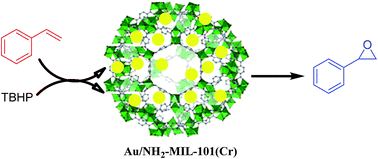
The catalytic activity of Au/NH2-MIL-101(Cr) was tested for the epoxidation of styrene in presence of TBHP (Scheme 1). The effect of various key parameters like catalyst dosage, temperature, solvent was also examined in order to get the optimized reaction condition. The effect of different mol% of the catalyst was summarized in Table 1. With neat NH2-MIL-101(Cr), the reaction was not proceeded, ensuring the catalytic role of Au Nps on the MOF support to carry out the chemical transformation. With increase in the mol% of the catalyst, both the conversion of the reaction and selectivity to styrene oxide was increased and attained maximum conversion (88.2%) and selectivity (74.7%) (Table 1, entry 3) with 0.025 mol% of the catalyst which could be attributed to the increase in the number of catalytically active centres with increase in catalyst dosage. However, beyond 0.025 mol%, conversion of the reaction decreased abruptly (44.1%) with slightly increase in the selectivity (78.2%) (Table 1, entry 4). Hence, 0.025 mol% was taken as the optimized catalyst dosage for this epoxidation reaction and all further studies were performed using this amount of catalyst.


image file: c6ra24458k-s1.tif
Scheme 1 Epoxidation of styrene using Au/NH2-MIL-101(Cr) as catalyst.
Table 1 Effect of catalyst dosagea
Entry Catalyst dosage (mol%) Conversion (%) Selectivity (%)
Styrene oxide Benzaldehyde Phenylacetaldehyde Other products
a Reaction condition: styrene (1 mmol), TBHP (1.5 mmol), toluene (5 mL), time (8 h), temperature (110 °C), GC conversion and selectivity.
1 0.008 59.7 35.5 44.6 0.0 19.8
2 0.016 84.0 40.3 33.0 2.1 24.4
3 0.025 88.2 74.7 0.0 0.4 24.9
4 0.038 44.1 78.2 0.0 0.6 21.2


The effect of different solvent system in the styrene epoxidation was examined by employing solvents having different polarities (Table 2). The highest conversion was obtained in DMF (96.7%) (Table 2, entry 2) with a very low styrene oxide selectivity (5.6%) (Table 2, entry 2). In case of acetone, although a highest selectivity towards styrene oxide was obtained (85.3%) (Table 2, entry 3), yet the conversion of the reaction was found to be low (7.6%) (Table 2, entry 3). A moderate reaction conversion and styrene oxide selectivity was observed in ethanol, acetonitrile and THF solvent system (Table 2, entry 5, 1, 7) while DCM displayed lowest reaction conversion (5.1%) (Table 2, entry 4) with medium styrene oxide selectivity (58.3%) (Table 2, entry 4). In comparison to other solvents, toluene showed better reaction conversion (88.2%) (Table 2, entry 6) as well as selectivity for styrene oxide (74.7%) (Table 2, entry 6). Under solvent free condition (Table 2, entry 8) no formation of styrene oxide was obtained although the conversion of the reaction was around 97.8% with 95.5% selectivity towards the side products. Hence, toluene was found to be the most suitable solvent for this reaction and all further studies were performed in toluene.

Table 2 Effect of solventsa
Entryb Solvents Conversion (%) Selectivity (%)
Styrene oxide Benzaldehyde Phenylacetaldehyde Other products
a Reaction condition: styrene (1 mmol), TBHP (1.5 mmol), solvent (5 mL), time (8 h), Au/NH2-MIL-101(Cr) (0.025 mol%), reflux condition, GC conversion and selectivity.b H2O2 = no reaction, air = conversion (7.2%), selectivity (100%), TBHP = conversion (88.2%), selectivity (74.7%).
1 Acetonitrile 29.4 78.5 0.08 11.2 10.1
2 DMF 96.7 5.6 6.5 0.0 87.8
3 Acetone 7.6 85.3 14.6 0.0 0.0
4 DCM 5.1 58.3 0.0 41.3 0.2
5 Ethanol 47.1 42.7 0.0 3.4 53.8
6 Toluene 88.2 74.7 0.0 0.4 24.9
7 THF 14.5 70.2 5.7 0.0 24.0
8 Solvent free 97.8 0.0 4.4 0.0 95.5


The effect of different oxidizing agents like H2O2, air and TBHP was also explored for the epoxidation of styrene using our catalytic system (Table 2). With H2O2 the reaction was not proceeded while with air the reaction conversion was found to be 7.2% with 100% styrene oxide selectivity. Using TBHP as oxidizing agent, maximum conversion of 88.2% was observed with 74.7% selectivity towards styrene oxide and therefore, TBHP was found to be an appropriate oxidizing agent for the mentioned chemical reaction.

The reaction temperature had a pronounced effect on styrene epoxidation as listed in Table 3. At room temperature the reaction was not proceeded as indicated by reaction conversion <1% (Table 3, entry 1). Increase in reaction temperature resulted in the increase in conversion (Table 3, entry 2–5) and slightly increased in selectivity at high temperature (Table 3, entry 3–5). Temperature above 110 °C was found to be detrimental for the reaction (Table 3, entry 6) as the conversion of the styrene was decreased with slight increase in styrene oxide selectivity, perhaps due to the instability of the BuO/OH radical species at high temperature. At 110 °C the reaction conversion and selectivity to styrene oxide were maximum (Table 3, entry 5), establishing it as the optimum reaction temperature for the chemical transformation.

Table 3 Effect of temperaturea
Entry Temperature (°C) Conversion (%) Selectivity (%)
Styrene oxide Benzaldehyde Phenylacetaldehyde Other products
a Reaction condition: styrene (1 mmol), TBHP (1.5 mmol), toluene (5 mL), time (8 h), Au/NH2-MIL-101(Cr) (0.025 mol%), GC conversion and selectivity.
1 RT <1 18.3 0.0 0.0 81.6
2 50 1.3 32.4 34.5 1.2 31.6
3 70 30.9 73.8 0.0 10.0 16.1
4 90 53.3 73.6 0.0 1.2 25.0
5 110 88.2 74.7 0.0 0.4 24.9
6 120 66.5 76.6 0.0 0.0 23.3


The effect of reaction time in the epoxidation of styrene was also studied and the results are summarized in Table S1, ESI. After 4 h of the reaction, the styrene conversion was found to be 55.9% with 84.4% selectivity to styrene oxide (Table S1, entry 1, ESI). Extension of reaction time from 4 h to 8 h led to a significant increase in reaction conversion with slight decrease in selectivity (Table S1, entry 2, ESI). However, further increase in reaction time from 8 h to 12 h (Table S1, entry 3, ESI) resulted in the increase of conversion with a very low selectivity towards styrene oxide may be attributed to the sequential oxidation of styrene oxide to benzaldehyde and/or phenyl acetaldehyde as the reaction proceeds.61

The influence of the amount of TBHP in the styrene epoxidation was observed and the results were summarized in Table 4. Without TBHP, the reaction was not move forward with a very low conversion of 1.1%. With the increase of amount of TBHP (Table 4, entry 1–3), the conversion increased continually from 50.9% (Table 4, entry 1) to 88.2% (Table 4, entry 3) whereas the selectivity to styrene oxide decreased from 87.9% (Table 4, entry 1) to 74.7% (Table 4, entry 3). However, further increased in the TBHP amount (Table 4, entry 4) resulted low conversion and selectivity. All these observations clearly confirmed the requisite TBHP amount, i.e. 1.5 mmol for carried out the epoxidation reaction.

Table 4 Effect of amount of TBHPa
Entry Amount of TBHPc (mmol) Conversionb (%) Selectivity (%)
Styrene oxide Benzaldehyde Phenylacetaldehyde Other products
a Reaction condition: styrene (1 mmol), Au/NH2-MIL-101(Cr) (0.025 mol%), toluene (5 mL), time (8 h), temperature (110 °C).b GC conversion and selectivity.c Without TBHP, conversion = 1.1%.
1 0.5 50.9 87.9 0.0 0.97 11.06
2 1 61.2 84.0 0.0 1.3 14.5
3 1.5 88.2 74.7 0.0 0.35 24.9
4 3 48.4 18.2 49.5 10.0 22.1


In order to assess the efficiency of the present catalytic system, different Au based catalytic system was screened based on the reactivity and selectivity to epoxides (Table S2, ESI) under similar reaction conditions. The present Au/NH2-MIL-101(Cr) exhibited excellent catalytic activity as compared to the previously reported catalysts available in the literature. The key advantages of our protocol are low catalyst dosage, facile recovery and reusability, high TOF etc. Furthermore, the high surface area of the parent MOF that provides not only a better dispersion of the Au Nps but also controls its size which seemed to be a critical role in enhancing its catalytic activity.

The heterogeneous nature of catalyst was evaluated by removing the catalyst from the reaction medium after 4 h of the reaction and then allowed the reaction to run for another 4 h. No further increase in the styrene conversion was observed after the removal of the catalyst. The atomic absorption spectroscopic (AAS) analysis revealed the absence of the Au in the supernatant solution of the reaction mixture, confirming that the Au Nps were not leached out from the NH2-MIL-101(Cr) matrix during the reaction condition, establishing the true heterogeneous nature of the catalyst.

A plausible reaction mechanism has been proposed for the epoxidation reaction catalysed by Au/NH2-MIL-101(Cr) in presence of TBHP. In fact the reaction was proceeded through the formation of a hydroperoxy species ((I) Scheme 2) which undergo dehydration and rearrangement to form peroxyformate intermediate ((II) Scheme 2). Styrene is then activated on the surface of Au Nps via its nucleophilic C[double bond, length as m-dash]C group and further reacts with O–O group of peroxyformate intermediate through a side-by-side interaction to yield species (III) (Scheme 2). The final product of the reaction, i.e. styrene oxide is formed through a metallo epoxy intermediate by the transfer of oxygen to the olefinic bond of styrene. The formation of benzaldehyde may be attributed to the breaking of the C–C bond of the species (III) whereas phenylacetaldehyde is formed through isomerisation of styrene oxide.76


image file: c6ra24458k-s2.tif
Scheme 2 Plausible reaction mechanism for the epoxidation of styrene in the presence of Au/NH2-MIL-101(Cr).

The reusability of the catalyst is an important feature of heterogeneous catalyst that makes it economically preferable over homogeneous catalyst. After completion of the reaction the catalyst was separated through filtration, washed it with acetone for several times and then dried in an oven at 70 °C for 5 h. The catalyst was then further employed for the next catalytic runs under identical reaction condition. It was observed that the catalyst showed effective catalytic performance upto fourth catalytic cycles without any significant loss of its catalytic activity (Fig. 5) which was in good agreement with the results of PXRD, FE-SEM, TEM, FT-IR analysis of the recovered catalyst. PXRD analysis (Fig. 1 (black)) of the recovered catalyst displayed the conservation of its crystallinity to that of the fresh one. The nanoscale morphology of the support i.e. NH2-MIL-101(Cr) was well maintained in the recovered catalyst as indicated by the FE-SEM analysis (Fig. S5(c), ESI). The EDS-mapping analysis of the recovered catalyst (Fig. S10, ESI) further clarified the presence of Au Nps on the support after the catalytic runs. The dispersion of the Au Nps in the recovered catalyst (Fig. S11, ESI) was well preserved during the chemical transformation as demonstrated by TEM analysis. The BET surface area of the recovered catalyst was found to be 947 m2 g−1 (Fig. 3, (blue)) which was slightly lower than that of the fresh catalyst may be owing to the blockage of pores of the support by the reactant molecules. From the FT-IR analysis (Fig. S6, (blue), ESI) it was observed that the chemical functionality of parent MOF remained unchanged after the catalytic cycles, confirming the robustness of the support. Finally all the results clearly signified the true heterogeneous nature of the synthesized Au/NH2-MIL-101(Cr) material as well as the robustness of the host matrix.


image file: c6ra24458k-f5.tif
Fig. 5 Catalyst recycling test for Au/NH2-MIL-101(Cr).

4. Conclusion

The work demonstrated the Au NPs embedded on an amine-functionalized nanoscale metal–organic framework by a facile solution approach. The resultant Au/NH2-MIL-101(Cr) exhibited excellent catalytic activity for the epoxidation of styrene in the presence of aqueous TBHP. Low catalyst dose, high turnover frequency (TOF) and reusability make this method superior to some of the reported catalytic methods available in the literature. The better catalytic activity may be owing to the high surface area of the parent MOF with high isoelectric point value (IEP) and the presence of Brønsted basic sites together provides a better dispersion of the catalytically active Au nanoparticles that results a better catalytic activity of the catalyst. Furthermore, the catalyst is easily separable and recyclable up to fourth catalytic cycles without much change in its catalytic activity and selectivity. The present work also demonstrated that the chemical functionalization can significantly improves the catalytic activity of MOF materials which can be extended to other metal NPs for implementing important organic transformations.

Acknowledgements

The authors are grateful to the Director of CSIR-North East Institute of Science and Technology, Jorhat, Assam, India for his kind permission to publish the work. We are thankful to Dr P. Sengupta, Head of Materials Sciences and Technology Division for support, and non network project MLP-6000 (WP-1) and network project (CSC-0408) project for financial assistance. M. S. acknowledges DST New Delhi for an INSPIRE fellowship.

References

  1. P. Hervés, M. Pérez-Lorenzo, L. M. Liz-Marzán, J. Dzubiella, Y. Lu and M. Ballauff, Chem. Soc. Rev., 2012, 41, 5577 RSC.
  2. T. Mallat and A. Baiker, Chem. Rev., 2004, 104, 3037 CrossRef CAS PubMed.
  3. G. Zhan, J. Huang, M. Du, D. Sun, I. Abdul-Rauf, W. Lin, Y. Hong and Q. Li, Chem. Eng. J., 2012, 187, 232 CrossRef CAS.
  4. Y. Onal, S. Schimpf and P. Claus, J. Catal., 2004, 223, 122 CrossRef CAS.
  5. M. Haruta, S. Tsubota, T. Kobayashi, H. Kageyama, M. J. Genet and B. Delmon, J. Catal., 1993, 144, 175 CrossRef CAS.
  6. H. Berndt, I. Pitsch, S. Evert, K. Struve, M.-M. Pohl, J. Radnik and A. Martin, Appl. Catal., A, 2003, 244, 169 CrossRef CAS.
  7. T. A. Nijhuis, T. Visser and B. M. Weckhuysen, Angew. Chem., Int. Ed., 2005, 44, 1115 CrossRef CAS PubMed.
  8. B. Chowdhury, J. J. Bravo-Suárez, M. Daté, S. Tsubota and M. Haruta, Angew. Chem., Int. Ed., 2006, 118, 426 CrossRef.
  9. M. M. Du, G. W. Zhan, X. Yang, H. X. Wang, W. S. Lin, Y. Zhou, J. Zhu, L. Lin, J. L. Huang, D. H. Sun, L. S. Jia and Q. B. Li, J. Catal., 2011, 283, 192 CrossRef CAS.
  10. N. Patil, B. Uphade, P. Jana, S. Bhargava and V. Choudhary, J. Catal., 2004, 223, 236 CrossRef CAS.
  11. X. Y. Deng and C. M. Friend, J. Am. Chem. Soc., 2005, 127, 17178 CrossRef CAS PubMed.
  12. M. Turner, V. B. Golovko, O. P. H. Vaughan, P. Abdulkin, A. Berenguer-Murcia, M. S. Tikhov, B. F. G. Johnson and R. M. Lambert, Nature, 2008, 454, 981 CrossRef CAS PubMed.
  13. A. Corma and P. Serna, Science, 2006, 313, 332 CrossRef CAS PubMed.
  14. R. Zanella, C. Louis, S. Giorgio and R. Touroude, J. Catal., 2004, 223, 328 CrossRef CAS.
  15. A. Corma and H. Garcia, Chem. Soc. Rev., 2008, 37, 2096 RSC.
  16. G. J. Hutchings, J. Catal., 1985, 96, 292 CrossRef CAS.
  17. Y. Jin, D. Zhuang, N. Yu, H. Zhao, Y. Ding, L. Qin, J. Liu, D. Yin, H. Qiu, Z. Fu and D. Yin, Microporous Mesoporous Mater., 2009, 126, 159 CrossRef CAS.
  18. N. S. Patil, B. S. Uphade, D. G. McCulloh, S. K. Bhargava and V. R. Choudhary, Catal. Commun., 2004, 5, 681 CrossRef CAS.
  19. N. S. Patil, R. Jha, B. S. Uphade, S. K. Bhargava and V. R. Choudhary, Appl. Catal., A, 2004, 275, 87 CrossRef CAS.
  20. C. Huang, H. Zhang, Z. Sun, Y. Zhao, S. Chen and R. Tao, J. Colloid Interface Sci., 2011, 364, 298 CrossRef CAS PubMed.
  21. B. Tyagi, B. Shaik and H. C. Bajaj, Appl. Catal., A, 2010, 383, 161 CrossRef CAS.
  22. Y. Zhu, H. Qian, A. Das and R. Jin, Chin. J. Catal., 2011, 32, 1149 CrossRef CAS.
  23. J. H. Liu, F. Wang, T. Xu and Z. G. Gu, Catal. Lett., 2010, 134, 51 CrossRef CAS.
  24. Z. Opre, T. Mallat and A. Baiker, J. Catal., 2007, 245, 482 CrossRef CAS.
  25. Y. Jin, P. Wang, D. Yin, J. Liu, H. Qiu and N. Yu, Microporous Mesoporous Mater., 2008, 111, 569 CrossRef CAS.
  26. X. Lu and Y. Yuan, Appl. Catal., A, 2009, 365, 180 CrossRef CAS.
  27. Q. Tang, Q. Zhang, H. Wu and Y. Wang, J. Catal., 2005, 230, 384 CrossRef CAS.
  28. N. Yu, Y. Ding, A.-Y. Lo, S.-J. Huang, P.-H. Wu, C. Liu, D. Yin, Z. Fu, D. Yin, C.-T. Hung, Z. Lei and S.-B. Liu, Microporous Mesoporous Mater., 2011, 143, 426 CrossRef CAS.
  29. S. Saxena, R. Dwivedi, S. Bhadauria, V. Chumbhale and R. Prasad, J. Chem. Technol., 2010, 12, 72 Search PubMed.
  30. X. Wang, X. Zhang, Y. Wang, H. Liu, J. Wang, J. Qiu, H. L. Ho, W. Han and K. L. Yeung, Chem. Eng. J., 2011, 175, 408 CrossRef CAS.
  31. Q. H. Yang, C. Li, S. D. Yuan, J. Li, P. L. Ying, Q. Xin and W. D. Shi, J. Catal., 1999, 183, 128 CrossRef CAS.
  32. Y. Guo, L. Zhengwang, W. Guangjian, Y. Huang and F. Kang, Appl. Surf. Sci., 2011, 258, 1082 CrossRef CAS.
  33. D. Tang, W. Zhang, Y. Zhang, Z.-A. Qiao, Y. Liu and Q. Huo, J. Colloid Interface Sci., 2011, 356, 262 CrossRef CAS PubMed.
  34. G. Wang, G. Liu, M. Xu, Z. Yang, Z. Liu, Y. Liu, S. Chen and L. Wang, Appl. Surf. Sci., 2008, 255, 2632 CrossRef CAS.
  35. S. Mandal, A. SinhaMahapatra, B. Rakesh, R. Kumar, A. Panda and B. Chowdhury, Catal. Commun., 2011, 12, 734 CrossRef CAS.
  36. Y. Bai, W. Hu, J. Xu and Y. Bao, J. Non-Cryst. Solids, 2011, 357, 1074 CrossRef CAS.
  37. V. R. Choudhary and D. K. Dumbre, Top. Catal., 2009, 52, 1677 CrossRef CAS.
  38. F. Zhang, X. Zhao, C. Feng, B. Li, T. Chen, W. Lu, X. Lei and S. Xu, ACS Catal., 2011, 1, 232 CrossRef CAS.
  39. T. R. Cook, Y. R. Zheng and P. J. Stang, Chem. Rev., 2013, 113, 734 CrossRef CAS PubMed.
  40. H. Furukawa, K. E. Cordova, M. O'Keeffe and O. M. Yaghi, Science, 2013, 341, 1230444 CrossRef PubMed.
  41. L. J. Shen, W. M. Wu, R. W. Liang, R. Lin and L. Wu, Nanoscale, 2013, 5, 9374 RSC.
  42. J. L. Long, H. L. Liu, S. J. Wu, S. J. Liao and Y. W. Li, ACS Catal., 2013, 3, 647 CrossRef CAS.
  43. H. L. Jiang, T. Akita, T. Ishida, M. Haruta and Q. Xu, J. Am. Chem. Soc., 2011, 133, 1304 CrossRef CAS PubMed.
  44. A. Dhakshinamoorthy and H. Garcia, Chem. Soc. Rev., 2012, 41, 5262 RSC.
  45. H.-L. Jiang, B. Liu, T. Akita, M. Haruta, H. Sakurai and Q. Xu, J. Am. Chem. Soc., 2009, 131, 11302 CrossRef CAS PubMed.
  46. J. Zhu, P. C. Wang and M. Lu, Appl. Catal., A, 2014, 477, 125 CrossRef CAS.
  47. L. Shen, M. Luo, L. Huang, P. Feng and L. Wu, Inorg. Chem., 2015, 54, 1191 CrossRef CAS PubMed.
  48. Y. K. Hwang, D. Y. Hong, J. S. Chang, S. H. Jhung, Y. K. Seo, J. H. Kim, A. Vimont, M. Daturi, C. Serre and G. Férey, Angew. Chem., Int. Ed., 2008, 47, 4144 CrossRef CAS PubMed.
  49. E. A. Flügel, A. Ranft, F. Haase and B. V. Lotsch, J. Mater. Chem., 2012, 22, 10119 RSC.
  50. M. Y. Masoomi and A. Morsali, RSC Adv., 2013, 3, 19191 RSC.
  51. C. Carné, C. Carbonell, I. Imaz and D. Maspoch, Chem. Soc. Rev., 2011, 40, 291 RSC.
  52. A. Carné-Sánchez, I. Imaz, M. Cano-Sarabia and D. Maspoch, Nat. Chem., 2013, 5, 203 CrossRef PubMed.
  53. Y. Lin, C. Kong and L. Chen, RSC Adv., 2012, 2, 6417 RSC.
  54. Z. Sun, G. Li, L. Liu and H.-O. Liu, Catal. Commun., 2012, 27, 200 CrossRef CAS.
  55. Y. Liu, S.-Y. Jia, S.-H. Wu, P.-L. Li, C.-J. Liu, Y.-M. Xu and F.-X. Qin, Catal. Commun., 2015, 70, 44 CrossRef CAS.
  56. Q. L. Zhu, J. Li and Q. Xu, J. Am. Chem. Soc., 2013, 135, 10210 CrossRef CAS PubMed.
  57. J. J. Alcañiz, J. F. Soria, I. Luz, P. S. Crespo, E. Skupien, V. P. Santos, E. Pardo, F. X. L. I. Xamena, F. Kapteijn and J. Gascon, J. Catal., 2013, 307, 295 CrossRef.
  58. H. Liu, Y. Liu, Y. Li, Z. Tang and H. Jiang, J. Phys. Chem. C, 2010, 114, 13362 CAS.
  59. R. B. Wu, X. K. Qian, K. Zhou, H. Liu, B. Yadian, J. Wei, H. W. Zhu and Y. Z. Huang, J. Mater. Chem. A, 2013, 1, 14294 CAS.
  60. H. L. Liu, Y. L. Liu, Y. W. Li, Z. Y. Tang and H. F. Jiang, J. Phys. Chem. C, 2010, 114, 13362 CAS.
  61. Y. Luan, Y. Qi, H. Gao, N. Zheng and G. Wang, J. Mater. Chem. A, 2014, 2, 20588 CAS.
  62. M. Saikia and L. Saikia, RSC Adv., 2016, 6, 14937 RSC.
  63. A. Corma, H. García, F. X. Llabrés and I. Xamena, Chem. Rev., 2010, 110, 4606 CrossRef CAS PubMed.
  64. J. Y. Lee, O. K. Farha, J. Roberts, K. A. Scheidt, S. T. Nguyen and J. T. Hupp, Chem. Soc. Rev., 2009, 38, 1450 RSC.
  65. D. Farrusseng, S. Aguado and C. Pinel, Angew. Chem., Int. Ed., 2009, 48, 7502 CrossRef CAS PubMed.
  66. S. C. Laha and R. Kumar, J. Catal., 2001, 204, 64 CrossRef CAS.
  67. D. Swern, Organic Peroxides, Wiley Interscience, New York, 1971, vol. 2 Search PubMed.
  68. S. V. R. Choudhary, N. S. Patil and S. K. Bhargava, Catal. Lett., 2003, 89, 55 CrossRef.
  69. Q. Yang, S. Wang, J. Lu, G. Xiong, Z. Feng, Q. Xin and C. Li, Appl. Catal., A, 2000, 195, 507 CrossRef.
  70. J. S. Sotelo, R. Van Grieken and C. Martos, Chem. Commun., 1999, 549 RSC.
  71. D. Yin, L. Qin, J. Liu, C. Li and Y. Jin, J. Mol. Catal. A: Chem., 2005, 240, 40 CAS.
  72. Y. Chen, X. Gu, C.-G. Nie, Z.-Y. Jiang, Z.-X. Xie and C.-J. Lin, Chem. Commun., 2005, 4181 RSC.
  73. S. H. Jhung, J. H. Lee, J. W. Yoon, C. Serre, G. Férey and J. S. Chang, Adv. Mater., 2007, 19, 121 CrossRef CAS.
  74. J. Gascon, U. Aktay, M. D. Hernandez-Alonso, G. P. M. vanKlink and F. Kapteijn, J. Catal., 2009, 261, 75 CrossRef CAS.
  75. M. Kandiah, M. H. Nilsen, S. Usseglio, S. Jakobsen, U. Olsbye, M. Tilset, C. Larabi, E. A. Quadrelli, F. Bonino and K. P. Lillerud, Chem. Mater., 2010, 22, 6632 CrossRef CAS.
  76. P. Cancino, V. Paredes-García, P. Aguirre and E. Spodine, Catal. Sci. Technol., 2014, 4, 2599 CAS.

Footnote

Electronic supplementary information (ESI) available. See DOI: 10.1039/c6ra24458k

This journal is © The Royal Society of Chemistry 2016
Click here to see how this site uses Cookies. View our privacy policy here.