Enhanced ethanol gas sensing performance of zinc–tin–vanadium oxide nanocomposites at room temperature

M. Chitraa, K. Uthayarani*a, N. Rajasekaranb, N. Neelakandeswarib, E. K. Girijac, D. Pathinettam Padiyand and G. Mangammae
aDepartment of Physics, Sri Ramakrishna Engineering College, Coimbatore 641022, India. E-mail: uthayarani.karunakaran@srec.ac.in
bDepartment of Chemistry, Sri Ramakrishna Engineering College, Coimbatore 641022, India
cDepartment of Physics, Periyar University, Salem 636011, India
dDepartment of Physics, Manonmaniam Sundaranar University, Abhishekapatti, Tirunelveli 627012, India
eSurface and Nanoscience Division, Material Science Group, Indira Gandhi Centre for Atomic Research, Kalpakkam, Tamilnadu 603102, India

Received 27th September 2016 , Accepted 17th November 2016

First published on 17th November 2016


Abstract

A zinc–tin–vanadium oxide (ZTV) nanocomposite is synthesised via a hydrothermal route followed by calcination, characterised by various state-of-the-art techniques and tested for ethanol sensing behaviour (0–300 ppm) at room temperature. The synergistic effect made ZTV a unique ethanol sensor (98.96%) with a fast adsorption and desorption rate of 32 s and 6 s, respectively. The morphological contribution from the zinc–tin oxide nanocomposite (ZT) and zinc–vanadium oxide nanocomposite (ZV) in the ZTV system provides a larger surface area which in turn promotes a higher number of surface active sites for the adsorption of ethanol molecules on the surface. The catalytic activity along with different reductive–oxidative states had a larger impact on the enhanced ethanol sensing ability of the ZTV system even at room temperature. In this present work, the novel material, ZTV which exhibits excellent ethanol sensing characteristics at room temperature is investigated and the mechanism behind the sensing behaviour of ZTV is elucidated based on its structure and morphology.

1. Introduction

The release of toxic gases, emission of volatile organic compounds and leakage of inflammable gases from industries and household articles pollutes the environment and leads to health hazards for humans. Hence, the focus of research on gas sensing technology marches due to the increasing concern for such environmental and security reasons in both domestic and industrial areas. Mainly, the emission of volatile organic compounds (VOCs) from various sources1 affects the atmospheric air resulting in ill effects. Among the sensors based on VOCs, ethanol (C2H5OH) sensing plays a vital role in monitoring food quality and in the fermentation industry. The main objective of fabricating a portable ethanol sensor is to prevent accidents due to vehicles driven by drunken drivers. Nowadays, monitoring ethanol consumption from human breath is aided by using integrated technology in cellphones and air quality monitoring system installed in cars. To have such wide applicability with high sensitivity, selectivity, stability, quick response and fast recovery at a lower cost, the metal oxide semiconductor (MOS) devices have been employed as gas sensors from the early days. Numerous reports are available for ethanol detection using ZnO, SnO2, TiO2, In2O3, V2O5, CuO etc.1–4 The utilization of ZnO and SnO2 as ethanol sensors has a long history. But, the main drawback of using these MOS is the need for a high operating temperature to maximize the sensing performance. The heating component required to achieve such high temperatures consumes more power, requires complex device packaging process and also costs high. Hence low cost ethanol sensor without the elevated operating temperature is of superior importance to achieve portability.5 Hence, research is being carried out to enhance the sensing characteristics of these MOS at room temperature by mastering the morphology and the structure of sensing materials. This is further accomplished by reducing the grain size, doping the metals, loading noble metals, synthesizing novel composite materials and so on.

Nowadays, investigations have been made to reduce the operating temperature by various researchers. The flower like ZnO nanorods reported by Chen et al. exhibit good response even after decreasing the temperature from 300 °C to 140 °C. Ag nanoparticle embedded ZnO nanorods and Au doped ZnO nanowires6 works better at operating temperatures of 250 °C and 325 °C respectively. The morphological effect of SnO2 nanowire exhibits a better response and selectivity towards 500 ppm of ethanol at 260 °C. Fe-doped ZnO thin film shows good response (>70) at 300 K but the response time seems to be higher.7 Only few reports are available for ethanol sensors at room temperature and a vast study over these reported MOS for ethanol detection reveals that the thermal stability has significant impact on the sensing performance and the change in microstructures in due course deteriorates sensitivity. Hence, significant research has been devoted to migrate from single metal oxides to complex multi-component materials.8 It is also reported that the addition of a second component as a surface modifier is used as active sites for redox processes and promotes free charge carriers resulting in the increase of electrical conductance. Based on this concept, zinc and tin compound oxides with special nanostructures reported by Peng Sun et al. show high sensing performance to ethanol at 275 °C due to their ultra high surface to volume ratio.9 Various coupled oxides such as core shell ZnO–SnO2 nanowires,10 Zn2SnO4 nanoparticles,11 ZnO–In2O3 nanotubes,12 ZnO–V2O5[thin space (1/6-em)]13 are available in the scenario for ethanol detection with high selectivity and sensitivity. All these reported nanocomposites exploring as ethanol sensors show thermal stability but they demand elevated operating temperature rather than room temperature. This retards their usage as a portable device and hence we put forth our investigations in analyzing the structural, morphological, optical properties of three individual (ZnO, SnO2, V2O5) oxides, their equimolar binary and ternary combinations on ethanol sensing applications at room temperature.

Zinc oxide (ZnO) and tin oxide (SnO2) have been primarily chosen for their range of conductance variability and their significant response towards both oxidative and reductive gases. The search for a third metal oxide into the matrix of these zinc–tin compounds promises vanadium oxide because of its redox ability. This is further supported by the report on TiO2–V2O5 nanocrystals for ethanol detection14 which has hoisted our attention strongly towards vanadium pentoxide (V2O5) to couple with zinc and tin.

2. Experimental details

2.1 Preparation of individual, binary and ternary oxides

The chemicals zinc chloride (ZnCl2), stannous chloride dihydrate (SnCl2·2H2O), vanadium chloride (VCl3), glyoxalic acid monohydrate (C2H2O3·H2O) and ammonia solution (NH4OH) were purchased from Rankem and were used as such without further purification. Double distilled water was employed as the solvent. The common protocol employed for the synthesis of individual, binary and ternary oxide is shown in the Fig. 1. 0.1 M aqueous solution of ZnCl2 was taken and 0.1 M glyoxalic acid was added dropwise to it under constant stirring. Further, ammonia was added to adjust the pH to 9. The gel was then transferred into a Teflon-lined stainless-steel autoclave and was maintained at 160 °C for 3 h. The filtrate was collected, washed with absolute ethanol and deionised water for several times and dried in air. The products were calcined at 600 °C for 3 h and this resulted in ZnO. The procedure shown in Fig. 1 was followed for the preparation of SnO2 and V2O5 by appropriately changing the precursor as SnCl2·2H2O and VCl3 respectively.
image file: c6ra24047j-f1.tif
Fig. 1 Flowchart for the synthesis.

Equimolar combination of ZnCl2 and SnCl2·2H2O were taken and 0.2 M glyoxalic acid was added dropwise to it under constant stirring. The procedure explained for ZnO was followed and the product obtained was named as ZT. Likewise, ZV was synthesized using the precursors ZnCl2 and VCl3 and TV using SnCl2·2H2O and VCl3 via the same protocol (Fig. 1).

0.3 M aqueous solution of ZnCl2, SnCl2·2H2O and VCl3 was prepared and 0.3 M glyoxalic acid was added under constant stirring. Ammonia was further added dropwise to adjust the pH to 9. Similar procedure was followed and the product obtained was named as zinc–tin–vanadium oxide nanocomposite (ZTV).

3. Characterization techniques

The XRD pattern of all the samples were recorded using PANalytical X'Pert PRO diffractometer in 2θ ranging from 20–80°. The average crystallite size was calculated using the Scherrer formula and the lattice parameters of ZnO were also calculated. The lattice parameters of ZnO, SnO2 and V2O5 were calculated using the following equations respectively.15
 
image file: c6ra24047j-t1.tif(1)
 
image file: c6ra24047j-t2.tif(2)
 
image file: c6ra24047j-t3.tif(3)
where ‘h’, ‘k’ and ‘l’ are miller indices, ‘a’, ‘b’ and ‘c’ represent the lattice parameters and ‘θ’ is the angle of diffraction in degrees. The strain in the lattice was calculated using the formula
 
image file: c6ra24047j-t4.tif(4)
where ‘d’ is idealized d-spacing and ‘Δd’ is deviation from d.16 The phase composition of the composite ZT was calculated using the formula
 
image file: c6ra24047j-t5.tif(5)
where I(hkl) is the intensity of the phase of interest and is the sum of the intensities of all the phases. FT-IR spectra of the samples were recorded in the 400–4000 cm−1 region using a Perkin Elmer RX1 FT-IR spectrophotometer by KBr pellet technique. The surface morphology of the samples was recorded using ZEISS ultra field emission scanning electron microscopic (FESEM) analysis. TEM image of the sample ZTV was recorded using JOEL JEM 2100 Transmission microscope. Selective area electron diffraction pattern (SAED) was also recorded using the same instrument. The specific surface area of the samples was analysed using Brunauer–Emmett–Teller (BET) analysis based on the nitrogen adsorption–desorption isotherm and the pore size distribution (PSD) from the Barrett–Joyner–Halenda (BJH) plot obtained with a micromeritics apparatus.

One gram of the sample is taken and is made into a pellet of 13 mm diameter at a pressure of 2 tons using hydraulic pellet press. The pellet was sandwiched between the two silver electrodes inside the gas sensing apparatus17 and the apparatus was tightly closed. The electrodes were in turn connected to the Agilent sourcemeter Model B2901A with specifications 100 fA (minimum measurement resolution), 210 V, 3 A DC/10.5 A (maximum output). An electrical current pulse was applied to the testing sample and the corresponding voltage signal was measured with high accuracy. Initially, the reading was taken in the air atmosphere. The ppm calculation for ethanol has been performed in relation to the volume of the stainless chamber. Appropriate quantity of the test gas is taken using an insulin syringe and is injected through the rubber cork in steps of 10 ppm up to 300 ppm and the change in voltage at a constant current for various concentrations of ethanol was measured and the resistance can be calculated using Ohm's law. The response magnitude was calculated using the formula as in equation17

 
image file: c6ra24047j-t6.tif(6)
which is described as the ratio of the modulus of magnitude of change in resistance upon exposure to ethanol vapour to that of in air without vapour. The response time and recovery time was calculated from the time verses voltage plot and it is defined as the time needed to reach 90% and 10% of the base line resistance after the injection and removal of ethanol respectively.

4. Results and discussion

4.1 XRD analysis

The peaks obtained in the X-ray diffraction pattern of Fig. 2(a) were indexed and found to match with the standard ICDD file of ZnO (36-1451) and the sample exhibited wurtzite structured hexagonal phase of ZnO.18 The lattice parameters were calculated as ‘a’ = 3.208 Å and ‘c’ = 5.211 Å which lie close to that of the standard values. The sharp and intense peak indicates the crystalline nature of the material. XRD pattern of SnO2 (Fig. 2(b)) when compared with ICDD file no. 41-1445 showed the existence of tetragonal rutile structure and indexed accordingly.19 The strongest peak corresponding to the plane (101) of the rutile structure suggests the anisotropic growth of the SnO2 crystals. The lattice parameters ‘a’ and ‘c’ were calculated as 4.655 Å and 3.151 Å respectively. Powder XRD pattern of zinc and tin metal oxides ZT is presented in Fig. 2(c). XRD of ZT was compared with the standard ICDD of both the individual metal oxides and its possible binary combinations. The pattern matches with the ICDD file no. 36-1451 for ZnO, ICDD file no. 41-1445 for SnO2 and ICDD file no. 24-1470 for Zn2SnO4 and were indexed separately in Fig. 1(c). Two sharp peaks at (311) and (422) of the secondary phase corresponding to the spinel Zn2SnO4 were also observed. The diffractogram displayed a preferential orientation to the ZnO reflection at 2θ ∼ 36.195°, SnO2 reflection at 2θ ∼ 26.476° and Zn2SnO4 reflections at 2θ ∼ 34.290° and 51.796°. From the analysis using the formula for phase composition, 22% and 45% of the individual oxides such as ZnO and SnO2 were present and the remaining 33% was the binary phase Zn2SnO4. The peaks show a little shift towards lower angle when compared to that of the peaks of individual oxides. There is only a negligible variation in the lattice parameters, since the ionic radii of Zn2+ (0.79 Å) is larger than Sn4+ (0.68 Å), Zn would not have entered as a dopant into the SnO2 crystal lattice. Meanwhile the diffraction peaks of the composite material got broadened when compared to that of the individual oxides which indicates the smaller crystallite size of the sample. The lattice strain observed due to the secondary phase was 0.0005. Such existence of similar phases was reported for an equimolar (1[thin space (1/6-em)]:[thin space (1/6-em)]1) mixture of Zn/Sn nanocomposite at a higher calcination temperature.20,21 Similar shift towards smaller angle for the peak (101) is observed for ZnSnxO composite as reported22 in which the formation of the composite along with the SnO2 enhances the formaldehyde sensing property. Along with the weaker peaks of SnO2 and ZnO, the presence of stronger Zn2SnO4 in the composite symptomatizes an interaction between the components of the composites. This is further supported by the reduction in the grain growth of the nanorods observed for ZT from the SEM image (Fig. 10(c)).
image file: c6ra24047j-f2.tif
Fig. 2 XRD patterns of (a) ZnO, (b) SnO2 and (c) ZT.

The diffractions of vanadium oxide given in Fig. 3(b) matches well with standard diffraction file (41-1426). It exhibits orthorhombic structured V2O5 with lattice constant values resembling the standard values.23 No other phases like VO2, V2O6, V2O3, V3O5 are observed which reveals the purity of the sample. XRD pattern of ZV in Fig. 3(c) was also compared with the standard ICDD of both the individual metal oxides (ZnO and V2O5) and its possible binary combinations. The peaks obtained matches the hexagonal wurtzite structured ZnO (ICDD no. 36-1451), orthorhombic structured V2O5 (ICDD no. 41-1426), ZnV2O6 (ICDD no. 23-0757) and ZnV3O8 (ICDD no. 71-0731). A sharp intense peak around 28.925° corresponds to ZnV2O6 and the peaks at 18.075°, 43.605°, 54.905°, 63.075°, 61.85°, 70.905°, 72.325° and 77.315°correspond to ZnV3O8. The individual phases ZnO and V2O5 were found to be 31% and 30% respectively and the mixed phase ZnV2O6 and ZnV3O8 were found to be around 23% and 16% respectively. ZV composite experienced a slight shift towards higher angle and suffer feeble variation in the lattice parameters. Similar reports are available for the shift towards higher angle which might be ascribed to the substitution of V5+ ions into the Zn2+ lattice.24 The lattice strain calculated was 0.0015.


image file: c6ra24047j-f3.tif
Fig. 3 XRD patterns of (a) ZnO, (b) V2O5 and (c) ZV.

The XRD pattern shown in Fig. 4(c) corresponds to the TV composite. The peaks at 38.375°, 52.365° and 64.95° matches with the ICDD no. 41-1445 and correspond to the tetragonal rutile structured SnO2. The peaks at 26.945°, 34.315°, 53.85°, 58.505° and 62.405° match with the ICDD no. 41-1426 and correspond to the orthorhombic structured V2O5. Further no other binary phases were observed. The low intensity peaks of TV when compared to the diffractograms of pure SnO2 and pure V2O5 prepared by the same procedure clearly indicates the poor crystallinity of the sample. From the analysis using the formula for phase composition, it is observed that the individual phase SnO2 and V2O5 were found to be 40% and 60% respectively. This might also be due to the substitution of Sn atoms by V atoms.25,26 The lattice strain experienced by the composite material is 0.0025.


image file: c6ra24047j-f4.tif
Fig. 4 XRD patterns of (a) SnO2, (b) V2O5 and (c) TV.

XRD pattern of ZTV is shown in Fig. 5. The distinct peaks obtained for ZTV were compared with the individual oxides of SnO2, ZnO, V2O5 and various binary combinations of these oxides. Phases such as SnO2 (28%) [ICDD no. 41-1445], Zn2SnO4 (19%) (ICDD no. 24-1470), ZnV2O6 (36%) (ICDD no. 23-0757) and ZnV3O8 (17%) (ICDD no. 71-0731) were found to exist in the composite sample ZTV. Peaks at 26.685° and 51.885° match well with the tetragonal rutile structure of SnO2 with d-spacing and calculated lattice parameters for the above peaks have no deviation from the standard values (a = 4.738 Å and c = 3.187 Å).


image file: c6ra24047j-f5.tif
Fig. 5 XRD pattern of ZTV.

The lattice strain was calculated and given in Table 1. It was observed that the peaks at 28.645° and 38.975° match closely with the diffraction peaks of ZnV2O6, however, strain observed can be attributed to the entry of Sn into ZnV2O6 lattice. Similarly the strain observed in the diffractions at 51.885°, 54.975°, 57.845°, 62.195°, 60.65°, 66.305° and 71.635° could be attributed to the entry of Sn into a binary lattice (ZnV3O8). The peaks at 34.015° and 60.445° correspond to Zn2SnO4 also experience strain which may be due to the entry of V with ionic radius 0.068 nm into the Zn2SnO4 lattice. Above facts suggest the formation of the ternary oxide consisting of Zn, Sn and V metal ions.

Table 1 d’-Spacing and induced strain of ZTV
2θ (degrees) Observed d (Å) Strain Reason (binary oxide, third metal ion)
26.685 3.3470 0.0000 SnO2
28.645 3.1153 0.0115 ZnV2O6, Sn
34.015 2.6308 0.0065 Zn2SnO4, V
38.975 2.3573 0.0192 ZnV2O6, Sn
51.885 1.7642 0.0000 SnO2
54.975 1.6733 0.0004 ZnV3O8, Sn
57.845 1.5949 0.0017 ZnV3O8, Sn
60.445 1.5267 0.0024 Zn2SnO4, V
62.195 1.4904 0.0003 ZnV3O8, Sn
60.605 1.4358 0.0029 ZnV3O8, Sn
66.305 1.4119 0.0024 ZnV3O8, Sn
71.635 1.3194 0.0039 ZnV3O8, Sn


4.2 FTIR analysis

FT-IR spectra of ZnO, SnO2 and ZT are presented in Fig. 6. It is observed that both the individual and binary combinations of zinc and tin oxide show strong absorbance band around 3500 cm−1 which corresponds to the stretching vibration of H–OH. The band around 1500 cm−1 occurs due to the bending vibrations (O–H) between oxygen and hydrogen atoms. A broad absorption band occurs between 600 cm−1 and 950 cm−1 in all the three samples which might be due to the symmetric stretching vibration of ZnO and SnO2 groups and this band could be assigned to the Sn–O–Zn bonding in the Zn2SnO4.27–30
image file: c6ra24047j-f6.tif
Fig. 6 FT-IR spectra of (a) ZnO, (b) SnO2 and (c) ZT.

FT-IR spectra of ZnO, V2O5 and ZV are presented in Fig. 7. The strong absorbance band corresponding to the stretching vibration of H–OH occurs at around 3500 cm−1 for ZnO, V2O5 and ZV nanocomposite. The band between 1500 cm−1 and 1700 cm−1 occurs due to the bending vibration of O–H bonds. The M–O bands occur between 800 cm−1 and 1000 cm−1 for the individual metal oxides. Especially, the obtained vanadium oxide phase is characterized by an intense band around 1001 cm−1 which is attributed to the terminal V[double bond, length as m-dash]O bonds in crystalline V2O5. The band around 834 cm−1 can be associated with the short stretching vibrations of V[double bond, length as m-dash]O bonds and these bands have undergone a slight shift towards higher wavenumber for ZV nanocomposite.


image file: c6ra24047j-f7.tif
Fig. 7 FT-IR spectra of (a) ZnO, (b) V2O5 and (c) ZV.

In the FT-IR spectrum of TV presented in Fig. 8, the absorbance band corresponding to the stretching vibration of H–OH and the bending vibration of O–H bonds occurs around 3500 cm−1 and 1500 cm−1 respectively. The M–O–M bands occur between 600 cm−1 and 900 cm−1 for the composite material. The band around 650 cm−1 of the composite material has experienced a slight shift towards higher wavenumber compared to SnO2 and the band around 800 cm−1 has undergone a shift towards lower wavenumber compared to V2O5.27–30 The shift in the wavenumbers might be attributed to the influence of Sn in the V2O5 matrix forming V–O–Sn bond. Though the formation of the binary phase is not sensitive to the XRD instrument, M–O–M band in FTIR confirms the composite formation. FT-IR spectrum of ZTV is shown in Fig. 9. The absorbance band around 3700 cm−1 is due to H–O–H stretching and the band around 1500 cm−1 is due to the bending vibration of O–H which is attributed to the terminal hydroxide. The bands around 900 cm−1, 600 cm−1 and 500 cm−1 might be due to the presence of either M–O–M or M–O bonding in the composite material.27


image file: c6ra24047j-f8.tif
Fig. 8 FT-IR spectra of (a) SnO2, (b) V2O5 and (c) TV.

image file: c6ra24047j-f9.tif
Fig. 9 FT-IR spectrum of ZTV.

4.3 Morphological studies

FE-SEM image of ZnO in Fig. 10(a) clearly portrayed uniform nanorods with hexagonal facets. The nanorods were around 380 nm in length and 95 nm in diameter. The hexagonal facets were around 70 nm. FE-SEM image of SnO2 in Fig. 10(b) shows uniform distribution of nanoparticles with grain size around 50 nm. FE-SEM image of the ZT composite in Fig. 10(c) depicted both the smaller spherical and larger hexagonal structured nanoparticles clouded among the irregular nanorods. Among that, the hexagonally faceted nanorods of length around 70 nm and diameter around 30 nm correspond to ZnO and the spherical shaped nanoparticles of grain size around 20 nm correspond to SnO2. The presence of hexagonal shaped nanoparticles of about 20 nm may correspond to the existence of the secondary phase Zn2SnO4. The Sn atoms present in the ZnO lattice might have inhibited the growth of ZnO nanorods resulting in hexagonal facets and this fact is further supported by the decrease in the intensity as evidenced from the XRD pattern (Fig. 2). The nanorods in the matrix of the nanoparticles could increase the surface area and it might provide more surface active sites for the adsorption of gas molecules.20
image file: c6ra24047j-f10.tif
Fig. 10 FE-SEM image of (a) ZnO, (b) SnO2 and (c) ZT.

FE-SEM image of V2O5 sample shown in Fig. 11(b) revealed nanoparticles of grain size around 5 nm (inset of Fig. 11(b)) distributed over the microflakes with well defined grain boundaries. The microflakes were about 4 μm in length and 1 μm in diameter. FE-SEM image of the composite ZV shown in Fig. 11(c), exhibited randomly distributed aggregated nanorods (ZnO) of length ranging from 600–800 nm and diameter around 200 nm. The spherical shaped V2O5 nanoparticles of size within 20 nm were observed to be dispersed over the nanorods. Unlike the smooth surface of ZnO nanorods (observed in individual ZnO phase), in ZV composite, V2O5 nanoparticles got attached over the nanorods resulting in surface irregularity. Similar result has been reported for particulated V2O5 over the ZnO nanorods.31


image file: c6ra24047j-f11.tif
Fig. 11 FE-SEM image of (a) ZnO, (b) V2O5 and (c) ZV.

FE-SEM image of TV composite is shown in Fig. 12(c). This composite has fine nanoparticles of grain size around 25 nm. The reduction in the grain size of SnO2 may be due to the presence of V2O5 which was also observed in the vanadium loaded tin oxide.25 The EDAX of SnO2 (inset of Fig. 12(a)) reveals the presence of Sn and O alone and that of TV (inset of (Fig. 12(c))) reveal the presence of Sn, V and O. There occurs a reduction in size of the particle from 50 nm to 25 nm and the amorphous nature of the composite material is further confirmed from the decrease in intensity of the peaks in XRD (Fig. 4(c)).


image file: c6ra24047j-f12.tif
Fig. 12 FE-SEM image of (a) SnO2, (b) V2O5 and (c) TV.

FE-SEM image of the nanocomposite ZTV is shown in Fig. 13(a). It exhibited hierarchical flower like microstructure with enormous petals and minute pores. The flower like microstructure is composed of nanoflakes (thin nanorods) having 326 nm length and 13 nm width which was found to extend axially from the center. The respective EDAX analysis on the individual flake indicated the presence of excess amount of Zn (13.86 atomic%) than Sn (9.41 atomic%) and V (11.72 atomic%). In addition, the composite also exhibited spherical nanoparticles with 11 nm diameter in which excess Sn (9.09%) is identified from its elemental composition (for Zn – 7.46 atomic% and V – 7.13 atomic%). This is in agreement with the results obtained from XRD data. Low magnification HRTEM image of ZTV shows both hexagonally faceted and spherical shaped nanoparticles of size ranging from 10–20 nm (Fig. 13(b)). The d-spacing for SnO2 (0.332 nm), ZnV2O6 (0.312 nm), Zn2SnO4 (0.262 nm) and ZnV3O8 (0.165 nm) obtained from high magnification HRTEM is shown in Fig. 13(c) was in close match with the corresponding standard values. It also clearly revealed the orientation of atoms in different planes indicating its polycrystalline nature which was further supported by SAED pattern shown in Fig. 13(d).


image file: c6ra24047j-f13.tif
Fig. 13 (a) FE-SEM image of ZTV. (b) HRTEM image of ZTV. (c) High magnification HRTEM image of ZTV. (d) SAED pattern of ZTV.

4.4 Surface area analysis

The sensitivity of the material depends on the surface area and also the nature of pores. The nitrogen adsorption–desorption isotherm obtained for all the samples exhibited type IV with type H3 hysteresis loop for the relative pressure P/P0 in the range of 0.1–1. This indicated the mesoporous nature of the material.9 The surface area of all the samples was calculated using BET analysis and was shown in Fig. 14. From the Fig. 14, it is understood that the binary combinations of the metal oxides possess larger surface area when compared to their respective individual oxides, where the secondary component led to the increase of specific surface area and henceforth could increase the sensing characteristics. It is also evident that the ternary nanocomposite ZTV is found to have larger surface area compared to the individual and binary oxides. The synergistic effect of the hierarchical nanostructured ZTV offers large surface area which could favor more interaction of gas molecules on the surface.
image file: c6ra24047j-f14.tif
Fig. 14 Surface area values of all the samples.

4.5 Gas sensing measurements

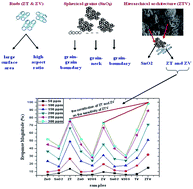
All the prepared samples were tested for ethanol (0–300 ppm) sensing property at room temperature using the gas sensing apparatus. The response magnitude was calculated for all the samples and was plotted for different concentration of ethanol vapour and is depicted in Fig. 15. The response time and recovery time was calculated from the respective time verses voltage plot of all the samples shown in Fig. 16–19. Generally, the gas sensing mechanism for n-type semiconductor oxides can be explained based on the change in resistance which is caused by the adsorption and desorption of gas molecules over the surface of the sensing layer.32–35 Molecules interact with surfaces with forces originating either from the physical van der Waals interaction or from the chemical hybridization of their orbitals with those of the atoms of the oxides.
image file: c6ra24047j-f15.tif
Fig. 15 Response magnitude plot of all the samples and the mechanism for better sensing characteristics of ZTV.

image file: c6ra24047j-f16.tif
Fig. 16 Time verses voltage plot of (a) ZnO, (b) SnO2 and (c) ZT towards 100 ppm of ethanol.

image file: c6ra24047j-f17.tif
Fig. 17 Time verses voltage plot of (a) ZnO (b) V2O5 and (c) ZV towards 100 ppm of ethanol.

image file: c6ra24047j-f18.tif
Fig. 18 Time verses voltage plot of (a) SnO2 (b) V2O5 and (c) TV towards 100 ppm of ethanol.

image file: c6ra24047j-f19.tif
Fig. 19 Time verses voltage plot of ZTV.

When the oxides are surrounded by air, oxygen molecules will get adsorbed on the surface and hence it generates chemisorbed oxygen species by capturing electrons from the conduction band. It results in the decrease of electron density on the surface of these nanostructures. Hence, depletion region will be formed on the surface which in turn results in the increase of sensor resistance. After sufficient adsorption to reach the equilibrium state of the chemisorption process, the surface resistance is stabilized by the decrease of the carrier concentration. The oxygen adsorption reaction kinematics can be described as follows32–35

 
O2 (gas) ↔ O2 (adsorbed) (7)
 
O2 (adsorbed) + e ↔ O2 (8)
 
O2 + e ↔ 2O22− (9)
 
O22− + e ↔ O2 + O2− (10)

When the ethanol molecules are exposed to the surface of these nanorods or nanoparticles or flakes at the room temperature, the vapor molecules will react with the adsorbed oxygen species and form CO2 and H2O. This helps to reinject the trapped electrons back to the depletion layer. Hence the width of the depletion layer gets decreased and the sensor resistance gets further decreased accordingly. The reaction mechanism between ethanol and ionic oxygen species can be written as

 
C2H5OH (gas) ↔ C2H5OH (adsorbed) (11)
 
C2H5OH (adsorbed) ↔ C2H4 (gas) + H2O (gas) (12)
 
C2H5OHads + 6Oads ↔ 2CO2 + 3H2O + 12e (13)

The net reaction is as below:

 
C2H4 (gas) + H2O (gas) + 6O (adsorbed) ↔ 2CO2 (gas) + 3H2O (gas) + 6e (14)

4.5.1 Mechanism for ZTV system. In a single component, say for ZnO, the sensitivity increases linearly with increase in concentration from 0 ppm to 250 ppm in steps of 10 ppm and it was 51.98% towards 250 ppm of ethanol. In a similar fashion, SnO2 and V2O5 systems exhibit a linear response of 42.92% and 30.98% respectively. In case of binary systems, ZT shows better response than the individual oxides and the other two binary oxides. The sensitivity of ZT is 77.93% which is better than ZV and TV whose response is 72.97% and 63.99% respectively. Response time and recovery time of ZT is 68 s and 79 s respectively which is faster than the other two systems (Fig. 16). Between 250 ppm and 300 ppm, the response gets saturated which may be due to the multimolecular layers formed on the surface of the samples as well as the non availability of active sites for the further adsorption of ethanol molecules.36 However the three component system, zinc–tin–vanadium oxide nanocomposite exhibits linear response of 98.96% from 0–300 ppm at a faster adsorption–desorption rate of 32 s and 6 s respectively.

ZTV experienced well pronounced sensing behaviour towards ethanol at room temperature when compared to the studied individual oxides such as ZnO, SnO2 and V2O5 and binary oxides such as ZT, ZV and TV. The parameters like crystallite size, morphology and surface area have great impact on the sensing characteristics and are compared and tabulated in Table 2. The better sensing characteristics of ZTV at room temperature might be ascribed to the following reasons

Table 2 Comparison of parameters influencing sensing characteristics of all the samples
Sample Crystallite size D (nm) Morphology Specific surface area (m2 g−1) Response magnitude (300 ppm) (%) Response time (100 ppm) (s) Recovery time (100 ppm) (s)
ZnO 66.57 Nanorods 123.9 51.98 105 130
SnO2 33.65 Nanoparticles 118.8 42.92 162 118
V2O5 20.81 Nanoparticles 116.5 30.98 156 128
ZT 27.15 Nanorods 156.7 77.93 68 79
ZV 15.05 Nanorods 151.6 72.97 98 84
TV 19.21 Nanoparticles 126.5 63.99 87 93
ZTV 11.24 Flower like microstructures and spherical nanoparticles 167.3 98.96 32 6


(i) Based on crystallite size and FTIR band shifting. In XRD, distinct peaks corresponding to SnO2, Zn2SnO4, ZnV2O6, ZnV3O8 phases were observed and the crystallite size of the different phases were calculated as 8.58 nm, 8.98 nm, 12.28 nm and 15.1 nm respectively. The broadening of the peak in XRD supports the decrease in crystallite size of the material. The movement of the crystallites in ZTV system is restricted due to the interaction of the boundaries between the mixed oxides. Thus further growth of grain boundaries is shunted and the growth of the crystallites is inhibited. This smaller crystallite size speeds up the expected surface reactions between different chemisorbed species and the material. In addition, in ZTV, the presence of three binary phases Zn2SnO4, ZnV2O6 and ZnV3O8 contributed from ZT and TV system along with the individual phase SnO2 might have provided more oxygen vacancies for enhancing the sensing behaviour (Fig. 15) and the formation of this nanocomposite was also evidenced by the corresponding M–O–M and M–O bands in the IR spectrum (Fig. 9). The enormous contribution of oxygen vacancies by the ZTV system would have strengthened the adsorption–desorption effects favouring the fastest response–recovery process even at room temperature.33 From all studied morphologies, nanorods gave the highest response in the present experiments. However, nanoparticles and isotropic nanoparticles may exhibit relatively comparable responses when exposed to this gas.
(ii) Based on morphology and surface area. Individual ZnO responds more towards ethanol when compared to SnO2 and V2O5. Each of these morphologies presents its own unique features in terms of size dispersion, surface properties, shape and organization, which have a crucial effect on their physical and chemical properties. Though the crystallite size of ZnO found to be higher, it possess rod like morphology with diameter around 95 nm while SnO2 and V2O5 exists as nanoparticles with grain size around 50 nm and 10 nm respectively. Since nanorods are said to possess large surface area and high aspect ratio when compared to nanoparticles, ZnO nanorods with surface area 123.9 m2 g−1 showed better sensing behaviour and the time to adsorb the ethanol on its surface is also faster. Among the binary oxides, ZT system exhibit good response of 77.93%, while ZV and TV exhibits the response of 72.97% and 63.99% respectively. This is due to the shrinkage of the nanorods of diameter 30 nm with hexagonal facets owing to the presence of Zn2SnO4 along with ZnO and SnO2 in ZT system with large surface area of 156.7 m2 g−1. The junction between zinc oxide and tin oxide nanostructures offer easy access to promote electronic interaction, zinc oxide could produce more electron donor states or it could create more oxygen vacancies. These contributions of ZT system would have resulted in the enhancement of oxygen adsorption and current carrying electrons on the surface of the material leading to better response. Similar report on zinc–tin composite is reported34 in which the formation of the composite along with the SnO2 enhances the formaldehyde sensing property. Similarly when compared to TV, ZV shows better response since the vanadium oxide nanoparticles embedded over the ZnO nanorods of diameter 20 nm possess large surface area of 151.6 m2 g−1. It has also been reported that nanorods with rough surface show better sensitivity when compared to nanoparticles as well as smooth surface nanorods.31 Also, the smaller response experienced by TV might be due to their spherical shaped particle morphology with smaller surface area (126.5 m2 g−1). In the case of particle like morphology (V2O5, SnO2 and TV), the resistance in the grain boundary region is large which deteriorates the response towards ethanol when compared to the nanorods. But in the ZTV system, the flower like microstructures which is formed due to the axially oriented thin nanorods and the presence of spherical shaped nanoparticles (Fig. 13(a)) contribute for the large surface area of 167.3 m2 g−1 which would have provided more number of surface active sites for the adsorption of ethanol molecules. The contact between the surfaces of the microstructures present in ZTV and the ethanol molecules is enhanced towards sensing due to lack of aggregation amongst the hierarchical morphology. Also the linear relationship between the surface area and catalytic activity as reported by Li et al. supports the enhancement in sensing performance of ZTV. Since, ZTV possess the larger surface area when compared to the individual and binary oxides, the catalytic activity of ZTV would have influenced the better sensing characteristics even at room temperature.37 The presence of different types of centers (Zn, Sn, V) with different reductive–oxidative and acid–base properties would have facilitated the promotion and adsorption of ethanol molecules. Fast response of 32 s and desorption rate of 6 s might be due to the porous nature of the composite thereby felicitating the diffusion of ethanol molecules easily and interacts with more number of catalytic sites.

ZTV nanocomposite reported for the first time has been established to exhibit high sensitive, fast response ethanol sensing characteristics at room temperature which is attributed to the synergistic effect of the composite material. The future scope of the research work is to examine this composite for selective detection of ethanol and to test their reproducibility and long term stability at room temperature.

5. Conclusion

ZTV nanocomposite synthesised for the first time explores as the best ethanol sensor at room temperature with fastest response–recovery process when compared to their other individual and binary combinations. This may be attributed to the smaller crystallite size and larger surface area of the three component system. The non-aggregated hierarchical morphology of ZTV contributed from ZV and TV provides enormous surface active sites which in turn enhances the sensing behaviour at a faster rate.

References

  1. T. J. Hsueh, S. J. Chang, C. L. Hsu, Y. R. Lin and I. C. Chen, Appl. Phys. Lett., 2007, 91, 053111 CrossRef.
  2. T. J. Hsueh, C. L. Hsu, S. J. Chang and I. C. Chen, Sens. Actuators, B, 2007, 126, 473 CrossRef CAS.
  3. J. F. Liu, X. Wang, Q. Peng and Y. D. Li, Adv. Mater., 2005, 17, 764 CrossRef CAS.
  4. X. Chu, C. Wang, D. Jiang and C. Zheng, Chem. Phys. Lett., 2004, 399, 461 CrossRef CAS.
  5. F.-S. Tsai, S.-J. Wang and Y.-C. Tu, Sens. Actuators, B, 2012 DOI:10.1016/j.snb.2012.08.032.
  6. N. S. Ramgir, M. Kaur, P. K. Sharma, N. Datta, S. Kailasaganapathi, S. Bhattacharya, A. K. Debnath, D. K. Aswal and S. K. Gupta, Sens. Actuators, B, 2013, 187, 313 CrossRef CAS.
  7. G.-H. Kuo, H. PaulWang, H. H. Hsu, J. Wang, Y. M. Chiu, C.-J. G. Jou, T. F. Hsu and F.-L. Chen, J. Nanomater., 2009, 316035,  DOI:10.1155/2009/316035.
  8. D. R. Miller, S. A. Akbar and P. A. Morris, Sens. Actuators, B, 2014, 204, 250 CrossRef CAS.
  9. P. Sun, X. Mei, Y. Cai, J. Ma, Y. Sun, X. Liang, F. Liu and G. Lu, Sens. Actuators, B, 2013, 187, 301 CrossRef CAS.
  10. W.-H. Zhang and W.-D. Zhang, Sens. Actuators, B, 2008, 134, 403 CrossRef CAS.
  11. W. Wang, H. Chai, X. Wang, X. Hu and X. Li, Appl. Surf. Sci., 2015, 341, 43 CrossRef CAS.
  12. B. Huang, C. Zhao, M. Zhang, Z. Zhang, E. Xie, J. Zhou and W. HanKey, Appl. Surf. Sci., 2015, 349, 615 CrossRef CAS.
  13. H. Yin, C. Song, Z. Wang, B. Guo and K. Yu, Appl. Surf. Sci., 2015, 345, 256 CrossRef CAS.
  14. M. Epifani, E. Comini, P. Siciliano, G. Faglia and J. R. Morante, Sens. Actuators, B, 2015, 217, 193 CrossRef CAS.
  15. S. A. Yousif and J. M. Abass, Int. Lett. Chem., Phys. Astron., 2013, 13, 90 CrossRef.
  16. M. Boin, R. C. Wimpory, A. Hilger, N. Kardjilov, S. Y. Zhang and M. Strobl, J. Phys.: Conf. Ser., 2012, 340, 012022 CrossRef.
  17. P. C. Lekha, M. Balaji, S. Subramanian and D. P. Padiyan, Curr. Appl. Phys., 2010, 10, 457–467 CrossRef.
  18. L. Xu and X. Li, J. Cryst. Growth, 2010, 312, 851–855 CrossRef CAS.
  19. L. Tan, L. Wang and Y. Wang, J. Nanomater., 2011, 2011, 529874 Search PubMed.
  20. D. Ruvini, A. Asif Tahir and K. G. Upul W, J. Am. Ceram. Soc, 2011, 94, 3540 CrossRef.
  21. J. Tiekun, Z. Junwei, F. Fang, D. Zhao, W. Weimin, Z. Fu and M. Fancheng, Int. J. Photoenergy, 2014, 197824 Search PubMed.
  22. X. Xiao, X. Xing, B. Han, D. Deng, X. Cai and Y. Wang, RSC Adv., 2015, 5, 42628 RSC.
  23. S.-H. Ng, T. J. Patey, R. t. Büchel, F. Krumeich, J.-Z. Wang, H.-K. Liu, S. E. Pratsinis and P. Novák, Phys. Chem. Chem. Phys., 2009, 11, 3748 RSC.
  24. R. Slama, F. Ghiribi, A. Houas, C. Barthou and L. E. Mir, International Journal of Nanoelectronics and Materials, 2010, 3, 133 Search PubMed.
  25. C.-T. Wang and M.-T. Chen, Sens. Actuators, B, 2010, 150, 360 CrossRef CAS.
  26. J. Liu, X. Wang, Q. Peng and Y. Li, Sens. Actuators, B, 2006, 115, 481 CrossRef CAS.
  27. J. Ryczkowski, Catal. Today, 2001, 68, 263 CrossRef CAS.
  28. M. R. Vaezi and S. K. Sadrnezhaad, Mater. Des., 2007, 28, 1065 CrossRef CAS.
  29. S. Sagadevan and J. Podder, Soft Nanosci. Lett., 2015, 5, 55 CrossRef.
  30. M. Risti, M. Ivanda, S. Popovic and S. Music, J. Non-Cryst. Solids, 2002, 303, 270 CrossRef.
  31. H. Yin, K. Yu, J. Hu, C. Song, B. Guo, Z. Wang and Z. Zhu, Dalton Trans., 2015, 44, 4671 RSC.
  32. W. Li, S. Ma, Y. Li, G. Yang, Y. Mao, J. Luo, D. Gengzang, X. Xu and S. YanKey, Sens. Actuators, B, 2015, 211, 392 CrossRef CAS.
  33. S. H. Yan, S. Y. Ma, W. Q. Li, X. L. Xu, L. Cheng, H. S. Song and X. Y. Liang, Sens. Actuators, B, 2015, 221, 88 CrossRef CAS.
  34. S. A. Hakim, Y. Liu, S. Yang, G. S. Zakharova and W. Chen, Ferroelectrics, 2015, 477, 77 CrossRef CAS.
  35. N. Al Hardan, M. J. Abdullah, A. Abdul Aziz and H. Ahmad, Appl. Surf. Sci., 2011, 257, 8993 CrossRef CAS.
  36. C. Ge, C. Xie and S. Cai, Mater. Sci. Eng., B, 2007, 137, 53 CrossRef CAS.
  37. S. Vallejos, F. Di Maggio, T. Shujah and C. Blackman, Chemosensors, 2016, 4, 1 CrossRef.

This journal is © The Royal Society of Chemistry 2016
Click here to see how this site uses Cookies. View our privacy policy here.