Formation of thermally conductive networks in isotactic polypropylene/hexagonal boron nitride composites via “Bridge Effect” of multi-wall carbon nanotubes and graphene nanoplatelets

Shi-Long Zhonga, Zheng-Yong Zhoua, Kai Zhanga, Yu-Dong Shia, Yi-Fu Chena, Xu-Dong Chenab, Jian-Bing Zenga and Ming Wang*a
aSchool of Chemistry and Chemical Engineering, Southwest University, Chongqing, 400715, China. E-mail: mwang@swu.edu.cn; Fax: +86-023-68254000; Tel: +86-023-68254000
bKey Laboratory of Polymer Composite and Function Materials of Ministry of Education, Key Laboratory for Designed Synthesis and Applied Polymer Materials, School of Chemistry and Chemical Engineering, Sun Yat-sen University, Guangzhou, 510275, China

Received 27th September 2016 , Accepted 11th October 2016

First published on 11th October 2016


Abstract

Fabrication of thermally conductive networks in polymer matrices is thought to be an efficient way to improve the thermal conductivity of polymer composites. Here we show a new approach to form thermally conductive networks in isotactic polypropylene (iPP)/hexagonal boron nitride (h-BN) composites via “bridge effect” of multi-wall carbon nanotubes (MWCNTs) or graphene nanoplatelets (GNPs). The isolated h-BN particles can be connected by MWCNTs or GNPs to form three-dimensional thermally conductive networks. It is found that the thermal conductivity of the iPP/h-BN composites is obviously enhanced but maintaining the electrical insulation by adding small amount of MWCNTs or GNPs. Because of the large content area of GNPs, the “bridge effect” of GNPs is more obvious than that of MWCNTs. The thermal conductivity of the iPP/h-BN composites with 10 wt% and 30 wt% h-BN particles show 14% and 23% enhancement by incorporation of 5.0 phr MWCNTs, respectively. Meanwhile, the thermal conductivity of the iPP/h-BN composites with 10 wt% and 30 wt% h-BN particles are enhanced by 59% and 70% when adding 5.0 phr GNPs, respectively. The electrical conductivities of the iPP/h-BN composites with MWCNTs and GNPs were maintained below 2.5 × 10⁻¹³ and 2.6 × 10⁻¹⁵ S cm−1, respectively.

1. Introduction

Filling functional fillers into polymer matrices has been well demonstrated to efficiently improve polymer properties.1–6 Polymer composites with high thermal conductivity have been increasingly used in electronic devices, such as light-emitting diode devices, batteries and communication equipments, due to their low cost, light weight, corrosion resistance and good processability.7–9 However, most polymers have a low thermal conductivity and not sufficient for many applications that require high heat conduction.10 Thus, the heat conductive fillers, such as aluminum oxide, boron nitride, aluminum nitride, silicon nitride, graphite, carbon nanotube, graphene, etc., are usually introduced into polymers to increase their thermal conductivity.11–23 Although the carbon-based fillers have higher thermal conductivity than that of ceramic fillers,9 the electrical insulation of polymer matrix will probably be destroyed by the carbon-based fillers with high amounts.24–32 In fact, in most application on the electronic devices, the higher thermal conductivity and electrical insulation are simultaneously required. In order to obtain the composites with high thermal conductivity and electrical insulation, the ceramic fillers are usually used in practice.

Normally, the improvement of thermal conductivity is less significant at low amounts of ceramic fillers. For example, the thermal conductivity of polyimide increased a little when adding less than 20 wt% boron nitride fillers compared with pure polyimide, but was up to 1.2 W m−1 K−1 by adding 30 wt% of boron nitride fillers.33 The reasons are that the low thermal conductivity of polymers acts as a thermal barrier and becomes rate-limiting in the thermal conduction pathway when the concentration of the fillers is low. However, the thermally conductive networks can take place at high filler loading levels which leads to abruptly enhance their thermal conductivity. Unfortunately, the high filler loadings result in poor processability, poor mechanical properties, and high cost.34 Thus, it is very necessary to develop composites with high thermal conductivity at a lower filler loading.

Except for the filler loading, both the surface modification and the distribution of fillers were found to improve the thermal conductivity of polymer composites.35–41 Surface modification of fillers is widely used to reduce the thermal interfacial resistance and improve the thermal conductivity. Silanes,36 titanates,37 inorganic coatings38 have been used to modifying filler's surface to decrease thermal interfacial resistance. Arrangement of fillers to form thermal conductive networks in polymer matrix is also used to improve the thermal conductivity of polymer composites. Introducing a strong shear field was one of the good methods available to adjust dispersion state of the fillers in the polymer matrix.39–41 For example, the strong shear field was helpful to not only enhance the thermal conductivity of polyethylene/boron nitride composites, but also improve their mechanic properties.41,42

Recently, a better thermally conductive network can be fabricated by using mixed fillers with different sizes, shapes and types to enhance the thermal conductivity.43–47 The mixed fillers can not only help to form efficiently conductive networks by building bridges between fillers but also significantly reduce the overall filler loading.48–53 For examples, only 1.0 vol% of carbon nanotubes can obviously enhance the thermal conductivity of the epoxy/aluminum nitride composites.52 The mixture of tetrapod-shaped zinc oxide whiskers and boron nitride flakes can obviously improve the thermal conductivity of phenolic formaldehyde resin.53 Inspired by the idea of mixed fillers,48–53 the ceramic fillers and the carbon-based fillers were used here to fabricate the composites with high thermal conductivity and low electrical conductivity.

In this work, hexagonal boron nitride (h-BN) particles were first mixed with multi-wall carbon nanotubes (MWCNTs) or graphene nanoplatelets (GNPs) and then added into isotactic polypropylene to form thermally conductive network therein. The h-BN particles which have been widely added into polymers to improve their thermal conductivity are thermal conducting but electrical insulating ceramic fillers with thermal conductivity of 300–400 W m−1 K−1.54–58 The MWCNTs are one-dimensional (1D) fillers with a cylindrical structure that have excellent thermal conductivity (about 3000 W m−1 K−1) in the longitudinal direction.8,9 The GNPs are two-dimensional (2D) carbon nanomaterials with higher thermal conductivity (about 5000 W m−1 K−1) than that of MWCNTs because of the flat structure with pure sp2 hybridization network.59–62 Although MWCNTs and GNPs have high thermal conductivity, they also had excellent electrical conductivity. In order to obtain the high thermal conductivity and maintain electrical insulation, the small amount of MWCNTs or GNPs was used as “bridges” to connect h-BN particles and then efficiently to form thermally conductive networks. Furthermore, the crystalline behavior and mechanical properties of the composites were also investigated with the adding fillers.

2. Experimental

2.1 Materials

Isotactic polypropylene (iPP) was provided by Lanzhou Petroleum and Chemical Company (China) with a melting flow index of 2.5 g/10 min (190 °C, 2.16 kg) and a density of 0.91 g cm−3. Hexagonal boron nitride (h-BN) powder was supplied by Pengcheng Special Ceramic Co. Ltd. (Shandong, China) with the purification of 99% and the average diameter of 150 nm. The multi-wall carbon nanotubes (MWCNTs) were obtained from Chengdu Organic Chemicals Co. Ltd. (China) with the length of 10–30 μm and outside diameter of 10–30 nm. Graphene nanoplatelets (GNPs) were also purchased from Chengdu Organic Chemicals Co. Ltd. (China) with the size of 5–10 mm and the thickness of 4–20 nm (less than 30 layers). Maleic anhydride grafted polypropylene (MAPP) used as a compatibilizer was obtained from Chongqing Copolyforce Engineering Plastics Co. Ltd. (China) with the grafting degree of 0.9–1.1 MA%.

2.2 Preparation of iPP/h-BN/MWCNTs and iPP/h-BN/GNPs composites

The fillers, MAPP and iPP were dried overnight at 90 °C in a vacuum oven before using. The iPP with 3 phr MAPP were first melt-mixed in an internal mixer (HAPRO-200A) at a temperature of 190 °C and a rotation speed of 70 rpm for 3 min. The h-BN particles or the h-BN/MWCNTs mixture or the h-BN/GNPs mixture were subsequently added into the mixer and mixed at the same condition for 7 min to obtain the iPP/h-BN/MWCNTs-x-y and iPP/h-BN/GNPs-x-z composites. The x, y and z represent the content of h-BN, MWCNTs and GNPs, respectively. The h-BN/MWCNTs mixture or the h-BN/GNPs mixture was obtained by directly dry-mixing in a blender. Table 1 shows the formulations of the composites. Finally, the above composites were compression molded under a pressure of 15.0 MPa at 190 °C for the characterization of thermal conductivity, crystalline behavior and mechanical properties.
Table 1 Sample formulations for iPP/h-BN/MWCNTs (or GNPs) composites
Sample code iPP/g MAPP/g h-BN/g CNTs or GNPs/g
Pure iPP 100 0 0 0
iPP/h-BN-10 90 3 10 0
iPP/h-BN-20 80 3 20 0
iPP/h-BN-30 70 3 30 0
iPP/h-BN/MWCNTs-10-1 90 3 10 1
iPP/h-BN/MWCNTs-10-3 90 3 10 3
iPP/h-BN/MWCNTs-10-5 90 3 10 5
iPP/h-BN/MWCNTs-20-1 80 3 20 1
iPP/h-BN/MWCNTs-20-3 80 3 20 3
iPP/h-BN/MWCNTs-20-5 80 3 20 5
iPP/h-BN/MWCNTs-30-1 70 3 30 1
iPP/h-BN/MWCNTs-30-3 70 3 30 3
iPP/h-BN/MWCNTs-30-5 70 3 30 5
iPP/h-BN/GNPs-10-1 90 3 10 1
iPP/h-BN/GNPs-10-3 90 3 10 3
iPP/h-BN/GNPs-10-5 90 3 10 5
iPP/h-BN/GNPs-20-1 80 3 20 1
iPP/h-BN/GNPs-20-3 80 3 20 3
iPP/h-BN/GNPs-20-5 80 3 20 5
iPP/h-BN/GNPs-30-1 70 3 30 1
iPP/h-BN/GNPs-30-3 70 3 30 3
iPP/h-BN/GNPs-30-5 70 3 30 5


2.3 Characterizations

Thermal conductivity. The thermal conductivity of the composites was measured on a thermal constants analyzer (Hot Disk Thermal Conductivity Detector, 1500) produced by Hot Disk Company (Sweden). The discs with the diameter of 12 mm and the thickness of 3.7 mm were made by the compression molding for the test. The transient plane source (TPS) method was applied and its fundamental principle was based upon the Fourier law of heat conduction.
Electrical conductivity. The electrical conductivity of the composites was measured on a high electric resistor (PC68, Shanghai Precision Instrument Manufacture, China) at room temperature. The samples with the diameter of 64 mm and the thickness of 1.5 mm were also compression molded under a pressure of 15.0 MPa at 190 °C for the test.
Differential scanning calorimeter (DSC). The crystalline behavior of the composites was investigated by a differential scanning calorimeter (DSC214, NETZSCH, Germany) under nitrogen atmosphere. The samples were heated from 25 to 200 °C at a heating rate of 10 °C min−1, and stayed at 200 °C for 3 min to remove thermal history, then cooled at a rate of 10 °C min−1 to 25 °C, and finally reheated to 200 °C at a heating rate of 10 °C min−1. The crystallinity of the samples (Xc) is calculated by the following equation.
 
image file: c6ra24046a-t1.tif(1)
where ΔH0m and ϕiPP are the melting enthalpy of iPP crystal (208 J g−1) and the iPP content in the composite, respectively.35
Mechanical properties. The mechanical properties were carried out on a Sansi Universal Testing Machine (CMT6503, Shenzhen, China) at room temperature with a crosshead speed of 5 mm min−1. At least six dumbbell-shaped specimens with width and thickness of 6 mm and 0.8 mm were cut from square plates (100 × 100 × 0.8 mm), which were compression molded under a pressure of 15.0 MPa at 190 °C. The average results were evaluated and reported.
Scanning electron microscopy (SEM). Scanning electron microscopy (SEM, S4800 Hitachi, 10 kV) was used to investigate the dispersion of h-BN particles, MWCNTs and GNPs in iPP matrix. The samples were cryo-fractured in liquid nitrogen and sputter-coated with a thin layer of gold in a vacuum chamber before SEM observation.
Rheological behavior. The rheological behaviors of neat iPP, the iPP/h-BN composites, the iPP/h-BN/GNPs composites and the iPP/h-BN/MWCNTs composites were measured on a rotational rheometer (TA AR200ex) with two parallel plates. The dynamic frequency sweep mode was used, with a strain of 1% from 0.1 to 100 rad s−1 at 190 °C.

3. Results and discussion

3.1 Effect of h-BN content on the thermal conductivity of the iPP/h-BN composites

Fig. 1 shows the effect of the h-BN content on thermal conductivity of the iPP/h-BN composites. The thermal conductivity of the composites increased with the content of h-BN particles. A lot of models, such as parallel, series, Maxwell-Garnett (MG), Bruggeman and Nielsen models,9 had been introduced to analyze the rules of thermal conductivity of the composites. The Maxwell-Garnett (MG) model63 which is one of the widest models to evaluate the thermal conductivity of the composites derives the expression for the conductivity for suspension of spherical non-interacting particles, as defined in eqn (2).
 
image file: c6ra24046a-t2.tif(2)
where λ, λm and λf are thermal conductivities of composite, polymer matrix and filler, respectively; and Vf is the filler fraction.

image file: c6ra24046a-f1.tif
Fig. 1 Effect of h-BN content on thermal conductivity of the iPP/h-BN composites with and without MAPP.

Here, the experimental data were fitted by the Maxwell-Garnett (MG) model, as shown in Fig. 1. Similar to the reported work,8,9,63 the results indicated that the Maxwell-Garnett (MG) model fitted very well for the experimental data. In addition, the composites with MAPP showed little higher thermal conductivity than that of the composites without MAPP. The results indicated that MAPP was helpful to improve the thermal conductivity of the composites. The addition of MAPP could enhance the interfacial interaction between h-BN particles and iPP chains and also make the h-BN particle be well dispersion in iPP matrix. Phonon diffusion and ballistic transportation are thought to be the two main mechanisms for thermal transport in the iPP/h-BN composites.64 Thus, the formation of h-BN networks in the iPP matrix will efficiently increase the thermal conductivity of the composites. Fig. 2 shows the dispersion of h-BN particles in the composites. The h-BN particles with little aggregations were well distributed in the iPP matrix because of the interfacial enhancement by adding MAPP. The thermally conductive networks of h-BN particles were not found in the iPP/h-BN-10 sample (Fig. 2a and b) but in the iPP/h-BN-30 sample (Fig. 2c and d), which indicated the formation of the thermally conductive networks of h-BN particles needed high content of h-BN particles.


image file: c6ra24046a-f2.tif
Fig. 2 The dispersion of h-BN particles in the iPP/h-BN-10 sample (a and b) and the iPP/h-BN-30 sample (c and d).

The rheological properties of the iPP/h-BN composites were also investigated to further confirm the formation of the h-BN conductive networks in iPP matrix. The storage modulus (G′) is very useful to detect the variation of filler dispersion state, especially the formation of percolation network structure of anisotropic fillers.65–68 Fig. 3 shows the G′ of the iPP/h-BN composites at different concentrations of h-BN as a function of sweeping frequency from 0.1 to 100 Hz at 190 °C. The G′ of the iPP/h-BN composites increased with h-BN content especially at low frequency. The results were ascribed to the high-concentration h-BN particles easily formed a stronger particle network in iPP matrix comparing with the composites with the low-concentration h-BN particles. The apparent G′ plateau at low frequency was found in the iPP/h-BN-30 composites which indicated the rheological percolation network was probably formed therein.


image file: c6ra24046a-f3.tif
Fig. 3 Frequency dependence of storage modulus in the iPP/h-BN composites with different h-BN loading.

3.2 “Bridge effect” of MWCNTs and GNPs on the thermal conductivity

Although the thermal conductivity of the iPP can be improved by the incorporation of the h-BN particles, the improvement is very limited and the addition amount is usually very high. Furthermore, there were also lots of isolated h-BN particles in the iPP/h-BN-30 sample (Fig. 2d). Thus, it gave us a great chance to further improve thermal conductivity through connecting the isolated h-BN particles. In this work, MWCNTs or GNPs with higher thermal conductivity were simultaneously added into the iPP/h-BN composites to further enhance the thermal conductivity of the composites.

Fig. 4 shows the thermal conductivity of the iPP/h-BN composites with MWCNTs or GNPs. As expected, the addition of a small amount of MWCNTs or GNPs in the iPP/h-BN composites showed a significant improvement of the thermal conductivity. For example, the incorporation of 1 phr and 5 phr MWCNTs into the iPP/h-BN-10 composites showed 7% and 17% enhancement on thermal conductivity of the composites, respectively. Furthermore, the thermal conductivities of the iPP/h-BN-10 composites with 1 phr and 5 phr GNPs were 14% and 59% higher than that of the iPP/h-BN-10 composites without GNPs. For the iPP/h-BN-30 composites, the thermal conductivity showed 9% and 33% enhancement by adding 1 phr and 5 phr MWCNTs, respectively, and showed 23% and 70% improvement by adding 1 phr and 5 phr GNPs, respectively. The results indicated the thermal conductivity of the iPP/h-BN composites were further improved by the incorporation of a small amount of MWCNTs or GNPs. The MWCNTs or GNPs probably acted as “bridges” to connect with isolated h-BN particles and helped to construct thermally conductive networks.


image file: c6ra24046a-f4.tif
Fig. 4 “Bridge effect” of MWCNTs or GNPs on thermal conductivity of the iPP/h-BN composites.

Furthermore, the GNPs showed higher efficiency to increase the thermal conductivity of the iPP/h-BN composites than the MWCNTs. The results were ascribed to the GNPs having higher thermal conductivity than that of MWCNTs. In addition, the GNPs are two-dimensional carbon nanomaterials which exhibit larger surface areas than that of MWCNTs. The larger surface areas could more easily connect the isolated h-BN particles to form conductive networks.

Dynamic rheological analysis was used to evaluate the “bridge effect” of MWCNTs or GNPs on h-BN particles. Fig. 5 shows the storage modulus of the iPP/h-BN composites with MWCNTs or GNPs. The iPP/h-BN-10 composites exhibited a monotonous increase in G′ as a function of sweeping frequency, showing a characteristic response of a viscous polymer melt. However, the G′ of iPP/h-BN-10 composites increased especially at the low frequencies by adding of 5 phr MWCNTs. The results were ascribed to the interactions between the h-BN/MWCNTs hybrid fillers and iPP chains which slowed down the motion of iPP chains and restrained their relaxation. Interestingly, the G′ of iPP/h-BN-10 composites was reduced by the incorporation of GNPs and low content of MWCNTs, especially at high frequencies, as shown in Fig. 5a. The results could be explained by the low interactions between the h-BN/GNPs hybrid fillers and iPP chains, and also the large flat size of GNPs which showed some interfacial slip happening at the surfaces. Furthermore, the low content of MWCNTs had not enough “bridges” to connect h-BN particles to form the h-BN/MWCNTs networks.


image file: c6ra24046a-f5.tif
Fig. 5 The storage modulus of the iPP/h-BN-10 composites (a) and the iPP/h-BN-30 composites (b) with MWCNTs or GNPs.

For the iPP/h-BN-30 composites, the addition of GNPs also showed low G′ at high frequencies because of the low interfacial interactions and the large flat size of GNPs. However, the G′ of the iPP/h-BN-30 composites at the low frequencies increased with the incorporation of the GNPs. The higher content of GNPs showed higher G′ value at the low frequencies. A plateau at the low frequencies was found in the iPP/h-BN/GNPs-30-5 composites, which indicated a transition from liquid-like to pseudo-solid-like behavior at the low frequencies. This plateau was attributed to the formed h-BN/GNPs networks, which restricted the long-range diffusion and mobility of iPP chains. The G′ value of the iPP/h-BN-30 composites with MWCNTs showed obviously higher than that of the composites without MWCNTs, especially at the low frequencies. The plateau was also found in the samples with MWCNTs, especially for the iPP/h-BN/MWCNTs-30-5 samples. The results were ascribed to the stronger interfacial interaction between MWCNTs and iPP chains. Furthermore, the coiled and one-dimensional structure of the MWCNTs was also thought to restrict the mobility of iPP chains.

The conductive networks of the hybrid fillers in iPP matrix were also investigated by SEM. Fig. 6 shows the “bridge effect” of MWCNTs on the iPP/h-BN/MWCNTs-30 samples. A lot of isolated h-BN particles were connected by MWCNTs, especially in the iPP/h-BN/MWCNTs-30-5 samples. The MWCNTs acted as “bridges” to connect with isolated h-BN particles. The 3D thermally conductive networks were subsequently formed in the iPP matrix to further improve its thermal conductivity. Obviously, the higher thermal conductivity was found in the iPP/h-BN/MWCNTs-30 samples with higher content of MWCNTs because of the formation of more “bridges”, as shown in Fig. 6e and f.


image file: c6ra24046a-f6.tif
Fig. 6 The “bridge effect” of MWCNTs on the iPP/h-BN/MWCNTs-30 samples with 1 phr (a and b), 3 phr (c and d) and 5 phr (e and f). The h-BN particles are marked by red circles and the MWCNTs are marked by red rectangles.

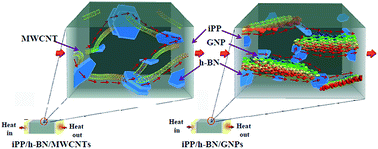
However, the MWCNTs which were 1D carbon-based material showed very limited surface areas to connect with isolated h-BN particles. The higher content of MWCNTs needed to connect more isolated h-BN particles, which would make the composites lose their electrical insulation. Thus, the GNPs which were 2D nanoplatelets with great specific surface area and rough edges were also added in the iPP/h-BN composites to improve the thermal conductivity. Fig. 7 shows the “bridge effect” of GNPs on the iPP/h-BN/GNPs-30 samples. The more isolated h-BN particles was connected by GNPs, especially in the high content of GNPs. Thus, the GNPs exhibited higher efficiency to improve thermal conductivity of the composites than that of MWCNTs. In order to clearly elucidate the “bridge effect” of MWCNTs or GNPs, the schematic draws for the microstructure of composites were given in Fig. 8. The heat flow could easily transmit from one end to another through the 3D conductive networks which were formed by the “bridge effect” of MWCNTs or GNPs.


image file: c6ra24046a-f7.tif
Fig. 7 The “bridge effect” of GNPs on the iPP/h-BN/GNPs-30 samples with 1 phr (a and b), 3 phr (c and d) and 5 phr (e and f). The h-BN particles are marked by red circles.

image file: c6ra24046a-f8.tif
Fig. 8 Schematic draw for the “bridge effect” of MWCNTs (a) and GNPs (b) in the iPP/h-BN composites.

The optimally thermal conductive composites not only have high thermal conductivity but also maintain electrical insulation. The electrical conductivity of insulators in the electric field was usually below 1 × 10⁻⁸ S cm−1.49 Fig. 9 shows the electrical conductivity of the iPP/h-BN composites with MWCNTs or GNPs. The electrical conductivity of the composites exhibited little increase when they added with MWCNTs or GNPs. The electrical conductivity of the samples with MWCNTs was below 2.5 × 10⁻¹³ S cm−1, while the electrical conductivity of the samples with GNPs was below 2.6 × 10⁻¹⁵ S cm−1. The results indicated that the iPP/h-BN composites with high thermal conductivity and low electrical conductivity could be fabricated by adding MWCNTs or GNPs. Furthermore, the GNPs not only exhibited more efficient to improve thermal conductivity of the composites, but also lower their electrical conductivity than that of MWCNTs.


image file: c6ra24046a-f9.tif
Fig. 9 Electrical conductivity of the iPP/h-BN composites with MWCNTs or GNPs.

3.3 Crystalline behavior of iPP with hybrid fillers

The crystalline behavior of the composites with different types and contents of hybrid fillers was measured by DSC. The peak temperature of melting (Tp,m), peak temperature of crystallization (Tp,c), melting enthalpy (ΔHm) and the degree of crystallinity χc (%) of pure iPP and its composites are shown in Table 2. It was well-known that the fillers generally affected the mobility of polymer chains which could be reflected by the Tp,c and χc (%). The Tp,c of iPP increased more than 10 °C by the incorporation of h-BN, h-BN/MWCNTs and h-BN/GNPs particles. The χc (%) of iPP was also enhanced by adding these fillers. The results indicated that the fillers probably acted as heterogeneous nucleating agents for iPP.
Table 2 The crystalline characteristics of pure iPP and its composites. Tp,m, Tp,c, ΔHm and χc (%) are the peak temperature of melting, peak temperature of crystallization, melting enthalpy and the degree of crystallinity, respectively
Samples Tp,m (°C) Tp,c (°C) ΔHm (J g−1) χc (%)
Pure iPP 162.0 112.3 94.6 45.5
iPP/h-BN-10 162.9 123.6 83.4 45.9
iPP/h-BN/MWCNTs-10-1 163.3 124.0 86.4 48.0
iPP/h-BN/GNPs-10-1 163.9 123.4 84.5 46.9
iPP/h-BN/MWCNTs-10-3 164.7 125.9 87.6 49.6
iPP/h-BN/GNPs-10-3 164.1 124.3 83.6 47.3
iPP/h-BN/MWCNTs-10-5 165.1 126.6 86.2 49.7
iPP/h-BN/GNPs-10-5 163.9 124.6 88.4 51.0
iPP/h-BN-20 163.9 127.3 78.6 48.7
iPP/h-BN/MWCNTs-20-1 162.9 126.7 80.3 50.2
iPP/h-BN/GNPs-20-1 164.5 127.3 80.6 50.4
iPP/h-BN/MWCNTs-20-3 165.1 128.0 77.6 49.4
iPP/h-BN/GNPs-20-3 164.1 127.1 77.6 49.4
iPP/h-BN/MWCNTs-20-5 165.1 128.6 79.3 51.5
iPP/h-BN/GNPs-20-5 165.1 127.0 79.4 51.5
iPP/h-BN-30 163.9 128.0 67.4 47.7
iPP/h-BN/MWCNTs-30-1 163.3 128.3 71.0 50.7
iPP/h-BN/GNPs-30-1 163.4 128.5 67.7 48.4
iPP/h-BN/MWCNTs-30-3 164.0 129.1 68.8 50.1
iPP/h-BN/GNPs-30-3 163.9 128.6 65.7 47.8
iPP/h-BN/MWCNTs-30-5 163.6 129.0 67.2 49.8
iPP/h-BN/GNPs-30-5 163.4 128.4 65.4 48.5


Furthermore, the iPP with h-BN/MWCNTs fillers showed the highest Tp,c and χc (%) comparing with the iPP/h-BN samples and the iPP/h-BN/GNPs samples. The Tp,c and χc (%) of the iPP/h-BN/GNPs samples exhibited little higher than that of the iPP/h-BN samples. The results were ascribed to the dimensionality of the nanoparticles. The 1D MWCNTs could provide the whole space for iPP crystallization around them. However, the 2D structure of GNPs made iPP chains be difficultly absorbed on their surfaces and the iPP chains needed more time to adjust their conformations.69 The addition of h-BN, h-BN/MWCNTs and h-BN/GNPs particles in iPP showed a little increase on the Tp,m of iPP, which indicated that the fillers did not change the crystalline forms of iPP (α-form).

3.4 Mechanical properties of iPP with hybrid fillers

Fig. 10 shows the mechanical property of iPP with h-BN, h-BN/MWCNTs or h-BN/GNPs particles. The effect of the hybrid fillers on the mechanical property of iPP was also evaluated. The Young's moduli of the iPP/h-BN composites, the iPP/h-BN/MWCNTs composites and the iPP/h-BN/GNPs composites increased gradually with increasing the content of the fillers, as shown in Fig. 10a. The highest Young's modulus was found in the iPP/h-BN/GNPs-30-5 composites, which were 39.1% higher than that of pure iPP. The enhancement of Young's modulus was ascribed to the formation of 3D networks of hybrid fillers which improve the hardness of the composites. In addition, the higher crystallinity of the samples with MWCNTs or GNPs was also related to the enhancement of the Young's modulus. Furthermore, the GNPs showed more efficient to enhance the hardness of the composites. The Young's modulus of the composites with h-BN/GNPs was generally higher than that of the composites with h-BN/MWCNTs. The results were ascribed to the higher modulus and larger surface area of GNPs than that of MWCNTs.
image file: c6ra24046a-f10.tif
Fig. 10 The content effects of the hybrid fillers on Young's modulus (a), tensile strength (b) and strain at break (c) of the iPP/h-BN/MWCNTs composites and the iPP/h-BN/GNPs composites.

However, both the tensile strength and strain at break of the composites decreased with the addition of h-BN, h-BN/MWCNTs or h-BN/GNPs particles, as shown in Fig. 10b and c. For the iPP/h-BN composites, the tensile strength and strain at break decreased gradually with the increase of the content of h-BN particles. The tensile strength of the iPP/h-BN-30 composites decreased from 34.6 to 19.0 MPa comparing with pure iPP. The low tensile strength and strain at break of the composites were ascribed to the high content of fillers and the weak interfacial interaction between fillers and polymer chains. The addition of MWCNTs or GNPs into the iPP/h-BN composites showed little effect on their tensile strength and strain at break.

4. Conclusion

In this work, the efficiently thermal conductive networks were fabricated in the iPP/h-BN composites by the “bridge effect” of MWCNTs and GNPs. Although the thermally conductive networks of h-BN particles could be formed in the iPP/h-BN-30 samples with high content of h-BN particles, there were still lots of isolated h-BN particles in the samples. The small amount of MWCNTs or GNPs acted as “bridges” to connect these isolated h-BN particles and then further improved the thermal conductivity of the composites. For the iPP/h-BN-30 composites, the thermal conductivity showed 9% and 33% enhancement by adding 1 phr and 5 phr MWCNTs, respectively, and showed 23% and 70% improvement by adding 1 phr and 5 phr GNPs, respectively. However, the electrical conductivity of the samples with MWCNTs was below 2.5 × 10⁻¹³ S cm−1, while the electrical conductivity of the samples with GNPs was below 2.6 × 10⁻¹⁵ S cm−1. The results indicated that the addition of MWCNTs or GNPs into the iPP/h-BN composites not only improved the thermal conductivity but also maintained their electrical insulation. Furthermore, the Young's modulus of the iPP/h-BN composites was obviously enhanced by the incorporation of MWCNTs or GNPs because of the high crystallinity of iPP matrix and the formation of 3D networks of hybrid fillers.

Acknowledgements

The authors are grateful to the National Natural Science Foundation of China (51541306), the Natural Science Foundation Project of CQ (CSTC2014JCYJA50024) and the Fundamental Research Funds for the Central Universities (XDJK2016E062) for financial support of this work.

References

  1. Q. Wang, X. Zhang, C. J. Wang, J. Zhu, Z. Guo and D. O'Hare, J. Mater. Chem., 2012, 22, 19113–19121 RSC.
  2. Q. He, T. Yuan, Z. Luo, N. Haldolaarachchige, D. P. Young, S. Wei and Z. Guo, Chem. Commun., 2013, 49, 2679–2681 RSC.
  3. P. Li, X. Chen, J.-B. Zeng, L. Gan and M. Wang, RSC Adv., 2016, 6, 5784–5791 RSC.
  4. Q. He, T. Yuan, S. Wei, N. Haldolaarachchige, Z. Luo, D. P. Young, A. Khasanov and Z. Guo, Angew. Chem., Int. Ed., 2012, 51, 8842–8845 CrossRef CAS PubMed.
  5. Y.-B. Hao, P. Hou, G.-X. Li, P. Li, F. Qiu, H. He, J.-B. Zeng and M. Wang, Polym. Int., 2016, 65, 125–132 CrossRef CAS.
  6. F. Qiu, Y. Hao, X. Li, B. Wang and M. Wang, Composites, Part B, 2015, 71, 175–183 CrossRef CAS.
  7. I. A. Tsekmes, R. Kochetov, P. H. F. Morshuis and J. J. Smit, IEEE Intern. Conf. Diel., 2013, 678–681 Search PubMed.
  8. Z. Han and A. Fina, Prog. Polym. Sci., 2011, 36, 914–944 CrossRef CAS.
  9. H. Chen, V. V. Ginzburg, J. Yang, Y. Yang, W. Liu, Y. Huang, L. Du and B. Chen, Prog. Polym. Sci., 2016, 59, 41–85 CrossRef CAS.
  10. X. Y. Huang, P. K. Jiang and T. Tanaka, IEEE Electr. Insul. Mag., 2011, 27, 8–16 CrossRef.
  11. B. H. Xie, X. Huang and G. J. Zhang, Compos. Sci. Technol., 2013, 85, 98–103 CrossRef CAS.
  12. H. Liem and H. S. Choy, Solid State Commun., 2013, 163, 41–45 CrossRef CAS.
  13. T. Zhou, X. Wang, P. Cheng, T. Wang, D. Xiong and X. Wang, eXPRESS Polym. Lett., 2013, 7, 585–594 CrossRef CAS.
  14. W. Zhang, X. Xu, J. Yang, T. Huang, N. Zhang, Y. Wang and Z. Zhou, Compos. Sci. Technol., 2015, 106, 1–8 CrossRef CAS.
  15. K. Naito, J. M. Yang, Y. Xu and Y. Kagawa, Carbon, 2010, 48, 1849–1857 CrossRef CAS.
  16. J. Gu, N. Li, L. Tian, Z. Lv and Q. Zhang, RSC Adv., 2015, 5, 36334–36339 RSC.
  17. J. Gu, X. Yang, Z. Lv, N. Li, C. Liang and Q. Zhang, Int. J. Heat Mass Transfer, 2016, 92, 15–22 CrossRef CAS.
  18. W. Zhao, J. Kong, H. Liu, Q. Zhuang, J. Gu and Z. Guo, Nanoscale, 2016 10.1039/C6NR06622D.
  19. J. Gu, C. Xie, H. Li, J. Dang and Q. Zhang, Polym. Compos., 2014, 35, 1087–1092 CAS.
  20. H. Gu, C. Ma, J. Gu, J. Guo, X. Yan, J. Huang, Q. Zhang and Z. Guo, J. Mater. Chem. C, 2016, 4, 5890–5906 RSC.
  21. J. Gu, C. Liang, J. Dang, W. Dong and Q. Zhang, RSC Adv., 2016, 6, 35809–35814 RSC.
  22. J. Gu, Q. Zhang, J. Dang and C. Xie, Polym. Adv. Technol., 2012, 23, 1025–1028 CrossRef CAS.
  23. J. Gu, X. Yang, C. Li and K. Kou, Ind. Eng. Chem. Res., 2016 DOI:10.1021/acs.iecr.6b03093.
  24. X. Yan, J. Gu, J. Guo, J. Yu, M. A. Khan, A. M. Galaska, L. Sun, D. P. Young, S. Wei, Q. Zhang and Z. Guo, Polymer, 2016, 103, 315–327 CrossRef CAS.
  25. M. Zhang, Z. Zhai, M. Li, T. Cheng, C. Wang, D. Jiang, L. Chen, Z. Wu and Z. Guo, J. Compos. Mater., 2016 DOI:10.1177/0021998315620000.
  26. J. Zhu, M. Chen, Q. He, L. Shao, S. Wei and Z. Guo, RSC Adv., 2013, 3, 22790–22824 RSC.
  27. J. Zhu, S. Wei, Y. Li, L. Sun, N. Haldolaarachchige, D. P. Young, C. Southworth, A. Khasanov, Z. Luo and Z. Guo, Macromolecules, 2011, 44, 4382–4391 CrossRef CAS.
  28. M. Wang, X.-Y. Deng, A.-K. Du, T.-H. Zhao and J.-B. Zeng, RSC Adv., 2015, 5, 73146–73154 RSC.
  29. X. Zhang, X. Yan, Q. He, H. Wei, J. Long, J. Guo, H. Gu, J. Yu, J. Liu, D. Ding, L. Sun, S. Wei and Z. Guo, ACS Appl. Mater. Interfaces, 2015, 7, 6125–6138 CAS.
  30. A. Yu, P. Ramesh, X. Sun, E. Bekyarova, M. E. Itkis and R. C. Haddon, Adv. Mater., 2008, 20, 4740–4744 CrossRef CAS.
  31. X. Huang, C. Zhi and P. Jiang, J. Phys. Chem. C, 2012, 116, 23812–23820 Search PubMed.
  32. Y. M. Chen and J. M. Ting, Carbon, 2002, 40, 359–362 CrossRef CAS.
  33. T. L. Li and S. L. C. Hsu, J. Phys. Chem. B, 2010, 114, 6825–6829 CrossRef CAS PubMed.
  34. W. Cheewawuttipong, D. Fuoka, S. Tanoue, H. Uematsu and Y. Iemoto, Energy Procedia, 2013, 34, 808–817 CrossRef CAS.
  35. C. C. Teng, C. C. M. Ma, C. H. Lu, S. Y. Yang, S. H. Lee and M. C. Hsiao, Carbon, 2011, 49, 5107–5116 CrossRef CAS.
  36. D. S. Muratov, D. V. Kuznetsov, I. A. Il'inykh, I. N. Burmistrov and I. N. Mazov, Compos. Sci. Technol., 2015, 111, 40–43 CrossRef CAS.
  37. W. Y. Zhou, J. Mater. Sci., 2011, 46, 3883–3889 CrossRef CAS.
  38. S. Y. Pak, H. M. Kim, S. Y. Kim and J. R. Youn, Carbon, 2012, 50, 4830–4838 CrossRef CAS.
  39. P. G. Ren, S. Y. Hou, F. Ren, Z. P. Zhang, Z. F. Sun and L. Xu, Composites, Part A, 2016, 90, 13–21 CrossRef CAS.
  40. H. J. Wu, X. W. Sun, W. Zhang, X. X. Zhang and C. H. Lu, Composites, Part A, 2013, 55, 27–34 CrossRef CAS.
  41. X. Zhang, L. Shen, H. Wu and S. Guo, Compos. Sci. Technol., 2013, 89, 24–28 CrossRef CAS.
  42. L. Gan, F. Qiu, Y.-B. Hao, K. Zhang, Z.-Y. Zhou, J.-B. Zeng and M. Wang, J. Mater. Sci., 2016, 51, 5185–5195 CrossRef CAS.
  43. S. G. Mosanenzadeh, S. Khalid, Y. Cui and H. Naguib, Polym. Compos., 2015, 37, 2196–2205 CrossRef.
  44. J. P. Hong, S. W. Yoon, T. Hwang, J. S. Oh, S. C. Hong, Y. Lee and J. D. Nam, Thermochim. Acta, 2012, 537, 70–75 CrossRef CAS.
  45. G. W. Lee, M. Park, J. Kim, J. I. Lee and H. G. Yoon, Composites, Part A, 2006, 37, 727–734 CrossRef.
  46. I. N. Mazov, I. A. Ilinykh, V. L. Kuznetsov, A. A. Stepashkin, K. S. Ergin, D. S. Muratov, V. V. Tcherdyntsev, D. V. Kuznetsov and J. P. Issi, J. Alloys Compd., 2014, 586, S440–S442 CrossRef CAS.
  47. K. Yang and M. Y. Gu, Composites, Part A, 2010, 41, 215–221 CrossRef.
  48. M. Bozlar, D. He, J. Bai, Y. Chalopin, N. Mingo and S. Volz, Adv. Mater., 2010, 22, 1654–1658 CrossRef CAS PubMed.
  49. Y. Yoo, H. L. Lee, S. M. Ha, B. K. Jeon, J. C. Won and S. G. Lee, Polym. Int., 2014, 63, 151–157 CrossRef CAS.
  50. S. Choi and J. Kim, Composites, Part B, 2013, 51, 140–147 CrossRef CAS.
  51. S. N. Leung, M. O. Khan, E. Chan, H. E. Naguib, F. Dawson, V. Adinkrah and L. Lakatos-Hayward, J. Appl. Polym. Sci., 2013, 127, 3293–3301 CrossRef CAS.
  52. C. C. Teng, C. C. M. Ma, K. C. Chiou and T. M. Lee, Composites, Part B, 2012, 43, 265–271 CrossRef CAS.
  53. F. Y. Yuan, H. B. Zhang, X. F. Li, X. Z. Li and Z. Z. Yu, Composites, Part A, 2013, 53, 137–144 CrossRef CAS.
  54. C. Zhi, Y. Bando, C. Tang, D. Golberg, R. Xie and T. Sekiguchi, Appl. Phys. Lett., 2005, 86, 213110 CrossRef.
  55. C. Zhi, Y. Bando, C. Tang, H. Kuwahara and D. Golberg, Adv. Mater., 2009, 21, 2889–2893 CrossRef CAS.
  56. M. Harada, N. Hamaura, M. Ochi and Y. Agari, Composites, Part B, 2013, 55, 306–313 CrossRef CAS.
  57. K. Sato, H. Horibe, T. Shirai, Y. Hotta, H. Nakano, H. Nagai, K. Mitsuishi and K. Watari, J. Mater. Chem., 2010, 20, 2749–2752 RSC.
  58. W. Y. Zhou, S. H. Qi, Q. L. An, H. Z. Zhao and N. L. Liu, Mater. Res. Bull., 2007, 42, 1863–1873 CrossRef CAS.
  59. A. A. Balandin, S. Ghosh, W. Bao, I. Calizo, D. Teweldebrhan, F. Miao and C. N. Lau, Nano Lett., 2008, 8, 902–907 CrossRef CAS PubMed.
  60. K. M. F. Shahil and A. A. Balandin, Nano Lett., 2012, 12, 861–867 CrossRef CAS PubMed.
  61. S. Stankovich, D. A. Dikin, G. H. B. Dommett, K. M. Kohlhaas, E. J. Zimney, E. A. Stach, R. D. Piner, S. T. Nguyen and R. S. Ruoff, Nature, 2006, 442, 282–286 CrossRef CAS PubMed.
  62. K. Hu, D. D. Kulkarni, I. Choi and V. V. Tsukruk, Prog. Polym. Sci., 2014, 39, 1934–1972 CrossRef CAS.
  63. A. Mohaddespour, H. Abolghasemi, M. T. Mostaedi and S. Habibzadeh, J. Appl. Polym. Sci., 2010, 118, 1042–1050 CAS.
  64. A. J. H. Mcgaughey and M. Kaviany, Adv. Heat Transfer, 2006, 39, 169–255 CAS.
  65. D. Xu and Z. Wang, Polymer, 2008, 49, 330–338 CrossRef CAS.
  66. K. Zhang, J.-K. Peng, Y.-D. Shi, Y.-F. Chen, J.-B. Zeng and M. Wang, J. Phys. Chem. B, 2016, 120, 7423–7437 CrossRef CAS PubMed.
  67. H. Dong, J. Xu, Y. Fan, L. Xu and Z. Li, J. Phys. Chem. B, 2013, 117, 10641–10651 CrossRef PubMed.
  68. C. Huang, H. Bai, H. Xiu, Q. Zhang and Q. Fu, Compos. Sci. Technol., 2014, 102, 20–27 CrossRef CAS.
  69. J.-Z. Xu, T. Chen, C.-L. Yang, Z.-M. Li, Y.-M. Mao, B.-Q. Zeng and B. S. Hsiao, Macromolecules, 2010, 43, 5000–5008 CrossRef CAS.

This journal is © The Royal Society of Chemistry 2016
Click here to see how this site uses Cookies. View our privacy policy here.