Reduction of lead dioxide with oxalic acid to prepare lead oxide as the positive electrode material for lead acid batteries

Wei Liua, Beibei Maa, Fajun Lia, Yan Fub, Jian Taia, Yanqing Zhoua and Lixu Lei*a
aSchool of Chemistry and Chemical Engineering, Southeast University, Nanjing, 211189, P. R. China. E-mail: lixu.lei@seu.edu.cn; Fax: +86-25-52090618; Tel: +86-25-52090620-6421
bOffice of Academic Affairs, Southeast University, Nanjing, 211189, P. R. China

Received 23rd September 2016 , Accepted 3rd November 2016

First published on 7th November 2016


Abstract

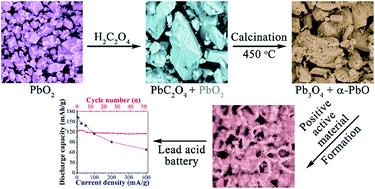
To achieve efficient and economic recycling of spent lead acid batteries (SLABs), we have invented a route to separately produce positive and negative active materials from the corresponding spent lead pastes based on full separation of the SLABs. This method can avoid the adverse effects of impurities (such as BaSO4) on the recycled positive active material. However, more economic and environment-friendly processes are still needed. This paper reports the room temperature reduction of PbO2 by oxalic acid and subsequent calcination to produce PbO. The results show that the reduction does produce the intermediate H2O2, but it cannot be achieved completely at room temperature, probably due to the PbC2O4 coat on PbO2; the calcination at 450 °C of the PbC2O4 coated PbO2 in air produces fine particles of a sponge-like mixture of α-PbO and Pb3O4, which can be directly used as the positive materials of brand new LABs. After formation, the electrode shows an urchin-like structure composed of many interconnected nano-whiskers, which can still discharge a capacity of 115.2 mA h g−1 after 50 cycles of 100% DOD at 100 mA g−1.

Introduction

In view of the distinctive advantages of mature manufacturing technology, low price, high reliability and high safety, lead acid batteries (LABs) have been widely used as the power source in electric bicycles, SLI (starter, lights and ignition) batteries, UPS, and especially, large scale energy storage for renewable energy sources.1–3 The widespread and ever-increasing use of lead acid batteries also leads to an increasing generation of spent LABs. In China, the total weight of spent LABs (SLABs) in 2014 was about 3.6 million tons, which brings demands for the economic and environment-friendly recycling of them.

SLABs generally consist of H2SO4, grid lead alloy, lead paste and plastic materials. Lead paste is composed mostly of PbSO4 (∼60%) and PbO2 (∼28%), and also a little amount of PbO (∼9%), lead metal (∼3%) and a small amount of impurities such as BaSO4, carbon and some alloy elements.4,5 Traditional pyrometallurgical recycling may lead to serious emission of SO2 and lead dust,5–8 especially in developing areas where government supervision is weak. Therefore, cost-efficient and less environment-harmful recycling routes of SLABs are still wanted.

Hydrometallurgical recycling processes which produce either metallic lead or lead oxide as the target product are promising.2,4,6–16 In order to be used as the material for new LABs, metallic lead has to be re-oxidized to produce lead oxide, which brings about energy exhaustion and pollution risk.2 Thus, processes producing lead oxide directly from spent lead paste (SLP) is highly demanding.

In general, the processes producing lead oxide directly have two key steps: (1) PbSO4 is desulfated by using salt solutions,4,5,7,15–17 organic acids12,18 or alkaline solutions;2 (2) PbO2 is reduced to Pb(II) compound by using H2O2,4,5,12 H2C2O4 (ref. 16) and metallic lead.2 For example, Zhu et al. found that the spent lead pastes can be treated in a mixed solution of acetic acid and sodium citrate to produce Pb3(C6H5O7)2·3H2O, in which PbO2 was firstly reduced by H2O2. Pb3(C6H5O7)2·3H2O can be heated to prepare lead oxide17 or a lead oxide composited with porous carbon skeleton.18

In these works, the SLP contains both positive active materials (PAM) and negative active materials (NAM), as well as the additives. Removal of these additives (especially BaSO4) is a common challenge for the hydrometallurgical processes, because the existence of BaSO4 in PAM will harm the performance of lead acid battery.1 To avoid this, some attempts had been made to remove these additives from the lead oxide by a series of dissolving–separating procedures.2,4,6,7 For example, Pan et al.2 invented a method to prepare pure lead oxide from SLP and lead grids. Firstly, spent lead grid was used as a reductant to reduce PbO2 into PbSO4 with Fe2+ as the catalyst. Secondly, the obtained PbSO4 was desulfated in NaOH solution to generate PbO, and then it was dissolved and recrystallized in concentrated NaOH solution to remove the impurities. Ma et al.4 reported a method to obtain lead oxide from SLP with low temperature burning and hydrometallurgical processing. After the calcination of SLP at 300–400 °C, PbO2 was reduced to PbSO4 by H2O2 in dilute H2SO4 solution, then PbSO4 was dissolved in NH4Ac solution. The solution was filtered and treated with CO2 to get PbCO3, which was calcined into lead oxide.

We have proposed a novel route to obtain separate spent PAM and NAM based on separation of positive plates from negative plates.6,7,19,20 Consequently, the additives of NAM (such as BaSO4) will not appear in the PAM, which avoids the adverse effects from impurities. In the reported processes, PbSO4 can be desulfated to PbCO3 by (NH4)2CO3, and PbO2 can be reduced to PbO by a methanothermal reduction. The as-generated mixture can be calcined to produce highly active lead oxide for lead acid batteries.6,7,19 However, due to the weak reduction ability of methanol, the reaction temperature is as high as 140 °C, limiting its industrial application because of the pressurized equipment. Therefore, the reduction of PbO2 under normal pressure is still in need.

H2C2O4 is a nontoxic and strong reducing agent, which can be stored and transported more safely and conveniently than H2O2; it has been used to reduce PbO2, and the reaction takes place vigorously at room temperature under normal atmosphere.8,16 Therefore, we tried to use H2C2O4 as the reductant. However, we found the inconsistency with the reported results, which shows that the reduction cannot be entirely. We had to explore the problem and find a solution. As the residual PbO2 can be reduced by CO formed during calcination of PbC2O4, we thought that the existing PbO2 may not be a problem. The experiments conform our guess, and the calcined products are very good if they are used as the PAM of LABs.

Experimental

Materials and chemicals

Oxalic acid (H2C2O4) was purchased from Sinopharm Chemical Reagent Co., Ltd. (China). Lead dioxide (PbO2) was purchased from Alfa Aesar Chemical Co., Ltd. (China). All the reagents were used without further purification. All aqueous solutions were prepared with deionized water.

Material preparation

The reduction reaction of lead dioxide was carried out as follows: typically, 0.04 mol of PbO2 was added to 200 mL of 0.6 mol L−1 H2C2O4 solution, which makes the molar ratio of H2C2O4 and PbO2 be 3[thin space (1/6-em)]:[thin space (1/6-em)]1. The suspension was vigorously stirred at 25 °C for 12 h. The obtained solid (reductive product) was filtered and washed three times with water, followed by drying at 100 °C overnight.

The effect of H2C2O4 concentration on the reduction of PbO2 was also investigated by using 200 mL of 0.2, 0.4 and 0.8 mol L−1 of H2C2O4 solutions instead, respectively, which make the molar ratio of H2C2O4 and PbO2 be 1[thin space (1/6-em)]:[thin space (1/6-em)]1, 2[thin space (1/6-em)]:[thin space (1/6-em)]1 and 4[thin space (1/6-em)]:[thin space (1/6-em)]1.

For preparation of lead oxide, the reductive product was transferred to crucible with a cover, and then it was calcined at 400, 450, 500 and 550 °C respectively for 2 h in air. The samples are sequentially denoted as A400, A450, A500 and A550.

Characterization

The X-ray diffraction (XRD) spectra were carried out with a Bruker D8 Discover instrument (Germany) operating at 40 kV, by using Cu Kα radiation (λ = 0.15406 nm). The morphologies of the samples were analyzed with field emission scanning electron microscopy (FESEM, FEI Inspect F50, USA) and scanning electron microscope (SEM, Phenom ProX, Holland) coupled with an X-ray energy dispersive spectrometer (EDS). The thermogravimetric analysis (TG) of sample was conducted on a TA Instruments SDT-Q600 (USA) with a rate of 10 °C min−1 in air and nitrogen, respectively. The content of C element was determined by elemental analyser (VARIO EL III, Germany). The N2 adsorption–desorption isotherms at 77 K were investigated using a Quantachrome Nova 1200e surface area and porosity analyzer (USA). The surface area was calculated by the Brunauer–Emmett–Teller (BET) method.

Battery assembling

Graphite, short polyester (PET) fibre, absorptive glass-mat (AGM) membranes and commercial negative plate were provided by Huafu High Technology Energy Storage Co., Ltd. (China).

The positive electrode lead pastes based on the samples were fabricated by mixing 1.0 g obtained samples (A400, A450, A500 and A550), 0.003 g of graphite, 0.003 g of short polyester fibre, 0.11 mL of H2SO4 (1.26 g cm−3) and 0.124 mL of deionized water. To meet the required density of the paste (4.0 g cm−3), the amount of deionized water added could be slightly modified. Then the fresh lead pastes were evenly applied on a Pb–Ca alloy grid with dimensions of 10 × 8 × 2 mm3. After pasting, the positive electrodes were immersed in diluted H2SO4 (1.055 g cm−3) for 5 s. Subsequently, they were dried at 100 °C for 5 min.

For the curing process of these electrodes, they were put into an oven maintained at 75 °C for 24 h with relative humidity >95%. After that, they were dried at 70 °C for 48 h. The mass of PAM was the mass of the dried electrode minus that of the blank grid.

The tested lead acid batteries were built up by assembling the prepared positive electrode, a commercial negative electrode (its area is about 3 times of the positive one) and AGM membranes into a plastic case. The electrolyte was a H2SO4 solution with a relative density of 1.26 g cm−3.

Electrochemical performance test

The formation and the cycling tests were carried out with an NEWARE BTS-5V3A Cycler (China). Before the execution of formation process, the plates had been immersed in H2SO4 solution (1.26 g cm−3) for 2 h. The formation of battery was executed through three steps constant-current charge process as follows: charged at a current density of 15 mA g−1 for 100 mA h g−1; charged at 25 mA g−1 for another 150 mA h g−1; then charged at 8 mA g−1 for 100 mA h g−1. Since the commercial negative electrode had a much larger capacity than the prepared positive electrode, the battery capacity was restricted by the as-prepared positive electrode. The designed capacity for the testing battery on basis of PAM is about 100 mA h at 2 V.

After formation, the battery was discharged at 5 mA g−1 until the voltage fell to 1.75 V. Then it was cycled for 50 times according to the following procedure: charged at 50 mA g−1 until the battery voltage increased to 2.45 V, then charged at 25 mA g−1 until the capacity was 110% of the first discharge capacity after the formation; finally it was discharged at 100 mA g−1 until the terminal voltage fell to 1.75 V (depth of discharge, DOD = 100%).

The cyclic voltammetry (CV) and electrochemical impedance spectroscopy (EIS) tests were measured on the CorrTest CS350 electrochemical working station (China). The CV curves and EIS measurements were determined with a three-electrode system in 1.26 g cm−3 H2SO4 solution. The work electrode was the positive electrode obtained from the disassembled test battery after 50 charging and discharging cycles of 100% DOD. A saturated Hg/Hg2SO4/K2SO4 electrode and a platinum foil were used as the reference and counter electrodes, respectively. EIS measurements were carried out by applying an AC voltage amplitude of 5 mV in the frequency range from 10−1 Hz to 105 Hz at the potential of 1.1 V.

Results and discussion

Reduction of lead dioxide by oxalic acid

At the beginning, the reaction of PbO2 and H2C2O4 is vigorous, huge amount of gas is being produced; soon, the reaction calms down although bubbles continues emerging. This means the reaction is driven forcefully. Fig. 1 shows the XRD patterns of reduction products produced in different concentrations of H2C2O4. Basically, full reduction of lead dioxide (β-PbO2, JCPDS 89-2805) to lead oxalate (PbC2O4, JCPDS 14-0803) was impossible under tested conditions, even if excessive oxalic acid was used.
image file: c6ra23671e-f1.tif
Fig. 1 XRD patterns of reduction products prepared by using (a) 0.2, (b) 0.4, (c) 0.6 and (d) 0.8 mol L−1 of H2C2O4 solutions.

This result which we found was surprising, as it is different from what was reported in literature.16 By using the software Jade®, the contents of PbO2 and PbC2O4 are calculated and listed in Table 1, which shows that more PbO2 is reduced with increase of the concentration of H2C2O4. When the concentration of H2C2O4 is 0.6 mol L−1 (r = 3), 7.2 wt% of PbO2 still exists in the product. The content of PbC2O4 was also calculated through carbon content measured by elemental analyser. The results are close to the result calculated from the XRD pattern. As shown in Table S1, the mass percentage of PbO2 were 58.3, 30.3, 8.2 and 9.3, when the r values were 1, 2, 3 and 4, respectively.

Table 1 The composition of the reduction product calculated from XRD patterns shown in Fig. 1 with the Jade® software
Concentration of H2C2O4 (mol L−1) ra Composition (wt%)
PbC2O4 PbO2
a r = n(H2C2O4)/n(PbO2).
0.2 1 39.3 60.7
0.4 2 72.4 27.6
0.6 3 92.8 7.2
0.8 4 91.6 8.4


It has been reported that the reduction process may contain the reactions (1)–(3):

 
2PbO2 + H2C2O4 = 2PbO + H2O2 + 2CO2 (1)
 
H2O2 + PbO2 = PbO + H2O + O2 (2)
 
PbO + H2C2O4 = PbC2O4 + H2O (3)

The total reaction is:

 
3PbO2 + 4H2C2O4 = 3PbC2O4 + 4H2O + O2 + 2CO2 (4)

By the chromogenic reaction of H2O2 with 3,3,5,5-tetramethylbenzidine in the presence of horseradish peroxidase,21,22 we have confirmed that there is H2O2 produced in the reduction (Fig. S1), therefore, reaction (1) is confirmed. The reactions (2) and (3) have been confirmed by previous researches.4 The total reaction (4) could complete if the molar ratio (r) of H2C2O4 and PbO2 is 1.33, but the value must be higher if we notice that H2O2 may decompose to H2O and O2 simultaneously, and we do not know how much of the PbO2 can be reduced by reaction (1). Also, the reduction may go as follows:

 
PbO2 + 2H2C2O4 = PbC2O4 + 2H2O + 2CO2 (5)
which requires the r to be 2. Therefore, the reduction may complete when the value of r is between 1.33 and 2, theoretically.

From the Table 1, we know that there is 60.7 wt% PbO2 left in 0.2 mol L−1 H2C2O2, 27.6 wt% in 0.4 mol L−1, and 7.2 wt% in 0.6 mol L−1. The first one is far from completion because H2C2O4 in the solution is only 40 mmol, which makes the r be 1 and H2C2O4 is not sufficient even for reaction (4). Consequently, the reaction cannot be completed. The r of second experiment is 2, which makes H2C2O4 excessive for reaction (4) but just enough for reaction (5). We believe the incompletion of the reduction is because of the low concentration of H2C2O4 at the end of reaction, which can be supported by the fact that a PbO2 electrode can be stable in the 0.1 mol L−1 of H2C2O4 solution.23 The reduction in 0.6 mol L−1 of H2C2O4 solution makes r to be 3, thus H2C2O4 is excessive, but 7.2% of PbO2 is still left unreduced. We believe that the incompleteness is probably caused by the wrapping of lead oxalate on lead dioxide, which protects PbO2 from the attacking of H2C2O4.

Table 1 also shows that further increasing the concentration of H2C2O4 does not help. Because PbC2O4 can reduce PbO2 during calcination, we did not bother to find other ways to make the reaction complete, we directly used the reaction in 0.6 mol L−1 H2C2O4 solution in the present work.

The morphologies of reduction products prepared in different concentrations of H2C2O4 were revealed by SEM. As shown in Fig. 2a, there are two kinds of irregular particles: larger particles with the size from 5 μm to 10 μm, and smaller ones sized from 500 nm to 2 μm. The inset picture in Fig. 2a reveals that the purchased PbO2 are irregular particles with the particle size from 300 nm to 2 μm, which is very similar to the shape and dimensions of the smaller particles (Fig. 2a). When the concentration of H2C2O4 is increased from 0.4 to 0.6 mol L−1, the smaller particles gradually disappears (Fig. 2b and c), which is consistent with the XRD result (Fig. 1) and our deduction from the reaction stoichiometry and the stability of PbO2 in low concentration (∼0.1 mol L−1) of H2C2O4. The particle size of large particles is getting bigger (2–5 μm, Fig. 2b and c) in higher concentrations of H2C2O4, and it is the biggest (5–10 μm) and the most aggregated in 0.8 mol L−1 H2C2O4 (Fig. 2d), which means high concentration of H2C2O4 is not good for the reduction, as it is not good for production of small particles of PbO which is required for high performance. To ensure the phase of the particles, the EDS mapping analysis was performed. As shown in Fig. S2, the distribution of Pb, C and O elements is identical. The result indicates that both of the large and small particles contain PbC2O4 phase. With the increase of the molar ratio of H2C2O4 and PbO2, the content of PbO2 in the reduction product is decrease, and the small particles gradually disappears. Thus, we think the small particles may be partly reduced PbO2 with PbC2O4 covered on the surface, while the large ones may be PbC2O4.


image file: c6ra23671e-f2.tif
Fig. 2 SEM morphologies of reduction products prepared by using (a) 0.2, (b) 0.4, (c) 0.6 and (d) 0.8 mol L−1 of H2C2O4 solutions, inset in (a) is the SEM morphology of purchased PbO2.

The preparation of the lead oxide samples by calcination

Thermal decomposition of purchased PbO2 and the reduction products prepared in 0.6 mol L−1 of H2C2O4 solution was observed with thermal analysis (Fig. 3), in which curve a shows that the decomposition of PbO2 begins at 385 °C and completes at 590 °C with a stable intermediate (Pb3O4) at around 500 to 550 °C (theoretical weight loss from PbO2 to Pb3O4 is 4.46%, and the measured value is 4.96%), and the final product is PbO.24 The total weight loss is about 6.72%, which is about the same as the theoretical value of 6.69% (from PbO2 to PbO). Under nitrogen atmosphere (curve c in Fig. 3), there is 23.36% weight loss of the reduction product between 270 °C and 400 °C. At the end of curve c, the weight loss is 22.93%, which is same as curve b tested under air atmosphere. It is known that PbC2O4 decomposes completely and produces PbO, CO2 and CO in this temperature range (the theoretical weight loss is 24.41%).8,25 Thus, we have proved that the reduction product is a mixture of PbO2 and PbC2O4 (Fig. 1), and the CO produced in decomposition of PbC2O4 can reduce PbO2 to PbO (reaction (7)):
 
PbC2O4 = PbO + CO2 + CO (6)
 
PbO2 + CO = PbO + CO2 (7)

image file: c6ra23671e-f3.tif
Fig. 3 TG curves of (a) purchased PbO2, reduction product prepared by using 0.6 mol L−1 of H2C2O4 solution tested in (b) air and (c) nitrogen.

We can calculate the mass fraction of PbC2O4 in the reduction product, which is about 91.65%. This is very close to the results calculated from the XRD pattern (92.8%, Table 1) and from carbon content (91.8, Table S1).

Therefore, the first weight loss of curve b in Fig. 3 in the range of 270–385 °C can be ascribed to the decomposition of PbC2O4 and reduction of PbO2, and the weight increase between 400 and 480 °C must be due to the oxidation of partial PbO to Pb3O4. This Pb3O4 decomposes again completely in the range of 550–580 °C.

Fig. 4 shows the XRD patterns of the samples A400, A450, A500 and A550 obtained by the calcination of the reduction product in air at indicated temperatures. The 400 °C product (A400) consists of two phases, α-PbO (JCPDS 78-1666) and Pb3O4 (JCPDS 76-1799). The 450 °C product (A450) also consists of α-PbO and Pb3O4 phases, but peaks of α-PbO have higher intensity than those of A400, which should be due to the higher crystallinity of α-PbO obtained at the higher temperature. As the temperature increases, the amount of Pb3O4 decreases. Once the temperature is increased to 500 °C, the as-produced A500 consists of three phases: the major phase α-PbO, the minor phases Pb3O4 and β-PbO (JCPDS card No. 77-1971). With the further increase of the temperature to 550 °C, Pb3O4 phase disappears, and β-PbO becomes the major phase. All those are in consistence with the TG results.


image file: c6ra23671e-f4.tif
Fig. 4 XRD patterns of products calcined in air at (a) 400, (b) 450, (c) 500 and (d) 550 °C, which will be named as A400, A450, A500 and A550, respectively.

Fig. 5 shows the SEM images of the samples A400, A450, A500 and A550, which were obtained by the calcination of the reduction product in air at indicated temperatures. As shown in Fig. 5, the particles sizes of these samples are about 2–5 μm, similar to the reduction product (Fig. 2c). Unlike the smooth surface of reduction product (Fig. 2), a mass of pores are observed in these calcined samples (Fig. 5), which is the result of the escape of CO2 and CO species from the reduction product crystals during the decomposition process.8,25 With increase of the calcination temperature, the morphology and pores structure of calcination products change visibly: at 400 °C and 450 °C, a large number of pores exist (Fig. 5b and d); at higher reaction temperature, the pores become larger in size but less in number (Fig. 5f and h), which is the result of recrystallization of the lead oxide during the heating process. Porous structure can provide larger contact area of active materials and electrolyte, which is beneficial for formation.


image file: c6ra23671e-f5.tif
Fig. 5 SEM images of samples of calcined product (a and b) A400, (c and d) A450, (e and f) A500, and (g and h) A550.

The formation of the lead oxide samples in positive electrode of a lead acid battery

Fig. 6 shows the XRD patterns of products after formation of samples A400, A450, A500 and A550 as PAM. It reveals that all the samples contain both β-PbO2 (JCPDS 76-0564) and PbSO4 (JCPDS 82-1855), and a small amount of α-PbO2 (JCPDS 72-2440) can be found in products other than A550. According to the software Jade®, the contents of α-PbO2, β-PbO2 and PbSO4 are calculated and listed in Table 2. Generally, existence of Pb3O4 may enhance the formation.6,7 Previous XRD results (Fig. 4) have shown content of Pb3O4 in A400 and A450 is higher than that in A500 and A550. Therefore, after formation, content of PbSO4 in A400 and A450 is less. Product of A550 contains the largest amount of PbSO4 (33.9 wt%), which must be due to the combined effect of composition (absence of Pb3O4) and morphology (less of pores).
image file: c6ra23671e-f6.tif
Fig. 6 XRD patterns of products after the formation of prepared samples (a) A400, (b) A450, (c) A500 and (d) A550.
Table 2 The composition and crystallite size of products after the formation of prepared samples
Sample Compositiona (wt%) Crystallite sizea (nm)
PbSO4 α-PbO2 β-PbO2 PbSO4 β-PbO2
a The composition and crystallite size were calculated according to the XRD patterns shown in Fig. 6.
A400 17.3 5.6 77.1 33.6 16.1
A450 12.8 4.7 82.5 28.5 17.5
A500 26.1 2.7 71.2 42.0 16.8
A550 33.9 66.1 54.9 19.0


The crystallite size of PbSO4 and β-PbO2 were calculated by using Scherrer method (FWHM), and the results are also shown in Table 2. It can be seen that the crystallite sizes of PbSO4 are increased gradually with the increased contents of PbSO4. The crystallite size of β-PbO2 of A450 electrode is larger (17.5 nm) than that of A400 (16.1 nm) and A500 (16.8 nm) and is much smaller than that of A550 (19.0 nm).

The surface of electrodes of the samples after formation were directly viewed by SEM and shown in Fig. 7. The electrodes after formation exhibit different surface morphologies due to the different morphologies and compositions of prepared samples. The surface morphology of A450 (Fig. 7d and e) electrode is hollow urchin-like structure composed of many interconnected whisker-like nanoparticles, which is similar to that of A400 (Fig. 7a and b). The average size of the hollows of A450 electrode is about 2 μm, which is large than that of A400 electrode (about 1 μm). This hierarchical hollow urchin-like structure could effectively enhance the quantity of PbO2 active sites for the electrochemical reaction and the transport of reaction species, improving the electrochemical performance of the electrode.26,27 It can be presumed that the morphology and structure of the A450 electrode will yield higher initial capacity. The surface of A500 electrode (Fig. 7g and h) is a fibrillar structure with irregular nanoparticles (particle size from 200 nm to 500 nm) inlaid. For A550 (Fig. 7j and k) electrode, the surface is a fibrillar structure with an average diameter in a range of 50 nm to 100 nm and length from 500 nm to 2 μm. And there are some uncharged PbSO4 bulk with particle size of about 2 μm can be observed (Fig. 7j).


image file: c6ra23671e-f7.tif
Fig. 7 SEM and FESEM (c, f, i and l) micrographs of products after the formation of prepared samples: (a–c) A400, (d–f) A450, (g–i) A500 and (j–l) A550.

Active materials were peeled from the electrode after formation, and then grinded for FESEM observations (Fig. 7). It can be seen that A400 electrode (Fig. 7c) has PbO2 nanorods with 30–50 nm in diameter and 50–200 nm in length. PbO2 nanoparticles of A450 electrode (Fig. 7f) shows rod-like structure with a mean diameter of 50 nm and a length of 100–200 nm. For A500 electrode (Fig. 7i), small PbO2 nanoparticles are assembled in agglomerates, leading to the decrease of active surface area. For A550 electrode (Fig. 7l), the particle size of the PbO2 nanoparticles is about 30 nm. And some uncharged PbSO4 bulk also can be seen, consistent with high content of PbSO4 resulting from the XRD analysis (Table 2). The PbO2 nanoparticles sizes of these electrodes analyzed by FESEM are in line with the crystallite sizes results (Table 2) calculated from XRD patterns. The nitrogen adsorption–desorption isotherms of the samples was measured and shown in Fig. S3. The BET specific surface areas of A400, A450, A500 and A550 are measured to be 8.891, 9.631, 7.165 and 5.671 m2 g−1, respectively. Here, the smaller particles of A450 results in the larger surface area, which can provide more active sites for the electrochemistry reaction, resulting in high performance. According to the analyses above, it can be speculated that the electrochemical performance of A450 electrode is better than the other ones.

During the formation of the positive electrode, PbSO4 is converted to PbO2 by the electrochemistry reaction:

 
PbSO4 + 2H2O → PbO2 + 4H+ + SO42− + 2e (8)

Previous researches show that this process undergoes a series of progress, which can be described as follows:28–31 (1) the surface layer PbSO4 dissolved to form Pb2+ ions in the electrolyte solution near the electrode; (2) Pb2+ ions are converted by sol–gel–crystalline processes into PbO2 on the surface of PbSO4; (3) then the inner PbSO4 dissolved and the generated Pb2+ ions move by diffusion along the PbSO4 crystal surface toward the PbO2 phase, where they are oxidized. During this process, transport of reaction species (H+, SO42− and H2O) are required between the oxidation layer and the electrolyte. Difficulties in the movement of these reaction species may regulate the oxidation process.29 During the formation process, both of the micro-structure and the morphology of PbO2 are influenced by the transport of Pb2+ ions and the concentration of H2SO4 nearby the PbO2 crystals.29,32

In the present work, the differences (composition, morphology and structure) between the four samples result in the various morphologies of surface appearance of electrodes. Unlike the fibrillar structures in the surface of A500 and A550 electrodes, a special hierarchical hollow urchin-like structure is formed in A400 and A450 electrodes. In the case of A450 electrode, the generation of this hierarchical structure may undergo two main progress as follows: (1) after soaking in H2SO4 solution, Pb3O4 decomposes to β-PbO2 and PbSO4 nanoparticles, as shown in Fig. S4; (2) in the formation process, the PbSO4 nanoparticles gradually dissolve and generated Pb2+ ions are directly oxidized on the surface of nearby β-PbO2 nanoparticles. Gradually, the hierarchical urchin-like structure is established with the formation of β-PbO2, while the hollows are generated from the completely dissolved PbSO4 nanoparticles.

Electrochemical performance of the lead oxide samples

Fig. 8a shows the cyclic performance of the four samples at a current density of 100 mA g−1. It can be seen that the capacities of the four samples are quite stable within 50 cycles. After 50 charging and discharging cycles of 100% DOD, the discharge capacities of A400, A450, A500 and A550 electrodes are 105.5, 115.2, 97.8 and 85.4 mA h g−1, respectively. If the utilization of active material is defined as the ratio of the discharge capacity and the corresponding theoretical capacity of PbO and Pb3O4, which are 240.1 and 234.7 mA h g−1, respectively. The composition of the four samples can be calculated through their XRD patterns (Fig. 4). Due to the different contents of PbO and Pb3O4 (Table S2), the theoretical capacity of A400, A450, A500 and A550 are 237.8, 237.3, 239.5 and 240.1 mA h g−1. If the measured discharge capacities after 50th cycle are divided by those theoretical ones, the utilization of the four samples can be calculated, which are 44.4, 48.5, 40.8, and 35.6%, respectively.
image file: c6ra23671e-f8.tif
Fig. 8 The discharge capacity versus (a) cycle number and (b) discharge current density for A400, A450, A500 and A550 electrodes; (c–f) the related curves of potential versus capacity at the 1st, 10th and 50th cycles: (c) A400, (d) A450, (e) A500 and (f) A550 electrodes.

Fig. 8c–f reveal the curves of potential versus charge and discharge capacities at 1st, 10th and 50th cycles. It can be seen that at 10th and 50th cycles the charging and discharging curves of A400 and A450 are similar, suggesting that these two electrodes are quite stable. For A500 and A550 electrodes, although at 10th and 50th cycles discharging curves of them are similar, the charging curves of the 50th cycle are higher than of 10th cycle, indicating these electrodes are getting more difficult to be charged. These results support that the hollow urchin-like structure of A400 and A450 electrodes is more conducive than that of A500 and A550 to the charging and discharging of the LAB.

Fig. 8b reveals the influence of current density on the discharge capacity after 50 charging and discharging cycles of 100% DOD. It can be seen that the discharge capacities of the best A450 electrode are 161.8, 144.8, 138.5, 114.3, 90.7 and 68.4 mA h g−1 at discharge current density of 5, 25, 50, 100, 200, 400 mA g−1, respectively. The discharge capacity of A450 (138.5 mA h g−1 at 50 mA g−1) is higher than that of α-PbO powders (about 120 mA h g−1) obtained from the PbO2 via solvothermal treatment in our previous work.6 In addition, the synthetic strategy for the reduction of PbO2 by using H2C2O4 is facile and economic. Chen's group8 reported the preparation of ultrafine lead oxide powders through the calcination of the PbC2O4 precursor. The discharge capacity of the product is about 150 mA h g−1 (initial capacity) at 25 mA g−1, which is slightly higher than that of A450 (144.8 mA h g−1 at 25 mA g−1). Chen's group16 also reported the preparation of lead oxide from SLP by using H2C2O4 and Na2C2O4. Lead oxide powder containing 15 wt% β-PbO showed the excellent initial capacity and cycling performance. Its discharge capacities were 93 mA h g−1 at 120 mA g−1 and about 125 mA h g−1 at 50 mA g−1 after 50 charging and discharging cycles, which is lower than that of A450 (138.5 mA h g−1 at 50 mA g−1). As mentioned above, the theoretical capacity of A450 is 237.3 mA h g−1. The utilizations of the A450 electrode are about 68.2, 61.0, 58.4, 48.2, 38.2 and 28.8% at 5, 25, 50, 100, 200 and 400 mA g−1, respectively.

Fig. 9a reveals the CV curves of A400, A450, A500 and A550 electrodes measured between 0 V and 1.8 V (vs. Hg/Hg2SO4 in sat. K2SO4) at a scan rate of 10 mV s−1. The loadings of active material in electrodes are about 1.2 g cm−2. All the CV curves display two anodic peaks at about 1.1 V and 1.4 V respectively and a cathodic peak at about 0.9 V.33,34 The first anodic peak appeared around 1.1 V is due to the electrochemical oxidation of PbO to α-PbO2. The second anodic peak at the high potential (about 1.4 V) is related to electrochemical oxidation of PbSO4 to β-PbO2. Accordingly, the cathodic peak at about 0.9 V is attributed to the reduction of β-PbO2 to PbSO4. By comparing CV curves of the electrodes, the A450 electrode displays the highest current density under otherwise identical conditions. This is due to the high surface area caused by the special structure and morphology of the A450 electrode.


image file: c6ra23671e-f9.tif
Fig. 9 (a) Cyclic voltammetry curves; (b) Nyquist plots of A400, A450, A500 and A550 electrodes; (c) the equivalent electric circuit used for data analysis.

Electrochemical impedance spectroscopy (EIS) method was also applied to investigate electrochemical behavior of the four electrodes, which was measured by applying an AC voltage amplitude of 5 mV in the frequency range from 10−1 Hz to 104 Hz at the potential of 1.1 V, when the positive electrodes are in the discharge plateau state. As shown in Fig. 9b, all Nyquist plots show similar impedance features. Inductive behavior at high frequencies is ascribed to the interconnected structure together with connectors and external contributions.35 The small capacitive loop at middle frequency is attributed to charge-transfer reaction, and its diameter is related to the charge-transfer resistance.34 Herein, the appearance of the small capacitive loop means that the electrochemical reaction in the discharge process can proceed at a fast rate. The capacity behavior resembling a straight line at low frequency is quite different from the standard Warburg impedance. It is caused by the complicated diffusion processes for SO42− and H+ to the reaction layer, containing the kinetic phase transition from PbO2 to PbSO4.31

The equivalent electrical circuit best describing the EIS data is presented in Fig. 9c, which is similar to previously reports.24,34,36 Here, L is the inductance, Rs is a serial resistance component at high frequencies which is come from diffusion in electrolyte, contact resistance and pore resistance. Rct is the charge transfer resistance of the redox reaction on electrode and electrolyte interface. CPEdl is a constant phase element representing the dielectric properties of the reaction layers, which is equivalent to double-layer capacitance. CPEdiff is a constant phase element representing the diffusion processes for SO42− and H+ ions in the reaction layer. n is an adjustable parameter, it denotes the deviation from the ideal behavior: n = 1 for the perfect capacitors, n = 0.5 for the Warburg element and n = 0 for the pure resistors. Various electrochemical parameters obtained by fitting the Nyquist plots are shown in Table 3. It can be seen that Rs and Rct of A450 electrode are smaller than that of others. This is attributed to the special structure and morphology of the electrode. On the one hand, hierarchical hollow urchin-like structure can effectively reduce the pore resistance and contact resistance between PbO2 particles, leading to the low value of Rs. On the other hand, this structure owns a high quantity of PbO2 active sites for the electrochemical reaction and the transport of reaction species, resulting in the low value of Rct and high rate of PbO2 to PbSO4, as it is also observed in the CV curves.

Table 3 EIS simulation parameters of A400, A450, A500 and A550 electrodes at 1.1 V in 1.26 g cm−3 H2SO4 solution at room temperature
Sample A400 A450 A500 A550
L (μH) 0.460 0.471 0.849 0.863
Rs (Ω) 0.450 0.363 0.629 0.741
Rct (Ω) 0.114 0.108 0.120 0.148
CPEdl−1 sn) 0.0586 0.0830 0.0544 0.0475
n1 0.57 0.58 0.58 0.56
CPEdiff−1 sn) 0.484 0.561 0.149 0.115
n2 0.71 0.81 0.88 0.86


Conclusions

The PbO2 can be reduced to PbC2O4 at room temperature by using oxalic acid as the reductant. When the molar ratio of H2C2O4 and PbO2 is 3[thin space (1/6-em)]:[thin space (1/6-em)]1, most of the PbO2 (92.8 wt%) can be reduced.

During calcining process, the PbO2 can be reduced to PbO by CO generated from the decomposition of PbC2O4. Base on this, full reduction of PbO2 is of no necessity. The reduction product is calcined to lead oxides with different contents of α-PbO, Pb3O4 and β-PbO at different temperatures.

Samples A400, A450, A500 and A550 obtained at different calcined temperatures are applied as PAM for LAB, and their discharged capacities at 100 mA g−1 respectively are 105.5, 115.2, 97.8 and 85.4 mA h g−1 after 50 charging and discharging cycles of 100% DOD. The superior electrochemical performance of A450 relates to its suitable content of Pb3O4 and porous structure, resulting in the hollow urchin-like structure composed of many interconnected whisker-like nanoparticles after formation.

Acknowledgements

This work was supported by Jiangsu Province Department of Science and Technology (BY2013073-03), Key Laboratory for Advanced Metallic Materials (BM2007204), Analytical Test Fund of Southeast University (201226) and Huafu High Technology Energy Storage Co., Ltd.

References

  1. X. Q. Yuan, J. P. Hu, J. Y. Xu, Y. C. Hu, W. Zhang, J. X. Dong, S. Liang, H. J. Hou, X. Wu and J. K. Yang, RSC Adv., 2016, 6, 27205–27212 RSC.
  2. J. Q. Pan, X. Zhang, Y. Z. Sun, S. Song, W. Li and P. Y. Wan, Ind. Eng. Chem. Res., 2016, 55, 2059–2068 CrossRef CAS.
  3. W. L. Zhang, H. B. Lin, H. S. Kong, H. Y. Lu, Z. Yang and T. T. Liu, Electrochim. Acta, 2014, 139, 209–216 CrossRef CAS.
  4. C. Ma, Y. H. Shu and H. Y. Chen, RSC Adv., 2016, 6, 21148–21155 RSC.
  5. X. J. Sun, J. K. Yang, W. Zhang, X. F. Zhu, Y. C. Hu, D. N. Yang, X. Q. Yuan, W. H. Yu, J. X. Dong, H. F. Wang, L. Li, R. V. Kumar and S. Liang, J. Power Sources, 2014, 269, 565–576 CrossRef CAS.
  6. P. R. Gao, Y. Liu, X. F. Bu, M. Hu, Y. Dai, X. R. Gao and L. X. Lei, J. Power Sources, 2013, 242, 299–304 CrossRef CAS.
  7. P. R. Gao, W. X. Lv, R. Zhang, Y. Liu, G. H. Li, X. F. Bu and L. X. Lei, J. Power Sources, 2014, 248, 363–369 CrossRef CAS.
  8. Y. H. Shu, C. Ma, L. G. Zhu and H. Y. Chen, J. Power Sources, 2015, 281, 219–226 CrossRef CAS.
  9. T. W. Ellis and A. H. Mirza, J. Power Sources, 2010, 195, 4525–4529 CrossRef CAS.
  10. L. Li, X. F. Zhu, D. N. Yang, L. X. Gao, J. W. Liu, R. V. Kumar and J. K. Yang, J. Hazard. Mater., 2012, 203–204, 274–282 CrossRef CAS PubMed.
  11. X. F. Zhu, L. Li, X. J. Sun, D. N. Yang, L. X. Gao, J. W. Liu, R. V. Kumar and J. K. Yang, Hydrometallurgy, 2012, 117, 24–31 CrossRef.
  12. L. Li, Y. C. Hu, X. F. Zhu, D. N. Yang, Q. Wang, J. W. Liu, R. V. Kumar and J. K. Yang, Mater. Res. Bull., 2013, 48, 1700–1708 CrossRef CAS.
  13. J. Q. Pan, Y. Z. Sun, W. Li, J. Knight and A. Manthiram, Nat. Commun., 2013, 4, 2178 Search PubMed.
  14. Y. J. Ma and K. Q. Qiu, Waste Manage., 2015, 40, 151–156 CrossRef CAS PubMed.
  15. J. F. Zhang, L. Yi, L. C. Yang, Y. Huang, W. F. Zhou and W. J. Bian, Hydrometallurgy, 2016, 160, 123–128 CrossRef CAS.
  16. C. Ma, Y. H. Shu and H. Y. Chen, RSC Adv., 2015, 5, 94895–94902 RSC.
  17. X. F. Zhu, J. K. Yang, L. X. Gao, J. W. Liu, D. N. Yang, X. J. Sun, W. Zhang, Q. Wang, L. Li, D. S. He and R. V. Kumar, Hydrometallurgy, 2013, 134, 47–53 CrossRef.
  18. Y. C. Hu, J. K. Yang, W. Zhang, Y. L. Xie, J. X. Wang, X. Q. Yuan, R. V. Kumar, S. Liang, J. P. Hu and X. Wu, J. Power Sources, 2016, 304, 128–135 CrossRef CAS.
  19. W. Liu, B. B. Ma, Y. Fu, K. Zhang, M. A. Mezaal, F. J. Li, X. Y. Zhao and L. X. Lei, J. Solid State Electrochem., 2016 DOI:10.1007/s10008-016-3333-1.
  20. L. X. Lei, P. R. Gao and Y. Dai, CN Patent, 102263309, 2011.
  21. L. Z. Gao, J. Zhuang, L. Nie, J. B. Zhang, Y. Zhang, N. Gu, T. H. Wang, J. Feng, D. L. Yang, S. Perrett and X. Y. Yan, Nat. Nanotechnol., 2007, 2, 577–583 CrossRef CAS PubMed.
  22. J. Qian, X. W. Yang, Z. T. Yang, G. B. Zhu, H. P. Mao and K. Wang, J. Mater. Chem. B, 2015, 3, 1624–1632 RSC.
  23. C. A. Martínez-Huitle, S. Ferro and A. De Battisti, Electrochim. Acta, 2004, 49, 4027–4034 CrossRef.
  24. J. Morales, G. Petkova, M. Cruz and A. Caballero, J. Power Sources, 2006, 158, 831–836 CrossRef CAS.
  25. M. Salavati-Niasari, F. Mohandes and F. Davar, Polyhedron, 2009, 28, 2263–2267 CrossRef CAS.
  26. N. Fan, C. H. Sun, D. L. Kong and Y. T. Qian, J. Power Sources, 2014, 254, 323–328 CrossRef CAS.
  27. A. Moncada, M. C. Mistretta, S. Randazzo, S. Piazza, C. Sunseri and R. Inguanta, J. Power Sources, 2014, 256, 72–79 CrossRef CAS.
  28. M. Dimitrov and D. Pavlov, J. Power Sources, 2001, 93, 234–257 CrossRef CAS.
  29. L. T. Lam, H. Ozgun, L. M. D. Cranswick and D. A. J. Rand, J. Power Sources, 1993, 42, 55–70 CrossRef CAS.
  30. S. Ghasemi, H. Karami, M. F. Mousavi and M. Shamsipur, Electrochem. Commun., 2005, 7, 1257–1264 CrossRef CAS.
  31. M. Hejabi, A. Oweisi and N. Gharib, J. Power Sources, 2006, 158, 944–948 CrossRef CAS.
  32. D. Pavlov, E. Bashtavelova, D. Simonsson and P. Ekdunge, J. Power Sources, 1990, 30, 77–97 CrossRef CAS.
  33. B. Zhang, J. H. Zhong, W. J. Li, Z. Y. Dai, B. Zhang and Z. M. Cheng, J. Power Sources, 2010, 195, 4338–4343 CrossRef CAS.
  34. T. Chen, H. Huang, H. Y. Ma and D. L. Kong, Electrochim. Acta, 2013, 88, 79–85 CrossRef CAS.
  35. C. V. D'Alkaine, P. Mengarda and P. R. Impinnisi, J. Power Sources, 2009, 191, 28–35 CrossRef.
  36. A. Kirchev, A. Delaille, M. Perrin, E. Lemaire and F. Mattera, J. Power Sources, 2007, 170, 495–512 CrossRef CAS.

Footnote

Electronic supplementary information (ESI) available: Detection of carbon content, experimental details of H2O2 detection, EDS mapping analysis, N2 adsorption–desorption isotherms, SEM micrograph of A450 electrode after soaking, the composition and theoretical capacity of the four PAM samples. See DOI: 10.1039/c6ra23671e

This journal is © The Royal Society of Chemistry 2016
Click here to see how this site uses Cookies. View our privacy policy here.