Gold–glutathione complex catalysts with carbon support for non-mercury catalytic acetylene hydrochlorination

Xueyan Qia, Wei Lia, Junjie Gua, Cuili Guoa and Jinli Zhang*ab
aSchool of Chemical Engineering & Technology, Tianjin University, Tianjin 300350, P. R. China. E-mail: zhangjinli@tju.edu.cn; Fax: +86-22-2740-3389; Tel: +86-22-2789-0643
bSchool of Chemistry & Chemical Engineering, Shihezi University, Xinjiang, Shihezi 832000, P. R. China

Received 21st September 2016 , Accepted 22nd October 2016

First published on 24th October 2016


Abstract

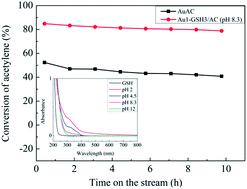
Gold–glutathione complex catalysts for acetylene hydrochlorination were prepared at different pH values. Coal-based columnar carbon, HAuCl4·4H2O and glutathione (GSH) were added as the carrier, the precursor and the protective/reductive agent, respectively. The catalysts were characterized by Fourier transform infrared spectroscopy, ultraviolet spectrum, N2 adsorption/desorption, thermogravimetric analysis, temperature-programmed reduction/desorption, powder X-ray diffraction, transmission electron microscopy, and X-ray photoelectron spectroscopy. The highest activity is obtained over the Au1–GSH3/AC (pH 8.3) catalyst with the acetylene conversion of 82%, under the conditions of 170 °C and the C2H2 gas hourly space velocity (GHSV) of 360 h−1. It is indicated that the addition of GSH can result in the reduction of Au3+ to Au+ during the catalysts preparation process, the species of Au+ and Au0 coexist in the fresh Au1–GSH3/AC catalysts, with the individual content close to 50%. Compared with fresh Au/AC catalyst comprised of Au3+ and Au0, it is illustrated that the presence of Au+ plays an important role in enhancing the catalytic activity. Adjusting the pH of the catalyst to a suitable value can make more active species disperse well on the catalysts, inhibit coke deposition and enhance the adsorption ability of reactants.

1. Introduction

Polyvinyl chloride (PVC) is widely used in various fields, especially the application of general-purpose plastics because of its excellent physical and chemical properties. Vinyl chloride monomer (VCM) is an important monomer to synthesize polyvinyl chloride (PVC).1,2 The production methods of VCM are mainly the direct chlorination of ethylene, oxychlorination of ethylene and acetylene hydrochlorination.3 Acetylene hydrochlorination, adopting HgCl2 as the industrial catalyst, is the dominant industrial process to produce VCM in the coal-rich regions of China.4–6 The toxicity and volatility of HgCl2 can lead to serious environmental pollution,7,8 thus it is urgent to explore non-mercury catalyst for acetylene hydrochlorination reaction.9–13

In the year 1975, Shinoda et al. investigated over 20 kinds of metal chloride as active components for acetylene hydrochlorination.14 On the basis of the results, Hutchings proposed the relationship between the standard electrode potential of the metal cations and the catalytic activity of the metal chloride.15 Whereafter, the Hutchings' group showed that gold was the most active catalyst for acetylene hydrochlorination.10 From then on, supported Au3+ catalysts have caused wide attention. The potential of gold to catalyze acetylene hydrochlorination provides an environmental friendly route for the production of VCM.5 However, the high cost and the poor stability of gold make it difficult for industrial application. In order to decrease the cost and improve the stability of gold catalysts, many researchers have begun to do some improvement to overcome these shortcomings. The addition of metal additives, including La2+, Cu2+, Ni2+, Bi3+, Sr2+, Ba2+, Cs+ and Sn2+ have been studied.3,5,8,16–20 Compared with the Au catalyst for acetylene hydrochlorination, the Au catalysts with the mental additives exhibited a better catalytic activity and stability. For example, Wei et al.5 reported that the addition of Bi3+ to Au inhibited the complete reduction of Aun+ (n = 1 or 3) to metallic nanoparticles, retained the Au active species in the form of Au+ and led to higher activity for acetylene hydrochlorination. In recent years, however, the catalytic efficiency of metallic Au0 catalysts has been investigated by many researchers. Dai et al.21 investigated the valence state and dispersion of the AuCl3/AC catalyst in acetylene hydrochlorination deactivation process, the results showed that the metallic Au0 exhibited considerable catalytic activity and the aggregation of the Au nanoparticles was another reason of the deactivation of Au-based catalyst besides the reduction of Au3+ component. Yang et al.22 used a new impregnation method to prepare a gold catalyst with the only active species of Au0, Zheng et al.23 prepared the Au–Cu–SH/AC catalysts with the AuNPs as the active species. All the Au0-based catalysts showed the better catalytic activity and stability. In order to keep the long-term stability of the novel catalysts, the gold complexes catalysts were researched by some researchers. Hutchings et al.24 investigated that the Na3Au(S2O3)2/C catalyst displayed greater activity and long-term stability after studied a serious gold complexes catalysts. Zhang et al.25 prepared the AuPPh3Cl/AC catalyst containing a large proportion Au+, which improved the catalytic activity and stability. Therefore, due to the considerable catalytic activity of the Au+ and the significant influence of the dispersion of the Au active species on the catalysts for the reaction, we aimed to prepare the catalysts with the Au+ as the main species and adjusted the dispersion of the active components on the catalysts for acetylene hydrochlorination.

Glutathione (GSH) is a ubiquitous tripeptide (γ-Glu-Cys-Gly), which acts primarily as a reducing agent in biologic system. The presence of thiol, amino group and carboxylic acid on GSH make it being widely used in making water-soluble nanoparticles for biological applications.26 GSH-coated gold nanoparticles have been synthesized via sodium borohydride reduction of the mixture of tetrachloroauric acid and GSH in organic solvent–water by many researchers.26–30 Hainfeld and co-workers26 developed a method in preparing size-controllable GSH capped gold nanoparticles by varying the pH of the solution before reduction. The synthesis process was divided into three steps. The first step was the reduction of Au3+ to Au+ by GSH, the second step was the formation of Au–GSH complexes by bridging Au+ ions with the thiolate sulfur atom of GSH, which was the key procedure to control the size of the complexes, and the last step was the addition of reducing agent to form the Au nanoparticles.26,31,32 Considering the reduction performance of thiol and the potential pH-sensitive advantage of the presence of carboxylic acid and amino groups on GSH, in this work, we synthesized the Au–GSH complex with the carbon support and assessed the catalytic performance for acetylene hydrochlorination.

2. Experimental

2.1 Materials

HAuCl4·4H2O (with 47.8% Au content) was purchased from Alfa Aesar company; reduced glutathione (GSH) was purchased from Beijing Bailingwei Technology Development Co., Ltd., and coal-based columnar activated carbon (φ = 3 mm, l = 5 mm) was purchased from Ningxia Huahui company. All the chemicals were commercially available and were used without further purification.

2.2 Catalyst preparation

The Au–GSH complexes were synthesized using certain molar ratio of Au/GSH under different pH values according to the literature.26,30,33,34 The aqueous solution of GSH (16 ml, 0.75 mmol) was mixed with the 5 ml aqueous solution of HAuCl4 at 3[thin space (1/6-em)]:[thin space (1/6-em)]1 molar ratios for 10 min, 1 M NaOH was introduced into the resulting mixture to adjust the pH to the particular value (2, 4.5, 8.3 and 12, respectively), followed by stirring at 25 °C for 12 h. The carbon-supported Au–GSH catalysts were prepared using an incipient wetness impregnation technique,35 using the activated carbon (AC) as the support. The final solutions were added dropwise to the activated carbon under stirring and then putted into ultrasonic-bath for 15 min, followed by evaporation at 60 °C for 12 h and desiccation at 120 °C for 12 h to obtain the supported catalysts. The samples were denoted as Au1–GSH3/AC (pH 2), Au1–GSH3/AC (pH 4.5), Au1–GSH3/AC (pH 8.3), Au1–GSH3/AC (pH 12), respectively.

On the other hand, the different molar ratios of GSH and Au catalysts at pH 8.3 were also prepared by using the same method for comparison. The obtained catalysts were denoted as Au1–GSH1/AC (pH 8.3), Au1–GSH2/AC (pH 8.3), Au1–GSH3/AC (pH 8.3) and Au1–GSH4/AC (pH 8.3), respectively. The Au/AC catalyst was prepared using an incipient wetness impregnation technique.35 A certain concentration of HAuCl4 aqueous solution was added dropwise to the activated carbon. The product was set aside for 4 h in room temperature, evaporated, and then dried at 120 °C for 12 h. The Au loading amount of all the catalysts were fixed at 0.5 wt%.

2.3 Catalytic performance tests

Activity tests were carried out in a fixed bed microreactor (i.d. of 10 mm) at normal pressure. The nitrogen was filled in the reactor to remove the air and water of the system until the reaction temperature raised from room temperature to a certain value, then the hydrogen chloride (gas, 99.0%) was fed into the reactor to activate the catalyst (1.2 g) for a period time, after that, the acetylene (gas, 99.0%) was introduced in mixing vessel for reaction at 170 °C with a total C2H2 gas hours space velocity (GHSV) of 360 h−1 (C2H2: 18 ml min−1, HCl: 19.8 ml min−1). The temperature was controlled by the CKW-1100 temperature controller. C2H2 and HCl were dried using silica-gel drier and 5 A molecular sieves to remove trace impurities, respectively. The pressures of the reactants, both HCl and C2H2, were in the range of 1.1–1.2 bar, all the gas flows were controlled by mass flow meters. The exit gas mixture from the reactor was firstly passed through an absorption bottle filled with solution of NaOH to remove the unreacted hydrogen chloride and then analyzed on-line using gas chromatography (Beifen 3420 A).

2.4 Catalyst characterization

The Fourier transform infrared spectroscopy (FT-IR) was recorded on a Bruker Vertex 70 spectrometer with the resolution of 4 cm−1 in the 500–4000 cm−1 wavenumber range. The samples were in the form of liquid, dropped onto the ZnSe transparent support and dried in the drying oven.

The UV-vis absorption spectra of the Au1–GSH3 (pH x) (x = 2, 4.5, 8.3, 12) complexes in aqueous solutions were measured by Varian Cary300 spectrophotometers at 25 °C using a 3 ml quartz cuvette with 1 cm path length.

The surface area and pore volume were determined by Quantachrome Autosorb Automated Gas Sorption System (Quantachrome Instruments, USA). The samples were measured at −196 °C under the liquid nitrogen and degassed at 300 °C for 3 h.

Thermogravimetric analysis (TGA) was analyzed by TG-DTA 2 thermal analyzer (METTLER TOLEDO, Switzerland) under the air atmosphere with the flow rate of 50 ml min−1. The temperature was increased from 35 °C to 900 °C with the heating rate of 10 °C min−1.

Temperature-programmed reduction (TPR) and temperature-programmed desorption (TPD) experiments were performed using an AutoChem BET TPR/TPD (Quantachrome Instruments AMI-90). For the TPR experiment, the samples (about 150 mg) were treated with He gas at 30 °C for 30 min, then the temperature was increased from 30 to 900 °C with the heating rate of 10 °C min−1 under the reducing gas of 10% H2 in Ar. For the TPD experiment, each catalyst sample (about 150 mg) was treated under pure C2H2 and HCl gas at reaction temperature (170 °C) for 3 h with the flow rate of 25 ml min−1, after the adsorption, the pure He gas was introduced to blow the samples at 30 °C for 30 min, then the temperature was increased from 30 to 750 °C under He gas atmosphere. For the C2H3Cl-TPD experiment, the process was the same with the C2H2/HCl-TPD, except that the pretreatment condition was at 100 °C for 1 h.

X-ray diffraction spectra (XRD) date were collected using a D8-Focus X-ray diffractometer with monochromatized Cu Kα radiation (λ = 1.5406 Å), with 2θ ranging from 20° to 90°, the scanning rate was 5 °C min−1.

X-ray photoelectron spectroscopy (XPS) was obtained using a PHI5000 Versa Probe spectrometer (ULVAC-PHI, JP) with a 24.2 W monochromatized Al-Kα X-ray source, with a scanning step of 0.1 eV. The binding energies were referenced to the C (1s) level of contaminated carbon at 284.8 eV.

Transmission electron microscopy (TEM) was carried out on the JEM 2100F electron microscope. The catalyst powders were dispersed ultrasonically in ethanol and then droplets of the suspension were laid on a 300-mesh copper TEM grid with a holey carbon film.

3. Results and discussion

3.1 Catalytic performance for acetylene hydrochlorination

In order to investigate the effect of the amount of GSH on the catalytic performance, the catalysts with different GSH/Au molar ratios were prepared and assessed. Fig. 1 shows the acetylene conversion along with the reaction time of AC, GSH/AC, Au/AC and Au1–GSHx/AC (pH 8.3) (x = 1, 2, 3, 4) catalysts, respectively. GSH/AC and AC show the acetylene conversion of 13% and 15% in 12 h, respectively. Au/AC catalyst shows an initial acetylene conversion of 52%, which decreases to 38% after 12 h. Over Au1–GSHx/AC (pH 8.3) (x = 1, 2, 3, 4) catalysts, the acetylene conversion is respectively 62%, 79%, 82%, and 68% at 3 h with the increasing GSH/Au molar ratio from 1 to 4, whereas it decreases to 58%, 64%, 76%, and 63% after 12 h. The selectivity to vinyl chloride over all the catalysts is higher than 99% (Fig. S1). It is worth noting that the acetylene conversion of the samples which added GSH is higher than that of the Au/AC catalyst. The optimal molar ratio of GSH/Au is 3[thin space (1/6-em)]:[thin space (1/6-em)]1 and the Au1–GSH3/AC (pH 8.3) catalyst exhibits the optimal catalytic performance for acetylene hydrochlorination.
image file: c6ra23455k-f1.tif
Fig. 1 Acetylene conversion of different molar ratio of Au/GSH for Au–GSH/AC catalysts under pH 8.3: (a) GSH/AC, (b) AC, (c) Au/AC, (d) Au1–GSH1/AC (pH 8.3), (e) Au1–GSH2/AC (pH 8.3), (f) Au1–GSH3/AC (pH 8.3), (g) Au1–GSH4/AC (pH 8.3). Reaction conditions: temperature (T) = 170 °C, GHSV (C2H2) = 360 h−1, and feed volume ratio VHCl/VC2H2 = 1.1.

Adopting the optimal GSH/Au molar ratio, we prepared the Au1–GSH3/AC catalysts at different pH values and evaluated these samples for acetylene hydrochlorination. As shown in Fig. 2, with the increase of the pH from 2 to 12, the acetylene conversion is 62% over Au1–GSH3/AC (pH 2), 76% over Au1–GSH3/AC (pH 4.5), 82% over Au1–GSH3/AC (pH 8.3) and 78% over the Au1–GSH3/AC (pH 12) at 3 h, decreasing to 59%, 72%, 80% and 75% after 10 h reaction. The selectivity to vinyl chloride over all the catalysts is higher than 99% (Fig. S2). It can be seen that Au1–GSH3/AC (pH 8.3) catalyst exhibits the optimal activity, indicating that the catalysts prepared at a suitable pH values behave a better catalytic activity for acetylene hydrochlorination.


image file: c6ra23455k-f2.tif
Fig. 2 Acetylene conversion of different pH values for Au1–GSH3/AC catalysts: (a) GSH/AC, (b) AC, (c) Au/AC, (d) Au1–GSH3/AC (pH 2), (e) Au1–GSH3/AC (pH 4.5), (f) Au1–GSH3/AC (pH 8.3), (g) Au1–GSH3/AC (pH 12). Reaction conditions: temperature (T) = 170 °C, GHSV (C2H2) = 360 h−1, and feed volume ratio VHCl/VC2H2 = 1.1.

3.2 Catalyst characterization

3.2.1 Formation of the Au–GSH complexes. FT-IR analysis was performed to demonstrate the interaction between the Au and glutathione. As shown in Fig. 3, the peaks at 1550 cm−1, 3026 cm−1 and 3252 cm−1 corresponding to N–H group vibrations.36,37 The typical band at 2526 cm−1 of the GSH spectra (Fig. 3(a)) is due to S–H stretching, which is absent in the Au1–GSH3 (pH 8.3) (Fig. 3(b)), confirming the existence of the interaction between Au and GSH.30,37 The UV-vis spectra can reflect the structural changes in the Au–GSH complexes by analyzing the interaction of adjacent Au+. The mechanism of the formation of Au–GSH complexes followed the general mechanism proposed previously.26,27 On the base of the mechanism, the presence of thiol group on the GSH lead to the reduction of Au3+ to Au+, and the Au+ ions have a coordination number of 2 and are bridged by the sulfur atom of GSH38 which can form the Au–S–Au (φ). The GSH molecule has four ionizable functional groups (one ammonium group, two carboxylic acid group, and one thiol group), therefore under different pH values the GSH exhibits different number of net charge.39 The number of negatively charge on the GSH ligands at the lower pH is less than that at higher pH. It can lead to the stronger repulsive interaction of negatively charge on the GSH under the higher pH condition, the formation of larger Au–S–Au angle (φ),26 which can make gold species dispersed well. As shown in Fig. 4, the absorption at ∼320 nm is an indication of metal–metal interaction,40,41 which is weakened by the increasing of pH values. In terms of the Au–S–Au angle (φ), the UV-vis spectra indicate that a smaller angle is favored at lower pH and a larger angle at higher pH. It is proved that the higher pH tends to form more dispersion gold species, and the catalysts containing more dispersed gold species can exhibit excellent catalytic activity for acetylene hydrochlorination.26
image file: c6ra23455k-f3.tif
Fig. 3 FT-IR spectra of (a) pure GSH and (b) Au1–GSH3 (pH 8.3) complexes.

image file: c6ra23455k-f4.tif
Fig. 4 UV-vis spectra of pure GSH and Au1–GSH3 aqueous solutions at different pH values.
3.2.2 Textual properties and coke deposition for the catalysts. The experiments of N2 adsorption/desorption were performed to investigate the variation tendency of the surface areas and total pore volume of the catalysts. The results are shown in Table 1, the specific surface areas and total pore volume of the fresh catalysts decrease after loading the active species. The phenomenon is called dilution effect, the more loading species, the more pores of supports are filled or blocked.42 After the reaction, the surface areas of the used catalysts have a significant decrease, which may be caused by the coke deposition or the collapse of the pore structures.8 As listed in Table 1, the variation trend of the specific surface areas (ΔSBET%) of the catalysts are following the order: Au/AC (13.8%) > Au1–GSH3/AC (pH 2) (13.2%) > Au1–GSH3/AC (pH 12) (12.6%) > Au1–GSH3/AC (pH 4.5) (11.4%) > Au1–GSH3/AC (pH 8.3) (10.8%). The changes of the total pore volume (ΔVtotal%) show the same trend in the following order: Au/AC (31.8%) > Au1–GSH3/AC (pH 2) (20%) > Au1–GSH3/AC (pH 12) (15.5%) > Au1–GSH3/AC (pH 4.5) (10.3%) > Au1–GSH3/AC (pH 8.3) (9.7%). The decrease of the surface areas and total pore volume of the catalysts may be due to the carbon deposition on the catalysts or the collapse of the pore structures during the reaction. It is worth noting that the sample (pH 8.3) has the least carbon deposition, corresponding to the highest activity of the Au1–GSH3/AC (pH 8.3) catalyst (Fig. 2).
Table 1 Pore structure parameters of catalysts test by N2 adsorption–desorption
Catalyst SBET (m2 g−1) Total pore volume (cm3 g−1)
Fresh Used Fresh Used
AC 1276 1156 0.731 0.715
Au/AC 1218 1050 0.723 0.701
Au1–GSH3/AC (pH 2) 903 783 0.541 0.433
Au1–GSH3/AC (pH 4.5) 996 882 0.589 0.528
Au1–GSH3/AC (pH 8.3) 984 878 0.577 0.521
Au1–GSH3/AC (pH 12) 792 692 0.476 0.402


TGA was used to evaluate the amount of coke deposition on the surface of catalysts directly. As seen in Fig. 5 and S3, due to very little water adsorption on the fresh and used catalysts, there are no apparent weight loss before 150 °C for all the samples. For the Au/AC catalyst (Fig. 5(a)), there is a slight weight loss of 1.1% for the fresh sample in the range of 150–500 °C, but the used sample has an obvious weight loss of 5.94%, which is attributed to the burning of coke deposition on the catalyst surface. There is a rapid weightlessness above 500 °C, which is mainly attributed to the combustion of carbon carrier.16 It is worth mentioning that the calculation method of the amount of coke deposition on the used catalysts is that, in the range of 150–500 °C, assuming the amount of deposited coke on the whole used Au/AC catalyst equals X and the mass of the pure used Au/AC catalyst equals Y, there are two equations, 100/1.1 = (100 − X)/Y and X + Y = 5.94. We get that the value of Y is 1.05, the value of X is 4.89, which is the real amount of coke deposition on the surface of the used catalyst.8 Based on the same calculation method, the amounts of deposited coke of Au1–GSH3/AC (pH x) catalysts are listed in Table 2. The amount of coke deposition is following the order: Au/AC (4.9%) > Au1–GSH3/AC (pH 2) (3.7%) > Au1–GSH3/AC (pH 4.5) (2.4%) > Au1–GSH3/AC (pH 12) (2.0%) > Au1–GSH3/AC (pH 8.3) (1.9%). It shows that the amount of coke deposition of the catalysts decrease with the increasing of pH value and the Au1–GSH3/AC (pH 8.3) has the least amount of carbon deposition. Combining with the BET results, the sample at an appropriate pH value has the lower ΔSBET% and ΔVtotal%. The decrease of the surface areas of the catalysts due to the carbon deposition which cause the blocking of the catalyst pores during the reaction. The results indicate that the catalyst under an appropriate pH value condition exhibits a better ability of resistance to coke deposition during the acetylene hydrochlorination reaction.


image file: c6ra23455k-f5.tif
Fig. 5 TG and DTG curves of the fresh and used (a) Au/AC and (b) Au1–GSH3/AC (pH 8.3) catalysts.
Table 2 Coke deposition on the Au-based catalysts
Catalysts Amount of carbon deposition (%)
AC 4.2
GSH/AC 3.4
Au/AC 4.9
Au1–GSH3/AC (pH 2) 3.7
Au1–GSH3/AC (pH 4.5) 2.4
Au1–GSH3/AC (pH 8.3) 1.9
Au1–GSH3/AC (pH 12) 2.0


3.2.3 Reduction and adsorption properties of the fresh catalysts. TPR profiles were carried out to determine whether the addition of GSH and the modulating of pH value can affect the valence and the dispersity of Au species. Fig. 6 displays the TPR analysis results of the fresh Au/AC and fresh Au1–GSH3/AC (pH x) (x = 2, 4.5, 8.3, 12) catalysts. For all the samples, the broad band at 550–850 °C can be assigned to the reduction peaks of the oxygen-containing functional groups on the support which release CO and CO2 during the reduction process.8,18 For the fresh Au/AC catalyst, a weak reduction peak appears about 285 °C, corresponding to the reduction of Au3+ species.43,44 The profiles of Au1–GSH3/AC catalysts show obvious peak in 400–520 °C, attributed to the reduction of Au+ species.45 The reduction peak temperature appears at 500 °C, 481 °C, 477 °C and 479 °C, which represents the reduction of Au+ of Au1–GSH3/AC (pH 2), Au1–GSH3/AC (pH 4.5), Au1–GSH3/AC (pH 8.3) and Au1–GSH3/AC (pH 12) catalysts, respectively. It shows that the reduction temperature of the catalysts decreases with the increasing of pH values and the sample at pH 8.3 shows the lowest reduction temperature. It can be illustrated that the size of the gold particles are smaller in the Au1–GSH3/AC samples under the higher pH values condition than that of the lower pH values condition. The result is proved by TEM images. Fig. S5 shows typical TEM images and particle size distributions of the fresh and used catalysts. The particle size of the fresh pH 8.3 sample is 1.67 nm which is the smallest for all the catalysts. The TPR profiles also show that the content and the dispersity of the Au active species have significant changes by controlling pH values of the catalysts. It can be seen that the Au1–GSH3/AC (pH 8.3) has the relative larger area and sharper peak compared with the other catalysts, indicating that more Au active species exist and they are highly dispersed on the catalyst.3 The result is consistent with the activity of the Au1–GSH3/AC (pH 8.3), which exhibits the most excellent catalytic performance. The TPR results indicate that the addition of GSH can lead to the reduction of Au3+ to Au+, adjusting the pH of the catalysts to a suitable value can increase the relative amount of Au active species and make it disperse well on the catalyst.
image file: c6ra23455k-f6.tif
Fig. 6 H2-TPR profiles of the fresh Au/AC and fresh Au1–GSH3/AC catalysts.

TPD measurements were carried out to investigate the adsorption properties of the two reactants and the product over the fresh Au1–GSH3/AC (pH x) (x = 2, 4.5, 8.3, 12) catalysts. Fig. 7(A) shows the C2H2-TPD profiles of the fresh Au/AC and Au1–GSH3/AC (pH x) catalysts. The desorption temperature of acetylene increases in the order of Au/AC (236 °C) < Au1–GSH3/AC (pH 12) (322 °C) < Au1–GSH3/AC (pH 2) (327 °C) < Au1–GSH3/AC (pH 4.5) (329 °C) < Au1–GSH3/AC (pH 8.3) (337 °C). The desorption temperature reflects the binding strength of the adsorbed species on the catalysts surface. It is clear that the samples at the suitable pH value can enhance the ability of the acetylene adsorption. The individual desorption amount of the catalysts is shown in Table S1. It is obvious that the desorption areas of acetylene for the catalysts increase with the increasing of the pH values. Fig. 7(B) shows the HCl-TPD profiles of the fresh Au/AC and Au–GSH complex catalysts. There are two desorption peaks in the HCl-TPD profiles for all the catalysts, which may be supposed to physical adsorption in the range of 100–200 °C and chemical adsorption in the range of 200–550 °C of HCl. We consider that the mainly adsorption of the catalysts for the HCl is the chemical adsorption. It can be seen that the desorption areas of the catalysts increase with the increasing of pH values and the Au1–GSH3/AC (pH 8.3) has the largest desorption area. The C2H3Cl-TPD profiles of the catalysts are shown in Fig. 7(C). The desorption areas and the desorption temperature of Au1–GSH3/AC (pH x) (x = 2, 4.5, 8.3, 12) catalysts are smaller and lower than that of Au/AC. All the results indicate that adjusting the pH of the catalysts to a suitable value can improve the adsorption of the two reactants and desorption of the product on the catalysts. It is worth mentioning that the Au1–GSH3/AC (pH 8.3) catalyst shows the highest desorption temperature of both reactants, by comparing with the other catalysts, which is consistent with the highest catalytic activity of the Au1–GSH3/AC (pH 8.3) catalyst (Fig. 2).


image file: c6ra23455k-f7.tif
Fig. 7 C2H2-TPD (A), HCl-TPD (B) and C2H3Cl-TPD (C) profiles of the fresh Au/AC and Au1–GSH3/AC catalysts.
3.2.4 Valence change of the active component. XRD patterns of the fresh and used Au-based catalysts are shown in Fig. 8. The diffraction peak at 26° is observed in all the samples which demonstrates typical peak of coal-based carbon materials.46,47 In order to illustrate what the typical diffraction peak at 26° in XRD pattern represented, Fe2O3 or SiO2, the carbon was treated by hydrochloric acid and hydrofluoric acid. The treating methods are shown in the ESI and the final samples are denoted as HCl–AC and HF–AC. The XRD patterns of the acid-treated carbon were shown in Fig. S4. It can be seen that the peak at 26° is observed in both of HCl–AC and AC samples but, disappears in HF–AC samples. It is known that Fe2O3 can be washed away by both HCl and HF, the SiO2 can be only removed by HF, and therefore, it is reasonable to consider that the typical diffraction peak at 26° is due to SiO2. As the apart from the amorphous diffraction peaks and the typical coal peaks of the activated carbon, the Au diffraction peak is detected at 38.08° and 44.34° in the fresh Au/AC catalyst, indicating that few large particles exist in the Au/AC catalyst. However, there is no discernible Au reflection peak appears in the fresh Au1–GSH3 complex catalysts, suggesting the absence of gold nanoparticles with size larger than 4.0 nm. This is confirmed by TEM images in Fig. S5. The average particle size of the Au particle is 3.96 nm and 1.67 nm for the fresh Au/AC and fresh Au1–GSH3/AC (pH 8.3) catalysts. Compared to the fresh Au/AC catalyst, the typical diffraction peaks of Au0 appear at 38.08°, 44.34°, 64.54° and 77.68° (2θ), corresponding to the (111), (200), (220) and (311) planes of metallic Au0 are shown in used Au/AC catalyst, indicating that the reduction of Au3+ or catalyst sintering occurs during the reaction.18 However, only the typical diffraction peak of Au (111) at 38.08° (2θ) is observed in the used Au1–GSH3/AC (pH x) (x = 2, 4.5, 8.3, 12) samples. The TEM images of the used catalysts in Fig. S5 reflect the results more directly. It is intense to illustrate that adjusting the pH of the catalysts to the suitable value can inhibit the reduction of Au active species to Au0. More smaller and more dispersed Au active species appear in the Au1–GSH3/AC (pH x) catalysts. The results of XRD patterns are also in accordance with that of TPR profiles (Fig. 6).
image file: c6ra23455k-f8.tif
Fig. 8 XRD patterns of the fresh (A) and used (B) Au/AC, Au1–GSH3/AC catalysts.

The valence states and relative amount of the active species of the fresh and used Au/AC and Au1–GSH3/AC (pH x) catalysts were also analyzed by XPS spectra. Fig. S6 shows the high-resolution XPS spectra for the Au 4f orbital of Au/AC and Au1–GSH3/AC catalysts. The binding energy and the relative content of the Au species are listed in Table 3. For the Au/AC catalyst, the electron binding energies of Au 4f7/2 peaks at 84.1 and 86.2 eV are assigned to Au0 and Au3+. For the Au1–GSH3/AC catalysts, the adding of GSH can lead to the reduction of Au3+ to Au+. The amount of Au+ is respectively 51.2%, 51.6%, 55% and 54% for Au1–GSH3/AC (pH 2), Au1–GSH3/AC (pH 4.5), Au1–GSH3/AC (pH 8.3) and Au1–GSH3/AC (pH 12). It is indicated that the appropriate pH value increases the amount of Au+ species in the catalysts. After the reaction, the amount of Au+ in all the Au1–GSH3/AC samples decreases while that of Au0 increases due to the reduction performance of C2H2 during the reaction. As listed in Table 3, the amount of Au+ and Au0 species in the fresh Au1–GSH3/AC (pH 8.3) catalyst are 55% and 45%, respectively. It is clear that the species of Au+ and Au0 coexist in the fresh Au1–GSH3/AC catalysts, with the individual content close to 50%. However, there is no Au+ species in the fresh Au/AC catalyst, and the amount of Au3+ and Au0 species is 27% and 73%. Combining with the other characterization results, the presence of Au+ plays an important role in enhancing the catalytic activity.

Table 3 The relative contents and binding energies of Au species in fresh and used catalysts
Catalyst Au species (area%) Binding energies (eV)
Au3+ Au+ Au0 Au3+ Au+ Au0
Fresh Au/AC 27.0 73.0 86.2 84.1
Used Au/AC 13.7 86.3 86.1 84.1
Fresh Au1–GSH3/AC (pH 2) 51.2 48.8 84.9 84.4
Used Au1–GSH3/AC (pH 2) 38.0 62.0 84.9 84.3
Fresh Au1–GSH3/AC (pH 4.5) 51.6 48.4 84.8 84.4
Used Au1–GSH3/AC (pH 4.5) 41.2 58.8 84.6 84.2
Fresh Au1–GSH3/AC (pH 8.3) 55.0 45.0 84.9 84.3
Used Au1–GSH3/AC (pH 8.3) 44.7 55.3 85.0 84.3
Fresh Au1–GSH3/AC (pH 12) 54.0 46.0 84.7 84.2
Used Au1–GSH3/AC (pH 12) 44.6 55.4 85.1 84.2


4. Conclusions

In conclusion, we have synthesized the Au1–GSH3/AC catalysts under different pH values for acetylene hydrochlorination. The Au1–GSH3/AC (pH 8.3) catalyst exhibits the best catalytic performance with the acetylene conversion of 82% and the selectivity to VCM of 100%. The ligand, GSH, plays an important role in the preparation of catalysts. Not only the existence of thiol on GSH can lead to the reduction of Au3+ to Au+, but also the presence of carboxylic acid and amino on GSH become the essential condition on the modulate of the pH values of catalysts. The suitable pH values for the catalysts can result in the active species highly dispersed on the catalysts, inhibit coke deposition and enhance the adsorption ability of the reactants. Due to the reducing action of GSH, the species of Au+ and Au0 coexist in the fresh Au1–GSH3/AC catalysts, with the individual content close to 50%. Comparing with the fresh Au/AC catalyst comprised of Au3+ and Au0, the presence of Au+ plays an important role in enhancing the catalytic activity. The use of aqueous preparation routes for the catalysts show the advantages of the environmentally friendly. The using of the coal-based columnar carbon in the reaction has a high industrial application prospect for acetylene hydrochlorination.

Acknowledgements

We gratefully acknowledge the financial supported by the Major State Basic Research Development Program (No. 2012CB720302) and NSFC (21176174).

References

  1. J. L. Zhang, N. Liu, W. Li and B. Dai, Front. Chem. Sci. Eng., 2011, 5, 514 CrossRef CAS.
  2. J. L. Zhang, W. Sheng, C. L. Guo and W. Li, RSC Adv., 2013, 3, 2106 Search PubMed.
  3. H. Y. Zhang, W. Li, X. Q. Li, W. Zhao, J. J. Gu, X. Y. Qi, Y. Z. Dong, B. Dai and J. L. Zhang, Catal. Sci. Technol., 2015, 5, 1870 CAS.
  4. M. Conte, C. J. Davies, D. J. Morgan, T. E. Davies, A. F. Carley, P. Johnston and G. J. Hutchings, Catal. Sci. Technol., 2013, 3, 128 CAS.
  5. K. Zhou, W. Wang, Z. Zhao, G. Luo, J. T. Miller, M. S. Wong and F. Wei, ACS Catal., 2014, 4, 3112 CrossRef CAS.
  6. B. Dai, K. Chen, Y. Wang, L. H. Kang and M. Y. Zhu, ACS Catal., 2015, 5, 2541 CrossRef CAS.
  7. M. Conte, C. J. Davies, D. J. Morgan, A. F. Carley, P. Johnston and G. J. Hutchings, Catal. Lett., 2014, 144, 1 CrossRef CAS.
  8. G. B. Li, W. Li and J. L. Zhang, Catal. Sci. Technol., 2016, 6, 3230 CAS.
  9. D. M. Smith, P. M. Walsh and T. L. Slager, J. Catal., 1968, 11, 113 CrossRef CAS.
  10. G. J. Hutchings and D. T. Grady, Appl. Catal., 1985, 17, 155 CrossRef CAS.
  11. B. Nkosi, N. J. Coville and G. J. Hutchings, Appl. Catal., 1988, 43, 33 CrossRef CAS.
  12. B. Nkosi, M. D. Adams, N. J. Coville and G. J. Hutchings, J. Catal., 1991, 128, 378 CrossRef CAS.
  13. M. Conte, A. F. Carley, C. Heirene, D. J. Willock, P. Johnston, A. A. Herzing, C. J. Kiely and G. J. Hutchings, J. Catal., 2007, 250, 231 CrossRef CAS.
  14. K. Shinoda, Chem. Lett., 1975, 4, 219 CrossRef.
  15. G. J. Hutchings, J. Catal., 1985, 96, 292 CrossRef CAS.
  16. S. J. Wang, B. Shen and Q. Song, Catal. Lett., 2010, 134, 102 CrossRef CAS.
  17. H. Y. Zhang, B. Dai, X. G. Wang, L. L. Xu and M. Y. Zhu, J. Ind. Eng. Chem., 2012, 18, 49 CrossRef CAS.
  18. Y. F. Pu, J. L. Zhang, X. Wang, H. Y. Zhang, L. Yu, Y. Z. Dong and W. Li, Catal. Sci. Technol., 2014, 4, 4426 CAS.
  19. J. Zhao, J. T. Xu, J. H. Xu, J. Ni, T. T. Zhang, X. L. Xu and X. N. Li, ChemPlusChem, 2015, 80, 196 CrossRef CAS.
  20. Y. Z. Dong, H. Y. Zhang, W. Li, M. X. Sun, C. L. Guo and J. L. Zhang, J. Ind. Eng. Chem., 2016, 35, 177 CrossRef CAS.
  21. B. Dai, Q. Q. Wang, F. Yu and M. Y. Zhu, Sci. Rep., 2015, 5, 10553 CrossRef PubMed.
  22. X. H. Tian, G. T. Hong, B. B. Jiang, F. P. Lu, Z. W. Liao, J. D. Wang and Y. R. Yang, RSC Adv., 2015, 5, 46366 RSC.
  23. G. T. Hong, X. H. Tian, B. B. Jiang, Z. W. Liao, J. D. Wang, Y. R. Yang and J. Zheng, RSC Adv., 2016, 6, 3806 RSC.
  24. P. Johnston, N. Carthey and G. J. Hutchings, J. Am. Chem. Soc., 2015, 137, 14548 CrossRef CAS PubMed.
  25. Y. Z. Dong, W. Li, Z. Yan and J. L. Zhang, Catal. Sci. Technol., 2016 10.1039/c6cy01241h.
  26. R. P. Brinas, M. H. Hu, L. P. Qian, E. S. Lymar and J. F. Hainfeld, J. Am. Chem. Soc., 2008, 130, 975 CrossRef CAS PubMed.
  27. T. G. Schaaff, G. Knight, M. N. Shafigullin, R. F. Borkman and R. L. Whetten, J. Phys. Chem. B, 1998, 102, 10643 CrossRef CAS.
  28. T. G. Schaaff and R. L. Whetten, J. Phys. Chem. B, 2000, 104, 2630 CrossRef CAS.
  29. Y. Negishi, Y. Takasugi, S. Sato, H. Yao, K. Kimura and T. Tsukuda, J. Am. Chem. Soc., 2004, 126, 6518 CrossRef CAS PubMed.
  30. Y. Negishi, K. Nobusada and T. Tsukuda, J. Am. Chem. Soc., 2005, 127, 5261 CrossRef CAS PubMed.
  31. M. Brust, M. Walker, D. Bethell, D. J. Schiffrin and R. Whyman, J. Chem. Soc., Chem. Commun., 1994, 801 RSC.
  32. M. M. Alvarez, J. T. Khoury, T. G. Schaaff, M. N. Schafigullin, I. Vezmar and R. L. Whetten, J. Phys. Chem. B, 1997, 101, 3706 CrossRef CAS.
  33. J. Zheng, Ch, PhD, Georgia Institute of Technology, 2005.
  34. C. Zhou, C. Sun, M. X. Yu, Y. P. Qin, J. G. Wang, M. Kim and J. Zheng, J. Phys. Chem. C, 2010, 114, 7727 CAS.
  35. M. Conte, A. F. Carley, G. Attard, A. A. Herzing, C. J. Kiely and G. J. Hutchings, J. Catal., 2008, 257, 190 CrossRef CAS.
  36. R. Hikosaka, F. Nagata, M. Tomita and K. Kato, Colloids Surf., B, 2016, 140, 262 CrossRef CAS PubMed.
  37. B. Mohanty, J. Behera, S. Acharya, P. Mohanty and A. K. Patnaik, Int. J. Adv. Chem., 2014, 2, 39 Search PubMed.
  38. K. Brown, R. V. Parish and C. A. McAuliffe, J. Am. Chem. Soc., 1981, 103, 4943 CrossRef CAS.
  39. N. W. Pirie and K. G. Pinhey, J. Biol. Inorg. Chem., 1929, 84, 321 CAS.
  40. C. King, J. C. Wang, M. N. I. Khan and J. P. Fackler Jr, Inorg. Chem., 1989, 28, 2145 CrossRef CAS.
  41. K. H. Leung, D. L. Phillips, Z. Mao, C. M. Che, V. M. Miskowski and C. K. Chan, Inorg. Chem., 2002, 41, 2054 CrossRef CAS PubMed.
  42. H. Y. Zhang, B. Dai, X. G. Wang, W. Li, Y. Han, J. J. Gu and J. L. Zhang, Green Chem., 2013, 15, 829 RSC.
  43. C. Baatz, N. Decker and U. Prüße, J. Catal., 2008, 258, 165 CrossRef CAS.
  44. M. Conte, C. J. Davies, D. J. Morgan, T. E. Davies, D. J. Elias, A. F. Carley, P. Johnston and G. J. Hutchings, J. Catal., 2013, 297, 128 CrossRef CAS.
  45. X. Yin, C. F. Huang, L. H. Kang, M. Y. Zhu and B. Dai, Catal. Sci. Technol., 2016, 6, 4254 CAS.
  46. B. Rubio and M. T. Izquierdo, Waste Manag., 2010, 30, 1341 CrossRef CAS PubMed.
  47. X. M. Xiao, D. D. Liu, Y. J. Yan, Z. L. Wu, Z. S. Wu and G. Cravotto, J. Taiwan Inst. Chem. Eng., 2015, 53, 160 CrossRef CAS.

Footnote

Electronic supplementary information (ESI) available. See DOI: 10.1039/c6ra23455k

This journal is © The Royal Society of Chemistry 2016
Click here to see how this site uses Cookies. View our privacy policy here.