
MOF-derived self-sacrificing route to hollow NiS2/ZnS nanospheres for high performance supercapacitors

Guo-Chang Li a, Minmin Liu b, Meng-Ke Wu a, Peng-Fei Liu a, Ziwei Zhou b, Shuai-Ru Zhu a, Rui Liu *b and Lei Han *ac
aState Key Laboratory Base of Novel Functional Materials and Preparation Science, School of Materials Science & Chemical Engineering, Ningbo University, Ningbo, Zhejiang 315211, China. E-mail: hanlei@nbu.edu.cn
bMinistry of Education Key Laboratory of Advanced Civil Engineering Material, School of Materials Science and Engineering, Institute for Advanced Study, Tongji University, Shanghai, 201804, China. E-mail: ruiliu@tongji.edu.cn
cKey Laboratory of Photoelectric Materials and Devices of Zhejiang Province, Ningbo University, Ningbo, Zhejiang 315211, China

Received 15th September 2016 , Accepted 22nd October 2016

First published on 24th October 2016


Abstract

Transition metal sulfides have complex valence states and exhibit excellent properties and promising applications in supercapacitors. NiS2/ZnS hollow spherical nanocomposites have been successfully synthesized via a facile MOF-derived self-sacrificing route. The synthesis process involves solvothermal method for preparation of Ni/Zn–BDC MOF and subsequently chemical sulfidation treatment to convert into NiS2/ZnS hollow nanospheres. When evaluated as electrode materials in supercapacitor, the NiS2/ZnS hollow nanospheres exhibit high capacitance of 1198 F g−1 at the current density of 1 A g−1. Moreover, an asymmetric supercapacitor based on NiS2/ZnS hollow nanospheres as the positive electrode and activated carbon (AC) as the negative electrode achieves an energy density of 28.0 W h kg−1 at a power density of 478.9 kW kg−1. The results suggest the NiS2/ZnS hollow nanospheres are promising electrode materials for high-performance supercapacitors.

Introduction

Hollow micro- and nano-particles with the properties of low density, high surface-to-volume ratio and low coefficients of thermal expansion have received significant attention due to their potential applications in catalysis, chemical sensors, drug delivery and energy storage.1–4 Especially for supercapacitors, hollow structures can provide rich electroactive sites and short diffusion path to enhance the utilization of supercapacitors electrodes at high power density.5,6 To date, various approaches have been developed to synthesize hollow micro/nanostructures, such as Kirkendall effect,7 Ostwald ripening process,8 self-assembly,9 galvanic replacement10 and templating approach.11,12 Among these methods, the templating method is considered as one of the most effective and universal approaches for the preparation of hollow structures with high uniform morphology and size.13–15 Recently, metal–organic frameworks (MOFs) and/or coordination polymers (CPs) have been utilized as both templates and precursors for the synthesis of hollow metal sulfides with various structures and components.16–19 For example, Chen et al. prepared amorphous CoS hollow polyhedra by utilizing zeolitic imidazolate framework (ZIF-67) nanocrystals as precursor for supercapacitors.16 Lou et al. reported a facile anion exchange method to synthesize a novel ball-in-ball hollow structure of ternary nickel cobalt sulfide (NiCo2S4) using NiCo-glycerate spheres as the sacrificial template.17 Although great progress has been made, the facile and controllable fabrication of novel hollow mixed metal sulfides with well-defined size, composition, morphology is still a challenge.

As a class of promising electrode materials, Ni-based sulfide materials have received particular interest due to their high theoretical specific capacitance, complex valence states and low cost.20–22 For example, NiS2 hollow spheres have been synthesized via a simple and general hydrothermal synthetic route, which presented excellent cycling stability (maintaining 96.5% of initial specific capacitance after 1000 cycles). However, the specific capacitance of the NiS2 hollow spheres is poor (547.2 F g−1 at 0.6 A g−1).21 On the other hand, ZnS is another important type of multifunctional semiconducting material and has been widely used in nanogenerators, sensors, photodetectors and energy storage devices.23–26 Hu et al. have reported the synthesis of ZnS nanospheres grown directly on flexible carbon textile (CT) through a simple and cost effective hydrothermal method.23 The obtained ZnS–CT composite electrodes exhibited a high capacitance of 747 F g−1 at a scan rate of 5 mV s−1. In comparison of single-phase counterpart, rational design and fabrication sulfide-based composite nanostructures are considered an effective strategy to achieve superior electrochemical properties.27–29 The electrochemical performance of nano-composites can be reasonably anticipated via the synergistic effect of each constituent. However, to the best of our knowledge, few reports are available on the synthesis and application of NiS2/ZnS composite as supercapacitor materials.

Herein, we report on the first example of NiS2/ZnS hollow spherical nanocomposites using a bimetallic Ni/Zn–BDC (BDC = 1,4-benzenedicarboxylate) MOF as both the precursor and the self-sacrificing template, and thioacetamide (TAA) as a sulfur source, respectively. During the MOF-derived self-sacrificing route, uniform Ni/Zn–BDC MOF spheres were synthesized via solvothermal strategy, and subsequently chemical sulfidation treatment transformed Ni/Zn–BDC into NiS2/ZnS hollow nanospheres through a facile anion-exchange reaction. The obtained NiS2/ZnS hollow nanospheres were evaluated as electrode materials for high performance supercapacitor, which exhibited a specific capacitance of 1198 F g−1 at the current densities of 1 A g−1. Moreover, an asymmetric supercapacitor assembled based on NiS2/ZnS hollow nanospheres exhibited an energy density of 28.0 W h kg−1 at a power density of 478.9 kW kg−1.

Experimental

Synthesis of Ni/Zn–BDC MOF spheres

All chemicals in the experiment were analytical grade and used without further purification. In a typical synthesis, 15 mL of 0.02 M Ni(NO3)2 in N,N-dimethylformamide (DMF) solution, 5 mL of 0.02 M Zn(NO3)2 in DMF solution, 6 mL of ethylene glycol and 0.0166 g of 1,4-benzenedicarboxylic acid were mixed at room temperature with constant stirring for 30 min. Then the mixture was transferred into a Teflon-lined autoclave and maintained at 120 °C for 6 h. After cooling to room temperature naturally, the virescent precipitation was collected by centrifugation and washed with DMF and alcohol for several times, then dried in a vacuum at 50 °C overnight.

Synthesis of NiS2/ZnS hollow spherical nanocomposites

30 mg of the above Ni/Zn–BDC MOF nanospheres were re-dispersed into 20 mL of ethanol, followed by addition of 70 mg of TAA. After stirring for 30 min, the mixture was transferred into a Teflon-lined stainless steel autoclave and kept at 160 °C for 6 h. After centrifugation and washed with ethanol for several times, the NiS2/ZnS hollow nanospheres were obtained, and then dried in a vacuum at 50 °C overnight.

Characterization

The phase structure of the samples was characterized by a Bruker D8 advance X-ray powder diffractometer using Cu Kα radiation (λ = 0.15418 nm). Fourier transform infrared (FT-IR) transmission spectra was recorded on a Nicolet 6700 IR spectrophotometer. X-ray photoelectron spectroscopy (XPS) was performed on AXIS Ultra DLD. The morphology of the samples was studied by field-emission scanning electron microscope (FE-SEM, Hitachi, S-4800) and transmission electron microscopy (TEM, JEOL, 2010F).

Electrochemical measurements

The electrochemical test was performed by an electrochemical analyzer system, CHI660E (Chenhua, Shanghai, China) using a three-electrode cell in 3 M KOH electrolyte. The NiS2/ZnS electrode, a platinum plate and a saturated calomel electrode (SCE) were respectively used as working electrode, counter electrode and reference electrode. The working electrodes was prepared by mixing 80 wt% NiS2/ZnS hollow spheres, 10 wt% acetylene black and 10 wt% polytetrafluoroethylene (PTFE) with a little N-methyl-2-pyrrolidone (NMP) to make a slurry. The slurries were coated on the nickel foam substrates of about 1 cm2 (1 × 1 cm), then pressed at 10 MPa and further dried at 60 °C overnight. The mass loading of active material is 4.0 mg. The specific capacitance was calculated from the discharge curves according to the eqn (1):
 
C = (IΔt)/(mΔV)(1)
where C (F g−1) is the specific capacitance, I (A) is the discharge current, Δt (s) is the total discharge time, m (g) is the mass of active materials and ΔV (V) is the potential range of discharge.

The asymmetric supercapacitor was assembled with NiS2/ZnS hollow nanospheres as a positive electrode, commercial AC as a negative electrode and one piece of cellulose paper as a separator, respectively. The optimal mass ratio of positive and negative electrode materials was followed the eqn (2):

 
m+/m = (C × ΔE)/(C+ × ΔE+)(2)
where C and C+ and are the capacities of the negative electrode and positive electrode, respectively; m and m+ are the masses of the negative electrode and positive electrode, respectively. The energy density and power density of the asymmetric supercapacitor was calculated by eqn (3) and (4):
 
E = 1/2CV2(3)
 
P = Et(4)
where E (W h kg−1) is the energy density, P (W kg−1) is the power density, C (F g−1) is the specific capacitance, V (V) is voltage range, Δt (s) is the total discharge time.

Results and discussion

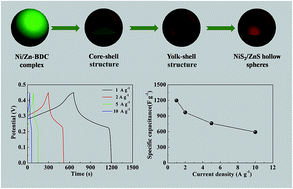
The whole preparation process is schematically illustrated in Scheme 1. The Ni/Zn–BDC MOF spheres were firstly obtained through a solvothermal method at 120 °C from the coordination of BDC2− and Ni2+/Zn2+. Then a facile anion exchange method was utilized to convert into NiS2/ZnS hollow nanospheres using Ni/Zn–BDC as both the precursor and the self-sacrificing template, and TAA as a sulfur source. During the self-sacrificing process, sulfide (S2−) ions released from the decomposition of TAA at high temperature react with metal ions on the surface of Ni/Zn–BDC MOF to yield Ni/Zn–BDC@NiS2/ZnS core–shell structure just after sulfidation treatment for 1 h at 160 °C (A → B, Scheme 1). When the reaction proceeds to 3 h, yolk–shell NiS2/ZnS nanospheres are formed due to further reaction between the inward diffused S2− ions and faster outward diffused metal cations (B → C, Scheme 1), leading to a well-defined gap between the shell and the core. Finally, the composite NiS2/ZnS hollow nanospheres are successfully obtained with the sulfidation duration prolonging to 6 h (C → D, Scheme 1).
image file: c6ra23071g-s1.tif
Scheme 1 Schematic illustration of the formation process of the NiS2/ZnS hollow nanospheres.

The FT-IR spectrum of Ni/Zn–BDC complex is shown in Fig. S1a. The characteristic peaks at 1579 and 1389 cm−1 correspond to the stretching vibrations of (–COO) and (–COO) of the carboxylate in BDC2−. The band at 1501 cm−1 is ascribed to the stretching vibrations of para-aromatic CH groups. The band at around 3389 cm−1 resulting from the H2O molecules suggests the coordinated H2O molecules exist within these materials.30,31 A red shift in the C[double bond, length as m-dash]O stretching to 1579 cm−1 from 1686 cm−1 for the uncoordinated building blocks H2BDC confirms the coordination interaction between metallic ions and carboxylic acid group of H2BDC.32 The FT-IR spectrum of this precursor matches well with the Zn-doped Ni-based MOF material according to the reported literatures in Wei's30 and our groups,31 which has 2D double-layered structure. No diffraction peak can be seen in the X-ray diffraction (XRD) pattern (Fig. S1b), indicating the amorphous state of Ni/Zn–BDC nanospheres.

The morphology of Ni/Zn–BDC MOF is monodisperse and uniformly spherical with an average diameter of about 1 µm, as shown in Fig. 1a and b. The TEM images in Fig. 1c and d confirm that the Ni/Zn–BDC MOF is composed of uniform solid spheres without visible pores. The electron dispersive spectroscopy (EDS) result shows that the Ni/Zn–BDC complex is composed of Ni, Zn, C, and O elements (Fig. S2).


image file: c6ra23071g-f1.tif
Fig. 1 SEM images (a and b) and TEM images (c and d) of the Ni/Zn–BDC MOF spheres.

Parallel experiments were carried out to investigate the self-sacrificing formation process of hybrid hollow metal sulfides. The products obtained at different times were examined by FE-SEM, TEM and powder XRD. After sulfidation treatment for 1 h, the smooth surface of Ni/Zn–BDC becomes very rough and the color of the obtained product changes from light green to black, indicating formation of sulfides on the surface. As shown in Fig. 2a–c, the product remains the solid spherical morphology and closely packed nanoparticles are formed on the surface. No diffraction peaks are found in the corresponding XRD pattern, which demonstrates that these spheres are still mainly amorphous Ni/Zn–BDC complex (Fig. S3a black curve). When increasing the reaction time up to 3 h, a clear gap between the outer shell and inner core is observed, confirming the yolk–shell structure (Fig. 2d–f). Four obvious diffraction peaks at 2θ values of 28.6, 31.6, 35.3, and 53.6° in the corresponding XRD patterns (Fig. S3a red curve) are allocated to the diffractions (111) planes of cubic ZnS and (200), (210), and (311) planes of NiS2, respectively. With the sulfidation duration prolonging to 6 h, hollow spheres are formed and some small particles appear on the surface of the particles (Fig. 2g and h). TEM images (Fig. 2i) show the hollow spheres have a single shell of ∼40 nm and a completely void interior. The corresponding XRD diffraction peaks (Fig. S3a blue curve) are become more intense and sharp compared to those of 3 h, confirming the good crystallinity in nature of the composite NiS2/ZnS hollow spheres. All the diffraction peaks are definitely in agreement with a mixture of cubic ZnS (JCPDS 05-0566) and cubic NiS2 (JCPDS 11-0099). No impurities have been detected, indicating the high purity of the synthesized product. The EDS elemental mapping images in Fig. S4 further indicate that Zn, Ni and S elements are uniformly distributed in the material. The ratio of Zn, Ni and S elements is 0.21[thin space (1/6-em)]:[thin space (1/6-em)]0.19[thin space (1/6-em)]:[thin space (1/6-em)]0.6 in atomic by quantitative analysis.


image file: c6ra23071g-f2.tif
Fig. 2 SEM and TEM images of products obtained after sulfidation of the Ni/Zn–BDC at 160 °C for different durations: (a–c) 1 h; (d–f) 3 h; (g–i) 6 h.

Fig. S5 shows the nitrogen adsorption–desorption isotherm of NiS2/ZnS hollow nanospheres. The isotherm is characteristic of type IV with a distinct hysteresis loop which mostly corresponds to the existence of a mesoporous structure. The calculated BET surface area is measured to be about 27.3 m2 g−1. Besides, the pore size distribution of the sample is centered at 3.7 nm. Such porosity can facilitate the transfer of ions and electrons at the electrode/electrolyte interface, thus improving the electrochemical performance.

X-ray photoelectron spectroscopy (XPS) was further carried out to confirm the surface chemical state and elemental compositions of the as-prepared products. The two peaks from XPS located at 853.8 and 871.3 eV belong to Ni 2p3/2 and Ni 2p1/2, respectively, which represent the typical binding energy of Ni2+. The binding energy at 857.7 and 876.4 eV are assigned to Ni3+, while the satellite peaks at 879.5 and 861.5 eV are two shake-up types of nickel at the high binding-energy side of the Ni 2p1/2 and Ni 2p3/2 edge (Fig. S3b).33–35 In the S 2p spectrum, the peaks located at 162.3 and 163.4 eV are assigned to S 2p3/2 and S 2p1/2, while the peak at 169.1 eV belongs to the shake-up satellite structure (Fig. S3c).36,37 The binding energies at 1022.7 and 1045.4 eV of Zn 2p spectrum belong to Zn 2p3/2 and Zn 2p1/2, indicating the presence of Zn element in ZnS (Fig. S3d).28,38

The electrochemical performances of the NiS2/ZnS hollow spherical nanocomposites were investigated by cyclic voltammetry (CV) and galvanostatic charge–discharge (GCD) measurements in a three-electrode system with 3 M KOH aqueous solution as the electrolyte. Fig. 3a shows the CV curves of the NiS2/ZnS electrode in the voltage range of −0.05 to 0.55 V at various scanning rates. It can be seen that all of the CV curves exhibit a pair of well-defined redox peaks, which is different from that of electric double layer capacitance, manifesting a typical pseudo-capacitive behavior. At lower scan rates, the diffusion of ions in KOH electrolyte have enough time to access at almost all the available site, giving rise to excellent reversibility of the oxidation and reduction process. Furthermore, with the increase of the scan rate, the anodic peaks and cathodic peaks shift to the converse direction because of the polarization at high scan rate. A couple redox peaks at around 0.40 V and 0.20 V at the scan rate of 10 mV s−1 may be ascribed to the overlap of the reversible redox reactions on the surface of the electrode, according to the following eqn (5)–(7):24,25,39

 
NiS2 + OH ↔ NiS2OH + e(5)
 
ZnS + OH ↔ ZnSOH + e(6)
 
ZnSOH + OH ↔ ZnSO + H2O + e(7)


image file: c6ra23071g-f3.tif
Fig. 3 (a) CV curves of Ni2S/ZnS electrode at different scan rates; (b) GCD curves of Ni2S/ZnS electrode at different current densities; (c) the corresponding specific capacitance of Ni2S/ZnS electrode calculated by the GCD curves; (d) cycle performance of Ni2S/ZnS electrode at the current density of 5 A g−1 for 1000 cycles.

Fig. 3b presents the GCD curves between the potential range of 0 and 0.45 V at various discharging current densities. The defined voltage plateaus in the charge–discharge curves indicate the characteristics of pseudo-capacitance, which matches well with the results of CV curves in Fig. 3a. The good symmetry of all the charge–discharge curves indicates good electrochemical capacitive characteristic and superior reversible redox reaction of the electrode. The IR drop is ascribed to the internal resistance of the electrode, which can be associated with the electrical connection resistance, bulk solution resistance and inner resistance of ion diffusion in electrode materials.25 It is clearly observed that the IR drop increases with the increase in current density. At a high current of 12.5 A g−1 the IR drop is only 0.07 V, indicating good electrical conductivity of the NiS2/ZnS hollow nanospheres.

Based on the eqn (1), the specific capacitances can be calculated to be 1198, 970, 760, 592 F g−1 at current densities of 1, 2, 5 and 10 A g−1, respectively, as shown in Fig. 3c. The specific capacitance of NiS2/ZnS hollow spheres is significantly better than some previous reported NiSX based electrodes, such as hollow Ni3S2/rGO (1015.6 F g−1 at 1 A g−1).24 porous NiS2 square rods (1020.2 F g−1 at 1 A g−1),36 NiS2 nanocube (695 F g−1 at 1.25 A g−1),40 NiS–rGO aerogel nanocomposite (852 F g−1 at 2 A g−1).41 The excellent electrochemical performances of the NiS2/ZnS hollow nanospheres material could be ascribed to the following factors. Firstly, the synergistic effects between NiS2 and ZnS can facilitate electron/ions transfer and combine the capacitance contributed from them. Secondly, the mesoporous hollow structure ensures that ions, electrons enter into the spheres and thus shorts their diffusion distance to access the electrode surface, thereby resulting in improved performances.

Cyclic stability is one of the most important factors for electrode materials in practical applications. The GCD measurements were tested at current density 5 A g−1 for 1000 cycles, as displayed in Fig. 3d. After 1000 cycle test, the specific capacitance of NiS2/ZnS electrode remains ∼87%, which can be ascribed to slight peeling-off of active materials from the electrode. All the above tests indicate that the NiS2/ZnS hollow nanospheres are promising active electrode materials for high performance supercapacitors.

To further evaluate the practical application of NiS2/ZnS hollow nanospheres, an asymmetric supercapacitor device (ASC) was assembled by using NiS2/ZnS as the positive electrode and AC as the negative electrode in 3 M KOH aqueous electrolyte, with one piece of cellulose paper as the separator. The electrochemical properties of AC electrode were also measured in 3.0 M KOH solution using a three electrode system, as shown in Fig. S6a–c. The specific capacitance of AC electrode calculated from the discharge curves is 221.1 F g−1 at current densities of 1 A g−1. Hence, the optimal mass ratio between NiS2/ZnS and AC electrode (m(NiS2/ZnS)/m(AC)) was determined to be about 0.41 for the ASC. A series of CV curves with different voltage windows at a scan rate of 30 mV s−1 were measured to estimate the operating potential of the ASC, as shown in Fig. S6d. When the ASC potential extended to 1.8 V, a little distortion of the curve can be observed. Thus, the potential window for the ASC was determined to be 0–1.6 V. Fig. 4a shows the CV curves of the NiS2/ZnS//AC-ASC at different scan rates ranging from 5 to 100 mV s−1. The quasi-rectangular CV curves indicate both electric double-layer capacitance and pseudo-capacitance. The current density increases with the increasing scan rate with no obvious distortion, indicating excellent fast-charge/discharge properties of the ASC device. GCD curves at different current densities were also conducted, as shown in Fig. 4b. The specific capacitance calculated based on the total mass of the electrode is 89.7, 81.5, 77.6, 71.7, 62 F g−1 at current densities of 1, 2, 3, 5, 10 A g−1, respectively (Fig. 4c). The electrochemical cycling performance of the ASC was further investigated by GCD measurements at current density 5 A g−1 for 1500 cycles, as shown in Fig. 4d. Remarkably, the ASC exhibits excellent cycling stability with 88.7% of its initial capacitance maintained after 1500 cycles test. This excellent electrochemical stability demonstrates the highly reversible redox reaction between the electrolyte and the electrode materials.


image file: c6ra23071g-f4.tif
Fig. 4 (a) CV curves of the NiS2/ZnS//AC-ASC at different scan rates. (b) GCD curves of the NiS2/ZnS//AC-ASC. (c) The specific capacitances of the NiS2/ZnS//AC-ASC at different current densities. (d) Cycling performance of NiS2/ZnS//AC-ASC at a current density of 5 A g−1.

The energy density and power density are important parameters to evaluate the performance of the asymmetric supercapacitor. Fig. 5 depicts the Ragone plot of the NiS2/ZnS//AC-ASC. The as-prepared ASC shows a high energy density of 28.0 W h kg−1 at a power density of 748.9 W kg−1, and 19.4 W h kg−1 even at a high power density of 7509.7 W kg−1, which are advantageous over many previously reported ASC, such as Ni3S2/CNFs//CNFs-ASC (25.8 W h kg−1 at 425 W kg−1),22 Ni3S2/MWCNT-NC//AC (19.8 W h kg−1 at 798 W kg−1),42 NiCo2O4–MnO2 nanowires//AG-ASC (9.4 W h kg−1 at 2500 W kg−1),43 hierarchical NiCo2O4//AC-ASC (21.4 W h kg−1 at 350 W kg−1).44 Therefore, the aforementioned results illustrate that the NiS2/ZnS hollow nanospheres have a potential application for high-efficient ASC device.


image file: c6ra23071g-f5.tif
Fig. 5 Ragone plots of the as-prepared NiS2/ZnS//AC-ASC compared to the reference.

Conclusions

In summary, NiS2/ZnS hollow nanospheres have been successfully fabricated through the chemical sulfidation of uniform Ni/Zn–BDC MOF spheres. The Ni/Zn–BDC spheres are prepared by solvothermal method and used as self-sacrifice template, while TAA used as sulfur source. Thanks to their hollow structure and synergistic effect, the NiS2/ZnS electrodes deliver a high specific capacitance of 1198 F g−1 at a current density of 1 A g−1. In addition, an asymmetric supercapacitor has been successfully fabricated to investigate the practical utilization of the NiS2/ZnS hollow nanospheres, which exhibits high energy and power densities and shows outstanding electrochemical stability after long term charge–discharge cycles. The results demonstrate that the NiS2/ZnS hollow nanospheres show great potential as electrode materials for high performance supercapacitor applications. Furthermore, the MOF-derived self-sacrificing template strategy presented here would be a promising method for the controllable preparation of complicated hollow structures with different compositions.

Acknowledgements

L. H. acknowledges the support by the National Natural Science Foundation of China (No. 21471086), the Social Development Foundation of Ningbo (No. 2014C50013), and the K. C. Wong MagnaFund in Ningbo University. R. L. acknowledges the start-up funding from Tongji University and the Young Thousand Talented Program.

References

  1. R. Liu and R. D. Priestley, J. Mater. Chem. A, 2016, 4, 6680–6692 CAS.
  2. J. Liu, S. Z. Qiao, J. S. Chen, X. W. Lou, X. Xing and G. Q. Lu, Chem. Commun., 2011, 47, 12578–12591 RSC.
  3. X. W. Lou, L. A. Archer and Z. C. Yang, Adv. Mater., 2008, 20, 3987–4019 CrossRef CAS.
  4. Z. Y. Wang, L. Zhou and X. W. Lou, Adv. Mater., 2012, 24, 1903–1911 CrossRef CAS PubMed.
  5. S. Peng, L. Li, H. Tan, R. Cai, W. Shi, C. Li, S. G. Mhaisalkar, M. Srinivasan, S. Ramakrishna and Q. Yan, Adv. Funct. Mater., 2014, 24, 2155–2162 CrossRef CAS.
  6. D. N. Futaba, K. Hata, T. Yamada, T. Hiraoka, Y. Hayamizu, Y. Kakudate, O. Tanaike, H. Hatori, M. Yumura and S. Iijima, Nat. Mater., 2006, 5, 987–994 CrossRef CAS PubMed.
  7. Y. D. Yin, R. M. Rioux, C. K. Erdonmez, S. Hughes, G. A. Somorjai and A. P. Alivisatos, Science, 2004, 304, 711–714 CrossRef CAS PubMed.
  8. R. Qiao, X. L. Zhang, R. Qiu, J. C. Kim and Y. S. Kang, Chem. Mater., 2007, 19, 6485–6491 CrossRef CAS.
  9. P. Hu, X. Zhang, N. Han, W. Xiang, Y. Cao and F. Yuan, Cryst. Growth Des., 2011, 11, 1520–1526 CAS.
  10. M. H. Oh, T. Yu, S. H. Yu, B. Lim, K. T. Ko, M. G. Willinger, D. H. Seo, B. H. Kim, M. G. Cho, J. H. Park, K. Kang, Y. E. Sung, N. Pinna and T. Hyeon, Science, 2013, 340, 964–968 CrossRef CAS PubMed.
  11. M. Yang, J. Ma, C. Zhang, Z. Yang and Y. Lu, Angew. Chem., Int. Ed., 2005, 44, 6727–6730 CrossRef CAS PubMed.
  12. M. M. Titirici, M. Antonietti and A. Thomas, Chem. Mater., 2006, 18, 3808–3812 CrossRef CAS.
  13. J. Qi, X. Lai, J. Wang, H. Tang, H. Ren, Y. Yang, Q. Jin, L. Zhang, R. Yu, G. Ma, Z. Su, H. Zhao and D. Wang, Chem. Soc. Rev., 2015, 44, 6749–6773 RSC.
  14. Y. Zhu, Z. Wu, M. Jing, X. Jia and X. Ji, Electrochim. Acta, 2015, 178, 153–162 CrossRef CAS.
  15. X. Y. Yu, L. Yu, L. Shen, X. Song, H. Chen and X. W. Lou, Adv. Funct. Mater., 2014, 24, 7440–7446 CrossRef CAS.
  16. Z. Jiang, W. Lu, Z. Li, K. H. Ho, X. Li, X. Jiao and D. Chen, J. Mater. Chem. A, 2014, 2, 8603–8606 CAS.
  17. L. Shen, L. Yu, H. B. Wu, X. Y. Yu, X. Zhang and X. W. Lou, Nat. Commun., 2015, 6, 6694–6701 CrossRef CAS PubMed.
  18. Z. F. Huang, J. Song, K. Li, M. Tahir, Y. T. Wang, L. Pan, L. Wang, X. Zhang and J. J. Zou, J. Am. Chem. Soc., 2016, 138, 1359–1365 CrossRef CAS PubMed.
  19. J. Liu, C. Wu, D. Xiao, P. Kopold, L. Gu, P. A. V. Aken, J. Maier and Y. Yu, Small, 2016, 12, 2354–2364 CrossRef CAS PubMed.
  20. C. Wei, C. Cheng, Y. Cheng, Y. Wang, Y. Xu, W. Du and H. Pang, Dalton Trans., 2015, 44, 17278–17285 RSC.
  21. J. Yang, X. Duan, Q. Qin and W. Zheng, J. Mater. Chem. A, 2013, 1, 7880–7884 CAS.
  22. W. Yu, W. Lin, X. Shao, Z. Hu, R. Li and D. Yuan, J. Power Sources, 2014, 272, 137–143 CrossRef CAS.
  23. M. S. Javed, J. Chen, L. Chen, Y. Xi, C. Zhang, B. Wan and C. Hu, J. Mater. Chem. A, 2016, 4, 667–674 CAS.
  24. S. Zhang, B. Yin, H. Jiang, F. Qu, A. Umar and X. Wu, Dalton Trans., 2015, 44, 2409–2415 RSC.
  25. R. Ramachandran, M. Saranya, P. Kollu, B. P. C. Raghupathy, S. K. Jeong and A. N. Grace, Electrochim. Acta, 2015, 178, 647–657 CrossRef CAS.
  26. M. Jayalakshmi and M. M. Rao, J. Power Sources, 2006, 157, 624–629 CrossRef CAS.
  27. J. Yang, X. Duan, W. Guo, D. Li, H. Zhang and W. Zheng, Nano Energy, 2014, 5, 74–81 CrossRef CAS.
  28. X. Ou, L. Gan and Z. Luo, J. Mater. Chem. A, 2014, 2, 19214–19220 CAS.
  29. H. Hua, S. Liu, Z. Chen, R. Bao, Y. Shi, L. Hou, G. Pang, K. N. Hui, X. Zhang and C. Yuan, Sci. Rep., 2016, 6, 20973 CrossRef CAS PubMed.
  30. J. Yang, C. Zheng, P. Xiong, Y. Li and M. Wei, J. Mater. Chem. A, 2014, 2, 19005–19010 CAS.
  31. G.-C. Li, P.-F. Liu, R. Liu, M.-M. Liu, K. Tao, S.-R. Zhu, M.-K. Wu, F.-Y. Yi and L. Han, Dalton Trans., 2016, 45, 13311–13316 RSC.
  32. Z. Zhang, Y. Chen, S. He, J. Zhang, X. Xu, Y. Yang, F. Nosheen, F. Saleem, W. He and X. Wang, Angew. Chem., Int. Ed., 2014, 53, 12517–12521 CAS.
  33. J. S. Chen, J. Ren, M. Shalom, T. Fellinger and M. Antonietti, ACS Appl. Mater. Interfaces, 2016, 8, 5509–5516 CAS.
  34. C. Wei, H. Pang, C. Cheng, J. Zhao, P. Li and Y. Zhang, CrystEngComm, 2014, 16, 4169–4175 RSC.
  35. J. Pu, F. Cui, S. Chu, T. Wang, E. Sheng and Z. Wang, ACS Sustainable Chem. Eng., 2014, 2, 809–815 CrossRef CAS.
  36. Y. Ruan, J. Jiang, H. Wan, X. Ji, L. Miao, L. Peng, B. Zhang, L. Lv and J. Liu, J. Power Sources, 2016, 301, 122–130 CrossRef CAS.
  37. W. Hu, R. Chen, W. Xie, L. Zou, N. Qin and D. Bao, ACS Appl. Mater. Interfaces, 2014, 6, 19318–19326 CAS.
  38. H. Virieux, M. L. Troedec, A. C. Gagneux, W. S. Ojo, F. Delpech, C. Nayral, H. Martinez and B. Chaudret, J. Am. Chem. Soc., 2012, 134, 19701–19708 CrossRef CAS PubMed.
  39. W. Ni, B. Wang, J. Cheng, X. Li, Q. Guan, G. Gu and L. Huang, Nanoscale, 2014, 6, 2618–2623 RSC.
  40. H. Pang, C. Wei, X. Li, G. Li, Y. Ma, S. Li, J. Chen and J. Zhang, Sci. Rep., 2014, 4, 3577 Search PubMed.
  41. F. Cai, R. Sun, Y. Kang, H. Chen, M. Chen and Q. Li, RSC Adv., 2015, 5, 23073–23079 RSC.
  42. C. S. Dai, P. Y. Chien, J. Y. Lin, S. W. Chou, W. K. Wu, P. H. Li, K. Y. Wu and T. W. Lin, ACS Appl. Mater. Interfaces, 2013, 5, 12168–12174 CAS.
  43. M. Kuang, Z. Q. Wen, X. L. Guo, S. M. Zhang and Y. X. Zhang, J. Power Sources, 2014, 270, 426–433 CrossRef CAS.
  44. S. Wang, S. Sun, S. Li, F. Gong, Y. Li, Q. Wu, P. Song, S. Fang and P. Wang, Dalton Trans., 2016, 45, 7469–7475 RSC.

Footnote

Electronic supplementary information (ESI) available: FT-IR, XRD pattern, EDS patterns of the Ni/Zn–BDC complex. XRD and XPS patterns of the NiS2/ZnS hollow spherical nanocomposites. Electrochemical properties of AC electrode. See DOI: 10.1039/c6ra23071g

This journal is © The Royal Society of Chemistry 2016
Click here to see how this site uses Cookies. View our privacy policy here.