DOI:
10.1039/C6RA23030J
(Paper)
RSC Adv., 2016,
6, 111261-111268
Effects of NaCl concentration on wear–corrosion behavior of SAF 2507 super duplex stainless steel†
Received
15th September 2016
, Accepted 4th November 2016
First published on 7th November 2016
Abstract
Wear–corrosion behavior of SAF 2507 super duplex stainless steel (SDSS) in different concentrations of NaCl (from 0.5% to 8%, w/v) was investigated using a pin-on-disk tester. Friction coefficient and mass loss rate were determined, and the synergistic effect of wear and corrosion was analyzed by tribocorrosion-related parameters. It was indicated that wear–corrosion regimes were significantly influenced by NaCl concentration and the related mechanism was attributed to the two different phases inside SAF 2507. Self-protection behavior between the two phases inside SAF 2507 led to a significantly different wear–corrosion mechanism, compared to that in the single-phase metal. To the best of our knowledge, this is the first study about wear–corrosion behavior of SAF 5207 within a solution with different corrosivity. This research provided a new insight for researchers to look into the tribocorrosion behavior of alloys with different phases, and helped us to better understand the principle that we should follow while developing alloys employed in a corrosive environment.
1. Introduction
Wear–corrosion process of metals in electro conductive media is influenced by the properties of the media in which they are immersed,1 such as salt concentration,2 dissolved oxygen,3 pH4 and temperature,5,6 etc. Sodium chloride (NaCl) solution is a type of typical electroconductive media, which could destroy the dense oxide layer formed by chromium (Cr) and nickel (Ni) in stainless steels (SS) containing these elements.7–9 NaCl, in particular, can induce stress corrosion cracking of austenitic stainless steels.10 Moreover, NaCl solution could also cause pitting corrosion when the concentration reached the minimum limit, which was determined by intrinsic properties of metal.11,12 For example, Co1.5CrFeNi1.5Ti0.5Mo0.1 alloy is susceptible to >1 M NaCl solution at 25 °C.13 Under normal circumstances, ferritic stainless steels (such as 430 SS) were less corrosion resistant than austenitic stainless steels (such as 304 SS). It was found that pitting corrosion of 430 SS occurred at a critical chloride concentration of 4 M.11 However, pitting corrosion of 304 SS occurred in the NaCl solution with concentration which is higher than 6 M at room temperature.11,14 This was normally due to the different phases and elemental content in the two metals.15
Furthermore, wear–corrosion behavior of different metals under different concentrations of NaCl was more complicated. Wear–corrosion behavior was determined by the combined effect of wear and corrosion behavior of metal under particular conditions. Generally, wear could reduce the pitting potential of metals and accelerate the corrosion rate.16 On the contrary, sometimes corrosion could inhibit the wear loss of metal, which was due to lubricity of the corrosion product. For example, corrosion of Co–Cr could protect the matrix from erosion.17 The wear loss rate of 304 SS reduced after corrosion due to the lubricity of solution and corrosion product.18,19
Super duplex stainless steel (SDSS) has a two-phase (α-ferrite phase and γ-austenite phase) organization and it combines high tensile and impact strength with a low coefficient of thermal expansion and high thermal conductivity.7,20 In general, SDSS is defined as duplex stainless steel (DSS) with a high pitting resistance equivalent to 40–45.20–22 Due to the high pitting resistance, SDSS was widely used in harsh corrosion conditions, such as ocean engineering, oil and gas industry, etc.23 Because of the complicated structure, corrosion resistance of SDSS depends strongly on the actual chemical composition. Lee et al.22 studied the open circuit potential (OCP) of SDSS and found that it was more active compared with the separate α-ferrite phase and γ-austenite phase, which was due to a number of phase boundaries with variations in alloying elements that affected the corrosion behaviors. In SDSS, the main alloying elements (Cr, Mo, Ni and N) are not equally distributed in ferrite and austenite. Austenite mainly consists of Ni and N, whereas ferrite mainly consists of Cr and Mo. The different distribution of these elements affects corrosion resistance of the entire alloy.21,24–26 In aggressive solutions containing Cl−, pitting corrosion usually took place preferentially in the ferrite phase rather than the austenite phase.15 Moser et al.27 found that S32304 exhibited low corrosion susceptibility when the concentration of Cl− was 0.5 M, but S32205 was resistant to corrosion at 1.0 M Cl−. Von der Ohe et al.28 found that wear–corrosion synergistic effect of SDSS was higher than that of austenite stainless steel. In other words, wear–corrosion behavior of SDSS under different concentrations of NaCl solution was significantly different from those of the ferritic stainless steel and austenitic stainless steel. A more careful and detailed research needs to be conducted for better understanding of the correlation between material properties and wear–corrosion behavior.
In this context, the wear–corrosion behavior of SAF 2507 SDSS was studied by changing the concentration of NaCl solution. The synergistic effect of wear–corrosion was investigated in the solutions by employing various electrochemical measurements and scanning electron microscopy (SEM). The wear–corrosion regimes were obtained by calculations according to ASTM G119-09.29 In addition, Raman spectra, contact angles and hardness of worn surfaces in different NaCl solutions were also obtained to analyze the wear–corrosion behavior. To the best of our knowledge, this is the first study about wear–corrosion behavior of SAF 5207 immersed in different NaCl solutions, which indicated that self-protection behavior inside SDSS showed significant influence on wear–corrosion regimes. This research provided a new insight for researchers to look into the tribocorrosion behavior of alloys with different phases, and helped us to better design the metallic materials employed in the corrosive environment.
2. Experimental
2.1. Materials
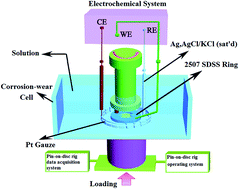
The material used in this study is SAF 2507 (UNS S32750) supplied by Sandmeyer Steel Company and its chemical composition is 0.02 C, 25.00 Cr, 7.00 Ni, 4.00 Mo, 0.27 N and balance Fe in mass fraction. The ring sample of SAF 2507 with outer diameter 54 mm and inner diameter 38 mm is shown in Fig. 1. A protected layer of polyurethane was sprayed to the area that was not employed for the tribocorrosion experiment. The surface for wear corrosion was ground with SiC grinding papers from grade 180 to 1500, then degreased and cleaned ultrasonically by acetone and dried. The rotating pin was made of alumina (99% in purity) with a diameter of 4.7 mm.
 |
| | Fig. 1 Schematic of wear–corrosion tester. | |
2.2. Tribocorrosion tests
The schematic of tribo-electrochemical tester used in this study is shown in Fig. 1. It was reformed by combining a tribometer (MMW-1, Jinan, P. R. China) with an electrochemical workstation (CHI 760C, Shanghai CH Instruments, P. R. China). The wear–corrosion behavior of SAF 2507 was studied in different NaCl solutions with a mass fraction ranging from 0.5% to 8% (correspondence between salinity and conductivity of different concentrations of NaCl is shown in Table 1). The applied load was 54 N and the sliding velocity was 0.25 m s−1. The OCP variation curves of SAF 2507 were tested before, during and after sliding. The potentiodynamic polarization measurements were performed by changing the potential automatically from −1000 to 0 mV versus OCP with a scan rate of 10 mV s−1. The potential range under friction was −600 to +400 mV with the same scan rate. All tests were conducted at room temperature. The variations of current density (icorr, mA cm−2) were monitored before, during and after sliding at different applied potentials. In addition, cathodic protection technology with a protected potential, which was 0.5 V negative to the open circuit potential (OCP), was applied to eliminate electrochemical corrosion.30 The friction coefficient and mass loss rate were obtained by the weighing method.
Table 1 Correspondence between salinity and conductivity of different concentrations of NaCl
| They were tested by Cond 1970i portable conductivity meter by WTW, Germany. The marked values were calculated by linear fitting of salinity–conductivity. |
| NaCl (wt%) |
0.5 |
2.0 |
3.5 |
5.0 |
6.5 |
8.0 |
| Salinitya (%) |
5.1 |
20.8 |
36.9 |
53.3 |
65.7b |
78.6b |
| Conductivitya (mS cm−1) |
9.1 |
33.3 |
55.7 |
76.8 |
97.1 |
116.2 |
All tests were performed three times under identical conditions and the result was reported as mean ± standard deviation. The mass loss rates during wear–corrosion were calculated according to ASTM G119-09 (ref. 29) and G102.31 The parameters that were employed to determine the wear–corrosion regimes were calculated according to the equation shown in ESI (eqn (1) to (13)†).
2.3. Characterization of worn surface
Contact angles of worn surfaces were measured by optical contact angle measuring device (DSA 100, Kruss, USA) and Raman spectra were characterized by Labram HR Evolution Raman Spectrometer (Horiba scientific, France). Hardness of the worn surfaces was tested by a Vickers micro-hardness tester (MH-5-VM, P. R China). Moreover, the morphologies of the worn surfaces and etched cross-sections were examined by scanning electron microscope (SEM, JEOL 5600, Japan). Furthermore the roughness of the worn surfaces was measured by 2206 surface roughness tester (Links, China). The metallographic morphologies were etched by ElectroMet™ 4 polisher etcher (Buehler, USA) after mechanical polishing. The electroetching was applied at 5 V for 5 s in 400 g L−1 NaOH solution.
3. Results
3.1. Electrochemical response
Fig. 2a shows open circuit potential (OCP) evolution during the time of SAF 2507 immersion in different NaCl solutions. The OCP was measured before, during and after sliding motion. It was found that sliding motion caused a sudden decrease in OCP that was attributed to the damage of passive film and following exposure of naked metal surface to NaCl solution. This phenomenon has been observed in several other metals.32–38 Once the sliding motion stopped, the passive film was able to recover in time, therefore a significant increase of OCP was observed.16 Moreover, it was found that OCP of SAF 2507 dispersed in higher concentration of NaCl solution showed a lower value, which means corrosion was accelerated with increasing NaCl concentration.1
 |
| | Fig. 2 Electrochemical characterization of tribocorrosion behavior of SAF 2507 dispersed in 0.5%, 2%, 3.5%, 5%, 6.5% and 8% (w/v) NaCl solution. (a) Variations of OCP during the tribocorrosion study. (b) Time–current curve during tribocorrosion study (c) potentiodynamic polarization curves (dotted line was obtained before sliding and solid line was obtained after 30 min steady sliding) and (d) corrosion potentials under tribocorrosion or cathodic protection. | |
In order to characterize pure mechanical wear loss rate, a negative potential was applied to all samples, which would efficiently inhibit the corrosion process (cathodic protection), thus the whole mass loss was only attributed to sliding motion. Fig. 2b shows that sliding motion led to a sudden decrease in current density and it was negative in the entire process, which indicated that sliding motion induced mechanical loss. After the sliding motion stopped, current density increased to about −0.5 mA. Since this was similar to the original value before the sliding motion started, which indicated that mass loss stopped as the sliding motion stopped under the cathodic protection.
As shown in Fig. 2c, sliding motion made the corrosion potential decrease significantly, which made the Tafel slopes move to the left side of the graph. Moreover, it was found that increasing NaCl concentration also led to drop of corrosion potential. Therefore, it was indicated that mechanical sliding and higher NaCl concentration both promoted the corrosion process. The corrosion potential quantified from Fig. 2c is shown in Fig. 2d. When SAF 2507 was under cathodic protection, it indicated that corrosion potentials were in static state and with wear, decreased linearly in the range of 0.5–8% and the protected potential was determined to be −0.5 V by the corrosion potential with wear. Moreover, corrosion rate increased linearly with increasing concentration of NaCl as a function of C0 = 0.00101ωNaCl + 8.19 × 10⁻⁵ without wear and Cw = 0.02914ωNaCl + 0.19055 with wear. It was clear that the corrosion rate changed faster under wear than that without wear. It was due to the increasing corrosiveness of solutions and friction accelerated corrosion rate. Friction had an evident accelerated effect compared to the solutions of increasing NaCl concentration.
3.2. Friction and wear
Furthermore, friction coefficient and mass loss rate of SAF 2507 under wear–corrosion (tribocorrosion) or cathodic protection (pure mechanical wear) in different NaCl solutions were characterized. As shown in Fig. 3a, friction coefficient of tribocorrosion and pure mechanical wear decreased with increasing NaCl concentration. It was reported that NaCl solution accelerated the formation of surface oxide layer and thus reduced the friction coefficient.39 Therefore, friction coefficients reduced with increasing NaCl concentration. Furthermore, when NaCl concentration was ranging from 0.5% to 5%, friction coefficients of SAF 2507 under tribocorrosion were lower than that under cathodic protection, which was due to the lubricity of the corrosion products.9,39,40 When the concentration was 6% and 8%, the friction coefficients were quite similar, which was due to the lubricity of NaCl solution because the corrosion had little effect on the friction.9
 |
| | Fig. 3 Coefficient of friction (a) and mass loss rate (b) of SAF 2507 in different NaCl solutions. | |
Analysis of laser Raman spectrum of worn surfaces of SAF 2507 showed that there were three types of iron oxides (α-Fe2O3, α-FeOOH and γ-FeOOH as shown in Fig. 4a) formed during the tribocorrosion process. Moreover, it clearly showed that the oxides increased with the increase in NaCl from the increasing peak intensity. It was due to the increasing corrosive ability of NaCl solutions. In addition, contact angle (shown in Fig. 4b) of worn surfaces showed that higher NaCl concentration significantly increases the hydrophobicity of the surface. Contact angles were related to several factors, such as roughness, contamination, surface heterogeneity, surface deformation and solution concentration.41–43 The relationship between contact angle and friction coefficients was studied before and it was indicated that friction coefficient decreased with an increase in contact angles due to weaker intermolecular interactions.44,45 Moreover, Fig. 3b shows that the wear loss rate of tribocorrosion decreased initially (0.5–2%) and then increased suddenly (3.5%), followed by a decrease (3.5–8%), but remained higher than 0.5–2%. However, pure mechanical wear rate decreased with the increasing of NaCl concentration. There was an inflection point at 3.5% which indicated that wear–corrosion regime changed.
 |
| | Fig. 4 The laser Raman spectra (a) and contact angles (b) of worn surfaces of SAF 2507 in different NaCl solutions. | |
Fig. 5 shows the hardness of the worn surfaces, which decreased along with increasing NaCl concentration. This was due to the denser oxide layer under higher NaCl concentration.
 |
| | Fig. 5 Micro-hardness of worn surfaces of SAF 2507 in different NaCl solutions. | |
3.3. Synergy analysis
In order to further determine the wear–corrosion regimes of SAF 2507 under different conditions, parameters such as W0, ΔWc, C0, ΔCw and S were calculated according to the equation in ESI.† Fig. 6a and c show that pure mechanical wear rate (W0) decreased with increasing NaCl concentration, which was due to the increasing lubrication effect.9 Moreover, the increased wear rate due to corrosion (ΔWc) was negative in NaCl concentration range from 0.5% to 2%. The negative ΔWc indicated that wear loss was inhibited. This was due to lubricity of corrosion products and protection of oxide film on the worn surface.17,18 ΔWc was positive when the concentration increased to 3.5%, which indicated that corrosion accelerated the wear loss. Furthermore, ΔWc decreased from 3.5% to 8%, which was due to lubricity of NaCl solutions and its corrosion products.9,39,40 Moreover, C0 (corrosion rate without wear) and ΔCw (increasing corrosion rate due to wear) both increased with increasing NaCl concentration. The C0 increase meant that higher NaCl concentration induced more severe corrosion, which has been proved for several metals.46,47 However, C0 was almost negligible compared to wear, which was due to high corrosion resistance of SAF 2507 because of formation of the oxide layer.39 ΔCw was also significantly larger than C0 for passive materials compared to non-passive materials, which was considered as a special property of the passive materials; this was because the increase in corrosion after removing passive films was much larger than corrosion with the passive films.39,47,48 W0 + C0 (sum of W0 and C0) and S (sum of the interactions between corrosion and wear) of SAF 2507, shown in Fig. 6d, had a similar trend of W0 and ΔWc, shown in Fig. 6a. This phenomenon was due to the high proportion of W0 and ΔWc (Fig. 6c), which meant that this wear–corrosion process was wear loss dominant.
 |
| | Fig. 6 Synergetic contributions of mechanical wear and corrosion toward each other and total mass loss of SAF 2507 in different NaCl solutions. | |
3.4. Microstructure analysis
Surface microstructure was further characterized to analyze the wear–corrosion mechanism under different condition. As shown in Fig. 7a and b and 8, there was no significant difference on the worn surface in 0.5% and 2% NaCl. Grooves were observed on the surfaces in solutions containing more than 2% NaCl. Pits and cracks were clearly observed on the worn surface of SAF 2507 in 3.5% NaCl solution. According to the wear–corrosion results (Fig. 3b), it was indicated that 3.5% NaCl with wear showed the most significant mass loss, thus the surface was rougher than that under all the other conditions (Fig. 7c and 8). With the increase of NaCl concentration at a range of 5–8%, the surfaces had the same cracks and grooves. This was due to the close corrosion and lubricity effect on the wear–corrosion.47 Considering the hardness of the worn surface, showed in Fig. 5, they were similar to each other. It indicated that the surfaces had the same mechanical property. However, lubricity of NaCl and corrosion products interaction reduced wear–corrosion rate at 8%. It had the lowest friction coefficient and wear loss rate at the range of 5–8%. Hence, the wear–corrosion rate would reduce due to the increase of corrosion within certain limits.
 |
| | Fig. 7 SEM morphologies of worn surface of SAF 2507 in different NaCl solutions. | |
 |
| | Fig. 8 The roughness of worn surfaces of 2507 SDSS in different NaCl solutions. | |
Moreover, the corrosion rate had a critical value that could change the corrosion-wear regimes from synergistic effect to antagonistic effect based on the analysis in Fig. 6c and the Fig. 7c and d also show the revulsion on the worn surfaces.
4. Discussion
Corrosion augmentation factor (1 + ΔCw/C0), wear augmentation factor (1 + ΔWc/W0) and total synergism factor (T/(T − S)) were further determined to better understand the wear–corrosion regimes. As shown in Fig. 9a, corrosion augmentation factor decreased with increasing NaCl concentration. As NaCl concentration increased, the lubricity of NaCl solution was improved,9,18 therefore area of mechanically re-passivated surface was small and the increment of corrosion rate due to wear was low. It was indicated that increasing NaCl solution led to the result that corrosion without wear (C0) increased more than 10 times, however the increment of corrosion due to wear (ΔCw) increased only 2 times. This result was completely different from 304 SS in artificial seawater with different halide concentration.18 Zhang et al. reported that as NaCl concentration increased, corrosion of 304 SS increased slowly, but the ΔCw increased rapidly.18 The difference in corrosion between 304 SS and SAF 2507 was mainly due to the better corrosion resistance of SAF 2507 than 304 SS.48 Moreover, wear augmentation factor and total synergism factor were much smaller than corrosion augmentation factor, which meant that wear due to corrosion increased in lower percentage than that of corrosion change due to wear.
 |
| | Fig. 9 Synergistic effect and wear–corrosion regimes of SAF 2507 in different NaCl solutions. | |
When the NaCl concentration was 0.5% and 2%, the total synergism factor was larger than 1, which meant that synergistic effect was negative.29,49 Negative synergism occurred when the corrosion product during wear provided better protection than the initial surface. The values of ΔCw/ΔWc under 0.5% and 2% were less than zero (as shown in Fig. 9b). It meant that corrosion product dissolved and thus inhibited wear loss.29 This phenomenon also led to decrease of wear augmentation factor. Once the concentration increased to 3.5%, the higher corrosivity of NaCl led to pitting corrosion.27,47 Therefore, wear augmentation factor increased immediately, and the total synergism factor decreased suddenly from 2% to 3.5%. The values of ΔCw/ΔWc was in the range of 0–0.1 in between 3.5% to 6.5%. This process was synergistic dominant, which meant that corrosion was affecting wear to a great extent than wear was affecting corrosion.29 Therefore, from 3.5%, the total synergism factor increased and approached to 1 until 8%, which meant that there was nearly no interaction between corrosion and wear.50 The value of ΔCw/ΔWc was more than 0.1 in the 8% NaCl solution and this process was additive–synergistic dominant which meant that the “additive” and “synergistic” interactions were equal and corrosion affecting wear was close to wear affecting corrosion.29
As is known, one of the most important driving force for corrosion is the potential difference between two or more metals or alloys in the conductive medium, which generates current flow between the anodic and cathodic members.51–53 When it occurred between the phases with different potentials in one metal, corrosion would also be affected. It has been proved that the different phases in Mg–Al–Zn–Mn alloy under cell culture media condition had a “self-protection” phenomenon owing to redistribution of the cathodic β phases compared to anodic α-Mg phases.54 SAF 2507 SDSS has two phases, which have different corrosion potentials. When immersed in corrosive solutions, γ phase was protected by α phase due to the higher corrosion potential of γ phase7,22 (Fig. 10). As shown in Fig. 10, it is very clear that the possibility and process of self-protection effect attributed to the two phases have different elements and non-uniform distribution.21 When the concentration was low (0.5–2%), the wear rate was inhibited because of the protection behavior of γ phase. That is why corrosion inhibited wear loss. Compared to 0.5%, 2% NaCl solution has better lubricity, which led to significant decrease of the total mass loss rate. As the concentration increased to 3.5%, corrosion broke through the critical limit to destroy the surface and enhance the wear rate. Thus, there was sudden change in the mass loss rate at 3.5%. When the concentration was higher than 3.5%, the self-protection effect of different phases was so weak that wear and corrosion accelerated each other and synergistic effect occurred. Moreover, when the concentration of NaCl was 8%, corrosion rate was maximized and the regimes of wear–corrosion changed to additive–synergistic effect.
 |
| | Fig. 10 Schematic of self-protect mechanism (the cross-section of unworn surface of SAF 2507). | |
5. Conclusion
In this study, the effect of NaCl concentration on tribocorrosion behavior for SAF 2507 SDSS was studied on a pin-on-disc tribometer and the obtained results could lead to the following conclusions:
(1) Within the entire studied range of NaCl concentration (0.5–8%), corrosion was claimed to be accelerated by wear. Wear was claimed to be inhibited first (0.5–2%), which was due to the self-protection behavior of SAF 2507. Then, wear–corrosion rate was accelerated (3.5–8%) by corrosion, but reduced as the NaCl concentration increased. The wear–corrosion rate reached maximum at 3.5%.
(2) In all conditions, wear–corrosion behavior of SAF 2507 was modulated by self-protection behavior, the lubricity and corrosivity of NaCl solution and the surface properties. The self-protection behavior was influenced by NaCl concentration, which was divided into two parts: protective effect (0.5–2%) and no protection (3.5–8%). The wear–corrosion regimes of SAF 2507 can be divided into three parts depending on NaCl concentration: antagonistic (0.5–2%), synergistic (3.5–6.5%) and additive–synergistic (8%).
(3) Self-protection behavior of two phases in SAF 2507 was found to be the most important factor for modulating wear–corrosion regimes.
Acknowledgements
This study was financially supported by the National Natural Science Foundation of China (Grant No. 51405478) and National Basic Research Program of China (973 Program, Grant No. 2014CB643302).
References
- V. I. Pokhmurs and V. M. Dovhuny, Mater. Sci., 2010, 46, 87–96 CrossRef.
- S. Jin, C. M. Liu, X. Lin, M. J. Li, H. B. Cao and H. Z. Wang, Mater. Corros., 2015, 66, 1077–1083 CrossRef CAS.
- K.-H. Chang, S.-M. Chen, T.-K. Yeh and J.-J. Kai, Corros. Sci., 2014, 81, 21–26 CrossRef CAS.
- Y. Zhang, X. Yin, Y. Yan, J. Wang and F. Yan, RSC Adv., 2015, 5, 17676–17682 RSC.
- N. De Cristofaro, M. Piantini and N. Zacchetti, Corros. Sci., 1997, 39, 2181–2191 CrossRef CAS.
- H. A. Jaffery, M. F. Mohd Sabri, S. Rozali, M. H. Mahdavifard and D. A. Shnawah, RSC Adv., 2016, 6, 58010–58019 RSC.
- N. Sathirachinda, R. Pettersson, S. Wessman, U. Kivisakk and J. Pan, Electrochim. Acta, 2011, 56, 1792–1798 CrossRef CAS.
- T. C. Zhang, X. X. Jiang and S. Z. Li, Wear, 1996, 199, 253–259 CrossRef CAS.
- Y. Huang, X. Jiang and S. Li, Bull. Mater. Sci., 2003, 26, 431–434 CrossRef CAS.
- B. T. Lu, Z. K. Chen, J. L. Luo, B. M. Patchett and Z. H. Xu, Electrochim. Acta, 2005, 50, 1391–1403 CrossRef CAS.
- S. Hastuty, A. Nishikata and T. Tsuru, Corros. Sci., 2010, 52, 2035–2043 CrossRef CAS.
- T. Wan, N. Xiao, H. Shen and X. Yong, Ultrason. Sonochem., 2016, 33, 1–9 CrossRef CAS PubMed.
- Y. L. Chou, J. W. Yeh and H. C. Shih, Corrosion, 2011, 67, 065003 Search PubMed.
- T. Suter, E. G. Webb, H. Böhni and R. C. Alkire, J. Electrochem. Soc., 2001, 148, B174 CrossRef CAS.
- L. F. Garfias-Mesias, J. M. Sykes and C. D. S. Tuck, Corros. Sci., 1996, 38, 1319–1330 CrossRef CAS.
- Y. Zhang, X. Yin, J. Wang and F. Yan, Corros. Sci., 2014, 88, 423–433 CrossRef CAS.
- M. M. Stack and T. M. A. E. Badia, Wear, 2006, 261, 1181–1190 CrossRef CAS.
- Y. Zhang, X. Yin and F. Yan, Corros. Sci., 2015, 99, 272–280 CrossRef CAS.
- Y. Zhang, X. Yin, J. Wang and F. Yan, RSC Adv., 2014, 4, 55752–55759 RSC.
- J. O. Nilsson, Mater. Sci. Technol., 1992, 8, 685–700 CrossRef CAS.
- R. A. Perren, T. A. Suter, P. J. Uggowitzer, L. Weber, R. Magdowski, H. Bohni and M. O. Speidel, Corros. Sci., 2001, 43, 707–726 CrossRef CAS.
- J.-S. Lee, K. Fushimi, T. Nakanishi, Y. Hasegawa and Y.-S. Park, Corros. Sci., 2014, 89, 111–117 CrossRef CAS.
- J. O. Nilsson, T. Huhtala, P. Jonsson, L. Karlsson and A. Wilson, Metall. Mater. Trans. A, 1996, 27, 2196–2208 CrossRef.
- M. A. Lage, K. S. Assis and O. R. Mattos, Int. J. Hydrogen Energy, 2015, 40, 17000–17008 CrossRef CAS.
- P. Craidy, L. Briottet and D. Santos, Int. J. Hydrogen Energy, 2015, 40, 17084–17090 CrossRef CAS.
- J. H. Kim, E. J. Oh, B. C. Lee and C. Y. Kang, J. Mater. Eng. Perform., 2016, 25, 9–14 CrossRef CAS.
- R. D. Moser, P. M. Singh, L. F. Kahn and K. E. Kurtis, Corros. Sci., 2012, 57, 241–253 CrossRef CAS.
- C. B. Von der Ohe, R. Johnsen and N. Espallargas, Wear, 2012, 288, 39–53 CrossRef CAS.
- ASTM International, G119-09, 2009.
- Y. L. Huang, X. X. Jiang and S. Z. Li, Mater. Sci. Eng., B, 2000, 23, 539–542 CAS.
- ASTM International, G102-98, 2015.
- S. Y. Yu, H. Ishii and T. H. Chuang, Metall. Mater. Trans. A, 1996, 27, 2653–2662 CrossRef.
- S. K. Varma and R. R. Romero, Wear, 1996, 201, 121–131 CrossRef CAS.
- A. M. Fan, J. M. Long and Z. Y. Tao, Wear, 1996, 193, 73–77 CrossRef CAS.
- A. G. Macdonald and F. H. Stott, J. Mater. Sci., 1988, 23, 629–636 CrossRef CAS.
- S. Akonko, D. Y. Li and M. Ziomek-Moroz, Tribol. Lett., 2005, 18, 405–410 CrossRef CAS.
- H. Ding, Z. Dai, F. Zhou and G. Zhou, Wear, 2007, 263, 117–124 CrossRef CAS.
- P. Henry and J. Takadoum, Tribol.–Mater., Surf. Interfaces, 2009, 3, 84–91 CrossRef CAS.
- M. R. Bateni, J. A. Szpunar, X. Wang and D. Y. Li, Wear, 2006, 260, 116–122 CrossRef CAS.
- H. Abd-El-Kader and S. M. El-Raghy, Corros. Sci., 1986, 26, 647–653 CrossRef CAS.
- C. Chuanuwatanakul, C. Tallon, D. E. Dunstan and G. V. Franks, Soft Matter, 2011, 7, 11464–11474 RSC.
- J. W. Krumpfer, P. Bian, P. Zheng, L. Gao and T. J. McCarthy, Langmuir, 2011, 22, 2166–2169 CrossRef PubMed.
- G. McHale, N. J. Shirtcliffe and M. I. Newton, Langmuir, 2004, 20, 10146–10149 CrossRef CAS PubMed.
- C. R. Hurley and G. J. Leggett, ACS Appl. Mater. Interfaces, 2009, 1, 1688–1697 CAS.
- L. Zhu, J. Wang and Z. Liu, J. Mater. Sci. Technol., 2015, 31, 1207–1216 Search PubMed.
- M.-C. Zhao, M. Liu, G.-L. Song and A. Atrens, Corros. Sci., 2008, 50, 3168–3178 CrossRef CAS.
- Y. Yahagi and Y. Mizutani, Wear, 1986, 110, 401–408 CrossRef CAS.
- S. Yin and D. Y. Li, Tribol. Lett., 2008, 29, 45–52 CrossRef CAS.
- M. M. Stack and N. Pungwiwat, Wear, 2004, 256, 565–576 CrossRef CAS.
- B. W. Madsen, Wear, 1988, 123, 127–142 CrossRef CAS.
- P. Henry, J. Takadoum and P. Bercot, Corros. Sci., 2009, 51, 1308–1314 CrossRef CAS.
- C. Xu, L. Du, B. Yang and W. Zhang, Corros. Sci., 2011, 53, 2066–2074 CrossRef CAS.
- R. Sanchez-Tovar, M. T. Montanes and J. Garcia-Anton, Corros. Sci., 2013, 68, 91–100 CrossRef CAS.
- G. Wu, Y. Zhao, X. Zhang, J. M. Ibrahim and P. K. Chu, Corros. Sci., 2013, 68, 279–285 CrossRef CAS.
Footnote |
| † Electronic supplementary information (ESI) available. See DOI: 10.1039/c6ra23030j |
|
| This journal is © The Royal Society of Chemistry 2016 |
Click here to see how this site uses Cookies. View our privacy policy here.