DOI:
10.1039/C6RA22993J
(Paper)
RSC Adv., 2016,
6, 109936-109944
Preparation of MFI zeolite membranes on coarse macropore stainless steel hollow fibers for the recovery of bioalcohols†
Received
14th September 2016
, Accepted 6th November 2016
First published on 7th November 2016
Abstract
Hydrophobic MFI zeolite membranes are considered suitable for the recovery of bioalcohols (bioethanol and biobutanol) from fermentation broths. Stainless steel (SS) hollow fibers (HF) are more appropriate Al-free supports for MFI membranes due to their high mechanical strength and easily-sealing property as compared to other Al-free HF such as silica or yttria-stabilized zirconia HF. High-quality MFI membranes on coarse macropore SS HF were fabricated via secondary growth with a simple dip-coating seeding method. The synthesis conditions (composition, time, temperature) were systematically investigated in this study. Considering the separation performance and time saving demand, the membranes synthesized at 175 °C for 6 h exhibited the optimal ethanol or butanol permselectivity with a flux of 1.68 kg (m2 h)−1 and a separation factor of 65 for 5 wt% ethanol/water pervaporation (PV) at 80 °C, and with a flux of 218 g (m2 h)−1 and a separation factor of 207 for 1.5 wt% butanol/water PV at 80 °C. The separation performance for ethanol or butanol permselectivity was comparable to that reported in the literature. The MFI membranes together with the intrinsic advantages of SS HF displayed promising prospects in the field of bioethanol or biobutanol recovery.
1 Introduction
The challenge of a serious energy crisis has promoted the development of renewable energy. Bioalcohols (bioethanol and biobutanol) have drawn much attention because of their renewability and environmentally friendly performance in comparison with fossil fuels. The timely recovery of alcohols from fermentation products is necessary in terms of the bioactivity of microorganisms and high reaction productivity. However, the concentration of alcohols in products is below 5 wt% and thus the products need concentrating before the following refining process.1 Pervaporation (PV) is an appropriate substitution for the conventional high energy-consumption distillation process. Hydrophobic membranes are suitable for alcohol concentration from dilute broths2 in the PV process. Pure silica MFI zeolite membranes are of interest owing to their desirable hydrophobicity, high chemical and thermal stabilities, superior mechanical properties, and multidimensional anisotropic channels consisting of 5.5 × 5.1 Å elliptical, sinusoidal channels along the a-axis and 5.6 × 5.3 Å elliptical, straight channels along the b-axis (Fig. S1†).3 The multidimensional channel sizes close to those of some organic molecules show that MFI membranes are also applicable for challenging gas separation, such as xylene isomer mixtures,3–5 butane isomer mixtures6 and carbon dioxide.7–11 Since Sano et al.12 first grew MFI membranes via in situ growth on stainless steel (SS) and alumina discs in order to separate ethanol from ethanol/water mixtures in 1994, various researches on MFI membranes have been done.
Gouzinis et al.13 and Lin et al.14 prepared preferred-orientation and high-performance MFI membranes via secondary growth method. The seed layer as nucleation site is in favor of accelerating the crystal growth rate once the seeds contact with the synthesis solution.15 Thus a uniform and continuous seed layer contributes to the formation of high preferred orientation and high reproducibility membrane. Many facile and efficient seeding techniques have been extensively investigated, such as dip-coating,2,16,17 rubbing,3,11,15 dynamic interfacial assembly,18,19 vacuum seeding,20 electrophoretic deposition,21 zeolite nanosheet deposition,6,22 varying-temperature hot-dip coating,23,24 etc. Besides the seeding process, modified synthesis conditions are also investigated to optimize membrane performance. In recent developments,5,6,25,26 gel-free secondary growth has gradually aroused interest due to the absence of bulk sol or gel and easy scale-up reproducibility.6 Lu et al.27 used ammonium salts as crystallization mediating agents to fabricate highly b-oriented MFI membranes. Bhachu et al.28 combined chemical vapor deposition with hydrothermal method to prepare silicalite-1 and titanium silicalite-1 membranes. Tsapatsis et al.29,30 investigated the effect of rapid thermal processing (RTP) on as-prepared MFI membrane separation performance. RTP could eliminate grain boundary defects, resulting in the improvement of separation performance. Zhou et al.11 prepared a uniformly b-oriented MFI membrane on a graded alumina support in fluoride media, obtaining a high separation selectivity for CO2/H2.
Ceramic substrates are the most general inorganic materials for supporting MFI membranes. Sebastian et al.16 synthesized MFI membranes on ceramic capillaries through microwave-assisted hydrothermal synthesis, obtaining a flux of 1.5 kg (m2 h)−1 and a separation factor of 54 at 45 °C. Shan et al.17 grew MFI membranes on Al2O3 hollow fibers (HF), obtaining a flux of 2.9 kg (m2 h)−1 and a separation factor of 66 at 60 °C. Pera-Titus et al.31 grew nanocomposite MFI membranes on Al2O3 HF for capturing CO2 from combustion motors. Xia et al.15 manipulated the microstructure of MFI membranes on Al2O3 HF obtaining a flux of 9.8 kg (m2 h)−1 and a separation factor of 58 at 60 °C. However, ceramic supports still have several disadvantages in the process of scale-up. The incorporation of aluminum in a zeolite framework at high temperature weakens the hydrophobicity. Meanwhile, the brittleness of ceramic materials also confines their development. Hence Al-free and high mechanical strength substrates are necessary to be developed. Shu et al.2 prepared MFI membranes on yttria-stabilized zirconia (YSZ) HF obtaining a high flux of 7.4 kg (m2 h)−1 and a separation factor of 47 at 60 °C. Agrawal et al.6 prepared oriented MFI membranes on Stöber silica supports by gel-free secondary growth. Yoon et al.3,5 prepared uniformly oriented MFI membranes on porous silica discs for xylene separation. Elyassi et al.25 grew b-oriented MFI membranes on porous silica supports coated with Stöber silica obtaining a flux of 2.1 kg (m2 h)−1 and a separation factor of 85 at 60 °C.
Unlike the aforementioned Al-free supports, porous SS is a desirable support because of its good heat conductivity, high chemical stability, superior mechanical strength and especially easy-sealing property at high temperature.32 Many attempts have been made to fabricate MFI membranes on SS supports.7,8,12,33–35 The shape of SS in previous investigations was always tube or disc. However, it is generally known that the thick wall of tubes and discs increases the transfer resistance, leading to low permeation flux. HF are promising substitutes for tubes and discs owing to the lower transfer resistance and higher area-to-volume ratio (>1000 m2 m−3). In short, MFI membranes on SS HF deserve to be studied systematically.
High-quality MFI membranes are prepared on coarse macropore SS HF via secondary growth. In previous reports,23,36,37 macropore HF were usually pre-modified with large seeds and then further modified with small seeds or with intermediate layer or directly by coating large seeds using wetting-rubbing seeding method. In this study, macropore HF is modified with middle-sized seeds using a one-step dip-coating seeding method. The synthesis conditions (composition, temperature, time) are systematically investigated to control the shape, size, morphology and microstructure of crystals. The as-prepared MFI membranes exhibit superior separation performance for ethanol or butanol permselectivity. The successful preparation of MFI membranes on macropore SS HF by a simple seeding method with middle-sized seeds shows that this is a convenient and feasible way to obtain high-performance MFI membranes with superior mechanical strength and easy-sealing property.
2 Experimental
2.1. Materials
Ethanol (99.7%), isopropanol (99.7%), and butanol (98%) were purchased from Sinopharm Chemical Reagent Co. Ltd. Tetraethyl orthosilicate (TEOS, 97%, Shanghai Lingfeng Chemical Reagent Co. Ltd) and tetrapropylammonium hydroxide (TPAOH, 25 wt%, Sinopharm Chemical Reagent Co. Ltd) were used as Si source and structure-directing agent (SDA), respectively. Deionized water was self-made in our lab.
2.2. Preparation of stainless steel HF and MFI seeds
For SS HF, the preparation method and casting solution compositions were reported in ref. 38. In brief, polyacrylonitrile (PAN) and polyvinylpyrrolidone (PVP) were dissolved in DMAc and then stainless steel powders (SSP) were added forming the casting solution. The mass ratio was SSP
:
PAN
:
DMAc
:
PVP = 80
:
3.2
:
16.6
:
0.2. After the wet-spinning process, the precursors were calcined at 1100 °C to obtain SS HF. Pore size distribution and scanning electron microscope (SEM) images of the as-prepared HF are shown in Fig. 1. It can be concluded that the as-prepared HF had rough surface and large pore size range of 1–5 μm. In addition, N2 permeance and pure water flux of the resultant HF were 2.0 × 10⁻⁴ mol (m2 s Pa)−1 and 1.9 m3 (m2 h bar)−1, respectively. For MFI seeds, hydrothermal synthesis was used to prepare coffin-shaped crystals according to ref. 15. The seed synthesis solution consisted of TEOS, TPAOH, and H2O in a molar composition of 1
:
0.32
:
165. TEOS was introduced into TPAOH and H2O mixture slowly and then aged for 24 h at ambient temperature forming a clear gel. The resultant gel was then transferred into a Teflon-lined autoclave and reacted at 175 °C for 2 h. After hydrothermal reaction, the obtained suspension was washed with water and isopropanol until the supernatant pH was close to neutral and then centrifuged to get MFI crystals. SEM image and X-ray diffraction (XRD) pattern of crystals are shown in Fig. S2.† It can be concluded that the coffin-shaped crystals had a mean size of 0.62 × 0.34 × 0.72 μm3 (along a × b × c axis) and possessed typical MFI zeolite structure. The obtained crystals were subsequently dispersed in isopropanol forming 3 wt% seed suspension.
 |
| | Fig. 1 SEM images and pore size distribution of stainless steel hollow fiber. (A and B) Cross-sections; (C) outer surface; (D) pore size distribution. | |
2.3. Preparation of MFI membranes
SS HF was dip-coated in seed suspension for 15 s and then put in a 60 °C oven immediately in case of seed penetration. The coating process was repeated twice in order to obtain high seed coverage. Fig. 2 shows SEM images of HF coated with MFI seeds. On the one hand, medium-sized seeds can fill the surface pores to ensure a high seed coverage as the small seeds do. On the other hand, they can also reduce the seed penetration into support channels as the large-size seeds do. Both factors facilitate the formation of the support with high seed coverage and low seed penetration as shown in Fig. 2. It can also be seen that the seeds were closely packed, which was beneficial for membrane growth.39 Subsequently, the seeded HF was calcined at 550 °C for 6 h to fix the seeds onto the support. TPAOH firstly mixed with H2O and then TEOS was introduced into the mixture. After aging for 24 h, the clear gel was charged into a Teflon-lined autoclave. The seeded HF wrapped by Teflon tape at both ends was then vertically put into the solution. The hydrothermal reaction was conducted in a static oven and the specific synthesis conditions are shown in Table 1. The molar composition of the synthesis solution was TEOS
:
TPAOH
:
H2O
:
NaOH = 1
:
x
:
165
:
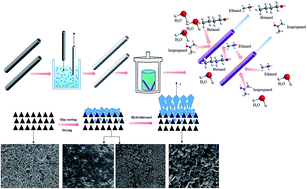
y (x + y = 0.1). NaOH was used to promote the hydrolysis of TEOS when the molar content of TPAOH was below 0.1.15 After reaction, the HF was rinsed with deionized water to remove the unfixed crystals and dried at 60 °C. To release the blocked zeolite pores, the HF needed to be calcined at 450 °C for 12 h (heating and cooling rate of 1 °C min−1). Fig. 3 shows a schematic diagram of MFI membranes on macropore SS HF depicting the preparation process and the recovery of alcohols. Although the penetration of small seeds still occurred, medium-sized seeds could cover most of the surface pores, which was a prerequisite for the preparation of high-performance MFI membranes.
 |
| | Fig. 2 Surface SEM images (left: 500×, right: 5000×) of HF coated with MFI seeds. | |
Table 1 Synthesis conditions for the preparation of MFI membranes
| Membrane no. |
TPAOH/TEOS |
Time (h) |
Temperature (°C) |
| SS-MFI-1 |
0.005/1 |
6 |
175 |
| SS-MFI-2 |
0.01/1 |
6 |
175 |
| SS-MFI-3 |
0.1/1 |
6 |
175 |
| SS-MFI-4 |
0.17/1 |
6 |
175 |
| SS-MFI-5 |
0.32/1 |
6 |
175 |
| SS-MFI-6 |
0.32/1.88 |
6 |
175 |
| SS-MFI-7 |
0.32/3.2 |
6 |
175 |
| SS-MFI-8 |
0.1/1 |
8 |
130 |
| SS-MFI-9 |
0.1/1 |
24 |
130 |
| SS-MFI-3-1 |
0.1/1 |
4 |
175 |
| SS-MFI-3-2 |
0.1/1 |
8 |
175 |
| SS-MFI-3-3 |
0.1/1 |
10 |
175 |
| SS-MFI-3-4 |
0.1/1 |
12 |
175 |
| PAN-SS-MFI |
0.1/1 |
6 |
175 |
| PES-SS-MFI |
0.1/1 |
6 |
175 |
| Al2O3-MFI |
0.1/1 |
6 |
175 |
 |
| | Fig. 3 Schematic diagram of MFI membranes on SS HF for the preparation process and for the recovery of alcohols. | |
2.4. Characterization
Microstructure and morphology of pristine HF and MFI membranes were observed by field emission scanning electron microscopy (FESEM, NOVA NanoSEM 450, USA). Crystallinity of MFI membranes was determined through an XRD device (Mini-Flex 600, Japan) employing Cu Kα radiation. Pore size of pristine HF was obtained by a capillary flow porosimetry device (Beishide 3H-2000PB, China) conforming to the standard ASTM F316. Element distribution of zeolite layer was measured by energy dispersive X-ray analysis (EDX, TEAM, USA). Separation performance of MFI membranes was evaluated by flux and separation factor at 60 °C for 5 wt% ethanol/water PV. The membranes needed to be made into a module in order to connect to the PV system (Fig. S3†). The collecting device ran for 40 min under liquid nitrogen cold trap conditions to condense the permeate. Mass ratio of components in feed or permeate was analysed by a gas chromatograph (Techcomp GC7890T, China) equipped with a thermal conductivity detector and a packed capillary column. The calculation of flux (J) and separation factor (α) was according to eqn (1) and (2):| |
 | (1) |
| |
 | (2) |
herein, W is the weight of permeate (kg), A is the permeation area of membrane (m2), and t is the gathering time (h). Y and X are the weight ratio of components in permeate and feed, respectively.
3 Results and discussion
3.1. Effects of synthesis conditions
TPAOH contents. TPAOH is commonly employed as SDA to modify the tailor-made crystal shape and as an alkaline source.17 Fig. 4 shows SEM images of MFI membranes with different TPAOH contents. The coffin-shaped crystals covered the support surface. Intercrystalline pores existed on the membrane surface from Fig. 4 for SS-MFI-1 to SS-MFI-4. When TPAOH content was below 0.01, the support was covered by random oriented crystals and the membrane surface with poor intergrowth crystals was loose and discrete (Fig. 4, SS-MFI-1 and SS-MFI-2). In addition, because of the preferential growth along c-axis and slow nucleation rate, the crystal grains seemed to take the shape of platelets with high aspect ratio.15 Therefore, with an increased TPAOH content, the support was gradually covered by c-oriented crystals and the membrane surface with good intergrowth of crystals became dense and continuous (Fig. 4, SS-MFI-3 and SS-MFI-4). Especially, when TPAOH reached 0.32, a local SEM image (Fig. 4, SS-MFI-5a) showed that there were hardly any intercrystalline pores on the well-intergrown membrane surface. Oppositely, the whole SEM image (Fig. 4, SS-MFI-5b) showed that the membrane was non-continuous and non-uniform. Shu et al.2 reported that excessive TPAOH could dissolve the zeolite. The other reason for the thin and defective membrane layer of SS-MFI-5 might be the fast crystallization of the bulk synthesis solution. To clarify why the membrane was non-continuous at high TPAOH, exploration experiments on increasing TEOS content were conducted, as discussed in the following section. XRD patterns of MFI membranes with different TPAOH contents are shown in Fig. 5. All membranes exhibited c-orientation of [h0h] characteristic peaks. The membrane orientation can be judged by the relative intensity of [101] peak and [020] peak.15 The peak height also reflected the membrane thickness. With an increase of TPAOH, the ratio of [101] peak to [020] peak (I101/I020) increased, which meant a high c-orientation degree. The similar peak height from Fig. 5, SS-MFI-2 to SS-MFI-4, indicated that these three samples had similar thickness. When TPAOH reached 0.32, the peak height of MFI characteristic peaks was very minor (Fig. 5 SS-MFI-5). This meant that the resultant membrane was very thin or even some surface areas were bare, which can also be confirmed from SEM images (Fig. 4, SS-MFI-5).
 |
| | Fig. 4 SEM images of MFI membranes with different TPAOH contents. (a) Outer surfaces (5000×); (b) outer surfaces (2000×); (c) cross sections (2000×). | |
 |
| | Fig. 5 XRD patterns of MFI membranes with different TPAOH contents. Asterisk (*) represents the SS characteristic peaks. | |
TEOS contents. More TEOS was introduced into the synthesis solution while TPAOH was maintained at 0.32. Fig. 6 shows SEM images of MFI membranes with different TEOS contents. With an increase of TEOS, the membrane surface with good intergrowth of crystals and fewer intercrystalline pores became dense and uniform. The crystal grain size showed an obvious increase as well. Based on previous MFI zeolite nucleation and growth theory,27,40 there were organic–inorganic composite species in TPA-silica solutions which consisted of a silica core surrounded by a TPA shell. The composite species would condense to MFI crystals with the TPA in the center of channel intersections. The above process was based on a sufficient amount of silica source as nutrient. The hydrophobic hydration species formed around TPA was replaced by silica partially or completely when there was sufficient soluble silicate species.27 However, for SS-MFI-5, the nutrient was insufficient, leading to the absence of sufficient composite species. The finite composite species was inclined to crystal growth rather than nucleation. As a result, a local continuous but whole non-continuous membrane was obtained as shown in Fig. 6 (SS-MFI-5). With increasing TEOS content, there was enough silica to form sufficient composite species. Moreover, the amount of composite species at high TPAOH (SS-MFI-6 and SS-MFI-7) was more than that at low TPAOH (from SS-MFI-1 to SS-MFI-4). As a result, it can be seen that the membrane surface of SS-MFI-6 and SS-MFI-7 in Fig. 6 exhibited good intergrowth of crystals and fewer intercrystalline pores as well as big crystal grain size. XRD patterns of MFI membranes with different TEOS contents are shown in Fig. S4.† PV performance at different TPAOH/TEOS ratios is summarized in Table 2. The flux of SS-MFI-1 was the highest owing to the thin (5 μm) membrane layer. Firstly, with an increase of TPAOH, the separation factor enhanced from 55 to 65 while the flux remained at nearly 1.7 kg (m2 h)−1 from SS-MFI-1 to SS-MFI-4. When TPAOH/TEOS ratio was 0.32/1 (SS-MFI-5), the membrane was non-continuous, so there were no PV data. And then with an increase of TEOS, the separation factor reached 71 and the flux showed a slight decrease from SS-MFI-6 to SS-MFI-7. It was fewer intercrystalline pores and good intergrowth of crystals that promoted the separation factor without greatly compromising the flux.
 |
| | Fig. 6 SEM images of MFI membranes with different TEOS contents. (a) Outer surfaces (5000×); (b) outer surfaces (2000×). | |
Table 2 Effect of ratio of TPAOH/TEOS on performance of MFI membranes for ethanol/water PV
| Membrane no. |
TPAOH/TEOS |
Separation factor (α) |
Flux (kg (m2 h)−1) |
| SS-MFI-1 |
0.005/1 |
55 ± 3 |
2.02 ± 0.23 |
| SS-MFI-2 |
0.01/1 |
60 ± 4 |
1.80 ± 0.21 |
| SS-MFI-3 |
0.1/1 |
65 ± 3 |
1.68 ± 0.16 |
| SS-MFI-4 |
0.17/1 |
64 ± 2 |
1.72 ± 0.26 |
| SS-MFI-5 |
0.32/1 |
— |
— |
| SS-MFI-6 |
0.32/1.88 |
71 ± 4 |
1.51 ± 0.15 |
| SS-MFI-7 |
0.32/3.2 |
71 ± 2 |
1.44 ± 0.11 |
Synthesis time. Fig. 7 shows SEM images of MFI membranes obtained with different synthesis times. The morphology of MFI membranes showed no significant difference from SS-MFI-3-1 to SS-MFI-3-4 in Fig. 7. With the extension of synthesis time, the MFI membranes exhibited good intergrowth of coffin-shaped crystals, and the crystal grain size increased as well. Moreover, the membrane thickness increased from 4 μm (Fig. 7, SS-MFI-3-1c) to 12 μm (Fig. 7, SS-MFI-3-4c). The corresponding separation factor improved as well.
 |
| | Fig. 7 SEM images of MFI membranes obtained with different synthesis times. (a) Outer surfaces (5000×); (b) outer surfaces (2000×); (c) cross sections (2000×). | |
Table 3 shows the effect of synthesis time on performance of MFI membranes for ethanol/water PV. It can be seen that the separation factor increased to above 70 while the flux decreased to half of the initial value due to the increase of thickness.
Table 3 Effect of synthesis time on performance of MFI membranes for ethanol/water PV
| Membrane no. |
Synthesis time (h) |
Separation factor (α) |
Flux (kg (m2 h)−1) |
| SS-MFI-3-1 |
4 |
59 ± 5 |
1.77 ± 0.14 |
| SS-MFI-3 |
6 |
65 ± 3 |
1.68 ± 0.16 |
| SS-MFI-3-2 |
8 |
72 ± 3 |
1.20 ± 0.21 |
| SS-MFI-3-3 |
10 |
70 ± 2 |
1.14 ± 0.12 |
| SS-MFI-3-4 |
12 |
71 ± 2 |
0.85 ± 0.21 |
Fig. 8 shows XRD patterns of MFI membranes obtained with different synthesis times. The increased peak heights indicated the increase of membrane thickness. The ratio of I101/I020 also increased, which meant the increase of c-orientation degree resulting from the ‘van der Drift's evolutionary selection’.15 It is well known that the growth of MFI crystals is anisotropic with different growth rates.
 |
| | Fig. 8 XRD patterns of MFI membranes obtained with different synthesis times. Asterisk (*) represents the SS characteristic peaks. | |
The higher the growth rate was, the greater the possibility of survival of the crystal faces. At the early growth stage, crystals grew towards various directions. At the later stage, out-of-plane c-orientation of grains which was perpendicular to the surface dominated the membrane orientation owing to the fastest growth rate. The dominance of c-orientation film was improved with prolonging the synthesis time at high synthesis temperature.
Synthesis temperature. Fig. 9 shows SEM images of MFI membranes obtained with different synthesis times at 130 °C. It can be seen that the morphology of SS-MFI-8 (Fig. 9) had different out-of-plane preferential orientation. Comparing SS-MFI-3-2 (Fig. 7) with SS-MFI-8 (Fig. 9), secondary growth at high temperature favored the formation of c-out-of-plane orientation crystals while deviations from such orientation would appear at low temperature (Fig. 9, SS-MFI-8). According to the evolutionary selection mechanism,15 the equiaxed crystals easily dominated the film due to the slow growth rate towards various orientations at low temperature. In contrast, c-out-of-plane orientation would gradually dominate the film13 for long synthesis time at low temperature (Fig. 9, SS-MFI-9). XRD patterns (Fig. S5†) further confirmed the tendency. The separation performance of membranes obtained at different synthesis temperatures is shown in Table S1.†
 |
| | Fig. 9 MFI membranes synthesized at 130 °C with different synthesis times. (a) Outer surfaces (5000×); (b) outer surfaces (2000×); (c) cross sections (2000×). | |
3.2. Effect of support material and structure
Self-made SS HF using polyacrylonitrile (PAN) as the polymer (PAN-SS), SS HF using polyethersulfone (PES) as the polymer (PES-SS), and Al2O3 HF were used for supporting MFI membranes. Fig. S6† shows cross-sectional structures of these three supports. It can be seen that Al2O3 HF had a larger area of finger-like structures compared with SS HF. Table S2† shows the effect of support material on performance of MFI membranes for ethanol/water PV. Al2O3-supported MFI membranes had the highest flux among these three supports while the separation factor was as low as 16. The high porosity and large area of finger-like structures led to the high flux.17 On the one hand, since the seed sizes were larger than the support pore size, there were fewer seeds fixed onto the Al2O3 surface. The absence of close-packed seeds on the surface would result in the development of defects.38 On the other hand, Al leaching changed the Si/Al ratio, leading to an increase of hydrophilicity.2,34 Both factors resulted in the relatively low separation factor of MFI membranes on Al2O3 HF. Fig. 10 shows EDX spectra of MFI membranes on Al2O3 HF and SS HF. It can be seen that Al leaching occurred in the membrane layer while membranes on SS HF did not have such an issue. As a result, MFI membranes on SS HF had higher separation factor than on Al2O3 HF. But the flux between PAN-SS-MFI and PES-SS-MFI was different with respect to the polymer variety. The flux of PAN-SS-MFI was higher than that of PES-SS-MFI due to the high porosity and large area of finger-like structures of PAN-SS. Fig. S7† shows SEM images of MFI membranes on these three supports. It can be seen that surface morphology of MFI membranes on Al2O3 and SS supports was dense and continuous, and the thickness of all of them was approximately 6 μm. As reported,2 it was easy to grow MFI membranes on Al2O3 substrates as compared to YSZ substrates. Therefore, it can be inferred that SS supports were also advantageous for the growth of MFI membranes.
 |
| | Fig. 10 EDX spectra of MFI membranes supported on Al2O3 HF and stainless steel HF. | |
3.3. Comparison with literature data
Table S3† shows the performance of MFI membranes synthesized at 175 °C for 6 h for ethanol/water, isopropanol/water and butanol/water PV. The flux decreased because of the increasing kinetic diameter. The alcohol molecules would absorb and block the zeolite channels. The larger the kinetic diameter was, the greater the resistance of molecule diffusion. Water permeation decreased a little faster than alcohol permeation, resulting in the increase of separation factor.
In Table S3,† the separation factor for 1.5 wt% butanol/water PV at 80 °C was as high as 207. As reported,41 biobutanol is also a superior renewable and clean biofuel. The concentration of biobutanol from fermentation broths was also of importance in terms of the higher energy density and lower volatility of butanol as compared with bioethanol.
Table 4 summarizes some high-performance membranes for butanol/water PV with high separation factor. Although the flux of MFI membranes in this study was not the best, they had ultra-high separation factor. Furthermore, the thickness of membranes used was ∼6 μm which was thicker than mixed matrix membranes. This was why MFI membranes had lower flux as compared with mixed matrix membranes.
Table 4 Selected high-performance membranes for butanol/water PV
| Membrane type |
Feed concentration (wt%) |
Feed temperature (°C) |
Separation factor (α) |
Flux (g (m2 h)−1) |
Ref. |
| Silicalite-filled PDMS |
1 |
40 |
92 |
134 |
42 |
| PTMSP |
1.5 |
70 |
70 |
1030 |
43 |
| ZIF-8-PMPS |
1 |
80 |
40 |
6400 |
44 |
| ZIF-8-PDMS |
1 |
80 |
82 |
4846 |
41 |
| PDMS |
1.5 |
55 |
43 |
670 |
45 |
| MFI |
2 |
70 |
150 |
100 |
46 |
| MFI |
1.5 |
80 |
207 |
218 |
This work |
Table 5 shows a summary of the performance of MFI membranes on SS supports for ethanol/water PV. It can be seen that the separation factor of MFI membranes on SS HF was comparable to that on SS tubes and discs while the flux was superior. Furthermore, a simple dip-coating seeding method was used and the synthesis conditions (175 °C and 6 h) were also mild and timesaving as compared with other coating methods and synthesis conditions.
Table 5 Summary of performance of MFI membranes on SS supports for ethanol/water PV
| Support |
Pore size (μm) |
Seeding methoda |
Synthesis conditions |
PV temperature (°C) |
Flux (kg (m2 h)−1) |
Separation factor (α) |
Ref. |
| Temperature (°C) |
Time (h) |
| DC: dip-coating; EPD: electrophoretic deposition; UD: ultra-sonication deposition. |
| Stainless steel disc |
0.5–2 |
No |
170 |
48 |
60 |
0.78 |
58 |
12 |
| Stainless steel tube |
0.1 |
DC |
175 |
8 |
60 |
3.67 |
35 |
34 |
| Stainless steel disc |
— |
No |
185 |
40 |
60 |
0.97 |
84 |
47 |
| Stainless steel disc |
10 |
No |
170 |
48 |
30 |
0.6 |
64 |
48 |
| Stainless steel disc |
2 |
No |
170 |
48 |
30 |
0.6 |
63 |
49 |
| Stainless steel disc |
0.5–2 |
No |
170 |
48 |
30 |
0.68 |
32 |
50 |
| Stainless steel disc |
2 |
No |
170 |
144 |
30 |
0.4 |
47 |
51 |
| Stainless steel tube |
0.5 |
No |
185 |
58 |
25 |
0.1 |
10 |
52 |
| Stainless steel tube |
2 |
EPD |
170 |
72 |
60 |
1.3 |
70 |
21 |
| Stainless steel tube |
1 |
UD |
175 |
48 |
75 |
1.2 |
43 |
29 |
| Stainless steel tube |
0.2 |
EPD |
170 |
72 |
30 |
∼0.2 |
∼60 |
53 |
| Stainless steel HF |
1.75 |
DC |
175 |
6 |
60 |
1.68 |
65 |
This work |
4 Conclusions
Polycrystalline MFI membranes on macropore SS HF were synthesized successfully using a simple dip-coating method with medium-sized seeds. Too much TPAOH was unfavorable for the formation of a dense and continuous membrane unless more nutrients were introduced into the solution. High synthesis temperature and short synthesis time favored the preparation of high PV performance membranes in comparison with low synthesis temperature and long synthesis time. PV performance of MFI membranes on SS HF was superior to that on stainless steel discs and tubes. The resultant membranes synthesized at 175 °C for 6 h with molar ratio TPAOH/TEOS = 0.1 exhibited high performance with a flux of 1.68 kg (m2 h)−1 and a separation factor of 65 for 5 wt% ethanol/water PV at 60 °C, and with a flux of 218 g (m2 h)−1 and an ultra-high separation factor of 207 for 1.5 wt% butanol/water PV at 80 °C. In conclusion, MFI membranes on SS HF are desirable for recovery of bioethanol and biobutanol from fermentation broths.
Acknowledgements
The authors are grateful for the financial support received from the National Natural Science Foundation of China (20076009, 21176067, 21276075 and 21406060), Project of National Energy Administration of China (2011-1635 and 2013-117), the Shanghai Yang-fan Plan for Young Talents (14YF1404800), and the Open Project of State Key Laboratory of Chemical Engineering (SKL-ChE-14C03).
References
- P. Wei, L. H. Cheng, L. Zhang, X. H. Xu, H. L. Chen and C. J. Gao, A review of membrane technology for bioethanol production, Renewable Sustainable Energy Rev., 2014, 30, 388–400 CrossRef CAS.
- X. Shu, X. Wang, Q. Kong, X. Gu and N. Xu, High-flux MFI zeolite membrane supported on YSZ hollow fiber for separation of ethanol/water, Ind. Eng. Chem. Res., 2012, 51, 12073–12080 CrossRef CAS.
- M. Navarro, E. Mateo and B. Diosdado, et al., Activation of giant silicalite-1 monocrystals combining rapid thermal processing and ozone calcination, RSC Adv., 2015, 5, 18035–18040 RSC.
- X. Gu, J. Dong, T. M. Nenoff and D. E. Ozokwelu, Separation of p-xylene from multicomponent vapor mixtures using tubular MFI zeolite membranes, J. Membr. Sci., 2006, 280, 624–633 CrossRef CAS.
- T. C. T. Pham, T. H. Nguyen and P. K. B. Yoon, Gel-free secondary growth of uniformly oriented silica MFI zeolite films and application for xylene separation, Angew. Chem., Int. Ed., 2013, 52, 8693–8698 CrossRef CAS PubMed.
- K. V. Agrawal, B. Topuz, T. C. T. Pham, T. H. Nguyen, N. Sauer, N. Rangnekar, H. Zhang, K. Narasimharao, S. N. Basahel and L. F. Francis, Oriented MFI membranes by gel-less secondary growth of sub-100 nm MFI-nanosheet seed layers, Adv. Mater., 2015, 27, 3243–3249 CrossRef CAS PubMed.
- M. P. Bernal, J. Coronas, M. Menéndez and J. Santamaría, Separation of CO2/N2 mixtures using MFI-type zeolite membranes, AIChE J., 2004, 50, 127–135 CrossRef CAS.
- H. Guo, G. Zhu, H. Li, X. Zou, X. Yin, W. Yang, S. Qiu and R. Xu, Hierarchical growth of large-scale ordered zeolite silicalite-1 membranes with high permeability and selectivity for recycling CO2, Angew. Chem., Int. Ed., 2006, 45, 7053–7056 CrossRef CAS PubMed.
- D. Korelskiy, M. Grahn and P. Ye, et al., A study of CO2/CO separation by sub-micron b-oriented MFI membranes, RSC Adv., 2016, 6, 65475–65482 RSC.
- W. Zhu, P. Hrabanek, L. Gora, A. F. Kapteijn and J. A. Moulijn, Role of adsorption in the permeation of CH4 and CO2 through a silicalite-1 membrane, Ind. Eng. Chem. Res., 2006, 45, 767–776 CrossRef CAS.
- M. Zhou, D. Korelskiy, P. Ye, M. Grahn and J. Hedlund, A uniformly oriented MFI membrane for improved CO2 separation, Angew. Chem., Int. Ed., 2014, 53, 3492–3495 CrossRef CAS PubMed.
- T. Sano, H. Yanagishita, Y. Kiyozumi, F. Mizukami and K. Haraya, Separation of ethanol/water mixture by silicalite membrane on pervaporation, J. Membr. Sci., 1994, 95, 221–228 CrossRef CAS.
- A. Gouzinis and M. Tsapatsis, On the preferred orientation and microstructural manipulation of molecular sieve films prepared by secondary growth, Chem. Mater., 1998, 10, 2497–2504 CrossRef CAS.
- X. Lin, H. Kita and K. Okamoto, A novel method for the synthesis of high performance silicalite membranes, Chem. Commun., 2000, 1889–1890 RSC.
- S. Xia, Y. Peng and Z. Wang, Microstructure manipulation of MFI-type zeolite membranes on hollow fibers for ethanol–water separation, J. Membr. Sci., 2016, 498, 324–335 CrossRef CAS.
- V. Sebastian, R. Mallada, J. Coronas, A. Julbe, R. A. Terpstra and R. W. J. Dirrix, Microwave-assisted hydrothermal rapid synthesis of capillary MFI-type zeolite-ceramic membranes for pervaporation application, J. Membr. Sci., 2010, 355, 28–35 CrossRef CAS.
- L. Shan, S. Jia, Z. Wang and Y. Yan, Preparation of zeolite MFI membranes on alumina hollow fibers with high flux for pervaporation, J. Membr. Sci., 2011, 378, 319–329 CrossRef CAS.
- Y. Liu, Y. Li and W. Yang, Fabrication of highly b-oriented MFI film with molecular sieving properties by controlled in-plane secondary growth, J. Am. Chem. Soc., 2010, 132, 1768–1769 CrossRef CAS PubMed.
- M. Zhou, Oriented monolayers of submicron crystals by dynamic interfacial assembly, J. Mater. Chem., 2012, 22, 3307–3310 RSC.
- H. Lin and Y. S. Yang, Synthesis and properties of A-type zeolite membranes by secondary growth method with vacuum seeding, J. Membr. Sci., 2004, 245, 41–51 CrossRef.
- H. Negishi, T. Imura, K. Dai, T. Ikegami, H. Yanagishita, M. Okamoto, Y. Idemoto, N. Koura and T. Sano, Preparation of tubular silicalite membranes by hydrothermal synthesis with electrophoretic deposition as a seeding technique, J. Am. Ceram. Soc., 2005, 89, 124–130 CrossRef.
- N. Rangnekar, M. Shete, K. V. Agrawal, B. Topuz, P. Kumar, Q. Guo, I. Ismail, A. Alyoubi, S. Basahel and K. Narasimharao, 2D zeolite coatings: Langmuir–Schaefer deposition of 3 nm thick MFI zeolite nanosheets, Angew. Chem., Int. Ed., 2015, 54, 6571–6575 CrossRef CAS PubMed.
- W. Xiao, Z. Chen, L. Zhou, J. Yang, J. Lu and J. Wang, A simple seeding method for MFI zeolite membrane synthesis on macroporous support by microwave heating, Microporous Mesoporous Mater., 2011, 142, 154–160 CrossRef CAS.
- L. Chai, J. Yang, J. Wang, J. Lu, D. Yin and Y. Zhang, Ethanol perm-selective B-ZSM-5 zeolite membranes from dilute solutions, AIChE J., 2016, 62, 2447–2458 CrossRef CAS.
- B. Elyassi, M. Y. Jeon, M. Tsapatsis, K. Narasimharao, S. N. Basahel and S. Al-Thabaiti, Ethanol/water mixture pervaporation performance of b-oriented silicalite-1 membranes made by gel-free secondary growth, AIChE J., 2016, 62, 556–563 CrossRef CAS.
- W. Chaikittisilp, M. E. Davis and T. Okubo, TPA+-mediated conversion of silicon wafer into preferentially-oriented MFI zeolite film under steaming, Chem. Mater., 2007, 19, 4120–4122 CrossRef CAS.
- X. Lu, Y. Peng, Z. Wang and Y. Yan, Rapid fabrication of highly b-oriented zeolite MFI thin films using ammonium salts as crystallization-mediating agents, Chem. Commun., 2015, 51, 11076–11079 RSC.
- D. S. Bhachu, A. J. Smith, I. P. Parkin, A. J. Dent and G. Sankar, Zeolite films: a new synthetic approach, J. Mater. Chem. A, 2012, 1, 1388–1393 RSC.
- J. A. Stoeger, J. Choi and M. Tsapatsis, Rapid thermal processing and separation performance of columnar MFI membranes on porous stainless steel tubes, Energy Environ. Sci., 2011, 4, 3479–3486 CAS.
- J. Choi, H. K. Jeong, M. A. Snyder, J. A. Stoeger, R. I. Masel and M. Tsapatsis, Grain boundary defect elimination in a zeolite membrane by rapid thermal processing, Science, 2009, 325, 590–593 CrossRef CAS PubMed.
- M. Pera-Titus, A. Alshebani, C. H. Nicolas, J. P. Roumégoux, S. Miachon and J. A. Dalmon, Nanocomposite MFI-alumina membranes: high-flux hollow fibers for CO2 capture from internal combustion vehicles, Ind. Eng. Chem. Res., 2009, 48, 9215–9223 CrossRef CAS.
- M. Wang, M. L. Huang, Y. Cao, X. H. Ma and Z. L. Xu, Fabrication, characterization and separation properties of three-channel stainless steel hollow fiber membrane, J. Membr. Sci., 2016, 515, 144–153 CrossRef CAS.
- M. A. P. Bernal, G. Xomeritakis and M. Tsapatsis, Tubular MFI zeolite membranes made by secondary (seeded) growth, Catal. Today, 2001, 67, 101–107 CrossRef CAS.
- X. Lin, A. Hidetoshi Kita and K. Okamoto, Silicalite membrane preparation, characterization, and separation performance, Ind. Eng. Chem. Res., 2001, 40, 4069–4078 CrossRef CAS.
- G. T. P. Mabande, G. Pradhan, W. Schwieger, M. Hanebuth, R. Dittmeyer, T. Selvam, A. Zampieri, H. Baser and R. Herrmann, A study of silicalite-1 and Al-ZSM-5 membrane synthesis on stainless steel supports, Microporous Mesoporous Mater., 2004, 75, 209–220 CrossRef CAS.
- X. Wang, X. Tan and B. Meng, et al., TS-1 zeolite as an effective diffusion barrier for highly stable Pd membrane supported on macroporous α-Al2O3 tube, RSC Adv., 2013, 3, 4821–4834 RSC.
- Y. Peng, Z. Zhan, L. Shan, X. Li, Z. Wang and Y. Yan, Preparation of zeolite MFI membranes on defective macroporous alumina supports by a novel wetting-rubbing seeding method: role of wetting agent, J. Membr. Sci., 2013, 444, 60–69 CrossRef CAS.
- M. Wang, Q. F. Zhong, Z. L. Xu and X. H. Ma, Modification of porous stainless steel hollow fibers by adding TiO2, ZrO2 and SiO2 nano-particles, J. Porous Mater., 2016, 23, 773–782 CrossRef CAS.
- G. Xomeritakis, A. Gouzinis, S. Nair, T. Okubo, M. He, R. M. Overney and M. Tsapatsis, Growth, microstructure, and permeation properties of supported zeolite (MFI) films and membranes prepared by secondary growth, Chem. Eng. Sci., 1999, 54, 3521–3531 CrossRef CAS.
- M. A. Snyder and M. Tsapatsis, Hierarchical nanomanufacturing: from shaped zeolite nanoparticles to high-performance separation membranes, Angew. Chem., Int. Ed., 2007, 46, 7560–7573 CrossRef CAS PubMed.
- H. Fan, Q. Shi, H. Yan, S. Ji, J. Dong and G. Zhang, Simultaneous spray self-assembly of highly loaded ZIF-8-PDMS nanohybrid membranes exhibiting exceptionally high biobutanol-permselective pervaporation, Angew. Chem., Int. Ed., 2014, 53, 5578–5582 CrossRef CAS PubMed.
- J. Huang and M. Meagher, Pervaporative recovery of n-butanol from aqueous solutions and ABE fermentation broth using thin-film silicalite-filled silicone composite membranes, J. Membr. Sci., 2001, 192, 231–242 CrossRef CAS.
- A. Fadeev, Y. A. Selinskaya, S. Kelley, M. Meagher, E. Litvinova, V. Khotimsky and V. Volkov, Extraction of butanol from aqueous solutions by pervaporation through poly(1-trimethylsilyl-1-propyne), J. Membr. Sci., 2001, 186, 205–217 CrossRef CAS.
- X. Liu, Y. Li, G. Zhu, Y. Ban, L. Xu and W. Yang, An organophilic pervaporation membrane derived from metal–organic framework nanoparticles for efficient recovery of bio-alcohols, Angew. Chem., Int. Ed., 2011, 50, 10636–10639 CrossRef CAS PubMed.
- S. Li, F. Qin, P. Qin, M. N. Karim and T. Tan, Preparation of PDMS membrane using water as solvent for pervaporation separation of butanol–water mixture, Green Chem., 2013, 15, 2180–2190 RSC.
- D. Shen, W. Xiao, J. Yang, N. Chu, J. Lu, D. Yin and J. Wang, Synthesis of silicalite-1 membrane with two silicon source by secondary growth method and its pervaporation performance, Sep. Purif. Technol., 2011, 76, 308–315 CrossRef CAS.
- H. Matsuda, H. Yanagishita, D. Kitamoto, T. Nakane, K. Haraya, N. Koura and T. Sano, Preparation of silicalite pervaporation membrane with high ethanol permselectivity, Membrane, 1998, 23, 259–265 CrossRef CAS.
- M. Nomura, T. Yamaguchi and S. Nakao, Ethanol/water transport through silicalite membranes, J. Membr. Sci., 1998, 144, 161–171 CrossRef CAS.
- T. Sano, M. Hasegawa, Y. Kawakami and H. Yanagishita, Separation of methanolrmmethyl-tert-butyl ether mixture by pervaporation using silicalite membrane, J. Membr. Sci., 1995, 107, 193–196 CrossRef CAS.
- T. Ikegami, H. Yanagishita, D. Kitamoto, K. Haraya, T. Nakane, H. Matsuda, N. Koura and T. Sano, Production of highly concentrated ethanol in a coupled fermentation/pervaporation process using silicalite membranes, Biotechnol. Tech., 1997, 11, 921–924 CrossRef CAS.
- H. Matsuda, H. Yanagishita, H. Negishi, D. Kitamoto, T. Ikegami, K. Haraya, T. Nakane, Y. Idemoto, N. Koura and T. Sano, Improvement of ethanol selectivity of silicalite membrane in pervaporation by silicone rubber coating, J. Membr. Sci., 2002, 210, 433–437 CrossRef CAS.
- V. A. Tuan, S. Li, J. L. Falconer and R. D. Noble, Separating organics from water by pervaporation with isomorphously-substituted MFI zeolite membranes, J. Membr. Sci., 2002, 196, 111–123 CrossRef CAS.
- K. Sakaki, H. Habe, H. Negishi and T. Ikegami, Pervaporation of aqueous dilute 1-butanol, 2-propanol, ethanol and acetone using a tubular silicalite membrane, Desalin. Water Treat., 2011, 34, 290–294 CrossRef CAS.
Footnote |
| † Electronic supplementary information (ESI) available. See DOI: 10.1039/c6ra22993j |
|
| This journal is © The Royal Society of Chemistry 2016 |
Click here to see how this site uses Cookies. View our privacy policy here.