
Preparation of polyacrylamide microspheres with core–shell structure via surface-initiated atom transfer radical polymerization

Peng Zhang*a, Shixun Baib, Shilan Chena, Dandan Lic, Zhenfu Jiaa, Chengyu Zhoua, Jian Fenga and Li Yua
aChongqing University of Science & Technology, School of Chemistry and Chemical Engineering, Chongqing, 401331, China. E-mail: zhangpengchina@foxmail.com
bUniversity of Wyoming, Department of Chemical and Petroleum Engineering, Laramie, Wyoming 82072, USA
cHekou Oil Production Plant, SINOPEC Shengli Oilfield Company, Dongying, Shangdong 257067, China

Received 10th September 2016 , Accepted 20th September 2016

First published on 20th September 2016


Abstract

Well defined core–shell microspheres were prepared by surface-initiated atom transfer radical polymerization with pre-crosslinked polyacrylamide as the core and non-crosslinked polyacrylamide as the shell. The obtained microspheres have diameters less than 1 μm with a few tens of nanometers shell thickness. The polymerization kinetics, number-average molecular weight and dispersity were investigated. The materials were characterized with infrared spectroscopy (IR), nuclear magnetic resonance (1H-NMR) spectroscopy, thermogravimetric analysis (TGA), scanning electron microscopy (SEM) and transmission electron microscopy (TEM). The viscosity and swelling property of materials were also investigated. The incremental oil recovery obtained with these microspheres is higher than that with polyacrylamide under the same conditions.

1 Introduction

Polymeric microspheres, due to their micro size, high diffusivity, decent mobility and large specific surface area, have been favored by scientists and engineers from a wide range of disciplines,1 especially in the area of oilfield chemistry.2–4 In the field of enhanced oil recovery (EOR), polyacrylamide microspheres as a deep profile control and flooding agent, have attracted extensive interest of researchers.5–10 One advantage of polyacrylamide microspheres is that they can move deeper into the formation, which can be explained by the way it migrates in the porous media, a process including migration, plugging, elastic deformation, remigration and subsequent plugging.

Because traditional microsphere itself has hardly any viscosifying ability, the microsphere solution will preferentially enter fractures or high-permeability channels when injected thus result in an undesired depletion of its deep profile control effect. Another issue caused by its low viscosity is the poor suspension and dispersion of the microspheres in aqueous solution, as a result of which some of the microspheres will end up precipitated at the bottom of the well and the injection lines. To solve this problem, some scholars proposed that microspheres should be carried by polyacrylamide solution, which is way more viscous than water.11 However, A multi-component solution may have chromatographic separation issues when flowing through a porous medium.12

Therefore, it is necessary to develop a novel polymer microsphere with self-tackifying capability. Liu et al. prepared the core–shell hyperbranched polymers for EOR with nano-silica as core, hyperbranched polyamidoamide as subshell and linear acrylamide copolymer as outermost layer.13 Although the hyperbranched polymer has some degree of tackifying property in addition to the desirable high-temperature and high-pressure tolerance, the core material nano-silica has almost no elastic deformation property. Surface modification on the particulates can be used to remarkably improve colloidal stability via alteration of the particle surface steric stabilization.14

We have reported the preparation of a polyacrylamide microsphere whose surface contains the reactive benzyl chloride group.15 Tailor-designed modification of the microsphere surface can be conducted for specific properties like temperature and pH responsiveness and viscosifying ability. For benzyl chloromethyl groups, nucleophilic substitution is easy to take place. Also, it can be used as an active surface initiator site of atom transfer radical polymerization (ATRP). For surface initiated atom transfer radical polymerization (SI-ATRP), the initiator group is attached to the surface, enabling growth of a polymer from that surface.16 Compared to other surface modification methods, SI-ATRP has some advantages including that the thickness of the polymer layer on the surface can be controlled and the polymer composition can be designed conveniently to get some unique properties such as specific interactions, wettability and responsiveness to external stimuli.17

In this paper, well defined core shell microspheres were prepared by SI-ATRP with pre-crosslinked polyacrylamide as core and non-crosslinked polyacrylamide as shell. To the best of our knowledge, microspheres of this type have not been demonstrated in literature.

2 Experimental section

2.1 Materials

4-Vinylbenzyl chloride was purchased from Sigma Aldrich. CuCl was purchased from Sinopharm chemical Reagent Co. and was purified by first dissolving in hydrochloric acid, then vacuum filtered and washed with ethanol and diethyl ether before vacuum dried. Acrylamide (AM) from Tianjin Chemical Co. was recrystallized twice from deionized water to remove the potential inhibitor. Other reagents are analytical reagent or chemical grade and are used without further purification. Distilled water was used throughout.

2.2 SI-ATRP processes

The preparation procedure of microsphere core containing benzyl chloride group as initiator of ATRP on the surface was described in our previous work.15 SI-ATRP of AM from the core surface was carried out in a 50 mL sealable glass tube. The glass tube was charged with microsphere core (2.50 g), CuCl (0.25 g, 2.53 mmol), AM (6.00 g, 84.41 mmol), Me6TREN (0.58 g, 2.53 mmol) and 30 mL mixed solvent (water and DMF in a 6[thin space (1/6-em)]:[thin space (1/6-em)]4 volume ratio). The tube was sealed with a septum and the solution was degassed and nitrogen was injected through three freeze–pump–thaw cycles. The polymerizations were carried out at 40 °C for sufficient time. Then the crude product was precipitated by an excess of ethanol and rinsed by an excess of acetone. Finally the product was dried under vacuum at 60 °C until constant weight. The AM monomer conversion was determined gravimetrically.

2.3 Characterization

1H-NMR spectra were measured with VarianGemini-500 NMR spectrometer using D2O as the solvent. A Bruker IFS 66 v/s infrared spectrometer was used for the IR spectroscopy analysis over the range 4000–300 cm−1. The structure and morphology of samples were investigated using SEM and TEM (JEOL). The Mn, and Mw/Mn of free polymers were determined using a Waters GPC (gel permeation chromatography) by flowing polyacrylamide dissolved water at a flow rate of 1.0 mL min−1. Thermogravimetric analysis (Ntzsch TG 209F1) was used for evaluating the thermal stability of the microspheres in nitrogen gas (50 mL min−1) at a heating rate of 10 °C min−1. The viscosity and particle size after swelling were measured by Brookfield DV-II viscometer (rotor: 0#; rotation speed: 6 RPM) and Malvern laser particle size analyzer (Mastersizer 3000) at 60 °C.

2.4 Physical simulation of enhanced oil recovery

The wet-packed sandpack model (Φ 2.5 × 30 cm) was saturated by the oil sample (with viscosity of 56 mPa s at 80 °C) until water production ceased. Thereafter, brine (with TSD = 20[thin space (1/6-em)]000 mg L−1; 1.861 wt% sodium chloride and 0.139 wt% calcium chloride) was injected until the water cut was greater than 98%. The first oil recovery was calculated this time. After that, 0.3 Pore Volume (PV) of microsphere solution or polyacrylamide solution slug was injected (1500 mg L−1), followed by water flood until the water cut of the efflux reached 98% again. And the second oil recovery was calculated at that point. Increment of oil recovery is defined as the difference of two above mentioned oil recoveries. The above experiments were all carried out at 80 °C.

3 Results and discussion

The complete 1H-NMR spectrum of microsphere core and PAM-modified microsphere are presented in Fig. 1A. It shows the characteristic signal of the monomer unit, methylene protons H at 1.2–1.8 ppm, methine protons H at 1.9–2.3 ppm and phenyl protons H at 6.8–7.1 ppm. Because the content of 4-vinylbenzyl chloride is small, the chemical shifts of chloromethyl protons H (4.7 ppm) may be covered by chemical shifts (4.5–4.8) of deuterium from the D2O solvent. It is noteworthy that compared with microsphere core (Fig. 1Aa), for PAM-modified microsphere (Fig. 1Ab), the peak intensity ratio of ethylene protons or methine proton to phenyl protons is extraordinarily improved. This means that the polyacrylamide was successfully grafted onto the surface of microsphere core.
image file: c6ra22615a-f1.tif
Fig. 1 (A) Expansions of the 1H-NMR spectra of the microsphere core (a) and microsphere with core–shell structure (b) with D2O as the solvent; (B) FTIR spectrum of the microsphere core (a) and microsphere with core–shell structure (b); (C) the dependence of the conversion and ln[M0]/[M] on polymerization time; (D) the dependence of number-average molecular weight (Mn) on conversion of AM (the numbers in the figures denote the molecular weight distribution).

FT-IR spectra for microsphere core and microsphere with core–shell structure are shown in Fig. 1B, respectively. The absorption broadband around 3386 cm−1 is mainly attributed to the stretching vibration of N–H from the amide group. The pronounced peak at 1640 cm−1 is assigned to the C[double bond, length as m-dash]O stretching from the –CO–NH2 group. It's important to note that the intensity of these two peaks increases significantly from Fig. 1Ba to b. And particularly the peak at 1640 cm−1 completely covers the peak at 1551 cm−1 which can be attributed to the benzene skeleton vibrations after the ATRP, indicating the successful introduction of the amine groups on the surfaces of microsphere core.

Fig. 1C shows the approximate linear relationship between ln([M0]/[M]) and polymerization time, where [M0] and [M] denote the initial monomer concentration and the monomer concentration at a certain moment respectively, exhibiting linear first-order kinetics in different proportions. The ln([M0]/[M]) can be obtained by eqn (1), where the C% is the monomer conversion. This result indicates that the radical concentration has a basically constant value during the chain growth under the experimental conditions, demonstrating a ‘living’ polymerization.

 
image file: c6ra22615a-t1.tif(1)

Given the carbon–carbon bonds between benzene ring and methylene from shell layer are easy to break by oxidation, we tried to process the core–shell microspheres using potassium permanganate solution in order to dissociate the surface-attached polyacrylamide to characterize its molecular weight and polydispersity. The result shows that the polyacrylamide has wide molecular weight distribution (2.4–2.7) and low molecular weight (4000–6000). It might be because not only the carbon–carbon bonds between benzene ring and methylene but also some carbon–carbon bonds in the macromolecular chains are broken. Subsequently, we add the benzyl chloride as the sacrificial initiator to produce free polyacrylamide. The molar feed ratio of ATRP was [AM][thin space (1/6-em)]:[thin space (1/6-em)][CuCl][thin space (1/6-em)]:[thin space (1/6-em)][Me6TREN][thin space (1/6-em)]:[thin space (1/6-em)][benzyl chloride] equal to 100[thin space (1/6-em)]:[thin space (1/6-em)]3[thin space (1/6-em)]:[thin space (1/6-em)]3[thin space (1/6-em)]:[thin space (1/6-em)]1. Suppose the molecular weight and polydispersity of the surface-attached polyacrylamide are nearly equal to those of the free polyacrylamide in solution. The relationship between number-average molecular weight of free polyacrylamide and the monomer conversion is shown in Fig. 1D. As can be observed in Fig. 1D, the Mn of free polyacrylamide almost increased linearly with the increase in the conversion of acrylamide. And the polydispersity is 1.51–1.83 with a narrow molecular distribution, which indirectly indicates the polymerization of AM initiated on the surface of bare microsphere core is controlled.

The thermogravimetric analysis further proved that the polyacrylamide had been successfully grafted onto the surfaces of the bare microsphere core (Fig. 2A). The bare microsphere core had only one obvious weight loss peak at 350 °C resulted from the breakdown of the gel structure. But the microsphere with core–shell structure had two significant weightlessness peaks at 240 °C and 350 °C. Among them, the peak at 240 °C may be attributed to the breakage of polyacrylamide, which is similar to Zhang's literature.18


image file: c6ra22615a-f2.tif
Fig. 2 (A) The thermogravimetric curve of the bare microsphere core (a) and microsphere with core–shell structure (b); (B) SEM image of bare microsphere core (Bar = 1 μm; 10[thin space (1/6-em)]000×); (C) SEM image of microsphere with core–shell structure (Bar = 1 μm; 10[thin space (1/6-em)]000×); (D) TEM image of bare microsphere core (Bar = 500 nm); (E) TEM image of microsphere with core–shell structure (Bar = 500 nm); (F) TEM image of microsphere with core–shell structure (Bar = 200 nm).

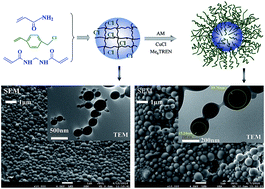
Fig. 2B and C show the surface morphology of the bare microsphere core and core–shell microsphere under SEM. It illustrates that the particles have the regular spherical structure with a wide range of size distribution from 0.1 to 1 micron. A significant increase in particles size can be observed after the surface modification by SI-ATRP of acrylamide (Fig. 2C) compared with bare microsphere core (Fig. 2B). The morphological structures obtained from transmission electron microscopy provided visual evidence for the successful growth of polyacrylamide on the bare microsphere core. For bare core, there is no shell structure round the core as can be seen in Fig. 2D. But it can be clearly observed that the core is surrounded by a shell layer from Fig. 2E. Furthermore, comparing with bare core, there is a significant growth of the size of core–shell microsphere. Fig. 2F shows that after 6 h polymerization a polyacrylamide shell of 15.24–59.76 nm was grafted onto the microsphere core. It's important to note that the size of the microspheres mentioned above is the original size before swelling equilibrium in an aqueous medium.

The apparent viscosity of microspheres before and after surface modification was measured as shown in Fig. 3A. There was almost no viscosifying power for microsphere core but the core–shell microsphere demonstrated relatively high viscosity due to the introduction of polyacrylamide on the surface. The swelling behavior of microspheres was also investigated. The particle size of microspheres was measured by laser particle size analyzer in deionized water at different swelling time, as shown in Fig. 3B (60 °C). The particle size increases gradually and reaches maximum with the increase of swelling time. For the microsphere core, the particle size no longer increases when the swelling time exceed about 100 h, which means a swelling equilibrium is achieved. But for microsphere with core–shell structure, the time needed for reaching swelling equilibrium is longer (about 220 h). It means that the introduction of shell not only increases the particle size of microsphere but also slows down the speed that water enters into the microsphere core, and then prolongs the time to reach an equilibrium.


image file: c6ra22615a-f3.tif
Fig. 3 (A) The viscosity of microspheres as a function of concentration; (B) influence of swelling time on the size of microspheres in aqueous solution at 60 °C.

At last, a group of enhanced oil recovery experiments were carried out in homogeneous sandpack models of approximate permeability (0.5 μm2) at 80 °C. For contrast evaluating, we also choose the polyacrylamide (degree of hydrolysis: 19.7%; intrinsic viscosity: 2415 mL g−1) to conduct experiment. The detail data are shown in Table 1. It can be seen that the oil recovery increment obtained with the core–shell macrospheres (17.43%) is higher than that with polyacrylamide (10.18%).

Table 1 Summary of enhanced oil recovery tests in sandpack model (1500 mg L−1)
Sample Permeability/μm2 First oil recovery/% Second oil recovery/% Increment of oil recovery/%
Polyacrylamide 0.527 52.91 63.09 10.18
Core–shell macrosphere 0.491 49.47 66.90 17.43


4 Conclusions

Well-defined core–shell microspheres were successfully synthesized by SI-ATRP. The growth of linear polyacrylamide from the crosslinked polyacrylamide core surface was confirmed by IR, 1H-NMR, TGA, SEM and TEM. The reaction was controllable as demonstrated by the linear kinetic plot and increase of Mn with conversions. Compared with the bare core, the core–shell microsphere has higher viscosity and bigger particle size at swelling equilibrium. The incremental oil recovery obtained with microspheres is higher than that with polyacrylamide under the same conditions.

Acknowledgements

Financial support from Research Foundation of Chongqing University of Science & Technology (CK2016B07), Scientific and Technological Research Program of Chongqing Municipal Education Commission (KJ1601305, KJ1501327, KJ1401308, KJ1401324) and National Natural Science Foundation of China (51504050, 21302237).

References

  1. X. Huang, L. Wang and W. Yang, Polym. Chem., 2015, 6, 6664–6670 RSC.
  2. M. Zuo, T. Liu and J. Han, Polym. Chem., 2014, 5, 6060–6067 RSC.
  3. W. Pu, D. Du, R. Liu, J. Gu, K. Li, Y. Zhang and P. Liu, RSC Adv., 2016, 6, 39522–39529 RSC.
  4. N. Lai, Y. Zhang, Q. Xu, N. Zhou, H. Wang and Z. Ye, RSC Adv., 2016, 6, 32586–32597 RSC.
  5. M. Lin, G. Zhang, Z. Hua, Q. Zhao and F. Sun, Colloids Surf., A, 2015, 477, 49–54 CrossRef CAS.
  6. Z. Hua, M. Lin, Z. Dong, M. Li, G. Zhang and J. Yang, J. Colloid Interface Sci., 2014, 424, 67–74 CrossRef CAS PubMed.
  7. C. Yao, G. Lei, L. M. Cathles and T. S. Steenhuis, Environ. Sci. Technol., 2014, 48, 5329–5335 CrossRef CAS PubMed.
  8. C. Yao, G. Lei, J. Hou, X. Xu, D. Wang and T. S. Steenhuis, Ind. Eng. Chem. Res., 2015, 10925–10934 CrossRef CAS.
  9. C. Yao, G. Lei, X. Gao and L. Li, J. Appl. Polym. Sci., 2013, 130, 1124–1130 CrossRef CAS.
  10. M. Abdulbaki, C. Huh, K. Sepehrnoori, M. Delshad and A. Varavei, J. Pet. Sci. Eng., 2014, 122, 741–753 CrossRef CAS.
  11. H. Yang, J. Zhang, G. Xu, D. Yu and G. Lei, Experimental research on polymer carrying elastic micro-spheres flooding in high permeability reserviors, Oil Drill. Prod. Technol., 2011, 33, 69–72 CAS.
  12. J. Sheng, Modern chemical enhanced oil recovery: theory and practice, Gulf Professional Publishing, 2011 Search PubMed.
  13. W. F. Pu, R. Liu, K. Y. Wang, K. X. Li, Z. P. Yan, B. Li and L. Zhao, Ind. Eng. Chem. Res., 2015, 54, 798–807 CrossRef CAS.
  14. B. T. Cheesman, J. D. Willott, G. B. Webber, S. Edmondson and E. J. Wanless, ACS Macro Lett., 2012, 1, 1161–1165 CrossRef CAS.
  15. P. Zhang, Y. Dong, W. Huang, Z. Jia, C. Zhou, M. Guo and H. Yu, J. Appl. Polym. Sci., 2015, 132, 41578 Search PubMed.
  16. Y. Lang, F. del Monte, D. P. Finn, W. Wang and A. Pandit, Polym. Chem., 2015, 6, 3014–3017 RSC.
  17. S. Banerjee, T. K. Paira and T. K. Mandal, Polym. Chem., 2014, 5, 4153–4167 RSC.
  18. K. Zhang, Q. Wang, H. Meng, M. Wang, W. Wu and J. Chen, Particuology, 2014, 14(3), 12–18 CrossRef CAS.

This journal is © The Royal Society of Chemistry 2016
Click here to see how this site uses Cookies. View our privacy policy here.