
Schottky–ohmic converted contact, fast-response, infrared PbTe photodetector with stable photoresponse in air

Zhonghai Lin *a, Zhi Yangb, Pingjian Wanga, Guangfen Weia, Aixiang Hea, Wen Guoa and Minqiang Wang*b
aKey Laboratory of Intelligent Information Processing in Universities of Shandong, Shandong Business and Technology University, Yantai, 264005, China. E-mail: zhonghailin@sdibt.edu.cn
bElectronic Materials Research Laboratory (EMRL), Key Laboratory of Education Ministry, International Center for Dielectric Research (ICDR), Xi'an Jiaotong University, Xi'an 710049, China. E-mail: mqwang@mail.xjtu.edu.cn

Received 9th September 2016 , Accepted 27th October 2016

First published on 27th October 2016


Abstract

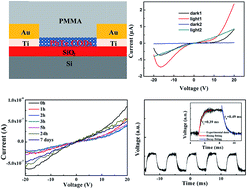
Lead chalcogenide colloidal quantum dots (CQDs) offer promise in infrared photodetectors due to their narrow bandgap and quantum size effect. Compared with PbS and PbSe CQDs, PbTe CQD has received the least attention because it is much easier oxidized in air owing to weak binding energy and hard size control is not in favor of observing quantum confinement effect. Here we developed a layer-by-layer method to prepare PbTe CQD photodetectors with the assistance of the inorganic halide ligand (TBAI) treatment. The results show that TBAI treated PbTe CQD film photodetectors have high photocurrent and short response time (0.39 ms) and recovery time (0.49 ms), indicating the effectiveness of TBAI treatment on PbTe CQD film. We also find PMMA protector is necessary to obtain stable photoresponse performance for TBAI treated PbTe CQD film photodetectors in air.

1. Introduction

Lead chalcogenide colloidal quantum dots (CQDs) are actively researched due to their unique and customizable optoelectronic features, tunable bandgap, control over work function, and enhanced multiple exciton generation (MEG).1,2 Colloidal solutions of PbS and PbSe CQDs have been extensively explored for fundamental studies in principle and various electronic,3 optoelectronic,4–8 and thermoelectric applications.9–11 Compared with the visible spectral region, there is a much greater demand for efficient and inexpensive absorber and emitter materials in the IR spectral region beyond 1 μm wavelengths, where mature silicon-based technologies cannot operate.12 So lead chalcogenide CQDs are a highly competitive class of materials. All applications of lead chalcogenide CQDs rely on facile injection or extraction of nonequilibrium charge carriers from CQDs, which is related to carrier mobility in CQD arrays. Very high mobility, such as occurs in a pristine material, enables rapid sweeping of the charges across the device. However, lead chalcogenide CODs, following their synthesis in solution, are generally capped by organic ligands that employ long chains to ensure their solution processability. Therefore, as-synthesized CQDs require post-treatment to remove the original long chain and insulating hydrocarbon ligands facilitating strong coupling between adjacent NCs.7,13 Much attentions have therefore been devoted to the development of new ligand strategies that minimize the interparticle spacing to promote carrier transportation and lower the defect density to reduce recombination loss.

A critical component of the progress listed above is the incorporation of halide and sulfide ligands into the CQDs. Although the charge carrier mobility of CQD films has been improved impressively by the use of sulfide ligands, there is a finding ascribed to these solids' high density of defects.12 To reduce defect density while keep high carrier mobility, halide ligands have been explored for CQD passivation. The atomic sizes of halide ligands allow efficient carrier transportation between CQDs, while the strong binding of halides to CQD surfaces offers the capacity to improve surface passivation.14 Since the use of a protic solvent in solid-state ligand exchange can cause the loss of ligands,15 it was crucial to develop new ligands that could bind more strongly to CQD surfaces, resisting these solvents. In comparison to bromide and chloride ligands, iodide ligands were found to form stronger bonds to the CQD surface atoms.16 The use of iodide ligands could lower film defect density greatly. These experimental results were explained via soft/hard base/acid theory: the soft base iodide bound strongly to soft acid lead atoms on PbS CQDs, while hard acid hydrogen cations bound strongly to hard base chloride.14,17 TBAI is one of iodine-containing ligands. It demonstrates the strong bonding character of iodine to the surface of lead chalcogenide CQDs and promote carrier transportation and lower the defect density in PbS and PbSe devices.5 E. H. Sargent's group has done a series of research works on CQD solar cells by that using tetrabutylammonium iodide (TBAI) treated CQD layer acts as a main charge generation layer.18–24 Power conversion efficiency was notably enhance to 10.8%.24 Furthermore, researchers have demonstrated the strong bonding character of TBAI ligands to the surface of lead chalcogenide CQDs (PbS, PbSe) and might be responsible for the lessened sensitivity to oxygen.5,25 PbTe with a larger average exciton Bohr radius (∼46 nm) and lighter e and h+ masses (0.22 and 0.24m0 respectively) than PbSe, is potentially even more size tunable than PbSe and PbS, and a more promising candidate from which to build electronically active solids because of its large dielectric constant (ε0 ∼ 1000), which should substantially reduce the Coulomb charging energy of the PbTe nanocrystal array.26,27

Among IR-active CQD optoelectronic materials, PbTe CQDs have received the least attention, compared with other lead chalcogenide PbS and PbSe CQDs, and the bonding length of PbTe is the largest owing to weak binding energy between Pb and Te. In addition, large surface activity of CQDs makes PbTe CQD very easy to oxidize in air, so bad environmental stability makes their photoconductor performance degrade very quickly until disappear in air.28 The PbTe has large Bohr radius, making it good candidate for the research on quantum size effect. However, the precisely size control of PbTe CQDs is very difficult, making narrow bandwidth of exciton absorption peak is hard to obtain, so many properties arising from quantum confinement effect are hard to observe. Our group has reported a rapid injection solution-phase synthesis route for the preparation of monodispersed PbTe CQDs.29

In this report, we prepared PbTe CQD film photodetector by solution-processed method in inert atmosphere at room-temperature. The PbTe CQDs thin film was fabricated on the plasma-treated Si/SiO2 substrate with interdigital Ti/Au electrodes using a layer-by-layer spin-coating method. The PbTe CQDs thin films with 2.5 nm-long oleate ligands (OA) are highly insulating and not applicable as photoconductive devices. The introduction of TBAI on PbTe CQDs has improved passivation of the PbTe QD surface, and promoted carrier transportation and lower the defect density of the PbTe QD thin film. Next, we exhibited the TBAI ligand exchange minimizes the PbTe CQDs spacing. Moreover, we measured and analyzed the infrared photoelectric properties of PbTe CQD device. The response time (0.39 ms) and recovery time (0.49 ms) are quite outstanding. We believe the success of chemical treatment using halide ligands can greatly expand the potential application areas of infrared PbTe CQD photodetector.

2. Experimental procedure

PbTe CQDs synthesis

PbTe CQDs were synthesized using a modified recipe described before.29 The PbTe CQDs were washed and isolated by hexane and acetone. These dots were finally dispersed in the mixed solvent (hexane[thin space (1/6-em)]:[thin space (1/6-em)]octane, 4[thin space (1/6-em)]:[thin space (1/6-em)]1 by volume).

TBAI treated PbTe CQD thin film fabrication

Inorganic halide treated PbTe CQD thin film was fabricated under inert atmosphere in a N2-filled glovebox using a layer-by-layer spin-coating method with interdigital Ti/Au electrodes. The gap between two neighboring Au electrode fingers is 25 μm and the length is 100 μm. There are 12 pairs of electrode fingers in this interdigital structure, so the active area of the photodetector is 1.5 mm2. Ti is a buffer layer of the gold electrode to increase the adhesive between gold electrode and substrate. Each iteration in the layer-by-layer deposition consisted of two steps: (1) PbTe CQDs solution was dropped onto the plasma-treated Si/SiO2 substrate with interdigital Ti/Au electrodes and spin-coated at 1500 rpm for 30 s; (2) as synthesized PbTe CQDs were capped with oleic acid ligands. The TBAI ligand exchange process is performed with 11 mg ml−1 TBAI methanol solution, left for 15 s and then spun at 1500 rpm for 30 s. The film was washed by methanol and then spin-coated at 1500 rpm for 15 s second times. The immersion time and multiple replacement are important. This process was repeated twice in order to exchange OA ligands completely. We repeated different times to obtain a smooth PbTe CQD thin film. The final PbTe CQD thin film was coated by PMMA.

Characterization

Transmission electron microscope (TEM) test was performed on a JEOL 2100, and FEI Quatan 250 FEG scanning electron microscope (SEM) was taken to characterize the film morphologies. The optical absorptance spectra were measured by a Jasco-V570 UV-vis-NIR spectrophotometer. X-ray photoelectron spectroscopy (XPS) was measured by Kratos Axis Ultra DLD, using mono Al Kα operated at 150 W. The xenon lamp (100 mW cm−2) and Nd[thin space (1/6-em)]:[thin space (1/6-em)]YAG NIR laser (1064 nm, 120 mW cm−2) were employed to evaluate the full spectrum and single spectrum photoresponse of PbTe CQD photodetector, respectively. The dark current, light current and the time-dependent photoresponse were recorded by a Keithley 2400 source meter. To determine the response and recovery time accurately, we used a pulsating source by keeping a mechanical chopper rotating at different frequencies in front of a continuous NIR laser. Then we could obtain the transient voltage across 20 MΩ resistance connected in series by using the digital phosphor oscilloscope (Tektronix DPO 4104). All measurements were conducted in air.

3. Result and discussion

TBAI treated PbTe CQD thin film was fabricated using a layer-by-layer spin-coating method. So this TBAI ligand exchange is a solid-state treatment. In order to investigate the microscopic change, we conducted TBAI ligand exchange in solution, which was similar to previous reports on PbSe30 and PbS.12 PbTe CQDs solution in hexane was mixed with N,N-dimethylformamide (DMF) containing TBAI. Upon vigorous stirring, the CQDs quickly transferred from hexane to DMF. Afterward, TBAI-capped PbTe CQDs were precipitated out by adding methanol. TBAI-capped CQD precipitates redispersed in DMF for TEM test. The TBAI concentration in solutions exchange was the same with that in the solid-state treatment. The TEM image (Fig. 1b) confirmed that the TBAI-capped PbTe CQDs retained their morphology, except for a shorter interparticle spacing compared with OA-capped PbTe CQDs (Fig. 1a). We used image analysis and obtained average interparticle spacing of 2.3 nm for CQDs with the TBAI ligand, compared with 4.2 nm in the case of OA-capped CQDs. We believe the interparticle spacing become shorter after solid-state treatment due to the extraction of the excess TBAI ligands. The TBAI ligand treatment minimizes interparticle spacings to promote carrier transportation and lowers the defect density to reduce recombination loss. As shown in Fig. S1, PbTe CQDs were dispersed in hexane (the top phase), before TBAI ligand exchange. After ligand exchange, PbTe CQDs are transferred into the bottom DMF phase. Fig. 1c shows the schematic diagram of PbTe CQDs with oleic surfactants and deprotonated oleic ligands together with TBAI, indicating shorter interparticle spacing for PbTe CQDs after TBAI ligand exchange.
image file: c6ra22581k-f1.tif
Fig. 1 TEM images and spacing statistics of PbTe CQDs capped with OA (a) and TBAI ligands (b). The insets show interparticle spacings. (c) Schematic diagram of TBAI exchange process of PbTe CQDs. Iodide anions bind to lead atoms, and tetrabutylammonium cations can be washed away by methanol cleaning process.

XPS was used to identify the effects of TBAI treated PbTe CQD film, as shown in Fig. 2. The general scan spectrum shows that the TBAI treated PbTe CQD film has stronger intensity for all elements than as-made. From elemental spectra, we can confirm the successful incorporation of iodine onto the CQDs due to the existence of strong I 3d peak in TBAI treated PbTe CQDs film. The standard peaks of Pb 4f are 137 eV and 142 eV, which is assigned to Pb(4f7/2) and Pb(4f5/2), respectively.31 The TBAI treated CQD film has the same Pb 4f peaks position, while as-made CQD film has a big shift, which may be attributed to PbOx peak.32 In addition, from Te 3d spectrum, we can see 571.7 eV (3d5/2) and 582 eV (3d3/2) for both as-made and TBAI treated CQD films, and high energy peaks for as-made are assigned to TeO2. Te 3d peaks are consistent with N. Ziqubu et al. experimental datas.33 So the severe oxidized state was demonstrated in as-made PbTe CQD film, and TBAI treated is quite helpful to overcome oxidized process, indicating the good passivation effect from TBAI treatment.


image file: c6ra22581k-f2.tif
Fig. 2 XPS spectra of as-made and TBAI treated PbTe CQD film on is substrate: (a) survey spectra and binding energy spectra of (b) Pb 4f, (c) Te 3d, (d) I 3d, (e) C 1s, and (f) O 1s. All peaks are calibrated using C 1s (284.6 eV).

PbTe CQDs were spin-coated onto the plasma-treated Si/SiO2 substrate with interdigital Ti/Au electrodes (see Fig. S3). We then fabricated PbTe CQD photodetector with the structure shown in Fig. 3a. To build photodetector devices, we prepared PbTe CQD thin film with different thickness. The top view and cross-sectional SEM images of the representative PbTe–TBAI CQD thin film were shown in Fig. 4b, c and S4. We can see clear PbTe CQDs grain and bright area from top and cross-sectional view, respectively, resulting from improving conductivity due to TBAI treatment. The thickness of PMMA layer is about 2 μm.


image file: c6ra22581k-f3.tif
Fig. 3 PbTe CQD photodetector physics. (a) TEM image of 4 nm PbTe CQDs and schematic illumination of PbTe–TBAI CQD photodetector device. The inset shows HRTEM image of 4 nm PbTe CQDs. (b) Top view SEM image of a representative PbTe–TBAI CQD thin film. (c) The cross-sectional SEM image of a representative PbTe CQD photodetector device.

image file: c6ra22581k-f4.tif
Fig. 4 IV curves of TBAI treated PbTe CQD film photodetectors with different thickness with and without xenon light illumination: (a) 4 cycles, 47 nm, (b) 6 cycles, 68 nm, (c) 8 cycles, 76 nm, (d) 12 cycles, 91 nm. Dark 1 and light 1 curves were collected immediately after the samples were taken out inner atmosphere, while dark 2 and light 2 curves were the final stable results.

In order to obtain good photoresponse performance, we have prepared TBAI treated PbTe CQD film with different thickness, and related thickness was obtained from cross-section SEM image in Fig. S5. From Fig. 4, we can see obvious electrical property change from nonlinear Schottky contact to symmetric linear ohmic contact except for PbTe CQD film with 47 nm thickness. According to equation image file: c6ra22581k-t1.tif, responsivity can be calculated as 0.13 mA W−1, 1 mA W−1, 1.6 mA W−1 and 1.9 mA W−1 for four devices with increasing thickness, respectively. In addition, with increasing thickness, we can see both increasing dark current and photocurrent, attributing to increasing photo-generated carriers number due to increasing light absorption. The working mechanism of photoconductor detector is based on three processes: the generation of photocarriers, the charge injection from external circuit and charge transportation in polycrystalline CQD film. Based on previous reports,32 the chemical ligand exchange can play a significant role for charge injection and transportation. In particular, the TBAI treatment has already been demonstrated to improve conductivity and stability of CQD film successfully through surface passivation. Oh et al. investigated the effect of different chemical ligand treatment on the charge injection and transportation of PbSe CQD film.30 According to Mott–Schottky theory, the barrier height for electron injection is determined by the metal work function and the semiconductor electron affinity, and electron affinity of CQDs can be great affected by surface ligands. Based on previous reports on PbS QDs, TBAI treated PbS QDs film exhibited air-stable n-type,16 while EDT treated PbS QDs film exhibited p-type.25 For our TBAI treated PbTe CQD film, the fresh sample has Schottky contact because the barrier between the high work function Au and n-type TBAI treated PbTe CQD film. However, after some time, it is changed to ohmic contact because p-type PbTe CQDs film is obtained due to CQDs surface oxidized partially. So we think the Schottky to ohmic contact transform is caused by the conversion from original n-type to p-type of PbTe CQD film. In order to further confirm above speculation, we conduct stability measurements for PbTe CQD film photodetectors with and without PMMA layer. From Fig. 5a and b, we can see almost unchanged dark current from the beginning to 7 days for photodetector with PMMA protective, while the photocurrent is decreasing gradually from the beginning to 5 h, then it can increase to a stable value after 24 h. Compared with that, from Fig. 5c and d, we can see gradually increased dark current and photocurrent from the beginning to 5 h for photodetector without PMMA protective, but it can decrease a little after 24 h, and photoresponse is disappeared when this photodetector is stored in air after 7 days. In addition, the Schottky contact can be preserved for a long time for photodetector with PMMA protective, while it is the ohmic contact for that without PMMA protective from the beginning. This stability measurement can illustrate that the oxidized process play a key role in both charge injection and transportation processes. Specifically, oxidized state existed on PbTe CQDs surface causes the change of barrier height between electrode and film, resulting in conversion from Schottky contact to ohmic contact, and film conductivity also can be improved upon air exposure because oxidized state is a kind of p-type doping for PbTe CQDs, increasing the carriers concentration, but finally very low conductivity will appear due to insulating PbOx or TeO2 shell after very long air exposure. This result is in accordance with previous reports on PbSe CQD film by Nozik's group.34,35 Our stability results also indicate that TBAI treatment is not enough to protect PbTe CQDs from oxidize in air, while TBAI treated PbS CQD film can achieve air-stable,16 indicating that PbTe CQDs are oxidized much easier than PbS CQDs. So PMMA protector is necessary to obtain stable photoresponse performance for TBAI treated PbTe CQD film photodetectors in air.


image file: c6ra22581k-f5.tif
Fig. 5 The dark current and photocurrent stability measurements for TBAI treated PbTe CQD film photodetectors with and without PMMA protective layer: (a) dark current of photodetector with PMMA, (b) photocurrent of photodetector with PMMA, (c) dark current of photodetector without PMMA, (d) photocurrent of photodetector without PMMA.

The multi-cycle time-dependent photoresponse measurements are an important route to evaluate photoresponse repeatability and obtain accurate response and recovery time. Fig. 6a shows a schematic setup for time-dependent photoresponse measurement. We can observe the alternating voltage from series resistance by oscilloscope under pulsating laser, indicating the photoresponse process of photodetector. The response time (tr) and recovery time (td) are defined as the time taken by the signal to reach 63% and 37% of the steady photovoltage according to previous report.36 From Fig. 6b and S6, we can see good photoresponse repeatability and obvious wave shape evolution by increasing pulsating light frequency, and steady photovoltage can always be obtained before the frequency reaches to 220 Hz. Here we can obtain accurate response time 0.39 ms and recovery time 0.49 ms by fitting single photoresponse cycle at frequency of 150 Hz. These very short times are quite outstanding compared with our previous PbTe CQD photodetector37 and other CQD photodetectors with the similar structure.33,38 The response and recovery time can be affected by many factors, such as crystal boundary size and barrier height, surface property of QDs, carrier mobility of QDs film and carrier transportation length and so on. We attributed the main reason for this ultrafast response to good surface passivation of QDs from TBAI and short carrier transportation length.


image file: c6ra22581k-f6.tif
Fig. 6 (a) Schematic of the experimental arrangement used to measure the time-dependent photoresponse of the photodetector. (b) Time-dependent photoresponse under pulsating light of frequency 150 Hz. The inset is a single photoresponse cycle, and the exponential fitted curves of photocurrent rising and decay processes are shown to obtain the response and recovery time.

4. Conclusion

In this work, a remarkable improvement in the performance and photostability of PbTe CQD photodetectors is reported by employing inorganic halide TBAI ligand exchange strategy. We have prepared TBAI treated PbTe CQD film with different thickness by a layer-by-layer method. TEM images exhibited a shorter interparticle spacing (2.3 nm) compared with OA-capped PbTe CQDs (4.2 nm). Additional, XPS analysis confirmed that TBAI treated was quite helpful to overcome oxidized process, indicating the good passivation effect from TBAI. Furthermore, we presented IV curve characters. The TBAI treated PbTe QD film exhibited obvious electrical property change from nonlinear Schottky contact to symmetric linear ohmic contact. The response time and recovery time of PbTe CQD photodetectors are 0.39 and 0.49 ms respectively. We also found PMMA protector was necessary to obtain stable photoresponse performance for TBAI treated PbTe CQD film photodetectors in air.

Acknowledgements

The authors gratefully acknowledge financial support from Natural Science Foundation of China (NSFC Grant No. 61307041, 61604122, 51572216, 61472227, 61272430, 11547036, 61403236, 61572296, 61174007, 61604122). The Industrial Science and Technology Research Project in Shaanxi Province (2015GY005) and 111 Program.

References

  1. R. J. Ellingson, M. C. Beard, J. C. Johnson, P. Yu, O. I. Micic, A. J. Nozik, A. Shabaev and A. L. Efros, Nano Lett., 2005, 5, 865–871 CrossRef CAS PubMed .
  2. O. E. Semonin, J. M. Luther, S. Choi, H. Y. Chen, J. Gao, A. J. Nozik and M. C. Beard, Science, 2011, 334, 1530–1533 CrossRef CAS PubMed .
  3. H. Du, C. Chen, R. Krishnan, T. D. Krauss, J. M. Harbold, F. W. Wise and J. Silcox, Nano Lett., 2002, 2, 1321–1324 CrossRef CAS .
  4. A. R. Marshall, M. R. Young, A. J. Nozik, M. C. Beard and J. M. Luther, J. Phys. Chem. Lett., 2015, 6, 2892–2899 CrossRef CAS PubMed .
  5. R. W. Crisp, D. M. Kroupa, A. R. Marshall, E. M. Miller, J. B. Zhang, M. C. Beard and J. M. Luther, Nature, 2015, 5, 9945 CAS .
  6. J. J. Choi, Y. F. Lim, M. E. B. Santiago-Berrios, M. Oh, B. R. Hyun, L. Sun, A. C. Bartnik, A. Goedhart, G. G. Malliaras, H. D. Abruna, F. W. Wise and T. Hanrath, Nano Lett., 2009, 9, 3749–3755 CrossRef CAS PubMed .
  7. H. Zhang, J. Jang, W. Liu and D. V. Talapin, ACS Nano, 2014, 8, 7359–7369 CrossRef CAS PubMed .
  8. Y. Cao, A. Stavrinadis, T. Lasanta, D. So and G. Konstantatos, Nat. Energy, 2016, 1, 16035 CrossRef .
  9. D. Wu, L. D. Zhao, X. Tong, W. Li, L. Wu, Q. Tan, Y. Pei, J. Li, Y. Zhu, M. G. Kanatzidis and J. He, Energy Environ. Sci., 2015, 8, 2056–2068 CAS .
  10. G. S. Shanker, A. Swarnkar, A. Chatterjee, S. Chakraborty, M. Phukan, N. Parveen, K. Biswas and A. Nag, Nanoscale, 2015, 7, 9204–9214 RSC .
  11. X. Hu, P. Jood, M. Ohta, M. Kunii, K. Nagase, H. Nishiate, M. G. Kanatzidis and A. Yamamoto, Energy Environ. Sci., 2016, 9(2), 517–529 CAS .
  12. J. Tang, K. W. Kemp, S. Hoogland, K. S. Jeong, H. Liu, L. Levina, M. Furukawa, X. Wang, R. Debnath, D. Cha, K. W. Chou, A. Fischer, A. Amassian, J. B. Asbury and E. H. Sargent, Nat. Mater., 2011, 10, 765–771 CrossRef CAS PubMed .
  13. D. V. Talapin, J. Lee, M. V. Kovalenko and E. V. Shevchenko, Chem. Rev., 2010, 110, 389–458 CrossRef CAS PubMed .
  14. R. Wang, Y. Shang, P. Kanjanaboos, W. Zhou, Z. Ning and E. H. Sargent, Energy Environ. Sci., 2016, 9, 1130–1143 CAS .
  15. L. Y. Chang, R. R. Lunt, P. R. Brown, V. Bulović and M. G. Bawendi, Nano Lett., 2013, 13, 994–999 CrossRef CAS PubMed .
  16. Z. Ning, O. Voznyy, J. Pan, S. Hoogland, V. Adinolfi, J. Xu, M. Li, A. R. Kirmani, J. Sun, J. Minor, K. W. Kemp, H. Dong, L. Rollny, A. Labelle, G. Carey, B. Sutherland, I. Hill, A. Amassian, H. Liu, J. Tang, O. M. Bakr and E. H. Sargent, Nat. Mater., 2014, 13, 822–828 CrossRef CAS PubMed .
  17. R. G. Pearson, J. Am. Chem. Soc., 1963, 85, 3533–3539 CrossRef CAS .
  18. G. H. Kim, F. P. García de Arquer, Y. J. Yoon, X. Lan, M. Liu, O. Voznyy, Z. Yang, F. Fan, A. H. Ip, P. Kanjanaboos, S. Hoogland, J. Y. Kim and E. H. Sargent, Nano Lett., 2015, 15, 7691–7696 CrossRef CAS PubMed .
  19. L. Hu, A. Mandelis, X. Lan, A. Melnikov, S. Hoogland and E. H. Sargent, Sol. Energy Mater. Sol. Cells, 2016, 155, 155–165 CrossRef CAS .
  20. Z. Jin, M. Yuan, H. Li, H. Yang, Q. Zhou, H. Liu, X. Lan, M. Liu, J. Wang, E. H. Sargent and Y. Li, Adv. Funct. Mater., 2016, 26, 5284–5289 CrossRef CAS .
  21. H. Chen, H. Liu, Z. Zhang, K. Hu and X. Fang, Adv. Mater., 2016, 28, 403–433 CrossRef CAS PubMed .
  22. J. Gao, S. C. Nguyen, N. D. Bronstein and A. P. Alivisatos, ACS Photonics, 2016, 3, 1217–1222 CrossRef CAS .
  23. M. Sulaman, S. Yang, A. Bukhtiar, C. Fu, T. Song, H. Wang, Y. Wang, H. Bo, Y. Tang and B. Zou, RSC Adv., 2016, 6, 44514–44521 RSC .
  24. M. Liu, F. P. García de Arquer, Y. Li, X. Lan, G. H. Kim, O. Voznyy, L. K. Jagadamma, A. S. Abbas, S. Hoogland, Z. Lu, J. Y. Kim, A. Amassian and E. H. Sargent, Adv. Mater., 2016, 28, 4142–4148 CrossRef CAS PubMed .
  25. C. H. M. Chuang, P. R. Brown, V. Bulović and M. G. Bawendi, Nat. Mater., 2014, 13, 796–801 CrossRef CAS PubMed .
  26. Y. Pan, H. Bai, L. Pan, Y. Li, M. C. Tamargo, M. Sohel and J. R. Lombardi, J. Mater. Chem., 2012, 22, 23593–23601 RSC .
  27. J. J. Urban, D. V. Talapin, E. V. Shevchenko and C. B. Murray, J. Am. Chem. Soc., 2006, 128, 3248–3255 CrossRef CAS PubMed .
  28. L. Protesescu, T. Zünd, M. I. Bodnarchuk and M. V. Kovalenko, ChemPhysChem, 2016, 17, 670–674 CrossRef CAS PubMed .
  29. Z. Lin, M. Wang, L. Wei, X. Song, Y. Xue and X. Yao, J. Alloys Compd., 2011, 509, 5047–5049 CrossRef CAS .
  30. S. J. Oh, Z. Wang, N. E. Berry, J. H. Choi, T. Zhao, E. A. Gaulding, T. Paik, Y. Lai, C. B. Murray and C. R. Kagan, Nano Lett., 2014, 14, 6210–6216 CrossRef CAS PubMed .
  31. Y. Yang, S. C. Kung, D. K. Taggart, C. Xiang, F. Yang, M. A. Brown, A. G. Güell, T. J. Kruse, J. C. Hemminger and R. M. Penner, Nano Lett., 2008, 8(8), 2447–2451 CrossRef CAS PubMed .
  32. Z. Yang, M. Wang, Y. Shi, X. Song, Z. Lin, Z. Ren and J. Bai, J. Mater. Chem., 2012, 22(39), 21009–21016 RSC .
  33. N. Ziqubu, K. Ramasamy, P. V. Rajasekhar, N. Revaprasadu and P. O'Brien, Chem. Mater., 2010, 22, 3817–3819 CrossRef CAS .
  34. M. Law, J. M. Luther, Q. Song, B. K. Hughes, C. L. Perkins and A. J. Nozik, J. Am. Chem. Soc., 2008, 130, 5974–5985 CrossRef CAS PubMed .
  35. J. M. Luther, M. Law, Q. Song, C. L. Perkins, M. C. Beard and A. J. Nozik, ACS Nano, 2008, 2(2), 271–280 CrossRef CAS PubMed .
  36. Z. Yang, M. Wang, X. Song, G. Yan, Y. Ding and J. Bai, J. Mater. Chem. C, 2014, 2, 4312–4319 RSC .
  37. Z. Lin, M. Wang, L. Zhang, Y. Xue, X. Yao, H. Cheng and J. Bai, J. Mater. Chem., 2012, 22, 9082–9085 RSC .
  38. B. S. Kim, D. C. Neo, B. Hou, J. B. Park, Y. Cho, N. Zhang, J. Hong, S. Pak, S. Lee, J. I. Sohn, H. E. Assender, A. A. R. Watt, S. Cha and J. M. Kim, ACS Appl. Mater. Interfaces, 2016, 8, 13902–13908 CAS .

Footnotes

Electronic supplementary information (ESI) available. See DOI: 10.1039/c6ra22581k
These authors contributed equally to the work.

This journal is © The Royal Society of Chemistry 2016
Click here to see how this site uses Cookies. View our privacy policy here.