

Synthesis, characterization and electrochemical evaluation of mixed oxides of nickel and cobalt from spent lithium-ion cells
C. P. Sandhyaa,
Bibin John*a and
C. Gourib
aEnergy Systems Division, Vikram Sarabhai Space Centre, Thiruvananthapuram – 695022, Kerala, India. E-mail: bbnjohn@yahoo.com
bPolymers and Special Chemicals Group, Vikram Sarabhai Space Centre, Thiruvananthapuram – 695022, Kerala, India
First published on 30th November 2016
Abstract
A simple and easy strategy for the synthesis of mixed oxides of Ni and Co from spent Li-ion cell cathodes based on LiNi0.8Co0.15Al0.05O2 (LNCAO) active material is presented here. The separation of the precursor of the active materials in the hydroxide form is achieved using a chemical precipitation technique and it is then subjected to heat treatment following two routes: (i) conventional heating, and (ii) microwave heating. The products thus obtained are evaluated as anode material in Li-ion cells using Li metal as the counter electrode. The mixed oxides of Ni and Co synthesised via the microwave route (MO-MW) perform better compared to those obtained following the conventional heating route (MO-CH). The MO-MW electrode shows an initial specific capacity of 1104 mA h g−1 and retains 846 mA h g−1 after 30 charge–discharge cycles, whereas, the MO-CH electrode delivers an initial specific capacity of 763 mA h g−1 with retention of 71% after 30 cycles. The metal oxide composite structure, its nano-dimensions as well as the spherical morphology of the MO-MW material contributed towards its better electrochemical performance.
1. Introduction
Energy conversion and storage is undoubtedly one of the greatest challenges in today's world. As one of the most promising energy storage devices, that is suitable as the power source for portable electronics and electric vehicles (EVs), lithium-ion (Li-ion) cells have attracted tremendous attention during the past decades. After being used for several charge–discharge cycles, the Li-ion cells/batteries form part of the battery waste stream. Thus, recycling of spent Li-ion cells to recover the useful materials is being explored with great attention, in particular to extract costly metals/synthesise new electrode-active materials. A Li-ion cell, in addition to the cell hardware, consists of anode, cathode, organic electrolyte and separator. The anode consists of copper foil coated with the active material along with the conducting diluent and polymeric binder, usually poly(vinylidene fluoride) (PVdF). Similarly, the cathode consists of aluminium foil coated with a mixture of active material, conducting diluent and polymeric binder. Most of the Li-ion cells are based on graphite anode and lithium cobalt oxide (LiCoO2) cathode. However, lithium nickel cobalt aluminium oxide (LiNi0.8Co0.15Al0.05O2 – LNCAO) based cathodes are also getting much attention these days and are being used in some of the commercial batteries for EVs. Most of the earlier research on recycling of spent Li-ion cells focused on recycling of LiCoO2 cathode due to the high cost of cobalt.1 The recycling of spent Li-ion cells based on LNCAO cathode is less explored.The recycling of Li-ion cells can be done by subjecting the spent cells to a combination of selected physical and chemical processes. At first, physical processes such as skinning, removing of crust, crushing, sieving and separation of materials are performed to separate the electrode materials from the rest. Secondly, active materials such as cobalt and other metals are recovered from the electrodes through a series of chemical processes. Simple and cheap methods are being investigated for the purpose. Shin et al. employed mechanical separation of LiCoO2 particles and further hydro-metallurgical procedure for recovery of lithium and cobalt.2 Thermal as well as mechano-chemical processes were also adopted for the recovery of lithium and cobalt.3 Recycling through chemical processes basically consists of leaching either by acid or base, chemical precipitation, filtration, extraction, etc. In the process given by Nan et al. for extraction of cobalt, leaching with alkaline solution, followed by dissolution of residue in H2SO4 and precipitation of cobalt as oxalate was done.4 Commercial extracting agents were also used to extract small quantities of copper and cobalt. Lithium was recovered as lithium carbonate deposition and the recovered materials were reused for the synthesis of LiCoO2. Dorella et al. reported the separation of cobalt through a chemical process involving acid leaching, precipitation with NH4OH and liquid–liquid extraction using a suitable extracting agent.5
Hybrid metal oxide anodes are gaining more attention in recent times; here one metal oxide acts as the active material while the other functions as a conducting and supporting matrix that can buffer the volume change of the first metal oxide.6 In a hybrid metal oxide anode, if both the metal oxides are electrochemically active, an overall improvement in performance is expected. The metallic nano particles generated from both metal oxides during the first discharge process can catalyze the decomposition of solid electrolyte interphase (SEI) in the subsequent charge processes and improve the performance.7,8
In this study, a recycling process via a chemical route involving the dissolution in acid, chemical precipitation, filtration, drying and calcination has been adopted to prepare mixed oxides of Ni and Co from spent Li-ion cell cathode based on LNCAO active material. The synthesis of mixed oxides of Ni and Co from the precursor was performed following two routes viz. air calcination and microwave heating and the products thus obtained were evaluated as anode-active material in Li-ion cells, and found to be promising.
2. Experimental
2.1. Materials
A typical Li-ion cell that had undergone about 50 charge–discharge cycles in the 2.7 to 4.0 V range was made available in-house for the study. This spent Li-ion cell was discharged in multiple steps to <3.0 V for safe dismantling operations. Con. HCl (A.R grade, M/s. Nice Chemicals) and NaOH (98%, M/s. Chemika biochemika reagents) were used for the dissolution of LNCAO and precipitation of metal ions, respectively. The other chemicals and materials used were: PVdF (M/s. Sigma Aldrich), acetylene black (M/s. Timcal, Switzerland), N-methylpyrrolidinone (NMP, M/s. Sigma Aldrich), copper foil (10 μm thickness, M/s. Schlenk Metallfolien, Germany), electrolyte 1 M LiPF6 in ethylene carbonate (EC)![[thin space (1/6-em)]](https://www.rsc.org/images/entities/char_2009.gif) :diethyl carbonate (DEC):ethyl methyl carbonate (EMC) (1:1:1, by weight, M/s. Danvec, Singapore), Celgard 2320 separator (PP/PE/PP trilayer membrane, 20 μm thick, M/s. Celgard, USA) and lithium metal foil (M/s. Aldrich).
:diethyl carbonate (DEC):ethyl methyl carbonate (EMC) (1:1:1, by weight, M/s. Danvec, Singapore), Celgard 2320 separator (PP/PE/PP trilayer membrane, 20 μm thick, M/s. Celgard, USA) and lithium metal foil (M/s. Aldrich).
2.2. Recovery of cathode-active material from spent Li-ion cell
The cell was cut open manually and the electrode components were separated, washed with acetone and vacuum dried at 60 °C for 24 h to remove traces of electrolyte. Following this, the cathode was separated, cut into strips of ∼5 cm × 2 cm and fully soaked in NMP at ambient conditions for 24 h under magnetic stirring to dissolve away the polymeric binder and to separate active materials from the supporting substrate. The active material gets peeled off from the Al foil during this process. After removing Al foil, the solution was filtered, residue was collected and vacuum dried at 100 °C for 12 h to remove NMP.2.3. Extraction of mixed oxide precursor from recovered LNCAO
The material thus obtained was dissolved completely in con. HCl and filtered to remove carbon residue (conducting diluent). 0.5 M NaOH was added drop wise to the filtrate with constant magnetic stirring until the pH of the solution reached an alkaline range (9–11). After continuous stirring for 2 h, the mixture was filtered, and the residue was washed several times with distilled water to remove excess NaOH and finally with acetone. The resulting solid was vacuum dried at 100 °C for 3 h, cooled and powdered using mortar and pestle to get the pale green coloured precursor powder.2.4. Synthesis of mixed oxides of Ni and Co from precursor powder
Mixed oxides of Ni and Co were synthesised from the precursor by adopting two types of heat treatment. In the conventional heating (CH) route, the precursor was heat treated at 500 °C for 2 h in air and cooled to ambient to get a grey coloured sample identified as MO-CH. In the microwave (MW) route, mixed oxide was synthesised by subjecting the precursor to microwave irradiation (2.45 GHz, 700 W, KenStar) for 30 min. The grey coloured sample thus obtained was identified as MO-MW. The different process steps involved in the recovery of metal ions and the synthesis of active material are outlined in Fig. 1.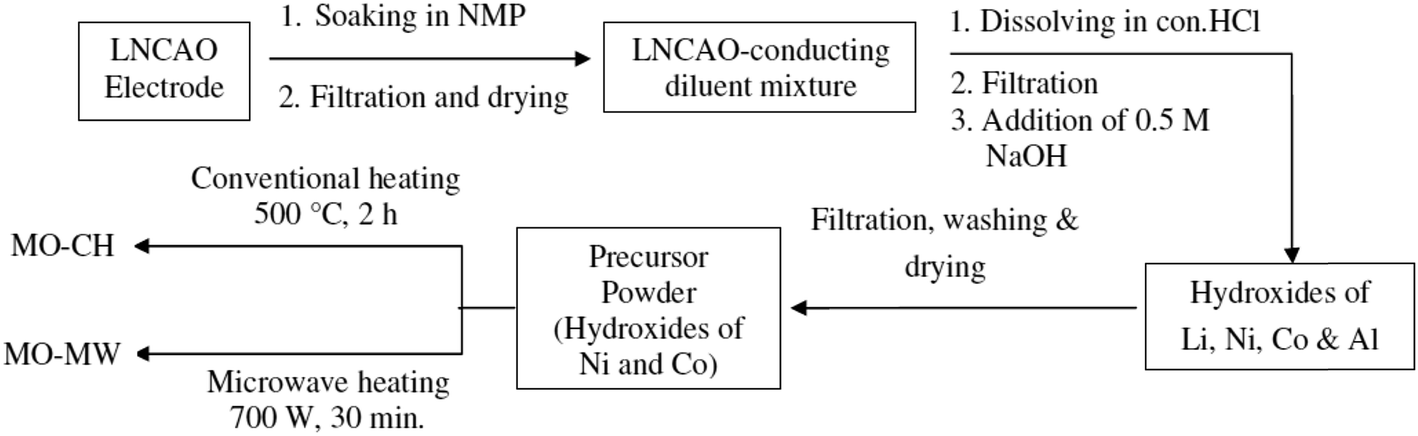 | ||
| Fig. 1 Outline of the various process steps adopted for the synthesis of mixed oxides of Ni and Co from LNCAO cathode of spent Li-ion cell. | ||
2.5. Product characterization
Thermogravimetric (TG)/differential thermogravimetric (DTG) analysis of the precursor was conducted in air using thermal analyser (TA Instruments SDT2960) at a heating rate of 10 °C min−1 from room temperature to 900 °C. X-ray diffraction (XRD) pattern of the active material was recorded on Panalytical X'Pert PRO (Philips) diffractometer with a CuKα radiation source. Fourier transform infrared (FTIR) spectra of the precursor as well as the products were recorded on Perkin Elmer Spectrum GX-A FTIR spectrometer in the wave number range of 2000–400 cm−1. The Ni and Co content in the mixed oxides was analysed using Inductively Coupled Plasma Atomic Emission Spectrometry (ICPAES). The surface morphologies of the powders were studied by Scanning Electron Microscopy (SEM) (INCA Penta FETX3, EVO 50).2.6. Electrode preparation and electrochemical characterization
The electrochemical properties of the synthesized MO-CH and MO-MW powders were studied by assembling CR 2032 coin cells. The composition of the electrodes used for electrochemical characterisation was 75:15:10 (by wt) of active material, carbon black and PVdF, respectively, blended using NMP as solvent and coated over Cu foil as current collector. The coin cell consisted of the mixed oxide based electrode, lithium foil as counter electrode, Celgard 2320 as separator and 1 M LiPF6 in EC:DEC:EMC (1:1:1, by wt) as electrolyte. The charge–discharge cycling of the cell was performed within the voltage range of 0.01–3.00 V vs. Li/Li+ at room temperature using Bitrode button cell cycling system (Model: MCV8-1/0.01/0.001-5B) at a current rate of C/15. CV tests were performed on a versatile multichannel cell cycling system (Arbin 24 channel BT2000) over the potential range of 0.01–3.00 V (vs. Li/Li+) at a scan rate of 1 mV s−1.
3. Results and discussion
3.1. Synthesis of mixed oxides
On addition of HCl to LNCAO, the soluble chlorides of the metals Li, Ni, Co and Al are formed. On addition of excess NaOH, at alkaline pH, the metal hydroxides are formed, some of which get precipitated. LiOH being soluble remains in the filtrate during filtration. Aluminium is precipitated as Al(OH)3 and dissolves in excess of NaOH as sodium aluminate. The residue thus contains the hydroxides of Ni and Co. Fig. 2 shows the TG/DTG curves of this residue (precursor). The initial weight loss in the temperature range of 30–150 °C can be ascribed to the loss of moisture and water of crystallization. The second weight loss in the region 200–400 °C is attributed to the thermal decomposition of hydroxide precursor to metal oxide particles.9,10 Above 400 °C, the curve is nearly horizontal with minimal weight loss, indicating the completion of formation of metal oxide. Based on these results, 500 °C was selected as the temperature for the preparation of active material from precursor following CH route. | ||
| Fig. 2 TG/DTG curves of the precursor. | ||
3.2. Characterization of MO-CH and MO-MW
The FT-IR spectra of the precursor as well as the products are shown in Fig. 3. The precursor, as shown in Fig. 3(a), which is a mixture of hydroxides of Ni and Co shows peaks at 1632 cm−1 (existence of water), 1370 and 1060 cm−1 (the O–C![[double bond, length as m-dash]](https://www.rsc.org/images/entities/char_e001.gif) O symmetric and asymmetric stretching vibrations, and C–O stretching vibration originating from the adsorption of atmospheric CO2) and 654 cm−1 (stretching vibration of hydroxyl groups hydrogen-bonded to Ni–O). These observations indicate the presence of Ni(OH)2 in the precursor. Metal oxides generally give absorption bands below 1000 cm−1 arising from inter-atomic vibrations.11 The FT-IR spectra of the products obtained after heat treatment is shown in Fig. 3(b) and (c). The absorption band in the region 430–650 cm−1 is assigned to Ni–O stretching vibration mode.12 The peaks corresponding to Co3O4 are not detected probably due to its very low concentration. The Ni/Co weight ratio, analysed by ICPAES, is 5.56 and 5.58 for MO-CH and MO-MW, respectively.
O symmetric and asymmetric stretching vibrations, and C–O stretching vibration originating from the adsorption of atmospheric CO2) and 654 cm−1 (stretching vibration of hydroxyl groups hydrogen-bonded to Ni–O). These observations indicate the presence of Ni(OH)2 in the precursor. Metal oxides generally give absorption bands below 1000 cm−1 arising from inter-atomic vibrations.11 The FT-IR spectra of the products obtained after heat treatment is shown in Fig. 3(b) and (c). The absorption band in the region 430–650 cm−1 is assigned to Ni–O stretching vibration mode.12 The peaks corresponding to Co3O4 are not detected probably due to its very low concentration. The Ni/Co weight ratio, analysed by ICPAES, is 5.56 and 5.58 for MO-CH and MO-MW, respectively.
 | ||
| Fig. 3 FT-IR curves of (a) the precursor, (b) MO-CH and (c) MO-MW. | ||
The XRD patterns of the precursor as well as the products are shown in Fig. 4. From Fig. 4(a) it is inferred that the precursor is of amorphous nature with broad reflections corresponding to Ni(OH)2. When the precursor is heat treated, well defined reflections start to appear as in Fig. 4(b) and (c). In the XRD pattern of MO-CH and MO-MW, the existence of strong reflections at 2θ values of 37.3, 43.4, 62.9, 75.4 and 79.3° correspond to (111), (200), (220), (311) and (222) crystal planes, respectively, indicating the formation of phase pure, cubic nickel oxide, NiO (JCPDS card no. 01-075-0269).13 For both the samples, the additional reflections observed at 59.6° and 65.5° correspond to (511) and (440) planes respectively, of Co3O4 phase (JCPDS card no. 01-078-1969). The very low intensity of these reflections indicates the presence of Co3O4 in trace amounts compared to NiO. In addition, broadening of all the peaks is observed in the case of MO-MW sample as in Fig. 4(c) indicating the formation of NiO and Co3O4 particles in nano dimensions. Similar observations have been reported by Cheng et al. for micro- and nano-sized NiO.14 The average crystallite size of the samples is calculated using the Scherrer equation: D = 0.9λ/βcosθ where D is the average crystalline size, λ is the wavelength of CuKα, β is the full width at half maximum of the diffraction peaks, and θ is the Bragg's angle. The average crystallite size calculated with respect to the β value of (200) peak, of the sample MO-CH is 26.4 nm and that for MO-MW is 5.2 nm.
 | ||
| Fig. 4 XRD of (a) the precursor, (b) MO-CH, and (c) MO-MW. | ||
Fig. 5 shows the SEM images of both the samples MO-CH and MO-MW. It could be seen that an irregular morphology with agglomerates are obtained for MO-CH sample (Fig. 5(a)); whereas, a spherical morphology is obtained for MO-MW (Fig. 5(b)). The sizes of the spheres obtained in MO-MW were not uniform, and were in the range of 100–800 nm.
 | ||
| Fig. 5 SEM images of (a) MO-CH, and (b) MO-MW. | ||
3.3. Electrochemical studies
The electrochemical properties of MO-CH and MO-MW as anode in Li-ion cells were evaluated via charge/discharge cycling and CV measurements. Fig. 6 shows the CV results of MO-CH and MO-MW electrodes at a scan rate of 0.5 mV s−1 between 0.01 and 3.0 V. In the CV curves of MO-CH sample, a single redox pair is observed; whereas, in the case of MO-MW electrode two redox pairs are seen. For the MO-MW electrode, in the first cycle, the reduction peaks at 0.6 and 1.4 V correspond to the reduction of metal oxides to corresponding metals and the formation of a partially reversible SEI layer.14 The oxidation peak at 1.5 V corresponds to the partial decomposition of the SEI, and the oxidation peak located at 2.4 V corresponds to the decomposition of Li2O leading to the reformation of metal oxides. It is noticed that the MO-MW electrode has smaller peak potential separation between the oxidation peak and the reduction peak which implies the better reversibility of MO-MW electrode. The difference in potential between the oxidation and reduction peaks in all the cycles is less in the case of MO-MW compared to MO-CH. It indicated that MO-MW performed with better electrochemical activity and stability. Based on the above results, it is concluded that the MO-MW has better reaction reversibility and enhanced electrochemical activity than MO-CH sample obtained through conventional way of heating. | ||
| Fig. 6 CV curves of (a) MO-CH, and (b) MO-MW at a scan rate of 0.5 mV s−1. | ||
Fig. 7 shows the discharge–charge curves at different cycles of cells assembled using MO-CH and MO-MW electrodes with Li as counter electrode cycled between 0.01 and 3.00 V at a rate of C/15. The 1st, 2nd and 15th cycle discharge–charge curves of both the samples are shown here. A single plateau is observed in the first discharge curve of MO-CH at around 0.7 V (Fig. 7(a)) corresponding to the reduction of metal oxides to the respective metals and the formation of amorphous Li2O as per the eqn (1).
| MO + 2Li+ + 2e− ↔ Li2O + M | (1) |
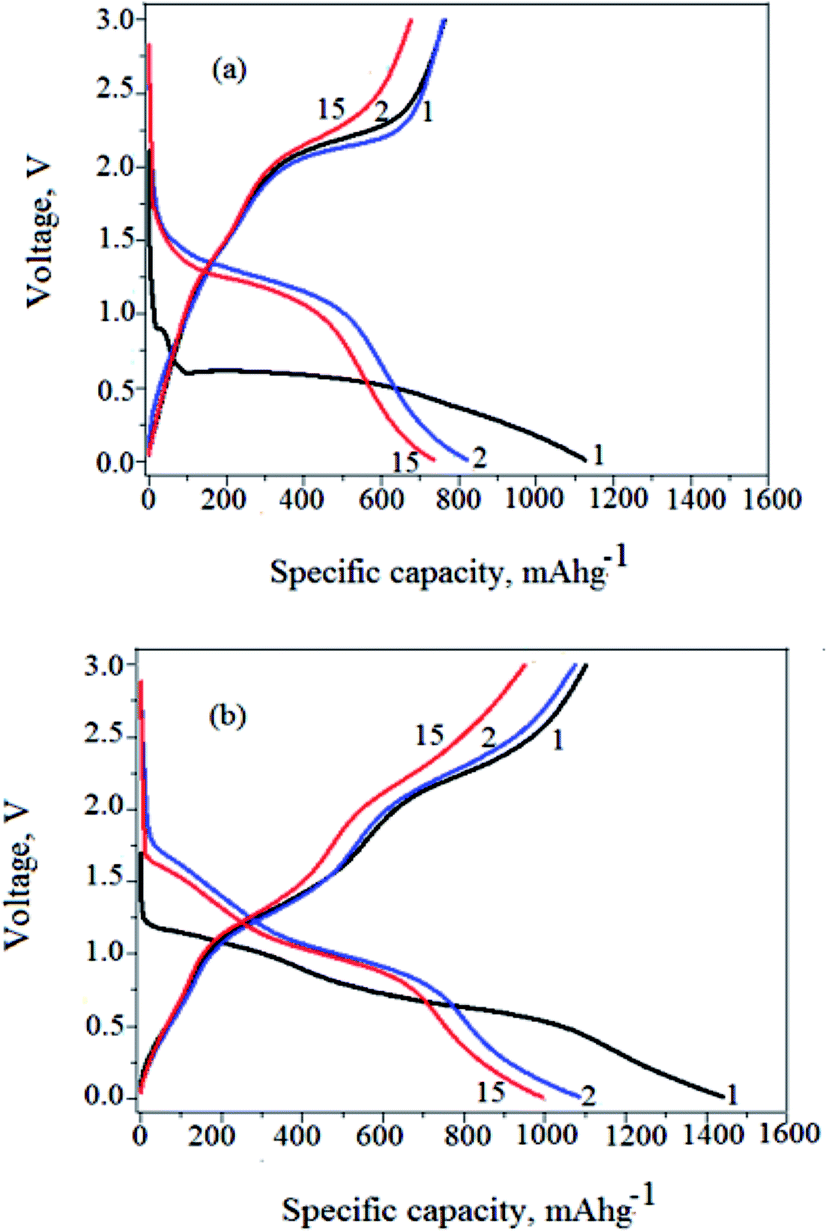 | ||
| Fig. 7 Typical charge–discharge curves of (a) MO-CH, and (b) MO-MW during 1st, 2nd and 15th cycle. | ||
For MO-MW electrode, as shown in Fig. 7(b), during the first discharge process, in addition to the plateau observed at ∼0.7 V as explained above, an additional plateau at ∼1.2 V is seen which can be assigned to the formation of a partially reversible SEI layer.14 The charging curve shows two plateaus for both materials, one at 1.4 V and another at 2.2 V which correspond to the decomposition of SEI and the re-oxidation of metal, respectively. However, the plateau at 1.4 V for MO-CH is not very prominent. This type of observation has been reported for micro and nano sized NiO.14
Though Ni/Co ratio is nearly the same for MO-CH and MO-MW, the spherical morphology of MO-MW sample along with its nano dimension provides large surface to volume ratio and easier access of Li+ ions to it. The MO-MW electrode showed an initial specific capacity of 1104 mA h g−1 with a coulombic efficiency of ∼77%. The capacity obtained is higher than the theoretical value (∼718 mA h g−1 for NiO and ∼890 mA h g−1 for Co3O4). The MO-MW material with nano dimension and large surface area contribute to more SEI layer formation during the initial discharge process. As reported in the literature15–17 the materials with smaller particle sizes could generate smaller metallic nanoparticles, which possessed higher catalytic property than larger ones. Since both the oxides in the mixed oxide are electro-active, and the metallic nano particles generated from these oxides in the first discharge process could catalyze the decomposition of SEI in the charge process, more SEI would decompose and the irreversible capacity could be thereby reduced. The MO-CH electrode delivered an initial specific capacity of 763 mA h g−1, with ∼67% coulombic efficiency. In this case, the capacity attained is close to that of theoretical value. The relatively larger particle size results in lower specific surface area for MO-CH material, and this contributed to reduced formation of SEI. In addition, the catalytic property of metallic particles generated during the first discharge process is less due to larger sizes compared to MO-MW, thereby reducing the coulombic efficiency.18
It is noted that there is a marginal increase in the discharge voltage for both the samples from second cycle onwards when compared to the first discharge cycle. This can be ascribed to the fact that during the first discharge, the mixed oxide gets converted to corresponding metals and Li2O which are being in the nanometer range. From the first charge cycle onwards, the nanometer sized particles so formed take part in the redox reaction. The nano dimension gets retained in further cycles and thereby enhances the discharge plateau to a higher value.19,20 The two voltage plateaus observed in both charge/discharge cycles of MO-MW were retained in all the cycles, which reveals the better reaction kinetics and the retention of a stable electron transfer pathway. The discharge plateau is higher for MO-MW compared to MO-CH, indicating the enhanced electrode reaction kinetics in the case of MO-MW arising as a result of the ease in access of Li+ to NiO/Co3O4 particles with smaller size and larger surface area.
Fig. 8 shows the cycling performance of both the samples and the corresponding coulombic efficiency of the electrode vs. Li/Li+. The MO-CH electrode retained specific capacity of 540 mA h g−1 after 30 charge–discharge cycles with 71% retention compared to initial cycles (Fig. 8(a)). The MO-MW electrode performed better retaining specific capacity of 846 mA h g−1 even after 30 cycles with 77% retention of capacity (Fig. 8(b)). High coulombic efficiency was obtained in the range of 92% and 95% for MO-CH and MO-MW electrodes, respectively. After initial cycles, both materials are seen to perform with high coulombic efficiencies. The cyclability studies reveal the stability of spherical morphology as well as the nanodimension of MO-MW sample towards enhancing the charge–discharge cycling performance when compared to MO-CH.
 | ||
| Fig. 8 The cycle performance of the electrodes (a) MO-CH, and (b) MO-MW vs. Li/Li+ at C/15 rate. | ||
4. Conclusion
In this study, a simple and versatile method is demonstrated for the synthesis of mixed oxides of Ni and Co from the isolated LNCAO electrode material of spent Li-ion cells. Two different heating methods were adopted for the synthesis of active material from the precipitated metal hydroxide precursor such as air calcination and microwave route. The MO-MW electrode showed an initial specific capacity of 1104 mA h g−1 and retained about 846 mA h g−1 after 30 charge–discharge cycles. The MO-CH electrode delivered an initial specific capacity of 763 mA h g−1 and retained about 71% after 30 charge–discharge cycles. The better performance of MO-MW material was attributed to its mixed oxide composition, nano dimension and spherical morphology with larger surface area which improves the reaction kinetics, compared to MO-CH.Acknowledgements
The authors thank Director, VSSC for granting permission to publish this paper. Ms Sandhya C. P. thanks Council for Scientific and Industrial Research (CSIR), India for the fellowship.References
- S. Saeki, J. Lee, Q. W. Zhang and F. Saito, Int. J. Miner. Process., 2004, 74, 373–378 CrossRef.
- S. M. Shin, N. H. Kim, J. S. Sohn, D. H. Yang and Y. H. Kim, Hydrometallurgy, 2005, 79, 172–181 CrossRef CAS.
- S. Castillo, F. Ansart, C. Laberty-Robert and J. Portal, J. Power Sources, 2002, 112, 247–254 CrossRef CAS.
- J. Nan, D. Han and X. Zuo, J. Power Sources, 2005, 152, 278–284 CrossRef CAS.
- G. Dorella and M. B. Mansur, J. Power Sources, 2007, 170, 210–215 CrossRef CAS.
- P. Zhang, Z. P. Guo, S. G. Kang, Y. J. Choi, C. J. Kim, K. W. Kim and H. K. Liu, J. Power Sources, 2009, 189, 566–570 CrossRef CAS.
- X. H. Huang, J. P. Tu, B. Zhang, Y. Li, Y. F. Yuan and H. M. Wu, J. Power Sources, 2006, 161, 541–544 CrossRef CAS.
- J. Y. Xiang, J. P. Tu, Y. F. Yuan, X. L. Wang, X. H. Huang and Z. Y. Zeng, Electrochim. Acta, 2009, 54, 1160–1165 CrossRef CAS.
- M. Aghazadeh, A. N. Golikand and M. Ghaemi, Int. J. Hydrogen Energy, 2011, 36, 8674–8679 CrossRef CAS.
- M. El-Kemary, N. Nagy and I. El-Mehasseb, Mater. Sci. Semicond. Process., 2013, 16, 1747–1752 CrossRef CAS.
- M. Salavati-Niasaria, F. Davara and Z. Fereshteh, J. Alloys Compd., 2010, 494, 410–414 CrossRef.
- M. Kanthimathi, A. Dhathathreyan and B. V. Nair, Mater. Lett., 2004, 58, 2914–2917 CrossRef CAS.
- V. S. Reddy Channu, R. Holze and B. Rambabu, Colloids Surf., A, 2012, 414, 204–208 CrossRef.
- M.-Y. Cheng, Y.-S. Ye, T.-M. Chiu, C.-J. Pan and B.-J. Hwang, J. Power Sources, 2014, 253, 27–34 CrossRef CAS.
- Y. F. Wang and L. J. Zhang, J. Power Sources, 2012, 209, 20–29 CrossRef CAS.
- X. H. Huang, J. P. Tu, C. Q. Zhang, X. T. Chen, Y. F. Yuan and H. M. Wu, Electrochim. Acta, 2007, 52, 4177–4181 CrossRef CAS.
- S. L. Jin, H. G. Deng, D. H. Long, X. J. Liu, L. Zhan, X. Y. Liang, W. M. Qiao and L. C. Ling, J. Power Sources, 2011, 196, 3887–3893 CrossRef CAS.
- X. J. Zhang, D. G. Zhang, X. M. Ni, J. M. Song and H. G. Zheng, J. Nanopart. Res., 2008, 10, 839–844 CrossRef CAS.
- B.-M. Chae, E.-S. Oh and Y.-K. Lee, J. Power Sources, 2015, 274, 748–754 CrossRef CAS.
- D. Larcher, G. Sudant, J. B. Leriche, Y. Chabre and J. M. Tarascon, J. Electrochem. Soc., 2002, 149, 234–241 CrossRef.
| This journal is © The Royal Society of Chemistry 2016 |