A highly efficient supramolecular adsorbent for precious metal: adsorption behavior of PdII by melamine cyanurate

D. Nagai* and T. Kimoto
Division of Molecular Science, Faculty of Science and Technology, Gunma University, 1-5-1 Tenjin-cho, Kiryu, Gunma 376-8515, Japan. E-mail: daisukenagai@gunma-u.ac.jp; Fax: +81-277-30-1409; Tel: +81-277-30-1485

Received 7th September 2016 , Accepted 20th October 2016

First published on 21st October 2016


Abstract

Melamine cyanurate (M-CA) was found to be a highly recoverable and selective supramolecular adsorbent for recovery of PdII ion. Adsorption of PdII by M-CA was fast in the first 30 min, with 93% adsorption efficiency, and equilibrium was reached within 1 h. Langmuir and Freundlich isotherm models were employed to correlate the experimental data. The adsorption of PdII by M-CA is well supported by a Langmuir isotherm model, with a high maximum adsorption capacity of 0.874 gPd gM-CA−1. M-CA was also capable of selective adsorption of PdII from a solution containing other metals. Pd adsorbed on M-CA was separated quantitatively by reductive treatment, and the M-CA could be recycled at least 3 times. We propose an in-plane adsorption mechanism for M-CA, which is a π–π stacked layered complex, based on the results of X-ray spectroscopy and computational calculations. This study demonstrates that M-CA is promising as a selective and highly efficient adsorbent for recovery of precious metals.

1. Introduction

Precious metals such as Pd, Pt, Au, Nd, and Dy, which are globally scarce, are part of a group of rare metals known as the ‘industrial vitamins’. It is often difficult to find suitable alternatives for these metals, because they are essential for high-tech industries such as the manufacturing of automobiles, digital consumer electronics, and information and communications technology devices.1,2 Although the demand for precious metals is increasing with the development of such industries, the price on the international market has increased significantly due to weak supplies. Therefore, efficient recovery of precious metals from nature, wastewater, and discarded high-tech products has been of increasing importance, both from the standpoint of ensuring a stable supply as well as the general desirability of resource recycling and environmental sustainability.

Conventional methods for the recovery of metals from water and wastewater include reduction,3 oxidation,4 solvent extraction,5,6 precipitation,7,8 and adsorption.9–11 Adsorption using polymer sorbents is one of the most suitable procedures due to its low cost, safety, and ease of separation.12,13 Although various sorbents have been reported,9–13 they remain serious hurdles to their practical use in metal recovery: (1) the molecular motion of these polymers in metal aqueous solutions is small due to their hydrophobicity, resulting in low adsorption amounts and rates; (2) the low proportion of coordination sites in the polymer structure results in low adsorption amounts per unit weight; (3) polymer structures often contain two or more coordination groups, resulting in low adsorption selectivity.

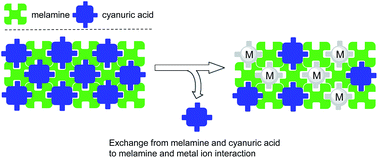
With the aim of solving these problems, we focused on the use of a melamine cyanurate supramolecular complex (denoted M-CA, Scheme 1) as an adsorbent. M-CA is a 1[thin space (1/6-em)]:[thin space (1/6-em)]1 hydrogen-bonded supramolecular complex of melamine (M) and cyanuric acid (CA) with π–π stacked layers.14–16 Compared with adsorption by polymers, adsorption using M-CA has significant advantages: (1) the molecular motion of M-CA in solution is greater than that of polymers due to its non-covalent hydrogen-bonded nature, allowing high adsorption amounts and rates; (2) the proportion of coordination sites (three imine nitrogen atoms of M) in M-CA is higher than for polymers, leading to a larger adsorption amount per unit weight; and (3) the adsorption selectivity is expected to be high due to the existence of a single coordination site (the imine nitrogen atom of M). Therefore, M-CA has potential utility as a highly efficient adsorbent that offers solutions to the aforementioned problems through its high adsorption capacity, high rate, and high selectivity. Moreover, the adsorption mechanism of the π–π stacked layered M-CA complex (i.e., interlayer adsorption or in-plane adsorption) is of interest and such investigation may lead to new designs for recovery materials based on layered compounds.


image file: c6ra22425c-s1.tif
Scheme 1 Adsorption of PdII ion by melamine cyanurate.

In this article, we describe the adsorption behavior and mechanism of adsorption of PdII ion by the M-CA complex, because Pd is the subject of increasing attention due to its applications in automotive catalysis,17 electronic devices,18 dental materials,19 and personal accessories.20

2. Experimental section

2.1 Materials

Melamine (M, Tokyo Kasei Kogyo, >98.0%) and cyanuric acid (CA, Tokyo Kasei Kogyo, >98.0%) were commercially available and used as received. Sodium tetrachloropalladate(II) (Na2PdCl4, Tokyo Kasei Kogyo, >98.0%), manganese(II) chloride tetrahydrate (Kanto Chemical, >99.0%), cobalt(II) chloride hexahydrate (Kanto Chemical, >99.0%), nickel(II) chloride hexahydrate (Kanto Chemical, >98.0%), copper(II) chloride (Wako Pure Chemical, >95.0%), and zinc(II) chloride (Kanto Chemical, >98.0%), were commercially available and used as received. Hydrochloric acid (Wako Pure Chemical, 60.0–61.0%), sodium hydroxide (Wako Pure Chemical, >97.0%), and sodium borohydride (Wako Pure Chemical, >90.0%) were commercially available and used as received.

2.2 Methods

Flame atomic absorption spectrometry was carried out using a Hitachi polarized Zeeman atomic absorption spectrometer (AAS) Z-2310 (detection limit of Pd: 0.02 ppm; wavelength: 265.9 nm; 10.0 mA; 380 V). 13C cross-polarization magnetic angle scanning (CP-MAS) NMR measurements were performed using a Bruker DSX300 spectrometer operating at 75 MHz equipped with a CP-MAS probe. X-ray photoelectron spectroscopy (XPS) spectrum was measured with a KRATOS AXIS-NOVA instrument. Scanning electron microscopy (SEM) was performed using a Hitachi S3000N instrument at an acceleration voltage of 1.5 kV. Energy dispersive X-ray analysis (EDX/SEM) measurement was carried out with Horiba EX-200K/Hitachi S3000N instruments. Powder X-ray diffraction (XRD) measurements were performed on a Rigaku RINT2200VF instrument (Cu-Kα irradiation, 25 kV, 200 mA). The calculations were performed using GAUSSIAN 09 for Windows on a computer equipped with an Inter® Core™ i5-2400CPU@ (3.10 GHz). The molecules have C1 symmetries. The geometries and the energies were calculated with density functional theory (DFT) method with B3LYP model. Basis sets were 6-31G for H, C, N, O, C, Cl and SDD for Pd atoms.

2.3 Preparation of M-CA

A 15.5 mM aqueous solution of melamine (20.0 mL) was added to a 15.5 mM aqueous solution of cyanuric acid (20.0 mL). The resulting precipitate was separated by filtration (pore size; 0.450 μm), washed with distilled water, and dried in vacuo.

2.4 Metal recovery (typical procedure)

M-CA (5.10 mg, 0.02 mmol) was added to a 2.00 mM of an aqueous sodium tetrachloropalladate(II) solution (10.0 mL, pH 5.5), and stirred at room temperature for 20 h. The resulting Pd/M-CA complexes were separated by filtration (pore size; 0.450 μm), and an aliquot (0.250 mL) of the filtrate was removed for sampling. After appropriate dilution (15.0 mL), the metal concentration in the solution was determined by atomic absorption spectroscopy (AAS). The adsorption amount was calculated based on the following equation:
Adsorption amount (gPd gM-CA−1) = atomic weight (g mol−1) of Pd × recovery amount (mol)/weights of M-CA used (g).

2.5 Separation of Pd from Pd/M-CA complex

To examine the separation of Pd from the Pd/M-CA complex, an adsorption experiment was conducted. M-CA (102 mg, 0.4 mmol) was added to a 0.2 mM aqueous solution of Na2PdCl4 (200 mL), and stirred at room temperature for 1 h. The resulting product, containing Pd/M-CA complexes, was separated by filtration (pore size; 0.450 μm), and the concentration of PdII in the filtrate was measured using AAS to determine the adsorption efficiency (95.1%). The Pd/M-CA complexes were washed with distilled water and dried in vacuo. The complexes were then dissolved in a 1.00 M aqueous solution of NaOH (50 mL). Addition of sodium borohydride (200 mg, 5.30 mmol) to the mixture followed by stirring for 18 h produced a precipitate (black powder, Pd), which was separated by filtration (pore size; 0.450 μm) and dried in vacuo (desorption efficiency: 99.8%).

2.6 Recycling of M-CA and subsequent PdII adsorption

The filtrate obtained as described above was neutralized with a 1.00 M aqueous solution of HNO3, precipitating M-CA. The separated M-CA was added to a 0.2 mM aqueous solution of Na2PdCl4 (200 mL) and the mixture was stirred at room temperature for 1 h. The resulting product, containing Pd/M-CA complexes, was separated by filtration (pore size; 0.450 μm) and the concentration of PdII in the filtrate was measured using AAS to determine the adsorption efficiency. The Pd/M-CA complexes were washed with distilled water and dried in vacuo for the next separation of Pd.

3. Results and discussion

3.1 Adsorption behavior of PdII using M-CA

We first examined the adsorption of PdII using M-CA in various concentration solution (Table 1). M-CA was added to an aqueous solution of Na2PdCl4, and the mixture was stirred at room temperature for 20 h (Scheme 1). The resulting Pd/M-CA complex was separated by filtration, and the concentration of PdII in the filtrate was measured by AAS to determine the adsorption efficiency. The results obtained using PdII solutions of various concentrations are summarized in Table 1. It was found that M-CA adsorbed PdII quantitatively when solutions with various concentrations of PdII were used (0.5–2.0 mM), which prompted us to examine the adsorption behavior of M-CA in further detail.
Table 1 Adsorption of PdII by M-CA in various concentration solution of PdII a
Entry Conc. of PdII (mM) Adsorptionb (mg) Adsorptionb (gPd gM-CA) Adsorptionb (%)
a Conditions: M-CA: 5.1 mg (0.02 mmol); aqueous solution of PdII: 20 mL; room temperature; reaction time: 20 h.b Determined by AAS analysis.
1 0.5 0.53 0.105 99.9
2 1.0 1.06 0.208 99.7
3 2.0 2.11 0.414 99.7


Because kinetics control the overall efficiency of the process, the kinetics of PdII adsorption by M-CA was examined at room temperature. The kinetic curve showed that adsorption was rapid in the first 30 min, with 93% efficiency, and equilibrium was reached at approximately 1 h (Fig. 1A). The rapid rate represents a significant advantage of M-CA for use in wastewater treatment processes. The experimental kinetic data for adsorption were fitted using pseudo first- and pseudo second-order kinetic models, with the following equations.21,22

 
log(q1qt) = log[thin space (1/6-em)]q1k1t/2.303 (pseudo-first-order) (1)
 
qt = q22k2t/(1 + q2k2t) (pseudo-second-order) (2)


image file: c6ra22425c-f1.tif
Fig. 1 (A) Changes in adsorption of PdII as a function of mixing time. Conditions: M-CA: 5.1 mg (0.02 mmol); aqueous solution of PdII: 20 mL (0.2 mM); room temperature; reaction time: 1 h. (B) Adsorption amounts as a function of equilibrium concentration of PdII. Conditions: M-CA: 5.1 mg (0.02 mmol); aqueous solution of PdII: 20 mL (appropriate concentration, pH 5.5); room temperature; reaction time: 1 h. (C) Effect of pH on adsorption of PdII by M-CA. Conditions: M-CA: 5.1 mg (0.02 mmol); aqueous solution of PdII: 20 mL (0.2 mM); room temperature; reaction time: 1 h. The pH of each solution was adjusted by HNO3 or NaOH aqueous solution.

Both q1 and q2 represent the calculated amount of PdII adsorbed at equilibrium (gPd gM-CA−1), qe is the experimental amount of PdII at equilibrium, qt is the experimental amount of PdII adsorbed at a certain time (gPd gM-CA−1), k1 is the pseudo first-order rate constant [min−1], and k2 is the pseudo second-order rate constant [min−1]. The rate constants, experimental and predicted equilibrium uptakes, and corresponding correlation coefficients were calculated, and these are summarized in Table 2. For the pseudo first-order model, the calculated q1 value deviates from the experimental qe value, with a correlation coefficient of 0.930, because this model represents only the kinetic experimental data for the rapid initial phase. In contrast, the pseudo second-order model, based on the adsorption capacity of the solid phase, predicts the adsorption behavior over the entire study range.21,23 The pseudo second-order model produced better results. The experimental qe value is close to the calculated q2 and the correlation coefficient is 0.997, suggesting that a chemical adsorption process is dominant.

Table 2 Constants for kinetic model of adsorption
qe (gHg ggel−1) q (gHg ggel−1) k (min−1) R2
Pseudo-first-order model
0.384 0.176 k1 0.052 0.930
[thin space (1/6-em)]
Pseudo-second-order model
  0.399 k2 2.24 0.997


To optimize the design of an adsorption system to remove metal ions, it is important to establish the most appropriate correlation for the adsorption isotherm. Langmuir and Freundlich isotherms have been used to model many adsorption processes. The Langmuir isotherm assumes monolayer coverage of the adsorbate over a homogeneous adsorbent surface, with the adsorption of each molecule onto the surface having equal adsorption activation energy, while the Freundlich isotherm supposes a heterogeneous surface and allows the expression of multilayer adsorption.24 The Langmuir and Freundlich isotherms are expressed as eqn (3) and (4), respectively.22

 
Ce/Qe = (1/Qm)Ce + 1/(QmKL) (3)
 
log[thin space (1/6-em)]Qe = 1/n[thin space (1/6-em)]log[thin space (1/6-em)]Ce + log[thin space (1/6-em)]KF (4)
where Ce is the equilibrium concentration of substrates in the solution (mg L−1), Qe is the adsorption capacity at equilibrium (gPd gM-CA−1), Qm is the calculated maximum adsorption amount (gPd gM-CA−1), KL is the Langmuir constant (L mg−1), and KF is the Freundlich constant (kg L mol−2), and n is the adsorption equilibrium constant.

Fig. 1B shows the adsorption isotherm of PdII on M-CA. It can been seen that Qe increased with increasing Ce, reaching a maximum value at 447 mg L−1, followed by a decrease. The decrease in the adsorption amount is ascribed to the disturbing of the hydrogen bond formation between M and CA by the excess coordination of PdII to M in high concentration. The precipitation amount of the Pd-adsorbed M-CA decreased, resulting in the decrease in the adsorption efficiency. The Langmuir and Freundlich adsorption constants evaluated from the isotherms, along with the correlation coefficients, are listed in Table 3. As can been seen, the Langmuir isotherm gave a better fit than the Freundlich isotherm by comparison of their correlation coefficients and the experimental maximum adsorption amount (0.836 gPd gM-CA−1) was closed to the calculated Qm, which showed that monolayer adsorption takes place on M-CA. According to the Langmuir equation, the maximum adsorption capacity (Qm) for PdII was 0.874 gPd gM-CA−1. Table 4 compares the maximum adsorption capacities of different types of adsorbent. The maximum adsorption capacity is the second-largest amount compared with other adsorbents. The highest recovery capacity was also achieved by us based on the complexation between trithiocyanuric acid and melamine.34 However, because this system was not capable of selective recovery of PdII and could not be recycled, the selectivity and recyclability of M-CA were next examined.

Table 3 Langmuir and Freundlich isotherm constants for PdII adsorption by M-CA
Langmuir model Freundlich model
Qm (gPd gM-CA−1) KL (L mg−1) R2 KF (kg L mol−2) n R2
0.874 0.465 0.975 232 2.53 0.952


Table 4 Comparison of the maximum adsorption capacities of palladium ions on different adsorbents
Entry Adsorbent Qm (gPd gpoly.−1) Ref.
1 PA–lignin 0.010 25
2 Thiourea-modified MA resin 0.015 26
3 Amberlite IRC 718 0.059 27
4 Lysin modified chitosan 0.101 28
5 Glycine modified chitosan 0.120 28
6 Glutaraldehyde modified chitosan 0.180 29
7 Dimethylamine-modified paper 0.224 30
8 Thiourea modified chitosan 0.278 31
9 Amine-modified polystyrene 0.280 32
10 Rubeanic acid modified chitosan 0.352 31
11 Thiourea-modified polyallylamine 0.508 33, our work
12 Melamine-cyanuric acid system 0.595 34, our work
13 Melamine cyanurate 0.874 This work
14 Trithiocyanuric acid–melamine system 1.248 35, our work


Adsorption using M-CA is affected by pH, because acidic and basic conditions may cause the dissociation of hydrogen bonds. Accordingly, we examined the effect of pH on the adsorption of PdII (Fig. 1C). High adsorption efficiencies were achieved at pH 3–9, indicating the high adsorptivity was maintained at wide range of pH. The decrease in the adsorption efficiency at pH 1 is ascribed to the dissociation of hydrogen bond in M-CA, resulting in the decrease in the precipitation of Pd/M-CA.

To investigate the selectivity of M-CA for PdII, competitive adsorption of PdII from a mixture of metal ions (MnII, CoII, NiII, CuII, and ZnII, each at 10 ppm) was investigated. M-CA was found to adsorb PdII selectively and quantitatively (Fig. 2). This can be explained by the hard–soft acid–base (HSAB) principle. The tertiary amine groups of melamine, a predictable coordination site (vide infra), are categorized as soft bases, which preferentially coordinate to a soft acid such as PdII.36–38 In contrast, MnII and CoII are hard acids, and NiII, CuII, ZnII are borderline acids, which are not preferentially coordinated by melamine. The slight adsorption of MnII may be ascribed to the existence as sulfide minerals [MnS(alabandite)]. This affinity reflected the selectivity result. These results show that M-CA acts as a selective adsorbent for soft metal ions such as platinum group metals.


image file: c6ra22425c-f2.tif
Fig. 2 Competitive adsorption of metal ions. Conditions: M-CA: 10.2 mg (0.04 mmol); metal ion aqueous solution (20 mL, pH 5.5, each metal ion at 10 ppm); room temperature; reaction time: 3 h.

3.2 Separation of Pd and reuse of M-CA

For practical use, Pd recovered through adsorption by M-CA must be quantitatively separated, allowing the M-CA to be reused. Initially, separation of Pd from Pd/M-CA complex was examined (Scheme 2). Pd/M-CA, whose adsorption efficiency had been confirmed by AAS (95.1%), was added to a 1.0 M aqueous solution of NaOH, resulting in dissolution of the Pd/M-CA via hydrogen bond scission. Subsequent reductive treatment with NaBH4 precipitated the reduced Pd (Scheme 2A), which was separated by filtration (Scheme 2B). The precipitate was confirmed by X-ray diffraction (XRD) analysis to be elemental Pd (Fig. S1, ESI). In order to recover the M-CA, the filtrate was neutralized with a 1.0 M aqueous solution of HNO3, resulting in precipitation of M-CA via the regeneration of hydrogen bonds (Scheme 2C). The separated M-CA was recycled for further PdII adsorption (Scheme 2d). The recyclability of M-CA is shown in Fig. 3. This method could be used for effective separation of Pd from M-CA; Pd separation was almost quantitative over four cycles. The adsorption efficiency did not decrease over the cycles, which means that M-CA can be used effectively over at least four cycles. Therefore, the M-CA is a highly efficient adsorbent having essential features for metal recovery: high recovery, high selectivity, and recyclability.
image file: c6ra22425c-s2.tif
Scheme 2 Separation of Pd from M-CA after adsorption.

image file: c6ra22425c-f3.tif
Fig. 3 Recyclability of M-CA in the adsorption of PdII. Adsorption conditions: M-CA: 102 mg (0.4 mmol); aqueous solution of PdII: 200 mL (0.2 mM); room temperature; reaction time: 1 h. Desorption conditions: NaBH4: 200 mg (5.29 mmol); 1.0 M NaOH aqueous solution: 50 mL; reaction time: 18 h.

3.3 Structural characterization of Pd-adsorbed M-CA

The M-CA with adsorbed Pd was next structurally characterized. X-ray photoelectron spectroscopy (XPS) showed the Pd3d3/2 Pd3d5/2 peaks at 342.8 eV and 336.9 eV, respectively, which were assigned to the PdII species (Fig. 4a).39 Scanning electron microscopy with energy-dispersive X-ray spectroscopy (SEM/EDX) revealed the presence of Pd and Cl species (Fig. 4b). The Cl species was ascribed to Na2PdCl4; this means that PdIICl2 is contained in Pd/M-CA complex. To examine the coordination sites, 13C cross-polarization/magic angle spinning (CP-MAS) nuclear magnetic resonance (NMR) spectroscopy was carried out for M-CA with different amounts of PdII adsorbed (Fig. 5). The NMR signal corresponding to the imine group of M at 165 ppm was shifted upfield in conjunction with increases in the amount of adsorbed Pd, while the signal corresponding to the carbonyl group of CA at 154 ppm was almost unchanged. These results showed that the imine group of M coordinates predominantly to PdII. These results are consistent with the fact that the nucleophilicity of the imine group is higher than that of the carbonyl group. When an aqueous solution of PdII without M-CA was stirred at room temperature for 20 h, the precipitation of Pd was not observed and the concentration of PdII in solution was not changed confirmed by AAS. Therefore, PdII removal is took place by the coordination process.
image file: c6ra22425c-f4.tif
Fig. 4 (a) XPS spectrum of M-CA adsorbing PdII (adsorption amount: 0.414 gPd gM-CA−1). (b) EDX spectrum of M-CA adsorbing PdII (adsorption amount: 0.414 gPd gM-CA−1).

image file: c6ra22425c-f5.tif
Fig. 5 13C CP-MAS NMR spectra of (A) M-CA, (B) M-CA with adsorption amount of 0.100 gPd gM-CA−1, and (C) M-CA with adsorption amount of 0.200 gPd gM-CA−1.

In order to examine whether adsorption by M-CA consists of interlayer or in-plane adsorption, XRD measurements of M-CA with different amounts of adsorbed PdII were carried out (Fig. 6). The peak at 2θ = 27.9°, attributable to an interlayer distance of 3.2 Å for M-CA,16 was not shifted after adsorption, indicating that adsorption of PdII did not occur in the interlayer space.40 Next, to confirm the possibility of an in-plane adsorption mechanism, the contents of the filtrate after adsorption were investigated by 1H NMR spectroscopic analysis. After adsorption, the M-CA with adsorbed PdII was separated by filtration and the filtrate was removed under reduced pressure. 1H NMR spectrometry of the residue (Fig. S2) revealed that M and CA were eluted in the solution (Table 5; internal standard: 1,4-dioxane). The amount of M eluted decreased as the amount of PdII adsorbed increased, while the amount of CA increased. These results implies that an exchange from hydrogen bonding between M and CA to coordination of M to PdII was the predominant process. The reason for this exchange-based bonding pattern was examined by computational calculations. We optimized the geometries of M-CA, the PdCl2–M complex, and the PdCl2–CA complex by DFT calculations (Fig. 7; basis sets 6-31G for H, C, N, O, C, Cl, and SDD for Pd atoms). Intramolecular bond energies (ΔEs) were calculated from the following equation:

 
ΔE = EAB − (EA + EB) (5)
where EAB is the potential energy of the A–B complex, EA is the potential energy of A, and EB is potential energy of B. The calculated potential energies and bond energies of each complex are summarized in Table S1. The bond energy of PdCl2–M (−59.2 kcal mol−1) implies greater stability than those of M-CA (−21.1 kcal mol−1) and PdCl2–CA (−35.2 kcal mol−1). In addition, the hydrogen bonds of M-CA are weakened in aqueous solution. These results supported the contention that there was an exchange from hydrogen bonding between M and CA to coordination between M and PdII during adsorption.


image file: c6ra22425c-f6.tif
Fig. 6 XRD profiles of (A) M-CA, (B) M-CA with adsorption amount of 0.200 gPd gM-CA−1, and (C) M-CA with adsorption amount of 0.400 gPd gM-CA−1.
Table 5 Adsorption of PdII by M-CA in various concentration of PdIIa
Entry Conc. of PdII (mM) Adsorption of PdII (gPd gM-CA−1) In the filtrateb
M (mmol) CA (mmol)
a Conditions: M-CA: 102 mg (0.400 mmol); room temperature; reaction time: 1 h.b Estimated by 1H NMR analysis (internal standard; 1,4-dioxane).
1 0 0 0 0
2 0.5 0.104 0.0628 0.141
3 1.0 0.208 0.0482 0.147
4 1.5 0.312 0.0428 0.199


image file: c6ra22425c-f7.tif
Fig. 7 Optimized geometries of (a) M-CA, (b) PdCl2–M complex, and (c) PdCl2–CA complex.

4. Conclusions

We have achieved the highly efficient recovery of PdII ion utilizing the supramolecular characteristics of melamine cyanurate. The maximum adsorption capacity for PdII calculated by the Langmuir isotherm model was 0.874 gPd gM-CA−1, which is the high adsorption capacity compared with other adsorbents in the literature. M-CA was also capable of selective adsorption of PdII from solutions containing other metals. Pd adsorbed on M-CA could be separated quantitatively by reductive treatment, and the M-CA was recyclable at least 3 times. We proposed an in-plane adsorption mechanism for M-CA, which is a π–π stacked layered complex, based on XRD measurement, investigation of the adsorption process, and numerical calculations. M-CA will be a promising highly efficient and adsorbent for recovery of precious metals and the recovery of other precious metals are now under investigation.

Acknowledgements

This work was financially supported by JSPS KAKENHI 26340075.

Notes and references

  1. K. Kuroda and M. Ueda, Appl. Microbiol. Biotechnol., 2010, 87, 53 CrossRef CAS PubMed.
  2. F. Zereini and F. Alt, Anthropogenic Platinum Groups Emissions, Their Impact on Man and Environment, Springer-Verlag, Berlin, 1999 Search PubMed.
  3. D. Parajuli, C. R. Adhikari, H. Kawakita, S. Yamada, K. Ohno and K. Inoue, Bioresour. Technol., 2009, 100, 1000 CrossRef CAS PubMed.
  4. J. B. Mosher and L. Figueroa, Miner. Eng., 1996, 9, 573 CrossRef CAS.
  5. H. T. Nguyen, W. Masayuki and K. Takaumi, Solvent Extr. Ion Exch., 2007, 25, 407 CrossRef.
  6. J. S. Wang and C. M. Wai, Ind. Eng. Chem. Res., 2005, 44, 922 CrossRef CAS.
  7. H. Koseoglu and M. Kitis, Miner. Eng., 2009, 22, 440 CrossRef CAS.
  8. T. Z. Sadyrbaeva, J. Membr. Sci., 2006, 275, 195 CrossRef CAS.
  9. H. Tokuyama, J. Haseda, S. Nii and S. Sakohara, Sep. Purif. Technol., 2010, 71, 83 CrossRef CAS.
  10. L. Zhou, J. Liu and Z. Liu, J. Hazard. Mater., 2009, 172, 439 CrossRef CAS PubMed.
  11. K. Fujiwara, A. Ramesh, T. Maki, H. Hasegawa and K. Ueda, J. Hazard. Mater., 2007, 146, 39 CrossRef CAS PubMed.
  12. L. Zhou, J. Liu and Z. Liu, J. Hazard. Mater., 2009, 172, 439 CrossRef CAS PubMed.
  13. K. Fujiwara, A. Ramesh, T. Maki, H. Hasegawa and K. Ueda, J. Hazard. Mater., 2007, 146, 39 CrossRef CAS PubMed.
  14. B. Roy, P. Bairi and A. K. Nandi, RSC Adv., 2014, 4, 1708 RSC.
  15. T. J. Prior, J. A. Armstrong, D. M. Benoit and K. L. Marshall, CrystEngComm, 2013, 15, 5838 RSC.
  16. A. Ranganathan, V. R. Predlireddi and C. N. R. Rao, J. Am. Chem. Soc., 1999, 121, 1752 CrossRef CAS.
  17. S. Compernolle, D. Wambeke, I. De Raedt, K. Kimpe and F. Vanhaecke, J. Anal. At. Spectrom., 2011, 26, 1679 RSC.
  18. A. I. Ayesh, Appl. Phys. Lett., 2011, 98, 133108 CrossRef.
  19. S. R. Shin, Y. H. Suh and Z. H. Lee, Mater. Sci. Eng., A, 2003, 358, 94 CrossRef.
  20. S. Mozgovoy, J. Heinrich, U. E. Klotz and R. Busch, Intermetallics, 2010, 18, 2289 CrossRef CAS.
  21. J. Park, S. W. Won, J. Mao, I. S. Kwak and Y. S. Yun, J. Hazard. Mater., 2010, 181, 794 CrossRef CAS PubMed.
  22. X. G. Li, Q. Y. Peng and M. R. Huang, Chem.–Eur. J., 2006, 12, 4341 CrossRef PubMed.
  23. J. Park, S. W. Won, J. Mao, I. S. Kwak and Y. S. Yun, Sep. Purif. Methods, 1999, 28, 87 CrossRef CAS.
  24. J. Yu, M. Tong, X. Sun and B. Li, Biochem. Eng. J., 2007, 33, 126 CrossRef CAS.
  25. D. Parajuli, H. Kawakita, K. Inoue and M. Funaoka, Ind. Eng. Chem. Res., 2006, 45, 6405 CrossRef CAS.
  26. E. Birinci, M. Gulfen and A. O. Aydin, Hydrometallurgy, 2009, 95, 15 CrossRef CAS.
  27. C. Park, J. S. Chung and K. W. Cha, Bull. Korean Chem. Soc., 2000, 21, 121 CAS.
  28. K. Fujiwara, A. Ramesh, T. Maki, H. Hasegawa and K. Ueda, J. Hazard. Mater., 2007, 146, 39 CrossRef CAS PubMed.
  29. M. Ruiz, A. M. Sastre and E. Guibal, React. Funct. Polym., 2000, 45, 155 CrossRef CAS.
  30. C. R. Adhikari, D. Parajuli, H. Kawakita, K. Inoue, K. Ohto and H. Harada, Environ. Sci. Technol., 2008, 42, 5486 CrossRef CAS PubMed.
  31. E. Guibal, N. Von Offenberg Sweeney, T. Vincent and J. M. Tobin, React. Funct. Polym., 2002, 50, 149 CrossRef CAS.
  32. D. Jermakowicz-Bartkowiak, B. N. Kolarz and A. Serwin, React. Funct. Polym., 2005, 65, 135 CrossRef CAS.
  33. D. Nagai, M. Yoshida, T. Kishi, H. Morinaga, Y. Hara, S. Kawakami and K. Inoue, Chem. Commun., 2013, 49, 6852 RSC.
  34. D. Nagai, T. Kuribayashi, H. Tanaka, H. Morinaga, H. Uehara and T. Yamanobe, RSC Adv., 2015, 5, 30133 RSC.
  35. D. Nagai, A. Nagashima and M. Mori, Chem. Lett., 2016, 45, 1165–1167 CrossRef.
  36. S. Morisada, Y. H. Kim, T. Pgata, Y. Marutani and Y. Nakano, Ind. Eng. Chem. Res., 2011, 50, 1875 CrossRef CAS.
  37. A. I. Ayesh, Appl. Phys. Lett., 2011, 98, 133108 CrossRef.
  38. B. Ochiai, T. Ogihara, M. Masuko and T. Endo, J. Am. Chem. Soc., 2009, 121, 1636 CrossRef PubMed.
  39. N. I. Skripov, T. P. Stepanova, L. B. Belykh and F. K. Shmidt, Russ. J. Gen. Chem., 2013, 83, 2260–2268 CrossRef.
  40. When the metal chlorides such as AuCl3, FeCl2, FeCl3, CdCl2, and HgCl2 were inserted into the interlayer space of graphite, the interlayer distance increased from 3.34 to 6.80–9.72 Å. (N. Watanabe, Graphite Intercalation Compounds, Kindai Hensyusya: Japan, 1986, p. 168).

Footnote

Electronic supplementary information (ESI) available. See DOI: 10.1039/c6ra22425c

This journal is © The Royal Society of Chemistry 2016
Click here to see how this site uses Cookies. View our privacy policy here.