
Ahmad Amiri*a,
Goodarz Ahmadib,
Mehdi Shanbedi*c,
Mohammadmahdi Etemadic,
Mohd Nashrul Mohd Zubira,
B. T. Chewa and
S. N. Kazi*a
aDepartment of Mechanical Engineering, University of Malaya, Kuala Lumpur, Malaysia. E-mail: ahm.amiri@gmail.com; salimnewaz@um.edu.my
bDepartment of Mechanical and Aeronautical Engineering, Clarkson University, Potsdam, NY 13699, USA
cDepartment of Chemical Engineering, Faculty of Engineering, Ferdowsi University of Mashhad, Mashhad, Iran. E-mail: mehdi.shanbedi@stu-mail.um.ac.ir
First published on 25th October 2016
Backward-facing step heat transfer of transitional and turbulent flows occurs in many industrial applications. The heat transfer performances of different multiphase working fluids over a backward-facing step in the transitional and turbulent flow regimes, however, have not been fully investigated experimentally. Recently, highly crumpled few-layer graphene (HCFLG) with a high surface area has been introduced as a promising additive for preparing nanofluids for high performance heat transfer applications. In this work, the heat transfer properties of the HCFLG nanofluids were studied experimentally. The HCFLG was prepared by exfoliation of graphite in the presence of liquid-phase using microwave-assisted methods, which was shown to be industrially-scalable, cost-effective, and simple. Then the HCFLG was used for fabricating a new class of water-based graphene nanofluid for use in large-scale heat transfer equipment. The prepared water-based HCFLG nanofluids were shown to be stable with less than 2% sedimentation after 30 days. In addition, the measured thermophysical properties indicated that the water-based HCFLG nanofluids have huge potential for high performance heat transfer applications. Finally, the water-based HCFLG nanofluids were shown to be significantly more effective in the duct with a backward-facing step in terms of overall thermal performance including the local Nusselt number (Nu), convective heat transfer coefficient, performance index, pumping power, and rheological properties such as effective viscosity in comparison to distilled water.
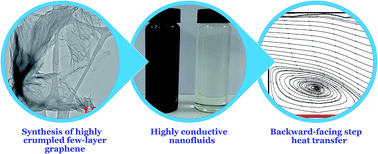
There are, however, a number of challenges. To fully exploit the properties of graphene with a large specific surface area as an additive in base fluids requires a method for the mass production of this remarkable material. The second problem is the lack of stability of carbon-based nanostructures in aqueous media. To solve the first problem, numerous studies have been performed. As a large-scale exfoliation technique, the production of chemically converted graphene from the reduction of graphene oxide is a convenient method to obtain large amounts of graphene;8 however, even with efficient reducing agents such as hydrazine or H2, and annealing at high temperature, the original crystalline structure of graphene is not restored, reducing all its unique properties. Also, graphene oxide is heavily functionalized with many permanent chemical defects, such as holes, introduced into the basal plane. These holes are not readily healed even upon annealing.8–11 As a new method to overcome the above-mentioned defects, the liquid phase exfoliation of graphite in the presence of high surface-tension organic solvents, along with continuous sonication,12,13 opened a new gateway to achieving few-layered graphene.
There are, however, other issues. The π–π interactions lead to a high level of aggregation and the liquid-phase exfoliated graphene cannot reach stable dispersion in base fluids.11 However, due to the lack of graphene-solubility, the exfoliation performances of most of the solvents used in previous studies14 were quite low. To increase the efficiency of exfoliation with this method and to solve the problem of low stability, in situ chemical functionalization and exfoliation of graphite with different functional groups, such as 4-bromophenyl, was used, providing a new approach for improving its solubility in polar, aprotic, organic solvents.15 For example, Sun et al.11 concluded that graphite can be changed to graphene by covalent functionalization of the graphite and the synthesis of a stable suspension in the presence of DMF without any added surfactant or stabilizer. Also, they achieved both exfoliation and functionalization by a fast procedure and obtained suitable edge-functionalization and an intact pristine graphene structure in the interior basal planes. Thus, finding a method for mass-production of HCFLG with hydrophilic functional groups to prepare highly-stable nanofluids is one major goal of this study.
The availability of highly-stable superconductive nanofluids opens a new gateway for an economical increase in the performance of thermal loops in industrial applications. Ducts and channels with abrupt expansion are broadly applied in different industrial applications and heat transfer equipment. These include passages of turbine blades, combustors, diffusers, and heat exchangers. Due to the mixing of high and low energy fluids in the flow reattachment zone, the rate of heat transfer along with other thermal parameters are affected in the back-step flows. In particular, in the reattaching flow region, momentum, mass and heat transfer vary significantly due to the presence of reverse flows.16 There have been many, mostly numerical, studies performed in the literature to determine the effects of different parameters on the heat transfer performance as well as to identify the actual mechanism of flow separation and reattachment.16–20
It is now known that one efficient way to increase the heat transfer rate in the separated flow regions is to use highly-conductive working fluids.21–25 To take advantage of this potential, numerous researchers have been employing different suspensions of metal and metal oxide nanoparticles.25,26
Abu-Nada27 was one of the pioneers in studying the heat transfer of nanofluids in a backward-facing step flow. He synthesized CuO-, Al2O3-, Ag-, Cu- and TiO2-based water nanofluids and investigated the rate of convective heat transfer enhancement for various nanofluids with different thermal conductivities. He concluded that the thermo-physical properties of the nanofluids – in particular the thermal conductivity – play the key roles in increasing the Nusselt number, particularly inside the recirculation zone.
In similar work, Mohammed et al.28,29 studied the effects of different nanofluids on the mixed convective heat transfer coefficient in vertical and horizontal backward-facing steps. According to their results, the nanofluids with secondary recirculation regions have lower Nusselt numbers and the diamond-based water nanofluids showed a significant enhancement in Nusselt number. More recently, Kherbeet et al.30 studied the heat transfer rate of Al2O3-, CuO-, SiO2- and ZnO-based water nanofluids in the laminar flow regime over a microscale backward-facing step. They reported that there was no recirculation region behind the step for all four nanofluids at various concentrations. They concluded that a SiO2-based water nanofluid showed the best performance among their prepared nanofluids.
Literature reviews of applications reveal that the majority of previous studies on the heat transfer over a backward-facing step used a water-based suspension of metal or metal oxide nanofluids, and the lack of highly-conductive nanofluids, including few-layered graphene, with high stability and specific surface area is obvious. Also, they were also mostly focused on heat transfer of the laminar regime and there is no study on transition, or turbulent flow regimes over a backward-facing step. Thus, discovering the heat transfer behavior of water and highly-conductive nanofluids in transition and turbulent flow regimes is the second target of this study.
To this end and covering the aforementioned targets, three phases of study have been performed to investigate the heat transfer behavior of water-based highly crumpled few-layer graphene nanofluids as well as water over a backward-facing step. First of all, a quick and efficient functionalization procedure was developed to fabricate highly-crumpled, few-layer graphene (HCFLG) flakes with large specific surface area. Also, the method of synthesizing HCFLG seems to be new, simple, cost-effective, and with the capability of mass-production. The HCFLG materials with a nanoscopic porous morphology have a high specific surface area, based on BET analyses of the nitrogen cryo-adsorption method. The morphology and structure of HCFLG were analyzed thoroughly. Secondly, water-based HCFLG nanofluids for different low weight concentrations were prepared, and thermophysical properties and colloidal stability in the presence of a non-covalent functional group were investigated. Lastly, heat transfer parameters such as the Nusselt number (Nu) and the convective heat transfer coefficient (h) over a backward-facing step in both of the transitional and turbulent flow regimes were investigated for water-based HCFLG nanofluids and compared with water as the base fluid. The results suggest that the water-based HCFLG nanofluid is a highly conductive nanofluid at very low weight concentration.
:
1 and then poured into a vessel filled with a given amount of water and finally sonicated with a probe-sonicator for 10 min.
The geometrical dimensions of the tube were 12.7 mm inlet diameter, 800 mm upstream length, 25.4 mm outlet diameter and 800 mm downstream length for an expansion ratio of 2. At the test section, the downstream part was a heated straight stainless steel tube, while all the other walls were insulated. The test section was also heated by using two programmable DC power supplies with outputs of 8 V and an output current of 600 A with maximum power of 1200 W. Sixty K-type thermocouples (Omega) were installed on the test section by using high temperature epoxy glue on the outer surface of the test section, as shown schematically in Fig. S1 (ESI).† The positioning of the thermocouples on the outer surface of the cylindrical tube is shown schematically in Fig. S1.† The thermocouples were flush mounted to avoid interaction with the flow boundary layer originating from the thermocouple probe protruding into the conduit inner surface. Furthermore, two RTD (PT-100) sensors (Omega) were used to measure and record the working fluid inlet and outlet temperatures. All of the thermocouples as well as RTDs were calibrated with the use of an Ametek temperature calibrator (AMETEK Test & Calibration Instruments, Denmark). The RTDs and thermocouples were connected to the PLC and SCADA system for the continuous monitoring and recording of the temperature data by WINCC software in a computer. To eliminate or minimize the amount of heat loss, two thick layers of white glass wool wrapping were used, and rubber insulation dressing was also applied. Two K-type thermocouples were installed on the outermost surface of the insulation to measure the amount of heat loss. Moreover, all the pipes were wrapped with rubber insulation to reach a steady state condition in terms of temperature at a given flow rate. Note that conduction and convection heat transfer occur simultaneously in the present system. Therefore, a further calibration test was needed to determine the exact temperature at the inner surface of the test section. Therefore, a Wilson plot was used for this purpose. The inlet temperature of the bulk fluid and the heat flux at different locations “x” of the duct were formulated, as mentioned in the Data processing section.
![]() | (1) |
![]() | (2) |
| Q = m°Cp(Tout − Tin) | (3) |
![]() | (4) |
![]() | (5) |
Also, the bulk temperature of the fluid (Tbx) at the axial distance x is given as:31
![]() | (6) |
![]() | (7) |
In order to calculate the friction factor, “f”, the pressure drop across the test section was measured by a Foxboro™ differential pressure transmitter and eqn (8) was used. That is,
![]() | (8) |
Employing new working fluids as a coolant requires investigation of their thermal performance, as well as their suitability as an appropriate alternative candidate for a range of Reynolds numbers and temperatures. According to ref. 32, using nanofluids as working fluids in heat exchangers provides an increase in both the heat transfer coefficient (positive effects) and a pressure drop (negative effects). To assess the effectiveness of HCFLG nanofluids, a performance index defined as,
![]() | (9) |
![]() | (10) |
Eqn (11) provides an appropriate parameter for clarifying the range of temperatures and velocities over which the synthesized coolant can be used.32 To study the energy saving in the turbulent flow region, the pumping power can be measured.34 That is,
![]() | (11) |
The uncertainty analysis of the experimental data for the heat transfer and flow characteristics in the test-rig are of critical importance to ensure the range of validity and the applicability of the of the test results. Here uncertainty analysis according to the method described by Kline and McClintock35 was performed and the resulting uncertainties in the Nusselt number, heat transfer coefficient and friction factor are listed in Table 1. The measurement uncertainties in the friction factor, heat transfer coefficient, and performance index (PI) were calculated as follows:
![]() | (12) |
| Parameters | Maximum uncertainty (%) |
|---|---|
| Friction factor | 5.3% |
| Nusselt number | 4.1% |
| Performance index (PI) | 5.7% |
C and C
O, respectively. In contrast, the HCFLG shows some peaks in its spectrum. In particular, the FT-IR spectrum of HCFLG exhibits two main peaks at 1151 and 2268 cm−1, which are related to the C–N and C
N stretching vibrations, which were created by the attachment of the –C
N chains of cyanamide during the diazonium reaction. Also, the broad peak at 3436 cm−1 can be assigned to an N–H stretching vibration. The major difference between the spectra of pristine graphite and HCFLG is the appearance of the N–H, C–N and C
N stretching vibrations after functionalization. The sharp peaks of C–N and N–H show the presence of a primary amine in the main structure.
![]() | ||
| Fig. 2 (a) FTIR spectra (b) Raman spectra (c) high-resolution C 1s spectra (d) N 1s spectra of HCFLG; (e and f) N2 adsorption–desorption isotherms of the (e) bulk graphite and (f) HCFLG. | ||
Raman is a powerful characterization instrument for analyzing carbon-based nanostructures, including sp2 and sp3 hybridized carbon atoms, functionalization, and exfoliation by investigating changes in hole and electron doping.36,37 The Raman spectra of the pristine graphite and HCFLG are presented in Fig. 2b. Considering the weak D band in terms of intensity in the pristine graphite, the significantly sharp D, G and 2D bands in the HCFLG sample are seen at 1351, 1578, and 2699 cm−1, respectively. The ratio of the intensities of the D-band to those of the G-band (ID/IG) was considered to be the amount of disordered carbon (sp3-hybridized carbon) relative to graphitic carbon (sp2-hybridized carbon). In edge-functionalization studies of graphene, the higher intensity ratio of ID/IG means the higher disruption of aromatic π–π electrons, implying partial damage of the graphitic carbon produced by exfoliation and functionalization.38 It can clearly be seen that the ID/IG ratio of HCFLG is significantly higher than that of bulk graphite, which verifies the successful functionalization of GNP via the diazonium reaction under microwave irradiation. Note that the G and 2D bands in the spectrum of HCFLG retained their intensities after the diazoniation reaction, which is strong evidence for the preservation of the quality of the graphene layers. In addition, Raman spectroscopy can be employed to identify the number of layers by checking the shape, size, and intensity of the 2D bands.13,39 According to the results of Ferrari et al.,39 as the layer of graphene increases, the 2D band becomes broader and up-shifted. It can be seen that the 2D bond of the bulk graphite includes a coupled peak; that is, D1 and D2 peaks, which produced a broad peak.13,39 However, a single sharp 2D peak is seen in the Raman spectrum of HCFLG. This change in the 2D bands observed in the HCFLG sample suggests the presence of the low number of sheets.
The nature and amount of different functional groups in the bulk graphite and HCFLG were studied by the X-ray photoelectron spectroscopy (XPS), which is shown in Fig. S2.† The spectrum of HCFLG has C 1s at around 286 eV, N 1s at 399 eV, and O 1s at 530 eV. It can be seen that HCFLG exhibits a very small amount of oxygen, and pristine graphite shows no nitrogen molecule in its structure. Upon exfoliation and functionalization, the intensity of the N 1s peak increased considerably. The cyanamide functionalities (the –C
N chains) may be the main reason for having higher content of nitrogen in the HCFLG sample. Fig. 2c shows the XPS C 1s spectrum of HCFLG. The HCFLG mostly had a peak at 284.6 eV, which was attributed to the C–C/C![[thin space (1/6-em)]](https://www.rsc.org/images/entities/char_2009.gif)
![[double bond, length as m-dash]](https://www.rsc.org/images/entities/char_e001.gif)
C network. Although the intensity of the oxygen element is insignificant, the minor O component in HCFLG presents two peaks in the form of the C![[thin space (1/6-em)]](https://www.rsc.org/images/entities/char_2009.gif)
![[double bond, length as m-dash]](https://www.rsc.org/images/entities/char_e001.gif)
O and O–C![[thin space (1/6-em)]](https://www.rsc.org/images/entities/char_2009.gif)
![[double bond, length as m-dash]](https://www.rsc.org/images/entities/char_e001.gif)
O groups at around 286.8 and 288.5 eV, respectively. Also, the C–N peak was observed at 285.6 eV. The N 1s spectrum of HCFLG in Fig. 2d shows two peaks at about 399.2 and 401.8 eV, which may be associated with the bonding configurations of amine functional groups and C
N, which were detected in the FTIR section.
To investigate the effects of exfoliation and functionalization on the specific surface area of HCFLG and bulk graphite, N2 adsorption–desorption isotherms were measured by a surface area analyzer (Quantachrome Autosorb-1 analyzer at 77
K). The N2 adsorption–desorption isotherms of the bulk graphite and HCFLG are illustrated in Fig. 2e and f, respectively. The comparison between the BET results of pristine graphite and HCFLG materials shows a considerable increase in the specific surface area (Table 2). It was obvious that by exfoliation of pristine graphite into HCFLG, the specific surface area was significantly enhanced from 85 m2 g−1 to 1568 m2 g−1. Also, the total pore volume increased from 0.3 nm in pristine graphite to 1.33 nm in HCFLG. Fig. S3† shows the pore size distribution curves of pristine graphite and HCFLG. From Fig. S3,† it can be seen that the HCFLG has higher pore volume than pristine graphene due to the in situ exfoliation and functionalization, which can be one of the main reasons for providing a pore size less than 2 nm. It is obvious that the pore size of the HCFLG is mostly less than 2 nm. The higher specific surface area of HCFLG compared to the pristine graphite is one of the main pieces of evidence for the exfoliation. The strong dependence of heat transfer on the specific surface area suggests that the HCFLG with an increased specific surface area can be a suitable candidate for developing a highly stable and conductive nanofluid. It should be pointed out that the highly-crumpled nature of the samples can be advantageous for the highly-stable colloidal suspension.
| Sample | SBET (m2 g−1) | Total pore volume (cm3 g−1) |
|---|---|---|
| HCFLG | 1568 | 1.33 |
| Pristine graphite | 85 | 0.3 |
Fig. 3 shows XRD patterns of the pristine graphite and HCFLG. The graphite exhibits a sharp diffraction peak centered at 2θ = 26.5° corresponding to the (002) graphite plane composed of well-ordered graphenes with an interlayer spacing of 3.35 Å. It is obvious that the functionalization by small moieties such as NH2 should increase the layer spacing. Therefore, the peak at 2θ = 26.5° disappears for HCFLG and a relatively low peak at 2θ = 14.8° appears, corresponding to the diffraction of the (002) HCFLG plane. The interlayer spacing of HCFLG is calculated according to Bragg's law to be 5.98 Å. This implies that as graphite transforms to HCFLG, most nitrogen atoms and/or primary amine groups are bonded to the graphite surface and that graphite expands when functionalized.40,41 We also note that there is a much broader (002) reflection peak in HCFLG than in pristine graphite. The enhanced (002) broadening of HCFLG can be correlated with the functionalization of NH2, which produces graphene with few layers. Moreover, the NH2 functionalization can prevent small graphene sheets from stacking or aggregating to form large carbon particles during the drying process for the XRD test.
Fig. 4a–c show the field emission scanning electron microscope (FESEM) images of HCFLG. The in situ exfoliation and functionalization procedure is able to expand the bulk graphite layers swiftly by initiating a semi-stable diazonium ion and radical reaction with layers. The FESEM images of HCFLG shown in Fig. 4a–c illustrate homogenous highly crumpled structures with a 2D geometry. Such a worm-like surface, with fully crumpled and curved sheets is due to the strong functionalization. More evidence of the crumpled structure is presented by the transmission electron microscopy (TEM) images shown in Fig. 4d–g. These TEM images of HCFLG can clearly be large few-layered graphene crumpled flakes with wrinkled morphology and folded edges. As discussed above, a sharp 2D peak in Raman spectrum of HCFLG suggested that the few-layer graphene phase is apparently a dominant phase. The TEM images show no observable graphite crystalline structure, which is in agreement with the sharp 2D bands in the Raman spectrum of HCFLG. As further evidence, the crystalline structure of HCFLG was confirmed via selected area electron diffraction (SAED), as shown in Fig. 4h and i. Fig. 4h shows the normal-incidence electron diffraction pattern of the flake in Fig. 4f, taken with the beam position close to the white dot in this figure. Fig. 4i shows the normal-incidence selected-area diffraction patterns for the flake in Fig. 4g, taken with the beam position close to the red dot. In one of the cases, the patterns show the typical six-fold symmetry expected for graphite/graphene,42 allowing the peaks to be labeled with the Miller–Bravais (hkl) indices.42 Also, the hexagonal patterns are similar to those reported by other researchers12,43 for single-layer and few-layer graphene.
![]() | ||
| Fig. 4 (a–c) FESEM images and (d–g) TEM images of HCFLG; (h and i) selected area electron diffraction (SAED) patterns of white point in panel (f) and red point in panel (g). | ||
Selected area electron diffraction (SAED) of the HCFLG sample also shows a ring-like diffraction pattern with dispersed bright spots. Such an amorphous structure was attributed partially to the presence of functional groups with abundant defective edges for HCFLG, which is in agreement with the high-intensity D band in the Raman spectrum of the HCFLG sample.44,45 A ring-like diffraction pattern suggests the loss of long-range ordering in the sheets.44
AFM was used for the further morphological characterization of the HCFLG and for the investigation of the thicknesses of the flakes in the final product. Fig. S4† shows typical AFM images in which the flakes were few-layered, which is in agreement with the sharp 2D bands of the Raman results. From cross-section contour results, the thickness of HCFLG is very low, even as low as about 1 nm for some of the flakes.
| (αhν)n = B(hν − Eg) | (13) |
![]() | ||
| Fig. 5 The colloidal stability of HCFLG in distilled water as a function of time and weight concentration. | ||
| Material and references | Base fluid | Concentration | Period of time (days) | Rate of sedimentation (%) |
|---|---|---|---|---|
| GA–GNPs47 | Distilled water | 0.1 wt% | 60 | 40% |
| CTAB–GNPs47 | Distilled water | 0.1 wt% | 60 | 46% |
| SDS–GNPs47 | Distilled water | 0.1 wt% | 60 | 47% |
| SDBS–GNPs47 | Distilled water | 0.1 wt% | 60 | 18% |
| Triethanolamine-treated graphene nanoplatelets (SSA = 300)7 | Distilled water | 0.1 wt% | 100 | 23.1% |
| Triethanolamine-treated graphene nanoplatelets (SSA = 500)7 | Distilled water | 0.1 wt% | 100 | 12.5% |
| Triethanolamine-treated graphene nanoplatelets (SSA = 750)7 | Distilled water | 0.1 wt% | 100 | 17% |
| Propylene glycol-treated graphene nanoplatelets22 | Distilled water | 0.1 wt% | 34 | 12% |
| Tetrahydrofurfuryl polyethylene glycol-treated graphene nanoplatelet48 | Distilled water | 0.1 wt% | 30 | 15% |
| Trimethylolpropane tris[poly(propylene glycol), amine terminated] ether-treated graphene nanoplatelet49 | Distilled water | 0.1 wt% | 30 | 12% |
| N-Doped rGO50 | Distilled water | 1 mg mL−1 | 49 | Less than 5% |
Graphene–SiO2 51 |
Distilled water | 0.1 wt% | 7 | More than 50% |
| Carboxylated graphene nanoplatelets52 | Distilled water | 0.1 wt% | 10 | 7% |
| PEG-treated GNP53 | Water | 0.05 wt% | 30 | 17% |
| Present study | HCFLG | 0.01 wt% | 30 | 2% |
![]() | ||
| Fig. 6 (a) Thermal conductivity and (b) specific heat capacity plots of water-based HCFLG nanofluids at different weight concentrations as well as distilled water. | ||
From Fig. 6a it can be seen that all samples were prepared with very low weight concentration. Nevertheless, the amount of enhancement in the thermal conductivity of different samples is significant. As the concentration was increased from 0.0 wt% to 0.01 wt%, the figure shows that the thermal conductivity of water-based HCFLG nanofluids increases from 0.642 to 0.915 W m−1 K−1 at 50 °C, which represents a 42.5% enhancement. This amount of enhancement is quite impressive for the low weight concentration of 0.01 wt%. Also, for distilled water, Fig. 6a showed that the increase in temperature from 20 to 50 °C resulted in an 8.6% increase in the thermal conductivity, while for water-based HCFLG nanofluids at 0.001 wt%, 0.005 wt%, and 0.01 wt%, the increases in thermal conductivity were 20.8%, 23.8%, and 21.9%, respectively. Keblinski et al.54 and Eastman et al.55 suggested some potential mechanisms for the increase in the thermal conductivity in the presence of nanoparticles: Brownian motion, molecular-level layering of the liquid at the liquid/particle interface, fluctuation of fluid velocity due to the drag of Brownian nanoparticles, thermophoresis, reduction in the thermal boundary layer thickness, the nature of heat transport in nanoparticles, and the effects of nanoparticle clustering. According to recent studies,7,56–60 the thermal conductivity of nanofluids is affected by the thermal conductivities of the base fluid and nanoparticles, temperature, concentration, specific surface area, shape/geometry of nanostructures. The present results show that the specific surface area of nanoparticles also affects the thermal conductivity as well as the colloidal stability.
Furthermore, we know that different carbon allotropes as additives behave differently in terms of increasing the thermal conductivity of base fluids. According to the results, HCFLG with a highly specific surface area showed a very high thermal conductivity. Table 4 summarizes the results of thermal conductivity measurements from different researchers on graphene-based nanofluids.
| Investigator | Particle type | Base fluid | Particle concentration | Maximum enhancement | Temperatures |
|---|---|---|---|---|---|
| Yu et al.61 | Graphene oxide nanosheets | Ethylene glycol | 1–5 vol% | 10.5–61% | 10–60 °C |
| Baby and Ramaprabhu62 | Exfoliated graphene | Water | 0.005–0.056 vol% | 14–64% | 25–50 °C |
| Ethylene glycol | 4–7% | ||||
| Martin-Gallego63 | Functionalized graphene sheets [FGS] | Water | 0.2–1 wt% | 10–70% | 30–60 °C |
| Baby and Sundara64 | Copper oxide-decorated graphene (CuO/HEG) | Water | 0.005–0.05 wt% | 23–90% | 25–50 °C |
| Ethylene glycol | 0.01–0.07 wt% | 17–23% | |||
| Baby and Ramaprabhu65 | Hydrogen-exfoliated graphene | Water | 0.005–0.05 wt% | 10–75% | 25–50 °C |
| Ethylene glycol | 0.05–0.08 wt% | 1–5% | |||
| Yu et al.66 | Graphene oxide nanosheets | Ethylene glycol | 2–5 wt% | Up to 86% | 10–60 °C |
| Baby and Ramaprabhu67 | Silver-decorated graphene | Water | 0.005–0.05 wt% | 7–86% | 25–70 °C |
| Ethylene glycol | 0.01–0.07 wt% | 3–14% | |||
| Aravind et al.68 | Graphene nanosheets | Water | 0.008–0.138 vol% | 2.4–17% | 25 °C |
| Ethylene glycol | 2.4–6.5% | ||||
| Sun et al.69 | Few-layer graphene | Polymer | 0.55–1 vol% | 18–25% | 10–60 °C |
| Dhar et al.70 | Poly-dispersed graphene | Water | 0.05–0.2 vol% | 3–30% | 25–50 °C |
| Ghozatloo et al.71 | Functionalized graphene | Water | 0.01–0.05 wt% | 3.8–17% | 10–50 °C |
| Kole and Dey72 | Functionalized graphene nano-sheets (GnS) | Water + ethylene glycol | 0.041–0.395 vol% | Up to 15% | 10–70 °C |
| Gupta et al.73 | Graphene nano-sheets | Water | 0.05–0.2 vol% | Up to 27% | 30–50 °C |
| Yang et al.74 | Diamond-treated graphene | Silicon oil | 0.35–5.2 vol% | Up to 10% | Room temperature |
| Baby and Sundara75 | MWCNT–graphene hybrid | Water | 0.005–0.04 vol% | 1–20% | 25–50 °C |
| Li et al.51 | SiO2-coated graphene | Water | 0.1 wt% | Up to 20% | 15–65 °C |
| Hajjar et al.76 | Graphite oxide (GO) | Water | 0.05–0.25 wt% | 14.75–47.57% | 10–40 °C |
| Park and Kim77 | Graphene | Water | 0.001–0.01 vol% | 6.24–14% | 25 °C |
| Liu et al.78 | Graphene | Water | 0.01–0.03 wt% | 3–22.9% | 25–200 °C |
| Akhavan-Zanjani et al.79 | Graphene | Water | 0.005–0.02 wt% | 6.04–10.3% | 25–45 °C |
| Haque et al.80 | MWCNT and graphene | Water | Mass ratios were 1/3, 3/1, 1/1, 1/2 and 2/1 | Up to 5.546% | 20–40 °C |
| Lee and Rhee81 | Graphene nanoplatelets | Ethylene glycol | 0.5–4 vol% | Up to 32% | 10–90 °C |
| Ma et al.82 | Functionalized graphene nanosheets | Silicon oil | 0.01–0.07 wt% | Up to 18.9% | 20–60 °C |
| Shende and Sundara83 | Nitrogen doped graphene | Ethylene glycol | 0.005–0.03 vol% | Up to 15.1% | 25–50 °C |
| Water | 0.005–0.02 vol% | Up to 17.7% | |||
| Present results | HCFLG | Water | 0.001–0.01 wt% | 10–43% | 25–50 °C |
In Fig. 6b, the effects of temperature and weight concentration of HCFLG on the specific heat capacity of distilled water-based HCFLG nanofluids are studied. It can be seen that an increase in the weight concentrations of HCFLG leads to a drop in the specific heat capacity. In particular, an average drop of 0.1–0.5% is observed for a weight concentration of 0.001–0.01 wt%. The specific heat capacity of distilled water-based HCFLG is lower than that of water due to the lower specific heat capacity of HCFLG loaded in the base fluid.
The measured values of viscosity are plotted in Fig. 7 as a function of shear rate for water-based HCFLG nanofluids and weight concentrations, as well as distilled water at various temperatures. This figure shows that the effective viscosity of water-based HCFLG nanofluids is higher than that of water and increases as the weight concentration increases. Furthermore, the effective viscosity decreases with an increase in the temperature. Fig. 7 also shows that the behavior of water-based HCFLG nanofluids is Newtonian, with almost constant viscosity for different values of shear rate.
![]() | ||
| Fig. 7 Plots of the measured values of viscosity versus shear rate for water-based HCFLG nanofluids at different temperatures and weight concentrations. | ||
The densities of water-based HCFLG nanofluids and water are measured as functions of temperature and weight concentration, and the results are shown in Table 5. It can be observed that the density of water-based HCFLG nanofluids as well as water decreases with an increase in the temperature, which may be related to the thermal expansion of the liquid. Also, there is an upward trend between the density of the samples and the weight concentration of HCFLG. Therefore as the weight concentration increases, the density grows. Since the density of solid particles is commonly more than that of liquids, the density of the prepared samples increases with concentration, which can be a reasonable issue. Also, as the temperature increases, the density is insignificantly enhanced. For example, the density of the Di-water and water-based HCFLG nanofluids at weight concentration of 0.01% decreases by 1.01% and 0.99%, when the temperature increases from 20 to 50 °C, respectively.
| T (°C) | Density (kg m−3) | |||
|---|---|---|---|---|
| Di-water | HCFLG-0.001 | HCFLG-0.005 | HCFLG-0.01 | |
| 20 | 997.78 | 998.18 | 999.79 | 1001.80 |
| 30 | 995.18 | 995.58 | 997.20 | 999.23 |
| 40 | 991.80 | 992.20 | 993.84 | 995.88 |
| 50 | 987.68 | 988.092 | 989.74 | 991.80 |
000 and HCFLG concentrations of 0.001, 0.005 and 0.01 wt% of HCFLG are obtained. The position of the thermocouples and the boundary conditions are shown schematically in Fig. S1.† Accordingly, a constant heat flux of 600 W was provided after the expansion via two DC power supplies. The inlet fluid rate was in the range of 1 to 16 L min−1. Also, the inlet flow temperature was always maintained at a constant temperature of 30 ± 1 °C.
Fig. 8 shows the temperature of the heated wall (TS), the temperature difference between the wall and the fluid bulk (TS − Tb), local convective heat transfer coefficient (h) and Nusselt number (Nu) versus X/D for distilled water at different Reynolds numbers (Re). In both plots of TS versus X/D and TS − Tb versus X/D, a U-shaped variation of the TS or TS − Tb with X/D can be seen. Heat transfer in the backward-facing step has been studied by a number of researchers16,20,27 in recent years. Accordingly, the boundary layer flow separates at the sharp step edge and forms a recirculation region, as shown schematically in Fig. S1.† The shear layer, downstream, impinges on the surface and reattaches to the lower wall at the so-called reattachment point.84 Downstream of the reattachment point, the boundary layer begins to redevelop and far downstream the flow approached the fully developed flow in the larger diameter pipe. The separation and reattachment in this area cause major changes in the flow in this region. Close to the step, the velocity is insignificant, leading to the maximum wall temperature and consequently minimum Nusselt number. On the other hand, the velocity can reach its maximum amount in the recirculation zone, where the wall temperature is a minimum and the Nusselt number is a maximum. So, a U-shaped variation in the TS or TS − Tb with X/D is reasonable and was reported by a majority of recent studies in this field, such as.16,20,27
That is, there is a sharp downward trend of temperature with X/D up to ∼2.66, after which both the temperature of the heated wall (TS) and the temperature difference between the wall and the fluid bulk for the deionized water increase moderately with further increase in X/D.
The heat transfer coefficient was computed from the temperature given by the thermocouples in different positions. Eqn (6) and (8) indicates that the local convective heat transfer coefficient (hx) and local Nusselt number (Nux) have an inverse relation with the temperature difference between the wall and the bulk fluid. Therefore, for X/D less than 2.66 for distilled water, the values of the local convective heat transfer coefficient (h) and local Nusselt number (Nu) increase. By contrast, the h and Nu show a downward trend for X/D higher than 2.66.
Fig. 9–11 present the measured temperature of the heated wall (TS), the measured temperature difference between the wall and the fluid bulk (TS − Tb), local convective heat transfer coefficient (h) and Nusselt number (Nu) for different Re numbers and X/D location for water-based HCFLG nanofluids with concentrations of 0.001, 0.005 and 0.01 wt%, respectively. Like distilled water, these figures show a similar U-shaped variation in the TS or TS − Tb with X/D, representing a sudden decrease and a gradual increase. Also, the local convective heat transfer coefficient (hx) and local Nusselt number (Nux) show the same trends as the variations of distilled water. From a comparison between Fig. 8–11, it can be observed that the measured temperature of the heated wall (TS) and the measured temperature difference between the wall and the fluid bulk temperature (TS − Tb) become closer for higher weight concentrations of HCFLG, representing the key role of HCFLG in transferring heat in the recirculation zone. All of the Nusselt profiles present the same characteristic behavior: their values are low in the recirculation zone, increase through a maximum at the reattachment point and decrease in the recovery region to a stable value, as found in by Nie and Armaly85 for a confined configuration.
Also, as the concentration of HCFLG in the nanofluids increases, the U-shaped variation in TS or TS − Tb with X/D becomes wider. As mentioned above, the local convective heat transfer coefficient and local Nusselt number have an inverse relationship with the measured temperature difference between the wall temperature and the fluid bulk temperature. In order to perform an appropriate comparison, the variations in average heat transfer coefficient with the Reynolds number for water-based HCFLG nanofluids at different weight concentrations as well as water were calculated, as shown in Fig. S5.† For all samples, the average heat transfer coefficient increases with the Reynolds number and weight concentrations. The highest average heat transfer coefficient was achieved for a water-based HCFLG nanofluid with a weight concentration of 0.01% and Re number of 16
000, representing an average heat transfer coefficient of 5520.26 W m−2 K−1. For instance, the maximum ratio of enhancement in the average heat transfer coefficient was almost 60% for a water-based HCFLG nanofluid at 0.01 wt% and Re number of 16
000 as compared with pure water, which is a brilliant improvement.
In order to clarify the key role of weight concentration of HCFLG, the measured results for Nusselt number are shown for Reynolds numbers of 2000, 3500, 7000, 13
000 in Fig. 12. We selected these four Reynolds numbers as candidates for all conditions. It can be seen that as the concentration of HCFLG in the nanofluids increases, the Nu number increases for a constant Re number. However, Fig. 12 shows that the effects of HCFLG concentration on the Nusselt number term are more pronounced than for other parameters. The reason for the larger enhancement of the Nusselt number for nanofluids compared to that of distilled water was suggested by the present authors86 using a simple analogy. Accordingly, the connective heat transfer is proportional to k/δt, where δt is the thickness of the thermal boundary layer. Thus, to increase the convective heat transfer coefficient, k should be increased and/or δt should be decreased. According to ref. 86 and 87, carbon nanomaterials such as carbon nanotubes and graphene have a tendency to decrease the thermal boundary layer thickness. On the other hand, as the concentration of HCFLG increases, the measured thermal conductivity of the nanofluids increases, implying a higher convective heat transfer coefficient. Therefore, both the thermal boundary layer thickness term and the thermal conductivity term have positive effects on increasing the heat transfer rate. Therefore, nanofluids with a higher weight concentration (higher thermal conductivity) enhance the value of the Nusselt number more. This conclusion is consistent with recent studies.27 Obviously, the maximum value of the Nusselt number coincides with the point of reattachment. As in other studies,27,88 after the point of reattachment, an increase in Nusselt number is observed by increasing the weight concentration of the HCFLG. Therefore, the high Nusselt number inside the recirculation depends mainly on the thermophysical properties of the nanoparticles. Also, outside the recirculation zone both the Reynolds number and the thermophysical properties of the nanofluids affect the value of the Nusselt number.
![]() | ||
| Fig. 12 The effects of Reynolds number and weight concentration of HCFLG on the Nusselt number at different axial ratios. | ||
Fig. 9–12 show that the position of the maximum Nusselt number (Xmax/D) changes as the Re number changes. Fig. 13 shows the variations in Xmax/D for water-based HCFLG nanofluids and distilled water for different Re numbers and weight% concentrations. It can be seen that the position of the maximum value of the Nusselt number increases (shifts up) with the Re number and the weight concentration of HCFLG. It can be observed that as the concentration increased, the temperature difference between the tube wall and the working fluid decreased due to higher thermal conductivity, implying higher heat transfer rate. For the same expansion ratio of 2, it is observed that the higher Re number leads to a higher Nux. For the same expansion ratio of 2 and Re number of 16
000, the experimentally measured values of Xmax/D are, 4.66, 3.99, 3.33 and 3.33 for water-based HCFLG nanofluids at 0.01, 0.005, 0.001 and 0 wt%, respectively. The position as well as the amount of Xmax/D increased as the Re number increased, showing that Xmax is dependent on Re and the concentration of additives (thermal conductivity).
![]() | ||
| Fig. 13 The effects of Reynolds number and weight concentration of HCFLG on the position of maximum Nusselt number. | ||
Fig. 14 plots the pressure drop of the flow over the backward-facing step for different Re numbers and weight concentrations of HCFLG, including distilled water. It can be seen that as the Re number and concentration of HCFLG in base fluid increase, the pressure drop increases. It is noteworthy that the pressure drops for the prepared samples are quite close to that for the distilled water, which is attributable to the low concentrations of 0.001 wt%, 0.005 wt% and 0.01 wt%. Fig. 14 shows that the pressure drop for the water-based HCFLG nanofluids at a concentration of 0.01 wt% and Re number of 16
000 has the highest pressure drop for the current range of measurement. Note that the pressure drop is proportional to the viscosity of the working fluids, exhibiting the highest and lowest amounts in similar conditions.
![]() | ||
| Fig. 14 The measured value of pressure drop of the set-up at different Re numbers for distilled water and water-based HCFLG nanofluids with different weight concentrations. | ||
Table 6 shows the average percentage increase in the friction factor of the nanofluids compared with the deionized water for the flow over the backward-facing step. From Table 6, we can see that the measured friction factor decreases with an increase in the Re number for different weight concentrations of HCFLG. In addition, the friction factor increases as the concentration of HCFLG increases, although the percentage enhancement is more obvious for low values of Re numbers. It can also be seen that as the Re number increases, the dependence of the friction factor on the weight concentration of HCFLG decreases. At low Reynolds numbers, the Brownian motion is the main mechanism that influences the momentum transfer between the HCFLG and base-fluid molecules. Thus, as Brownian motion increases the concentration of HCFLG in the nanofluids increases, leading to an increase in the friction factor with a higher slope as compared with the base fluid.26 In contrast, this mechanism loses its dominance for high Reynolds number flows, where turbulent agitations in the flow play the key role. In summary, the turbulence of the working fluid can be considered to be the most important parameter in increasing the friction factor at high Reynolds numbers. Also, the small differences between friction factors of the distilled water and water-based HCFLG suspensions at different weight concentrations are attributable to the small differences between the viscosities of the base fluid and the prepared nanofluid samples.
| Percentage increase in the friction factor | |||||||||||||
|---|---|---|---|---|---|---|---|---|---|---|---|---|---|
| Weight concentration | Re number | ||||||||||||
16 000 |
13 000 |
10 000 |
7000 | 4000 | 3500 | 3000 | 2500 | 2400 | 2300 | 2200 | 2100 | 2000 | |
| 0.001 | 0.018234 | 0.043588 | 0.09094 | 0.084823 | 0.209077 | 0.214451 | 0.247023 | 0.093786 | 0.163302 | 0.174387 | 0.224146 | 0.19396 | 0.206224 |
| 0.005 | 0.074384 | 0.129912 | 0.108376 | 0.171763 | 0.245811 | 0.330957 | 0.308987 | 0.334116 | 0.38078 | 0.341263 | 0.356486 | 0.349793 | 0.326606 |
| 0.01 | 0.101268 | 0.216088 | 0.23571 | 0.375622 | 0.738048 | 0.695673 | 0.848073 | 0.788283 | 0.81984 | 0.708389 | 0.704982 | 0.643127 | 0.673305 |
The economic performance of working fluids for different heat transfer equipment is measured via the performance index (ε), which is identified as the ratio of the heat transfer rate to the pressure drop ratios. Recent studies (e.g., ref. 89) suggested that while the addition of solid nanoparticles improves the heat transfer rate, the pressure drop in the flow loops also increases, which is undesirable. Therefore, the performance index is presented to consider both parameters. The variations in the average performance index and PEC for water-based HCFLG nanofluids are illustrated for different Re numbers and weight concentrations in Fig. 15a. It can be seen that the average performance index as well as PEC of all samples including HCFLG is higher than 1, representing the effectiveness of the prepared coolant samples for use over the backward-facing step flows. It can also be seen that, as the weight concentration of HCFLG in the nanofluids increases, the average performance index as well as the PEC increase, which shows that the enhancement in heat transfer is more effective than the increase in pressure drop. This figure also shows that the average performance index curves for different Re numbers. Also, the performance index results showed a gradual decrease with Re numbers.
Pumping power can be considered to be an economic performance indicator in a loop system for evaluating the operability of fluids and the performance of power plants. Fig. 15b compares the pumping power of the water-based HCFLG nanofluids for different weight concentrations with that of the base-fluid. This figure shows that there is a slight increase in the pumping power with the HCFLG loading but the percentage increase in pumping power increase is negligible. The small growth in the pumping power could be due to the low weight fraction of HCFLG in the base fluid.
| Cp | Specific heat, J g−1 K−1 |
| D | Diameter, m |
| h | Heat transfer coefficient, W m−2 K−1 |
| k | Thermal conductivity (W m−1 K−1) |
| Nu (h = Dh/k) | Nusselt number |
| q | Heat flux (W m−2) |
| Q | Heat transfer rate, W |
| Re | Reynolds number |
| PEC | Performance evaluation criterion |
| Uave | Average velocity (m s−1) |
| f | Friction factor |
| m° | Mass flow rate (kg s−1) |
| Ac | Surface area of the cross section (m2) |
| L | Channel length (m) |
| Lx/L | Ratio of the length of x to the channel length |
| TSx | The wall temperature of fluid at the axial distance x |
| Tbx | The bulk temperature of fluid at the axial distance x |
| Aw | Area of downstream wall (m2) |
| Rh | Ratio of the heat transfer coefficient enhancement of new coolant to the base-fluid |
| RΔP | Ratio of pressure drop of new coolant to the base-fluid |
| PI | Performance index |
| PLC | Programmable logic controller |
| RTD | Resistance temperature detector |
| μ | Viscosity (Pa s) |
| ρ | Density (kg m−3) |
| ΔP | Pressure drop (Pa) |
| nf | Nanofluid |
| bf | Base fluid |
| ave | Average |
| s | Tube wall |
| in | inlet |
| out | outlet |
Footnote |
| † Electronic supplementary information (ESI) available. See DOI: 10.1039/c6ra22365f |
| This journal is © The Royal Society of Chemistry 2016 |