DOI:
10.1039/C6RA22343E
(Paper)
RSC Adv., 2016,
6, 93505-93510
Iodine-catalyzed oxidative cyclisation for the synthesis of sarisan analogues containing 1,3,4-oxadiazole as insecticidal agents†
Received
7th September 2016
, Accepted 24th September 2016
First published on 26th September 2016
Abstract
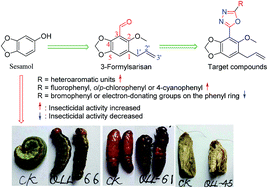
In continuation of our research aimed at the discovery and development of natural products-based insecticidal agents, a series of novel sarisan analogues containing 1,3,4-oxadiazole through iodine-catalyzed oxidative cyclisation were prepared as insecticidal agents against the pre-third Mythimna separata Walker at 1 mg mL−1 in vivo. Compound 8r, 8t, 8k and 8q exhibited more promising insecticidal activities with final mortality rates of >60%, when compared with sarisan and toosendanin (a commercial insecticide). An efficient way using iodine as the catalyst and K2CO3 as base for the synthesis sarisan analogues containing 1,3,4-oxadiazole was developed. The results revealed that introduction of fluorophenyl or 4-cyanophenyl units on the 1,3,4-oxadiazole ring at the C-3 position of sarisan could afford more potent compounds. Moreover, introduction of heteroaromatic fragments on the 1,3,4-oxadiazole ring at the C-3 position of sarisan was very crucial for the insecticidal activity.
Introduction
Although synthetic chemical insecticides have a longstanding and key role in agriculture and public health with the characteristics of high efficiency, quick-fix, low-price and insecticides spectrum broad, the overuse and improper application of synthetic chemical insecticides over the years have resulted in the development of pest resistance, pesticide residues, environmental problems, threat to non-target organisms, etc.1–3 Since the publication of Rachel Carson's book Silent Spring, more than 550 pest species have been reported with resistance to one or more existing insecticides.4,5 Hence the development of the effective, low mammalian toxicity, quick degradation, selective and eco-friendly insecticides for pest management have been encouraged to be necessary in the future. Botanical insecticides are naturally occurring chemicals resulted from the interaction between plants and the environment (life and non life) during the long period of evolution in plants, which are just satisfied with the demand of low insecticide resistance, quick degradation, eco-friendly characteristics and so on mentioned above.6–8 In light of the advantages of botanical insecticides, the discovery and development of new insecticides from plant secondary metabolites or using them as the lead compounds for further modification have recently been a frequent topic of interest and the periodic subject for researchers to develop novel pesticides.9–11
Sarisan (I, Fig. 1), bearing a piperonyl unit, is a naturally occurring monolignan and a major constituent of the essential of many species of plants in Umbelliferae, Piperaceae, Lauraceae and Saururaceae, including Ligusticum mutellina,12 Heteromorpha trifoliata,12 Piper solmsianum C.DC,13 Piper guineense,14 Piper sarmentosum,15 Beilschmiedia miersii16 Saururus chinensis.17 It is also an isomer of myristicin (II, Fig. 1) with known synergistic activity like piperonyl butoxide (III, Fig. 1), a commercial synergist for pyrethroids and carbamates.16,18 Sarisan has shown promising activities in the field of medicine such as antimicrobial activity,12 psychopharmacologic effect19 and anti-septic activity.20 Additionally, the most noteworthy is its insecticidal activity against armyworms and Aedes aegypti.21,22 Although sarisan was very easy to synthesize, to the best of our knowledge, little attention has been paid to structural modifications at C-3 or C-2′,3′ position of compound I for use as pesticides. On the other hand, 1,3,4-oxadiazoles are an important class of N-heterocyclic compounds with a wide range of biological activities such as anticancer, antimicrobial, antiviral, analgesic etc.,23 especially insecticidal24 and herbicidal activities,25 for example, Oxadiazon (IV, Fig. 1) was the first 1,3,4-oxadiazole herbicide discovered by Rhone Poulenc Inc., in 1969, Metoxadiazone (V, Fig. 1), discovered by Sumitomo Chemical Co., Ltd and launched in 1978, has shown an excellent insecticidal activity against medical insects.26,27 In light of the above-mentioned interesting results, and in continuation of our program aimed at the discovery and development of natural products-based insecticides,28–31 herein we designed and used iodine as catalyst to successfully prepare a series of sarisan analogues containing 1,3,4-oxadiazole as insecticidal agents.
 |
| | Fig. 1 Chemical structures of sarisan (I) and related compounds (II–V). | |
Experimental
Instrument and materials
All reagents and solvents were of reagent grade or purified according to standard methods before use. Analytical thin-layer chromatography (TLC) and preparative thin-layer chromatography (PTLC) were performed with silica gel plates using silica gel 60 GF254 (Qingdao Haiyang Chemical Co., Ltd.). Melting points were determined on a digital melting-point apparatus and were uncorrected (Beijing Tech Instrument Co., Ltd.). Infrared spectra (IR) were recorded on a PE-1710 FT-IR spectrometer (Perkin-Elmer, Waltham, MA, USA). NMR spectra were carried out in CDCl3 on a Bruker Avance (400 MHz) spectrometer using tetramethylsilane (TMS) as the internal standard (Bruker, Bremerhaven, Germany). High-resolution mass spectra (HR-MS) were carried out with LTQ FT Ultra instrument (Thermo Fisher Scientific Inc., Waltham, MA).
General procedure for the synthesis of compound (2)
A mixture of 1 (8 mmol, 1105 mg), allylbromide (9.6 mmol, 1161 mg) and K2CO3 (16 mmol, 2208 mg) in acetone (20 mL) was refluxed. When the reaction was complete according to TLC analysis, the solvent was removed and the residue was dissolved in CH2Cl2 and filtered. The filtrate was concentrated in vacuo and purified by silica gel column chromatography eluting with petroleum ether/ethyl acetate (10
:
1, v/v) to afford 2 in 93% yield.
General procedure for the synthesis of compound (3)
A solution of 2 (8 mmol, 1425 mg) in N,N-dimethylaniline (10 mL) was heated at 180 °C for 5 h. After cooling the mixture to RT, the mixture was diluted with ethyl acetate and washed with 1 N hydrochloric acid (3 × 20 mL), brine (2 × 20 mL) and dried over anhydrous Na2SO4. The crude product was concentrated in vacuo and purified by silica gel column chromatography eluting with petroleum ether/ethyl acetate (10
:
1, v/v) to afford 3 in 90% yield.
General procedure for the synthesis of compound (4 and 5)
To a solution of 3 (12 mmol, 2148 mg) in toluene (20 mL) at RT under N2, the DBU (14.4 mmol, 2.15 mL) and SnCl4 (3.6 mmol, 0.42 mL) were added in sequence. The reaction mixture was stirred at RT for 20 min and then paraformaldehyde (26.4 mmol, 1587 mg) was added. The resulting yellow solution was heated to 100 °C for 12 h. After cooling to RT, the reaction was quenched into 2 N HCl (10 mL) and extracted with ethyl acetate (3 × 20 mL). The combined organic layer was dried over anhydrous Na2SO4, filtered and evaporated. The residue was purified by silica gel column chromatography eluting with petroleum ether/ethyl acetate (10
:
1, v/v) to afford 4 and 5 in 20% and 58%, respectively.
Data for 4. CAS: 259138-63-1. White solid, yield: 20%, mp 83–85 °C (lit. 82–84 °C);18 IR cm−1 (KBr): 3396, 3086, 3007, 2980, 2886, 2785, 1640, 1443, 1177, 972; 1H NMR (400 MHz, CDCl3) δ: 6.83 (s, 1H, –OH), 6.55 (s, 1H, H-6), 5.91–6.01 (m, 1H, H-2′), 5.85 (s, 2H, –OCH2O–), 5.06–5.12 (m, 2H, H-3′), 4.85 (s, 2H, –CH2OH), 3.30 (d, J = 6.4 Hz, 2H, H-1′).
Data for 5. CAS: 259138-64-2. Bright yellow solid, yield: 58%, mp 67–69 °C (lit. 68–70 °C);18 IR cm−1 (KBr): 3251, 3072, 2971, 2907, 1657, 1459, 1241, 930; 1H NMR (400 MHz, CDCl3) δ: 10.68 (s, 1H, –CHO), 10.12 (s, 1H, –OH), 6.90 (s, 1H, H-6), 6.03 (s, 2H, –OCH2O–), 5.87–5.97 (m, 1H, H-2′), 5.07–5.09 (m, 2H, H-3′), 3.30 (d, J = 6.4 Hz, 2H, H-1′).
General procedure for the synthesis of compounds (6)
A mixture of 5 (3.74 mmol, 771.2 mg), CH3I (37.4 mmol, 2.3 mL) and K2CO3 (7.48 mmol, 1033.8 mg) in acetone (15 mL) was refluxed. After the reaction was complete according to TLC analysis, the solvent was removed and the residue was dissolved in CH2Cl2 and filtered. The filtrate was concentrated in vacuo and purified by silica gel column chromatography eluting with petroleum ether/ethyl acetate (8
:
1, v/v) to afford 6 in 85% yield.
Data for 6. CAS: 316800-07-4. Pale yellow solid, yield: 81%, mp 100–101 °C (lit. 101–102 °C);18 IR cm−1 (KBr): 3010, 2973, 2872, 2750, 1681, 1466, 1241, 924; 1H NMR (400 MHz, CDCl3) δ: 10.28 (s, 1H, –CHO), 6.90 (s, 1H, H-6), 6.10 (s, 2H, –OCH2O–), 5.87–5.97 (m, 1H, H-2′), 5.06–5.13 (m, 2H, H-3′), 3.81 (s, 3H, –OCH3), 3.35 (d, J = 6.4 Hz, 2H, H-1′).
General procedure for the synthesis of compounds (8a–u)
A mixture of 6 (0.25 mmol, 55.05 mg) and the corresponding hydrazides (0.275 mmol) in absolute ethanol (10 mL) was refluxed until the reaction was complete according to TLC analysis (1–5 h), and then the solvent was removed under reduced pressure, and the residue was redissolved in DMSO (5 mL), followed by addition of K2CO3 (0.75 mmol, 103.7 mg), iodine (0.3 mmol, 76.1 mg) in sequence. The reaction mixture was stirred at 100 °C until the reaction was complete according to TLC analysis (2–12 h). After being cooled to RT, the mixture was treated with saturated Na2S2O3 (20 mL) and extracted with ethyl acetate (3 × 20 mL). The combined organic layer was washed with brine (3 × 20 mL), dried over anhydrous Na2SO4, filtered and evaporated. The given residue was purified by PTLC to give the target products 8a–u in 20–89% yield. The example data of 8a–e are shown as follows, whereas data of 8f–u can be found in the ESI.†
Data for 8a. White solid, yield: 52%, mp 86–87 °C; IR cm−1 (KBr): 3076, 2978, 2950, 2923, 1619, 1478, 993, 928; 1H NMR (400 MHz, CDCl3) δ: 8.15–8.19 (m, 1H, –Ar), 7.52–7.58 (m, 1H, –Ar), 7.24–7.34 (m, 2H, –Ar), 6.84 (s, 1H, H-6), 6.12 (s, 2H, –OCH2O–), 5.91–6.01 (m, 1H, H-2′), 5.09–5.13 (m, 2H, H-3′), 3.82 (s, 3H, –OCH3), 3.42 (d, J = 6.4 Hz, 2H, H-1′). 13C NMR (100 MHz, CDCl3) δ: 161.5, 160.0, 158.8, 150.2, 146.1, 144.4, 136.6, 133.5, 133.4, 130.0, 126.7, 124.7, 124.6, 117.0, 116.8, 116.4, 112.4, 112.3, 102.4, 101.9, 62.7, 33.5. HRMS (ESI): calcd for C19H16O4N2F ([M + H]+), 355.1100; found, 355.1100.
Data for 8b. White solid, yield: 44%, mp 74–75 °C; IR cm−1 (KBr): 3075, 2999, 2942, 2922, 1636, 1470, 994, 929; 1H NMR (400 MHz, CDCl3) δ: 8.05 (dd, J = 8.0, 2.0 Hz, 1H, –Ar), 7.56 (dd, J = 8.0, 0.8 Hz, 1H, –Ar), 7.40–7.50 (m, 2H, –Ar), 6.84 (s, 1H, H-6), 6.12 (s, 2H, –OCH2O–), 5.91–6.01 (m, 1H, H-2′), 5.09–5.13 (m, 2H, H-3′), 3.80 (s, 3H, –OCH3), 3.42 (d, J = 6.4 Hz, 2H, H-1′). 13C NMR (100 MHz, CDCl3) δ: 163.0, 160.1, 150.2, 146.1, 144.4, 136.6, 133.3, 132.4, 131.4, 131.2, 127.1, 126.7, 123.3, 116.4, 112.3, 102.4, 101.9, 62.8, 33.5. HRMS (ESI): calcd for C19H16O4N2Cl ([M + H]+), 371.0791; found, 371.0793.
Data for 8c. Pale yellow solid, yield: 46%, mp 88–89 °C; IR cm−1 (KBr): 3008, 2944, 2914, 1628, 1474, 988, 926; 1H NMR (400 MHz, CDCl3) δ: 7.98 (dd, J = 7.6, 1.6 Hz, 1H, –Ar), 7.76 (d, J = 8.0 Hz, 1H, –Ar), 7.38–7.49 (m, 2H, –Ar), 6.84 (s, 1H, H-6), 6.12 (s, 2H, –OCH2O–), 5.90–6.00 (m, 1H, H-2′), 5.09–5.13 (m, 2H, H-3′), 3.81 (s, 3H, –OCH3), 3.41 (d, J = 6.4 Hz, 2H, H-1′). 13C NMR (100 MHz, CDCl3) δ: 163.6, 160.1, 150.2, 146.1, 144.4, 136.6, 134.5, 132.4, 131.8, 127.6, 126.7, 125.4, 121.8, 116.4, 112.3, 102.4, 101.9, 62.8, 33.5. HRMS (ESI): calcd for C19H16O4N2Br ([M + H]+), 415.0288; found, 415.0288.
Data for 8d. White solid, yield: 57%, mp 99–100 °C; IR cm−1 (KBr): 3005, 2955, 2923, 1630, 1465, 994, 931; 1H NMR (400 MHz, CDCl3) δ: 8.03 (d, J = 7.6 Hz, 1H, –Ar), 7.41–7.45 (m, 1H, –Ar), 7.32–7.37 (m, 2H, –Ar), 6.83 (s, 1H, H-6), 6.12 (s, 2H, –OCH2O–), 5.91–6.01 (m, 1H, H-2′), 5.09–5.13 (m, 2H, H-3′), 3.81 (s, 3H, –OCH3), 3.42 (d, J = 6.4 Hz, 2H, H-1′), 2.78 (s, 3H, –CH3). 13C NMR (100 MHz, CDCl3) δ: 164.8, 159.1, 150.1, 146.0, 144.4, 138.6, 136.7, 131.7, 131.2, 129.1, 126.7, 126.1, 123.0, 116.4, 112.1, 102.4, 102.1, 62.6, 33.5, 22.1. HRMS (ESI): calcd for C20H19O4N2 ([M + H]+), 351.1340; found, 351.1339.
Data for 8e. White solid, yield: 62%, mp 118–119 °C; IR cm−1 (KBr): 3073, 2948, 2913, 2847, 1637, 1473, 993, 930; 1H NMR (400 MHz, CDCl3) δ: 8.01 (dd, J = 7.6, 1.6 Hz, 1H, –Ar), 7.49–7.54 (m, 1H, –Ar), 7.06–7.11 (m, 2H, –Ar), 6.82 (s, 1H, H-6), 6.11 (s, 2H, –OCH2O–), 5.91–6.01 (m, 1H, H-2′), 5.09–5.13 (m, 2H, H-3′), 3.98 (s, 3H, –OCH3), 3.80 (s, 3H, –OCH3), 3.41 (d, J = 6.4 Hz, 2H, H-1′). 13C NMR (100 MHz, CDCl3) δ: 163.4, 159.3, 157.9, 150.2, 146.0, 144.3, 136.7, 133.0, 130.7, 126.5, 120.8, 116.3, 113.1, 111.9, 102.3, 102.3, 62.6, 56.0, 33.5. HRMS (ESI): calcd for C20H19O5N2 ([M + H]+), 367.1287; found, 367.1288.
Biological assay
The insecticidal activity of sarisan (I), 4–6 and 8a–u against the pre-third-instar larvae of Mythimna separata Walker was assessed by leaf-dipping method as described previously.28,30 For each compound, 30 larvae (10 larvae per group) were used. Acetone solutions of sarisan (I), 4, 5, 6, 8a–u and toosendanin (used as a positive control) were prepared at the concentration of 1 mg mL−1. Fresh corn leaf discs (1 × 1 cm) were dipped into the corresponding solution for 3 s, then taken out and dried in RT. Leaf discs treated with acetone alone were used as a blank control group. Several treated leaf discs were kept in each dish, where every 10 larvae were raised. If the treated leaves were consumed, the corresponding ones were added to the dish. The experiment was carried out in a conditioned room (25 ± 2 °C and relative humidity (RH) 65–80%, and on 12 h/12 h (light/dark) photoperiod). After 48 h, untreated fresh leaves were added to all dish until the adult emergence. The corrected mortality rate values of the tested compounds against the pre-third-instar larvae of M. separata Walker was calculated by the following formula:
| Corrected mortality rate (%) = (T − C) × 100/(1 − C) |
where T is the mortality rate in the treated group expressed as a percentage, and C is the mortality rate in the untreated group expressed as a percentage.
Result and discussion
Synthesis
As shown in Scheme 1, in order to save economic costs, sesamol (1 was purchased from Macklin Biochemical Co., Ltd. Shanghai, China) was used as the starting material for our synthesis instead of using sarisan extracted from plants. When sesamol reacted with allylbromide and K2CO3, allyl ether 2 formed in 93% yield, followed by Claisen rearrangement to obtain phenol 3. Formylation of phenol 3 with SnCl4, paraformaldehyde and 1,8-diazabicyclo[5.4.0]undec-7-ene (DBU) to afford 4 and 5 in 20%, 58% yield, respectively. Subsequently, methylation of compound 5 with CH3I–K2CO3 in acetone was smoothly acquired 3-formylsarisan (6), finally, 3-formylsarisan was first condensed with each different arylhydrazide, after the reaction was complete, the solvent was evaporated under reduced pressure, and then the residue was redissolved in DMSO, followed by the iodine-catalyzed oxidative cyclisation to obtain a series of sarisan analogues containing 1,3,4-oxadiazole (8a–u). The structures of all target compounds were characterized by 1H NMR, 13C NMR, IR, HRMS, and mp.
 |
| | Scheme 1 Synthetic route for the preparation of sarisan analogues containing 1,3,4-oxadiazole 8a–u. | |
What's more, taking the synthesis of compound 8p as a model (Table 1), the reaction conditions for the synthesis of sarisan analogues containing 1,3,4-oxadiazole using molecular iodine as the catalyst and different base were investigated in DMSO at 100 °C. The results indicated that the usage of the inorganic base (Na2CO3, K2CO3, Cs2CO3) gave higher yields and shorter reaction time than the organic base such as Et3N and DBU. Especially, the usage of K2CO3 as the base gave the best result (yield: 89%, reaction time: 2 h).
Table 1 Investigation of reaction conditions for the synthesis sarisan analogues containing 1,3,4-oxadiazole 8p from 3-formylsarisan (6) using different basea
Insecticidal activity
The insecticidal activity of sarisan (I), 4–6 and 8a–u against the pre-third-instar larvae of M. separata Walker was evaluated as the mortality rates at 1 mg mL−1. Toosendanin, a commercial insecticide, was used as the positive control at 1 mg mL−1, and corn leaves treated with acetone alone were used as a blank control. As shown in Table 2, the corresponding mortality rates after 35 days were generally higher than those after 25 and 10 days, which indicated that these compounds showed delayed insecticidal activity.32 This phenomenon was different from traditionally synthetic pesticides possessing the quick-acting, such as organophosphates, organochlorine pesticide etc. In addition, in treated groups, due to feeding too much treated leaves during the first 48 h, some larvae died slowly during the larvae period (Fig. 2). And part of larvae cannot successfully molt to normal pupae, and these malformed pupae will die during the pupation period (Fig. 3). In the last stage of emergence period, many malformed sharply appeared with shrinking or immature wings (Fig. 4). This symptom was also consistent with the reason why the corresponding mortality rates after 35 days were generally higher than those after 25 and 10 days. As described in Table 2, ten compounds, 8a, 8b, 8f, 8k, 8l, 8q, 8r, 8s, 8t and 8u exhibited more potent insecticidal activity than toosendanin. Especially, compound 8r displayed the most outstanding insecticidal activity with a final mortality rate of 69.0%, which was 20.7% points higher than the positive control toosendanin. Meanwhile, we discovered some interesting results of structure–activity relationships of (I) and 8a–u. Introduction of heteroaromatic units on the 1,3,4-oxadiazole ring at the C-3 position of sarisan could lead to the promising compounds. For example, the final mortality rates of 8r (R = pyridin-3-yl), 8s (R = 2-ethoxy-pyridin-3-yl), 8t (R = pyridin-4-yl) and 8u (R = thiophene-2-yl) were 69.0, 55.2, 65.5 and 51.7%, respectively. Moreover, we found that introduction of fluorophenyl or o/p-chlorophenyl fragments on the 1,3,4-oxadiazole ring at the C-3 position of sarisan could also bring about the potent compounds. For example, the final mortality rates of 8a (R = o-fluorophenyl), 8f (R = m-fluorophenyl), 8k (p-fluorophenyl), 8b (R = o-chlorophenyl) and 8l (R = p-chlorophenyl) were 58.6, 55.2, 62.1, 51.7 and 51.7%, respectively. However, when bromophenyl fragments on the 1,3,4-oxadiazole ring were introduced at C-3 position of sarisan could not afford the more potent compounds (e.g., 37.9% for 8c, 41.4% for 8h and 37.9% for 8m). And also when the 1,3,4-oxadiazole ring possessing electron-donating groups on the phenyl ring substituted at C-3 position of sarisan to afford 8d, 8e, 8i, 8j, 8n and 8o, the final mortality rates of them were no more than 44.8%. (e.g., 41.4% for 8d, 8j and 8n, 44.8% for 8e, 8i and 8o). Furthermore, introduction of 4-cyanophenyl on the 1,3,4-oxadiazole ring at the C-3 position of sarisan to obtain 8q, which also showed better insecticidal activity than toosendanin (62.1% for 8q vs. 48.3% for toosendanin).
Table 2 Insecticidal activity of sarisan analogues containing 1,3,4-oxadiazole 8a–u against M. separata Walker on leaves treated at a concentration of 1 mg mL−1
| Compd. |
Corrected mortality rate (% ± SD) |
| 10 days |
20 days |
35 days |
| Sarisan (I) |
13.8(±3.3) |
20.7(±3.3) |
44.8(±3.3) |
| 4 |
3.4(±3.3) |
20.7(±3.3) |
41.4(±3.3) |
| 5 |
6.9(±5.8) |
24.1(±3.3) |
37.9(±5.8) |
| 6 |
3.4(±3.3) |
24.1(±6.7) |
41.4(±3.3) |
| 8a |
24.1(±3.3) |
41.4(±3.3) |
58.6(±5.8) |
| 8b |
10.3(±3.3) |
24.1(±3.3) |
51.7(±3.3) |
| 8c |
10.3(±6.7) |
27.6(±0) |
37.9(±5.8) |
| 8d |
6.9(±0) |
24.1(±3.3) |
41.4(±3.3) |
| 8e |
27.6(±5.8) |
34.5(±3.3) |
44.8(±3.3) |
| 8f |
31.0(±3.3) |
37.9(±0) |
55.2(±3.3) |
| 8g |
27.6(±0) |
37.9(±5.8) |
44.8(±3.3) |
| 8h |
13.8(±3.3) |
24.1(±3.3) |
41.4(±3.3) |
| 8i |
24.1(±3.3) |
34.5(±3.3) |
44.8(±3.3) |
| 8j |
6.9(±0) |
24.1(±3.3) |
41.4(±3.3) |
| 8k |
20.7(±3.3) |
31.0(±3.3) |
62.1 (±3.3) |
| 8l |
3.4(±3.3) |
20.7(±3.3) |
51.7(±3.3) |
| 8m |
24.1(±3.3) |
27.6(±0) |
37.9(±5.8) |
| 8n |
31.0(±3.3) |
34.5(±3.3) |
41.4(±3.3) |
| 8o |
3.4(±3.3) |
17.2(±5.8) |
44.8(±3.3) |
| 8p |
10.3(±3.3) |
24.1(±3.3) |
44.8(±3.3) |
| 8q |
27.6(±5.8) |
41.4(±3.3) |
62.1(±3.3) |
| 8r |
10.3(±3.3) |
34.5(±6.7) |
69.0(±5.8) |
| 8s |
6.9(±0) |
27.6(±5.8) |
55.2(±3.3) |
| 8t |
10.3(±3.3) |
27.6(±5.8) |
65.5(±3.3) |
| 8u |
17.2(±5.8) |
24.1(±3.3) |
51.7(±3.3) |
| Toosendanin |
10.3(±3.3) |
17.2(±0) |
48.3(±5.8) |
| Blank control |
3.3(±3.3) |
3.3.(±3.3) |
3.3(±3.3) |
 |
| | Fig. 2 The representative abnormal larvae pictures of 8i (QLL-52), 8r (QLL-53), 8u (QLL-57), 8a (QLL-58), 8n (QLL-60), 8s (QLL-66) and 8e (QLL-69) during the larval period (CK: blank control group). | |
 |
| | Fig. 3 The representative malformed pupae pictures of 8g (QLL-49), 8r (QLL-53), 8a (QLL-58), 8n (QLL-60), 8d (QLL-61), 8q (QLL-65) and 8e (QLL-69) during the pupation period (CK: blank control group). | |
 |
| | Fig. 4 The representative malformed moth pictures of 8m (QLL-45), 8f (QLL-47), 8g (QLL-49), 8t (QLL-54), 8n (QLL-60), 8q (QLL-65) and 8e (QLL-69) during the emergence period (CK: blank control group). | |
Conclusions
In summary, a series of novel sarisan analogues containing 1,3,4-oxadiazole were prepared and evaluated for their insecticidal activity against the pre-third-instar larvae of M. separata Walker in vivo. Among all of derivatives, compound 8r, 8t, 8k and 8q exhibited more promising insecticidal activities with the final mortality rates of >60%. On the other hand, we have developed an efficient way using iodine as the catalyst and K2CO3 as base for the synthesis sarisan analogues containing 1,3,4-oxadiazole. The results suggested that introduction of fluorophenyl, o/p-chlorophenyl or 4-cyanophenyl fragments on the 1,3,4-oxadiazole ring at the C-3 position of sarisan could afford more potent compounds than that possessing bromophenyl or electron-donating groups on the phenyl ring fragments, and introduction of heteroaromatic units on the 1,3,4-oxadiazole ring at the C-3 position of sarisan was very crucial for the insecticidal activity. Now, the development of novel sarisan analogues containing other heterocyclic ring at other position (such as C-2′,3′) of sarisan is ongoing in our lab. This work will provide definitive experimental and theoretical basis for further design, structural modification, and development of sarisan as a novel insecticidal agent.
Acknowledgements
This work was supported by National Natural Science Foundation of China (No. 21502176), the China Postdoctoral Science Foundation (No. 2015M582207), Postdoctoral Research Sponsorship in Henan Province (2015001) and Startup Research Fund of Zhengzhou University (145-51090119). We are deeply thankful to Dr Bing Zhao for the NMR tests and Dr Yi Wang (Shanxi Agricultural University) for help in biological assay.
Notes and references
- H. R. Köhler and R. Triebskorn, Science, 2013, 341, 759 CrossRef PubMed.
- M. Grung, Y. Lin, H. Zhang, A. O. Steen, J. Huang, G. Zhang and T. Larssen, Environ. Int., 2015, 81, 87 CrossRef CAS PubMed.
- I. C. Yadav, N. L. Devi, J. H. Syed, Z. Cheng, J. Li, G. Zhang and K. C. Jones, Sci. Total Environ., 2015, 511, 123 CrossRef CAS PubMed.
- Arthropod Pesticide Resistance Database, Michigan State University, 2012, http://www.pesticideresistance.org/ Search PubMed.
- D. G. Heckel, Science, 2012, 337, 1612 CrossRef PubMed.
- S. Senthil-Nathan, Front. Physiol., 2013, 4, 359 Search PubMed.
- M. B. Isman, Annu. Rev. Entomol., 2006, 51, 45 CrossRef CAS PubMed.
- S. Miresmailli and M. B. Isman, Trends Plant Sci., 2014, 19, 29 CrossRef CAS PubMed.
- J. N. Seiber, J. Coats, S. O. Duke and A. D. Gross, J. Agric. Food Chem., 2014, 62, 11613 CrossRef CAS PubMed.
- R. S. Rattan, Crop Prot., 2010, 29, 913 CrossRef CAS.
- B. L. Wang, H. W. Zhu, Y. Ma, L. X. Xiong, Y. Q. Li, Y. Zhao, J. F. Zhang, Y. W. Chen, S. Zhou and Z. M. Li, J. Agric. Food Chem., 2013, 61, 5483 CrossRef CAS PubMed.
- M. Villegas, D. Vargas and J. D. Msonthi, Planta Med., 1988, 54, 36 CrossRef CAS PubMed.
- H. R. Bizzo, D. Lopes, R. V. Abdala, F. A. Pimentel, J. A. de Souza, M. V. G. Pereira, L. Bergter and E. F. Guimaraes, Flavour Fragrance J., 2001, 16, 113 CrossRef CAS.
- L. Jirovetz, G. Buchbauer, M. B. Ngassoum and M. Geissler, J. Chromatogr. A, 2002, 967, 265 CrossRef.
- T. Masuda, A. Inazumi, Y. Yamada, W. G. Padolina, H. Kikuzaki and N. Nakatani, Phytochemistry, 1991, 30, 3227 CrossRef CAS.
- J. Kumamoto and R. W. Scora, J. Agric. Food Chem., 1970, 18, 544 CrossRef CAS.
- C.-S. Seo, Y.-K. Lee, Y.-J. Kim, J.-S. Jung, Y. Jahng, H.-W. Chang, D.-K. Song and J.-K. Son, Biol. Pharm. Bull., 2008, 31, 523 CAS.
- S. L. Majerus, N. Alibhai, S. Tripathy and T. Durst, Can. J. Chem., 2000, 78, 1345 CAS.
- D. L. Moreira, P. O. Souza, M. A. C. Kaplan, N. A. Pereira, G. L. Cardoso and E. F. Guimarães, An. Acad. Bras. Cienc., 2001, 73, 33 CrossRef CAS PubMed.
- C. S. Seo, Y. K. Lee, Y. J. Kim, J. S. Jung, Y. Jahng, H. W. Chang, D. K. Song and J. K. Son, Biol. Pharm. Bull., 2008, 31, 523 CAS.
- C. M. Passreitera, Y. Akhtarb and M. B. Isman, Z. Naturforsch., C: J. Biosci., 2005, 60, 411 Search PubMed.
- J. T. Arnason, T. Durst and B. Foster, US Patent App., 13/469, 870, 2012.
- H. J. Khalilullah, M. Ahsan, M. Hedaitullah, S. Khan and B. Ahmed, Mini-Rev. Med. Chem., 2012, 12, 789 CrossRef CAS PubMed.
- N. Tabanca, A. Ali, U. R. Bernier, I. A. Khan, B. Kocyigit-Kaymakcioglu, E. E. Oruç-Emre and S. Rollas, Pest Manage. Sci., 2013, 69, 703 CrossRef CAS PubMed.
- Z. Liu, G. Yang and X. Qin, J. Fuel Chem. Technol., 2001, 76, 1154 CrossRef CAS.
- M. Z. Zhang, N. Mulholland, D. Beattie, D. Irwin, Y. C. Gu, Q. Chen and J. Clough, Eur. J. Med. Chem., 2013, 63, 22 CrossRef CAS PubMed.
- D. Ambrosi, P. C. Kearney and J. A. Macchia, J. Agric. Food Chem., 1977, 25, 868 CrossRef CAS PubMed.
- Y. Guo, Y. Yan, X. Yu, Y. Wang, X. Y. Zhi, Y. Hu and H. Xu, J. Agric. Food Chem., 2012, 60, 7016 CrossRef CAS PubMed.
- Y. Guo, Y. Y. Yan, C. Yang, Y. Xiang, X. Y. Zhi and H. Xu, Bioorg. Med. Chem. Lett., 2012, 22, 5384 CrossRef CAS PubMed.
- Y. Guo, H. Qu, X. Zhi, X. Yu, C. Yang and H. Xu, J. Agric. Food Chem., 2013, 61, 11937 CrossRef CAS PubMed.
- Y. Guo, L. Fan, J. Wang, C. Yang, H. Qu and H. Xu, Tetrahedron, 2013, 69, 774 CrossRef CAS.
- H. Xu, Comments to, Insecticide resistance after silent spring, 2013, http://comments.sciencemag.org/content/10.1126/science.1226994 Search PubMed.
Footnote |
| † Electronic supplementary information (ESI) available. See DOI: 10.1039/c6ra22343e |
|
| This journal is © The Royal Society of Chemistry 2016 |
Click here to see how this site uses Cookies. View our privacy policy here.