

Preparation of oleic diethanolamide-capped copper borate/graphene oxide nanocomposites and their tribological properties in base oil
Wei Li,
Zhi-Lin Cheng* and
Zan Liu
School of Chemistry and Chemical Engineering, Yangzhou University, Yangzhou 225002, China. E-mail: zlcheng224@126.com
First published on 14th November 2016
Abstract
Graphene oxide (GO) nanosheets were decorated with copper borate (CuB) nanoparticles via a liquid phase-based ultrasonic-assisted stripping method to afford CuB/GO nanocomposites. The as-prepared nanocomposites were characterized using FT-IR, XRD, Raman, UV-vis, TEM and AFM techniques, revealing CuB nanoparticles anchored on the surface of GO nanosheets. To inhibit the agglomeration and improve the dispersion stability of the nanocomposites in the base oil, the CuB/GO nanocomposites were modified with oleic diethanolamide (OD), to obtain oleic diethanolamide-capped copper borate/graphene oxide nanocomposites (OD-CuB/GO). The tribological properties of these nanocomposites, when used as an additive in base oils with different viscosities, were evaluated with a four-ball friction and wear tester. The results showed that when the OD-CuB/GO nanocomposites were added into the base oil at a mass fraction of up to 4.0%, the friction coefficient and wear scar diameter of the OD-CuB/GO-based oil were respectively about 43.6% and 49.3% lower than those of the base oil. This indicates that the OD-CuB/GO nanocomposites can significantly improve the tribological properties of the base oil and possess a good anti-wear ability and load-carrying capacity.
1. Introduction
Graphene, being a two-dimensional material, offers unique friction and wear properties that are not typically seen in conventional materials. Aside from its well-established thermal, electrical, optical, and mechanical properties, graphene can also serve as a solid or colloidal liquid lubricant.1 In recent years, many researches have been focusing on the tribological properties of graphene, owing to its extreme mechanical strength and ability to be impermeable to liquids and gases.2,3 For example, Eswaraiah et al.4 prepared ultrathin graphene via a novel technique based on focused solar radiation. They found that the improvements in the friction, anti-wear and extreme pressure properties of graphene-based engine oil nanofluids were 80%, 33% and 40% respectively, compared with those of the base oil. Emil et al.5 found that when tri-layer graphene is benchmarked with a 2 nm repulsive asperity against an 86% sp3 content diamond-like-carbon (DLC) coating of the same thickness (1.0 nm), the graphene can support up to 8.5 times the normal load of DLC during indentation, and up to twice the normal load of DLC during sliding, even after failure of one or more layers.Furthermore, it has been proven that the load-carrying capacity, friction-reducing ability and anti-wear ability of graphene are improved when they are incorporated in composite materials. For instance, Jia et al.6 synthesized a nano-copper/reduced graphene oxide (Cu/GO) composite via a facile one step in situ reduction method. The results showed that the wear scar diameter was decreased from 0.75 nm to 0.35 nm and the friction coefficient was decreased from 0.10 to 0.055, when the oleic acid-modified Cu/GO composites were added into PAO (Poly Alpha Olefin). Jia et al.7 synthesized a series of calcium borate/graphene oxide (CB/GO) composites via a hydrothermal method. The tribological testing results showed that while the friction coefficient of PAO was 0.1, that of PAO containing CB/GO was much lower (0.052), having decreased by almost 48%. In addition, the wear scar diameter (WSD) of the PAO was reduced by about 52%.
A uniform and stable dispersion of graphene in the base oil are the two key issues that need to be considered when developing graphene or graphene oxide-based effective lubricant additives.8 To solve these problems, several procedures have been developed. Oleic and stearic acid-modified graphene has been found to improve the friction–reduction properties, wear-resistance and load-bearing capacity of lube oil, due to its small size and extremely thin laminated structure.9 Khatri et al.10 have reported 26% and 9% reduction in the frictional coefficient and wear scar diameter, respectively, when octadecylamine functionalized graphene oxide is used as a lubricant additive in hexadecane. Zhang et al.11 used oleic acid to modify graphene sheets and stably dispersed them into lubricant oil. The lubricant with an optimized graphene concentration in the range of 0.02–0.06 wt% showed enhanced friction and anti-wear performance, with a 17% and 14% reduction in the friction coefficient and wear scar diameter, respectively.
In this paper, copper borate/graphene oxide (CuB/GO) nanocomposites were prepared via a liquid phase-based ultrasonic-assisted stripping method. The structure and stacking state of the CuB/GO nanocomposites were confirmed using FT-IR, XRD, Raman, UV-vis, TEM and AFM methods. To inhibit agglomeration and improve the dispersion stability of the nanocomposites in base oil, the CuB/GO nanocomposites were modified with oleic diethanolamide (OD) to afford OD-CuB/GO nanocomposites. Then, the tribological performance of OD-CuB/GO as an additive in the base oil was evaluated, by investigating the friction coefficient and wear scar diameter. More importantly, 3D laser scanning microscopy and Raman spectroscopy were performed on the rubbing surfaces of steel balls to assess the tribological behavior and wear mechanism.
2. Experimental procedures
2.1 Materials and methods
GO nanosheets with several layers were prepared from graphite using an improved Hummers' method.12 The copper borate/graphene oxide (CuB/GO) nanocomposites were synthesized via a liquid phase-based ultrasonic-assisted stripping method.13 The preparation process is shown in Scheme 1. Firstly, CuB soliquoid was prepared by mixing 30 g of Na2B4O7·10H2O aqueous solution (10 wt%) and 28 g of Cu(NO3)2 aqueous solution (10 wt%) with stirring for 1 h at 80 °C. Then, 200 ml of GO nanosheet aqueous solution (1.0 wt%) was added into the above solution with vigorous stirring at 60 °C for 1 h, thus forming a suspension solution. Then, it was sonicated in an ultrasonic cell disruptor for 2 h. After this, it was filtered and washed at least 3 times using deionized water. Finally, the obtained solid was dried at 100 °C under vacuum, and denoted as CuB/GO. | ||
| Scheme 1 Illustration of the liquid phase-based ultrasonic-assisted stripping method for CuB/GO and its modification to OD-CuB/GO. | ||
For the sake of keeping the nanocomposites stable in the base oil, CuB/GO was modified with oleic diethanolamide (OD). Firstly, 2.0 g CuB/GO and 20 g OD were added into a three-necked flask reactor equipped with a thermometer, a reflux condenser and a stirrer. The reactor was then raised to 140–150 °C. After reacting for 4 h, the solution was sonicated in an ultrasonic cell disruptor for 1 h. Finally, the black oily OD-CuB/GO nanomaterial was obtained. For comparison, the independent CuB and GO nanomaterials were also each modified with OD. For studying the tribological properties of these nanomaterials, the as-prepared OD-CuB, OD-GO and OD-CuB/GO nanocomposites were highly dispersed into the 500SN base oil, at concentrations of 1.0 wt%, 2.0 wt%, 3.0 wt%, 4.0 wt% and 5.0 wt%. These oils were denoted as the OD-CuB-based oil, the OD-GO-based oil and the OD-CuB/GO-based oil, respectively.
2.2 Tribological properties testing
The tribological testing was performed in an MMW-1 four-ball machine (Jinan Chenda Ltd. Co., China). The testing conditions were set at a rotating speed of 1200 rpm under a stable load (147 N) for the testing duration of 2 h and at a constant load for the testing duration of 1 h. The wear scar diameter (WSD) was measured on an optical microscope after testing had ended.2.3 Characterization
The FT-IR spectra were recorded on a Cary 610/670 Micro infrared spectrometer in the range of 4000–750 cm−1 using a single reflection ATR attachment (Varian, USA). The XRD data were recorded using a powder X-ray diffractometer with a Cu Kα radiation source, on a D8 advance instrument (Bruker AXS, German). The Raman spectra were recorded on an In Via Raman spectrometer under 532 nm laser excitation (Renishaw, Britain). The UV-vis spectra were collected on a Cary 5000 spectrophotometer (Varian, USA). The TEM images were recorded using a Tecnai 12 transmission electron microscope (Philips, Netherlands). The AFM images were collected on a Nanoscope (Digital Instruments, USA) operating at a tapping mode. The wear scar micrographs were obtained on an LSM 700 3D Laser Scanning Microscope (CARL ZEISS, Germany).3. Results and characterization
Fig. 1a shows the FT-IR spectra of GO, CuB, CuB/GO and OD-CuB/GO. The characteristic absorption bands related to the GO nanosheets are –OH stretching at about 3250 cm−1, C![[double bond, length as m-dash]](https://www.rsc.org/images/entities/char_e001.gif) O in carboxyl moieties (carboxyl) at 1721 cm−1, CC from unoxidized sp2 cc bonds at 1630 cm−1, and O–H (carboxyl) at 1410 cm−1.14 As for the CuB/GO nanocomposites, the typical C–O–O–H peaks of the GO nanosheets at 1721 cm−1 and 1410 cm−1 are significantly depressed due to the combination of the carboxyl groups of the GO nanosheets and the hydroxyl groups of CuB. Meanwhile, two fresh peaks appear in the spectrum of the CuB/GO nanocomposites, which are ascribed to B(3)–O at 1385 cm−1 and B(4)–O at 970 cm−1.7,15 This variation indicates that a reaction did occur between CuB and GO. As for OD-CuB/GO, the bands at 2932 cm−1 and 2865 cm−1 are attributed to the –CH3 and –CH2 stretching vibrations,7,16 which come from OD. This proves that CuB/GO was successfully decorated with OD.
O in carboxyl moieties (carboxyl) at 1721 cm−1, CC from unoxidized sp2 cc bonds at 1630 cm−1, and O–H (carboxyl) at 1410 cm−1.14 As for the CuB/GO nanocomposites, the typical C–O–O–H peaks of the GO nanosheets at 1721 cm−1 and 1410 cm−1 are significantly depressed due to the combination of the carboxyl groups of the GO nanosheets and the hydroxyl groups of CuB. Meanwhile, two fresh peaks appear in the spectrum of the CuB/GO nanocomposites, which are ascribed to B(3)–O at 1385 cm−1 and B(4)–O at 970 cm−1.7,15 This variation indicates that a reaction did occur between CuB and GO. As for OD-CuB/GO, the bands at 2932 cm−1 and 2865 cm−1 are attributed to the –CH3 and –CH2 stretching vibrations,7,16 which come from OD. This proves that CuB/GO was successfully decorated with OD.
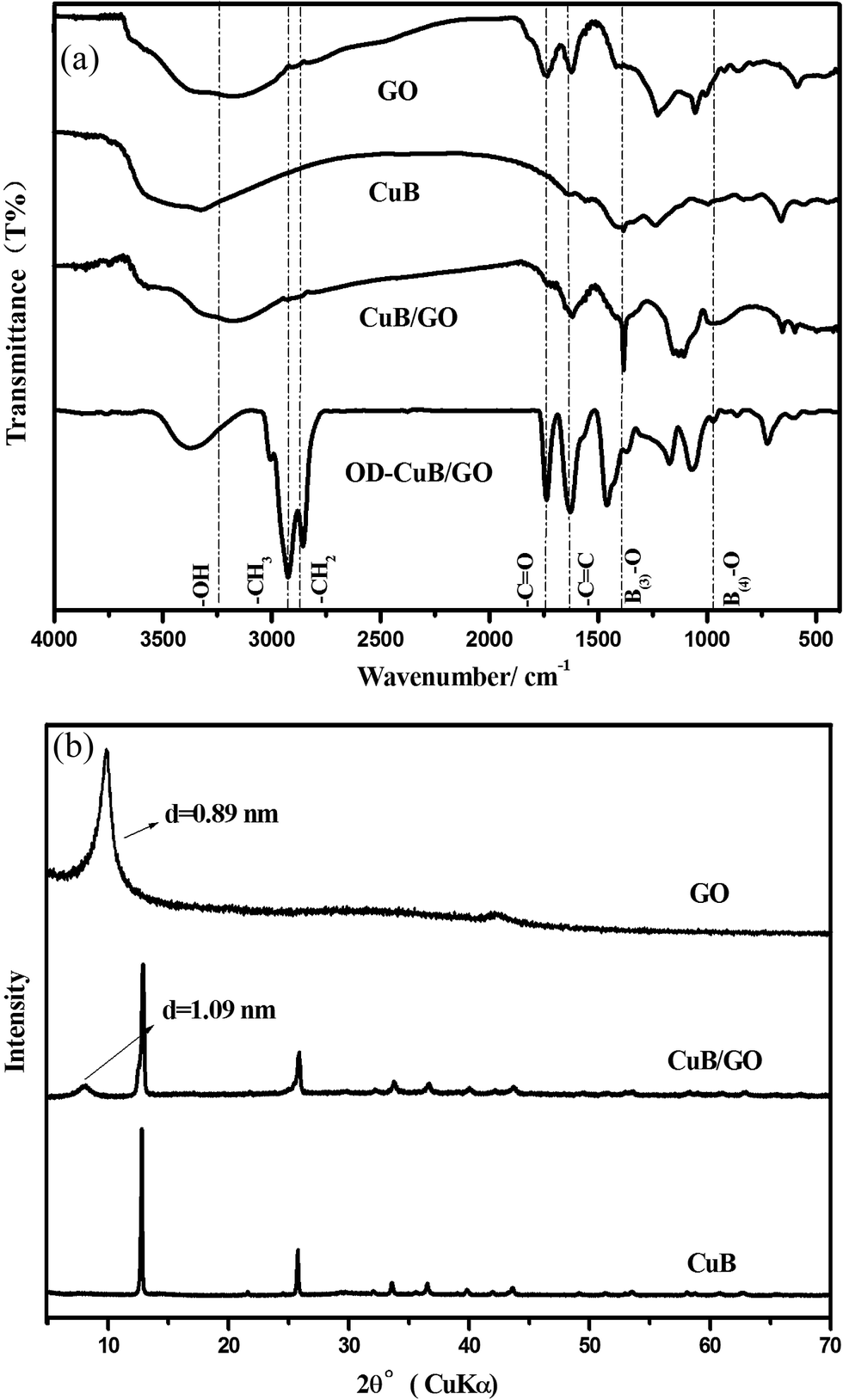 | ||
| Fig. 1 (a) FT-IR spectra of GO nanosheets, CuB, CuB/GO and OD-CuB/GO; (b) XRD patterns of GO, CuB and CuB/GO. | ||
Fig. 1b shows the XRD patterns of the GO nanosheets, CuB and the CuB/GO nanocomposites. The characteristic diffraction peak of the GO nanosheets appears at about 2θ = 9.8°, corresponding to a d-spacing of 0.89 nm.17 The spectrum of CuB possesses six main peaks located at 2θ = 13°, 25°, 33°, 36°, 40° and 43°, which are ascribed to the typical feature peaks of CuB. Simultaneously, both the characteristic diffraction peaks of GO nanosheets and CuB are observed in the XRD pattern of CuB/GO, revealing the successful loading of CuB hybrids on the surface of the GO nanosheets. More importantly, the characteristic peak of GO nanosheets in CuB/GO appears with the slightly lower value of 2θ = 8.1°, suggesting that the corresponding d-spacings are 1.09 nm. This result indicates that the hydrothermal growth of CuB nanocrystals between the interlaminations of the GO nanosheets causes the enlargement of the d-spacings of the GO nanosheets, and may play a significant role in lubrication.
Raman spectra of CuB, GO nanosheets and CuB/GO are shown in Fig. 2a. Analogous to the spectrum of the GO nanosheets, that of the CuB/GO nanocomposites reveals a strong G band at ∼1590 cm−1 and a weaker D band at around ∼1350 cm−1, which are typical bands for GO nanosheets.18–20 As for CuB, a peak appears at 1050 cm−1; however, this peak is not observed in the spectrum of the CuB/GO nanocomposites. This peak is likely due to the CuB nanoparticles that are highly dispersed on the surface of the GO nanosheets. More importantly, reflecting the level of disordered carbon,21 the ID/IG intensity ratio of the GO nanosheets is 0.87, which is lower than that of CuB/GO (0.91). The increasing ID/IG ratio is due to the removal of oxygen functionalities and a partially ordered crystal structure of graphene.22,23 Fig. 2b shows the UV-vis spectra of CuB, the GO nanosheets and the CuB/GO nanocomposites. The spectrum of the GO nanosheets has a main absorption peak at 230 nm and a shoulder peak at 300 nm, which correspond to the π–π* transition of CC bonds and the n–π* transition of CO bonds, respectively.24,25 For CuB/GO, the π–π* transition of CC bonds shifts to 212 nm and the n–π* transition of CO bonds shifts to 254 nm, probably as a result of the interaction between the CuB nanoparticles and the surfaces of the GO nanosheets.
 | ||
| Fig. 2 Raman spectra (a) and UV-vis spectra (b) of CuB, GO and CuB/GO nanocomposites. | ||
As shown in Fig. 3, AFM and TEM were used to characterize the GO nanosheets and the CuB/GO nanocomposites. The typical AFM image (Fig. 3a) of the GO nanosheets reveals that the self-made GO nanosheet is approximately 1.42 nm (about 3–4 layers) in height and between hundreds of nanometers to micrometers in length, indicating that graphite was fully exfoliated by the improved Hummers' method. As shown in Fig. 3b, the TEM image demonstrates that the GO nanosheets have the typical transparent nanosheet structure and a more corrugated morphology. However, after introducing the CuB nanoparticles by employing the liquid phase-based ultrasonic-assisted stripping method, the corrugations of the GO nanosheets disappear and on the surface the uniformly distributed CuB nanoparticles appear (Fig. 3c).
 | ||
| Fig. 3 (a) AFM image and height profiles of the GO nanosheets; TEM images of (b) GO nanosheets and (c) CuB/GO nanocomposites. | ||
Fig. 4a gives the friction coefficient curves of the OD-CuB/GO nanocomposites with different weight percentages in the base oil, as a function of friction time. Obviously, the friction coefficient (COF) remarkably drops as the OD-CuB/GO content increases from 1.0 wt% to 4.0 wt%. However, when the OD-CuB/GO content is further increased to 5.0 wt%, the COF increases on the contrary. This can be ascribed to the agglomeration of the OD-CuB/GO nanocomposites due to the excess, which influences the dispersion of the OD-CuB/GO nanoparticles. As shown in Fig. 4b, the COFs of the base oil, the OD-GO-based oil and the OD-CuB-based oil increase remarkably with increasing friction time. In comparison, the COF of the OD-CuB/GO-based oil is relatively steady and is even accompanied by a small drop. More interestingly, the OD-CuB/GO-based oil always exhibits the lowest friction coefficient during most of the friction time, and finally stabilizes at 0.075. More obviously, the COF of the OD-CuB/GO-based oil is 43.6%, 28.6% and 22.3% lower than those of the base oil, the OD-CuB-based oil and the OD-GO-based oil, respectively. The excellent antifriction properties of the OD-CuB/GO nanocomposites may possibly be due to their small diameter and extremely thin laminated structure, which allow the OD-CuB/GO nanocomposites to easily enter the contact area and deposit a continuous protective film that prevents direct contact with the rough face.9 As shown in Fig. 4c and d, the OD-CuB/GO-based oil with a CuB content of 4.0 wt% exhibits the lowest oil temperature, which is consistent with the COF results. Furthermore, the final oil temperature of the OD-CuB/GO-based oil (4.0 wt%) is 6.2 °C, 5.1 °C and 2.5 °C lower than those of the base oil, the OD-CuB-based oil and the OD-GO-based oil, respectively. This result indicates that the OD-CuB/GO nanocomposites exhibit a cooling effect, useful for practical applications. This is due to the low friction coefficient of the OD-CuB/GO nanocomposites in the base oil, which can lessen the heat derived from the friction pair, thus reducing the oil temperature.
 | ||
| Fig. 4 The friction coefficient and oil temperature curves of the (a and c) OD-CuB/GO-based oil with different weight percentages and (b and d) the base oil, OD-GO-based oil (4.0 wt%), OD-CuB-based oil (4.0 wt%) and OD-CuB/GO-based oil (4.0 wt%) as a function of friction time. | ||
Fig. 5a shows the wear scar diameter (WSD) curves of the base oil, the OD-GO-based oil, the OD-CuB-based oil and the OD-CuB/GO-based oil as a function of the content. This graph reflects that the OD-CuB/GO nanocomposites exhibit more excellent anti-wear performance than those of the other oils. When the content of the OD-CuB/GO nanocomposites in the base oil is 4.0 wt%, the WSD value drops to its lowest value. It is strikingly reduced from 0.75 mm to 0.38 mm, which is a decline of about 49.3%. The reason for this may be due to the double effects of GO film with a low friction coefficient and the CuB nanoparticles with excellent wear-resistant performance in the OD-CuB/GO nanocomposites that cover the rubbing surface.6,7,22 As the content of OD-CuB/GO in the base oil further increases above 5.0 wt%, the WSD value gradually increases. Similarly, the OD-GO and OD-CuB nanomaterials exhibit greater orderliness. This is ascribed to the poor dispersion of nanocomposites at high concentrations. As shown in Fig. 5b, the WSD values of the base oil, the OD-GO-based oil (4.0 wt%), the OD-CuB-based oil (4.0 wt%) and the OD-CuB/GO-based oil (4.0 wt%) increase with an increase in the applied load. Compared to the base oil, the OD-GO-based oil and the OD-CuB-based oil, the WSD value of the OD-CuB/GO-based oil increases more slowly. More importantly, the WSD value of the OD-CuB/GO-based oil is obviously lower than those of the base oil, the OD-GO-based oil and the OD-CuB-based oil. For example, the WSD value of the OD-CuB/GO-based oil at a load of 400 N is 0.57 mm, which is about 18.6%, 26.9% and 49.1% lower than those of the OD-GO-based oil (0.70 mm), the OD-CuB-based oil (0.78 mm) and the base oil (1.12 mm), respectively. This suggests that the OD-CuB/GO nanocomposites exhibit the most excellent load-carrying capacity.
 | ||
| Fig. 5 The WSD curves of the base oil, the OD-GO-based oil, the OD-CuB-based oil and the OD-CuB/GO-based oil as a function of the content added (a) and load (b). | ||
From the above results, we may infer that the ability of the OD-CuB/GO-based oil to decrease the friction coefficient and wear scar diameter by approximately 43.6% and 49.3% respectively, compared with the base oil, is superior to most of the novel additives employed in recent studies.8,10,11
In order to assess the tribological behavior and wear mechanisms, the worn steel ball surfaces used in the tests for the base oil, the OD-CuB-based oil, the OD-GO-based oil and the OD-CuB/GO-based oil were observed using a 3D laser scanning microscope, as shown in Fig. 6a–d. It can be clearly seen that the wear scar of the steel ball used in the base oil tests is seriously damaged and much bigger than those for the other three material-based oils. Meanwhile, the surface of the worn steel ball from the OD-CuB/GO-based oil test is the smallest among these oils, in agreement with the WSD results. This suggests that the OD-CuB/GO sheets show a better capacity to prevent damage to the steel ball. To understand the role of OD-CuB/GO, Raman spectra of the wear scar surfaces derived from above four oil tests were obtained. As shown in Fig. 6e–h, two characteristic peaks of GO at 1350 cm−1 (D band) and 1600 cm−1 (G band) are detected on the worn surfaces used in the OD-GO-based oil and OD-CuB/GO-based oil tests. This demonstrates that the GO nanosheets in the OD-CuB/GO-based oil have smoothly entered the contact surfaces and thus can slide between the friction pairs, bearing the load of the steel ball and preventing damage.8
 | ||
| Fig. 6 3D laser scanning micrographs (a–d) and corresponding Raman spectra (e–h) of the worn steel ball surfaces used in the tests for the (a and e) base oil, (b and f) OD-CuB-based oil (4.0 wt% CuB), (c and g) OD-GO-based oil (4.0 wt% GO) and (d and h) OD-CuB/GO-based oil (4.0 wt% CuB/GO). | ||
Fig. 7 shows the COF curves of the OD-CuB-based oil, the OD-GO-based oil and the OD-CuB/GO-based oil in the base oils of different viscosities (150 SN, 100 SN). It is clear that the OD-CuB/GO-based oil shows the lowest COF in both the 100 SN and 150 SN base oils, which is consistent with the results for the 500 SN base oil. Moreover, the average COFs of the OD-CuB/GO-based oil in the 150 SN and 100 SN base oils are 0.086 and 0.094, respectively, which is about 32.8% and 30.4% lower than those of the 150 SN and 100 SN base oils. Furthermore, the data for the 500 SN base oil shows a 43.6% reduction in the COF. Obviously, the OD-CuB/GO nanocomposites show the best friction-reducing ability in the 500 SN base oil. This is because the high viscosity of the base oil can improve the dispersibility and thus inhibit the agglomeration of the OD-CuB/GO nanocomposites in the base oil. This is highly beneficial for lubrication.
 | ||
| Fig. 7 The friction coefficient curves of the OD-CuB-based oil (4.0 wt% CuB), the OD-GO-based oil (4.0 wt% GO) and the OD-CuB/GO-based oil (4.0 wt% CuB/GO) as a function of friction time in the (a) 150 SN base oil and (b) 100 SN base oil. | ||
4. Conclusions
Copper borate/graphene oxide (CuB/GO) nanocomposites were successfully prepared via a liquid phase-based ultrasonic-assisted stripping method. As revealed by FT-IR, XRD, Raman, UV-vis, TEM and AFM techniques, CuB nanoparticles were successfully anchored on the surface of the GO sheets. The CuB/GO nanocomposites with OD modification could be homogeneously dispersed in the base oil. When the concentration of OD-CuB/GO in the base oil was 4.0 wt%, the COF and WSD values were about 43.6% and 49.3% lower than those of the 500 SN base oil, respectively. However, the friction-reducing ability of the OD-CuB/GO nanocomposites was affected by the viscosity of the base oil (150 SN, 100 SN and 500SN). These results reveal that the OD-CuB/GO nanocomposites possess good anti-wear ability and excellent load-carrying capacity.Acknowledgements
This work was supported by the Talent Introduction Fund of Yangzhou University (2012), Key Research Project-Industry Foresight and General Key Technology of Yangzhou (YZ2015020), Innovative Talent Program of Green Yang Golden Phoenix (yzlyjfjh2015CX073), Yangzhou Social Development Project (YZ2016072), Jiangsu Province Six Talent Peaks Project (2014-XCL-013), Jiangsu Province Science and Technology Support Project (BE2014613) and Jiangsu Industrial-academic-research Prospective Joint Project (BY2016069-02). The authors also acknowledge the Project Funded by the Priority Academic Program Development of Jiangsu Higher Education Institutions. The data in this paper originates from the Test Center of Yangzhou University.References
- D. Berman, A. Erdemir and A. V. Sumant, Mater. Today, 2014, 17, 31–42 CrossRef CAS.
- G. Lee, R. Cooper and S. An, Science, 2013, 340, 1073–1076 CrossRef CAS PubMed.
- J. Bunch, S. Verbridge and J. Alden, Nano Lett., 2008, 8, 2458–2462 CrossRef CAS PubMed.
- V. Eswaraiah, V. Sankaranarayanan and S. Ramaprabhu, ACS Appl. Mater. Interfaces, 2011, 3, 4221–4227 CAS.
- E. J. Sandoz-Rosado, O. A. Tertuliano and E. J. Terrell, Carbon, 2012, 50, 4078–4084 CrossRef CAS.
- Z. F. Jia, T. Chen, J. Wang, J. J. Ni, H. Y. Li and X. Shao, Tribol. Int., 2015, 88, 17–24 CrossRef CAS.
- Z. F. Jia, X. J. Pang, H. Y. Li, J. J. Ni and X. Shao, Tribol. Int., 2015, 90, 240–247 CrossRef CAS.
- L. Zhang, Y. He, S. W. Feng, L. Zhang, L. Zhang, Z. L. Jiao, Y. Q. Zhan and Y. J. Wang, Ceram. Int., 2016, 42, 6178–6186 CrossRef CAS.
- J. S. Lin, L. W. Wang and G. H. Chen, Tribol. Lett., 2011, 41, 209–215 CrossRef CAS.
- S. Choudhary, H. P. Mungse and O. P. Khatri, J. Mater. Chem., 2012, 22, 21032–21039 RSC.
- W. Zhang, M. Zhou, H. W. Zhu, Y. Tian, K. L. Wang, J. Q. Wei, F. Ji, X. Li, Z. Li, P. Zhang and D. H. Wu, J. Phys. D: Appl. Phys., 2011, 44, 4329–4334 Search PubMed.
- D. C. Marcano, D. V. Kosynkin, J. M. Berlin, A. Sinitskii, Z. Z. Sun, A. Slesarev, L. B. Alemany, W. Luand and J. M. Tour, ACS Nano, 2010, 4, 4806–4814 CrossRef CAS PubMed.
- C. Hao, F. Feng, X. H. Wang, M. Zhou, Y. T. Zhao, C. Y. Ge and K. Wang, RSC Adv., 2015, 5, 21161–21169 RSC.
- H. Liu, Y. Q. Li, T. M. Wang and Q. H. Wang, J. Mater. Sci., 2012, 47, 1867–1874 CrossRef CAS.
- J. S. Li, L. F. Hao, X. H. Xu and T. H. Ren, Ind. Lubr. Tribol., 2012, 64, 217–223 CrossRef.
- Z. F. Jia and Y. Q. Xia, Tribol. Lett., 2011, 41, 425–434 CrossRef CAS.
- L. Peng, Z. Xu, Z. Liu, Y. Y. Wei, H. Y. Sun, Z. Li, X. L. Zhao and C. Gao, Nat. Commun., 2015, 6, 5716 CrossRef CAS PubMed.
- S. Pei and H. Cheng, Carbon, 2012, 50, 3210–3228 CrossRef CAS.
- X. Hou, C. Z. Yang, J. He, Z. W. Li and Z. Z. Zhang, Ind. Eng. Chem. Res., 2015, 54, 4773–4780 CrossRef CAS.
- J. Sun, H. M. Liu, X. Chen, G. E. David, W. S. Yang and X. Duan, Chem. Commun., 2012, 48, 8126–8128 RSC.
- J. Chen, Y. R. Li, L. Huang, N. Jia, C. Li and G. Q. Shi, Adv. Mater., 2015, 27, 3654–3660 CrossRef CAS PubMed.
- G. Y. Bai, J. Q. Wang, Z. G. Yang, H. G. Wang, Z. F. Wang and S. R. Yang, Carbon, 2015, 84, 197–206 CrossRef CAS.
- H. C. Gao, Y. X. Wang, F. Xiao, C. B. Cheng and H. W. Duan, J. Phys. Chem. C, 2012, 116, 7719–7725 CAS.
- V. Murugan, Z. Linghe, K. Karthikeyan and Y. Kyusik, Nanotechnology, 2013, 24, 395706 CrossRef PubMed.
- J. Chen, Y. R. Li, L. Huang, C. Li and G. Q. Shi, Carbon, 2015, 81, 826–834 CrossRef CAS.
| This journal is © The Royal Society of Chemistry 2016 |