DOI:
10.1039/C6RA21442H
(Paper)
RSC Adv., 2016,
6, 89503-89509
Supported cobalt oxide nanocrystals: morphology control and catalytic performance for styrene oxidation†
Received
26th August 2016
, Accepted 13th September 2016
First published on 13th September 2016
Abstract
Metal oxide nanoparticles with controlled size and morphology seem extremely important due to the strong correlation between these parameters and their catalytic properties. Herein supported cobalt oxide nanoparticles with controlled size and different morphologies were successfully synthesized via a facile hydrothermal synthetic route under mild conditions. The size and morphology of the products can be readily tuned by tuning process parameters such as hydrothermal time and hydrothermal temperature. As synthesized supported cobalt oxide nanoparticles, namely Co3O4-150, Co3O4-550 and Co3O4-650, were quite active in the catalytic oxidation of styrene with H2O2 as a green oxidant. However, due to the size and morphology differences, these supported cobalt oxide nanoparticles exhibited different activities and selectivities. Co3O4-550 resulted in higher activity while Co3O4-650 exhibited relatively higher selectivity to epoxide. Moreover, these cobalt catalysts could be recycled, indicating this to be a promising method of fabricating supported cobalt oxide catalysts for the oxidation of olefins in large-scale processes.
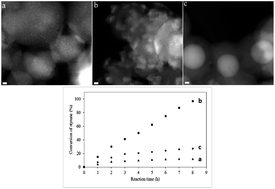
Introduction
Nanomaterials have gained extensive interest due to their applications in the field of medicine, optics, electrics, energy and catalysis.1 As one of the most studied nanomaterials, cobalt oxide nanoparticles have exhibited outstanding electrochemical,2,3 magnetic,4,5 gas sensing6,7 and catalytic8,9 capabilities. On the catalytic capability of supported cobalt oxide nanoparticles are of particular interest because of their great industrial potential in the oxidation of hydrocarbon reactions, including methane combustion,10 propane combustion,11 cyclohexane oxidation,12 CO oxidation,13 etc.
In recent years, the synthesis and structural characterization of cobalt oxide nanostructures have been well established,14–18 which enable us to explore the effect of particle morphology on catalytic performance, and develop rational design and synthesis of highly active catalysts. On the other hand, when materials approach nanoscale dimensions, they exhibit extremely different properties from their bulk counterparts in adsorption capacities, surface area and accessibility of the active sites, etc. Conventionally, active catalysts consist of small nanometer-sized particles, because the number of corner and edge atoms for adsorption and activation of the reactants increases with decreasing crystal domains.19–21 Moreover, if metal oxide nanoparticles can be confined within a nanoporous host this may limit the size to which the metal nanoparticle can grow, as they typically sinter during preparation. Typically nanopores serve as a confined or growing space for the loaded nanocrystals with a narrow size distribution.
Metal oxide nanoparticles with controlled size and morphology seem extremely important due to the strong correlation between these parameters and their catalytic properties. The catalytic performance for styrene oxidation is extremely sensitive to the particle size and morphologies because the surface structure and electronic properties may change considerably at different nanometer-size level. On the other hand, surface science enabled the study of the activity and selectivity of the catalysts by the characteristics at the atom-level structure of the planes that they expose.22,23 It is obvious that both the activity and the selectivity of a catalyst can be tailored by tuning its morphology. Although the concept of morphology-dependent catalysis makes is possible to correlate the catalytic performance with the morphology/plane of the crystal under realistic reaction conditions, it is still challenging to synthesize catalytic nanomaterials that are enclosed by specific surface planes, hopefully the most reactive facets.
In the past we successfully designed a kind of novel compound possesses 16 carboxylic acid groups in each corner of POSS structure.24 Based on this work, we became interested in applying this compound in the synthesis of supported metal oxide. Herein, we report three cobalt oxide catalysts with different size and morphologies for styrene oxidation reaction. The catalysts were successfully synthesized via a facile hydrothermal synthetic route under mild conditions. The size and morphology of the catalysts can be readily tuned by tuning process parameters such as hydrothermal time and hydrothermal temperature. It was expected that these supported cobalt oxide nanoparticles exhibited different activities and selectivities due to the size and morphology differences. Moreover, these cobalt catalysts could be recycled, indicating this to be a promising method of fabricating cobalt oxide catalysts for the oxidation of olefins in large-scale processes.
Experimental
Materials
All the solvents (anhydrous), reagents and catalysts were purchased commercially and were used without further purification. Tetrahydrofuran (anhydrous, 99.9%), ethyl ether (anhydrous, ≥99.0%), toluene (anhydrous, ≥99.8%), benzyl alcohol (99%), [Si8O12]-(OSiMe2H)8 (95%), diethylamine (99%, Sigma-Aldrich), Pt/C (30 wt%) were purchased from Sigma-Aldrich. Allylmalonic acid (99%) was purchased from Alfa Aesar, 1,4-bis-dimethylsilylbenzene (97%) were purchased from ABCR. The Karstedt catalyst (a platinum(0) divinyl tetramethyldisiloxane complex in xylene, 2.1–2.4 wt% Pt, Gelest Inc) was used for hydrosilylation. Pt/C (30 wt%, Sigma-Aldrich) was used for the hydrogenolysis. Thin layer chromatography was performed on silica gel plates Merck 60 F254. The compounds were detected by UV lamp. Compound I and compound III were purified by silica gel column chromatography (pore size 60 Å, 70–230 mesh, Sigma-Aldich). Experiments involving compound IV was performed in N2 glovebox or Schlenk techniques under nitrogen atmosphere. The structure of the compound I, II, III, IV were shown in Fig. 1.
 |
| | Fig. 1 The structure of compound I, II, III, IV. | |
Preparation of supported cobalt oxide catalysts
Synthesis of compound I, III, IV.
(1) Compound I. The synthesis procedure was based on the ref. 24. Allylmalonic acid (4.32 g, 30 mmol), benzyl alcohol (7.46 mL, 70 mmol) and anhydrous toluene (30 mL) were added to a round bottom flask. A drop of H2SO4 (95.8%, 0.030 mL) was added under stirring. The solution was refluxed for 6 h with a Dean–Stark apparatus to remove water. The reaction was monitored with thin-layer chromatography (TLC). When the allylmalonic acid disappeared, the solution was cooled down and washed by saturated sodium bicarbonate solution, sodium chloride solution and distilled water. The desired compound I, was purified by column chromatography (eluent: hexane/ethyl acetate = 9/1 by volume). Yield: 6.39 g (95%). 1H NMR characterization is shown in Fig. S1.† 1H NMR (CDCl3, 400 MHz): δ 2.67 (t, 2H, J = 7); 3.54 (t, 1H, J = 7); 5.02 (d, 1H, J = 10); 5.07 (d, 1H, J = 17); 5.13 (m, 4H); 5.76 (m, 1H); 7.19–7.37 (m, 10H). 13C NMR (CDCl3, 100 MHz): δ 32.93; 51.77; 67.33; 117.90; 128.32; 128.46; 128.66; 133.91; 135.42; 168.73.
(2) Compound III. Compound I (2.60 g, 8.77 mmol), commercial compound II (0.893 g, 0.877 mmol), and anhydrous THF (40 mL) was loaded in a flamed dried Schlenk flask. The solution was heated to 40 °C. Karstedt's catalyst (platinum divinyltetramethyldisiloxane [Pt(dvs)], 0.1 mL) was added to the solution to catalyze the hydrosilylation reaction. The reaction was monitored by 1H NMR for the disappearance of the Si–H signal. The solution was stirred for 8 h at 40 °C to reach completion. The product was purified by column chromatography. Unreacted compound I was first removed using hexane/ethyl acetate = 4/1 by volume. After that the eluent was then changed to hexane/ethyl acetate = 3/1 by volume to purify III. Yield: 2.65 g (90%). The product was characterized by 1H, 13C, and 29Si NMR spectroscopy which were shown in Fig. S2.† 1H NMR (CDCl3, 400 MHz): δ 0.043 (s, 48H); 0.56 (t, 16H, J = 8); 1.27 (m, 16H); 1.91 (q, 16H, J = 7); 3.42 (t, 8H, J = 8); 5.18 (m, 32H); 7.14–7.37 (m, 80H). 13C NMR (CDCl3, 100 MHz): δ −0.095; 17.55; 21.13; 32.50; 51.95; 67.26; 128.47; 128.63; 128.83; 135.81; 169.41. 29Si NMR (CDCl3, 79 MHz): δ −112.6; 8.61.
(3) Compound IV. Compound III (2.58 g) and Pd/C catalyst (30 wt%, 10 mg) were added to a flame dried Schlenk flask preloaded with 50 mL, a mixed solvent MeOH/THF (1/9 by volume) under N2 atmosphere. H2 gas was then bubbled into the solution for 12 h under stirring at ambient temperature. The mixture was then filtered through a PTFE membrane syringe filter (dia. 0.45 μm) to remove the catalyst. The volatiles of the resulting clear filtrate were evaporated under vacuum to yield a colorless oil. The oil was further evacuated under high vacuum for overnight to afford a white solid. Yield: 1.55 g (97%). The product was confirmed by 1H, 13C, and 29Si NMR spectroscopy which were shown in Fig. S3.† 1H NMR (DMSO-d6, 400 MHz): δ 0.11 (s, 48H); 0.59 (t, 16H, J = 8); 1.31 (m, 16H); 1.72 (q, 16H, J = 8); 3.22 (t, 8H, J = 8); 12.6 (s, 16H). 13C NMR (THF-d8, 100 MHz): δ 0.50; 18.71; 22.41; 33.83; 52.42; 171.72. 29Si NMR (THF-d8, 79 MHz): δ −103.31; 18.30.
Synthesis of supported cobalt nanospheres. Compound IV (100 mmoles) was added to a Schlenk flask with 4 or 8 equivalents of Co2(CO)8 in a mixture of toluene and THF solution (50 mL, 20
:
1 volume ratio). The reactions were allowed to stir for 24 h at room temperature under N2 atmosphere. Then the precipitate was collected by filtering the mixture with diethyl ether in N2 glovebox. Concentration of the filtrate solution afforded pink precipitate as the major products with about 90% yield (based on the amount of compound IV added). The amount of cobalt precursor did not affect the yield. The pink precipitate is the as-synthesized supported cobalt nanospheres. There are several reasons that we chose POSS supported cobalt oxide as a precursor of catalyst. Firstly, the cobalt oxide were highly dispersed in silica support due to the structure of POSS compound IV. Compound IV possesses 16 carboxylic acid groups coupling with cobalt in eight corners on the periphery. It is well known that better dispersion of cobalt species results in higher catalytic activity. Secondly, the POSS structure can prevent cobalt oxide from sintering during the thermal treatment. Finally, the morphology of POSS supported cobalt oxide after calcination would be more uniform with narrower size distribution. The above advantages made the catalysts much more active compared to the general silica supported cobalt oxide catalyst.
Synthesis of supported cobalt oxide nanocrystals. The supported cobalt oxide were generated by the calcination of the as-prepared pink cobalt nanospheres under 100 cm3 min−1 dry air (medical grade, Airgas) at 150 °C, 550 °C, 650 °C respectively, for 6 hours with a 5 °C min−1 temperature ramp. The as-synthesized catalysts were labelled as Co3O4-150, Co3O4-550, Co3O4-650, respectively.
Characterization
1H, 13C and 29Si nuclear magnetic resonance (NMR) spectra were recorded with a Varian INOVA 400 spectrometer, operated at 400 MHz for 1H, 100 MHz for 13C, and 79 MHz for 29Si. NMR spectra of the moisture sensitive compound were recorded in sealed J. Young NMR tubes. The 1H and 13C NMR chemical shifts, reported relative to SiMe4, were determined by reference to the residual 1H solvent resonances. 29Si NMR chemical shifts were referenced to TMS at 0.0 ppm. The chemical shifts reported are in ppm and coupling constants in Hz. Scanning electron microscopy (SEM) images were collected by a FE-SEM, Hitachi S-4800-II. High angle annular dark field (HAADF) scanning transmission electron microscope (STEM) images were obtained using a JEOL 2100-F transmission electron microscope (TEM) with a field emission gun at 200 kV, which has a spatial resolution of 0.2 nm. Particle size analyses were performed using the program Image J. X-ray diffraction (XRD) patterns were collected by Scintag XDS2000, Cu-Kα radiation (λ = 1.5418 Å) at 40 kV, scan range 2θ = 5–90°, and step rate = 0.05° s−1. The size of the cobalt oxide nanoparticles was calculated using the Debye–Scherrer formula from the full width at half maximum (FWHM) of the (3 1 1) diffraction peak. X-ray photoelectron spectroscopy (XPS) spectra were collected by Omicron ESCA Probe equipped with an electron flood gun, Al-Kα radiation at (1486.6 eV). The XPS binding energies were calibrated with respect to adventitious carbon (C 1s). Fourier transform infrared (FT-IR) spectra were taken on Thermo Nicolet NEXUS 670 Fourier transform infrared spectroscopy. The Brunauer–Emmett–Teller (BET) surface area was determined from equilibrium and saturation pressures measured by a Micromeritics ASAP 2010.
Catalytic test with as-synthesized catalysts
Catalytic reactions were carried out according to the following procedure. 1.04 g of styrene (10 mmol), 30 mg of supported cobalt oxide catalysts were mixed in 20 ml of acetonitrile in a 50 ml sealed glass reactor. Then the mixture was heated to 60 °C under constant vigorous stirring in an oil bath. After that 3.4 mL of H2O2 (30 mmol) solution (30 wt% in H2O, Sigma Aldrich) was added to the reactor at one time. Then the mixture was stirred for another 8 hours under atmospheric pressure. The products were analysed by a gas chromatograph (Varian star 3400 CX) with DB-624 column (Agilent, 30 m, 0.25 mm, 1.40 μm) and a flame ionization detector.
Results and discussion
Formation of pink cobalt nanospheres
The pink cobalt nanospheres was synthesized via the reaction of Co2(CO)8 with compound IV in the mixture of toluene and THF as previously described. Compound IV possesses 16 carboxylic acid groups on the periphery. The carboxylic acid can be used to anchor cobalt cations in the interior of several carboxylic acid groups and CO was released during this reaction. This reaction resulted in a pink precipitate of uniform, spherical globules. The FT-IR spectrum of compound IV and prepared pink cobalt nanospheres were shown in Fig. 2. The FT-IR spectrum (Fig. 2b) of the compound IV shows an intense band at 1715 cm−1 (–C
O in the –COOH group), while the cobalt nanospheres after the reaction have a strong band at 1583 cm−1, indicating the formation of –COO– group. The remained, relatively weak band at 1715 cm−1 suggests that there are still some carboxylic acid groups, possibly on the surfaces of the nanospheres. XRD spectra (Fig. S4†) show two diffraction peaks at 2θ = 12.4° and 25.6°, which are the feature peaks of spherosilicate carboxylate with POSS network structure. We replaced Co2(CO)8 with Fe and Pd precursor following the similar procedure, similar XRD spectra were observed in the case of Fe and Pd. XPS spectra of the precipitate were recorded and the Co 2p spectra for the catalysts are shown in Fig. S5a.† The binding energy of Co 2p3/2 is approximately 782.5 eV, indicating the formation of Co(II).25,26 Apparently, Co2(CO)8 was oxidized when reacting with carboxylic acids, leading to the formation of spherosilicate carboxylate – Co(II) cross-linking network. Based on the ICP data, the Co content is determined to be 10.01 wt%, suggesting that 4 Co cations are coordinated with 16 carboxyl groups.
 |
| | Fig. 2 FT-IR spectra of (a) cobalt nanospheres and (b) compound IV. | |
 |
| | Fig. 3 XRD spectra of (a) Co3O4-150, (b) Co3O4-550, (c) Co3O4-650 and standard spectrum of Co3O4. | |
Particle size and morphology determination of supported cobalt oxide nanoparticles
Powder X-ray diffraction (PXRD). Fig. 3 shows the PXRD patterns of the supported cobalt oxide catalysts after calcination at different temperature, with a standard spectra of Co3O4 as a reference. We imported all standards of cobalt oxide, like CoO, Co2O3, Co3O4, Co(OH)3, etc. However, the diffraction peaks of the product showed the fitness to characteristic peaks of Co3O4. The standard Co3O4 shows diffraction peaks at 2θ = 19.0°, 31.2°, 36.8°, 38.5°, 44.8°, 55.6°, 59.3°, 65.2°, 68.6°, 74.1° and 77.3°, indicated the crystallized spinel Co3O4 with space group Fd3m: crystallochemical formula Co2+Co23+O4, where Co3+ occurs in the octahedral position and Co2+ occurs in the tetrahedral position.27,28 As expected, spherosilicate structure (POSS) shows a broad peak at 15° < 2θ < 30°, corresponding to the amorphous structure of the Si–O–Si clustering, which served as the support of cobalt oxide. Catalyst Co3O4-150 (Fig. 3a) did not display any sharp diffraction pattern but a very broad and slight peaks attributed to cobalt oxide. The signals were very weak, likely due to the thermal decomposition just started and only very small amount of cobalt oxide products formed. The catalyst Co3O4-550 (Fig. 3b) showed very broad diffraction peaks at 2θ = 36.6°, 44.7°, 65.1°, indicated the formation of nanocrystalline product. The average particle size, calculated by X-ray line broadening through the Scherrer equation, was 11 nm which was consistent with the TEM images. The distinct peaks of catalyst Co3O4-650 indicate the formation of large cobalt oxide particles with high crystallinity, and the average diameter of Co3O4 is calculated to be 70 nm based on Scherrer equation (Fig. 3c). When comparing Co3O4-650 and Co3O4-550, the former shows narrower peaks with stronger intensity, which is the evidence for the formation of larger Co3O4 crystals.
XPS spectra. XPS measurements were carried out to obtain further insight into the oxidation state of cobalt in the supported catalysts. As we discussed previous, the XPS spectrum of the pink cobalt nanospheres (Fig. 4a) shows the peak of Co 2p3/2 located at ∼782.5 eV indicating the formation of Co(II).26 Commercial Co3O4 (Fig. 4e) showed the Co 2p3/2 peak located at ∼780.2 eV and the Co 2p1/2 peak located at ∼795 eV. For the three catalysts after calcination, the Co 2p peak shifted a little bit to the lower binding energy with the temperature increase. While the peak located very close to commercial Co3O4 (Fig. 4b–d), indicating that the cobalt oxide supported on silica likely fits the stoichiometry of Co3O4. That was in good accordance with XRD data. The Co 2p XPS spectra showed two major peaks with BE values at 795.6 and 780.2 eV, corresponding to the Co 2p1/2 and Co 2p3/2 spin–orbit peaks, respectively, of the Co3O4 phase.29 The Co 2p1/2–Co 2p3/2 energy separation was approximately 15.4 eV. Lack of prominent shake-up satellite peaks in the Co 2p spectra further suggests that the product mainly compose of Co3O4.30
 |
| | Fig. 4 Co 2p XPS spectra of (a) cobalt nanospheres before calcination, (b) Co3O4-150, (c) Co3O4-550, (d) Co3O4-650 and (e) commercial micrometer Co3O4. | |
The XPS spectra of Si 2p are shown in Fig. S5.† The cobalt nanospheres before calcination (Fig. S5a†) shows two peaks at ∼103.5 eV and ∼101.2 eV, indicating that two types of Si–O bond exist in the compound. It can be inferred that one can be assigned to Si–O–Si in POSS structure and the other to O–Si–CHx. After calcination, most of the hydrocarbons were burnt down and Si–O bond can form clustering Si–O–Si bond, which is pretty similar to the Si–O–Si bond in POSS structure. Therefore, the peak of Si 2p became sharper and the shoulder becomes smaller as the calcination temperature increased.
SEM and (HAADF) STEM images. Fig. 5a–c showed the SEM images of samples obtained before calcination and after calcination at 150 °C and 550 °C, respectively. Silica-supported cobalt nanospheres with monodisperse size dispersion were achieved using our synthetic approach (Fig. 5a). These nanospheres had a mean diameter of 200 nm. After calcination at 150 °C (Fig. 5b and d), the morphology was maintained upon formation of the CoxOy clusters since the temperature was not high enough for the thermal decomposition or cobalt oxide crystallization. Probably very small amount cobalt oxide nanocrystalline already formed.
 |
| | Fig. 5 SEM images of (a) cobalt nanospheres before calcination, (b) Co3O4-150, (c) Co3O4-550. STEM images of (d) Co3O4-150, (e) Co3O4-550, (f) Co3O4-650. Scale bars are 100 nm in (a–c) and 15 nm in (d–f). | |
With the calcination temperature increased to 550 °C, the SEM images (Fig. 5c) showed the integrity of the spinel nanostructure. Fig. 5e showed a typical STEM image of the nanostructure with high crystallinity. The chemical compositions of the as-prepared nanocrystals have been investigated by EDS. Results from EDS elemental analysis for the nanocrystals on the surface of Co3O4-550 sample showed that the nanocrystals contain Co and O. The atomic ratio of Co to O is 42
:
58, which matched the stoichiometry of Co3O4 quite well. Basically based on the elemental mapping images (Fig. S6a†) we noticed that Co3O4 nanocrystals were developed and supported on silica which was consistent with the XRD results. Herein, the corners and edges of Co3O4 nanocrystals can be clearly observed.
As the calcination temperature further increased to 650 °C, cobalt oxides like egg yolk were formed exclusively inside the supported silica (Fig. 5f and S6b†). The yolk shaped crystals consist of parallel bundles of nanocrystals whose structure is confined by the supported silica channels. The crystals were linked by short bridges, formed by Co3O4 growth in the micropores interconnecting the microscale channels. We estimated that the yolk shaped cobalt oxide may be formed through a redissolving and redepositing process under thermal conditions.31,32
Our studies indicate that the morphology and size of final products strongly depend on calcination conditions such as temperature and time. Study on the effects of calcination time shows that spinel cobalt oxide nanocrystals gradually form with increasing calcination time. Six hours are enough for the crystallization process. Generally, the size and the morphology of the cobalt oxide nanostructure could be manipulated by changing calcination temperature and hydrothermal time.
Catalytic activity of supported cobalt oxide nanocrystals with different morphologies. The as-synthesized cobalt oxide nanocrystals were used as the catalyst for the oxidation reaction of styrene, in which hydrogen peroxide was used as the oxidant. The performance of each catalyst is summarized in Table 1. Under the reaction conditions, all catalysts gave quantitative conversions after 8 h of reaction, the two main products being styrene oxide and benzaldehyde in all cases. The cobalt content in all three catalysts are around 8–9 wt% more or less based on the ICP-AES results. However, they performed totally different catalytic activity under the same reaction conditions. Typically Co3O4-550 showed substantially higher activity than that of Co3O4-150 and Co3O4-650. Besides, Co3O4-550 showed relatively high selectivity to styrene epoxide as high as 91%, almost close to the selectivity over Co3O4-650 sample (96%). Taken together, Co3O4-550 was the best catalyst due to the high activity and high selectivity for styrene oxidation. Co3O4-550 manifested so excellent catalytic properties, on one hand, due to the high crystallinity of Co3O4 formed on the support and the nanocrystals size and the morphology are more active for styrene oxidation. The particle size calculated from XRD line broadening measurements were listed in Table 1, column 3 and 4. The particle size before and after the catalytic test remained about the same within uncertainties. It was found that the turnover frequency increases from 8.2 to 28.3 with decreasing cobalt oxide particle size, which was attributed to the increasing fraction of edge and corner surface sites with decreasing size. Therefore, it was concluded that the smaller Co3O4 particles perform better in catalysis of styrene oxidation. On the other hand, the BET surface area of Co3O4-550 after thermal treatment (Table 1, last column) is larger compared to the other two samples, which can absorb more reactants and offer more active sites in the reaction. However, the selectivity to epoxide is a little bit lower than Co3O4-650. Co3O4-650 with the larger cobalt oxide size nanoparticles showed better selectivity to styrene oxide, which was as high as 96%. We conjectured that the selectivity of the reaction is dependent on the silica framework used for the stabilization of the cobalt oxide NPs, with the 3D channel framework of the support providing higher selectivity. The reactants and products can only be selected to pass the channel of the silica support. For Co3O4-550, Co3O4 nanocrystals outside of the silica support could lower the selectivity to some degree.
Table 1 Selective oxidation of styrene on supported cobalt oxide catalystsa
| Catalyst |
[Co]b (wt%) |
Particle size calculated from XRD |
Conv. (%) |
Selectivity (%) |
TOFc |
BET (m2 g−1) |
| Before reaction |
After reaction |
Styrene epoxide |
Benzaldehyde |
Other product |
| Reaction conditions: catalyst weight = 30 mg. Determined by ICP-AES. mol(C8H8 converted) mol(Co)−1 h−1. The peak is too week to do the calculation from X-ray line broadening. |
| Co3O4-150 |
9.1 |
N/Ad |
N/Ad |
12 |
80 |
15 |
5 |
3.3 |
15 |
| Co3O4-550 |
8.4 |
11 |
12 |
97 |
91 |
5 |
4 |
28.3 |
46 |
| Co3O4-650 |
8.1 |
70 |
73 |
27 |
96 |
2 |
2 |
8.2 |
42 |
We have further investigated the reaction kinetics by monitoring the time-dependent conversion of styrene in the system (Fig. 6). When Co3O4-550 was used as the catalyst, the conversion of styrene increases roughly linearly with reaction time, reaching 97% within 8 h. However, for Co3O4-150 catalyst, the conversion of styrene slightly increased with reaction time and reached quasi-equilibrium after 4 h. Totally the conversion after 8 h was only 12%. For Co3O4-650, a similar trend in activity was observed, while the conversion was much higher than Co3O4-150 catalyst. We conjectured that in the first 4 hours the H2O2 was quite reactive and can readily be activated even with larger cobalt oxide catalysts. While after several hours, the reactants and products reached equilibrium on cobalt oxide surface which might block the exposed active sites. Besides, as presented distinctly in Fig. S7,† the increase of styrene concentration from 0.5 mmol to 2.5 mmol caused almost a linear reduction of styrene conversion from 97 to 71% at 333 K. However, the increase of styrene concentration had small influence on the selectivity to epoxide, which exhibited a small decrease from 93% to 87%. We concluded that the contact of hydrogen oxide to active site of Co3O4-550 might be a rate determining step at this reaction. All in all, different morphology of the supported cobalt oxide nanocrystals performed differently in styrene oxidation reaction. By controlling the synthetic parameter, we can prepare the active catalyst with appropriate morphology in catalytic reaction.
 |
| | Fig. 6 The conversion of styrene as a function of reaction time (▲) Co3O4-150, (●) Co3O4-550, (◆) Co3O4-650. | |
For the development of cost-effective, green, and benign industrial processes, catalyst stability and recycling are very important. In metal-containing heterogeneous catalysts, the leaching of the active metal from the supported materials is often a problem. Such leaching processes result in diminished reactivity and selectivity in catalytic processes. When studying the recycling of active catalyst Co3O4-150 system, the solution after the reaction was cooled down and 100 mL CH3CN was added. Then the solid was filtered and dried in the oven for the next run under the same conditions. Fig. 7 showed the epoxide yield after 5 recycling experiments with the use of Co3O4-550. The catalyst was still active and a similar conversion was observed like the fresh use. In brief, Co3O4-550 was a pretty proper catalyst for styrene oxidation with high conversion and high selectivity and can be used repeatedly.
 |
| | Fig. 7 Recycling of the active Co3O4-550 catalyst for the epoxidation of styrene. Run 1 is with fresh catalyst. | |
Conclusions
Metal oxide nanoparticles with controlled morphology are crucial due to the strong correlation between these parameters and their catalytic properties. In this paper, we demonstrated a practical, convenient and facile method to prepare supported cobalt oxide nanoparticles with controlled size and morphology. The synthesis was mediated by thermal treatment temperature and permitted controlled variation of metal oxide particle size and morphology at nanometer scale. In the present work three samples Co3O4-150, Co3O4-550 and Co3O4-650 were successfully synthesized and as synthesized samples with different morphologies exhibited totally different properties for the oxidation of styrene. Monitor the synthesis with SEM, TEM, XRD, EDS and XPS at different calcination stages and optimize the catalyst for the target reaction. Co3O4-550 resulted in extraordinary activity with relatively high selectivity to epoxide. Thus, the results reported here indicated that nanocrystalline cobalt oxide supported on silica by this method are very promising catalysts for the selective oxidation of olefins. We concluded that different morphology of metal oxide nanoparticles performed differently in catalytic reaction. By controlling the synthetic parameter, we can prepare the active catalyst with appropriate morphology in catalytic reaction. Moreover, in developing large-scale processes, heterogeneous catalytic systems have many advantages including easy removal of catalysts from reaction mixtures and recycling of catalysts. In conclusion, the method is very versatile because the carboxylic acid ligand can easily couple to metal carbonyl and many other commercially available metal precursors, in addition to Co, such as Pd, Fe, Ni, etc. (to be reported later). Thus, it could have many potential applications when such particles are called for, such as in sensors and catalysis.
Acknowledgements
This research was supported by the Specialized Research Fund for NSF of China (51172184, 51572221); Specialized Research Fund for the Doctoral Program of the Ministry of Education (20116102110014). Z. W. and X. H. acknowledge the funding support from China Scholarship Council. This work made use of the SEM, TEM and NMR in the EPIC facility of NUANCE Center and IMSERC facility at Northwestern University.
Notes and references
- C. N. R. Rao and A. K. Cheetham, J. Mater. Chem., 2001, 11, 2887–2894 RSC.
- P. Poizot, S. Laruelle, S. Grugeon, L. Dupont and J. M. Tarascon, Nature, 2000, 407, 496–499 CrossRef CAS PubMed.
- C. N. P. Dafonseca, M. A. Depaoli and A. Gorenstein, Adv. Mater., 1991, 3, 553–554 CrossRef.
- S. Takada, M. Fujii, S. Kohiki, T. Babasaki, H. Deguchi, M. Mitome and M. Oku, Nano Lett., 2001, 1, 379–382 CrossRef CAS.
- K. Takada, H. Sakurai, E. Takayama-Muromachi, F. Izumi, R. A. Dilanian and T. Sasaki, Nature, 2003, 422, 53–55 CrossRef CAS PubMed.
- C. Cantalini, M. Post, D. Buso, A. Guglielmi and A. Martucci, Sens. Actuators, B, 2005, 108, 184–192 CrossRef CAS.
- M. Ando, T. Kobayashi, S. Iijima and M. Haruta, J. Mater. Chem., 1997, 7, 1779–1783 RSC.
- B. Solsona, T. E. Davies, T. Garcia, I. Vazquez, A. Dejoz and S. H. Taylor, Appl. Catal., B, 2008, 84, 176–184 CrossRef CAS.
- T. E. Davies, T. Garcia, B. Solsona and S. H. Taylor, Chem. Commun., 2006, 32, 3417–3419 RSC.
- G. Laugel, J. Arichi, H. Guerba, M. Moliere, A. Kiennemann, F. Garin and B. Louis, Catal. Lett., 2008, 125, 14–21 CrossRef CAS.
- I. Yuranov, L. Kiwi-Minsker and A. Renken, Appl. Catal., B, 2003, 43, 217–227 CrossRef CAS.
- L. Zhou, J. Xu, H. Miao, F. Wang and X. Li, Appl. Catal., A, 2005, 292, 223–228 CrossRef CAS.
- I. Lopes, A. Davidson and C. Thomas, Catal. Commun., 2007, 8, 2105–2109 CrossRef CAS.
- Y. Li, B. Tan and Y. Wu, J. Am. Chem. Soc., 2006, 128, 14258–14259 CrossRef CAS PubMed.
- T. Li, S. Yang, L. Huang, B. Gu and Y. Du, Nanotechnology, 2004, 15, 1479–1482 CrossRef CAS.
- X. H. Liu, G. Z. Qiu and X. G. Li, Nanotechnology, 2005, 16, 3035–3040 CrossRef CAS.
- X. Shi, S. Han, R. J. Sanedrin, C. Galvez, D. G. Ho, B. Hernandez, F. Zhou and M. Selke, Nano Lett., 2002, 2, 289–293 CrossRef CAS.
- X. Shi, S. Han, R. J. Sanedrin, F. Zhou and M. Selke, Chem. Mater., 2002, 14, 1897–1902 CrossRef CAS.
- S. Ladas, Surf. Sci., 1986, 175, L681–L686 CrossRef CAS.
- R. B. Greegor and F. W. Lytle, J. Catal., 1980, 63, 476–486 CrossRef CAS.
- X. Xie and W. Shen, Nanoscale, 2009, 1, 50–60 RSC.
- M. E. Grass, Y. Zhang, D. R. Butcher, J. Y. Park, Y. Li, H. Bluhm, K. M. Bratlie, T. Zhang and G. A. Somorjai, Angew. Chem., Int. Ed., 2008, 47, 8893–8896 CrossRef CAS PubMed.
- G. A. Somorjai and N. Materer, Top. Catal., 1994, 1, 215–231 CrossRef CAS.
- Z. Shen, J. Kim, J. Shen, C. M. Downing, S. Lee, H. H. Kung and M. C. Kung, Chem. Commun., 2013, 49, 3357–3359 RSC.
- B. W. Lee, A. Ignatiev, J. A. Taylor and J. W. Rabalais, Solid State Commun., 1980, 33, 1205–1208 CrossRef CAS.
- C. Wagner and G. Muilenberg, Handbook of X-ray photoelectron spectroscopy, Perkin-Elmer, 1979 Search PubMed.
- G. Laugel, J. Arichi, M. Moliere, A. Kiennemann, F. Garin and B. Louis, Catal. Today, 2008, 138, 38–42 CrossRef CAS.
- J. Taghavimoghaddam, G. P. Knowles and A. L. Chaffee, J. Mol. Catal. A: Chem., 2012, 358, 79–88 CrossRef CAS.
- C. V. Schenck, J. G. Dillard and J. W. Murray, J. Colloid Interface Sci., 1983, 95, 398–409 CrossRef CAS.
- M. A. Langell, M. D. Anderson, G. A. Carson, L. Peng and S. Smith, Phys. Rev. B: Condens. Matter Mater. Phys., 1999, 59, 4791–4798 CrossRef CAS.
- W. Wang, C. Xu, G. Wang, Y. Liu and C. Zheng, Adv. Mater., 2002, 14, 837–840 CrossRef CAS.
- P. W. Voorhees, Annu. Rev. Mater. Sci., 1992, 22, 197–215 CrossRef CAS.
Footnotes |
| † Electronic supplementary information (ESI) available: NMR, XPS, XRD, SEM, TEM, EDS, etc. See DOI: 10.1039/c6ra21442h |
| ‡ Z. Wang and X. Hou contributed equally in this paper. |
|
| This journal is © The Royal Society of Chemistry 2016 |
Click here to see how this site uses Cookies. View our privacy policy here.