
Abhisek Choudharyab,
Swadesh K. Pratihara and
Shantanu K. Behera*ab
aDepartment of Ceramic Engineering, National Institute of Technology Rourkela, Odisha 769008, India. E-mail: Behera@alum.lehigh.edu
bLaboratory for New Ceramics, India
First published on 3rd October 2016
Pinewood derived carbon templates were infiltrated with preceramic polymers and pyrolyzed in inert atmosphere to fabricate hierarchically porous biomorphic silicon oxycarbide amorphous ceramics with ∼80% porosity. Elemental mapping of the ceramics indicated the formation of silicon oxycarbide coating on the carbonaceous skeleton. The pore channels exhibited biomorphic macroporosity, and the channel walls had multimodal mesoporosity as evidenced by N2 adsorption isotherms. Compressive strength of the porous monoliths increased from 0.5 to 4.5 MPa as the pyrolysis temperature was changed from 900 to 1100 °C. The excellent porosity, surface area, and high temperature stability of these materials can be exploited in adsorption, filtration, and catalytic applications.
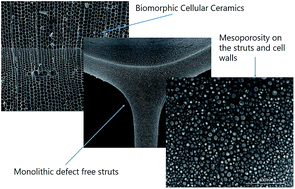
In the current work, we present the fabrication of a highly porous ceramic component by infiltrating a preceramic polymer to a carbon template derived from inert thermolysis of pine wood. Aspects on rheological processing parameters, evolution of mechanical strength, phase and microstructure with pyrolysis temperature, and the distribution of carbon have been studied in detail. These materials were found to be stable at high temperatures without any deformation in the biomorphic structure, and possessed excellent porosity and strength. An interesting find is the exhibition of a unique hierarchical pore structure in the form of macroporous cells and mesoporous cell walls. Such structures can allow high flow rates of liquid feed/reactive gases as well as provide numerous sites for catalytic reactions and/or adsorption.
:
1 for all experiments. CB templates were submerged in the polymer slurry and vacuum infiltrated. After first infiltration, the excess slurry was wiped off. The samples were dried overnight in an oven, followed by crosslinking in a muffle furnace at 200 °C for 1 h. CB templates infiltrated once in polymer solution and cross-linked at 200 °C were abbreviated as X1. The samples were subsequently infiltrated and crosslinked for 2, 3, 4 and 5 cycles, which were denoted as X2, X3, X4 and X5 respectively. All of the crosslinked samples were pyrolyzed in an alumina tubular furnace with flowing argon gas. The pyrolysis temperature was varied from 900–1100 °C. Fig. 1 shows the general schematic for the preparation of biomorphic SiOC ceramics.
Rheological behaviour of the slurries was measured at varying shear rates (MCR 51, Anton Paar, Austria) to determine the flow properties. FTIR absorption spectra of the polymer were recorded in transmission mode using Perkin-Elmer FTIR (Spectrum RX-I) spectrophotometer in the range 4000–400 cm−1. Thermal behaviour of the cross-linked polymer precursors were characterized by differential scanning calorimetry (DSC) and thermogravimetric analysis (TGA) (NETZSCH STA, Germany). The microstructural features of the pyrolyzed samples were analysed by high resolution field emission scanning electron microscopy (FESEM) (FEI Nova NanoSEM, Eindhoven, NL). The phase composition of the pyrolyzed samples were determined by X-ray diffraction (XRD) using nickel filtered Cu Kα radiation (Rigaku Ultima-IV, Japan). Geometrical density was calculated by measuring the sample exterior volume and weight. The cellular ceramics were pulverized in a mill (Spex, 8000M, Metuchen, NJ, USA), and the resulting powders were used to find out the specific gravity of the ceramic using a pycnometer and kerosene as the medium. The amount of porosity and the pore size distributions in biomorphic SiOC ceramics were measured by Hg porosimetry (PoreMaster 33, Quantachrome, USA). N2 adsorption–desorption isotherms were collected at 77 K with relative pressure p/p0 ranging from 0.05 to 0.99 (Autosorb-iQ, Quantachrome, USA). Samples were outgassed at 200 °C overnight before analysis. The specific surface area was determined by the Brunauer–Emmet–Teller (BET) method in the range 0.05 < p/p0 < 0.30. The total pore volume was estimated from the amount of N2 adsorbed at p/p0 = 0.99. Compressive strength of the biomorphic porous ceramics pyrolyzed at different temperatures (900–1100 °C). The measurement was carried out with a crosshead speed of 0.2 mm min−1 (Hounsfiled H10KS, Tinius Olsen, UK) with the loading direction being parallel to the main pore channels of the wood structure (out-of-plane loading). For each specimen 20 samples were tested and the average compressive strength was reported.
:
1 also showed shear thinning behaviour, which was chosen as the working concentration.
![]() | ||
| Fig. 2 General morphological features of the pinewood derived carbon template; (a) low magnification, (b) high magnification, where the different types of porosity can be observed. | ||
The gradual evolution of the pore channels with progressive infiltration of the preceramic polymers, followed by crosslinking at 200 °C for 2 h can be seen in Fig. 3. Fig. 3a shows the general microstructure of the porous wooden template indicating the channel pores, which exhibited a thin layer like deposition after single infiltration with the PMS polymer (sample X1, Fig. 3b). Microstructure of the carbon templates infiltrated with the preceramic polymer and crosslinked with 2, 3, 4, and 5 infiltration cycles can be seen in Fig. 3c–f, respectively (samples X2, X3, X4, X5). One can easily infer from the micrographs (Fig. 3b–f) that with increase in the number of infiltration cycles, the pore channels of the wood template got increasingly filled up; the polymer blocked the pore channels, possibly restricting efficient penetration of the liquid polymer to the interior regions of the channel. A closer look at the singly infiltrated specimen (sample X1) pyrolyzed at 900 °C indicated homogeneous coating of the polymer (Fig. S2a†), with almost all of the pore channels open (Fig. S2b†). On the contrary, the X5 sample of similar history exhibited highly blocked pore channels (Fig. S2c†). Interestingly the coating thickness of the struts were fairly similar to that of the X1 samples. But the additional infiltration cycles progressively got deposited in the pore channels itself (Fig. S2d†). Based on the above observations, the polymer to solvent ratio of 1
:
1 and single infiltration (X1 series) of the templates with the polymer was carried out, which showed excellent coating of the polymer as can be seen from the micrographs longitudinally aligned to the pore channels (Fig. 4b) as well as transverse to the pore channels (Fig. 4a). These coated samples were subsequently pyrolyzed at 900, 1000, and 1100 °C in flowing Ar atmosphere.
![]() | ||
| Fig. 4 Scanning electron micrographs of CB templates with single PMS infiltration; (a) view transverse to the major pore channels, (b) parallel to the major pore channels. | ||
Typically, the wooden template possessed bulk density (BD) of 0.125 g cc−1. The average BD of PMS coated CB pyrolyzed at 900 °C was 0.212 g cc−1 which increased slightly to 0.247 for 1000 °C pyrolysis, and 0.262 g cc−1 for 1100 °C. The weight loss from the cross linked stage to the pyrolyzed state was about 26% (for 900 °C pyrolysis) to 29% (for 1100 °C). The general weight loss during pyrolysis of the PMS polymer was about 21%, consistent with the literature values.24 The additional weight loss of 5–8% can be ascribed to the weight loss of the carbon template. The shrinkage of the pyrolyzed monoliths was anisotropic with the shrinkage transverse to the main pore channel directions being higher and more prominent as compared to that in the longitudinal direction.
The pyrolyzed cellular SiOC ceramics were crushed in a mill, and X-ray diffractograms were recorded. Fig. 5a shows the XRD patterns of the X1 samples pyrolyzed in the temperature range of 900, 1000, and 1100 °C, denoted as X1-9, X1-10, and X1-11, respectively. The patterns exhibited largely amorphous nature of the ceramics. Presence of nanodomains of SiO2 can be observed as a very broad hump at 2Θ of 25°. These results are fairly consistent with that observed in the literature for polysilsesquioxane derived silicon based ceramics.24 The additional carbon in this system (due to the carbon phase of the biomorphous templates) doesn't cause any discernible change in the phase patterns. Such results have also been interpreted as characteristic peak of the porous carbon template and the amorphous SiO2.24 The FTIR spectrographs (Fig. S3, ESI†) also indicated features that are consistent with the formation of silicon oxycarbide amorphous ceramics. Fig. 5b shows the effect of pyrolysis temperature of the cross-linked samples on the apparent porosity and compressive strength. All of the pyrolyzed samples showed open porosity in excess of 75% (∼80% for samples pyrolyzed at 1000 and 1100 °C). Similar porosity have been reported in the literature for various system.14,17,19,25,26 Better densification of the struts in SiOC pyrolyzed at higher temperature increases the porosity marginally. The compressive strength of the X1-9 samples was 0.5 MPa, which increased about 9 times to 4.5 MPa for the X1-10 and X1-11 samples, when the pyrolysis temperature was raised to 1000–1100 °C. Literature suggests that the strength of cellular materials with porosities greater than 70% is mostly related to the bending or breaking strength of the cell walls.27 The improvement in strength in the current work thus can be ascribed to the sintering of the struts and ceramization of the Si-ceramics matrix.
![]() | ||
| Fig. 5 (a) X-ray diffraction patterns, and (b) Porosity and Compressive strength measurement for X1 samples pyrolysed at various temperatures (900–1100 °C). | ||
Microstructural investigation was done on the strut junctions of the pyrolyzed SiOC. The SiOC sample (X1-9) pyrolyzed at 900 °C exhibited defect free struts of thickness in the range of 1 μm (Fig. S4a, ESI†). It can be seen that two layers of the ceramic coat in the existing carbon based biomorphous strut that has shrunk considerably due to the pyrolysis process. The interior of the X1-9 sample was featureless (Fig. S4b, ESI†). In the literature, cellular ceramics of comparable dimension have been fabricated, but with no common walls between the biomorphic cell channels. In gas infiltration based (Si or SiO gas) biomorphic SiC ceramics, the overall structure has appeared as a combination of many individual cylindrical pore channels held together.2,19 The current results, on the contrary, exhibit excellent homogeneity of SiOC ceramics with geometrical array of pore channels with pore walls that are common to contiguous cells. Notwithstanding the observation of distinctly monolithic cellular structure, it is important to understand the distribution of the carbonaceous phase in the ceramic. The elemental distribution of C and Si by energy dispersive spectrometry (EDS) in the SEM was performed. It must, however, be borne in mind that EDS analysis of the light elements, such as O and C, in the SEM column is difficult. While higher accelerating voltage improves signal intensity for electron imaging, the X-ray generation for the light elements generally decrease with voltage. As an optimized condition, 10 kV accelerating voltage was used for the analysis. Fig. 7a reveals the view of the interior of a PMS coated and pyrolyzed cellular structure cut longitudinal to the major pore channels of the wood (the centre of the ridged structures expose the wood interior). The sides of the ridge and the trough regions are uniformly coated with PMS derived SiOC. From the elemental distribution map of C by EDS it is amply clear that the core of the ridges show intense C signal with gradual decrease in intensity as we move away from the core (Fig. 7c). Interestingly, the Si elemental mapping signals were quite complementary to that of C (Fig. 7d); the regions of considerable C signal showed negligible Si content, and the Si signal gradually increased on both sides of the ridges. Some of the shadowy artefacts are present (Fig. 6b) due to the fact that the specimen surface is not flat (it has corrugated morphology), which complicates the collection of characteristic X-rays. Generally, the X-ray detector is positioned at a very low angle to the sample plane, while the electron detector is usually kept normal. The generated X-ray may have found obstructions due to the ridged structure of the biomorphic channels, thus creating shadow-like artefacts. Nevertheless, it is very clear that the ceramic forms as a uniform coating around the base wood derived CB template without forming any cracks and laminations during the pyrolysis process. It is to be noted that the process forms a uniform coating of materials with molecular units of Si–O bonds on a carbonaceous template. Thus, unlike Si based vapour phase infiltration, reactions with the struts to form another ceramic is not expected. Rather a ceramic coating can be formed around a carbon based template that can be stable in intermediate temperature uses. The process outlined in this work is generic in that by changing the polysilsesquioxanes to polycarbosilanes, coatings of SiC ceramics on biomorphic structures can be made.
The X1-10 samples exhibited geometry and integrity of the struts similar to X1-9. This is a major feature in that the microstructure of the samples appeared as monolithic cell walls, mimicking the structure of a biomorphous template (Fig. 7a). On first sight, these struts appear featureless (Fig. 7a). However, a close look at higher magnification on the strut region exhibited fine nanostructured precipitates (Fig. 7b). Such structures were not observed in the interior walls of X1-9 samples (Fig. S4b, ESI†). These are interesting features in that for catalytic reactions more of the exposed ceramic substrate surface is essential for higher efficiency and selectivity. Higher magnification images of the strut surface exhibited uniformly distributed nanostructured precipitates (Fig. 7b). The X1-11 sample exhibited similar defect free strut details (Fig. 7c) along with the nanostructured precipitates (Fig. 7d). Only that the size distribution of the nanoprecipitates was bimodal. Interestingly some of the precipitates appeared to have grown in size. However, many such precipitates still remained in the extremely fine (<10 nm) range. One can also observe that the enlarged precipitates (in the range of 100–200 nm range) were clusters of the fine sub-10 nm precipitates. The specific surface area (SSA) must have increased considerably due to the presence of these structures. The exact mechanism for the formation of such hierarchical porous precipitates is an interesting question, which will be addressed elsewhere. We theorize that the chemistry at the interface of the carbon template (wood) and the coating (SiOC ceramics) leads to slightly faster phase separation of the amorphous SiOC ceramic coating phase (as compared to the phase separation tendency of a pure PMS derived SiOC ceramics), thus enhancing the formation of numerous SiO2 nanodomains, and their growth results in the nanoprecipitates. Nevertheless, it is amply clear from the micrographs that in the current process, the cellular structure is efficiently replicated, and that the available surface area could be considerably enhanced.
The biomorphic ceramics possessed macroporous cellular structure and nanostructured precipitates in the cell walls that impart additional porosity of much finer size (mesoporous). To understand the finer porosity, BET adsorption experiments was performed. Nitrogen adsorption isotherms indicated SSA of 99 m2 g−1 for X1-11 samples (cf. Table 1), which is exceptionally high for a bulk material (note that the adsorption experiment was conducted on a few broken pieces of the C–SiOC material). The isotherms of X1-11 had a unique and rare feature of multiple hysteresis curves in the adsorption–desorption branches indicating presence of pores of different size ranges (Fig. 8a). Nguyen et al.28 predicted interpore connectivity and hysteresis in gas adsorption of porous materials using a three pore model of different sizes, based on which the current results can be explained. The isotherm fits closely with a model consisting of interconnected pores of different sizes, similar to the pore morphology of the wood template (cf. Fig. 2b).29 The presence of hysteresis is attributed to capillary condensation in mesopores (pore size > 2 nm and <50 nm).30 The three distinct hysteresis loops can be associated with the filling and emptying of pore of increasing size range. The corresponding BJH plot, illustrating the pore size distribution of X1-11 (Fig. 8b), is consistent with the multiple pore model discussed above. The t-plot for the micropore analysis also confirmed the presence of mesopores (not shown). The total pore volume in the sample came out to be 0.35 cc g−1. Thus, overall the BET analysis confirms the presence of hierarchical pore structure in the biomorphic SiOC ceramics, corroborating the microstructural evidence seen in Fig. 7.
| Sample ID | True density (g cc−1) | SSA (m2 gm−1) | Porosity (% TD) | Compressive strength (MPa) |
|---|---|---|---|---|
| X1-9 | 1.8 | 25 | 75.6 | 0.5 |
| X1-10 | 1.86 | 64 | 79.1 | 4.5 |
| X1-11 | 1.92 | 99 | 78.7 | 4.5 |
![]() | ||
| Fig. 8 Porosity of the biomorphic ceramics; (a) N2 adsorption isotherms indicating multiple hysteresis curves, (b) BJH pore size distribution of the biomorphic ceramics. | ||
Hg intrusion porosimetry (MIP), to evaluate the macroporosity, indicated pore diameter in the range of 10 μm. The contribution of pore diameters in the size range of 100 μm is due to the convolution of the pressure/equivalent diameter pore size spectrum of the long biomorphic pore channels often measuring higher than 100 μm (cf. Fig. 4b). Fig. 9a shows the volume of Hg intruded (dV/d(log
D)) with respect to the pore diameter present in the pyrolyzed samples. The X1-9 sample showed intruded volume of 2.6 cc g−1, whereas for the X1-11 samples it was much higher at 3.6 cc g−1, consistent with the higher open porosity (Table 1).
![]() | ||
| Fig. 9 (a) Mercury intrusion porosimetry of the C–SiOC ceramics, (b) constant heating rate oxidation by thermogravimetry. | ||
Further, constant heating rate (CHR) oxidation tests by thermogravimetry in a flowing oxygen environment was performed by taking a few broken pieces of the C–SiOC ceramics (Fig. 9b). It clearly showed that the carbon template gets completely oxidized at a temperature lower than 450 °C. The pyrolyzed SiOC ceramic powders (derived from pure PMS after pyrolysis at 1100 °C) lose weight over 550 to 600 °C, presumably due to the loss of free carbon in the system. The SiOC coated biomorphic ceramics lose weight in the range of 500 to 550 °C. In addition, the total weight loss is only 6% higher for the biomorphic C–SiOC ceramics than pure SiOC. We must add here that since the biomorphic templates were broken to accommodate the pieces in the thermogravimetry sample holder, the oxidation is highly overestimated as compared to the unbroken C–SiOC structures. The broken pieces expose the carbonaceous strut interiors (cf. Fig. 6b), thus accelerating oxidation loss. The unbroken C–SiOC ceramics are, however, expected to show much better oxidation resistance.
There are no major works in the literature, except for the report by Zollfrank et al.,20 to place the current results in context. However, the work clearly demonstrates that preceramic polymer infiltration can be carried out to fabricate C–SiOC ceramics, and that the morphology of biomorphic porous templates can be successfully replicated to a high temperature resistant ceramic monolith. The approach has the versatility of using other Si-containing polymer resins to be coated by adjusting polymer rheology to derive appropriate Si-based ceramics. The notable advances in this work include an order of magnitude increase in compressive strength when the ceramics were pyrolyzed at higher temperatures, exhibition of multimodal hierarchical porosity in the porous monoliths, exceptional retention of the biomorphic structures in the resulting ceramic component, and improved oxidation resistance as compared to the carbon template.
Footnote |
| † Electronic supplementary information (ESI) available. See DOI: 10.1039/c6ra21206a |
| This journal is © The Royal Society of Chemistry 2016 |