DOI:
10.1039/C6RA21199B
(Paper)
RSC Adv., 2016,
6, 110247-110254
Arsenic speciation analysis in environmental water, sediment and soil samples by magnetic ionic liquid-based air-assisted liquid–liquid microextraction
Received
23rd August 2016
, Accepted 3rd November 2016
First published on 4th November 2016
Abstract
A novel magnetic ionic liquid-based air-assisted liquid–liquid microextraction (MIL–AALLME) technique was developed for highly selective separation of trace amounts of arsenite and arsenate species in various environmental water, sediment and soil samples prior to its determination by graphite furnace atomic absorption spectrometry (GFAAS). This highly efficient separation method combines the advantages of magnetic ionic liquid (MIL) and air-assisted liquid–liquid microextraction (AALLME) for the first time. The MIL, 1-butyl-3-methylimidazolium tetrachloroferrate ([C4mim][FeCl4]), was used as the extractant to simplify the microextraction procedure by magnetic separation. The variables of interest in the MIL–AALLME method, such as pH values, amounts of chelating agent, types and amounts of MIL, salt effect and number of extraction cycles were assessed and optimized systematically. Under optimal extraction conditions, the MIL–AALLME method provided a good linear dynamic range (LDR) in the range of 0.04–10.0 μg L−1 and the determination coefficient was 0.9991. Using the present method, the limit of detection (LOD) and the relative standard deviation (RSD) for seven replicate measurements of 2.0 μg L−1 of As(III) was 0.029 μg L−1 and 2.5%, respectively. The developed methodology was successfully used for inorganic arsenic speciation studies in different environmental water, sediment and soil samples with satisfactory results ranging from 93.0 to 108.5% for the spiked samples. In order to confirm the accuracy of MIL–AALLME, five standard reference materials such as GBW08605 simulated natural water and GBW07309 sediment were analyzed, and the analyzed values found by using the present methodology were in statistic agreement with the certified values.
Introduction
In recent years, speciation analysis has become an extremely active research field in analytical chemistry because the toxicological and physiological effects of trace elements in an environmental system depend critically on their chemical forms. Arsenic has been identified as a public health problem because it has serious toxic effects even at low exposure levels and is widespread in the environment.1 It is generally recognized that arsenic predominantly occurs in inorganic species such as AsH3, As(III) and As(V), and may form several organic forms such as methyl and dimethyl arsenic compounds. It is well known that the inorganic species of As are more toxic than organic arsenic compounds, and the toxicity of As(III) is 25–60 times greater than that of As(V).2–4 Due to the toxic nature of As(III) especially, the speciation analysis of inorganic arsenic in the majority of environmental samples is of great significance for the public health safety.
In general, a series of instrumental techniques such as electro-thermal atomic absorption spectrometry (ETAAS),5,6,8,9 atomic fluorescence spectrometry (AFS),7 hydride generation-graphite furnace atomic absorption spectrometry (HG-GFAAS),10 inductively coupled plasma-mass spectrometry (ICP-MS),11,12 dielectric barrier discharge-atomic emission spectrometry (DBD-AES),13 hydride generation-inductively coupled plasma-optical emission spectrometry (HG-ICP-OES)14 and hydride generation laser-induced breakdown spectrometry (HG-LIBS)15 have been widely applied for direct determination of total arsenic in different natural samples. However, direct measurement of trace arsenic by the above-mentioned instrumental methods is limited due to insufficient sensitivity and complex natural sample matrix.
To obtain speciation data, methodologies of separation and preconcentration are also required prior to the spectrometric measurement of trace inorganic arsenic. Conventional sample preparation methods including co-precipitation,16 solid phase extraction (SPE),17,18 cloud point extraction (CPE),19 liquid–liquid extraction (LLE),20 solid phase microextraction (SPME),21 dispersive liquid–liquid microextraction (DLLME)22,23 and dispersive-micro-solid phase extraction (D-μ-SPE)24 are widely utilized in microextraction and separation of trace level of inorganic arsenic species from real complex matrix. Among the conventional pretreatment techniques, DLLME has emerged as a useful and efficient microextraction method for the isolation of inorganic arsenic forms due to the advantages include sensitive, simplicity of operation and relatively high enrichment factor. However, the classical DLLME technology also has its drawbacks and the main disadvantage is the necessity of using a large quantity of water-miscible organic dispersive solvents.25 The excess water-miscible organic dispersive solvents in sample solution will lead to increase the solubility of target analytes into solution which commonly results to relatively low partition coefficient of the target analytes.
To overcome the above mentioned shortcomings, some disperser solvent-free DLLME methodologies including gas-assisted dispersive liquid-phase microextraction (GA-DLPME),26 vortex-assisted DLLME (VA-DLLME),27 ultrasound-assisted DLLME (UA-DLLME),28 and magnetic stirring-assisted DLLME (MSA-DLLME)29 have been proposed. Recently, Farajzadeh and Mogaddam reported using the process of aqueous sample withdrawal and ejection to assist the dispersion of the extractant into sample solution,30 comparing to classical DLLME method, which was a dispersive solvent-free liquid-phase microextraction method, termed as air-assisted liquid–liquid microextraction (AALLME). The AALLME method has been used for the microextraction and enrichment of trace levels of inorganic pollutants31,32 and residual pesticides in various environmental water and food samples.30,33,34 In addition, an important technical aspect of AALLME is the isolation and collection of organic phase containing the target analytes from test solution. Typically the phase separation step is often accomplished by centrifugation, which is considered to be the most time-consuming process throughout the AALLME procedure, a process which prolongs analysis time. However, the latest developments in the use of magnetic isolation based on magnetic ionic liquid (MIL) have provided the ability to reduce the time of sample pretreatment.35 Use of MIL as extraction solvent constitute a quite great advancement in sample preparation. Unlike conventional ionic liquids-DLLME, where centrifugation step is often required to separate the ionic liquids from water phase, MIL could be easily harvested from aqueous phase utilizing an external magnet. However, to the best of our knowledge, the utilization of MIL coupled with the AALLME technology for separation, enrichment and measurement of trace inorganic arsenic species has not been reported in literature. The application of MIL in AALLME would be another “green”, innovative, simple and effective sample pretreatment method.
The objective of the present study is to propose a rapid and simple microextraction approach, magnetic ionic liquid-based air-assisted liquid–liquid microextraction (MIL–AALLME), as an alternative novel methodology for the separation and preconcentration of inorganic arsenic species in environmental water, sediment and soil samples prior to its graphite furnace atomic absorption spectrometric determinations. The variables of interest in the MIL–AALLME method, such as pH values, amounts of chelating agent, types and amounts of MIL, salt effect and number of extraction cycles were assessed and optimized systematically, and the analytical characteristics of the proposed methodology was investigated in detail.
Experimental
Apparatus
The arsenic determination was performed with an AAnalyst 800 model atomic absorption spectrometer (Perkin Elmer, USA) equipped with Zeeman-effect background correction device in this study. An arsenic hollow cathode lamp operating at 6 mA and a wavelength of 193.7 nm with a spectral bandwidth of 0.7 nm was used as the radiation source. The optimum instrumental conditions are summarised in Table 1. A 100 kHz ultrasonic water bath with temperature control (Kunshan Ultrasound Instruments Company, China) was used for the ultrasonic treatment. Multiwave 3000 XF100 (Anton Paar, Austria) microwave digestion system was utilized for digestion of soil and sediment samples. The pH of aqueous solution was controlled by a Delta 320 pH-meter with a glass calomel electrode (Mettler-Toledo, Zurich, Switzerland).
Table 1 Operation conditions of GFAAS
| Parameters |
| Lamp current |
6 mA |
| Wavelength |
193.7 nm |
| Slit |
0.7 nm |
| Measurement mode |
Peak area |
| Chemical modifier |
0.005 mg Pd(NO3)2 + 0.003 mg Mg(NO3)2 |
| Ar flow rate |
250 mL min−1 (stopped during atomizing) |
| Sample volume |
20 μL |
![[thin space (1/6-em)]](https://www.rsc.org/images/entities/char_2009.gif) |
| Temperature program |
| Dry1 |
110 °C (ramp 1 s, hold 30 s) |
| Dry2 |
130 °C (ramp 15 s, hold 30 s) |
| Pyrolysis1 |
600 °C (ramp 10 s, hold 10 s) |
| Pyrolysis2 |
800 °C (ramp 5 s, hold 10 s) |
| Atomization |
2200 °C (ramp 0 s, hold 3 s) |
| Cleaning |
2400 °C (ramp 1 s, hold 3 s) |
Standard solution and reagents
All chemicals in this work were of high purity available or at least of analytical grade. To prevent contamination, all glasswares in this work were kept in 10% (v/v) nitric acid for at least 24 h and then rinsed three times with ultrapure water before use. Ultrapure water (18.2 MΩ cm resistivity at 25 °C) obtained using a Milli-Q Element water system (Millipore Corporation, USA) was utilized to prepare solutions throughout the experiment. The stock solutions (1000 mg L−1) of As(III) and As(V) were prepared by dissolving appropriate amount of Na3AsO3 and As2O5 (Sigma-Aldrich, USA) in ultrapure water and then stored in the dark at 4 °C, respectively. Working standard solutions were obtained daily by stepwise dilution of the stock standard solution. Three types of magnetic ionic liquids including [C4mim][FeCl4], [C6mim][FeCl4] and [C8mim][FeCl4] were purchased from Chengjie Chemical Co. LtD, China. The ammonium pyrrolidine dithiocarbamate (APDC) solution was prepared fresh daily by dissolving appropriate amount of APDC (AR, Aladdin Reagent Corporation, China) in ultrapure water prior to use.
Extraction procedures
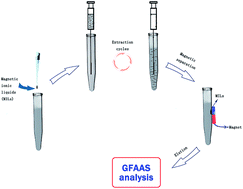
The extraction procedure of the MIL–AALLME is shown in Fig. 1. A total volume of 10 mL of sample solution spiked with 2 μg L−1 of As(III) and As(V) was placed in a 15 mL centrifuge tube with conical bottom. The aliquots 10 mL sample solution containing 0.40 mg APDC was adjusted to pH 3.5 by using diluted nitric acid/ammonia. Then, 75 mL of magnetic ionic liquids ([C4mim][FeCl4]) as extraction solvent was quickly added to the centrifuge tube. The mixture was rapidly withdrawn and was then rapidly injected into the tube (10 times) via syringe needle to accelerate the dispersion of magnetic ionic liquids and to enhance the microextract of As(III)–APDC complex. Subsequently, an external magnetic field was held around the tube to rapidly collect and isolate the MIL, and the aqueous phase was discarded carefully. Then 75 μL of 0.1 M HNO3 in ethanol (1
:
1, v/v) was added to reduce its viscosity and facilitate sample handling. Finally, 20 μL of the enriched phase was removed using a 50 μL microsyringe prior to GFAAS measurements.
 |
| | Fig. 1 Schematic setup for the magnetic ionic liquid-based air-assisted liquid–liquid microextraction (MIL–AALLME) procedures. | |
Samples preparation
Water samples. Different environmental water samples including river water (Tiesha River, Hangzhou, China) and pond water (Huajiachi Lake, Hangzhou, China) were collected in a 500 mL polyethylene bottles, respectively. Tap water was collected from the private household around the downtown campus of Xiacheng District (Hangzhou, China) after running for approximately 30 min. Before MIL–AALLME procedure, all the water samples above were filtered with a 0.45 μm cellulose acetate membrane filter to remove any insoluble particulate, and then all the water samples were stored in a refrigerator at 4 °C until analysis.In order to measure the total inorganic arsenic (As(V) and As(III)) in different environmental water samples, 20 μL of 1% (w/v) Na2S2O3 solution and 20 μL of 0.5% (w/v) KI solution were added to the test solution (10 mL) for the reduction of arsenate to arsenite. Then, the sample solution was allowed to stand at room temperature for 5 min to ensure complete reduction process. After reduction, the MIL–AALLME method was carried out and the determination for the total inorganic arsenic concentration (As(V) and As(III)) was obtained. As(V) concentration in test solution could be calculated by the difference between the total inorganic arsenic concentration and the As(III) concentration.
Soil and sediment samples. Soil sample A was collected from the plow layer of agricultural fields at the suburb of Hangzhou City, China. Soil sample B1, B2 and B3 were collected at upper, middle and lower reaches of the Han River in Hubei Province, China, respectively. Sediment sample was collected from Xixi wetland in Hangzhou City, China. The collected soil and sediment samples were dried in an oven at 40 °C during 5 days to remove organic trace and humidity. After that, the pretreated samples were sufficiently ground using an agate pestle and mortar to a fine powder and then sieved using a nylon 180 μm sieve. The resulting samples were stored in polyethylene flasks and kept at 4 °C in a dark environment until required for analysis.Total As in soil and sediment samples was measured by reducing the As(V) to As(III) and performing the MIL–AALLME process. 0.2 g of the soil and sediment samples was weighed and transferred to the PTFE reactor. Then, 4 mL of 1
:
1 HNO3
:
HCl mixture, 2 mL H2O2 (30%) and 0.2 mL HF were added to the PTFE reactor and the natural samples was digested by microwave digestion system. The optimized microwave digestion program was carried out as follows: 600 W for 10 min (10 min of ramp), 800 W for 10 min (10 min of ramp) and 0 W for 15 min (cooling). After that, the PTFE reactor was cooled, and then volumes of 0.5 mol L−1 KI (5 mL) and 0.5 mol L−1 Na2S2O3 (1 mL) solutions were added to the residual solution for the reduction of As(V) to As(III) with microwave assistant. Finally, the total arsenic concentration was evaluated by the MIL–AALLME procedure given above.
For the determination of As(V) and As(III), 0.2 g of the soil and sediment samples were accurately weighed inside of a 50 mL centrifuge tube and 15 mL of the extraction solution (0.3 mol L−1 of phosphoric acid and 0.1 mol L−1 of ascorbic acid) was added to the tube. The extract of As(V) and As(III) obtained after 30 min of sonication at 50 °C was centrifuged at 5000 rpm for 4 min. After that, the obtaining supernatant containing of As(V) and As(III) was filtered with a 0.45 μm cellulose acetate membrane filter and then the filtered supernatant was separated into two portions for following studies. In order to obtain As(III) concentration, an aliquot of filtered supernatant was diluted to volume and subjected to the MIL–AALLME procedure to measure As(III). On the other hand, volumes of 0.5 mol L−1 KI (5 mL) and 0.5 mol L−1 Na2S2O3 (1 mL) solutions were added to another aliquot of filtered supernatant for the reduction of As(V) to As(III) with microwave assistant. Finally, the total inorganic arsenic concentration was evaluated by the MIL–AALLME procedure given above. The As(V) concentration was calculated by subtracting the As(III) concentration from the total inorganic arsenic.
Results and discussion
In this research, MIL–AALLME combined with GFAAS was established for separation of trace inorganic arsenic species from various environmental waters, soils and sediments. To obtain satisfactory sensitivity and precision, the influence of some significant factors such as pH of test solution, amounts of chelating agent, type and volume of magnetic ionic liquids, number of extraction cycles, salt effects and matrix effects were assessed and optimized.
Effect of pH
In general, the pH of aqueous phase plays a critical role in the metal-chelate formation and the subsequent extraction.38 The influence of pH on the MIL–AALLME separation of inorganic arsenic species was investigated in the pH range of 1.0 to 8.0 according to the general procedure. Fig. 2 depicts the effect of change in pH on the extraction efficiency of inorganic arsenic species. As could be seen, the extraction recovery of As(III) was increased rapidly with increasing solution pH from 1.0 to 3.0, and kept nearly constant in the pH range of 3.0–4.0, then was decreased with further increasing pH from 5.0 to 8.0, while the extraction recovery of As(V) constantly remain in the studied pH range. This difference therefore makes it possible to selectively microextract As(III) from As(V) at pH of 3.5. Hence, the pH of 3.5 was selected for separation of inorganic arsenic species.
 |
| | Fig. 2 Effect of pH on the speciation of As(III) and As(V) obtained from MIL–AALLME. Conditions: sample volume, 10 mL; concentration of As(III) and As(V), 2.0 ng mL−1; [C4mim][FeCl4], 75 μL; amount of APDC, 0.40 mg; extraction cycles, 10 times. | |
Effect of APDC amount
In MIL–AALLME methods, the amount of ammonium pyrrolidine dithiocarbamate (APDC) is one of the key factors for selective extraction As(III) from As(V). The influence of APDC amounts on the separation of inorganic arsenic species was investigated in the range of 0.1–0.6 mg. The experimental results showed that the extraction recovery of As(III) was increased by increasing the APDC amount from 0.1 to 0.3 mg, and then kept nearly constant to 0.6 mg. For further studies, the amount of 0.4 mg APDC was found to be optimum for further studies.
Effect of the type and volume of magnetic ionic liquids
As is well known the structure of magnetic ionic liquids has a very important influence on its physicochemical properties, such as melting point, viscosity and hydrophobicity, which might affect the separation of inorganic arsenic species. For selection a suitable magnetic ionic liquid as extracting solvent in MIL–AALLME, some critical properties such as capability for arsenic species microextraction, low solubility in water, acceptable viscosity and high affinity to target analytes were considered. Three magnetic ionic liquids including [C4mim][FeCl4], [C6mim][FeCl4] and [C8mim][FeCl4] were carefully selected as potential extracting solvents because of their notable hydrophobic character. A comparison between the three types MIL of different alkyl chains showed that the long chain-based MIL, which is characterized by higher density and viscosity, is difficult to completely separate from aqueous solution using applying an external magnet. The results in Fig. 3 indicate that the extraction recoveries of As(III) obtained with the short chain-based MIL ([C4mim][FeCl4]) were higher than the recoveries obtained with the other long chain-based MIL. Therefore, [C4mim][FeCl4] was chosen as the extractant because of their relatively suitable viscosity among the three types of magnetic ionic liquids.
 |
| | Fig. 3 Effect of MIL type on the speciation of As(III) and As(V) obtained from MIL–AALLME. Conditions: sample volume, 10 mL; concentration of As(III) and As(V), 2.0 ng mL−1; sample pH, 3.5; MIL volume, 75 μL; amount of APDC, 0.40 mg; extraction cycles, 10 times. | |
The volume of magnetic ionic liquids could play a significant role on the separation and enrichment of inorganic arsenic species from the real complex matrix. The target inorganic arsenic species were selectively extracted with different volumes of [C4mim][FeCl4] within the range of 10–90 μL. As the results showed in Fig. 4, the extraction recovery increased when the volume of [C4mim][FeCl4] increased from 10 to 70 μL, and decreased a little when the volume of [C4mim][FeCl4] further increased to 90 μL. Therefore, an volume of 70 μL [C4mim][FeCl4] was marked as the optimum for MIL–AALLME process.
 |
| | Fig. 4 Effect of [C4mim][FeCl4] volume on the speciation of As(III) and As(V) obtained from MIL–AALLME. Conditions: sample volume, 10 mL; concentration of As(III) and As(V), 2.0 ng mL−1; sample pH, 3.5; amount of APDC, 0.40 mg; extraction cycles, 10 times. | |
Effect of the number of extraction cycles
In the air-assisted liquid–liquid microextraction method, the numbers of extraction cycles were defined as the number of the operation that the mixture of extraction solvent and sample solution was rapidly sucked into a 10 mL glass syringe and then ejected into the test tube. To investigate the influence of the number of extraction cycles on the separation of inorganic arsenic species, a series of experiments were examined with extraction cycles of 4, 6, 8, 10, 12 and 14. The results in Fig. 5 depict that by increasing the number of extraction cycles, the extraction recovery of As(III) is also increased till 8 times and then kept nearly constant. Therefore, 10 times of extraction cycles was found to be optimum for subsequent extraction studies. It is noted that this process could be performed in less than one minute, which would demonstrate the rapidity of the established methodology.
 |
| | Fig. 5 Effect of the number of extraction cycles on the speciation of As(III) and As(V) obtained from MIL–AALLME. Conditions: sample volume, 10 mL; concentration of As(III) and As(V), 2.0 ng mL−1; sample pH, 3.5; amount of APDC, 0.40 mg; [C4mim][FeCl4], 75 μL. | |
Effect of salt
To evaluate the effect of salt concentration on extraction efficiency of proposed MIL–AALLME procedure, various experiments were performed by adding different amount of NaCl (0–5%, w/v) while the other experimental conditions were kept constant. The observations showed that by salt addition up to 5% (w/v), the extraction recoveries of As(III) were almost remained constant. Therefore, salt addition had no significant influence on the MIL–AALLME performance in the studied concentration range, and all the extraction experiments carried out without adding salt.
Effect of coexisting ions
The effects of potentially interfering ions in environmental samples on the separation of trace inorganic arsenic species were investigated under the optimum conditions.43 In order to evaluate the possible analytical application of the recommended extraction method to natural samples, different amounts of concomitant ions were added individually to model solutions containing 2.0 ng mL−1 As(III). The tolerance limit of coexisting ions is defined as the largest amount making variation of less than 5% in the extraction recovery of As(III). The result of this study was presented in Table 2, and no significant influence on preconcentration and determination of trace As(III) was observed at the given level. According to the data obtained, this proposed microextraction procedure has high tolerance limits to alkaline, alkaline earth metal ions (K+, Na+, Mg2+, Ca2+, Ba2+), and anions (Cl−, NO3−, SO42−) since they have negligible interaction with APDC. However, some heavy metal ions such as Zn2+, Ni2+, Mn2+, Co2+ and Cu2+ can react with APDC to form hydrophobic complex, which could enter the competitive reaction with As(III). Therefore, the excessive chelating reagent (0.04 mg mL−1 APDC) was applied for this study. Taking into account the results and the additional selectivity inherent in GFAAS determination, the proposed microextraction procedure may be applicable to analysis of trace inorganic arsenic species in environmental samples.
Table 2 Effect of potential interfering ions on the determination of As(III)
| Interfering ions |
Ratio of interfering ions to the As(III) (w/w)a |
Recovery (%) |
| Concentration of As(III) is 2.0 μg L−1. |
| Na+ |
2 500 000 |
103.7 |
| K+ |
2 500 000 |
101.6 |
| Ca2+ |
1 000 000 |
99.4 |
| Mg2+ |
1 000 000 |
95.6 |
| Ba2+ |
1 000 000 |
97.5 |
| Co2+ |
2000 |
98.6 |
| Mn2+ |
2000 |
103.1 |
| Ni2+ |
2000 |
99.1 |
| Cu2+ |
2000 |
101.2 |
| Zn2+ |
2000 |
103.4 |
| Cd2+ |
2000 |
96.5 |
| Pb2+ |
1000 |
98.2 |
| Fe3+ |
400 |
103.6 |
| Cl− |
2 500 000 |
97.9 |
| SO42− |
2 500 000 |
96.4 |
| NO3− |
2 500 000 |
101.9 |
Analytical performance
In order to assess the figures of merit of the established MIL–AALLME–GFAAS method, some characteristics such as linear range, correlation coefficients and limits of detection (LOD) were all investigated under optimized speciation conditions and the data were summarized in Table 3. Under the optimum microextraction conditions, the calibration graph was linear with a correlation of coefficient (r) of 0.9991 at levels near the detection limits (0.04 ng mL−1) and up to at least 10.0 ng mL−1 As(III). The limits of detection (LOD) by the recommended procedure, which is defined as CLOD = 3Sd/m (where CLOD, Sd and m are LOD, standard deviation of the blank, and slope of the calibration graph, respectively), was calculated as 0.029 ng mL−1 for As(III). The limit of quantification (LOQ), calculated at a signal-to-noise of 10, was 0.097 ng mL−1 for As(III). The relative standard deviation (RSD) for seven replicate measurements of 2.0 ng mL−1 As(III) was 2.5%.
Table 3 Comparison of MIL–AALLME with some other reported microextraction techniques for arsenic determination
| Method |
Detection |
LODa |
RSD (%) |
LDRb |
Sample volume (mL) |
Ref. |
| Limit of detection (μg L−1). Linear dynamic range (μg L−1). Liquid–liquid microextraction. Ultrasound assisted emulsification of solidified floating organic drop microextraction. Solid phase extraction-solidified floating organic drop microextraction. Electrothermal vaporization-inductively coupled plasma mass spectrometry. UV-Vis spectrometry. In situ solvent formation microextraction. Dispersive-solidification liquid–liquid microextraction. Flow injection-hydride generation-inductively coupled plasma mass spectrometry. |
| MIL–AALLME |
GFAAS |
0.029 |
2.5 |
0.05–10 |
10 |
This work |
| SPME |
ICP-MS |
0.005 |
3.2 |
0.005–10 |
1 |
4 |
| LLMEc |
ETAAS |
0.002 |
4.1 |
0.01–3.8 |
5 |
8 |
| IL-DLLME |
ETAAS |
0.013 |
4.9 |
0.1–7.5 |
5 |
22 |
| USAE-SFODMEd |
ETAAS |
0.004 |
6.1 |
0.05–2 |
5 |
36 |
| DLLME |
GFAAS |
0.036 |
3.1 |
0.1–10 |
5 |
37 |
| SPE-SFODMEe |
ETV-ICP-MSf |
0.000046 |
6.3 |
— |
2 |
38 |
| CPE |
UV-Visg |
1.44 |
2.2 |
5–1500 |
50 |
39 |
| ISFMEh |
ETAAS |
0.006 |
4.78 |
0.02–0.25 |
10 |
40 |
| DSLLMEi |
ETAAS |
0.02 |
5.3 |
0.08–2 |
5 |
41 |
| SPE |
FI-HG-ICP-MSj |
0.05 |
2.0 |
0.5–50 |
— |
42 |
A comparison of this work with other different approaches reported in the literature for speciation of trace inorganic arsenic species in various natural samples by GFAAS is shown in Table 3. The presented MIL–AALLME method has low sample consumption and shorter extraction time in contrast to some other previous reported studies. Moreover, the proposed approach shows a LOD that is acceptable compared with other reported microextraction methods developed for arsenic measurement in real samples. Meanwhile, the RSD obtained by the proposed method is comparable to or better than IL-DLLME and USAEME. Generally, the linear dynamic ranges of the represented method are acceptable compared with other reported methodologies.
Analysis of real samples
In demonstrating the reliability of the proposed magnetic ionic liquid-based air-assisted liquid–liquid microextraction method, the proposed method was applied for the separation of trace inorganic arsenic species in various natural samples including tap water, pond water, river water, soil and sediment. The obtained analytical results for the original samples and for the spiked samples, to which known amounts of inorganic arsenic ions were added, are listed in Tables 4 and 5. In all cases the relative recoveries at different spiked levels were observed to be from 93.0 to 108.5%. The satisfactory recovering added inorganic arsenic species during the established method revealed no arsenic redox transformation between As(III) and As(V). The analytical results of inorganic arsenic species indicate that the complex matrices of these natural samples had very little influence on the separation of As(III) from As(V).
Table 4 Recovery of added inorganic arsenic species to different environmental water samples by MIL–AALLME–GFAAS method
| Samples |
Added (μg L−1) |
Found mean ± S.D.a (μg L−1) |
Recovery (%) |
| As(III) |
As(V) |
As(III) |
As(V) |
As(III) |
As(V) |
| Standard deviation (n = 3). |
| Tap water |
— |
— |
0.72 ± 0.03 |
0.89 ± 0.05 |
— |
— |
| 2.0 |
— |
2.58 ± 0.09 |
0.83 ± 0.04 |
94.9 |
93.3 |
| — |
2.0 |
0.69 ± 0.05 |
2.71 ± 0.10 |
95.8 |
93.8 |
| 2.0 |
2.0 |
2.84 ± 0.11 |
2.78 ± 0.09 |
104.4 |
96.2 |
| Pond water |
— |
— |
2.29 ± 0.09 |
3.45 ± 0.11 |
— |
— |
| 2.0 |
— |
4.31 ± 0.11 |
3.26 ± 0.09 |
100.5 |
94.5 |
| — |
2.0 |
2.36 ± 0.08 |
5.59 ± 0.13 |
103.1 |
102.6 |
| 2.0 |
2.0 |
4.12 ± 0.09 |
5.31 ± 0.15 |
96.0 |
97.4 |
| River water |
— |
— |
1.51 ± 0.05 |
3.07 ± 0.11 |
— |
— |
| 2.0 |
— |
3.49 ± 0.09 |
2.94 ± 0.08 |
99.4 |
95.8 |
| — |
2.0 |
1.52 ± 0.04 |
5.24 ± 0.13 |
100.7 |
103.4 |
| 2.0 |
2.0 |
3.67 ± 0.10 |
5.18 ± 0.14 |
104.6 |
102.2 |
Table 5 Recovery of added inorganic arsenic species to different soil and sediment samples by MIL–AALLME–GFAAS method
| Samples |
Added (μg g−1) |
Found mean ± S.D.a |
Recovery (%) |
| As(III) |
As(V) |
As(III) |
As(V) |
As(III) |
As(V) |
| Standard deviation (n = 3). |
| Soil sample A |
— |
— |
1.29 ± 0.03 |
3.47 ± 0.09 |
— |
— |
| 1.0 |
— |
2.31 ± 0.10 |
3.31 ± 0.11 |
100.9 |
95.4 |
| — |
1.0 |
1.20 ± 0.02 |
4.58 ± 0.13 |
93.0 |
102.5 |
| 1.0 |
1.0 |
2.41 ± 0.08 |
4.82 ± 0.10 |
105.2 |
107.8 |
| Soil sample B1 |
— |
— |
0.57 ± 0.02 |
2.18 ± 0.05 |
— |
— |
| 1.0 |
— |
1.48 ± 0.04 |
2.27 ± 0.07 |
94.3 |
104.1 |
| — |
1.0 |
0.61 ± 0.03 |
3.29 ± 0.09 |
107.0 |
103.5 |
| 1.0 |
1.0 |
1.65 ± 0.07 |
3.01 ± 0.11 |
105.1 |
94.7 |
| Soil sample B2 |
— |
— |
1.43 ± 0.02 |
3.87 ± 0.06 |
— |
— |
| 1.0 |
— |
2.61 ± 0.05 |
3.74 ± 0.04 |
107.4 |
96.6 |
| — |
1.0 |
1.52 ± 0.03 |
4.68 ± 0.10 |
106.3 |
96.1 |
| 1.0 |
1.0 |
2.52 ± 0.05 |
5.01 ± 0.13 |
103.7 |
102.9 |
| Soil sample B3 |
— |
— |
2.71 ± 0.06 |
5.67 ± 0.11 |
— |
— |
| 1.0 |
— |
3.89 ± 0.10 |
5.42 ± 0.09 |
104.9 |
95.6 |
| — |
1.0 |
2.94 ± 0.08 |
6.89 ± 0.13 |
108.5 |
103.3 |
| 1.0 |
1.0 |
3.97 ± 0.11 |
6.54 ± 0.10 |
107.0 |
98.1 |
| Sediment sample |
— |
— |
0.67 ± 0.01 |
0.87 ± 0.01 |
— |
— |
| 1.0 |
— |
1.74 ± 0.03 |
0.81 ± 0.01 |
104.2 |
93.1 |
| — |
1.0 |
0.71 ± 0.01 |
1.93 ± 0.02 |
106.0 |
103.2 |
| 1.0 |
1.0 |
1.61 ± 0.02 |
1.97 ± 0.03 |
96.4 |
105.3 |
Accuracy of the method
In order to validate the accuracy and validation of the proposed procedure, the method was applied to the separation of trace inorganic arsenic in two types of water standard reference materials (GBW08605 simulated natural water and GBW(E)080231 sea water) and three types of soil standard reference materials (GBW07402 soil, GBW(E)070008 soil, GBW07309 sediment). The analytical results were summarized in Table 6. As could be seen from Table 6, the analyzed values found by using MIL–AALLME–GFAAS for inorganic arsenic were in statistically agreement with the certified values. It can be concluded that the proposed method is accurate and free from systematic errors.
Table 6 Analytical results for total As in certified reference materials (mean ± S.D.a)
| Samples |
Found |
Certified value |
| Standard deviation (n = 3). |
| GBW(E)080231 (sea water), ng mL−1 |
52.8 ± 2.4 |
51.0 ± 2.6 |
| GBW08605 (simulated natural water), μg g−1 |
0.493 ± 0.005 |
0.500 ± 0.008 |
| GBW07402 (soil), μg g−1 |
13.9 ± 1.5 |
13.7 ± 1.8 |
| GBW(E)070008 (soil), μg g−1 |
73.4 ± 6.3 |
74.6 ± 7.1 |
| GBW07309 (sediment), μg g−1 |
8.31 ± 0.37 |
8.4 ± 1.4 |
Conclusion
The present work described the first use of MIL–AALLME coupled with GFAAS as a novel sample preparation method for the speciation of As(III) and As(V) in environmental water, soil and sediment samples. The proposed method is an environmentally-friendly, simple, precise, efficient, and sensitive procedure for the separation of trace inorganic arsenic species. The results obtained showed that the MIL–AALLME method, as a disperser-free version of DLLME, provided an economical and noticeable extraction clean-up in a few minutes. In addition, magnetic ionic liquid as green extraction solvent can be easily separated from the test solution by magnetic separation technology. The using of magnetic separation technology in classical AALLME based on novel magnetic ionic liquid offers incomparable merits such as simple operation, short separation time and rapid mass transfer between organic and aqueous phases. The combination of MIL–AALLME with GFAAS was a high-performance analytical methodology for trace measurement of inorganic arsenic species from various environmental water, sediment and soil samples with satisfactory accuracy and reproducibility.
Compliance with ethics requirements
Xiaojun Wang, Guoliang Xu, Peng Chen, Xueying Liu, Ye Fang, Siyu Yang, Guozhen Wang declare that they have no conflict of interest. This article does not contain any studies with human or animal subjects.
Acknowledgements
This work was supported by the Key Project of Research and Development Program of Zhejiang Province under Grant number 2015C03G2610002; and National University Students' Innovation and Entrepreneurship Training Program under Grant number 201511481009.
References
- J. E. Fergusson, Heavy elements: chemistry, environmental impact and health effects, Pergamon, Oxford, 1990 Search PubMed.
- A. Sarı and M. Tuzen, J. Hazard. Mater., 2009, 164, 1372–1378 CrossRef PubMed.
- A. Sarı and M. Tuzen, Sep. Sci. Technol., 2010, 45, 463–471 CrossRef.
- P. Li, X. Q. Zhang, Y. J. Chen, H. Z. Lian and X. Hu, Anal. Methods, 2014, 6, 4205–4211 RSC.
- A. de Jesus, A. V. Zmozinski, I. C. F. Damin, M. M. Silva and M. G. R. Vale, Spectrochim. Acta, Part B, 2012, 71, 86–91 CrossRef.
- A. Zhuravlev, A. Zacharia, S. Gucer, A. Chebotarev, M. Arabadji and A. Dobrynin, J. Food Compos. Anal., 2015, 38, 62–68 CrossRef CAS.
- X. Duan, J. Zhang and F. Bu, Spectrochim. Acta, Part B, 2015, 111, 87–91 CrossRef CAS.
- R. P. Monasterio and R. G. Wuilloud, J. Anal. At. Spectrom., 2010, 25, 1485–1490 RSC.
- A. V. Zmozinski, T. Llorente-Mirandes, I. C. Damin, J. F. López-Sánchez, M. G. R. Vale, B. Welz and M. M. Silva, Talanta, 2015, 134, 224–231 CrossRef CAS PubMed.
- E. M. Becker, M. B. Dessuy, W. Boschetti, M. G. R. Vale, S. L. Ferreira and B. Welz, Spectrochim. Acta, Part B, 2012, 71, 102–106 CrossRef.
- E. Bolea-Fernandez, L. Balcaen, M. Resano and F. Vanhaecke, Anal. Bioanal. Chem., 2015, 407, 919–929 CrossRef CAS PubMed.
- A. Sorbo, A. C. Turco, M. Di Gregorio and L. Ciaralli, Food Control, 2014, 44, 159–165 CrossRef CAS.
- Z. Zhu, H. He, D. He, H. Zheng, C. Zhang and S. Hu, Talanta, 2014, 122, 234–239 CrossRef CAS PubMed.
- M. Welna and A. Szymczycha-Madeja, Food Chem., 2014, 159, 414–419 CrossRef CAS PubMed.
- S. Ü. Yeşiller and Ş. Yalçın, Anal. Chim. Acta, 2013, 770, 7–17 CrossRef PubMed.
- M. Tuzen, D. Çıtak, D. Mendil and M. Soylak, Talanta, 2009, 78, 52–56 CrossRef CAS PubMed.
- G. Chen and T. Chen, Talanta, 2014, 119, 202–206 CrossRef CAS PubMed.
- K. Hagiwara, T. Inui, Y. Koike, M. Aizawa and T. Nakamura, Talanta, 2015, 134, 739–744 CrossRef CAS PubMed.
- S. Li, M. Wang, Y. Zhong, Z. Zhang and B. Yang, Spectrochim. Acta, Part B, 2015, 111, 74–79 CrossRef CAS.
- O. Muñoz, D. Vélez and R. Montoro, Analyst, 1999, 124, 601–607 RSC.
- Z. Mester, R. Sturgeon and J. Pawliszyn, Spectrochim. Acta, Part B, 2001, 56, 233–260 CrossRef.
- S. Rabieh, M. Bagheri and B. Planer-Friedrich, Microchim. Acta, 2013, 180, 415–421 CrossRef CAS.
- I. López-García, M. Briceño, Y. Vicente-Martínez and M. Hernández-Córdoba, Food Chem., 2015, 167, 396–401 CrossRef PubMed.
- A. Khaligh, H. Z. Mousavi, H. Shirkhanloo and A. Rashidi, RSC Adv., 2015, 5, 93347–93359 RSC.
- M. Li, J. Zhang, Y. Li, B. Peng, W. Zhou and H. Gao, Talanta, 2013, 107, 81–87 CrossRef CAS PubMed.
- M. Akhond, G. Absalan, T. Pourshamsi and A. M. Ramezani, Talanta, 2016, 154, 461–466 CrossRef CAS PubMed.
- Y. Zhang, Y. Zhang, Q. Zhao, W. Chen and B. Jiao, Food Anal. Method., 2016, 9, 596–604 CrossRef.
- X. Wen, S. Yang, H. Zhang and J. Wang, Anal. Methods, 2014, 6, 8773–8778 RSC.
- A. Golbabanezhadazizi, E. Ranjbari, M. R. Hadjmohammadi and H. Daneshinejad, RSC Adv., 2016, 6, 50710–50720 RSC.
- M. A. Farajzadeh and M. R. A. Mogaddam, Anal. Chim. Acta, 2012, 728, 31–38 CrossRef CAS PubMed.
- M. Ezoddin, K. Abdi and N. Lamei, Talanta, 2016, 153, 247–252 CrossRef CAS PubMed.
- G. Fakhriyan, H. Z. Mousavi and S. M. Sajjadi, Anal. Methods, 2016, 8, 995–1002 RSC.
- M. A. Farajzadeh, M. R. A. Mogaddam and H. R. Shahbaazi, Food Anal. Method., 2016, 9, 1096–1105 CrossRef.
- M. A. Farajzadeh, A. Mogaddam and M. Reza, J. Sep. Sci., 2016, 39, 1160–1167 CrossRef CAS PubMed.
- T. Chatzimitakos, C. Binellas, K. Maidatsi and C. Stalikas, Anal. Chim. Acta, 2016, 910, 53–59 CrossRef CAS PubMed.
- M. Asadollahzadeh, N. Niksirat, H. Tavakoli, A. Hemmati, P. Rahdari, M. Mohammadi and R. Fazaeli, Anal. Methods, 2014, 6, 2973–2981 RSC.
- P. Liang, L. Peng and P. Yan, Microchim. Acta, 2009, 166, 47–52 CrossRef CAS.
- S. Chen, S. Zhu and D. Lu, Food Chem., 2015, 169, 156–161 CrossRef CAS PubMed.
- R. Gürkan, U. Kir and N. Altunay, Food Anal. Method., 2015, 8, 1637–1651 CrossRef.
- B. Majidi and F. Shemirani, Biol. Trace Elem. Res., 2011, 143, 579–590 CrossRef CAS PubMed.
- M. Asadollahzadeh, H. Tavakoli, M. Torab-Mostaedi, G. Hosseini and A. Hemmati, Talanta, 2014, 123, 25–31 CrossRef CAS PubMed.
- K. Chandrasekaran, M. V. BalaramaKrishna and D. Karunasagar, J. Anal. At. Spectrom., 2010, 25, 1348–1353 RSC.
- A. Sarı, Ö. D. Uluozlü and M. Tüzen, Chem. Eng. J., 2011, 167, 155–161 CrossRef.
Footnote |
| † These authors are co-first authors on this work. |
|
| This journal is © The Royal Society of Chemistry 2016 |
Click here to see how this site uses Cookies. View our privacy policy here.