N-Acylamino-pyridine-2,6-dione based heterocyclic dyes and their oxidative ring-degradation under alkaline conditions

Jiao Genga, Dan Xua, Xiao-Lei Zhaoa, Ya-Nan Fengb, Hui-Fen Qianb, Yuan Daia and Wei Huang*a
aState Key Laboratory of Coordination Chemistry, Nanjing National Laboratory of Microstructures, School of Chemistry and Chemical Engineering, Nanjing University, Nanjing, Jiangsu Province 210093, P. R. China. E-mail: whuang@nju.edu.cn; Fax: +86-25-89682309; Tel: +86-25-89686526
bCollege of Sciences, Nanjing Tech University, Nanjing, Jiangsu Province 210009, P. R. China

Received 21st August 2016 , Accepted 1st October 2016

First published on 5th October 2016


Abstract

Three new N-acylamino-pyridine-2,6-dione compounds have been synthesized, which are used for the first time as coupling components to prepare corresponding heterocyclic dyes. These dyes exhibit the same hydrazone-tautomeric form both in the solid state and in solution, which have been verified by X-ray single-crystal structures and 1H NMR spectra, respectively. The reversible acid–base discoloration of the dyes has been studied via pH titration experiments, which is ascribed to the interconversion between the hydrazone and deprotonated azo forms, as evidenced by the isoabsorptive point in their UV-Vis spectra. Comparisons of their dyeing performance have been made with five commercially available pyridine-2,6-dione based disperse yellow dyes. In terms of the current problems of alkaline and oxygen instability for pyridine-2,6-dione based disperse dyes in the dyeing process, the oxidation of these dyes under alkaline conditions is further explored and three ring-degradation (ring-opening and subsequent oxidative cleavage) products are yielded. Our results clearly demonstrate that the relatively poor basic stability of pyridine-2,6-dione based dyes under oxidative conditions originates from the ring-opening of the amide unit and subsequent oxidative cleavage of the C[double bond, length as m-dash]C double bond in the pyridine-2,6-dione ring.

1. Introduction

Investigations on azo-functionalized dyes have attracted increasing attention in the past few decades because of their interesting physicochemical properties and versatile applications.1–3 They have been widely used in the traditional textile industry owing to their wide variety of color shades and brilliant colors.4–6 In addition, they have found wide applications in many fields such as non-linear optics, optical data storage, two proton absorptions and dye-sensitized solar cells.7–17 Among them, pyridine-2,6-dione based heterocyclic disperse dyes have occupied a large proportion of commercialized dyes since this family of dyes usually give bright greenish-yellow hues and high molar extinction coefficients and excellent color fastness to washing. Currently, the design and development of new pyridine-2,6-dione based dyes have attracted much interest in modern textile chemistry.18–29

In our previous work, some heterocyclic disperse yellow dyes (C.I. disperse yellow 114, 119, 126, 211 and 241) crystallized in the hydrazone form in the solid state were investigated, including their azo–hydrazone tautomerisms driven by pH control and metal-ion complexation.30–41 However, with the denier processing of polyester fibers and rapid development of mixed fabrics, traditional N-alkyl-pyridine-2,6-dione based heterocyclic dyes have shown relatively poor sublimation and washing fastness on some polyester blended fabrics, and they also display bad compatibility with other compositing dyes.42–47 In order to solve these problems, we designed and prepared, herein, three new 1-acylamino-5-cyano-2-hydroxy-4-alkyl-6-pyridone derivatives (1–3) as coupling components to synthesize three N-acylamino-pyridine-2,6-dione based heterocyclic dyes (4–6) as a continuation our work (Scheme 1). These heterocyclic dyes are found to show better dyeing performance on polyester blended fabrics compared to previously reported disperse yellow heterocyclic dyes.


image file: c6ra21019h-s1.tif
Scheme 1 Schematic for the preparation of compounds 1–9.

Furthermore, it is known that pyridine-2,6-dione based disperse dyes can only be used under acidic conditions in the dyeing process and the color of these dyes fades quickly under basic conditions in air.18,48 We postulate that the main reason for this may be the instability of the amide unit of the pyridine-2,6-dione ring under alkaline conditions, however no related study has been reported in the literature on the ring-opening reactions of this type of pyridine-2,6-dione derivative yet. Hence, in this study we try to explore the possible mechanism for the alkaline and oxygen instability of pyridine-2,6-dione based disperse dyes in the dyeing process. Firstly, a weak base (ammonia water) and excess oxygen gas were used to treat the pyridine-2,6-dione based disperse dyes to simulate the basic dyeing conditions in air, however the resultant products are very complicated and hard to isolate. Therefore, we used more aggressive experimental conditions (potassium hydroxide and hydrogen peroxide) to promote the ring-opening reactions of pyridine-2,6-dione based dyes, in order to simplify and separate the final products. As a result, three novel ring-degradation products (7–9) were yielded, and the corresponding TLC comparisons reveal the formation of the same ring-degradation products by the addition of ammonia water and oxygen. In addition, a two-step mechanism on the formation of ring-degradation products is proposed, in which the ring-opening of the pyridine-2,6-dione ring and subsequent oxidative cleavage of the C[double bond, length as m-dash]C bond are suggested to take place step by step. Our results demonstrate the relatively poor basic stability of pyridine-2,6-dione based dyes under oxidative conditions, which should be avoided in the dyeing and post-treatment processes.

2. Results and discussion

Synthesis and spectral characterization

As shown in Scheme 1, three new N-acylamino-pyridine-2,6-dione coupling components 1–3 were synthesized via the traditional method for pyridine-2,6-dione derivatives (Scheme SI1), and heterocyclic dyes 4–6 were prepared via classic diazotization reactions between 2-nitroaniline/4-methoxy-2-nitroaniline and the corresponding coupling components 1–3 in satisfactory yields. Dyeing performance evaluation experiments reveal that all three N-acylamino-pyridine-2,6-dione based heterocyclic dyes show better sublimation, washing, dipping and light fastness on cellulose acetate, nylon and terylene in comparison with five commercially available disperse yellow dyes (C.I. disperse yellow 114, 119, 126, 211 and 241), as can be seen in Table SI1.

The thermal stability of the three N-acylamino-pyridine-2,6-dione based heterocyclic dyes 4–6 was studied using TGA-DSC. As illustrated in Fig. SI10–12, the dyes are all thermally stable and dye 4 has the best thermal stability among the three dyes. There is almost no weight loss until 255 °C in dye 4, however a melting process is found which can be evidenced by the endothermic DSC peak at 200 °C, after which it begins to decompose with a sharp exothermic DSC peak at 278 °C. Similarly, dyes 5 and 6 exhibit endothermic DSC peaks at 198 °C and 233 °C and exothermic DSC peaks at 218 °C and 270 °C, which correspond to the melting and decomposing processes, respectively.

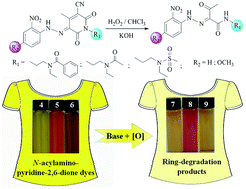
In order to further evaluate the stability of these dyes, their oxidation under basic conditions (KOH + H2O2) is further explored and three ring-degradation products 7–9 are yielded. A two-step mechanism on the formation of ring-degradation products is proposed (Scheme 2), in which the ring-opening of the amide unit of the pyridine-2,6-dione ring under alkaline conditions and subsequent oxidative cleavage of the C[double bond, length as m-dash]C double bond in the presence of hydrogen peroxide are suggested to take place step by step.


image file: c6ra21019h-s2.tif
Scheme 2 Proposed mechanism of oxidative ring-degradation under basic conditions.

As can be seen in Fig. SI16–18, the hydrazone proton (NH) resonates at δ = 15.14, 15.92 and 14.31 ppm in dyes 4, 5 and 6, respectively, which is comparable with our previously reported pyridine-2,6-dione based disperse dyes [8–11]. In dye 4, the chemical shifts of the four phenyl protons are located at 8.95, 8.83, 8.25 and 8.21 ppm. In contrast, the chemical shifts of the of phenyl protons in dye 5 are found at 8.06, 7.79 and 7.37 ppm, which are certainly shifted to a higher field because of the introduction of the electron-rich methoxy group in the phenyl ring.

In our experiments, the color of the solutions of the three N-acylamino-pyridine-2,6-dione based heterocyclic dyes 4–6 changed from yellow to light yellow obviously after the oxidative ring-degradation reaction under alkaline conditions. Therefore, UV-Vis spectra of compounds 4–9 in their methanol solutions with the same concentration of 3.0 × 10⁻⁵ mol L−1 were recorded at room temperature for detailed comparisons. As shown in Fig. 1, the typical π–π* transitions within the benzene/hydrozene/pyridine-2,6-dione skeleton are found in the range of 400–500 nm as the strongest absorption band for this family of compounds, which indicate their excellent color purity in the visible region. Among them, dye 5 exhibits the strongest absorption band at 442 nm, which shows a bathochromic shift of 5 nm in comparison with that of dye 4 at 437 nm. This may originate from the introduction of the electron-donating methoxy group in the phenyl ring. Moreover, the ring-degradation compounds 7–9 have the λmax values of 435, 414 and 427 nm, respectively, which exhibit hypsochromic shifts relative to dyes 4–6, which are consistent with the color variation of the dye solutions before and after ring-degradation in our experiments.


image file: c6ra21019h-f1.tif
Fig. 1 UV-Vis absorption spectra of compounds 4–9 with the same concentration of 3.0 × 10⁻⁵ mol L−1 in methanol at room temperature.

The hydrazone ⇌ azo tautomeric equilibrium of this series of azo dyes has been verified by pH-titration experiments, which could be monitored by the changes in their UV-Vis absorption spectra. The methanol solution of dye 4 was divided into two parts, and ammonia water and acetic acid was added, respectively, to adjust the pH values. As can be seen in Fig. 2, the hydrazone tautomer of dye 4 dominates under neutral conditions and its amount increases with a decrease in pH value. The hydrazone form becomes the preponderant form when the pH value is less than 4, and further addition of acetic acid exhibits almost no conversion except for dilute effects of the dye solution. An isoabsorptive point at 341 nm is observed in this case. The color of the dye solution changes from yellow under neutral conditions to light yellow under strong alkaline conditions, where the amount of azo species increases with an increase in pH value which is accompanied by an increase in the UV-Vis absorption strength. When the pH value of the dye solutions is higher than 10, the deprotonated azo form becomes the predominating form and the color of the solution changes to orange. In addition, the recorded electronic spectra of dye 4 in methanol with the addition of different amounts of ammonia water and acetic acid prove that the abovementioned azo–hydrazone tautomerism is reversible.


image file: c6ra21019h-f2.tif
Fig. 2 UV-Vis absorption spectra for compound 4 at different pH values starting from the same concentration of 3.0 × 10⁻⁵ mol L−1 in methanol at room temperature.

The acid–base discoloration of the ring-degradation products was also examined and monitored via UV-Vis absorption spectra. As shown in Fig. 3, the variation tendency of the main absorption peaks corresponding to the hydrazone ⇌ azo tautomeric equilibrium in dye 7 is analogous to that of dye 4. However, unlike dye 4, the hydrazone tautomer of dye 7 cannot be completely converted to the azo form even if under strong acidic environment.


image file: c6ra21019h-f3.tif
Fig. 3 UV-Vis absorption spectra for compound 7 at different pH values in methanol at room temperature.

Structural description of dyes 4·CH3CN and 5

The molecular structures of dyes 4·CH3CN and 5 with the atom-numbering scheme are shown in Fig. 4. The X-ray crystal structural analyses indicate that dye 4·CH3CN crystallizes in the monoclinic P21/c space group, which includes one solvent acetonitrile molecule. In contrast, dye 5 crystallizes in the orthorhombic Pna21 space group in the absence of any solvent molecule. Both dyes 4·CH3CN and 5 exist in the hydrazone form, which can be verified by the bond lengths of their related atoms. The bond lengths of O3–C8 and N3–C7 are 1.221(2) and 1.313(2) Å in 4·CH3CN, respectively, and those of O4–C9 and N3–C8 are 1.237(5) and 1.326(5) Å in 5, respectively, which exhibit typical double-bond character. In contrast, the bond lengths of N2–N3, C7–C8 and C8–N4 are 1.303(2), 1.474(3) and 1.389(3) Å in 4·CH3CN, respectively, whereas those of N2–N3, C8–C9 and C9–N4 are 1.313(5), 1.453(6) and 1.375(5) Å in 5, respectively, which are indicative of predominantly single-bond character. In dye 4·CH3CN, all the atoms except the N-substitute group are essentially coplanar with the dihedral angle (θ) of 2.7(2)° between the pyridine-2,6-dione ring and the benzene ring, which form an extended π-system linked by the hydrazone unit. Similarly, the dihedral angle between the pyridine-2,6-dione ring and the benzene ring in dye 5 is 6.2(5)°. The dihedral angle between the pyridine-2,6-dione ring and N-substituted benzene ring in 4·CH3CN is calculated to be 69.3(2)°.
image file: c6ra21019h-f4.tif
Fig. 4 ORTEP drawing of 4·CH3CN (a) and 5 (b) with the atom-numbering scheme. Displacement ellipsoids are drawn at the 30% probability level and hydrogen atoms are shown as small spheres of arbitrary radii.

Hydrogen bonding interactions are the most interesting feature of the two structures. As illustrated in Fig. 3, the nitro group of the phenyl ring in 4·CH3CN and 5 is fixed on the same side of the N–H group where two fused six-membered C2N2OH hydrogen-bonding rings are formed. The donor is the hydrogen atom of the hydrazone N–H group and the acceptors are two oxygen atoms of the NO2 and O–H groups from the two aromatic rings (Table 3). It is suggested that the formation of these intramolecular N–H⋯O hydrogen bonds contributes greatly to stabilizing the hydrazone form in the solid state.

It is also found that the subtle alteration of the N-substituent group in the pyridine-2,6-dione ring results in different packing modes in their crystal structures, as displayed in Fig. SI22. There are two sets of molecules in the crystal packing of dye 4·CH3CN because of the steric hindrance effects of the N-substituent phenyl group, and a dimeric packing fashion between adjacent dye molecules in 4·CH3CN is observed with the separation of 3.243(2) Å. In contrast, dye 5 adopts a different packing mode where all the molecules are parallel with the interlayer separation of 3.134(4) Å. Nevertheless, all the aromatic rings in both dye molecules are severely offset and no π–π stacking interactions can be observed.

3. Conclusion

In summary, three new N-acylamino-pyridine-2,6-dione based heterocyclic dyes 4–7 have been designed and prepared via classic diazotization and the subsequent coupling reactions with 2-nitroaniline/4-methoxy-2-nitroaniline via classic diazotization reactions. They are found to display better sublimation, washing, dipping and light fastness on cellulose acetate, nylon and terylene in comparison with five commercially available disperse yellow dyes. More interestingly, three ring-degradation products 7–9 have been firstly isolated, and a two-step mechanism has been proposed for the formation of these ring-degradation products. Namely, the ring-opening of the amide unit of the pyridine-2,6-dione ring under alkaline conditions and subsequent oxidative cleavage of the C[double bond, length as m-dash]C double bond in the presence of hydrogen peroxide are suggested to take place step by step. These results are believed to reveal the reason why alkaline and oxidative conditions should be avoided in the dyeing and post-treatment processes for pyridine-2,6-dione based dyes.

Moreover, UV-Vis absorption spectral comparisons for dyes 4–9 reveal prominent hypsochromic shifts after oxidative ring-degradation under alkaline conditions because of the variation of the π-conjugated system, which could explain well the color variation of the dye solutions in our experiments. In addition, acid–base discoloration was carried out for both N-acylamino-pyridine-2,6-dione based heterocyclic dyes and ring-degradation products in order to study the interconversion between the hydrazone and deprotonated azo forms of these compounds. To the best of our knowledge, this is the first report on N-acylamino-pyridine-2,6-dione based heterocyclic dyes and their oxidative ring-degradation under alkaline conditions.

4. Experimental

Materials and physical measurements

All melting points were measured without corrections. Analytical grade reagents were purchased from commercial sources and used without any further purification. Elemental analyses (EA) for carbon, hydrogen and nitrogen were performed on a Perkin-Elmer 1400C analyzer. Infrared spectra (4000–400 cm−1) were recorded using a Nicolet FT-IR 170X spectrophotometer on KBr disks. Electrospray ionization mass spectra (ESI-MS) were recorded on a Finnigan MAT SSQ 710 mass spectrometer in the scan range of 200–2000 amu. 1H NMR spectra were measured with a Bruker DMX300 MHz NMR spectrometer at room temperature with tetramethylsilane as the internal reference. UV-Vis spectra were recorded with a Shimadzu UV-3150 double-beam spectrophotometer using a quartz glass cell with a path length of 10 mm.

Synthesis of N-acylamino-pyridine-2,6-dione precursors 1–3

Compound 1. A methanol solution (20 mL) of 2-cyano-N-(2-(ethylamino)ethyl)acetamide (2.96 g, 10 mmol) and benzoyl chloride (1.14 g, 10 mmol) was added to a round-bottom flask, and aqua ammonia was added to adjust the pH value of the mixture to 5. The solution was stirred for 8 h at room temperature, and then methyl acetoacetate (1.16 g, 10 mmol) and ethylamine (0.45 g, 10 mmol) were added. The mixture was stirred for another 12 h at 75 °C, cooled to room temperature, and poured into cold water (200 mL). Sulfuric acid was used to adjust the pH value of the solution to 2, and the precipitate was filtered and washed with distilled water. The crude product was dried and purified by recrystallization from acetonitrile.
Compound 1. Yield: 2.88 g (88%), mp: 206–208 °C. 1H NMR (300 MHz, CDCl3) δ: 5.61 (s, 1H), 7.93–7.98 (m, 2H), 7.50–7.86 (m, 3H), 4.06 (m, 2H), 3.31 (m, 2H), 3.23 (m, 2H), 1.17 (t, J = 7.5 Hz, 3H). Main FT-IR absorptions (KBr pellets, cm−1): 3406 (m), 1636 (s), 1558 (m), 705 (m). Negative ESI-MS in methanol: m/z = 324.17, [M − H]. Anal. calcd for C18H19N3O3: C, 66.45; H, 5.89; N, 12.91%. Found: C, 66.67; H, 5.92; N, 12.80%.

The syntheses of compounds 2 and 3 were similar to that described for compound 1 except that methanesulfonyl chloride (1.15 g, 10 mmol) and acetic anhydride (1.02 g, 10 mmol), respectively, were used instead of benzoyl chloride. Compound 2: yield: 2.40 g (90%), mp: 205–207 °C. 1H NMR (300 MHz, CDCl3) δ: 5.60 (s, 1H), 4.05 (m, 2H), 3.45 (m, 2H), 3.24 (m, 2H), 2.22 (s, 3H), 1.04 (m, 3H). Main FT-IR absorptions (KBr pellets, cm−1): 3406 (m), 1649 (s), 1570 (m), 1420 (m). Negative ESI-MS in methanol: m/z = 262.08, [M − H]. Anal. calcd for C13H17N3O3: C, 59.30; H, 6.51; N, 15.96%. Found: C, 59.19; H, 6.65; N, 15.78%.

Compound 3. Yield: 2.57 g (86%), mp: 207–209 °C. 1H NMR (300 MHz, CDCl3) δ: 5.61 (s, 1H), 4.07 (m, 2H), 3.31 (m, 2H), 3.27 (m, 2H), 2.86 (s, 3H), 2.21 (s, 3H), 1.13 (t, J = 6.9 Hz, 3H). Main FT-IR absorptions (KBr pellets, cm−1): 3855 (w), 3676 (s), 1701(s), 1639 (s), 1555 (m). Negative ESI-MS in methanol: m/z = 298.00, [M − H]. Anal. calcd for C12H17N3O4S: C, 48.15; H, 5.72; N, 14.04%. Found: C, 47.99; H, 5.87; N, 13.96%.

Synthesis of heterocyclic dyes 4–6

Dye 4. 2-Nitroaniline (1.38 g, 10.0 mmol) was dissolved in a mixture of concentrated sulfuric acid (5 mL) and glacial acetic acid (7.5 mL) at −5 °C in an ice bath. Sodium nitrite (0.76 g, 11.0 mmol) was dissolved in cold water (10 mL) and added dropwise to the reaction mixture for 0.5 h under stirring. The diazonium salt was obtained and used for the next coupling reaction. Compound 1 (3.20 g, 10.0 mmol) was added to a mixture of methanol and water (90 mL, v/v = 2[thin space (1/6-em)]:[thin space (1/6-em)]1) solution in a three-necked flask immersed in an ice bath. The freshly prepared diazonium salt was added dropwise to the reaction mixture for 1 h under vigorous mechanical stirring (0–5 °C). The precipitate was filtered and dried after thorough washing with distilled water. The crude product was purified by recrystallization from acetonitrile. Microcrystals of dye 4 suitable for X-ray diffraction measurement were grown by slow evaporation from a mixture of acetonitrile and methanol (v/v = 2[thin space (1/6-em)]:[thin space (1/6-em)]1) in air at room temperature after two weeks.
Compound 4. Yield: 3.60 g (76%), mp: 275–277 °C. 1H NMR (300 MHz, CDCl3) δ: 15.14 (s, 1H), 8.95 (d, J = 2.1 Hz, 1H), 8.83 (d, J = 2.1 Hz, 1H), 8.21 (m, 2H), 7.95 (m, 1H), 8.75 (m, 2H), 7.51 (m, 1H), 7.37 (m, 1H), 4.72 (m, 2H), 4.57 (m, 3H), 3.31 (m, 2H), 2.02 (s, 3H), 1.51 (t, J = 14.1 Hz, 3H). Main FT-IR absorptions (KBr pellets, cm−1): 3438 (w), 2229 (w), 1685 (m), 1637 (s), 1487 (vs.), 1442 (s), 1326 (m), 1224 (m). Negative ESI-MS in methanol: m/z = 473.25, [M − H]. Anal. calcd for C24H22N6O5: C, 60.75; H, 4.67; N, 17.71%. Found: C, 60.61; H, 4.54; N, 17.52%. UV-Vis in methanol: λmax/ε (L mol−1 cm−1) = 437 nm/35[thin space (1/6-em)]533.

The syntheses of compounds 5 and 6 were similar to that described for compound 4 except that compound 2 (2.63 g, 10 mmol) and compound 3 (2.99 g, 10 mmol), respectively, were used instead of compound 1. Compound 5: yield: 3.27 g (74%), mp: 270–272 °C. 1H NMR (300 MHz, CDCl3) δ: 15.92 (s, 1H), 8.05 (m, 1H), 7.78 (d, J = 10.8 Hz, 1H), 7.38 (m, 1H), 7.34 (m, 1H), 4.23 (t, J = 10.5 Hz, 2H), 3.95 (s, 3H), 3.67 (t, J = 10.5 Hz, 2H), 3.37 (m, 2H), 2.62 (s, 3H), 1.96 (s, 3H), 1.20 (m, 3H). Main FT-IR absorptions (KBr pellets, cm−1): 3450 (w), 2225 (w), 1683 (m), 1620 (s), 1504 (s), 1465 (vs.), 1406 (m), 1269 (m), 1184 (m). Negative ESI-MS in methanol: m/z = 441.25, [M − H]. Anal. calcd for C20H22N6O6: C, 54.29; H, 5.01; N, 19.00%. Found: C, 54.16; H, 4.97; N, 18.87%. UV-Vis in methanol: λmax/ε (L mol−1 cm−1) = 442 nm/34[thin space (1/6-em)]467.

Compound 6. Yield: 3.65 g (79%), mp: 216–218 °C. 1H NMR (300 MHz, DMSO) δ: 14.31 (s, 1H), 8.54 (m, 1H), 8.02 (m, 1H), 7.76 (m, 1H), 4.39 (s, 1H), 4.02 (t, J = 12.9 Hz, 2H), 3.26 (m, 2H), 2.88 (m, 2H), 2.73 (s, 3H), 2.56 (s, 3H), 1.86 (t, J = 14.1 Hz, 3H). Main FT-IR absorptions (KBr pellets, cm−1): 3420 (w), 2224 (m), 1687 (m), 1640 (s), 1591 (vs.), 1442 (s), 1335 (m), 837 (s). Negative ESI-MS in methanol: m/z = 447.17, [M − H]. Anal. calcd for C19H21N5O6S: C, 51.00; H, 4.73; N, 15.65%. Found: C, 49.91; H, 4.94; N, 15.38%. UV-Vis in methanol: λmax/ε (L mol−1 cm−1) = 456 nm/33[thin space (1/6-em)]333.

Synthesis of ring-degradation compounds 7–9

Compound 7. Compound 4 (4.74 g, 10 mmol) was dissolved in 30 mL trichloromethane, and 10 mL 30% H2O2 was added. 1 g KOH was added to the mixture which was then stirred for 24 h at room temperature. The solvent was removed by a rotatory evaporator and the yellow residue was rinsed thoroughly by petroleum ether to obtain the crude compound of 7. Further purification was performed by column chromatography using chloroform as the eluent.
Compound 7. Yield: 1.74 g (41%), mp: 212–214 °C. 1H NMR (300 MHz, CDCl3) δ: 8.53 (m, 1H), 8.50 (m, 1H), 8.03 (m, 1H), 7.92 (m, 1H), 7.76 (m, 1H), 4.37 (s, 2H), 3.89 (s, 2H), 3.35 (m, 2H) 2.62 (s, 3H), 1.12 (m, 3H). Main FT-IR absorptions (KBr pellets, cm−1): 3560 (w), 1612 (s), 1376 (m), 897 (m). Negative ESI-MS in methanol: m/z = 424.17, [M − H]. Anal. calcd for C21H23N5O5: C, 59.29; H, 5.45; N, 16.46%. Found: C, 59.15; H, 5.61; N, 16.32%. UV-Vis in methanol: λmax/ε (L mol−1 cm−1) = 414 nm/34[thin space (1/6-em)]200.

The syntheses of compounds 8 and 9 were similar to that described for compound 7. Compound 8: yield: 1.13 g (31%), mp: 203–205 °C. 1H NMR (300 MHz, CDCl3) δ: 8.32 (m, 3H), 7.96 (m, 2H), 4.53 (m, 2H), 4.29 (m, 2H), 4.32 (m, 2H) 2.73 (s, 2H), 2.56 (s, 3H), 1.19 (m, 3H). Main FT-IR absorptions (KBr pellets, cm−1): 3530 (w), 1612 (s), 1380 (m), 1024 (m). Negative ESI-MS in methanol: m/z = 392.00, [M − H]. Anal. calcd for C16H21N5O5: C, 52.89; H, 5.83; N, 19.27%. Found: C, 52.76; H, 5.97; N, 19.41%. UV-Vis in methanol: λmax/ε (L mol−1 cm−1) = 427 nm/34[thin space (1/6-em)]100.

Compound 9. Yield: 1.40 g (35%), mp: 210–212 °C. 1H NMR (300 MHz, CDCl3) δ: 14.31 (s, 1H), 4.39 (s, 1H), 4.02 (m, 2H), 3.25 (m, 2H), 2.89 (m, 2H), 2.57 (m, 2H), 1.19 (m, 3H). Main FT-IR absorptions (KBr pellets, cm−1): 3490 (w), 1612 (s), 1379 (m), 1057 (m). Negative ESI-MS in methanol: m/z = 398.37, [M − H]. Anal. calcd for C15H21N5O6S: C, 45.11; H, 5.30; N, 17.53%. Found: C, 44.96; H, 5.41; N, 17.36%. UV-Vis in methanol: λmax/ε (L mol−1 cm−1) = 435 nm/34[thin space (1/6-em)]700.

X-ray data collection and solution

Single-crystal samples of 4·CH3CN and 5 were glue-covered and mounted on glass fibers for data collection on a Bruker SMART 1K CCD area detector at 291(2) K using graphite mono-chromated Mo Kα radiation (λ = 0.71073 Å). The collected data were reduced using the program SAINT and empirical absorption corrections were done by the SADABS program.49 The crystal systems were determined by Laue symmetry and the space groups were assigned on the basis of systematic absences using XPREP. The structures were solved by the direct method and refined by the least-squares method. All non-hydrogen atoms were refined on F2 by the full-matrix least-squares procedure using anisotropic displacement parameters, whereas hydrogen atoms were inserted in the calculated positions assigned fixed isotropic thermal parameters at 1.2 times the equivalent isotropic U of the atoms to which they are attached (1.5 times for the methyl groups) and allowed to ride on their respective parent atoms. All calculations were carried out with the SHELXTL PC program package and the molecular graphics were drawn using the XSHELL, Diamond and ChemBioDraw software.50 Details of the data collection and refinement results for compounds 4·CH3CN and 5 are listed in Table 1, while selected bond distances and bond angles are given in Table 2. In addition, hydrogen-bonding interactions are listed in Table 3.
Table 1 Crystal data and structural refinements for compounds 4·CH3CN and 5a
a R1 = ∑||Fo| − |Fc||/∑|Fo|, wR2 = [∑[w(Fo2Fc2)2]/∑w(Fo2)2]1/2.
Compound 4·CH3CN 5
Empirical formula C24H22N6O5 C20H22N6O6
Formula weight 515.53 442.44
Crystal size (mm) 0.10 × 0.10 × 0.10 0.10 × 0.10 × 0.10
Crystal system Monoclinic Orthorhombic
Space group P21/c Pna21
a 9.141(2) 17.441(5)
b 17.714(3) 24.502(7)
c 17.405(3) 4.832(2)
α 90 90
β 114.274(8) 90
γ 90 90
V3 2569.2(8) 2064.8(11)
Z/Dcalcd (g cm−3) 4/1.333 4/1.423
F (000) 1080 928
μ/mm−1 0.096 0.108
hmin/hmax −8/10 −22/22
kmin/kmax −21/21 0/31
lmin/lmax −20/20 −6/0
Data/parameters 4492/350 2592/289
Final R indices [I > 2σ(I)] R1 = 0.0620 R1 = 0.0461
wR2 = 0.1606 wR2 = 0.0849
R indices (all data) R1 = 0.0892 R1 = 0.1429
wR2 = 0.1823 wR2 = 0.1116
S 1.051 0.964
Max./min. Δρ/e·Å−3 0.416/−0.348 0.183/−0.214


Table 2 Selected bond distances (Å) and angles (o) for compounds 4·CH3CN and 5
Bond distances Bond angles
4·CH3CN
O3–C8 1.221(2) N3–N2–C1 118.9(2)
N3–C7 1.313(2) N2–N3–C7 121.4(2)
N2–N3 1.303(2) O4–C9–N4 121.0(2)
C7–C8 1.474(3) N4–C8–C7 117.2(2)
C8–N4 1.389(3) O5–C16–N6 121.5(2)
C1–N2 1.400(3)    
N1–O1 1.206(3)    
N1–O2 1.225(2)    
C8–O3 1.221(2)    
C9–O4 1.218(2)    
C16–N6 1.351(3)    
C16–O5 1.233(2)    
[thin space (1/6-em)]
5
O4–C9 1.237(5) N2–N3–C8 119.1(4)
N3–C8 1.326(5) N3–N2–C1 119.8(4)
N2–N3 1.313(5) O5–C10–N4 120.8(4)
C8–C9 1.453(6) O4–C9–N4 120.4(4)
C9–N4 1.375(5) N4–C9–C8 118.1(4)
C1–N2 1.402(5)    
N1–O2 1.221(5)    
N1–O3 1.232(5)    
C9–O4 1.237(5)    
C10–O5 1.214(5)    
C17–N6 1.338(6)    
C17–O6 1.222(5)    


Table 3 Hydrogen bonding parameters (Å, o) in compounds 4·CH3CN and 5
D–H⋯A d (D–H) d (H⋯A) d (D⋯A) ∠DHA Sym. code
4·CH3CN
N2–H2⋯O3 0.91(2) 1.91(2) 2.613(2) 133(2)  
C5–H5⋯N5 0.93 2.46 3.272(4) 146 1 − x, −y, 1 − z
C13–H13B⋯O3 0.96 2.59 3.411(3) 143 2 − x, −y, 1 − z
C20–H20⋯O2 0.93 2.43 3.324(4) 161 x, 1/2 − y, 1/2 + z
C26–H26A⋯O5 0.96 2.56 3.336(4) 138  
C26–H26B⋯O4 0.96 2.43 3.339(3) 157 −1 + x, 1/2 − y, −1/2 + z
[thin space (1/6-em)]
5
N2–H2⋯O3 0.86 2.00 2.617(5) 128  
N2–H2⋯N4 0.86 1.88 2.560(5) 134  
C7–H7B⋯O6 0.96 2.52 3.421(6) 156 3/2 − x, 1/2 + y, 3/2 + z


Acknowledgements

This study was financially supported by the Major State Basic Research Development Programs (No. 2013CB922101), the National Natural Science Foundation of China (No. 21171088), the Natural Science Foundation of Jiangsu Province (Grant BK20130054) and the project of scientific and technological support program in Jiangsu province (No. BE2014147-2).

Notes and references

  1. K. Hunger, Industrial dyes chemistry, properties and applications, Wiley-VCH. Verlag, Weinheim, 2003 Search PubMed.
  2. X. Tong and Y. Zhao, Chem. Mater., 2009, 21, 4047 CrossRef CAS.
  3. M. Hojjati, Y. Yamini, M. Khajeh, S. Rouhani and K. Gharanjig, J. Chem. Eng. Data, 2008, 53, 634 CrossRef CAS.
  4. H. Zollinger, Color chemistry: synthesis, properties and applications of organic dyes and pigments, Wiley-VCH, Weinheim, 3rd edn, 2003 Search PubMed.
  5. H. A. Wegner, Angew. Chem., Int. Ed., 2012, 51, 4787 CrossRef CAS PubMed.
  6. S. Rodriguez-Couto, J. Hazard. Mater., 2011, 194, 297 CrossRef CAS PubMed.
  7. P. F. Gordon and P. Gregory, Organic chemistry in color, Springer-Verlag, Berlin, Heidelberg, 1983 Search PubMed.
  8. M. M. M. Raposo, A. M. C. Fonseca, M. C. R. Castro, M. Belsley, M. F. S. Cardoso, L. M. Carvalho and P. J. Coelho, Dyes Pigm., 2011, 91, 62 CrossRef CAS.
  9. K. Hunger, Industrial dyes: chemistry, properties and applications, Wiley-VCH, Weinheim, 2002, p. 543 Search PubMed.
  10. P. Bamfield and M. G. Hutchings, Chromic phenomena: technological applications of color chemistry, RSC, Cambridge, 2nd edn, 2010 Search PubMed.
  11. E. Kleinpeter, U. Boelke and J. Kreicberga, Tetrahedron, 2010, 66, 4503 CrossRef CAS.
  12. S. Manickasundaram, P. Kannan, Q. M. A. Hassan and P. K. Palanisamy, J. Mater. Sci.: Mater. Electron., 2008, 19, 1045 CrossRef CAS.
  13. J. Liu, X. D. Yang, A. Islam, Y. Numata, S. F. Zhang, N. T. Salim, H. Chen and L. Y. Han, J. Mater. Chem. A, 2013, 1, 10889 CAS.
  14. J. Liu, K. Wang, X. P. Zhang, C. H. Li and X. Z. You, Tetrahedron, 2013, 69, 190 CrossRef CAS.
  15. D. El-Mekkawi and M. S. A. Abdel-Mottaleb, Int. J. Photoenergy, 2005, 7, 95 CrossRef CAS.
  16. A. B. Tathe and N. Sekar, J. Fluoresc., 2016, 26, 1279 CrossRef CAS PubMed.
  17. L. Zhang, J. M. Cole, P. G. Waddell, K. S. Low and X. G. Liu, ACS Sustainable Chem. Eng., 2013, 1, 1440 CrossRef CAS.
  18. Y. X. Peng, X. L. Zhao, D. Xu, H. F. Qian and W. Huang, Dyes Pigm., 2017, 136, 559 CrossRef CAS.
  19. M. S. Yen and I. J. Wang, Dyes Pigm., 2004, 63, 1 CrossRef CAS.
  20. M. S. Yen and I. J. Wang, Dyes Pigm., 2004, 62, 173 CrossRef CAS.
  21. H. S. Freeman and J. C. Posey, Dyes Pigm., 1992, 20, 171 CrossRef CAS.
  22. H. R. Maradiya and V. S. Patel, Polym.-Plast. Technol. Eng., 2002, 41, 735 CrossRef CAS.
  23. H. R. Maradiya and V. S. Patel, Fibers Polym., 2002, 3, 43 CrossRef CAS.
  24. J. N. Gadre, R. M. S. Periaswamy and M. Mulay, Indian J. Heterocycl. Chem., 2006, 16, 43 CAS.
  25. BASF, DE Patent, 1,544,375, 1965.
  26. Q. Peng, M. Li, K. Gao and L. Cheng, Dyes Pigm., 1992, 18, 271 CrossRef CAS.
  27. C. C. Chen and I. J. Wang, Dyes Pigm., 1991, 15, 69 CrossRef CAS.
  28. M. A. Metwally, E. Abdel-Galil, A. Metwally and F. A. Amer, Dyes Pigm., 2012, 92, 902 CrossRef CAS.
  29. J. Geng, T. Tao, W. You and W. Huang, Dyes Pigm., 2011, 90, 65 CrossRef CAS.
  30. D. Xu, J. Geng, Y. Dai, H. F. Qian and W. Huang, Dyes Pigm., 2017, 136, 398 CrossRef CAS.
  31. D. Xu, Z. Li, Y. X. Peng, J. Geng, H. F. Qian and W. Huang, Dyes Pigm., 2016, 133, 143 CrossRef CAS.
  32. W. Huang, Dyes Pigm., 2008, 79, 69 CrossRef CAS.
  33. H. F. Qian and W. Huang, Acta Crystallogr., Sect. C: Cryst. Struct. Commun., 2006, 62, 62 Search PubMed.
  34. W. Huang and H. F. Qian, Dyes Pigm., 2008, 77, 446 CrossRef CAS.
  35. X. C. Chen, T. Tao, Y. G. Wang, Y. X. Peng, W. Huang and H. F. Qian, Dalton Trans., 2012, 41, 11107 RSC.
  36. W. You, H. Y. Zhu, W. Huang, B. Hu, Y. Fan and X. Z. You, Dalton Trans., 2010, 39, 7876 RSC.
  37. X. C. Chen, Y. G. Wang, T. Tao, W. Huang and H. F. Qian, Dalton Trans., 2013, 42, 7679 RSC.
  38. W. A. Prütz, J. Butler and E. J. Land, Int. J. Radiat. Biol., 2009, 58, 215 CrossRef.
  39. M. J. Burkitt, Methods Enzymol., 1994, 234, 66 CAS.
  40. L. J. Kennedy, K. Moore, J. L. Caulfield, S. R. Tannenbaum and P. C. Dedon, Chem. Res. Toxicol., 1997, 10, 386 CrossRef CAS PubMed.
  41. L. Qiao, Y. Lu, B. H. Liu and H. H. Girault, J. Am. Chem. Soc., 2011, 133, 19823 CrossRef CAS PubMed.
  42. H. Zollinger, Color chemistry: synthesis, properties and application of organic dyes and pigments, Wiley-VCH, Zürich, 3rd edn, 2003 Search PubMed.
  43. K. Hunger, Industrial dyes: chemistry, properties, applications, Wiley-VCH, Weinheim, 3rd edn, 2003 Search PubMed.
  44. A. K. Samanta and P. Agarwal, Indian J. Fibre Text. Res., 2009, 34, 384 CAS.
  45. P. Kaushik, V. K. Garg and B. Singh, Bioresour. Technol., 2005, 96, 1189 CrossRef CAS PubMed.
  46. A. Guesmi, N. B. Hamadi, N. Ladhari and F. Sakli, Ind. Crops Prod., 2012, 37, 493 CrossRef CAS.
  47. M. Shahid, A. Ahmad, M. Yusuf, M. I. Khan, S. A. Khan, N. Manzoor and F. Mohammad, Dyes Pigm., 2012, 95, 53 CrossRef CAS.
  48. A. T. Peters and H. S. Freeman, Colour chemistry: The design and synthesis of organic dyes and pigments, Elsevier, London, 1991, ch. 1 Search PubMed.
  49. SMART and SAINT, Area Detector Control and Integration Software, Siemens Analytical X-ray Systems Inc., Madison, WI, 2000 Search PubMed.
  50. G. M. Sheldrick, SHELXTL (Version 6.10), Software Reference Manual, Bruker AXS, Inc., Madison, Wisconsin (USA), 2000 Search PubMed.

Footnote

Electronic supplementary information (ESI) available: ESI-MS, TGA-DSC and 1H NMR spectra as well as crystal packing structures for the related compounds are attached to this paper. CCDC 1060110 and 1060111 for compounds 4·CH3CN and 5. For ESI and crystallographic data in CIF or other electronic format see DOI: 10.1039/c6ra21019h

This journal is © The Royal Society of Chemistry 2016
Click here to see how this site uses Cookies. View our privacy policy here.