

Poly(ε-caprolactone)-based shape memory polymers crosslinked by polyhedral oligomeric silsesquioxane†
Pengfei Yang,
Guangming Zhu*,
Xuelin Shen,
Xiaogang Yan and
Jing Nie
Department of Applied Chemistry, Northwestern Polytechnical University, 127 West Friendship Road, Xi'an, 710072, PR China. E-mail: gmzhu@nwpu.edu.cn
First published on 13th September 2016
Abstract
A series of biodegradable SMP networks with various PCL arm lengths and well-defined star-branched molecular structures were fabricated using polyhedral oligomeric silsesquioxane (POSS) as the core reacting with different molecular weight PCL. Fourier transform infrared spectroscopy (FTIR) was used to follow the reaction, and the cross-link density of the samples was evaluated by the gel content. Differential scanning calorimetry (DSC) and dynamic mechanical analysis (DMA) results showed a similar trend: transition temperature can be tailored by varying the PCL molecular weight; melting temperature of the networks gradually increased with increasing of the PCL molecular weight. The crystallization behavior was studied by DSC and the crystallization temperatures of these networks were influenced by PCL arm lengths. Mechanical properties of the POSS–PCL networks at two different temperatures were compared: tensile strength reaching 12 MPa at room temperature while this figure reduced to around 0.1 MPa above its transition temperature. Outstanding shape memory behaviors of the samples were observed in the strain-controlled cyclic thermomechanical tensile test. The results revealed that sample POSS-N2000 (higher POSS moiety) displayed the most remarkable shape fixity (97%) and recovery ratio (99%), which was induced by lowering the cross-linking density and increasing chain mobility. Finally, the possible molecular mechanism of shape memory was illustrated schematically.
1. Introduction
Shape memory polymers (SMPs), which can change their shape in a predefined way once exposed to a suitable stimulus (heat, electrical current, magnetic field, light, pH, or chemical environment), are a class of stimuli-response polymers.1 Among the vast majority of reported SMPs, poly(ε-caprolactone) (PCL), with a relatively low melting temperature and slower degradation rate, has attracted increasing attention as a biodegradable and biocompatible candidate for biomedical and tissue engineering applications.2,3Various PCL-based polymers were designed to obtain the satisfactory shape memory effect (SME) in the previous studies.4 Thermoplastic PCL can be modified with another polymer to form a copolymer or cross-linked system, all of which can allow a thermally reversible transformation and prevent long-range molecular chain slipping.5 Zhou and his co-workers6–8 have widely investigated the PCL-based SMPs, and they used polyethylene glycol (PEG) and PCL to design biodegradable SMPs with various structures. Polyurethane block copolymers consisting soft PCL chain are a typical way to exhibit SME, where the soft PCL forms the reversible phase through the mobility of molecular chain in rubbery state.9,10 While in the case of cross-linked PCL network, whether chemical or physical, SMPs based-on PCL system can be fixed by strain-induced crystallization and in this way elastic energy was stored, then the material recovered to its original shape once upon the temperature reaching its melting temperature. Lendlein et al. reported a thermo-induced shape-memory effect through the cross-linking of PCL dimethacrylates (MACL) under photocuring, then they successfully found the triple shape memory effect of copolymer networks based on poly(ω-pentadecalactone) and poly(ε-caprolactone) segments.11,12 Interestingly, Huang et al. investigated the shape memory phenomena in non-crosslinked PCL or unmodified thermoplastic PCL.13
Although shape-memory PCL has showed the potential for many biomedical applications such as surgical sutures, vascular stent and other medical devices, its insufficient recovery force against external loads remains challenging. Recently, many researchers have been focusing on the improvement of thermal–mechanical and shape-memory properties through designing a variety of network structure in order to obtain high-performance SMPs. Anthamatten's group have done a lot of work to investigate the relationship between the role of molecular architecture and shape memory properties using thiol-acrylate chemistry to make well defined PCL networks.14–16 By controlling network architecture such as cross-link density and cross-link functionality, resulting networks exhibit appealing elastic energy storage and improved shape-memory properties.
Another viable approach is to incorporate POSS nanoparticles into polymer matrix because multifunctional group tethered to its inorganic core will help to obtain various networks, also provide the possibility to achieve better processability, increased strength and higher stability for tissue engineering.2,17 Hybrid POSS molecule features a well-defined cubic geometry to achieve nanostructured material and associated enhancement in thermal and mechanical properties, and the rigid POSS nanoparticles can control the polymer chain on a molecular scale, which motivated the design of SMPs based on POSS nanoparticle.18–20 Various structures of POSS-based SMPs can be obtained depending on the number of reactive organic groups.21,22 Well-defined molecular architectures of POSS related nanocomposites included (a) network with unbound POSS, (b) amphiphilic POSS telechelics or POSS pendant, (c) random or block copolymer incorporating POSS, and (d) network with POSS in junction or star-shape network.
Mather and his co-workers have done extensive research on macrostructure and phase behaviours of POSS-based shape memory polymers.23–28 A mono-functional POSS was used as an initiator for PCL ring-opening polymerization to prepare chemical/physical double networks which superimposed a covalent network with a percolative physical network, suitable for biomedical application.27 The dual network molecular architecture enabled reversible deformation and enhanced performance in cycling tensile test. Their later work concerned about the microstructure and nanoscale crystallization in POSS–PCL shape memory molecular networks. The state of crystallization as well as the role of the short- and long-range order of POSS moieties was investigated after the crystallization of POSS monomer had been testified in detail.25,29
Star-shape molecular structures have been widely used to design shape memory polymers because of their unique topological architecture.30 Researchers have attached much interest on star-shape POSS-based SMPs, where POSS moieties with more than two reactive groups can serve as chemical cross-links or rigid core of star-shape polymers.31 Mya et al. synthesized star-like polyurethane films by incorporating POSS into film, which endowed the material improved thermal stability and better oxidation resistance.32 Moreover, attractive shape memory properties were quantified with close to 100% of shape recovery ratio.19 From both practical and theoretical viewpoints, a well-defined molecular structure is particularly important for star polymers, which clarify or quantify the relationship between macroscopic physical/chemical properties and microscopic structure.33
In this work, we developed a novel set of POSS–PCL networks with different PCL arm lengths by one-step ring-opening reaction of epoxy groups of POSS moiety to obtain excellent shape memory performance and broaden the properties of PCL-based SMPs. The tuning of shape transition temperature can be achieved by varying the PCL molecular weight. The thermal properties of the material were determined by DSC and DMA. FTIR was used to follow the curing process and the gel content was measured to evaluate the crosslink density of the networks. In the end, strain-controlled cyclic thermomechanical tensile test was carried out to assess the shape memory properties.
2. Experimental section
2.1 Materials
Poly(ε-caprolactone) diols (PCL-diol) with different number-average molecular weight (Mn) were obtained from Shanghai Yizhu Industry Co., Ltd. The PCL-diols were kept in dry under vacuum at room temperature prior to use. Octaglycidyldimethylsilyl POSS (viscous liquids at room temperature), hereafter referred to as POSS–epoxy, was purchased from Hybrid Plastic (Hattiesburg, MS) and used as received. Magnesium perchlorate (Mg(ClO4)2) was reagent grade from Aladdin and used as received. Tetrahydrofuran (THF), toluene and chloroform were distilled under reduced pressure over CaH2 and stored over 4 molecular sieves.2.2 Star-shape POSS–PCL shape-memory networks
Star-shape POSS networks with homogeneous arms were prepared in the following method. THF solutions of POSS and PCL macromonomers were prepared separately. After stirring vigorously with a mechanical stirrer, the two solutions were mixed according to 1![[thin space (1/6-em)]](https://www.rsc.org/images/entities/char_2009.gif) :1 epoxy/–OH molar ratio. Mg(ClO4)2 (0.2 wt% based on the total weight of reactant) was added drop-wise into the mixture. Once homogeneous mixture was obtained, the mixture was briefly degassed under vacuum at 80 °C until no bubbles were observed. The melted mixture was then quickly casted between two Teflon-packaged glass slides which were separated by a 1 mm thick spacer. The sandwich-like mould was then put into an oven and cured at an elevated temperature (120 °C/4 h; 140 °C/4 h; 160 °C/2 h).
:1 epoxy/–OH molar ratio. Mg(ClO4)2 (0.2 wt% based on the total weight of reactant) was added drop-wise into the mixture. Once homogeneous mixture was obtained, the mixture was briefly degassed under vacuum at 80 °C until no bubbles were observed. The melted mixture was then quickly casted between two Teflon-packaged glass slides which were separated by a 1 mm thick spacer. The sandwich-like mould was then put into an oven and cured at an elevated temperature (120 °C/4 h; 140 °C/4 h; 160 °C/2 h).
2.3 Characterization
FTIR was recorded with a Perkin-Elmer spectrum GXA at a resolution ratio of 4 cm−1 and 32 scans at room temperature. Dry polymer powders (weight ratio 1%) and KBr mixture were mold-pressed into transparent discs, while liquid sample was directly coated on a KBr plate. The thermal properties of POSS–PCL were analyzed by DSC (Q-20 from TA Instruments) under a nitrogen purge. A small amount of samples (3 to 5 mg) were encapsulated into a sealed span. Each sample was heated from −30 °C to 120 °C at a heating rate of 10 °C min−1, held at 120 °C for 5 minutes, cooled to −30 °C with a cooling rate of 10 °C min−1, held at −30 °C for 5 minutes, and reheated to 120 °C with a same heating rate. The heat flow traces were taken from the second heating runs to avoid the influence of thermal history. Glass transition temperature was determined as the midpoint of the stepwise decrease of the heating curve. Melt points were determined as the valley temperature of the endothermic transition, while heat-of-fusion (ΔH) were calculated through the integration of the endothermic peak and normalized for the sample mass. DMA was used to determine the linear viscoelastic thermomechanical properties of the material on a Q800 DMA (TA Instruments) equipped with a single cantilever clamping fixture. Samples with dimensions of 40 mm × 12 mm × 2 mm were used for testing. The temperature was ramped from room temperature to 120 °C with a heating rate of 3.0 °C min−1. A frequency of 1 Hz was applied. The gel content was measured by Soxhlet extraction to evaluating the crosslink density of the networks. The cut samples, accurately weighed m0, were extracted with toluene (unreacted reactant can be dissolved) for 72 hours. The residual mass m1 was obtained after dried in a vacuum oven to constant weight. Strain-controlled cyclic thermomechanical tensile test was carried out on Microforce Tester, Instron 8848. The shape memory properties of POSS–PCL were investigated by the test abovementioned equipped with a thermochamber and temperature controller. Strain-controlled programming with stress-free recovery were performed with four steps:34 (1) heating the sample to 60 °C, then stretching the heated sample to a certain extension εm with a strain rate of 2 mm min−1, sample fixing for 5 min; (2) cooling the sample to room temperature (20 °C) with a rate of 5 °C min−1 while εm was kept constant and holding for 10 min; (3) unloading the specimen to zero stress at 20 °C while recording the strain εu; (4) heating the specimen up to 37 °C while keeping σ = 0 MPa and εp is the permanent strain after recovery. This cyclic tensile test was repeated three times. The shape memory fixity ratio (Rf) and shape memory recovery (Rr) ratio was calculated by using the following formula:and

where N stands for cycle index.

3. Results and discussion
3.1 Star-shaped POSS–PCL network synthesis
A series of star-shaped POSS–PCL SMPs containing organic–inorganic hybrid POSS core were synthesized via ring opening polymerization of epoxy group by PCL diol as shown in Fig. 1, and four PCL diols with different molecular weight ranging from 2000 to 6000 were used to fabricate SMPs in order to obtain diverse transition temperature. The curing reaction was conducted at a stoichiometric ratio of hydroxyl group and epoxy group to ensure eventual networks had a well defined star-shaped structure. FTIR was also used to follow the complete polymerization reaction over time in Fig. 2. The reduction of the absorption peak for the POSS epoxy ring in 845 cm−1 testified the epoxy functionalized POSS surely reacted with PCL diols. The network obtained is called POSS-N2000 for convenience, where 2000 stands for molecular weight of PCL diol. | ||
| Fig. 1 Schema of POSS–PCL network. | ||
 | ||
| Fig. 2 FTIR spectra of POSS–PCL systems in different curing process: (a) (POSS–PCL before curing); (b) (120 °C/4 h); (c) (140 °C/4 h); (d) (160 °C/2 h). | ||
The gel content test was conducted as a criterion to evaluate the degree of cross-links. Gel fraction of each POSS–PCL networks were summarized in Table 1, and it can be seen the gel fractions of all four samples are relatively low comparing with other PCL networks reported. The main reason may be related to the reaction itself. In order for a PCL chain to be attached to the network, only one end needs to react. The chains that are removed during extraction have no ends reacted. So, there are probably many chains with only one end reacted. There must be a large amount of “dangling ends”. The higher gel content had a significant role on melting temperature and crystallinity of the cross-linked PCL material.35 Chain crowding around the POSS sites caused by “dangling chains” seems to limit the degree of crosslinking or extent of reaction, which will directly affect the crystalline properties of the soft PCL moiety. This limitation will further affect the DSC and mechanical data. Among the four samples, POSS-N2000 exhibited the highest gel fraction (∼89%), and this was because decreasing the PCL chain lengths can increase the concentration of the reactive groups. Network consisting longer PCL chain showing lower gel fraction will generate much more dangling ends, and this can lead to the difference in thermal mechanical properties (Table 1), crystallinity (Table 1), and shape memory properties (Table 2), which will be discussed later in detail.
| Sample | Gela | TDSCmb (°C) | TDMAmc (°C) | tanδd |
E′e 37 °C (MPa) | ΔHmf (J g−1) | Crystallinity XCg (%) |
|---|---|---|---|---|---|---|---|
| a Gel content as determined from extraction experiment.b Melting temperature as determined from DSC curve.c Melting temperature as determined from the tanδ-temperature scans.d Peak value of the tanδ-temperature scans.e Storage modulus of the glassy state determined at 37 °C.f Enthalpy of melting obtained from DSC curves.g ΔH divided by a reference enthalpy value of 136.5 J g−1 for fusion of 100% crystalline PCL. |
|||||||
| POSS-N2000 | 89.8 | 57.7 | 52.1 | 0.159 | 308.28 | 17.06 | 12.5 |
| POSS-N4000 | 87.5 | 59.6 | 54.8 | 0.164 | 426.19 | 19.79 | 14.5 |
| POSS-N5000 | 84.9 | 61.0 | 57.4 | 0.170 | 618.05 | 20.88 | 15.3 |
| POSS-N6000 | 82.2 | 64.2 | 60.2 | 0.176 | 754.41 | 22.38 | 16.4 |
| Sample | Rf (N = 1) (%) | Rf (N = 2, 3) (%) | Tonseta | Rr (N = 1) | Rr (N = 2, 3) | εb |
|---|---|---|---|---|---|---|
| a The temperature which samples start to recover.b The elongation at break. | ||||||
| POSS-N2000 | 97.3 ± 0.2 | 97.3 ± 0.2 | 53.2 | 99.8 ± 0.2 | 99.6 ± 0.2 | 65 |
| POSS-N4000 | 95.5 ± 0.2 | 95.2 ± 0.3 | 55.4 | 99.1 ± 0.2 | 98.7 ± 0.3 | 125 |
| POSS-N5000 | 94.2 ± 0.2 | 94.0 ± 0.2 | 57.0 | 98.6 ± 0.2 | 98.1 ± 0.2 | 180 |
| POSS-N6000 | 93.6 ± 0.2 | 93.3 ± 0.3 | 59.5 | 97.5 ± 0.2 | 97.0 ± 0.3 | 287 |
3.2 Thermal properties
The thermal properties of POSS–PCL networks with various arm lengths were characterized by DSC and DMA. Fig. 3a illustrated the second heating scan of all cross-linked networks, and the mono-disperse endothermic peak are ascribed to the crystallizable structures of PCL. Interestingly, the heating DSC curve of each network does not clearly identify the glass transition temperature (Tg) of POSS–PCL samples.27 The sharp melting transition in the DSC curves of the POSS-SMP obtained from the second heating scanning process was ascribed to the formation of a homogeneous cross-linked structure from POSS core with uniformly distributed polymer arms.36 The Tm of POSS–PCL network gradually increased from ∼55 to 65 °C with decreasing number average weight of PCL-diol, which is in good agreement with the earlier conclusion reported by Mya et al.19 Meanwhile, longer PCL chain sample have a higher crystalline temperature (Tc): POSS-N2000 peaks at ∼17 °C and POSS-N6000 continuously increases the peak area at ∼26 °C (Fig. 3b). This is likely to be related to the dangling ends discussed above. The results of gel fraction showed there existed a large amount of dangling chain with only one end attached to POSS core, so these PCL chain will have an easier time to crystalline in the cooling process. The observation that longer PCL sample has a slightly higher degree of crystallinity (Table 1) is also a result of dangling chain. In addition, we noticed the degrees of crystallinity of all these POSS–PCL networks were far below the other reported values, and this may be a result of star-shape structure.37 As we talked in gel content part, chain crowding around POSS site will probably limit the degree of crosslinking. The dangling chains far away the rigid POSS are prone to crystalline, while the crowded PCL chains covalently tethered to the POSS site will be imposed on much more position restriction and difficulty to decouple from the POSS core presenting the closed packing of the PCL chain, affecting the crystalline properties of the sample. The phenomenon is consistent with the fact that the rigid POSS core structure favoured a reduction in the crystallization of PCL with shorter arm lengths.35 | ||
| Fig. 3 DSC curves of POSS–PCL networks with various PCL arm lengths: (a) heating; (b) cooling. | ||
We next sought to investigate how the strengths of these POSS–PCL networks vary as a function of PCL arm lengths and temperature by using DMA analysis (Fig. 4). The storage modulus of all these four SMPs at glassy state possesses a similar order of magnitude values (Fig. 4a). At low temperature range (T < Tm), the storage modulus (E′) increases as increasing of the PCL chain lengths, which is in complete agreement with the conclusion obtained by Bothe et al.38 This phenomenon is due to the high level of crystallinity. Since there are many dangling ends those chains are easier to form crystals. The highest modulus is attributed materials from the 6000 g mol−1 prepolymer because the material has a higher crystallinity. Moreover, the increase of twining among the PCL chain with increasing arm lengths will potentially impose more positional restriction, which may be another reason for high storage modulus of POSS–PCL networks with higher arm lengths.38,39
 | ||
| Fig. 4 DMA curves of the POSS–PCL networks: (a) storage modulus (E), (b) tanδ. | ||
tanδ data indicate the viscoelastic properties of the sample tested with a peak at Tm of PCL. From the Fig. 4b, we can see tanδ peak varies from 52 to 60 °C increasing the molecular weight of PCL, and this reveals a similar relationship with Tm obtained from DSC data. So we assert the transition temperature can be tuned by varying the PCL arm lengths. Comparing the curves of storage modulus and tanδ versus temperature, all samples have a wide transition temperature region from 40 to 75 °C and the storage modulus drastically changed around the temperature of tanδ peak, with sharp storage modulus changes of 2 orders of magnitude. This tremendous change in E′ has contributed to an excellent shape memory effect proved by previous literature.
3.3 Mechanical properties
In addition to dynamic mechanical analysis, it is essential for SMP to possess enhanced static mechanical strength before shape changing.40,41 Fig. 5 depicts the stress–strain curve of POSS–PCL networks with different PCL molecular weight at two different temperatures. It can be found that brittleness crack occurred both in POSS-N2000 and POSS-N4000 at room temperature, while the other two behave like plastics and apparent yield phenomena is found. POSS-N6000 exhibits much higher tensile strength (11.62 MPa), which is attractive as a substitute for tissue scaffold.42 These observations were ascribed to the difference in crystallinity and cross-links density of networks. With shorter PCL arm lengths, lower crystallinity will reduce the tensile strength and higher cross-links density leads to brittle fracture. In a mean time, there are much more dangling ends in the sample with longer PCL chain, and those dangling ends present high level of crystals which can be seen from the degree of crystallinity obtain from DSC analysis (Table 1). The energy generated by stretching during tensile test will be stored in the crystalline domain. So all of these can explain why the sample POSS-N600 exhibit heightened tensile strength. The tensile test of POSS–PCL networks were also performed above their Tm (65 °C). It is clear that all samples behave like soft elastomers above Tm, with sharply declining tensile strength (0.05 MPa to 0.12 MPa) and increasing elongation (65% to 280%) at break. Those figures are also compatible with many natural tissues.36 | ||
| Fig. 5 Tensile stress–strain curves of POSS–PCL networks with different PCL arm lengths at room temperature and at elevated temperature. | ||
3.4 Shape memory properties of POSS–PCL networks
Shape memory effects have been quantized with different test procedures. One of the most widely used test procedures is cyclic thermomechanical tensile test: the typical strain-controlled test allows the stress loaded on the specimen to be measured at defined thermal conditions while the change in strain is kept constant. Rectangular samples with dimension of 60 mm × 10 mm × 1 mm were programmed in the stretching machine equipped with heating apparatus. The stress–strain diagrams listed in Fig. 6 provide a representative overview of cycle thermomechanical behaviours of the investigated samples. The diagrams show a sequence of 3 successive cycles, with each cycle consisting of a shape programming and recovering unit. | ||
| Fig. 6 Cyclic tensile behaviour of POSS–PCL networks: (a) POSS-N2000, (b) POSS-N4000, (c) POSS-N5000, (d) POSS-N6000. | ||
It has been noted that stress for drawing in the first cycle is distinctly higher than subsequent cycles. The reason that the first cycle has higher draw stress is because more time was allocated for crystallization. In order to testify this assumption, we repeated the cyclic tensile test in two different times and the stress–strain curves of N = 1 are compared in Fig. S1.† It can be clearly seen that the N = 1 cycle are nearly repeated after three cycles. These observations differ from the reported explanations that the higher draw stress in the first cycle are ascribed to the occurrence of entanglement of PCL molecular chains and the breakage of covalent bonds due to polymer stretching. Beyond this, the generated stresses decreased with cycle number, which indicated the less resistance to SMP deformation. Cycle 2 and cycle 3 seemed almost identical, with a shape-fixity ratio of about more than 90% and nearly 98% recovery ratio upon heating. During each heating–stretching–cooling–unloading–recovery cycle, the maximum stress loaded on sample peaks at 1 MPa when heat is applied in these similar POSS–PCL networks. Noticeably, POSS-N6000 SMPs exhibited the highest value among the four networks, and this is due to a lower cross-link density resulted from an increased molecular weight between cross-links for these covalently cross-linked networks.
The ratio of shape fixity (Rf) and shape recovery (Rr) of each cycle are summarized in Table 2. The shape fixity ratio increases slightly with decreasing the molecular weight of the soft segment in the free strain recovery data. The enhancement in shape fixity resulted from cross-link density decreased from POSS-N2000 to POSS-N6000, which correspondingly made the ability of the soft PCL chain to maintaining the temporary or deformed shape slightly decrease. This is again a result of high level of crystallinity from dangling chains. Crystal region stores the elastic energy which will be converted to the recovery force in the shape recovery process. These phenomena are totally consistent with the observation reported previously for polyurethane-based and epoxy-based shape memory polymers.
Shape recovery (Rr) ratio also depended both on cycle number and PCL chain lengths of the investigated POSS–PCL networks. The recovery strain decreased and residual strain increased with proceeding cycle numbers. Moreover, the shorter PCL chain tended to return to its initial shape more easily. These phenomena may be attributed to the plastic deformation of PCL chain and the cumulative breakage of covalent bonds.
From POSS-N2000 to POSS-N6000 networks, PCL chain length plays a significant role both in the thermal properties and shape memory behaviour. The thermal response temperature or the recovery onset temperatures Tonset (from ∼53 to ∼60 °C) tended to increase with growing the molecular weight of PCL, which is in good accordance with the PCL melting temperatures of these four SMPs networks in the DSC analysis (Fig. 3). Once the surrounding temperature reaching the onset temperature, the PCL segments could no longer crystallize and the frozen stress started to release.
From the aforementioned conclusion, it is clearly shown that the material with the highest POSS moieties (POSS-N2000) possesses the most favourable shape memory behaviour evidenced by the highest shape recovery ratio and shape fixity ratio. The gradual increase of the PCL chain lengths resulted in the lowering of loading stresses of each cycles. The applied loading stress decreased with proceeding cycles for each investigated POSS–PCL network, and the major difference occurs between the first cycle and the continuing cycles.
3.5 Molecular mechanism of shape memory effect
To further illustrate the shape memory effect in the molecular level based on the above discussion, the underlying schematic representation for these shape memory networks was supplied as shown in Fig. 7. The structures of POSS–PCL copolymers are supposed to consist of a PCL network cross-linked by POSS nanoparticles. At first, amorphous PCL chains and PCL crystallites are in a random orientation state, where the mobility of PCL chain is constrained by the POSS nanoparticles.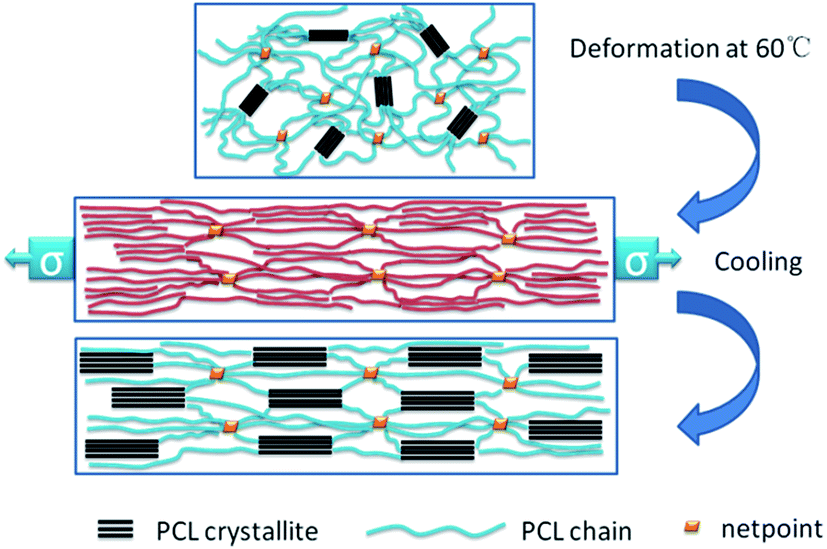 | ||
| Fig. 7 Schematic representation of processes occurring during deformation on the molecular level. | ||
During the stretching deformation, the cross-linked PCL network is deformed in the rubbery state and the constrained PCL chain starts to orientate in the direction of force. In this process, it is the cross-linked structure that provides the maximum tensile stress. Upon cooling samples to the room temperature after unloading, the newly formed crystallites induced by strain in the amorphous PCL part stabilize the temporary shape in deformed state, together with realignment and recrystallization of the existed crystallites. The freezing of these recrystallized PCL chains stores the elastic energy and endows the material with internal stress, which renders the material ability to recover to its original shape.
In the shape recovery process, all crystallites gradually melt once heating the sample above Tm, during which the potential stored energy and the conformational entropy of amorphous part start to release. The internal stresses drive the sample to finish the recovery process. In order to better understand the shape memory behaviour of the POSS–PCL networks, here the macroscopic shape memory effect of POSS-N5000 from the temporary folded three-dimensional box to permanent two-dimensional template was pictured in Fig. 8. When increasing the surrounding temperature of the box, each side of the box quickly opened until the box had recovered to its permanent shape. The self-deployment rate greatly depend on the surrounding temperature and it took approximately 6 seconds to for the box to transform to the original cross template at a temperature of 55 °C when a slow and obvious recovery process can be presented.
 | ||
| Fig. 8 Shape transition from the temporary folded shape to permanent cross template (the recovery process was conducted at 55 °C). | ||
4. Conclusions
In summary, a series of star-shape polymers with a covalently cross-linked organic–inorganic hybrid core have been made by solvent casting. PCL molecular weight, which directly influences the density of cross-links, plays a significant part in thermal and mechanical properties. The higher PCL molecular weight can endow the material better tensile strength or storage modulus, also brings the higher strain above its transition temperature. But the decrease in shape fixity and shape recovery ratio can't be ignored. POSS-N2000 showed the best recovery ratio of nearly 100% but its elongation at break is only 65% at 60 °C, which is far lower than the other counterparts. Shape memory properties do not decrease a lot when increasing the cycle number of tensile test, and it may be the result of well-defined structure. Based on the above experiment, the possible molecular mechanism of these POSS–PCL shape memory polymers were proposed with schematic graph. The melting–recrystallization of PCL chain results in softening of the hard domain when temperature changes.Acknowledgements
The author would like to thank engineer Xiyan Di for help on mechanical testing and discussion of the film.References
- D. Habault, H. Zhang and Y. Zhao, Chem. Soc. Rev., 2013, 42, 7244–7256 RSC.
- C. P. Teng, K. Y. Mya, K. Y. Win, C. C. Yeo, M. Low, C. He and M.-Y. Han, NPG Asia Mater., 2014, 6, e142 CrossRef.
- M.-J. Chern, L.-Y. Yang, Y.-K. Shen and J.-H. Hung, Int. J. Precis. Eng. Man., 2013, 14, 2201–2207 CrossRef.
- M. Ebara, K. Uto, N. Idota, J. M. Hoffman and T. Aoyagi, Soft Matter, 2013, 9, 3074–3080 RSC.
- S. Pandini, F. Baldi, K. Paderni, M. Messori, M. Toselli, F. Pilati, A. Gianoncelli, M. Brisotto, E. Bontempi and T. Ricco, Polymer, 2013, 54, 4253–4265 CrossRef CAS.
- T. Gong, K. Zhao, W. Wang, H. Chen, L. Wang and S. Zhou, J. Mater. Chem. B, 2014, 2, 6855–6866 RSC.
- Y. Liu, Y. Li, G. Yang, X. Zheng and S. Zhou, ACS Appl. Mater. Interfaces, 2015, 7, 4118–4126 CAS.
- L. Wang, S. Di, W. Wang, H. Chen, X. Yang, T. Gong and S. Zhou, Macromolecules, 2014, 47, 1828–1836 CrossRef CAS.
- S. Gu and X. Gao, RSC Adv., 2015, 5, 90209–90216 RSC.
- L. Wang, X. Yang, H. Chen, G. Yang, T. Gong, W. Li and S. Zhou, Polym. Chem., 2013, 4, 4461–4468 RSC.
- J. Zotzmann, M. Behl, Y. Feng and A. Lendlein, Adv. Funct. Mater., 2010, 20, 3583–3594 CrossRef CAS.
- A. Lendlein, A. M. Schmidt, M. Schroeter and R. Langer, J. Polym. Sci., Part A: Polym. Chem., 2005, 43, 1369–1381 CrossRef CAS.
- A. V. Salvekar, Y. Zhou, W. M. Huang, Y. S. Wong, S. S. Venkatraman, Z. Shen, G. Zhu and H. P. Cui, Eur. Polym. J., 2015, 72, 282–295 CrossRef CAS.
- C. L. Lewis, Y. Meng and M. Anthamatten, Macromolecules, 2015, 48, 4918–4926 CrossRef CAS.
- Y. Meng, J. Jiang and M. Anthamatten, ACS Macro Lett., 2015, 4, 115–118 CrossRef CAS.
- Y. Meng, J. Jiang and M. Anthamatten, J. Polym. Sci., Part A: Polym. Chem., 2016, 54, 1397–1404 CrossRef CAS.
- K. S. Lee and Y. W. Chang, Polym. Int., 2013, 62, 64–70 CrossRef CAS.
- G. Yin, G. Chen, Z. Zhou and Q. Li, RSC Adv., 2015, 5, 33356–33363 RSC.
- K. Y. Mya, H. B. Gose, T. Pretsch, M. Bothe and C. He, J. Mater. Chem., 2011, 21, 4827–4836 RSC.
- S. Y. Gu and X. F. Gao, RSC Adv., 2015, 5, 90209–90216 RSC.
- S. W. Kuo and F. C. Chang, Prog. Polym. Sci., 2011, 36, 1649–1696 CrossRef CAS.
- J. Wu and P. T. Mather, Polym. Rev., 2009, 49, 25–63 CrossRef CAS.
- H. B. Nejad, R. M. Baker and P. T. Mather, Soft Matter, 2014, 10, 8066–8074 RSC.
- A. H. Torbati, H. B. Nejad, M. Ponce, J. P. Sutton and P. T. Mather, Soft Matter, 2014, 10, 3112–3121 RSC.
- B. A. Tenorio, A. R. Uribe and P. T. Mather, Macromolecules, 2011, 44, 5682–5692 CrossRef.
- P. T. Knight, K. M. Lee, T. Chung and P. T. Mather, Macromolecules, 2009, 42, 6596–6605 CrossRef CAS.
- K. M. Lee, P. T. Knight, T. Chung and P. T. Mather, Macromolecules, 2008, 41, 4730–4738 CrossRef CAS.
- X. Z. Gu, J. Wu and P. T. Mather, Biomacromolecules, 2011, 12, 3066–3077 CrossRef CAS PubMed.
- B. A. Tenorio, A. R. Uribe and P. T. Mather, Macromolecules, 2015, 48, 5770–5779 CrossRef.
- H. C. Wu, J. Zhang, Z. Bo and W.-C. Chen, Chem. Commun., 2015, 51, 14179–14182 RSC.
- K. N. Raftopoulos, S. Koutsoumpis, M. Jancia, J. P. Lewicki, K. Kyriakos, H. E. Mason, S. J. Harley, E. Hebda, C. M. Papadakis and K. Pielichowski, Macromolecules, 2015, 48, 1429–1441 CrossRef CAS.
- K. Y. Mya, Y. Wang, L. Shen, J. Xu, Y. Wu, X. Lu and C. He, J. Polym. Sci., Part A: Polym. Chem., 2009, 47, 4602–4616 CrossRef CAS.
- W. Wu, W. Wang and J. Li, Prog. Polym. Sci., 2015, 48, 55–85 CrossRef.
- A. Lendlein and S. Kelch, Angew. Chem., Int. Ed., 2002, 41, 2034–2057 CrossRef CAS.
- M. Huang, X. Dong, L. Wang, J. Zhao, G. Liu and D. Wang, RSC Adv., 2014, 4, 55483–55494 RSC.
- Z. Ge, D. Wang, Y. Zhou, H. Liu and S. Liu, Macromolecules, 2009, 42, 2903–2910 CrossRef CAS.
- C. H. Wu, S. M. Shau, S. C. Liu, S. A. Dai, S. C. Chen, R. H. Lee, C. F. Hsieh and R. J. Jeng, RSC Adv., 2015, 5, 16897–16910 RSC.
- M. Bothe, K. Y. Mya, E. M. J. Lin, C. C. Yeo, X. Lu, C. He and T. Pretsch, Soft Matter, 2012, 8, 965–972 RSC.
- L. Xue, S. Dai and Z. Li, Biomaterials, 2010, 31, 8132–8140 CrossRef CAS PubMed.
- B. Guo, Y. Chen, Y. Lei, L. Zhang, W. Y. Zhou, A. B. M. Rabie and J. Zhao, Biomacromolecules, 2011, 12, 1312–1321 CrossRef CAS PubMed.
- S. Neuss, I. Blomenkamp, R. Stainforth, D. Boltersdorf, M. Jansen, N. Butz, A. Perez-Bouza and R. Knüchel, Biomaterials, 2009, 30, 1697–1705 CrossRef CAS PubMed.
- F. Migneco, Y.-C. Huang, R. K. Birla and S. J. Hollister, Biomaterials, 2009, 30, 6479–6484 CrossRef CAS PubMed.
Footnote |
| † Electronic supplementary information (ESI) available. See DOI: 10.1039/c6ra20431g |
| This journal is © The Royal Society of Chemistry 2016 |